Pedestrian Right-of-Way Laws & Crosswalk Accidents in Colorado: A Comprehensive Guide
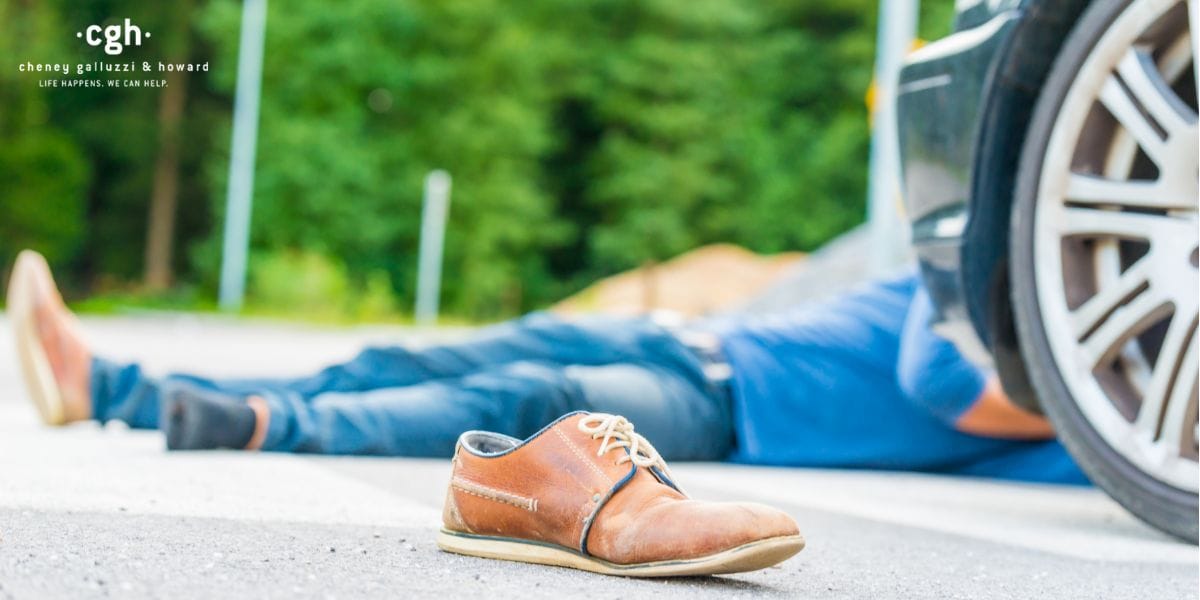
Pedestrian right-of-way laws in Colorado, governed primarily by C.R.S. § 42-4-802, establish when drivers must yield to individuals crossing roadways. A critical but often misunderstood aspect of Colorado law is that every intersection constitutes a legal crosswalk—regardless of whether painted lines are present. This means drivers have a duty to yield to pedestrians at both marked and unmarked crossings, and violations of this statute form the basis for most pedestrian accident liability claims.
If you’ve been injured in a crosswalk accident, you’re likely confused about who was at fault—especially if an insurance adjuster or police report suggested you were partially to blame. Understanding Colorado’s specific pedestrian laws is the first step toward protecting your rights and determining whether you have a valid injury claim.
Injured in a Colorado Pedestrian Accident? Find Legal Representation by Practice Area
Pedestrian accidents often result in catastrophic injuries that require specialized legal expertise. Depending on the severity and circumstances of your case, you may benefit from connecting with attorneys who focus on specific injury types:
Bicycle vs. Pedestrian Accident Law Similarities – Colorado’s right-of-way laws apply similarly to both pedestrians and cyclists, and understanding these parallels can help you navigate your claim.
Learn About Wrongful Death Claims in Pedestrian Fatalities – When a crosswalk accident results in a loved one’s death, Colorado law allows surviving family members to pursue compensation for loss of companionship, financial support, and funeral expenses.
Understand Traumatic Brain Injury from Pedestrian Impacts – Head injuries are among the most common and devastating consequences of pedestrian-vehicle collisions, often requiring lifelong medical care and rehabilitation.
Understanding Colorado’s Pedestrian Right-of-Way Statute (C.R.S. § 42-4-802)
Colorado Revised Statutes § 42-4-802 is the cornerstone of pedestrian protection law in the state. This statute outlines when and where drivers must yield to individuals on foot.
The Law in Plain English:
Under C.R.S. § 42-4-802, drivers approaching a crosswalk must yield the right-of-way to any pedestrian who is within the crosswalk or “so close thereto as to be in danger.” This applies to both marked crosswalks (those with painted lines or signage) and unmarked crosswalks at intersections.
The statute further specifies that once a pedestrian has entered a crosswalk, drivers in all lanes traveling in the same direction must stop and remain stopped until the pedestrian has safely crossed. Drivers are also prohibited from passing vehicles that have stopped to allow a pedestrian to cross.
The “Every Intersection is a Crosswalk” Doctrine:
Here’s where many drivers—and even some police officers—get it wrong. According to Colorado law, a crosswalk exists at every intersection where sidewalks meet, whether or not there are painted lines, signs, or signals. This means that if you were struck while crossing at an unmarked intersection, the driver may still have violated your right-of-way, even if they claim “there was no crosswalk.”
This legal principle is critical in pedestrian injury cases because insurance companies often argue that victims were “jaywalking” when, in fact, they were crossing at a legal (though unmarked) crosswalk where drivers had a duty to yield.
Driver Duties vs. Pedestrian Duties:
While drivers bear the primary responsibility to yield, pedestrians also have legal obligations under Colorado law. C.R.S. § 42-4-803 requires pedestrians crossing at locations other than marked or unmarked crosswalks to yield the right-of-way to vehicles. Additionally, pedestrians must use available traffic control signals when present and should not suddenly leave a curb and enter a crosswalk when a vehicle is so close that the driver cannot reasonably yield.
However, even when a pedestrian violates these duties, it doesn’t automatically eliminate their right to compensation. Colorado’s comparative negligence law (discussed below) allows injured pedestrians to recover damages even if they were partially at fault.
The “Unmarked Crosswalk” Trap: Why Paint Doesn’t Determine Liability
One of the most common—and costly—misconceptions in pedestrian accident cases is that crosswalks only exist where there are painted white lines. This myth allows insurance companies to deny valid claims by arguing the victim was “crossing illegally.”
The Reality:
Every intersection in Colorado where two roadways meet and sidewalks are present creates an implied crosswalk. This is true whether the intersection is controlled by traffic signals, stop signs, or is completely uncontrolled. The absence of painted stripes does not eliminate the crosswalk or the driver’s duty to yield.
Why This Matters for Your Case:
If you were struck at an intersection without painted lines, the driver’s insurance company will likely argue you were jaywalking and therefore at fault. However, by citing C.R.S. § 42-4-802 and demonstrating that you were crossing at a legal unmarked crosswalk, your attorney can shift liability back to the driver who failed to yield.
Visual Concept [Infographic Placeholder]:
“Marked vs. Unmarked Crosswalks in Colorado: A side-by-side diagram showing a traditional striped crosswalk and an intersection with no paint, both labeled as legal crosswalks under Colorado law. Include annotations showing driver duty zones and pedestrian right-of-way areas.”
Case Scenario Example:
Maria was crossing at a residential intersection with no painted lines or stop signs. A driver turning left struck her, breaking her leg. The driver’s insurance adjuster claimed Maria was “crossing illegally” and offered nothing. However, because Maria was crossing at an unmarked crosswalk where the driver had a duty to yield, her attorney successfully argued the driver violated C.R.S. § 42-4-802, ultimately securing a six-figure settlement.
Comparative Negligence in Colorado Pedestrian Accidents
Even if you made a mistake—crossing against a signal, stepping into traffic suddenly, or crossing mid-block—you may still be entitled to compensation under Colorado’s modified comparative negligence rule.
The 50% Bar Rule (C.R.S. § 13-21-111):
Colorado follows a “modified comparative negligence” system with a 50% bar. This means that as long as you are less than 50% at fault for the accident, you can still recover damages. However, your compensation will be reduced by your percentage of fault.
How It Works:
- If you are found 0% at fault, you recover 100% of your damages.
- If you are found 20% at fault, you recover 80% of your damages.
- If you are found 49% at fault, you recover 51% of your damages.
- If you are found 50% or more at fault, you recover nothing.
The “Jaywalking” Myth:
Insurance companies love to use the word “jaywalking” to scare injured pedestrians into accepting lowball settlements or abandoning their claims entirely. The truth is that even if you crossed outside a designated crosswalk, the driver may still bear the majority of fault if they were speeding, distracted, or failed to exercise reasonable care.
Example Scenario:
John crossed Colfax Avenue mid-block (outside a crosswalk) to reach a bus stop. A driver traveling 15 mph over the speed limit struck him, causing a traumatic brain injury. While John technically violated C.R.S. § 42-4-803 by crossing outside a crosswalk, the driver’s excessive speed and failure to maintain a proper lookout made the driver 70% at fault. Under comparative negligence, John recovered 70% of his $500,000 in damages—$350,000.
Common Defense Tactics:
Insurance adjusters will often claim:
- “You darted out into traffic.”
- “The driver couldn’t have seen you.”
- “You were wearing dark clothing at night.”
These arguments are designed to shift fault to you. However, experienced pedestrian accident attorneys use accident reconstruction, witness testimony, and traffic camera footage to demonstrate that drivers had sufficient time and distance to stop, or that they violated other traffic laws (such as speeding or distracted driving) that contributed to the collision.
Common Crosswalk Accident Scenarios & Liability Matrix
Pedestrian accidents happen in predictable patterns. Understanding these common scenarios can help you identify who was at fault in your case.
The “Left Hook” Accident
What Happens: A driver turning left at an intersection focuses on oncoming vehicle traffic and fails to see a pedestrian crossing in the crosswalk. The front of the turning vehicle strikes the pedestrian.
Who’s at Fault: In most cases, the turning driver is at fault. Colorado law requires drivers making left turns to yield to pedestrians in crosswalks. Even if the pedestrian entered the crosswalk on a “Don’t Walk” signal, the driver still has a duty to avoid striking them if reasonably possible.
The “Wave Through” Trap
What Happens: A vehicle in the first lane stops to allow a pedestrian to cross. The pedestrian begins crossing and is struck by a vehicle in the second lane that did not stop.
Who’s at Fault: The driver in the second lane is typically at fault. C.R.S. § 42-4-802 explicitly prohibits drivers from passing vehicles stopped at a crosswalk. This scenario is particularly common on multi-lane roads like Federal Boulevard and Colorado Boulevard in Denver.
School Zones and Enhanced Duty of Care
What Happens: A child is struck while crossing near a school, either in a marked crosswalk with a crossing guard or at an unmarked intersection adjacent to school property.
Who’s at Fault: Drivers have a heightened duty of care in school zones. Colorado law imposes reduced speed limits and increased penalties for violations in these areas. If a driver was speeding, distracted, or failed to stop for a crossing guard, they bear significant liability. Courts recognize that children are less predictable and may not always follow crossing rules perfectly, placing greater responsibility on drivers to anticipate and avoid collisions.
Parking Lot Crossings
What Happens: A pedestrian is struck while walking through a parking lot, either in a designated pedestrian walkway or while crossing between parked cars.
Who’s at Fault: Liability in parking lots can be complex because these are often private property with different traffic rules. However, drivers in parking lots still have a duty to exercise reasonable care and watch for pedestrians. If a driver was speeding, backing without looking, or distracted, they will likely be found at fault.
Mid-Block Crossings vs. Intersection Crossings
What Happens: A pedestrian crosses a street in the middle of the block rather than at an intersection or marked crosswalk.
Who’s at Fault: Under C.R.S. § 42-4-803, pedestrians crossing mid-block must yield to vehicles. However, drivers still cannot strike pedestrians with impunity. If the driver saw (or should have seen) the pedestrian and had time to stop but failed to do so, the driver may share fault. Additionally, if the driver was engaged in reckless behavior (speeding, texting, DUI), they may bear the majority of liability despite the pedestrian’s violation.
Visual Concept [Infographic Placeholder]:
“The Liability Matrix: Six Common Pedestrian Accident Scenarios. A visual grid showing each scenario with simple illustrations, fault percentages, and key statutory violations.”
Proving Fault in Pedestrian Accident Cases
Establishing liability in pedestrian accident cases requires more than just pointing to the law. You need evidence that demonstrates what actually happened and who violated their legal duties.
Traffic Camera Footage:
Many intersections in Denver, Aurora, and Boulder are equipped with traffic cameras that capture accidents. This footage can prove whether a pedestrian was in a crosswalk, whether the driver ran a red light, and whether the pedestrian entered the crosswalk when it was safe to do so. Your attorney should request this footage immediately, as many municipalities only retain it for 30-90 days.
Witness Statements:
Independent witnesses who saw the accident are invaluable. Unlike the parties involved, witnesses have no financial interest in the outcome and are generally considered credible by insurance adjusters and juries. Your attorney will locate and interview witnesses to obtain detailed statements about what they observed.
Accident Reconstruction:
In complex cases—especially those involving disputed facts about speed, visibility, or reaction time—accident reconstruction experts can recreate the collision using physics, vehicle damage patterns, and road conditions. These experts can demonstrate that a driver had sufficient time to stop, that a pedestrian was visible, or that excessive speed contributed to the severity of injuries.
Challenging Police Reports:
Police officers who respond to pedestrian accidents often make preliminary fault determinations based on limited information. These reports are not the final word on liability. If the police report incorrectly blames you for the accident, your attorney can challenge it using the evidence described above. Courts and insurance companies understand that officers arriving after the fact may not have the complete picture.
Biomechanics and Injury Analysis:
The nature and location of your injuries can also prove fault. For example, if you suffered injuries to the front of your body, it suggests you were facing the oncoming vehicle and likely visible to the driver. If the vehicle damage is on the driver’s side front bumper, it corroborates that the driver turned into you rather than you “darting out.”
Types of Damages in Colorado Pedestrian Injury Claims
When a driver’s negligence causes a pedestrian accident, Colorado law allows injured victims to recover several categories of damages. Understanding what you can claim is essential to ensuring you receive full compensation—not just for your immediate medical bills, but for the long-term impact on your life.
Economic Damages:
These are quantifiable financial losses with clear dollar amounts:
- Medical Expenses: Past and future costs of emergency treatment, hospitalization, surgery, physical therapy, assistive devices, and ongoing care.
- Lost Wages: Income you’ve already lost due to time off work, including sick days, vacation days, and unpaid leave.
- Lost Earning Capacity: If your injuries prevent you from returning to your previous job or earning the same income, you can recover the difference between what you would have earned and what you can now earn.
- Property Damage: Replacement or repair costs for damaged personal items (phone, clothing, glasses, etc.).
Non-Economic Damages:
These compensate for subjective losses that don’t have price tags:
- Pain and Suffering: Physical pain, discomfort, and the ongoing experience of living with injuries.
- Emotional Distress: Anxiety, depression, PTSD, and fear of traffic or crossing streets.
- Loss of Quality of Life: Inability to participate in hobbies, sports, social activities, or family events you previously enjoyed.
- Disfigurement and Scarring: Permanent visible injuries that affect your appearance and self-esteem.
- Loss of Consortium: Compensation to your spouse for the loss of companionship, affection, and intimacy resulting from your injuries.
Wrongful Death Damages:
When a pedestrian accident results in death, surviving family members can pursue a wrongful death claim under Colorado law. Recoverable damages include funeral and burial expenses, loss of financial support, loss of companionship and guidance, and the pain and suffering the deceased experienced before death.
It’s More Than Money:
At Cheney Galluzzi & Howard, we understand that no amount of compensation can undo what happened to you. But fair compensation provides the resources you need to rebuild your life—to pay for the best medical care, to support your family during recovery, and to regain a sense of security and dignity. You aren’t just a case file; you’re a person rebuilding their life, and you deserve representation that treats you that way.
Insurance Coverage for Pedestrian Accidents
Many pedestrian accident victims are surprised to learn that multiple insurance policies may provide coverage for their injuries—not just the at-fault driver’s policy.
The At-Fault Driver’s Liability Coverage:
The primary source of compensation is typically the driver’s auto liability insurance. Colorado requires all drivers to carry minimum liability coverage of $25,000 per person for bodily injury. However, serious pedestrian accidents often result in damages far exceeding this minimum. If the driver carries higher limits (such as $100,000, $250,000, or $500,000), you can recover up to those amounts.
Your Own Auto Insurance (UM/UIM Coverage):
Here’s something most people don’t know: your own auto insurance policy likely covers you even when you’re on foot. If you carry Uninsured Motorist (UM) or Underinsured Motorist (UIM) coverage, it can provide additional compensation when:
- The at-fault driver has no insurance (uninsured).
- The at-fault driver’s insurance is insufficient to cover your damages (underinsured).
- The at-fault driver flees the scene (hit-and-run).
UM/UIM coverage essentially allows you to “stack” your own policy on top of the at-fault driver’s policy. For example, if the driver has $25,000 in coverage but your damages are $200,000, and you have $100,000 in UIM coverage, you can potentially recover $125,000 total.
Health Insurance and Medical Payments Coverage:
Your health insurance will typically cover your immediate medical treatment. However, health insurers often have “subrogation” rights, meaning they can seek reimbursement from any settlement or verdict you receive. Experienced attorneys negotiate these liens to ensure you keep as much of your recovery as possible.
Some auto insurance policies also include Medical Payments (MedPay) coverage, which pays your medical bills regardless of fault, up to a specified limit (often $5,000-$10,000). This coverage can be crucial for covering immediate expenses while your claim is pending.
Dealing with Insurance Adjusters:
Insurance companies—even your own—are businesses focused on minimizing payouts. Adjusters may contact you shortly after the accident asking for recorded statements, medical authorizations, or quick settlements. Be cautious. Statements you make can be used to undervalue or deny your claim. Before speaking with any insurance adjuster, consult with an attorney who can protect your rights and handle communications on your behalf.
Colorado’s Most Dangerous Intersections for Pedestrians
Certain corridors and intersections in Colorado have earned reputations as particularly hazardous for people on foot. Understanding where accidents cluster can help you stay safe—and can also provide context if you were injured at one of these locations.
Federal Boulevard:
Federal Boulevard, particularly between downtown Denver and Westminster, consistently ranks among the most dangerous roads for pedestrians in Colorado. The combination of high-speed traffic, frequent commercial driveways, and limited marked crosswalks creates a deadly environment. The Colorado Department of Transportation (CDOT) has identified multiple segments of Federal Boulevard as “high priority” for pedestrian safety improvements.
Colfax Avenue:
As one of the longest commercial streets in America, Colfax Avenue sees heavy vehicle and pedestrian traffic. The wide roadway, multiple lanes, and frequent bus stops mean pedestrians are constantly crossing. Accidents are particularly common at intersections with poor lighting or where drivers make high-speed turns without checking crosswalks.
Speer Boulevard:
Speer Boulevard’s diagonal path through Denver creates complex intersections where pedestrians must cross multiple lanes of traffic. The roadway’s design prioritizes vehicle speed over pedestrian safety, and several fatal accidents have occurred at intersections near downtown.
Aurora’s Havana Street and Iliff Avenue:
The intersection of Havana Street and Iliff Avenue in Aurora has been the site of multiple serious pedestrian accidents. High traffic volumes, confusing signal timing, and long crossing distances all contribute to the danger.
Vision Zero Denver:
In response to rising pedestrian fatalities, Denver launched its Vision Zero initiative with the goal of eliminating all traffic deaths and serious injuries by 2030. The program focuses on engineering improvements (such as better lighting and shorter crossing distances), enforcement of traffic laws, and education campaigns. If you were injured at an intersection identified in the Vision Zero High Injury Network, this can support your claim by demonstrating that the city recognized the location as dangerous.
Get the Legal Guidance You Deserve
If you or a loved one has been injured in a pedestrian accident, you’re facing physical pain, financial stress, and uncertainty about the future. You may be dealing with insurance adjusters who are trying to minimize your claim or blame you for the accident. You don’t have to face this alone.
At Cheney Galluzzi & Howard, we don’t just handle cases—we fight for people. Kevin Cheney and our team are committed to a hands-on approach: we visit accident scenes, pull traffic camera footage, and challenge incomplete police reports. We prepare every case for trial to force insurance companies to take your claim seriously. And we do it all on a 100% contingency fee basis, which means you pay nothing unless we win.
You aren’t just a case file. You’re a person rebuilding your life, and you deserve representation that treats you that way.
Call us today for a free consultation. Let us handle the fight so you can focus on healing.
Frequently Asked Questions About Colorado Pedestrian Accidents
Do pedestrians always have the right of way in Colorado?
No. While pedestrians have the right of way in marked and unmarked crosswalks at intersections, they must yield to vehicles when crossing outside of crosswalks (mid-block). Pedestrians must also obey traffic signals when present. However, even when a pedestrian violates these rules, drivers still have a duty to exercise reasonable care to avoid striking them.
What happens if a pedestrian is hit in a crosswalk?
If you are struck in a crosswalk, the driver is typically at fault for failing to yield your right of way under C.R.S. § 42-4-802. You may be entitled to compensation for medical expenses, lost wages, pain and suffering, and other damages. The key is to document the scene, obtain witness information, and consult with an attorney who can preserve evidence and build your case.
Can I sue if I was jaywalking?
Yes. Even if you were crossing outside a designated crosswalk, you can still pursue a claim under Colorado’s comparative negligence law. As long as you are found less than 50% at fault, you can recover a portion of your damages. Factors such as driver speed, distraction, or intoxication can shift the majority of fault to the driver despite your violation.
Does my car insurance cover me if I’m hit as a pedestrian?
Yes, if you carry Uninsured Motorist (UM) or Underinsured Motorist (UIM) coverage. This coverage applies even when you’re on foot and can provide compensation when the at-fault driver has insufficient insurance or flees the scene. Check your policy declarations page or contact your insurer to confirm your coverage limits.
What is the statute of limitations for pedestrian accidents in Colorado?
In most cases, you have three years from the date of the accident to file a personal injury lawsuit under C.R.S. § 13-80-101. However, if the at-fault driver is a government employee (such as a city bus driver), you may need to file a notice of claim within 180 days. If the victim is a minor, different rules may apply. To protect your rights, consult with an attorney as soon as possible after the accident.
How is fault determined in pedestrian accidents?
Fault is determined by analyzing evidence such as police reports, witness statements, traffic camera footage, vehicle damage, injury patterns, and applicable traffic laws. An attorney will investigate whether the driver violated C.R.S. § 42-4-802 (failure to yield), was speeding, distracted, or impaired, and whether the pedestrian was crossing legally and exercising reasonable care.
What should I do immediately after being hit by a car?
First, seek medical attention—even if you feel fine, as some injuries (like internal bleeding or traumatic brain injuries) may not be immediately apparent. Call 911 to report the accident and request police and medical response. If you’re able, take photos of the scene, the vehicle, your injuries, and any traffic signals or crosswalk markings. Obtain the driver’s insurance information and contact details for any witnesses. Do not give a recorded statement to any insurance company before consulting with an attorney.
If you’re exploring your legal options after a serious injury, you may also benefit from learning about our other areas of expertise. Visit our Practice Areas page to see how Cheney Galluzzi & Howard can help you navigate complex personal injury claims, insurance disputes, and wrongful death cases.