
ClickCease
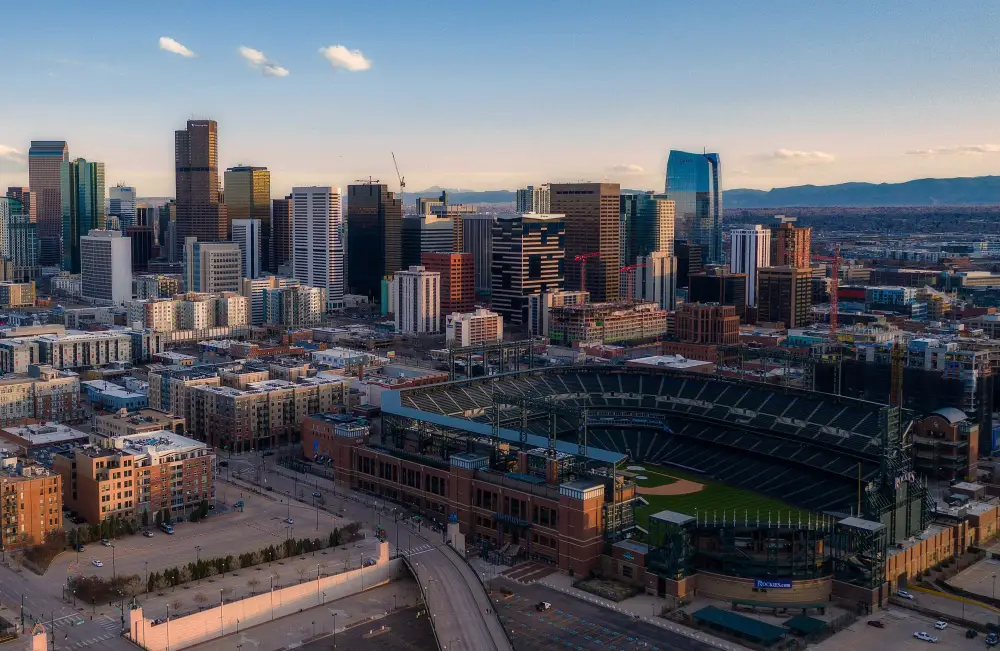
Arvada, Colorado street scene. CGH Injury Lawyers represents slip and fall victims in Arvada and Jefferson County.
Arvada, Colorado

Arvada Slip and Fall Lawyers Who Hold Negligent Property Owners Accountable

From black-ice falls in Olde Town Arvada to trip hazards on Wadsworth Boulevard, Colorado's Premises Liability Act gives you real rights against property owners who let dangerous conditions go unfixed. We serve Arvada from our Denver office and never charge a fee unless we win your case.

No fee unless we win

It's More Than Money.

Get my free slip and fall case review

100% confidential. No fee unless we win.

Serving Arvada from Our Denver Office CGH Injury Lawyers 2701 Lawrence St., Suite 201 Denver, CO 80205 (303) 209-9395 Se habla espanol
5-star rated on Google ABOTA trial advocate on the team Trial lawyers, not a settlement mill 8 attorneys, bilingual EN / ES

Arvada sits where Front Range winters hit hardest and where high-traffic commercial corridors along Wadsworth Boulevard and Kipling Street see consistent falls year-round. Colorado's Premises Liability Act gives injured Arvada residents a clear legal path, but the rules are strict and the clock starts running on the day of the fall.

  • Colorado slip and fall claims are governed by the Premises Liability Act (C.R.S. 13-21-115). The duty a property owner owes you depends on whether you were an invitee, a licensee, or a trespasser when you were hurt.
  • If you fell on government property in Arvada, such as an RTD Gold Line station, a City of Arvada sidewalk, or a Jefferson County building, you have only 182 days to file a written notice of claim under the Colorado Governmental Immunity Act (C.R.S. 24-10-109). Miss that deadline and the claim is almost certainly gone forever.
  • Colorado follows modified comparative fault. You can still recover if you were partly responsible, as long as you were less than 50 percent at fault. At 50 percent or more, you recover nothing (C.R.S. 13-21-111).

CGH Injury Lawyers represents Arvada slip and fall victims from our Denver office at 2701 Lawrence St., Suite 201. We handle the notice requirements, the investigation into the property owner's maintenance records, and trial in Jefferson Combined Court when an insurer refuses to pay what your case is worth. You pay nothing unless we recover for you.

Who we represent

Arvada residents seriously hurt on someone else's property

A fall can produce injuries that change every part of your life: surgeries, months of physical therapy, missed work, and lasting pain. We represent people whose injuries are real and whose case has a sound legal basis, and we will tell you honestly in the free review which category you are in.

Situations we handle

  • Slip and fall on ice or snow in an Arvada parking lot, sidewalk, or building entrance that an owner failed to clear in a reasonable time
  • Trip and fall on uneven pavement or defective flooring in Olde Town Arvada shops, the Arvada Center for the Arts, or the Apex Center
  • Falls at RTD Gold Line stations, including Olde Town Arvada Station, Arvada Gold Strike (60th and Sheridan), and Arvada Ridge/Ward Road
  • Falls on retail and grocery store properties along Wadsworth Boulevard and Kipling Street
  • Stairwell, broken handrail, and apartment common-area falls in Arvada residential buildings
  • Falls caused by hail or summer storm debris that an owner left on a walkway or entrance

Injuries we see most often

  • Traumatic brain injury and concussion from striking the head on pavement or flooring
  • Spinal cord injuries and herniated discs from high-impact falls
  • Hip fractures and wrist fractures from bracing a fall, especially in older adults
  • Torn knee and shoulder ligaments requiring surgery
  • Soft-tissue injuries and long-term chronic pain that do not always appear on initial imaging
The law that governs your case

Colorado's Premises Liability Act decoded for Arvada victims

Colorado handles slip and fall cases under one specific law, the Premises Liability Act (C.R.S. 13-21-115). What a property owner owes you depends entirely on your legal status on the property when you were hurt. That status is where every case begins, and getting it right is the foundation of a winning claim.

Visitor status Who it covers What the property owner owes you
Invitee (highest duty) Customers, restaurant patrons, shoppers, and anyone there for the mutual benefit of both parties Must inspect for hazards, fix dangerous conditions, and warn of dangers that cannot be immediately fixed
Licensee (moderate duty) Social guests, friends visiting a home, or anyone on the property with permission for their own purpose Must warn of known hazards that are not obvious; no duty to inspect for hidden dangers
Trespasser (lowest duty) Anyone on the property without permission or legal right Owed only protection from willful or wanton harm; special rules protect child trespassers under the attractive nuisance doctrine

The natural accumulation rule for Arvada winter falls

Colorado follows the natural accumulation rule, which generally protects property owners from liability for ice and snow that naturally accumulates during a storm. An owner is not automatically responsible every time it snows on Wadsworth Boulevard or Kipling Street. However, liability can attach when:

  • Enough time has passed after a storm for reasonable clearing, and the owner did nothing.
  • The owner created or worsened the hazard, for example by piling shoveled snow that refroze into a hidden ice patch at a building entrance on Ralston Road.
  • The owner began snow removal but did it negligently, leaving ice patches or hidden hazards behind.

Recent Colorado appellate decisions have narrowed the natural accumulation defense. When an owner starts clearing snow and does it carelessly, they can lose the protection of this rule. Arvada's Front Range climate, with rapid temperature swings and freeze-thaw ice cycles on elevated ramps and commercial parking lots, generates exactly these fact patterns regularly.

Government property

The 182-day deadline for falls on Arvada government property

If you fell on government property in Arvada, including an RTD Gold Line station, a City of Arvada sidewalk, Jefferson County-maintained property, or a public park near Standley Lake, you face a much shorter deadline under the Colorado Governmental Immunity Act (C.R.S. 24-10-109). Most people assume they have two years and call an attorney too late.

  1. File written notice within 182 days

    You must file a written notice of your claim within 182 days of discovering your injury. This is a formal notice to the government entity, not the same as filing a lawsuit. Under C.R.S. 24-10-109, compliance with this requirement is a jurisdictional prerequisite. Missing it will permanently bar your claim.

  2. Identify the correct entity

    Arvada straddles Jefferson and Adams Counties. Most of the city falls under Jefferson County jurisdiction, with the Jefferson Combined Court in Golden handling civil litigation. But the City of Arvada, RTD, Jefferson County, and Adams County are separate legal entities. The notice must reach the right one, and a misdirected notice does not preserve your claim.

  3. Confirm an immunity exception applies

    The CGIA grants immunity for many government functions, but important exceptions exist including dangerous conditions of public buildings and certain public roadways. We evaluate whether your Arvada fall fits a recognized exception before the 182-day clock runs out.

  4. Know the damage limits that apply

    When you sue a government entity and an exception to immunity applies, Colorado caps your recovery. For claims accruing on or after January 1, 2026, the Secretary of State-certified CGIA caps are $505,000 per person and $1,421,000 per occurrence (C.R.S. 24-10-114(1)(b)). These figures replace lower prior-period caps for newer claims.

If your Arvada fall happened near an RTD station, on a public sidewalk, or on any City of Arvada or Jefferson County property, call (303) 209-9395 immediately. Waiting even a few weeks can consume a significant part of the 182-day window.

Local knowledge

Arvada courts, trauma centers, and the corridors where people fall

A premises liability case in Arvada lives in Arvada: the courthouse where it is filed, the hospital where you were treated, and the specific properties where the fall happened. Here is the ground we work on.

Courthouse

Jefferson Combined Court

Slip and fall cases arising in Arvada, which lies primarily in Jefferson County, are filed in the First Judicial District at Jefferson Combined Court, 100 Jefferson County Parkway, Golden, CO 80401. The court handles both district-level civil litigation and county court matters. Most of Arvada's population and commercial corridors sit in Jefferson County; the small portion in Adams County falls under different jurisdiction. Knowing which county controls your case before you file is something we verify at intake.

Trauma Care

Intermountain Health Lutheran Hospital and UCHealth University of Colorado Hospital

Seriously injured Arvada fall victims are typically transported to Intermountain Health Lutheran Hospital, a CDPHE-designated Level II Trauma Center that opened its new facility in August 2024, or to UCHealth University of Colorado Hospital, a CDPHE-designated and American College of Surgeons-verified Level I Trauma Center. The medical records from these facilities document the full scope of your injuries and become the backbone of your damages claim. We preserve these records early.

Where Falls Happen

Arvada's high-risk corridors and destinations

Olde Town Arvada, the historic district served by the RTD Gold Line at Olde Town Arvada Station, sees heavy pedestrian traffic across older uneven pavement and brick surfaces. The Arvada Center for the Arts and Humanities draws more than 300,000 visitors annually near 6901 Wadsworth Blvd, with significant parking-lot and entrance traffic. The Apex Center in northeast Jefferson County generates high-volume foot traffic through shared recreation spaces. Wadsworth Boulevard (Colorado State Highway 121) and Kipling Street are high-speed suburban arterials with documented pedestrian hazard issues, and Ralston Road serves as the primary east-west corridor through central Arvada. Front Range winter conditions, including the freeze-thaw ice cycles and 25 documented hail events in the Arvada area, make parking lots and commercial entrances particularly dangerous from November through March.

Why CGH

Why Arvada slip and fall victims choose CGH Injury Lawyers

Serving Arvada from our Denver office, trial-ready attorneys, bilingual help, and no fee unless we win. We do not publish slip and fall settlement figures, because every injury and every property condition is different. What we offer is the work, not a headline.

The Statute

C.R.S. 13-21-115

Colorado's Premises Liability Act sets the duty standard based on your visitor status. We determine which tier applies to your Arvada case before anything else.

Denver Office, Arvada Cases

No Arvada office. No pretending.

We serve Arvada from our Denver office at 2701 Lawrence St., Suite 201. We are not a virtual listing with a mailbox in Jefferson County. You can walk into our Denver office, meet the attorney handling your case, and review your file. We are direct about where we practice from, and our results speak for the distance.

182-Day Alert

Government property? Clock is running now.

Falls on RTD stations, Arvada sidewalks, or Jefferson County property trigger a 182-day notice deadline under the CGIA. We file the notice before the window closes.

Honest Case Review

We decline cases we cannot stand behind.

If your facts do not support a valid premises liability claim, we say so in the free review. We do not sign up cases to collect contingency fees on claims that have no realistic path to recovery. You deserve that honesty before you invest your time in us.

Trial-Ready

8 attorneys. Jefferson County court experience.

Managing Partner Kevin Cheney is a member of the American Board of Trial Advocates and has tried over 25 cases to verdict. Timothy G. Tarr has been recognized by Best Lawyers every year since 2023. When attorneys are genuinely prepared to try a case in Jefferson Combined Court, insurers respond differently at the negotiating table.

Bilingual

Hablamos espanol.

Spanish-speaking staff and attorneys serve Arvada's Spanish-speaking community with full representation in both languages.

No Win, No Fee

Contingency only.

You pay nothing out of pocket for legal fees. We advance costs and collect only from a settlement or verdict in your favor.

After the fall

What to do after a slip and fall in Arvada

Evidence in these cases disappears fast. Surveillance footage gets overwritten within days, spills get cleaned, and ice patches melt. The steps you take in the first hours and days shape what a lawyer can do with your case weeks later.

  1. Get medical care immediately

    Seriously injured Arvada residents are often transported to Intermountain Health Lutheran Hospital or UCHealth University of Colorado Hospital. Even if you feel you can walk away, get examined. Spinal, head, and soft-tissue injuries often show full severity hours or days after impact. Medical records from the day of the fall are the most important document in your case.

  2. Document the scene before it changes

    Photograph the hazard, the surrounding area, any warning signs that were or were not present, and your injuries. Note the time, date, weather, and lighting conditions. If a store manager or property employee approaches you, ask for an incident report in writing and keep a copy.

  3. Identify witnesses

    Get the names and contact information of anyone who saw the fall or who was aware of the hazard before it happened. Witness memories begin to fade quickly, and contact information for bystanders disappears even faster.

  4. Call us before you talk to the property owner's insurer

    Property owners and their insurers move quickly. Do not give a recorded statement, sign any release, or accept any payment before speaking with an attorney. Call CGH at (303) 209-9395. A recorded statement taken before you know the full extent of your injuries can limit your recovery.

  5. We preserve the evidence and file notice if required

    We immediately send preservation letters for surveillance footage and maintenance logs, photograph the scene while conditions remain, and, if government property is involved, we file the written notice required under the CGIA before the 182-day window closes.

  6. We build the case and negotiate from trial readiness

    We establish your visitor status, document actual or constructive notice, calculate your full damages, and send a documented demand. Most cases settle. When an Arvada property owner or insurer refuses a fair offer, we file in Jefferson Combined Court and try your case.

Compensation

What you can recover in an Arvada slip and fall case

Colorado law recognizes two categories of damages in premises liability cases. Your actual recovery depends on the severity of your injuries, the strength of the liability evidence, and whether a government entity or a private party owned the property.

Economic damages (not capped)

  • Medical bills, past and future, including surgery, physical therapy, and specialist care
  • Lost wages and lost income while you could not work
  • Loss of earning capacity if the injury limits your ability to work long-term
  • Rehabilitation, adaptive equipment, and future care needs
  • Out-of-pocket expenses directly tied to the fall

Non-economic damages

  • Pain and suffering
  • Emotional distress
  • Loss of enjoyment of life
  • Permanent disability or diminished quality of life

Colorado does not cap economic damages such as medical bills and lost wages in premises liability cases against private parties. Non-economic damages are subject to the general statutory cap under C.R.S. 13-21-102.5. For claims accruing on or after January 1, 2025, that cap is $1.5 million, with inflation adjustments starting in 2028. Damages for physical impairment or disfigurement are not capped at all under C.R.S. 13-21-102.5(5).

When the property is owned by a government entity, the CGIA damage caps apply instead. For claims accruing on or after January 1, 2026, those caps are $505,000 per person and $1,421,000 per occurrence (C.R.S. 24-10-114(1)(b), as certified by the Colorado Secretary of State). The rules are different enough that whether a government or private party owns the Arvada property where you fell is one of the first things we determine.

Modified comparative negligence applies under C.R.S. 13-21-111. If you were partly at fault, your recovery is reduced by your share of fault. If you were 50 percent or more at fault, you recover nothing. Property owners and their insurers will argue you were careless, which is why documenting the hazard immediately after the fall matters so much.

Owner defenses

Defenses Arvada property owners raise, and how we answer them

Insurers reach for the same defenses in almost every Arvada premises liability case. Knowing what each one actually requires under Colorado law is how we keep valid claims from being dismissed before they reach full value.

  1. "The hazard was open and obvious"

    Colorado courts have traditionally been receptive to this defense. If a danger is open and obvious to a reasonable person using ordinary care, the owner may not be liable. But this defense is not absolute. Recent Colorado Court of Appeals decisions have begun to limit it when owners create unreasonably dangerous conditions. Even a visible hazard can support liability when it is so dangerous that injury is foreseeable. Surveillance footage, maintenance records, and the scene itself tell the story that defeats this argument.

  2. "It just snowed, so we are not responsible"

    Colorado's natural accumulation rule protects owners during and immediately after storms. But Arvada's freeze-thaw climate means ice that forms after a storm ends, or ice that results from a property owner's own snow removal operations, is not protected by that rule. We examine weather records, timestamps on store surveillance, and maintenance logs to show how long the hazard existed and what the owner did about it.

  3. "We did not know about the hazard"

    To win, you must prove actual notice, meaning someone told the owner about the hazard, or constructive notice, meaning the hazard existed long enough that a reasonable inspection would have found it. Prior complaints or incident reports, inspection intervals in the maintenance log, and how long surveillance footage shows the hazard was present are the evidence that proves constructive notice in Arvada commercial properties.

  4. "You were partly at fault"

    Colorado's modified comparative negligence rule under C.R.S. 13-21-111 allows insurers to argue your award should be reduced based on your own conduct. Wearing appropriate footwear, paying attention to your surroundings, and the presence or absence of warning signs all factor in. We build the record that keeps your fault percentage below 50 percent, which is the threshold at which Colorado bars recovery entirely.

I wish I could leave more than 5 stars!
Grace M., 5-star CGH Injury Lawyers client review
How the money works

Who actually pays in an Arvada slip and fall claim

Most Arvada residents hesitate to pursue a slip and fall claim because they worry about financially harming a local business owner or a neighbor. Understanding how property liability insurance actually works usually changes that calculation.

  • When you fall at a commercial property on Wadsworth Boulevard or in Olde Town Arvada, you are generally filing a claim against the business or landlord's commercial general liability insurance, not their personal savings.
  • For residential falls at a neighbor's home or an Arvada apartment complex, claims typically go against the homeowner, landlord, or property management company's liability coverage.
  • Some policies exclude certain hazards, cap coverage below the full value of your injuries, or have multiple layers of coverage from both the tenant and the property owner. We identify all available coverage before making a demand.
  • The insurer's job is to minimize payouts, not to be fair to you. They will assign an adjuster to contest your claim whether the property owner is a stranger or someone you know personally. Having an attorney changes the dynamic in your favor from the first contact.
Questions

Arvada slip and fall: frequently asked questions

How long do I have to file a slip and fall lawsuit in Arvada?

For a fall on private property, you generally have two years from the date of injury to file a lawsuit in Colorado (C.R.S. 13-80-102). Do not wait, because evidence disappears and witness memories fade. If the fall happened on government property, including an RTD Gold Line station, a City of Arvada sidewalk, or a Jefferson County building, you must file a written notice of claim within 182 days of discovering the injury under the Colorado Governmental Immunity Act (C.R.S. 24-10-109). Missing that shorter deadline will almost certainly bar your claim permanently.

Where is a slip and fall lawsuit filed for an Arvada injury?

Arvada lies primarily in Jefferson County, so most Arvada slip and fall lawsuits are filed in the First Judicial District at Jefferson Combined Court, 100 Jefferson County Parkway, Golden, CO 80401. A small portion of Arvada falls within Adams County, which would be under different court jurisdiction. We confirm which county controls your case at intake based on where the fall occurred.

Can I sue if I fell on ice or snow in an Arvada parking lot?

Possibly, but not automatically. Colorado follows the natural accumulation rule, which generally protects owners from liability for snow and ice that naturally accumulates during a storm. However, once enough time has passed after a storm for reasonable clearing, or if the owner created or worsened the icy condition, liability can attach. Arvada's freeze-thaw climate means a lot of ice forms after storms end and after snow removal operations leave wet surfaces that refreeze overnight. Those facts can support a valid claim even when the original storm is protected.

I fell at an RTD Gold Line station in Arvada. Do I have a claim?

Possibly, but the process is more complicated than a private property claim. RTD is a government entity, which means you must file a written notice of claim within 182 days of discovering your injury under the Colorado Governmental Immunity Act (C.R.S. 24-10-109). You also need to confirm that a recognized CGIA immunity exception applies to your situation. If it does and your claim succeeds, recovery from RTD is capped at Secretary of State-certified amounts under C.R.S. 24-10-114. Call us before that 182-day window closes.

What is my visitor status and why does it matter?

Under Colorado's Premises Liability Act (C.R.S. 13-21-115), the duty a property owner owes you depends on whether you were an invitee, a licensee, or a trespasser. An invitee is a customer or anyone there for mutual benefit, and the owner must actively inspect for hazards. A licensee is a social guest or someone there with permission for their own purpose, and the owner only needs to warn of known dangers. A trespasser is owed almost nothing except protection from willful harm. Your visitor status is the first legal question in your case because it determines how high the bar is to prove the owner's liability.

What if the Arvada property owner says the hazard was open and obvious?

The open-and-obvious defense is common but not absolute in Colorado. Even visible hazards can create liability when they are so unreasonably dangerous that injury is foreseeable, or when the circumstances made it impossible to safely avoid the hazard. Recent Colorado Court of Appeals decisions have narrowed this defense. We use surveillance footage, expert testimony, and the physical evidence from the scene to show that a visible hazard does not automatically mean a property owner avoids responsibility.

I was partly at fault for my fall. Can I still recover?

Yes, if you were less than 50 percent at fault. Colorado's modified comparative negligence rule (C.R.S. 13-21-111) lets you recover damages reduced by your percentage of fault, but bars recovery entirely when you are 50 percent or more responsible. The correct phrasing matters: if you are 49 percent at fault and your damages are $100,000, you recover $51,000. If you are 50 percent at fault, you recover nothing. Property owners and their insurers will work hard to push your fault percentage above 50 percent, which is why building a strong liability record from day one is critical.

Is there a cap on what I can recover in an Arvada slip and fall case?

It depends on who owned the property. For falls on private property, Colorado does not cap economic damages such as medical bills and lost wages. Non-economic damages like pain and suffering are subject to the general cap under C.R.S. 13-21-102.5, which is $1.5 million for claims accruing on or after January 1, 2025, with inflation adjustments starting in 2028. Damages for physical impairment or disfigurement are not capped at all (C.R.S. 13-21-102.5(5)). For falls on government property in Arvada, the CGIA caps apply instead: $505,000 per person and $1,421,000 per occurrence for claims accruing on or after January 1, 2026 (C.R.S. 24-10-114(1)(b), Secretary of State-certified).

It's More Than Money.

You fell on someone else's property in Arvada. We handle everything else.

Free consultation from our Denver office. No fee unless we win. Available in English and Spanish.

Tell us what happened in Arvada

100% confidential. No fee unless we win.

Prefer to read the full Colorado law first? See how Colorado's Premises Liability Act works statewide.

CGH Injury Lawyers · 2701 Lawrence St., Suite 201, Denver, CO 80205 · Serving Arvada and Jefferson County