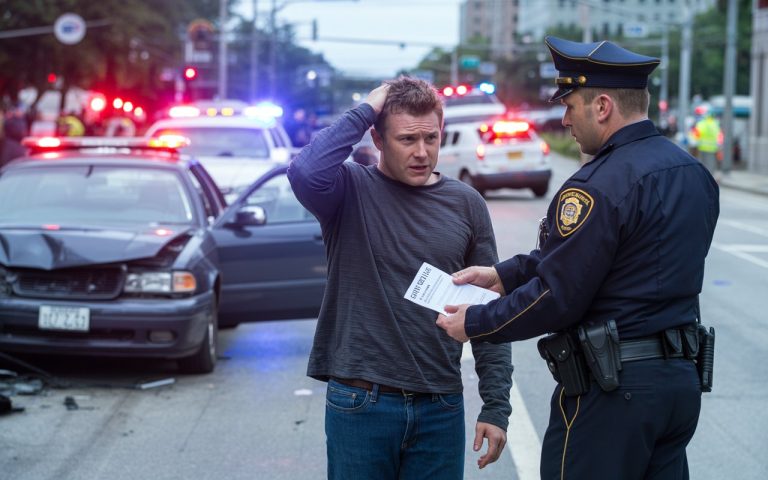

- Under C.R.S. 42-4-1401, reckless driving in Colorado requires proof of willful or wanton disregard for the safety of others, a meaningfully higher bar than careless driving, with direct implications for your civil claim.
- If a reckless driver injured you, Colorado law may allow a jury to award punitive (exemplary) damages on top of your actual losses, a fact most injury victims never learn, and one that can change your case value.
- You do not need a criminal conviction or even criminal charges to pursue a civil personal injury claim for reckless driving injuries in Colorado.
- SB 25-281, signed into law in May 2026, increases criminal penalties for careless driving that causes death, the latest signal that Colorado is taking dangerous driving more seriously than ever.
Reckless driving in Colorado is defined under C.R.S. 42-4-1401 as operating a vehicle “in such a manner as to indicate either a wanton or willful disregard for the safety of persons or property.” That’s the legal answer.
But if you were injured by someone who blew through a red light at 60 mph, was weaving through I-25 traffic as they owned it, or was clearly driving drunk, you already know what reckless looks like. You watched it happen. What you may not know is whether the law will call it what it was, and what that label means for you.
Here’s what matters: the reckless label isn’t just a criminal matter. Whether the other driver’s conduct qualifies as reckless, or rises to what Colorado courts call “willful and wanton,” can change everything about your right to compensation. Insurance companies understand this. They’re counting on the fact that you probably don’t.
What Is Reckless Driving in Colorado?
Colorado law makes reckless driving a criminal traffic offense defined by one essential element: willfulness. It’s not enough that someone drove dangerously. The law requires that the driver consciously choose to create a serious risk and drive that way anyway.
The Key Word: “Willful”
“Willful disregard” is what separates reckless from careless. A driver who drifts into your lane while adjusting the radio may be careless. A driver who weaves through stopped traffic at 80 mph knows they’re creating danger and do it anyway. That mental state, conscious disregard of an obvious and serious risk, is what Colorado courts look for.
Willful doesn’t mean the driver intended to hurt you. It means they made a choice that any reasonable person would recognize as putting everyone around them in serious danger. That’s the threshold. And it’s exactly what makes reckless driving more legally powerful, both criminally and in your civil claim.
How Colorado Law Distinguishes Reckless From Careless
Colorado maintains two separate statutes for dangerous driving behavior:
- Reckless driving (C.R.S. 42-4-1401): Willful or wanton disregard for the safety of persons or property. A Class 2 misdemeanor traffic offense.
- Careless driving (C.R.S. 42-4-1402): Operating without due care in a way that endangers persons or property. A lower standard, negligence rather than willfulness.
The gap between these two isn’t semantic. It has direct consequences for what you can recover. We’ll get to that.
Common Reckless Driving Examples in Colorado
Colorado courts look at the totality of a driver’s conduct, not just speed in isolation, not just one bad maneuver. Here are the behaviors most commonly found to meet the reckless driving standard:
Would This Count as Reckless?
Running a red light at 60 mph in a school zone: Yes. Speed combined with deliberate signal disregard in a high-risk location is textbook willful conduct.
Street racing on I-70 or a residential street: Yes. The conscious choice to race at dangerous speeds is one of the clearest examples.
Driving drunk or impaired (DUI/DUID): Yes, in most cases. Impaired driving that causes an accident frequently satisfies the willful and wanton standard.

Road rage, brake-checking, deliberate cut-offs, forced merges: Yes. Intentional aggressive acts directed at other drivers are strong evidence of willful disregard.
Texting while driving or using a handheld device (especially after Colorado’s hands-free law took effect in January 2025): Frequently yes, depending on the full circumstances.
Eating while drifting slightly over the center line: Likely no. This is careless driving, unless combined with additional dangerous conduct or high speed.
Other scenarios our Colorado car accident lawyers see regularly include aggressive weaving through highway traffic at dangerous speeds, driving with a suspended license while impaired, and ignoring severe weather conditions on mountain passes. Someone doing 80 mph on an icy I-70 corridor, for instance, can meet the wanton disregard standard.
Suppose you’re describing the other driver in phrases like “flying through the intersection,” “weaving all over,” “clearly wasted,” or “driving like a maniac.” Those aren’t just vague impressions. They’re factual observations that often map directly onto the legal standard.
Reckless Driving vs. Careless Driving in Colorado
| Reckless Driving | Careless Driving | |
| Colorado Statute | C.R.S. 42-4-1401 | C.R.S. 42-4-1402 |
| Mental Standard | Willful or wanton disregard | Lack of due care (negligence) |
| Criminal Classification | Class 2 misdemeanor | Class 2 misdemeanor traffic offense |
| License Points | 8 points | 4 points (more if injury/death involved) |
| Civil Claim Impact | Can support a punitive damages claim | Supports negligence and damages claim |
| Criminal Conviction Required to Sue? | No | No |
Why the Distinction Matters in Court, and in Your Claim
Most people assume they need the other driver to be charged with reckless driving and convicted, for that label to help their civil case. That’s not how it works.
Colorado’s civil and criminal systems run on separate tracks. In a personal injury case, your attorney argues the facts of the driver’s conduct directly to a jury. A criminal conviction is useful evidence. But it is not a prerequisite, and the absence of criminal charges does not close the door on your civil recovery.
What matters in your civil case is what the driver actually did, and whether a jury finds that conduct willful and wanton. That’s where the real leverage in your claim lives.
Criminal Penalties for Reckless Driving in Colorado
Under current Colorado law, reckless driving is a Class 2 misdemeanor traffic offense. Penalties may include, depending on the circumstances and the driver’s prior record:
- Up to 10 days in jail for a first offense; up to 90 days for subsequent offenses
- Fines ranging up to $300 (first offense) to higher amounts for repeat violations
- 8 points on the driver’s license, enough to trigger suspension proceedings for certain drivers
Actual penalties vary based on the specific facts, prior traffic history, and the presence of aggravating factors. A criminal defense attorney would advise on those specifics. As an injured victim, the civil dimension is what matters most to your recovery.
Legislative Alert: Colorado SB 25-281 (May 2026)
Governor Polis signed SB 25-281 on May 13, 2026, increasing criminal penalties for careless driving that causes death in Colorado. This legislation, passed by the Colorado General Assembly in the final weeks of the 2026 session, reflects a clear escalation in how Colorado treats drivers whose dangerous conduct kills someone. While SB 25-281 addresses criminal penalties specifically, its passage underscores a legislative recognition that dangerous driving has consequences far beyond a traffic ticket. (Full text: leg.colorado.gov/bills/SB25-281).
Were you injured by a reckless driver in Colorado? Before you talk to the insurance adjuster again, talk to us. Adjusters are trained to minimize what the other driver’s conduct means for your claim. We’re not. The consultation is free. You pay nothing unless we win. And we’ll give you an honest picture of what your case may actually be worth, including whether punitive damages could apply.
Contact Cheney Galluzzi & Howard, Free Consultation
What Reckless Driving Means for Your Personal Injury Claim
This is the section that most articles, every single competitor ranking for this keyword, never get to. They write for the person accused of reckless driving. We’re writing for you.
Civil vs. Criminal: Two Separate Tracks
When someone drives recklessly and injures you, two things can happen simultaneously and completely independently of each other:
- The state may pursue criminal charges against the driver.
- You may pursue a civil personal injury claim for your losses.
These are not the same process. They do not depend on each other. A district attorney may decline to file charges for any number of reasons unrelated to the merits of your civil case. A criminal case may be dismissed or result in an acquittal, and your civil claim remains entirely intact. You do not need the state’s cooperation to hold a reckless driver accountable for what they did to you.
How Recklessness Affects Fault Under Colorado’s Comparative Negligence Law
Colorado follows a modified comparative negligence rule: if you’re found partially at fault, your recovery is reduced by your percentage of fault. If you’re 50 percent or more at fault, you recover nothing.
When the other driver’s conduct is found to be reckless, willful, and wanton, it typically shifts the fault calculus decisively in your favor. A driver who ran a red light at speed or was weaving dangerously through traffic has a much harder time arguing you share meaningful responsibility. That fault allocation directly affects the value of your recovery.
Punitive (Exemplary) Damages: The Angle Most People Miss
Here’s what insurance companies are counting on you not to know.
Under C.R.S. 13-21-102, Colorado courts may award punitive (exemplary) damages when a jury finds that the defendant’s conduct was “attended by circumstances of fraud, malice, or willful and wanton conduct.” Reckless driving, particularly where it involves DUI, extreme speeding, or deliberate road rage, can qualify as “willful and wanton” under this standard.
What that means for you: punitive damages are awarded in addition to your actual losses, medical bills, lost wages, and pain and suffering. Their purpose is to punish the defendant and deter others from similar conduct. And critically, they do not operate under the same framework as Colorado’s non-economic damages cap.
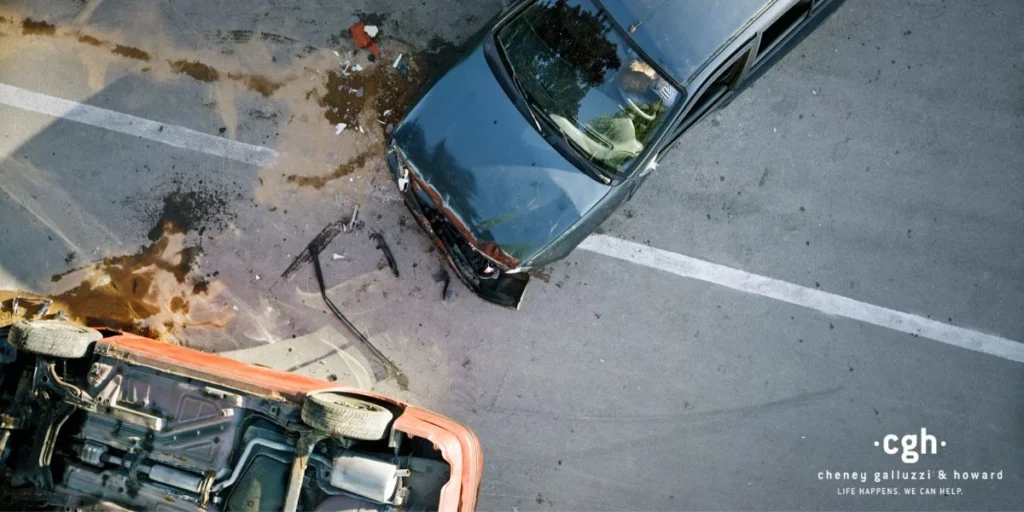
Insurance companies rarely volunteer this information. They would prefer you think you’re entitled only to reimbursement for your bills. In cases where conduct clearly rises to the level of willful and wanton disregard, Colorado law built in an additional layer of accountability for exactly the kind of behavior you may have experienced.
We’ve helped clients recover significant compensation in Colorado reckless driving cases, including matters where we successfully pursued exemplary damages based on the at-fault driver’s conduct.
Every case is different and depends on specific facts. But if the driver who injured you was consciously, demonstrably reckless, that fact carries real legal weight in a civil courtroom. Most people never know to ask about it.
Why You Don’t Need a Criminal Conviction to Win a Civil Case
The burden of proof in a civil personal injury case is “preponderance of the evidence,” meaning more likely than not. That is a substantially lower standard than the “beyond a reasonable doubt” required in criminal court.
Practically, this means: even if the driver was never charged, charges were dropped, or a jury acquitted them in criminal court, you can still prevail in a civil proceeding by showing that the driver’s conduct was, on balance of evidence, reckless and caused your injuries. The systems serve different purposes. Criminal law punishes wrongdoers on behalf of the state. Civil law makes you whole.
If the crash involved a fatality, our Colorado wrongful death lawyers handle these cases with the same trial-ready preparation, because in cases involving intentionally dangerous conduct, the fight is worth taking all the way.
Can You Sue Someone for Reckless Driving in Colorado?
Yes. A civil personal injury claim arising from reckless driving is entirely independent of any criminal proceeding and does not require that criminal charges were filed.
A few things to keep in mind as you consider your options:
Statute of limitations: Personal injury claims in Colorado generally must be filed within three years of the accident date under Colorado’s auto accident statute (C.R.S. 13-80-101(1)(n)). Deadlines can vary depending on the specific facts of your case, who the defendants are, and whether exceptions apply. Always confirm the applicable deadline with a Colorado personal injury attorney as early as possible. Waiting is consistently one of the most consequential mistakes injured people make.
Evidence that matters most: Police reports documenting the other driver’s conduct, witness statements, traffic camera or dashcam footage, the driver’s prior traffic history, blood alcohol or toxicology results, and cell phone records in distracted driving cases. The sooner your attorney begins preserving and gathering this evidence, the stronger your position.
When reckless driving results in a fatality, Colorado law provides a separate path for the victim’s family through a wrongful death claim. Our wrongful death lawyers handle these cases with the same trial-ready preparation we bring to every serious injury matter, because in cases involving intentionally dangerous conduct, the fight is worth taking all the way.
If you were seriously hurt in a Denver-area crash, our Denver car accident lawyers are available for a free case evaluation and serve clients across all of Colorado.
Your Next Step Starts Here
If someone’s reckless driving injured you, you’re probably sitting with more questions than answers. You know what you saw. You know it wasn’t an accident in the ordinary sense. It was a choice, a reckless one, that cost you. And now an insurance adjuster is framing the other driver’s behavior as something minor, manageable, maybe even partly your fault.
Recklessness isn’t just a word. In Colorado, it’s the threshold for a category of damages, punitive damages, that most injury victims never even know to ask about. It’s leverage on fault allocation. It’s the difference between what the insurance company wants to pay you and what you may actually be owed.
You don’t have to figure this out alone. It’s more than money. It’s about holding the right person accountable and rebuilding your life on solid ground.
Contact Cheney Galluzzi & Howard for a Free Consultation
We’ll review the facts of your accident, explain what Colorado law says about the other driver’s conduct, and give you an honest, no-pressure assessment of your claim, including whether exemplary damages may apply to your situation. You pay nothing unless we win.
Frequently Asked Questions
What is considered reckless driving in Colorado?
Under C.R.S. 42-4-1401, reckless driving means operating a vehicle with willful or wanton disregard for the safety of persons or property. Colorado courts look at the totality of the driver’s conduct. Common examples include driving while impaired, street racing, running traffic signals at dangerous speeds, road rage maneuvers, and extreme speeding in high-risk zones. The critical element is willfulness: the driver consciously chose to create a serious risk to others.
Can you sue for reckless driving in Colorado even if no charges were filed?
Yes. A civil personal injury claim is entirely separate from the criminal process. Even if the at-fault driver was never charged, or criminal charges were dismissed or resulted in acquittal, you can still pursue a civil claim. The standard of proof in a civil case, preponderance of the evidence, is meaningfully lower than in criminal court. The absence of a criminal conviction does not bar your recovery.
How does reckless driving affect a personal injury settlement in Colorado?
In two significant ways. First, a finding of reckless conduct typically strengthens your position under Colorado’s modified comparative negligence framework, shifting fault more decisively toward the at-fault driver. Second, conduct that qualifies as “willful and wanton” under Colorado law may support a claim for punitive (exemplary) damages under C.R.S. 13-21-102, awarded on top of your actual losses. Insurance companies rarely raise this possibility on their own. An experienced Colorado personal injury attorney can evaluate whether your case meets the threshold and build a strategy to pursue full compensation accordingly.
This article is general information for Colorado injury readers. It is not legal advice, does not create an attorney-client relationship, and does not promise that any deadline, rule, or outcome applies to your case. Statute-of-limitations, comparative negligence, insurance, and compensation questions require case-specific legal review.
Related articles
-
Can I Sue if a Car Hit Me in a Denver Crosswalk?
Colorado law allows a person injured by another’s negligence to bring a civil claim for their losses. Whether a particular crosswalk collision supports such a claim depends on…
-
How Much Are Denver Motorcycle Accident Settlements?
There is no published average for motorcycle accident settlements in Denver, and any page that gives you one is guessing. Settlements are private agreements. They are not filed…
-
Hit by an Uninsured Driver in Colorado? Here’s Exactly What to Do, and What Not to Miss
That number, 19.7%, per data cited by the Denver Post in late 2025 from the Insurance Research Council, sits well above the national average of 15.4%. On a…