
ClickCease
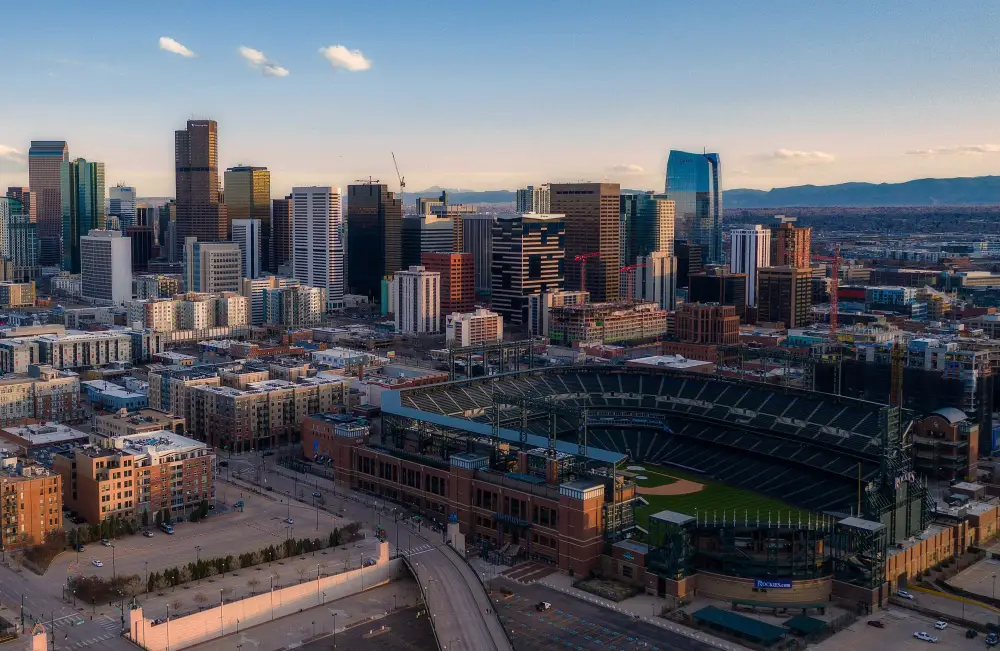
Centennial, Colorado commercial corridor. CGH Injury Lawyers represents people hurt on unsafe property across Arapahoe County.

IT'S MORE THAN MONEY.

Centennial Premises Liability Lawyers Who Prove the Owner Knew

You slipped in a store off Arapahoe Road, fell in a parking garage near the Denver Tech Center, or were hurt because a Centennial property owner ignored a hazard they had every reason to fix. The insurer's first move will be to blame you. CGH Injury Lawyers serves Centennial and all of Arapahoe County from our Denver office, uses the Colorado Premises Liability Act to put responsibility where it belongs, and tries cases in Arapahoe County District Court when the insurer refuses to be fair. You pay nothing unless we win.

No fee unless we win
Or speak with our team now (303) 209-9395

Tell us about your Centennial injury

100% confidential. No fee unless we win.

5-star rated on Google ABOTA trial advocate on the team Trial lawyers, not a settlement mill No fee unless we win

When you are hurt on someone else's property in Centennial, Colorado law does not leave you guessing about whether the owner owes you anything. The Colorado Premises Liability Act assigns each visitor a legal status and tells owners exactly what duty of care they must meet. The question an insurer will spend every resource attacking is whether the owner knew or should have known about the hazard. Proving that is how premises cases are won.

  • The Colorado Premises Liability Act (C.R.S. 13-21-115) governs every property-injury claim in the state. It divides visitors into invitees, licensees, and trespassers, and it sets a different duty of care for each category. Most people hurt in Centennial stores, parking lots, and commercial buildings qualify as invitees, who are owed the highest protection under the law.
  • An owner can be liable for a hazard they should have found through reasonable inspection, even without proof they had direct knowledge. That principle is called constructive notice, and it is the cornerstone of most premises liability cases involving spills, broken surfaces, and unsafe walkways in Centennial's commercial corridors.
  • The statute of limitations to file a premises liability lawsuit in Colorado is two years from the date of injury under C.R.S. 13-80-102. If the property is owned or controlled by a government entity, a written notice of claim must be filed within 182 days from the date you discovered the injury under C.R.S. 24-10-109(1). Missing either deadline eliminates the right to recover.

CGH Injury Lawyers does not have a Centennial office. We are a eight-attorney Colorado personal injury firm serving Centennial and all of Arapahoe County from our Denver office at 2701 Lawrence St., Suite 201, Denver, CO 80205. We file cases in Arapahoe County District Court and handle every stage of your premises liability claim, from the initial investigation through negotiation and trial when needed. You pay nothing unless we recover for you.

The governing law

What the Colorado Premises Liability Act means for a Centennial property injury

Colorado's Premises Liability Act, codified at C.R.S. 13-21-115, replaced older common-law negligence rules with a structured framework that ties the property owner's duty directly to why you were on the property and to what the owner knew or should have known about the dangerous condition. Every premises injury claim filed in Arapahoe County starts with this statute.

The Act covers virtually every kind of Centennial property: grocery and retail stores along Arapahoe Road and Parker Road, parking garages and lots serving the Denver Tech Center, apartment complexes and townhome communities, restaurants and entertainment venues near E-470, office buildings in corporate parks, and public spaces such as parks and recreation facilities. Government-owned property falls under modified sovereign immunity rules, which create a different legal framework and a shorter notice deadline covered below.

The Act's central question is not whether the owner technically owned the property. It is whether the owner satisfied the duty they owed to you given your legal status as a visitor. Owners who actively inspect, repair, and warn about hazards can meet that duty. Owners who let a spill sit for two hours, ignore a cracked parking lot surface for a season, or leave a stairwell dark after a bulb burns out often cannot.

Visitor status

Invitees, licensees, and trespassers: how your status determines what a Centennial property owner owed you

Under C.R.S. 13-21-115, your legal category as a visitor at the moment of injury determines the duty the property owner owed you. This is the first thing an insurer will challenge, and the first thing we establish.

  1. Invitees: the highest protection

    Customers shopping at retail stores, diners at restaurants, guests at hotels, and employees at workplaces are typically invitees because they are on the property for a purpose that benefits the owner or under a general public invitation. Owners owe invitees the highest duty: they must actively inspect for hazards, fix them within a reasonable time, and warn visitors about dangers that cannot be immediately corrected. A Centennial grocery store that fails to inspect its aisles regularly and leaves a floor wet for an extended period cannot hide behind a wet-floor sign placed only after the fall.

  2. Licensees: the duty to warn

    A social guest visiting a Centennial home is the classic licensee, someone on the property with permission but for their own purpose rather than the owner's benefit. Owners must warn licensees about known hazards but are not required to inspect for and discover hidden dangers they do not already know about. The distinction between an invitee and a licensee is a common battleground in cases involving mixed-purpose properties such as fitness studios with guest areas or apartment common rooms open to invited non-residents.

  3. Trespassers: limited but real duties

    Owners owe trespassers the narrowest duty and generally cannot set traps or willfully harm them. However, the attractive-nuisance doctrine raises that duty when a child trespasser is injured by a feature the owner could foresee drawing children in, such as an unfenced pool, abandoned equipment, or a construction site. In Centennial's residential neighborhoods and commercial properties under development, attractive-nuisance claims have real legal weight.

Status can shift mid-visit. A customer who wanders into an employee-only stockroom may lose invitee protection. A social guest who stays after being asked to leave becomes a trespasser. Arapahoe County insurers exploit these line-crossings aggressively, which is why the precise facts of exactly where you were and why you were there matter from the very first conversation.

Duty and notice

How we prove a Centennial property owner knew or should have known about the hazard

Every Centennial premises case turns on one question: did the owner know about the dangerous condition, or should they have known? Actual knowledge is often hard to prove directly. Constructive notice, which means the hazard existed long enough or was obvious enough that a reasonable owner doing regular inspections would have found it, is the theory that wins most cases.

Evidence we use to establish constructive notice

  • Surveillance footage showing how long the hazard was present before the injury
  • Inspection logs, or the owner's inability to produce them
  • Maintenance records showing repeated repair calls for the same condition
  • Witness testimony from employees, customers, or residents who saw or reported the hazard before the fall
  • Prior incident reports at the same location

Defenses we counter in Centennial cases

  • "We did not know about it" countered with constructive notice from inspection failures and hazard duration
  • "The hazard was open and obvious" countered with evidence the danger was not visible from the customer's sightline or was in a location customers reasonably focus elsewhere
  • "You assumed the risk" countered with the fact that a recreational waiver does not excuse hazards the owner's own negligence created
  • "You were partly at fault" countered with thorough reconstruction of the scene and the hazard's condition

Colorado also recognizes weather-related duties. Property owners are not expected to continuously clear snow and ice during an active storm, but once precipitation stops they must remove accumulated ice and snow from walkways within a reasonable time. A Centennial commercial property that allows ice to build up on its entrance for days after a storm has ended cannot claim the storm is still the cause when someone falls.

I wish I could leave more than 5 stars!
Grace M., 5-star CGH Injury Lawyers client review

Local knowledge

Centennial courts. Centennial trauma care. The property corridors behind your premises liability claim.

A premises liability case in Centennial is tied to the specific property where you were hurt, the hospital that treated you, and the courthouse where an Arapahoe County jury would decide your case. Here is the ground we work on for every Centennial client.

Courthouse

Arapahoe County District Court, 18th Judicial District

A Centennial premises liability lawsuit that exceeds the county-court jurisdictional limit is filed in Arapahoe County District Court at the Arapahoe County Justice Center, 7325 S. Potomac St., Centennial, CO 80112, in the Eighteenth Judicial District. The courthouse is located in Centennial itself. Local court procedures, the Arapahoe County jury pool, and the defense firms that routinely defend property owners and their insurers in this district all differ from those in Denver or other Front Range counties. CGH Injury Lawyers handles Arapahoe County District Court cases directly from our Denver office, without referring your case to outside litigation counsel.

Trauma Care

HCA HealthONE Swedish and AdventHealth Littleton

Serious injuries from Centennial premises incidents, including hip fractures, head trauma, spinal injuries, and soft-tissue damage, are often treated at HCA HealthONE Swedish (Swedish Medical Center), 501 E. Hampden Ave., Englewood, CO 80113, a state-designated Level I trauma and burn center minutes from I-25. AdventHealth Littleton (formerly Littleton Adventist Hospital), 7700 S. Broadway, Littleton, CO 80122, is an American College of Surgeons verified and state-designated Level II Trauma Center. Medical records from both facilities document the full scope of your injuries and form the foundation of your damages case. We request and analyze these records as soon as we are retained.

High-Risk Property Corridors

The Denver Tech Center, Arapahoe Road retail, Parker Road commercial strips, and E-470 corridor properties

Centennial's commercial landscape concentrates foot traffic and property-injury risk in predictable locations. The Denver Tech Center, one of the largest suburban office and retail complexes in Colorado, generates heavy pedestrian movement across shared parking structures and lobby areas where inspection and maintenance duties are easily neglected. State Highway 88 (Arapahoe Road) is lined with grocery anchors, big-box retailers, and restaurant clusters where high customer volume and high-frequency deliveries create recurring slip-and-fall exposure in entryways, aisles, and outdoor walkways. The South Parker Road corridor south of the Arapahoe Road intersection is home to mixed retail and medical office properties. The E-470 corridor toward Lone Tree includes apartment complexes and lifestyle retail properties where parking lot and sidewalk defects, inadequate lighting, and deferred maintenance regularly lead to tenant and visitor injuries. These are not abstract locations to us: they are the settings where Centennial premises cases are built and decided.

Government property

Hurt on Centennial government property? The Colorado Governmental Immunity Act changes the rules.

When the property that injured you is owned or operated by a government entity, such as a city park, a public recreation center, a county road facility, or a school, the Colorado Governmental Immunity Act (CGIA) applies instead of the standard premises liability rules. The CGIA creates a separate legal framework with a shorter notice deadline, different liability caps, and specific waiver requirements.

The 182-day notice requirement

Before you can sue a government entity in Colorado, you must file a written notice of claim under C.R.S. 24-10-109(1). That notice must be filed within 182 days from the date you discovered the injury. This is not a suggestion and it is not counted from the date of the underlying incident. The clock runs from your date of discovery. Missing the 182-day notice deadline is a jurisdictional defect that bars the claim entirely, no matter how serious your injuries or how clear the government's negligence. In practice this means the moment you believe a government-owned or operated property may have caused your Centennial injury, contacting an attorney is urgent.

CGIA damages caps

For claims that survive the notice requirement and fall within one of the CGIA's waivers of immunity, damages are capped under C.R.S. 24-10-114. For claims accruing on or after January 1, 2026, those caps are $505,000 per person and $1,421,000 in aggregate. These figures are lower than the non-economic cap that applies to private-property cases, which makes it even more important to document the full scope of economic damages including future medical care and lost earning capacity when a government entity is the responsible party.

After the injury

What to do after a premises liability injury in Centennial

The actions you take in the first hours and days after a property injury determine what evidence will be available when we build your case. Evidence from commercial properties can disappear in 24 to 48 hours. These steps protect your health and your claim.

  1. Report the incident before you leave

    Tell the property manager, store manager, or building supervisor what happened and ask for a written incident report. Get a copy if they will provide one. Do not accept a verbal acknowledgment and leave. The report creates a contemporaneous record that the owner cannot later deny. If the injury happened in a Centennial apartment complex or office building, request the written report in writing by email or text so there is a record of the request itself.

  2. Document the scene immediately

    Photograph the exact location, the hazard itself, any wet-floor signs, broken fixtures, or lighting conditions, and your visible injuries. If someone can photograph while you seek help, do both. Note the time, the store or building name, the section or floor, and any weather conditions if the fall was near an entrance. Stores routinely mop up spills and repair surfaces immediately after a fall to prevent further liability; once that happens, visual proof of the condition is gone.

  3. Get witnesses before they leave

    Shoppers, other tenants, and bystanders are often the only people who saw how long the hazard existed before you fell. Ask for names and phone numbers before they walk away. Employees who help you may have observed the condition earlier and can be tracked through the employer's records later, but strangers cannot. Even a single witness who saw the spill or broken surface before the incident can be decisive in establishing the duration of the hazard, which is central to proving constructive notice.

  4. Seek medical care at a recognized facility

    Serious Centennial premises injuries are often treated at HCA HealthONE Swedish in Englewood, a state-designated Level I trauma and burn center, or AdventHealth Littleton in Littleton, a state-designated Level II Trauma Center. Do not delay treatment because you feel functional at the scene. Hip fractures, soft-tissue damage, and concussions from falls are notorious for producing symptoms hours or days later. A treatment gap after a property injury gives the insurer the argument that you were not seriously hurt, or that a different event caused your symptoms.

  5. Do not give a recorded statement to any insurer

    The property owner's insurance carrier may contact you quickly, often within 24 hours. Their representative is not calling to help you. A recorded statement taken before you know the full extent of your injuries, before you have reviewed the incident report, and before you have consulted an attorney is used to hold you to early admissions and to build comparative fault arguments against you. Do not agree to a recorded statement without counsel.

  6. Call CGH before the deadlines run

    Most Centennial premises liability claims have a two-year filing deadline under C.R.S. 13-80-102. Claims involving government property require written notice within 182 days of discovering the injury under C.R.S. 24-10-109(1). Surveillance footage is typically erased within 30 to 90 days. Acting quickly is not just about the statute; it is about preserving the evidence that proves notice. A free consultation costs you nothing and puts that timeline under our control instead of the insurer's.

Compensation

What compensation can you recover in a Centennial premises liability case?

Colorado law lets injured people recover both the measurable financial costs of an injury and the human cost of living with it. Understanding both categories and the rules that govern them is how we build a claim to its full value.

Economic damages (never capped)

  • Medical expenses, past and projected future care
  • Lost wages while recovering from the injury
  • Lost earning capacity if the injury affects future work
  • Rehabilitation, physical therapy, and home modification costs
  • Out-of-pocket expenses tied directly to the injury

Non-economic damages (capped with important exceptions)

  • Pain and suffering
  • Emotional distress
  • Loss of enjoyment of life
  • Disability and disfigurement (these are entirely uncapped)
  • In fatal cases, funeral costs and loss of companionship for surviving family

The non-economic cap and the uncapped exceptions

Colorado caps non-economic damages such as pain and suffering under C.R.S. 13-21-102.5. For claims accruing on or after January 1, 2025, the cap is $1,500,000. Importantly, compensation for physical impairment or disfigurement is not subject to this cap at all under C.R.S. 13-21-102.5(5). In a serious premises liability case, such as one involving a hip fracture requiring replacement surgery, a traumatic brain injury from a fall, or a spinal injury from a stairwell collapse, the uncapped categories frequently carry the largest share of the total claim value. We calculate every category before any settlement number is discussed.

Comparative fault and what it means for your Centennial case

Colorado follows a modified comparative negligence rule under C.R.S. 13-21-111. You can recover as long as your share of fault is less than 50 percent. If you are assigned 50 percent or more of the fault, you recover nothing. Your damages are reduced by whatever percentage of fault is assigned to you. If a Centennial insurer finds you 25 percent responsible for a $200,000 claim, your recovery is $150,000. Adjusters routinely inflate a victim's fault percentage to depress the payout or push it toward the 50-percent bar entirely. We document the scene, contest unwarranted fault assignments, and push back on every comparative negligence argument the insurer advances.

Your team

The attorneys handling your Centennial premises liability case

CGH Injury Lawyers is a eight-attorney Colorado personal injury firm founded in 2016, formerly Cheney Galluzzi and Howard. Managing Partner Kevin Cheney is a member of the American Board of Trial Advocates (ABOTA) and has tried over 25 cases to verdict. Timothy G. Tarr has been recognized by Best Lawyers every year since 2023. Every Centennial premises liability case is handled by a licensed Colorado attorney, not a paralegal, from the investigation of the incident through final resolution or trial in Arapahoe County District Court.

ABOTA member on the team Tim Tarr: Best Lawyers in America since 2023 Over 25 cases to verdict Arapahoe County District Court experience Bilingual EN / ES Free consultation No fee unless we win

CGH Injury Lawyers does not have a Centennial office. We serve Centennial and all of Arapahoe County from our Denver office at 2701 Lawrence St., Suite 201, Denver, CO 80205. We meet clients on their schedule, file in Arapahoe County District Court, and do not refer Centennial premises liability cases to outside counsel.

Frequently asked questions

Centennial premises liability lawyer, frequently asked questions

How long do I have to file a premises liability claim after being hurt in Centennial?

Colorado's statute of limitations for most premises liability cases is two years from the date of injury under C.R.S. 13-80-102. If the property is owned or controlled by a government entity, a separate written notice of claim must be filed within 182 days from the date you discovered the injury under C.R.S. 24-10-109(1). Missing the government-entity notice deadline is a jurisdictional bar that eliminates the claim entirely, regardless of fault. Surveillance footage from commercial properties is typically erased within 30 to 90 days, so contacting an attorney quickly is not only about the statute; it is about preserving the evidence that proves your case.

I was partly at fault for my fall in Centennial. Can I still recover?

Often yes. Colorado follows a modified comparative negligence rule under C.R.S. 13-21-111. You can recover as long as your share of fault is less than 50 percent; your damages are reduced by your percentage of fault. If you are found 50 percent or more at fault, you recover nothing. Arapahoe County property insurers commonly inflate a victim's fault percentage to reduce or eliminate the payout, which is why an independent investigation of the hazard, its duration, and the owner's inspection practices is central to every premises case we handle.

Does the property owner have to have actually known about the hazard for me to win my Centennial case?

No. Under the Colorado Premises Liability Act (C.R.S. 13-21-115), property owners can be liable for a condition they should have discovered through reasonable inspection, even if no one specifically reported it. This is called constructive notice. A spill that sat in a Centennial grocery aisle for two hours is treated very differently from one that appeared moments before the fall. Surveillance footage, the absence of inspection logs, and prior incidents at the same location are all evidence we use to prove the owner had constructive knowledge of the hazard.

Does a wet-floor sign protect the Centennial property owner from all liability?

Not necessarily. A sign can help an owner meet the duty to warn, but it does not eliminate liability if the hazard was unreasonably dangerous or if the owner should have repaired the condition rather than just flagging it. Placing a cone next to a plumbing leak that has been dripping for a week does not satisfy the duty to fix the underlying problem. Colorado courts look at whether the warning was adequate for the severity and duration of the hazard, where the sign was placed relative to where you were walking, and whether you had any realistic way to avoid the danger even with the warning present.

Where would my Centennial premises liability lawsuit be filed?

A Centennial premises liability lawsuit that exceeds the county-court jurisdictional limit is filed in Arapahoe County District Court at the Arapahoe County Justice Center, 7325 S. Potomac St., Centennial, CO 80112, in the Eighteenth Judicial District. The courthouse is in Centennial itself. Most premises cases settle before a lawsuit is filed, but venue shapes the local court rules, the jury pool, and which defense firms and adjusters you face. CGH Injury Lawyers handles Arapahoe County District Court premises cases directly, without referring your claim to outside litigation counsel.

Does CGH Injury Lawyers have an office in Centennial?

No. CGH Injury Lawyers has one physical office at 2701 Lawrence St., Suite 201, Denver, CO 80205. We serve Centennial and all of Arapahoe County from that Denver office, file in Arapahoe County District Court at the Eighteenth Judicial District, and meet clients on their schedule. We do not maintain a Centennial address and do not claim otherwise. Call us at (303) 209-9395 for a free consultation.

IT'S MORE THAN MONEY.

You were hurt on unsafe property in Centennial. We handle everything else.

Free consultation. No fee unless we win. Serving Centennial and Arapahoe County from Denver. Available in English and Spanish.

Start your free Centennial case review

100% confidential. No fee unless we win.

Read next: How Colorado's premises liability law works statewide

CGH Injury Lawyers · Serving Centennial from 2701 Lawrence St., Suite 201, Denver, CO 80205