Denver Car Accident Lawyer
It’s more than money. It’s about helping you put your life back together.

You were driving on I-25 or navigating the tight, high-traffic intersections around Colfax Avenue. Now you’re hurt, your car is damaged, and an insurance adjuster is calling — sounding helpful, asking for a recorded statement, and floating a number that doesn’t come close to covering what you’ve lost. You’re not imagining it. That offer is almost certainly 10 to 20 percent of what your case is actually worth.
At CGH Injury Lawyers, we’ve spent 10 years standing up to exactly this. Our Denver car accident lawyers take over all communication with the adjuster, fight to protect you under Colorado’s modified comparative negligence rules, and prepare every case as if it’s going to trial — because that’s the only thing that forces insurers to pay fair value. You pay nothing unless we win.
Denver’s Roads Create Specific Dangers — and Specific Legal Challenges
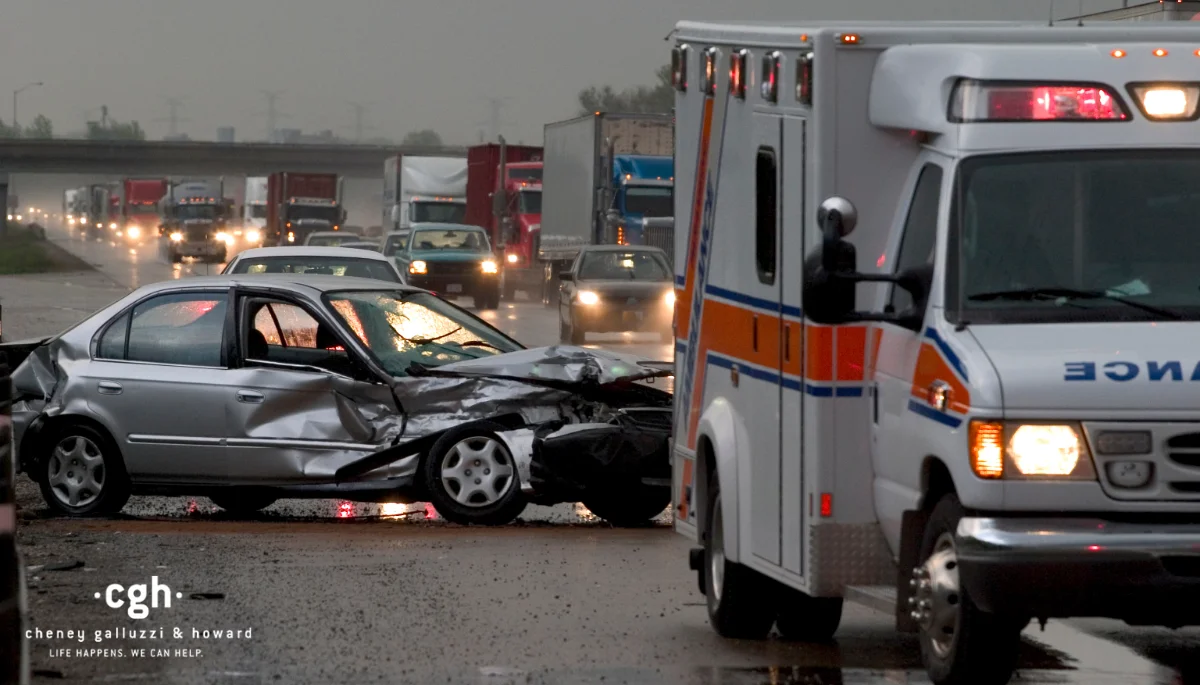
Denver’s crash landscape is unlike any other city in Colorado. The I-25 and Colorado Boulevard interchange is one of the most consistently congested and collision-prone stretches on the Front Range. Colfax Avenue — one of the longest commercial streets in the country — funnels heavy vehicle traffic through Capitol Hill, Five Points, and LoDo at all hours. When winter storms roll in off the Rockies, ice accumulates on elevated sections of I-70 and I-25 before CDOT crews can treat them, turning routine commutes into multi-vehicle pileups.
These aren’t abstract risks. They’re the conditions our clients were driving in when their lives changed. And they create specific legal complications: disputed fault percentages on icy multi-lane highways, Uber and Lyft liability questions for rideshare passengers in LoDo, commercial trucking collisions on the freight corridors running through the Denver Tech Center, and pedestrian and scooter accidents on the crowded sidewalks and bike lanes of Capitol Hill.
Our Denver car accident legal services include:
Lost Wage and Future Earning Capacity Claims for Denver’s Working Commuters — recovering the financial lifeline for clients who can’t return to work while waiting for a settlement
Car Accident Claims for I-25 and I-70 Winter Storm Pileups — multi-vehicle fault disputes on the icy Front Range corridors where comparative negligence is most aggressively contested
Rideshare Accident Representation for LoDo and Capitol Hill Passengers — navigating the layered insurance policies between Uber/Lyft’s commercial coverage and individual driver policies
Traumatic Brain Injury and Whiplash Documentation for Denver Soft Tissue Cases — countering the “low impact” classification insurers use to delay and deny claims on the city’s surface streets
How the Insurance Company Is Already Working Against You
The moment your crash happened, the other driver’s insurance company began building a case to pay you as little as possible. That’s not cynicism — it’s how the system is designed.
Adjusters in Denver are trained to move fast in the first 72 hours: contact you before you’ve seen a specialist, request a recorded statement while your adrenaline is still masking the full extent of your injuries, and use anything you say to shift fault percentages under Colorado’s modified comparative negligence rule. In Colorado, if an insurer can prove you were 50% or more at fault for a crash, you recover nothing. Even a finding of 30% fault reduces your recovery by 30%.
Once your medical records arrive, your claim gets fed into automated valuation software — systems like Colossus that convert your billing codes into a baseline settlement number, completely disconnected from the actual disruption to your life. Soft tissue injuries like whiplash and herniated discs are routinely classified as “low impact” to trigger the “delay, deny, defend” playbook: delay the payout until you’re financially desperate, deny the severity of the injury, then defend the lowball offer in litigation if you push back.
We don’t take the insurance company’s word for any of it.
CGH Injury Lawyers investigates independently, works with medical experts to document the full impact of your injuries, and builds the case for trial from day one — because that’s what forces insurers to take your claim seriously.
Colorado Law That Directly Affects Your Denver Car Accident Claim
Colorado’s modified comparative negligence statute (C.R.S. § 13-21-111) is the single most important law in your case — and the most commonly weaponized against unrepresented victims.
Under this rule, your compensation is reduced by whatever percentage of fault is assigned to you. If your damages are $100,000 and you’re found 20% at fault, you recover $80,000. If you’re found 50% or more at fault, you recover nothing. Insurance adjusters use recorded statements, traffic camera footage, and witness accounts specifically to push your fault percentage above the threshold that eliminates your recovery.
Additional Colorado laws that shape Denver car accident claims:
- Statute of limitations: Under Colorado law, you generally have three years from the date of the accident to file a car accident lawsuit. Deadlines can vary based on the specific facts of your case — talk with an attorney about your situation before that window closes.
- Minimum liability coverage: Colorado requires drivers to carry at least $25,000 per person in bodily injury coverage — a limit that is frequently exhausted by serious injuries, making uninsured/underinsured motorist (UM/UIM) coverage a critical recovery tool.
- MedPay: Colorado law requires insurers to offer MedPay coverage with a minimum of $5,000 — but drivers can opt out. If you accepted it when purchasing your policy, MedPay pays your medical bills immediately regardless of fault — a vital bridge during the months between your crash and your settlement.
All legal work by CGH Injury Lawyers is performed in compliance with Colorado Bar Association standards. Licensing through the Colorado Supreme Court.
The Three Steps We Take to Build Your Denver Car Accident Case
Step 1: Independent Investigation Before the Adjuster Closes the File
Before we do anything else, we preserve the evidence the insurance company is hoping disappears. That means requesting traffic camera footage from CDOT and the City of Denver before retention periods expire, securing the police report from Denver Police Department, identifying witnesses, and — for crashes on I-25 or I-70 — pulling black box data from commercial vehicles involved in the collision. Denver’s road network generates more documented crash data than most cities in Colorado, and we use all of it.
Step 2: Medical Documentation That Overrides the Software
Insurance valuation software like Colossus runs on billing codes, not on your actual pain or your actual life disruption. We work with your Denver-area treating physicians and, where necessary, independent medical experts to build documentation that reflects the true scope of your injuries — including traumatic brain injuries, herniated discs, and soft tissue damage that doesn’t show up on initial X-rays. This documentation is what separates a $5,000 offer from a fair settlement.
Step 3: Filing Suit When Negotiation Fails
We prepare every Denver car accident case for trial from the moment we take it. That’s not a threat we make to insurers — it’s a structural reality they recognize. When an insurer knows your attorney has the resources, the trial record, and the willingness to take the case to a Denver District Court jury, the negotiation dynamic changes. Ninety-five percent of cases settle before trial. The ones that do settle for fair value almost always do so because the other side believes the alternative is worse for them.
Denver Neighborhoods We Serve
CGH Injury Lawyers represents car accident victims across Denver, including residents and commuters in:
RiNo , Capitol Hill, Highlands, LoDo, Cherry Creek, Washington Park, City Park, Stapleton, Montbello
Our office at 2701 Lawrence St Suite 201, Denver, CO 80205 sits in the Five Points neighborhood — a few blocks from Coors Field and directly accessible from I-25 and I-70. If you can’t come to us, we come to you. Virtual consultations are available, and we’ll meet you at home, at a rehab facility, or wherever your recovery has you. CGH Injury Lawyers is a member of the Colorado Trial Lawyers Association (CTLA), a statewide association of plaintiff-side trial attorneys dedicated to protecting the rights of injured Coloradans.
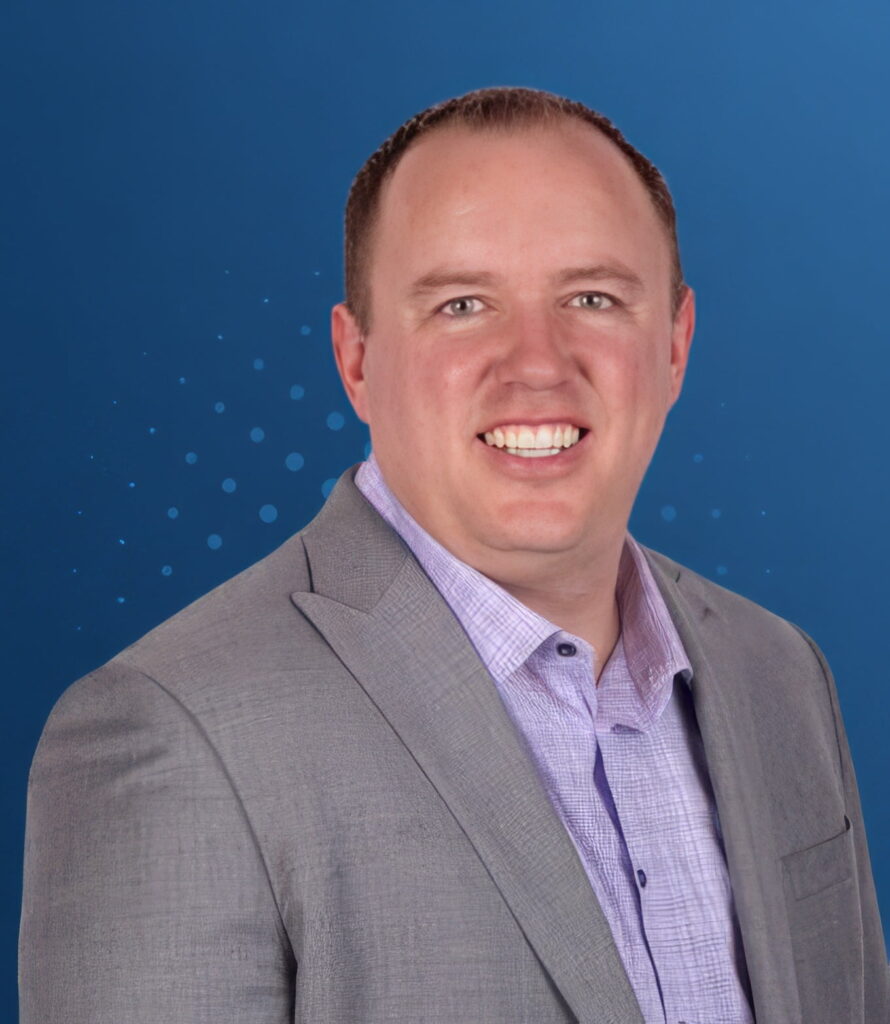
Meet Kevin Cheney, CGH Injury Lawyers’ Managing Partner
Kevin has spent his career doing one thing: fighting for injured Coloradans against insurance companies that have every structural advantage. He has tried more than 25 cases to verdict, recovered tens of millions of dollars for clients across the state, and built a reputation — in courtrooms and in the legal community — for preparing every case as if a jury will decide it. He currently serves as Treasurer of the Colorado Trial Lawyers Association (CTLA), sits on the Colorado Bar Association (CBA) Board of Governors, and is a member of the American Board of Trial Advocates (ABOTA). For Denver car accident victims navigating the I-25 corridor, the Capitol Hill intersections, and the commercial trucking routes through the Denver Tech Center, Kevin’s trial-tested experience is the difference between what the insurance company offers and what your case is actually worth.
What Happens If I Wait to Call a Lawyer?
The first 72 hours after a Denver car accident are the most consequential — and the most dangerous if you’re unrepresented.
Insurance adjusters are trained to reach out fast, before you’ve seen a specialist and before you understand the full extent of your injuries. A recorded statement made in that window can be used to establish a fault percentage that follows your case all the way to trial. Evidence — traffic camera footage, black box data, witness contact information — disappears quickly. And in Colorado, using your own MedPay coverage to pay immediate medical bills is sometimes discouraged by adjusters who know it creates a paper trail that supports your claim.
You don’t need to have all the answers before you call us. That’s what the free consultation is for.
Call CGH Injury Lawyers: +17206698062
Related Resources From CGH Injury Lawyers
Understanding what your case may be worth is the first step toward making an informed decision. Our guide to the average car accident settlement breaks down Colorado settlement ranges by injury type — including what separates soft tissue claims from serious injury cases.
If you’re wondering how long the process takes, our breakdown of the Colorado car accident settlement process and timeline walks through each stage from initial demand to resolution, so you know what to expect at every step.
For truck accident victims — a common scenario on Denver’s freight corridors — our Denver Truck Accident lawyers covers the additional liability layers involved when a commercial carrier is at fault. And if your crash involved a motorcycle on one of Denver’s surface streets, our Denver Motorcycle Accident Lawyers addresses the specific challenges those cases present under Colorado law.
Frequently Asked Questions: Denver Car Accident Claims
How does Colorado’s modified comparative negligence rule affect my settlement if the other driver’s insurer claims I was speeding on I-25?
Colorado’s modified comparative negligence statute (C.R.S. § 13-21-111) reduces your recovery by your assigned fault percentage — and eliminates it entirely if you’re found 50% or more at fault. On I-25, where multi-vehicle crashes often involve disputed speeds and lane changes, insurers aggressively use recorded statements to push victims’ fault percentages above the threshold that ends their recovery. This is exactly why we advise clients not to give recorded statements before speaking with an attorney. We work to protect your fault percentage from the moment we take your case — and we don’t take the insurance company’s characterization of what happened as the final word.
What happens if my medical bills from Denver Health exceed the at-fault driver’s $25,000 minimum policy limit?
Colorado’s minimum liability coverage is $25,000 per person — a limit that is frequently exhausted by serious injuries treated at Denver Health or other major trauma centers. When that happens, your own uninsured/underinsured motorist (UM/UIM) coverage becomes the critical recovery tool. UM/UIM allows you to make a claim against your own policy for the gap between the at-fault driver’s limits and your actual damages. Identifying and stacking all available coverage sources — including MedPay, UM/UIM, and any applicable commercial policies — is one of the first things we do when we take a case.
Why is the adjuster asking for a recorded statement before I’ve even seen a specialist?
Because it’s in their interest to capture your account before you know the full extent of your injuries. In the 48 to 72 hours after a crash, adrenaline masks pain, and injuries like herniated discs and traumatic brain injuries often don’t present fully until days later. Anything you say in that recorded statement — including “I feel okay” or “it wasn’t that bad” — can be used to minimize your claim later. You are not legally required to give a recorded statement to the other driver’s insurer. We strongly recommend speaking with an attorney before you do.
How do hospital liens work in Denver, and will they take my entire settlement before I see any money?
Denver Health and other Colorado hospitals have the right to file a lien against your personal injury settlement to recover the cost of your treatment. In practice, this means that if your case settles, the hospital’s lien must be paid before you receive your share. However, liens are often negotiable — and negotiating those liens down is a standard part of what we do. We work directly with medical providers to reduce lien amounts and ensure that the money you recover actually reaches you, not just your creditors.
Can I still pursue a claim if I didn’t feel injured at the scene but developed severe whiplash or back pain 48 hours later?
Yes — and this situation is more common than most people realize. Soft tissue injuries like whiplash and herniated discs frequently don’t present with full severity until 24 to 72 hours after a crash. The critical issue is documentation: seeking medical attention promptly after symptoms appear, and establishing a clear timeline that connects your injuries to the accident. Insurance companies will attempt to argue that a gap between the crash and your first medical visit means your injuries are pre-existing or unrelated. We work with your treating physicians to build the documentation that closes that argument down.
What is the actual difference in case valuation when an attorney files a lawsuit versus negotiating directly with an adjuster?
The difference is structural, not just tactical. An adjuster negotiating with an unrepresented victim knows the worst-case scenario for the victim is accepting a low offer or walking away. An adjuster negotiating with CGH Injury Lawyers knows the worst-case scenario is a Denver District Court jury trial with an attorney who has tried more than 25 cases to verdict. That changes the math on every offer. Initial insurance offers average 10 to 20 percent of actual case value. The settlements we pursue reflect what cases are actually worth — not what insurers hope victims will accept before they understand their options.
Is a car accident claim in Denver covered under a standard contingency arrangement, or are there additional costs I should know about?
CGH Injury Lawyers handles Denver car accident cases on a contingency fee basis — you pay nothing unless we win. There are no upfront fees and no hourly billing. The contingency percentage and any case costs are explained clearly at the outset of your representation, before you sign anything. We believe you should understand the full financial picture of working with us before you make any decision. Every case is different, and we’ll walk you through exactly what to expect during your free consultation.
This page contains general information about Colorado car accident law and is not legal advice. Every case is different. If you want guidance specific to your situation, talk with a Colorado personal injury lawyer.