
Colorado Car Accident Laws & Liability: A Comprehensive Guide (2026)
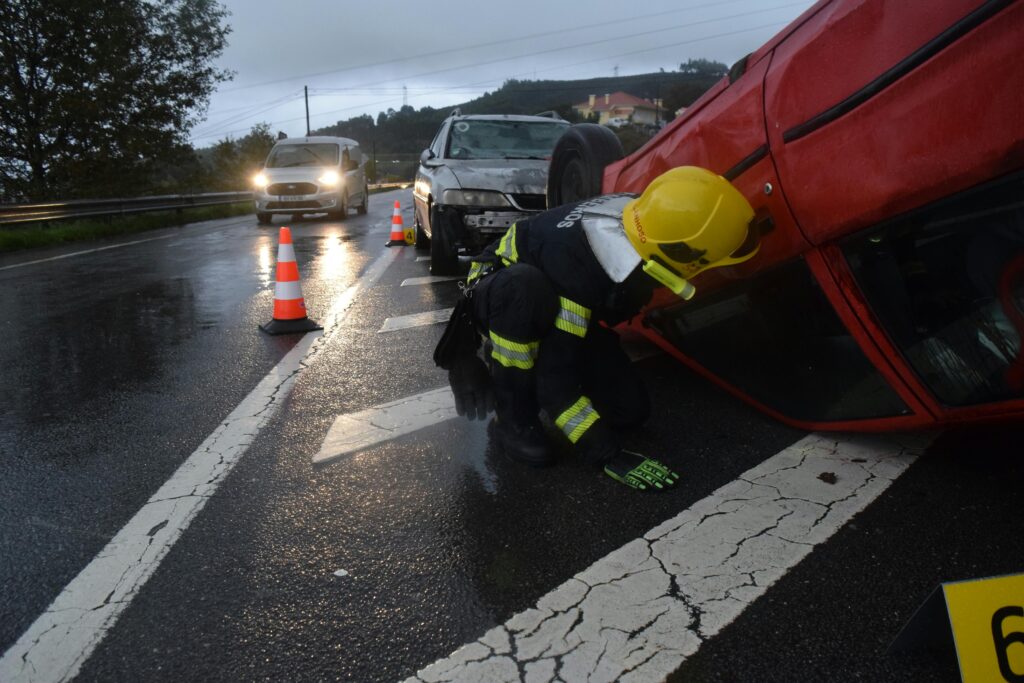
Colorado car accident law is governed by a modified comparative negligence system (C.R.S. § 13-21-111), which determines how fault is assigned and how victims can recover damages after a collision. Under Colorado law, injured parties can seek compensation only if they are less than 50% at fault—making the precise calculation of liability percentages critical to any claim. This comprehensive guide explains every legal rule, insurance requirement, and procedural deadline you need to understand after a crash in Colorado.
Whether you were involved in a collision on the I-25/I-70 interchange, a mountain corridor accident, or a winter weather incident, understanding your rights and obligations under Colorado law is the first step toward protecting your recovery. This resource covers the statutory framework, insurance realities, and strategic considerations that define car accident litigation in our state.
Need Specialized Legal Help in Your Situation?
If your collision resulted in severe or life-altering consequences, you may need representation that goes beyond standard claims handling:
- Wrongful Death Claims → — When a collision results in the loss of a loved one
- Catastrophic Injury Cases → — For spinal cord injuries, traumatic brain injuries, or permanent disability
- Insurance Bad Faith Claims — When your insurer wrongfully denies or delays your claim
- Uninsured Motorist Cases — When the at-fault driver has no coverage or insufficient limits
Each of these practice areas requires specialized knowledge of Colorado statutes and trial experience. Don’t let the complexity of your case prevent you from seeking full compensation.
Understanding Colorado’s Modified Comparative Negligence Rule
Colorado follows a “modified comparative negligence” standard under C.R.S. § 13-21-111. This rule governs every car accident case in the state and determines whether you can recover damages—and how much.
The 50% Threshold: The Critical Line
Under Colorado law, you can only recover damages if you are less than 50% at fault for the accident. If you are found to be 50% or more responsible, you recover nothing. This creates a sharp dividing line that makes fault determination the most contested issue in Colorado car accident litigation.
The 50/49 Split: A Mathematical Reality
Here’s why a single percentage point matters:
Scenario: You suffer $100,000 in damages (medical bills, lost wages, pain and suffering).
- If you are 49% at fault: You recover $51,000 ($100,000 minus 49%).
- If you are 50% at fault: You recover $0.
That one percentage point represents the difference between meaningful recovery and complete loss. Insurance adjusters and defense attorneys understand this math. They will fight aggressively to push your fault percentage to 50% or above, even when the evidence suggests otherwise.
How Fault is Determined
Colorado courts and insurance companies evaluate fault based on several factors:
- Traffic violations: Running a red light, speeding, or failing to yield dramatically increases fault percentage.
- Physical evidence: Skid marks, vehicle damage patterns, and debris fields tell the story of impact.
- Witness statements: Independent third-party observations carry significant weight.
- Police reports: While not admissible in court, these reports influence settlement negotiations.
- Expert reconstruction: In disputed cases, accident reconstruction engineers analyze physics and mechanics.
The comparative negligence calculation happens in two contexts: during insurance settlement negotiations and, if necessary, at trial where a jury assigns percentages.
Required Insurance Coverage in Colorado
Colorado is an “at-fault” state, meaning the driver responsible for the accident must compensate victims through their insurance. Understanding minimum requirements and optional coverages is essential.
Mandatory Liability Coverage
Under C.R.S. § 10-4-620, every Colorado driver must carry:
- $25,000 per person for bodily injury
- $50,000 per accident for bodily injury (total for all victims)
- $15,000 per accident for property damage
These are minimums, and they are often inadequate. A serious collision with multiple injuries can easily exceed $50,000 in medical bills alone, leaving victims to pursue the at-fault driver’s personal assets or rely on their own insurance.
Medical Payments Coverage (MedPay)
MedPay is optional in Colorado but highly valuable. It covers your medical expenses regardless of fault, up to your policy limits (typically $5,000 to $25,000). MedPay pays quickly and doesn’t require proving negligence, making it a critical bridge while your liability claim is pending.
Uninsured/Underinsured Motorist Coverage (UM/UIM)
Colorado law requires insurers to offer UM/UIM coverage, but drivers can reject it in writing. This coverage protects you when:
- The at-fault driver has no insurance (uninsured)
- The at-fault driver’s limits are insufficient to cover your damages (underinsured)
Stacking: If you own multiple vehicles, Colorado allows you to “stack” UM/UIM coverage, combining the limits from each policy to increase your available compensation.
Duties and Obligations After a Collision
Colorado law imposes specific requirements on drivers involved in accidents. Failure to comply can result in criminal charges and undermine your civil claim.
Immediate Reporting Requirements
Under C.R.S. § 42-4-1606, you must:
- Stop immediately at the scene or as close as safely possible
- Provide your name, address, vehicle registration, and insurance information to other parties
- Render reasonable assistance to anyone injured (including calling 911)
If the accident results in injury, death, or property damage exceeding $1,000, you must report it to local law enforcement immediately.
Written Accident Reports
Colorado requires drivers to submit a written report (DR 3447) to the Department of Revenue within 60 days if the accident caused injury, death, or property damage over $1,000. Failure to file can result in license suspension.
Preserving Evidence
While not a legal duty, preserving evidence is practically essential:
- Photograph the scene: Vehicle positions, damage, road conditions, traffic signals, and weather.
- Document injuries: Visible injuries should be photographed as they develop.
- Collect witness information: Names and contact details of anyone who saw the collision.
- Secure video footage: Dashcam, business security cameras, and traffic cameras may capture the incident.
Evidence degrades quickly. Skid marks fade, witnesses forget details, and surveillance footage is often overwritten within days.
Time Limits for Filing Claims in Colorado
Colorado’s statute of limitations creates strict deadlines for pursuing legal action. Missing these deadlines permanently bars your claim.
Personal Injury Claims: 3 Years
Under C.R.S. § 13-80-101, you have three years from the date of the accident to file a personal injury lawsuit. This applies to claims for medical expenses, lost wages, pain and suffering, and other bodily injury damages.
Property Damage Claims: 3 Years
Claims for vehicle damage and other property loss also carry a three-year deadline under C.R.S. § 13-80-101.
Wrongful Death Claims: 2 Years
If the accident resulted in death, surviving family members have two years from the date of death to file a wrongful death action under C.R.S. § 13-21-201. This shorter deadline requires immediate legal consultation.
Why You Shouldn’t Wait
While you technically have years to file, waiting creates practical problems:
- Evidence disappears: Witnesses move, memories fade, and physical evidence is lost.
- Medical records become harder to obtain: Providers may destroy records after retention periods expire.
- Insurance companies become more skeptical: Gaps in treatment or delayed claims raise red flags.
Most successful claims begin within weeks of the accident, not months or years later.
Types of Recoverable Damages
Colorado law divides damages into two categories: economic and non-economic. Understanding the distinction is critical because non-economic damages face statutory caps.
Economic Damages (No Cap)
Economic damages compensate for measurable financial losses:
- Medical expenses: Past and future treatment, surgery, rehabilitation, medication, and assistive devices.
- Lost wages: Income lost due to inability to work during recovery.
- Loss of earning capacity: Reduced ability to earn income in the future due to permanent impairment.
- Property damage: Vehicle repair or replacement costs.
These damages are proven through bills, pay stubs, tax returns, and expert economic testimony. There is no statutory cap on economic damages in Colorado.
Non-Economic Damages (Capped)
Non-economic damages compensate for intangible losses:
- Pain and suffering: Physical discomfort and emotional distress.
- Loss of enjoyment of life: Inability to participate in activities you once enjoyed.
- Disfigurement and scarring: Permanent changes to appearance.
- Loss of consortium: Impact on your relationship with your spouse.
Under C.R.S. § 13-21-102.5, non-economic damages are capped at $642,180 (adjusted for inflation as of 2026). However, if “clear and convincing evidence” shows physical impairment or disfigurement, the cap increases to $1,284,360.
The Physical Impairment Exception
This exception is critical in serious cases. “Physical impairment” means significant and permanent loss of a bodily function. Courts have recognized this exception in cases involving:
- Spinal cord injuries resulting in paralysis
- Traumatic brain injuries causing cognitive deficits
- Amputations or loss of limb function
- Severe burns requiring multiple surgeries
Proving physical impairment requires detailed medical testimony and often determines whether your case settles or proceeds to trial.
Common Causes and Liability Scenarios
Understanding how fault is assigned in common accident scenarios helps you anticipate insurance company arguments.
Rear-End Collisions
Colorado law presumes the following driver is at fault in rear-end accidents. However, this presumption can be rebutted if the lead driver:
- Reversed suddenly without warning
- Had non-functioning brake lights
- Stopped abruptly for no legitimate reason
Left-Turn Accidents
Drivers making left turns must yield to oncoming traffic. If a left-turning driver collides with oncoming traffic, they are typically found at fault unless:
- The oncoming driver was speeding excessively
- The oncoming driver ran a red light
- The left-turning driver had a green arrow
Winter Weather and Traction Law Violations
Colorado’s Traction Law (C.R.S. § 42-4-1202) requires adequate tire tread or chains during certain weather conditions. Violating this law can establish negligence per se, meaning the violation itself proves fault. Mountain corridor accidents during winter storms often hinge on traction law compliance.
Interstate Interchange Collisions
The I-25/I-70 “Mousetrap” interchange in Denver is one of the most dangerous intersections in Colorado. High speeds, sudden merges, and complex lane configurations create frequent collisions. Fault in these cases often depends on:
- Who had the right of way during the merge
- Whether drivers used turn signals
- Speed differentials between merging and through traffic
Distracted Driving
Colorado prohibits texting while driving (C.R.S. § 42-4-1411). Cell phone records can be subpoenaed to prove a driver was texting at the time of impact. Distracted driving dramatically increases fault percentages and can support punitive damages claims in extreme cases.
Dealing with Insurance Companies
Insurance adjusters are trained negotiators working to minimize payouts. Understanding their tactics protects your claim.
The Recorded Statement Trap
Adjusters often request recorded statements within days of the accident. They frame these as routine, but every word you say can be used to reduce your settlement. Common traps include:
- “How are you feeling?” — If you say “fine,” they’ll argue your injuries aren’t serious.
- “What happened?” — Any statement that could suggest shared fault will be used against you.
- “Have you ever been injured before?” — They’re looking for pre-existing conditions to blame for your current pain.
You are not legally required to give a recorded statement to the other driver’s insurance company. Your own insurer may require cooperation under your policy terms, but even then, you should consult an attorney first.
Lowball Settlement Offers
Adjusters often make quick, low offers before you understand the full extent of your injuries. They know that many accident victims face immediate financial pressure and may accept inadequate compensation out of desperation.
Red flags of a lowball offer:
- Made within days or weeks of the accident
- Doesn’t account for future medical treatment
- Ignores lost earning capacity or permanent impairment
- Requires you to sign a release waiving all future claims
Once you sign a release, you cannot reopen the claim—even if you discover additional injuries later.
Bad Faith Insurance Practices
Colorado law requires insurers to handle claims in good faith. Under C.R.S. § 10-3-1115 and § 10-3-1116, bad faith occurs when an insurer:
- Unreasonably denies a valid claim
- Delays payment without justification
- Fails to conduct a proper investigation
- Offers significantly less than the claim is worth
Victims of bad faith can sue for the full value of their claim plus additional damages, including attorney fees. If your own insurance company is acting in bad faith (for example, refusing to pay UM/UIM benefits), you may have a separate cause of action beyond the underlying accident claim.
When Legal Representation Becomes Critical
Not every car accident requires an attorney. Minor fender-benders with no injuries often settle quickly through insurance. But certain circumstances make legal representation essential.
Disputed Fault
If the insurance company claims you were 50% or more at fault, your ability to recover anything is at stake. An attorney can:
- Hire accident reconstruction experts
- Subpoena cell phone records and surveillance footage
- Depose witnesses under oath
- Challenge the insurer’s fault determination with evidence
Severe or Permanent Injuries
Cases involving traumatic brain injuries, spinal cord damage, amputations, or disfigurement require sophisticated medical testimony and life care planning. Attorneys work with medical experts to:
- Document the full extent of physical impairment
- Calculate future medical costs over your lifetime
- Prove loss of earning capacity through vocational experts
- Establish eligibility for the higher non-economic damages cap
Inadequate Insurance Coverage
When the at-fault driver carries only minimum limits ($25,000/$50,000), your damages may far exceed available coverage. An attorney can:
- Pursue your own UM/UIM coverage
- Identify additional liable parties (employers, vehicle owners, third-party contractors)
- Explore bad faith claims if your insurer refuses to pay
Insurance Company Refusal to Negotiate
If the insurer denies your claim, offers an unreasonably low settlement, or stops responding to communications, litigation may be the only path forward. Most personal injury attorneys work on contingency, meaning you pay nothing unless you recover compensation
Frequently Asked Questions
Can I still recover damages if I was partially at fault?
Yes, as long as you are less than 50% at fault. Colorado’s modified comparative negligence rule allows recovery even if you share some blame. Your damages will be reduced by your percentage of fault. For example, if you are 30% at fault and your damages are $100,000, you would recover $70,000.
How long do I have to file a car accident claim in Colorado?
You have three years from the date of the accident to file a personal injury lawsuit (C.R.S. § 13-80-101). Wrongful death claims have a shorter deadline of two years from the date of death. However, waiting until the deadline approaches can harm your case by allowing evidence to disappear and making insurance companies more skeptical.
What is the minimum car insurance required in Colorado?
Colorado requires $25,000 per person and $50,000 per accident for bodily injury liability, plus $15,000 for property damage (C.R.S. § 10-4-620). These minimums are often insufficient to cover serious injuries. Optional coverages like MedPay and UM/UIM provide additional protection.
Do I need a lawyer for a car accident claim?
It depends on the severity of your injuries and the complexity of your case. Minor accidents with clear fault and minimal injuries often settle without legal representation. However, if fault is disputed, injuries are severe, or the insurance company denies your claim, an attorney can significantly increase your recovery.
What is the average settlement for a car accident in Colorado?
There is no meaningful “average” because every case depends on unique factors: the severity of injuries, the clarity of fault, insurance policy limits, and the victim’s lost wages and future medical needs. Minor soft tissue injuries may settle for $10,000 to $30,000, while catastrophic injuries can result in settlements or verdicts exceeding $1 million.
Making Informed Decisions After Your Colorado Car Accident
Colorado car accident law is a complex intersection of statutory rules, insurance regulations, and strategic litigation considerations. The modified comparative negligence standard makes fault determination the central battleground in every case, with the 50% threshold creating a sharp dividing line between recovery and loss.
Understanding your rights under Colorado law—from the modified comparative negligence rule to the statute of limitations to the damages caps—empowers you to make informed decisions after a collision. Whether you’re navigating insurance negotiations, preserving evidence, or evaluating whether to pursue litigation, this guide provides the foundation you need.
For cases involving severe injuries, disputed fault, or insurance bad faith, legal representation can mean the difference between inadequate compensation and full recovery. We fight the fault percentage, not just the payout—because in Colorado, that single percentage point can change everything.