Denver Bus Accident Lawyer
RTD’s 182-day notice deadline doesn’t pause while you’re recovering. The insurance company’s team is already working. You deserve someone in your corner who knows exactly how to fight back.
It’s more than money. It’s about helping you put your life back together.

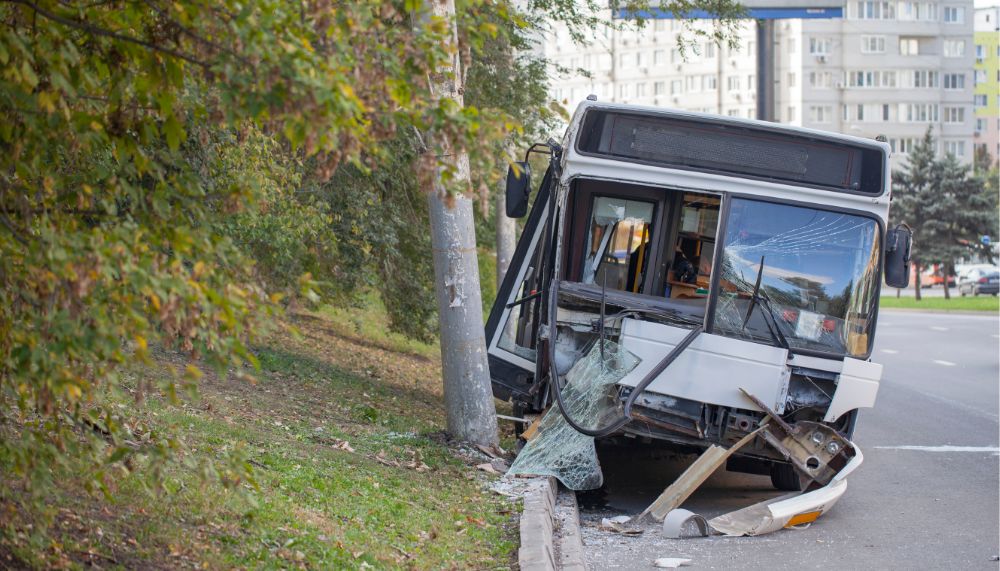
Denver bus crashes aren’t standard personal injury cases — and that distinction costs injured commuters their claims every year. The moment an RTD bus is involved, the Colorado Governmental Immunity Act (CGIA) takes over. It imposes a hard 182-day Notice of Claim deadline, statutory caps on what you can recover, and procedural requirements that have nothing to do with how fault is determined. Miss that window by a single day, and Colorado courts have upheld dismissal of otherwise valid claims — regardless of injury severity.
CGH Injury Lawyers is part of a full suite of Denver personal injury representation, and this page focuses specifically on what makes bus accident claims in Denver legally distinct from every other case we handle. Whether you were riding the 16th Street Free MallRide, commuting through Five Points, or caught in a multi-vehicle crash near the I-25 and Broadway interchange, we investigate independently, fight the insurance company’s playbook head-on, and work on contingency — meaning you pay nothing unless we win.
Get a Free Denver Bus Accident Case Review
Last Updated: March 28, 2026
Why Denver Bus Accident Claims Are Legally Unlike Any Other Case in Colorado
The single most dangerous assumption a Denver bus crash victim can make is that their claim works like a standard car accident claim — it doesn’t, and the consequences are permanent.
Denver’s Regional Transportation District operates one of the largest public transit systems in the Mountain West. The Free MallRide on 16th Street, the bus corridors running through the Five Points and RiNo neighborhoods, the heavily trafficked stops near Union Station — these routes carry thousands of Denver commuters every day. When something goes wrong on any of them, the CGIA immediately governs your claim, not standard tort law.
That means three things change at once. First, the 182-day Notice of Claim deadline begins running from the date of the accident — not from when you finish treatment, not from when you hire an attorney. Second, statutory damage caps under the CGIA limit what you can recover from a public entity like RTD in ways that don’t apply to private-party claims. Third, the notice must be filed with the correct government entity in the correct format — filing with the wrong office doesn’t restart the clock, it simply fails.
Private charter buses and commercial carriers operating in Denver operate under a completely separate framework: FMCSA hours-of-service regulations, corporate liability for negligent driver hiring, and multi-layered insurance policies that stack the driver, the carrier, and sometimes the manufacturer as separate defendants. Confusing an RTD claim strategy with a charter bus claim strategy is one of the most expensive mistakes an injured person can make.
CGH Injury Lawyers’ Denver bus accident representation covers:
- RTD Transit Injury Claims Under the Colorado Governmental Immunity Act — including strict 182-day notice compliance and statutory damage cap strategy for Denver commuters injured on the Colfax corridor, the MallRide, and routes through Five Points and LoDo
- Commercial Bus & Charter Carrier Liability for Denver-Area Crashes — including FMCSA hours-of-service violations, corporate negligent hiring, and navigating multi-layered insurance policies when a crash occurs near the I-25 and Broadway interchange
- Unrestrained Passenger Trauma Claims for Denver Bus Riders — addressing the distinct injury physics of seatbelt-free transit environments and their specific impact on TBI and spinal cord damage valuations
Multi-Vehicle Comparative Fault Defense for Denver Bus Collisions — independent liability investigation under Colorado’s modified comparative negligence rules to prevent insurers from unfairly shifting blame to injured commuters
The Colorado Governmental Immunity Act — What It Actually Means for Your RTD Claim
The CGIA is the single most important law governing Denver bus accident claims against RTD, and most injured commuters don’t know it exists until it’s too late.
The Colorado Governmental Immunity Act, codified at C.R.S. § 24-10-101 et seq., governs all claims against public entities in Colorado — including the Regional Transportation District. Under the CGIA, any person injured by a public entity’s negligence must file a written Notice of Claim within 182 days of the date of the injury. This notice must identify the claimant, describe the circumstances of the injury, and be filed with the correct governmental entity. For RTD claims, that means RTD’s legal department specifically — not Denver city government, not the Colorado Department of Transportation.
The CGIA also imposes statutory caps on damages recoverable from public entities. These caps are distinct from Colorado’s general non-economic damages cap (raised to $1.5 million in 2025 for private defendants) and apply specifically to RTD and other government defendants. For claims accruing on or after January 1, 2026, the CGIA caps recovery against a public entity at $505,000 per person — significantly lower than the general tort cap. In plain terms: the maximum amount you can recover from RTD is lower than what you could recover from a private bus company for the same injury.
Understanding which cap applies, how to structure your claim to work within those limits, and how to pursue any third-party defendants who may not be subject to CGIA protections — that’s where the legal strategy becomes critical. This is general information, not legal advice. Every case is different.
How CGH Injury Lawyers Handles a Denver Bus Accident Case
Step 1: Emergency Evidence Preservation Before RTD Overwrites the Record
Within the first 24 to 48 hours of being retained, we issue formal litigation hold demands to RTD’s legal department for dashcam footage, internal transit surveillance from Union Station and along the relevant Colfax or MallRide corridor, driver logs, pre-trip inspection records, and dispatch communications. RTD’s internal footage overwrite cycles mean this step cannot wait. We also contact the Denver Police Department for any incident reports and begin identifying independent witnesses before memories fade.
Step 2: CGIA-Compliant Notice of Claim Filed With RTD’s Legal Department
We prepare and file the Notice of Claim with RTD’s legal department — the specific governmental entity required under the CGIA — and document every element required by C.R.S. § 24-10-109. This includes the claimant’s identity, the circumstances of the injury, the nature of the claim, and the damages sought. We calendar the 182-day deadline from the date of injury and work backward from that date to ensure the notice is filed with time to spare. A procedurally defective notice is treated the same as no notice at all under Colorado law.
Step 3: Independent Liability Investigation and Insurance Fight
We don’t take RTD’s account of the crash or the insurance company’s valuation of your injuries at face value. We conduct our own independent investigation — accident reconstruction when warranted, medical expert consultation to document the full scope of your injuries including delayed-onset TBI and spinal trauma, and a systematic challenge to any attempt by RTD or a third-party insurer to shift fault onto you under Colorado’s modified comparative negligence rules. If the insurer’s Colossus-generated offer doesn’t reflect the real cost of your injuries, we build the record to override it — and we prepare every case as if it’s going to trial, because that preparation is what creates genuine settlement leverage.
How Insurance Companies Value Your Denver Bus Injury — And Why the Number Is Wrong
Insurance adjusters don’t evaluate your injuries individually — they run them through software, and the output is designed to minimize what you’re paid.
A program called Colossus, used widely by major carriers, applies predetermined algorithms to soft tissue injuries like whiplash and spinal trauma. The output is a number. That number is not based on your specific medical history, your actual pain, or what your life looked like before the crash. It’s based on how your billing codes map to a database of prior low settlements.
For Denver bus accident victims — who are unrestrained passengers by definition, since RTD buses have no seatbelts — this algorithmic approach is especially damaging. The physics of a bus collision are fundamentally different from a car crash. When a 40,000-pound transit bus brakes hard or is struck by another vehicle, unrestrained passengers absorb that force through uncontrolled body movement. The result is often traumatic brain injuries with delayed symptom onset, cervical spine damage that doesn’t appear on initial imaging, and soft tissue injuries that worsen over weeks.
Colossus doesn’t account for any of that. It accounts for billing codes.
Overriding an algorithmic valuation requires building a specific medical record — the right diagnostic imaging, the right specialist documentation, and expert testimony that ties your injury to its long-term economic impact. We know exactly what that record needs to look like, and we build it before the insurance company has a chance to shape the narrative.
Here’s the math worth knowing: initial settlement offers in personal injury cases average just 10 to 20 percent of actual case value. If the insurance company has offered you something that feels low, you’re right to question it. A free consultation costs you nothing. Signing a release before you understand what your case is actually worth could cost you everything.
Understanding the full legal landscape of personal injury claims in Colorado — including how bus accident claims interact with negligence standards — is covered in depth in our guide to Colorado personal injury practice areas.
Comparative Fault in Denver Bus Crashes: The Insurance Company’s Favorite Weapon
Colorado’s modified comparative negligence law allows insurance companies to reduce — or eliminate — your recovery by assigning you a share of the fault. In multi-vehicle bus crashes, they use this aggressively.
Under Colorado law, your compensation is reduced proportionally by your percentage of fault. If you’re found 50% or more at fault, you recover nothing. In crashes near Denver’s I-25 and Broadway interchange, along congested Colfax Avenue, or in the pedestrian-heavy corridors around Union Station, fault is rarely clean. A bus driver’s negligence, a third-party motorist’s lane change, and a pedestrian’s position can all become variables in a liability dispute — and insurance adjusters are trained to find ways to assign as much of that fault to the victim as possible.
We don’t accept that framing. Our independent investigation documents the scene, secures witness statements, subpoenas RTD’s driver logs and training records, and — when a private carrier is involved — pulls FMCSA compliance data. We build the liability picture before the insurance company builds theirs. The distinction between ordinary negligence and gross negligence also matters significantly in multi-vehicle bus crashes — it affects both the legal theory of liability and the damages available. Our analysis of ordinary vs. gross negligence under Colorado law explains how that distinction applies to commercial vehicle collisions and why it shapes our investigation strategy from the first day of a case.
Related Services
If you were a pedestrian struck by an RTD bus rather than a passenger aboard one, the liability framework shifts in important ways — see our Denver pedestrian accident lawyer page for how those claims are built.
Bus crashes that result in traumatic brain injury involve a separate layer of medical documentation and long-term damages calculation — our Denver brain injury lawyers work alongside our bus accident team when TBI is part of the claim.
CGH Injury Lawyers’ Standing in the Colorado Legal Community
All legal services provided by CGH Injury Lawyers comply with the rules and regulations of the Colorado Supreme Court, which governs attorney licensing and professional conduct statewide.
Kevin Cheney serves as Treasurer on the Board of Directors and Executive Committee of the Colorado Trial Lawyers Association (CTLA) — the state’s leading plaintiff-side trial bar — and on the Board of Governors of the Colorado Bar Association. He is a member of the American Board of Trial Advocates (ABOTA), a credential reserved for attorneys who have tried a substantial number of cases to verdict. CTLA New Trial Lawyer of the Year. 25+ cases taken to verdict. Trial-tested experience that insurance companies recognize and respond to.
Denver neighborhoods served: RiNo , Capitol Hill, Highlands, LoDo, Cherry Creek, Washington Park, City Park, Stapleton, Montbello
Meet Kevin Cheney, CGH Injury Lawyers’ Managing Partner
Kevin Cheney has spent 10 years representing injured Coloradans from CGH Injury Lawyers’ Denver office at 2701 Lawrence St Suite 201. He earned his J.D. from the University of Colorado School of Law, where he served as Class Vice-President, and has taken more than 25 cases all the way to verdict. He was named New Trial Lawyer of the Year by the Colorado Trial Lawyers Association and currently serves on CTLA’s Board of Directors and Executive Committee as Treasurer. When Kevin takes a Denver bus accident case, the RTD legal department and the insurance carriers on the other side know they’re dealing with an attorney who prepares every case for trial from day one — and has the record to prove it.
Written by Kevin Cheney, Managing Partner at CGH Injury Lawyers | View attorney profile
★★★★★
Everyone at CGH is so amazing! They ACTUALLY care about their clients and are extremely ethical, not to mention they are also so fun and friendly. Leslie is such a joy to work with and explains everything in terms that the average person can understand, she is the best. You are in good hands at CGH, I can’t recommend them enough!

Golnaz S.
★★★★★
Highly recommend! Big thanks to Kevin and his entire team. While my case was minor they still gave it their attention and perseverance. The whole team was very helpful and made sure I was knowledgeable of the process and what each step entailed. If you are injured even if you feel it may be minor, reach out to CGH, they will help you get what you are owed.
Bridget M.
2025, January
★★★★★
I had a wonderful experience talking with Henock about my mom’s case. He was incredibly thoughtful and went above and beyond to make sure all my questions were answered. It was clear he truly cared about her case and I deeply appreciated his time and dedication. I look forward to working with him more in the future and I would highly recommend him and CG&H.
Simon F.
2025, January
★★★★★
Daniel Garza stands out as one of Westword’s most valuable marketing partners. Over our five-year collaboration, he has consistently demonstrated exceptional digital media expertise and meticulous attention to detail. His results-driven approach, combined with genuine enthusiasm and creative talent, makes every project a success. I look forward to continuing our partnership on upcoming campaigns.
Tracy K
2025, January
★★★★★
I was fortunate to be referred to CGH, Tim and his team took great care of my family throughout the entire process. I would highly recommend this firm. Honesty and integrity is how I would describe the representation, they know how to fight and do it with care and compassion. Many thanks to this team.
Spencer M.
2025, January
★★★★★
Tim Galluzzi at CGH did outstanding work on my car accident case. He is extremely knowledgeable, honest, direct in his communication, and completely transparent and trustworthy. He negotiated our settlement with a favorable result. We were highly impressed with his work ethic and positive energy throughout the process. I highly recommend Tim Galluzzi and would hire him again if ever needed.
Juliet G.
2024, November
★★★★★
CGH is a really cool firm with some amazing people! Daniel is very friendly and knowledgeable, truly representing the firm with dignity and respect. If you’re in the unfortunate situation for lawyer help, I highly recommend these awesome people at CGH!!!
Autumn E.
2025, January
★★★★★
Being from out of state, when I was involved in a car accident in Denver, a lawyer who I deeply respect highly recommended Cheney Galluzzi & Howard. I’m so glad he did! I interviewed a few firms, but felt like CG&H was the most responsive, professional & thorough. I immediately felt like I was in good hands and that feeling continued throughout the process. Tim, Nicole and team are total pros and I highly recommend!
Valerie H.
2024, October
★★★★★
Professional, respectful, and very competent. A great team to work with, personable and compassionate. I felt that I could really trust them to work on my behalf to get just compensation after an auto accident. I will recommend to any friends or family who need help after an accident. You can count on them to represent you well.
Katherine Scarritt
2023, May
★★★★★
Tim took over my car accident case just over a year ago. He was polite, professional, and easy to work with. I hope I never have to use him again, but if I do I will. I recommend this firm.
Char S
2023, March
★★★★★
We attended for a consultation, and we definitely recommend this law firm. Excellent service. They took the necessary time, we were very well advised by Kevin Cheney without a doubt there is honesty and transparency. Thanks
hilaria rodriguez
2023, February
It’s More Than Money
A Denver bus crash doesn’t just injure you. It disrupts your commute, your income, your family’s finances, and your confidence in a transit system you depend on every day. The 182-day clock, the Colossus algorithm, the comparative fault dispute — these aren’t abstract legal concepts. They’re the specific mechanisms the system uses to pay you less than you deserve, or nothing at all.
We’ve spent 10 years learning exactly how to dismantle them.
You’re not just a case file. You’re a person who deserves to be heard, helped, and represented by attorneys who will fight as hard for your life as they would for their own family’s. That’s what trial-tested experience means in practice — not a credential on a wall, but a track record of showing up when it matters, in Denver courts, against the RTD legal team and the insurance companies that fund it.
CGH Injury Lawyers is ready to take over the fight. Call +17206698062 for a free consultation — no upfront fees, no payment unless we win.
Information on this site is general and not legal advice. Every case is different.
Frequently Asked Questions
How does the 182-day Notice of Claim deadline under the CGIA affect my RTD bus accident case in Denver?
The Colorado Governmental Immunity Act requires that any injured person file a written Notice of Claim with RTD’s legal department within 182 days of the date of injury — not the date treatment ends, not the date you hire an attorney. Colorado courts have consistently upheld dismissal of claims filed even one day late, regardless of injury severity. The notice must identify the claimant, describe the accident and injury, and be filed with the correct governmental entity — filing with Denver city government or the Colorado Department of Transportation instead of RTD does not satisfy the requirement. If you were injured on an RTD bus anywhere in Denver, contact an attorney immediately. This is general information, not legal advice. Every case is different.
Why do insurance adjusters use software like Colossus to value my Denver bus accident injuries, and what can actually override it?
Colossus and similar algorithmic tools allow insurance carriers to generate settlement offers based on billing codes and injury classifications rather than the real human cost of your injury. For unrestrained bus passengers — which describes every RTD rider in Denver — the software frequently undervalues soft tissue injuries, delayed-onset TBI, and spinal trauma because those injuries often don’t generate the high-dollar billing codes the algorithm weights most heavily in its early stages. Overriding an algorithmic valuation requires building a specific medical record: the right diagnostic imaging, specialist documentation, and expert testimony connecting your injury to its long-term economic impact. This is general information, not legal advice. Every case is different.
What happens to my injury claim if the RTD bus I was on didn’t have seatbelts?
RTD buses and most commercial transit buses in Denver are not equipped with passenger seatbelts — this is standard for public transit vehicles. The absence of seatbelts is not a defense RTD can use against you; it is a physical reality that changes how injuries occur and how they must be documented. Unrestrained passengers absorb collision forces through sudden, uncontrolled movement, producing injury patterns distinct from those in belted vehicle occupants — including higher rates of TBI with delayed symptom onset and cervical spine trauma. Because these injuries sometimes don’t appear immediately, seek medical evaluation as soon as any symptoms develop, even days after the crash. This is general information, not legal advice. Every case is different.
How is fault divided in Colorado if both an RTD bus driver and another motorist caused my crash near the I-25 and Broadway interchange?
How is fault divided in Colorado if both an RTD bus driver and another motorist caused my crash near the I-25 and Broadway interchange?
Do the CGIA’s statutory damage caps limit what I can recover from RTD even if my injuries are severe?
Yes. Claims against public entities like RTD in Colorado are subject to statutory damage caps under the CGIA that are separate from — and significantly lower than — Colorado’s general non-economic damages cap of $1.5 million (which applies to private defendants). For injuries that occur on or after January 1, 2026, the CGIA limits recovery against RTD to $505,000 per person per occurrence. This cap adjusts every four years for inflation under C.R.S. § 24-10-114.” These CGIA caps apply specifically to government defendants and limit total recovery regardless of injury severity. However, if a third-party private motorist or commercial carrier also bears fault for the crash, those defendants may not be subject to CGIA caps — which is why identifying all potentially liable parties is a critical part of building a Denver bus accident claim. This is general information, not legal advice. Every case is different.
Is a Denver bus accident claim handled differently than CGH Injury Lawyers’ other Denver personal injury cases?
Yes — and that difference is the entire reason this page exists. Bus accident claims involving RTD require CGIA compliance from day one, including the 182-day notice deadline and statutory damage cap strategy that simply don’t apply to car accident or slip-and-fall claims. Commercial bus and charter carrier claims involve FMCSA regulatory compliance, corporate negligent hiring liability, and multi-layered insurance structures that require a different investigation approach than a standard two-party crash. We handle both RTD and commercial bus claims as part of CGH Injury Lawyers’ Denver personal injury practice — and we treat each as the distinct legal category it actually is.