
ClickCease
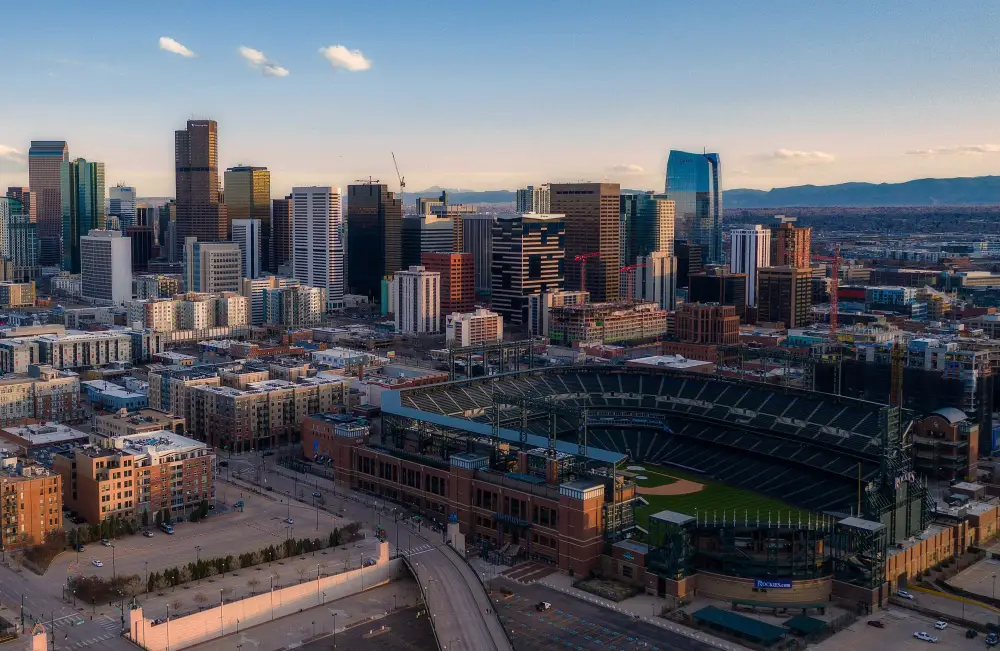
Denver skyline. CGH Injury Lawyers represents premises liability victims across Denver, Colorado.
Denver, Colorado

Denver Premises Liability Lawyers Who Make Negligent Property Owners Accountable

When an unsafe condition on someone else's Denver property puts you in Denver Health or out of work, Colorado law may hold the owner responsible. Our team works from our Denver office at 2701 Lawrence St. to build your case, fight the insurer, and take it to trial in Denver District Court when necessary. You pay nothing unless we win.

No fee unless we win

It's More Than Money.

Get my free premises liability case review

100% confidential. No fee unless we win.

Our Denver Office CGH Injury Lawyers 2701 Lawrence St., Suite 201 Denver, CO 80205 (303) 209-9395 Se habla espanol
5-star rated on Google ABOTA trial advocate on the team Trial lawyers, not a settlement mill 8 attorneys, bilingual EN / ES
  • The Colorado Premises Liability Act (C.R.S. 13-21-115) sets a property owner's duty to you based on why you were on the property: as an invitee, a licensee, or a trespasser. Customers in Denver stores and visitors in Denver apartment buildings are typically invitees, owed the highest duty of care.
  • An owner can be liable for a hazard they should have found through reasonable inspection, even if no one told them about it. This is constructive notice, and it is how most Denver slip-and-fall and trip-and-fall cases are won or lost.
  • The deadline to file a premises liability lawsuit in Colorado is two years from the date of injury under C.R.S. 13-80-102. Claims involving a Denver city facility or RTD property require a written notice of claim within 182 days of discovering the injury under the Colorado Governmental Immunity Act (C.R.S. 24-10-109).

When an unsafe condition inside a Denver store, parking garage, apartment building, or public sidewalk injures you, Colorado law decides whether the owner is responsible and what you can recover. CGH Injury Lawyers is a Denver-based firm with a physical office in the RiNo and Five Points area. We represent people hurt on unsafe property across the metro, from Cherry Creek retail corridors to the RiNo warehouse district. Our attorneys preserve evidence fast, build the case against the owner's insurer, and file in Denver District Court when insurers refuse to be fair. You pay nothing unless we recover for you.

The governing law

The Colorado Premises Liability Act governs every Denver property injury

Colorado replaced older common-law premises rules with a single statute, the Colorado Premises Liability Act, codified at C.R.S. 13-21-115. It applies to virtually every kind of property in Denver: grocery stores, apartment buildings, office towers, parking garages, hotel lobbies, and commercial corridors along Federal Blvd, Colfax Ave, and Speer Blvd alike.

The Act applies to private owners, business entities, property management companies, retailers, and landlords. Government entities such as the City and County of Denver can also face premises claims, though the Colorado Governmental Immunity Act (CGIA) sets a strict 182-day notice requirement and its own damage caps for those situations. Whether your injury happened inside a LoDo restaurant, on a Capitol Hill apartment stairwell, or in a Wash Park neighborhood parking lot, the Act frames who owes you a duty and what that duty requires.

Property owners cannot simply deny knowledge of a hazard and walk away. The central question is what they knew or should have known and what they did or failed to do about it. The answer depends heavily on your status as a visitor, which the Act defines in three tiers.

Visitor status

How the law categorizes Denver property visitors

Your status at the moment you were hurt determines what the owner owed you. Colorado law divides visitors into three tiers, each owed a different level of protection.

  1. Invitees

    People on the property for a purpose that benefits the owner, or who enter under a public invitation, such as customers in Cherry Creek boutiques, diners on Colfax Ave, shoppers at Denver retailers, and hotel guests near LoDo. Owners owe invitees the highest duty and must actively inspect for, find, and fix hazards rather than simply wait for a complaint.

  2. Licensees

    People on the property with permission but for their own purposes, such as a social guest at a friend's Denver apartment. Owners must warn licensees about known dangers but do not have to actively inspect for hazards they are unaware of. The duty is real but narrower than for invitees.

  3. Trespassers

    People on the property without permission. Owners owe trespassers very limited duties and mainly cannot set traps or deliberately harm them. The attractive-nuisance doctrine raises the duty for child trespassers near features like construction zones, pools, or equipment storage areas, which appear throughout Denver's ongoing development corridors.

Status is not always obvious. A shopper who walks into an employees-only stock area can lose invitee protection. A delivery driver is typically an invitee under the business-invitation rule. Courts examine the specific facts at the moment of injury, and insurers dispute status early to reduce what they owe. This is one of the first things we pin down in a free case review.

Duty and notice

What Denver property owners owed you, and what constructive notice means

For invitees, reasonable care means active steps to find and fix hazards: regular inspections, prompt cleanup of spills on tile floors, timely repair of broken handrails on Denver apartment stairwells, adequate lighting in parking garages off I-25 and I-70, and ice removal from entrances after Colorado snowstorms clear. An owner cannot simply wait for someone to report a problem.

When the owner should have known: constructive notice

Denver property owners often claim they did not know about the hazard that hurt you. Under Colorado law, actual knowledge is not always required. An owner can be liable for a danger they should have discovered through reasonable care. That is constructive notice, and it is one of the most important concepts in a Denver premises case.

  • How long the hazard was present matters. A spill that sat on a supermarket floor near Speer Blvd for two hours is treated very differently from one that appeared seconds before the fall.
  • Visibility and location matter. A broken tile near a busy Denver store entrance is more likely to put the owner on notice than one tucked in a back aisle.
  • Inspection records matter. Denver property managers who cannot produce sweep logs often lose the argument that they inspected at all.

Colorado also recognizes weather-related duties. The ongoing-storm rule gives owners some protection during active snowfall, but once precipitation stops they must clear walkways within a reasonable time. Letting ice build up for days on a Denver sidewalk after the storm ends can establish constructive notice. That same principle applies to Denver parking structures and the covered entrances along 16th Street Mall and throughout Capitol Hill.

Where these injuries happen in Denver

Common premises liability situations in Denver

Denver's density and its mix of historic buildings, new construction, and high-traffic retail corridors create predictable hazard patterns. These are the property situations our Denver attorneys see most often.

Commercial and retail property

  • Slip and fall on unsalted or icy store entrances along Federal Blvd and Colfax Ave corridors
  • Spills and debris left unattended in grocery and retail aisles throughout the Denver metro
  • Potholes, crumbling concrete, and poor lighting in parking garages off I-25 and I-70
  • Loose floor mats, uneven surfaces, and unmarked step-downs at Cherry Creek and LoDo retail locations

Residential and apartment property

  • Dark stairwells, broken handrails, and crumbling steps in Capitol Hill and Five Points apartment buildings
  • Neglected common areas, laundry rooms, and fitness facilities in RiNo and Wash Park complexes
  • Short-term rental decks, walkways, and roof access areas that violate Denver building codes
  • Negligent security where prior criminal activity near the property made an assault foreseeable

Negligent security is a premises claim. When a Denver property owner knows of foreseeable criminal activity but fails to provide working door locks, adequate lighting, cameras, or security patrols, they can be liable for an assault that occurs on their property. Prior incidents on or near Pena Blvd hotel corridors, downtown parking structures, or RTD light-rail station properties establish the foreseeability that puts an owner on legal notice.

Local Knowledge

Denver courts. Denver trauma care. Denver corridors.

A Denver premises liability case lives in Denver: the courthouse where it is filed, the hospital where you were treated, and the specific property corridors where these injuries happen most. Here is the ground we work on every day.

Courthouse

Denver District Court, 2nd Judicial District

Premises liability cases that arise in the City and County of Denver are filed in Denver District Court, the 2nd Judicial District, with civil matters heard at the City and County Building, 1437 Bannock St. Denver civil procedure differs from suburban jurisdictions. The judges, the jury pools drawn from Denver precincts, and the defense firms regularly appearing in that courtroom either know your firm or they do not. CGH Injury Lawyers handles Denver District Court cases directly from our Lawrence St. office, minutes away.

Trauma Care

Denver Health Medical Center

The most critically injured premises liability victims in Denver are typically transported to Denver Health Medical Center, the region's Level I trauma center at 777 Bannock St. Those admission records, surgical notes, and discharge summaries document the full scope of your injuries and become the core of your damages claim. Saint Joseph Hospital and Presbyterian/St. Luke's Medical Center also treat serious fractures, head injuries, and soft-tissue damage from property falls throughout the metro.

Corridor

I-25, Federal Blvd, and Colfax Ave

A large share of Denver premises injuries happen along high-traffic retail and residential corridors: commercial properties strung along Federal Blvd from I-70 south toward I-25, the Colfax Ave corridor from Wash Park through Capitol Hill to Aurora, and the parking structures serving the venues and offices clustered near the I-25 and Speer Blvd interchange. These corridors see concentrated foot traffic, high turnover of tenants, and property maintenance patterns that create predictable hazard windows. We know the players and the properties.

What the other side will argue

Property owner defenses in Denver premises cases and how we answer them

Denver property owners and their insurers reach for the same defenses in nearly every case. Recognizing them helps you understand when you are being unfairly blamed for your own injury.

  • Open and obvious. Denver owners often claim a hazard was too apparent to warn about. Colorado courts apply this narrowly. A danger that is unreasonably risky, or that appears where shoppers are looking at displays instead of the floor, can still create liability even if a careful observer would have noticed it.
  • Comparative negligence. Under C.R.S. 13-21-111, your recovery is reduced by your percentage of fault. You can still recover as long as your fault is less than 50 percent. At 50 percent or more, you recover nothing. Denver insurers routinely inflate your share of fault to reduce what they pay, and we counter that with evidence of the owner's inspection failures.
  • Lack of notice. The owner says they did not know about the hazard. We answer it with surveillance footage, witness accounts, inspection logs we can subpoena, and evidence of how long the condition existed before you fell.
  • Assumption of risk. Sometimes raised in recreational or fitness-facility contexts, but it does not excuse a hazard the owner's own negligence created, such as a broken cable on a Denver gym machine that was flagged in an inspection and never repaired.
  • Liability waivers. Waivers can be enforceable in Colorado, but they must be clear and specific. Waivers for gross negligence or willful misconduct are generally unenforceable and cannot shield a Denver property owner who ignored a known and serious danger.
Why CGH

Why Denver premises liability victims choose CGH Injury Lawyers

A real Denver office, trial-ready attorneys, bilingual representation, and no fee unless we win. We do not publish premises liability settlement figures, because every property injury is different and a number on a page tells you nothing about your case. What we offer is the work.

The Statute

C.R.S. 13-21-115

Colorado's Premises Liability Act sets the owner's duty by your status as a visitor. We identify your status and build the case on that foundation.

Real Denver Office

Not a P.O. box.

Our office at 2701 Lawrence St., Suite 201 in Denver's RiNo and Five Points neighborhood is where your attorney works. You can walk in, review your medical records, meet the team, and plan your case in person.

Evidence Preservation

We move first.

Surveillance footage from Denver properties is often overwritten within 30 to 72 hours. We send preservation letters immediately to stop the clock.

Comparative Fault

Less than 50% fault still recovers.

Under C.R.S. 13-21-111, you can recover as long as your fault is less than 50 percent. We fight inflated fault assignments before any demand is made.

Trial-Ready

8 attorneys, prepared for Denver District Court.

Managing Partner Kevin Cheney is a member of the American Board of Trial Advocates and has tried over 25 cases to verdict. When attorneys are genuinely prepared to try a case in front of a Denver jury, property insurers respond differently to a demand letter.

Bilingual

Hablamos espanol.

Spanish-speaking staff and attorneys serve Denver's Spanish-speaking community in premises liability cases.

No Win, No Fee

Contingency only.

You pay nothing out of pocket for legal fees. We advance costs and collect only from a settlement or jury verdict.

Compensation

What you can recover after a Denver premises liability injury

Colorado law lets injured people recover both the documented financial costs of an injury and the human cost of living with it. The two main categories work together, and how much you can recover depends on what the owner's negligence actually took from you.

Economic damages (no cap)

  • Emergency care and surgery at Denver Health or Saint Joseph
  • Follow-up treatment, physical therapy, and rehabilitation
  • Future medical expenses projected by a life-care planner
  • Lost wages and lost earning capacity if the injury affects your ability to work
  • Out-of-pocket expenses tied directly to the injury

Non-economic damages

  • Pain and suffering
  • Disability and loss of enjoyment of life
  • In fatal premises cases, funeral expenses and loss of companionship

Economic damages are not capped in Colorado. Non-economic damages are capped under C.R.S. 13-21-102.5 at $1.5 million for claims accruing on or after January 1, 2025, with inflation adjustments beginning in 2028. Compensatory damages for physical impairment or disfigurement are not capped at all. We calculate the full value of your claim, including future medical care and long-term impact, before any settlement discussion begins, so no category of harm you suffered is left on the table.

After the injury

What to do after a premises liability injury in Denver

A property injury case is won or lost on evidence that disappears fast. Take these steps to protect yourself before you do anything else.

  1. Get medical care

    Denver Health Medical Center handles the most serious trauma. For urgent care, Presbyterian/St. Luke's and Rose Medical Center also serve the metro. Get examined even if you feel only moderate pain. Falls can cause fractures, head injuries, and soft-tissue damage that worsen in the first 24 to 48 hours, and gaps in medical care become arguments against you.

  2. Document everything at the scene

    Photograph the hazard, your injuries, and the surrounding area before the property owner can fix or remove it. Get the name and contact information of any witnesses. Ask the property manager or store employee for the incident report, and request a copy.

  3. Report the incident formally

    Report the injury to the property owner or manager in writing before you leave if possible. For injuries on Denver city property, RTD facilities, or other government-owned premises, the CGIA requires a written notice of claim within 182 days of discovering the injury under C.R.S. 24-10-109. Missing that window bars the claim entirely.

  4. Call before you talk to the insurer

    The property owner's liability insurer may call quickly. Do not give a recorded statement or accept any offer before speaking with us. Call (303) 209-9395. First offers are almost never the full value of a serious property injury claim.

  5. We preserve the evidence

    We send litigation hold letters immediately to stop the deletion of surveillance footage, which Denver commercial properties typically overwrite within 30 to 72 hours. We subpoena inspection logs, maintenance records, and prior incident reports that the owner would never volunteer.

  6. Negotiate or take it to Denver District Court

    Most cases settle when the insurer understands we are prepared for trial. When they are not fair, we file in Denver District Court, 2nd Judicial District, 1437 Bannock St., and try your case.

I wish I could leave more than 5 stars!
Grace M., 5-star CGH Injury Lawyers client review
City and government property

Injuries on Denver city property and RTD facilities

Some of the most dangerous premises in Denver are owned by the city, the Regional Transportation District, or other public entities. The legal path is narrower and the deadlines are much shorter.

  • Colorado's Governmental Immunity Act (CGIA) requires a written notice of claim filed within 182 days after you discover the injury when a public entity is responsible (C.R.S. 24-10-109). That notice deadline is jurisdictional, meaning missing it bars the claim permanently.
  • If the CGIA applies, recovery is capped at $505,000 per person and $1,421,000 per occurrence for claims accruing on or after January 1, 2026 (C.R.S. 24-10-114(1)(b), as certified by the Colorado Secretary of State). These caps are lower than general tort damages.
  • RTD light-rail station platforms, Denver International Airport corridors, public parks, and city-owned sidewalks all fall under government ownership. But not every city-adjacent property is immune: a private lessee of city land may not be protected by the CGIA.

If you were hurt near a bus stop on Colfax Ave, on an RTD platform, or on a public sidewalk in the Five Points or Capitol Hill area, the 182-day notice deadline is the first thing we confirm. We file that notice immediately so you do not lose the right to pursue the claim.

Questions

Denver premises liability, frequently asked questions

How long do I have to file a premises liability claim in Denver?

Colorado's statute of limitations for premises liability cases is generally two years from the date of injury under C.R.S. 13-80-102. If you were hurt on a Denver city facility, RTD property, or any other government-owned premises, the Colorado Governmental Immunity Act imposes a much shorter deadline: a written notice of claim must be filed within 182 days after you discover the injury (C.R.S. 24-10-109). Missing either deadline typically ends the claim. Contact an attorney immediately after the injury, especially if you are unsure who owns the property where you fell.

Can I recover if I was partly at fault for my fall in Denver?

Yes, under Colorado's modified comparative negligence rule (C.R.S. 13-21-111), as long as your fault is less than 50 percent. Your recovery is reduced by your percentage of fault, but you still recover. For example, if a Denver jury finds you 20 percent at fault and your damages are 100,000 dollars, you recover 80,000 dollars. At 50 percent or more at fault, you recover nothing. Denver property insurers routinely inflate your share of fault to reduce payouts, and we fight those assignments with evidence of the owner's actual inspection failures.

Is a Denver property owner automatically liable if I get hurt on their property?

No. You must prove the owner knew or should have known about the dangerous condition and failed to take reasonable action. Liability under the Colorado Premises Liability Act (C.R.S. 13-21-115) depends on your visitor status at the time of injury, the specific duty the owner owed you, and whether the owner had actual or constructive notice of the hazard. Constructive notice means the owner should have discovered the condition through reasonable inspection, even if no one told them about it.

Does a warning sign protect a Denver property owner from liability?

Not always. A wet-floor sign can help satisfy the duty to warn, but it does not erase liability if the hazard is unreasonably dangerous or if the owner should have fixed the problem rather than simply posting a sign. Placing a cone near a crumbling Denver apartment staircase that has needed structural repair for months is not the same as repairing the staircase. When the danger requires a fix and the owner chose a warning instead, liability can survive the sign.

Where would my Denver premises liability lawsuit be filed?

Personal injury cases arising in the City and County of Denver are filed in Denver District Court, the 2nd Judicial District, with civil matters heard at the City and County Building at 1437 Bannock St. Most premises liability claims settle before a lawsuit is filed, but where a case would be tried affects the local rules, the jury pool, and which defense attorneys and insurers you face across the table. CGH Injury Lawyers handles Denver District Court premises cases directly from our Lawrence St. office.

What happens to my case if a Denver city facility caused my injury?

Claims against the City and County of Denver, RTD, or other public entities are governed by the Colorado Governmental Immunity Act. You must file a written notice of claim within 182 days of discovering the injury (C.R.S. 24-10-109), and that notice is a jurisdictional prerequisite. Missing it bars the claim entirely. If the claim proceeds, recovery from a government entity is capped at $505,000 per person and $1,421,000 per occurrence for claims accruing on or after January 1, 2026 (C.R.S. 24-10-114). We confirm the ownership of the property immediately so no deadline is missed.

What evidence does a Denver premises liability case need?

Surveillance footage showing how long the hazard existed before your fall, witness accounts, the property's inspection logs or the absence of them, maintenance records, incident reports, and your medical records from Denver Health or another treating hospital. Denver commercial properties routinely overwrite surveillance footage within 30 to 72 hours. We send litigation hold letters on the first day of representation to preserve the footage before it disappears. An experienced attorney can also subpoena records the owner would never voluntarily produce.

Should I accept the Denver property owner's insurer's first settlement offer?

No. Denver property liability insurers make quick, low offers before you understand the full scope of your injuries or the long-term costs of your treatment. Once you sign a release, you cannot recover more later, even if your injuries prove more serious than they appeared in the first weeks. Speak with an attorney before accepting anything. We review the offer against your full damages, including future medical care, lost earning capacity, and the non-economic impact of the injury.

It's More Than Money.

You were hurt on someone else's Denver property. We handle everything else.

Free consultation. No fee unless we win. Available in English and Spanish.

Tell us what happened

100% confidential. No fee unless we win.

Prefer to read first? See how Colorado's Premises Liability Act works.

CGH Injury Lawyers · 2701 Lawrence St., Suite 201, Denver, CO 80205