
ClickCease
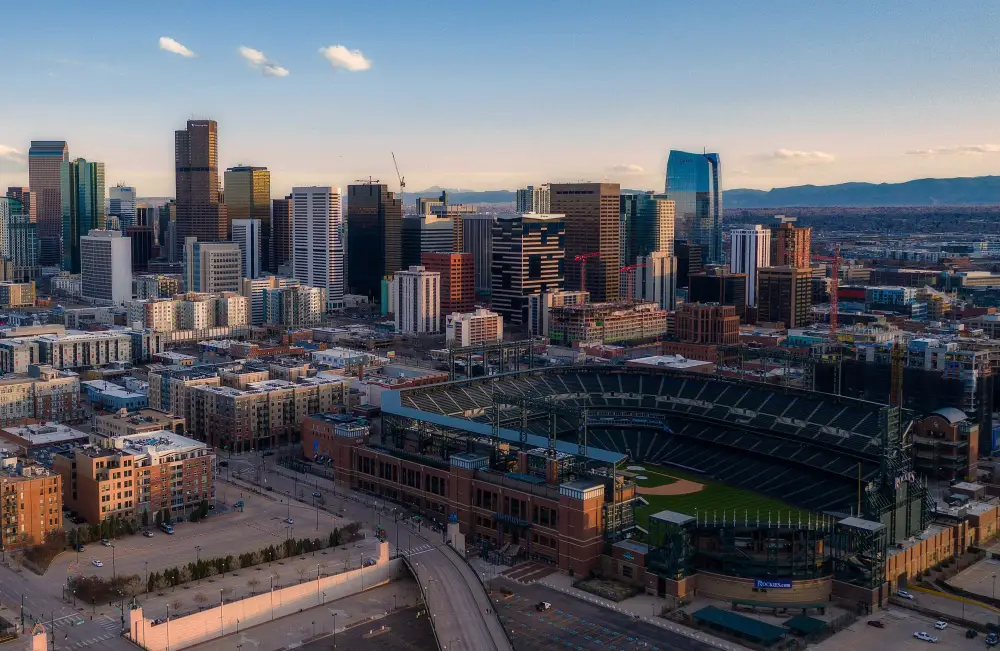
Downtown Durango, Colorado. CGH Injury Lawyers represents premises liability victims across La Plata County.

IT'S MORE THAN MONEY.

Durango Premises Liability Lawyers Who Prove What the Property Owner Knew

A fall on an icy Main Avenue sidewalk, a negligent security failure at a Durango hotel, a broken stairwell in a downtown rental property -- these are not accidents in the legal sense. They are failures of duty by owners who controlled the space and had the responsibility to keep it reasonably safe. CGH Injury Lawyers handles Durango and La Plata County premises liability claims from our Denver office. We build every case around the evidence the owner hoped you would never gather, and we file in the District Court, La Plata County, 6th Judicial District when an insurer will not be fair. You pay nothing unless we win.

No fee unless we win
Or speak with our team now (303) 209-9395

Tell us what happened

100% confidential. No fee unless we win.

5-star rated on Google ABOTA trial advocate on the team Trial lawyers, not a settlement mill No fee unless we win

Durango's mountain tourism economy packs visitors onto the Animas River Trail, through historic Main Avenue storefronts, into short-term rental cabins near Purgatory Resort, and into hotels and restaurants that serve Fort Lewis College students and Durango and Silverton Narrow Gauge Railroad tourists year-round. Every one of those settings is governed by the Colorado Premises Liability Act, C.R.S. 13-21-115, which defines when a property owner's failure to keep a space reasonably safe becomes your legal right to compensation. CGH Injury Lawyers handles Durango and La Plata County premises liability claims from our Denver office. We investigate, negotiate, and try these cases in the District Court, La Plata County, 6th Judicial District when an insurer will not settle fairly.

  • The Colorado Premises Liability Act (C.R.S. 13-21-115) assigns your rights based on your status as an invitee, licensee, or trespasser at the moment of injury. Customers at Durango businesses are typically invitees, owed the highest duty: the owner must actively inspect for and correct dangerous conditions, not merely respond to complaints.
  • The deadline to file most premises liability lawsuits in Colorado is two years from the date of injury (C.R.S. 13-80-102). If a government property, such as a city-maintained sidewalk along Main Avenue or a trail managed by the City of Durango, contributed to your injury, a written notice of claim must reach the entity within 182 days of discovering the injury (C.R.S. 24-10-109(1)), well before the two-year general deadline.
  • CGH Injury Lawyers does not have a Durango office. The firm's only physical office is at 2701 Lawrence St., Suite 201, Denver, CO 80205. We serve La Plata County clients from that office, file cases in the District Court, La Plata County, 6th Judicial District at 1060 East Second Ave, Suite 106, Durango, CO 81301, and travel to Durango as the case requires.

The governing law

What the Colorado Premises Liability Act means for your Durango claim

Colorado replaced older common-law rules with a single, structured statute: C.R.S. 13-21-115, the Colorado Premises Liability Act. The Act covers virtually every property in the state, from a tourist shop on Main Avenue to a vacation rental outside Durango near Purgatory Resort to an apartment building near Fort Lewis College. It applies to private owners, commercial landlords, property management companies, and retailers alike. Government entities can also face premises liability claims in some situations, though the Colorado Governmental Immunity Act imposes strict notice requirements and caps on recovery.

The Act ties the owner's duty to the reason you were on the property. Someone who enters a Durango store to shop is an invitee and is owed the highest protection. A social guest at a private residence is a licensee and is owed warnings about known dangers. A person on the property without permission is a trespasser and is owed very limited duties, though child trespassers near swimming pools or similar features receive greater protection under the attractive-nuisance doctrine.

For invitees, which describes most people hurt on commercial Durango property, the owner must actively look for and correct hazards, not just fix the ones that get reported. That is the legal standard, and it is meaningfully stronger than many business owners believe when they first receive notice of a claim. The difference between what the law requires and what the owner actually did is where a premises liability case is built.

Where Durango premises injuries happen

The property hazards we see turn into La Plata County claims

Durango's tourism economy, mountain climate, and historic building stock create a specific set of property hazards. Knowing where harm tends to happen informs how we investigate and who we hold responsible.

  1. Main Avenue storefronts, restaurants, and retail

    Main Avenue carries US 550 through downtown Durango and is lined with historic commercial buildings that attract heavy tourist foot traffic throughout the year. Older tile floors, uneven thresholds between historic storefronts, wet entries during Durango's heavy winter snowfall, and improperly maintained display merchandise all create invitee hazards. Restaurants and bars along Main Avenue and the surrounding downtown blocks face spill hazards in high-traffic service areas. The Durango and Silverton Narrow Gauge Railroad depot just blocks from Main Avenue draws concentrated visitor traffic that places pressure on neighboring businesses to manage entrances and exits safely. When a commercial property owner on this corridor fails to meet the active inspection duty owed to invitees, the injury that results is a recoverable claim under C.R.S. 13-21-115.

  2. Short-term rentals and vacation properties near Purgatory Resort

    The area around Purgatory Resort north of Durango on US 550 hosts a dense concentration of short-term vacation rentals, condominiums, and ski lodges. Rental properties owe guests the same invitee duty that hotels owe their registered guests. Hazards that generate claims in this environment include unsalted exterior walkways and decks after snowfall, unmarked steps that blend into decking surfaces, hot tubs and pools with inadequate barriers or broken hardware, and loose handrails on elevated walkways. The rapid turnover of short-term rental guests creates pressure on owners and management companies to inspect between stays, and gaps in that inspection process are often what allows a persistent hazard to remain when the next group arrives. Owners who use management companies can face combined liability depending on who controlled the property and had notice of the condition.

  3. Apartment complexes and residential rentals near Fort Lewis College

    Fort Lewis College sits on a mesa overlooking downtown Durango and generates significant demand for rental housing throughout the surrounding neighborhoods. Apartment complexes and multi-unit residential buildings owe tenants and their guests the duty to keep common areas, stairwells, parking lots, and building approaches in reasonably safe condition. Broken lighting in parking areas, icy exterior walkways that go untreated after snowfall, deteriorated handrails on exterior stairways, and defective exterior doors that allow unauthorized access are recurring hazard types in this category. When a landlord's failure to maintain or inspect common areas produces a slip and fall, a trip injury, or a negligent security incident, the tenant's status as an invitee in common areas supports a premises liability claim under the Act.

  4. The Animas River Trail and recreational property

    The Animas River Trail runs through Durango as a multi-use path maintained by the City of Durango. When spring snowmelt and seasonal flooding create hazardous conditions on the trail, the question of who bears responsibility depends on who controlled the property and what they knew about the condition. Claims involving city-maintained recreational property are subject to the Colorado Governmental Immunity Act, C.R.S. 24-10-114, which imposes caps on recovery and a critical notice deadline. A written notice of claim must be served on the City of Durango within 182 days of discovering the injury under C.R.S. 24-10-109(1). Missing that deadline bars the government-entity portion of the claim entirely, regardless of how strong the underlying facts are.

Duty and notice

What the property owner owed you, and what they will argue to avoid it

For invitees, Colorado law requires owners to actively inspect for hazards and take reasonable steps to fix or warn about them. Waiting for a customer to report a spill is not enough. Having a staff member walk past a broken step for a week without flagging it is not enough. The owner's duty to act runs from the moment a hazard exists or reasonably should have been found through regular inspection.

Constructive notice: when the owner should have known

Owners routinely claim they did not know about the hazard that injured you. Colorado law does not require that they had actual knowledge. Constructive notice holds an owner responsible for a condition they should have discovered through reasonable inspection. How long the hazard existed, how visible it was, and whether the owner's inspection procedures were followed are all evidence. A water leak that pooled in a store entrance for two hours gives rise to constructive notice. An icy deck at a vacation rental that went uncleared for three days after a snowstorm is even clearer.

Owner defenses and how we answer them

  • Open and obvious. Owners argue the hazard was too obvious to warn about. Colorado courts apply this doctrine narrowly. A condition that is unreasonably dangerous, or that appears where customers would reasonably be looking at merchandise or signage rather than the floor, can still create liability even if a careful observer might have spotted it.
  • Comparative negligence. Under C.R.S. 13-21-111, your recovery is reduced by your share of fault. As long as you are less than 50 percent at fault, you can still recover. Insurance adjusters regularly inflate the injured person's fault to cut the payout, calling a slip on an unmarked icy step the victim's failure to watch where they were going.
  • Liability waivers. Some Durango recreational businesses use waivers. Colorado waivers can be enforceable when they clearly apply to the specific risk. Waivers for gross negligence or willful misconduct are generally unenforceable, and vague waiver language may not cover the specific hazard that injured you.
  • Ongoing storm. Colorado courts recognize that owners cannot continuously clear snow during an active storm, but once precipitation stops, they must act within a reasonable time. A trail or commercial entrance left icy for 48 hours after a storm has ended does not benefit from an ongoing-storm defense.

After the injury

What to do after a premises injury in Durango or La Plata County

The hours after a premises injury shape the strength of your claim. Evidence disappears fast. Surveillance footage is overwritten. Inspection logs get amended. These steps protect your health and preserve the evidence the property owner will later claim does not exist.

  1. Get medical care at CommonSpirit Mercy Hospital

    Serious injuries in La Plata County are typically treated at CommonSpirit Mercy Hospital, the regional Level III Trauma Center in Durango. Falls produce injuries that frequently worsen over hours: spinal compression, traumatic brain injury, and internal soft tissue damage may not be fully apparent at the scene. Seek care promptly, follow through with all recommended treatment, and keep every medical record and bill. Those records become the backbone of your damages claim and document the timeline of your injury.

  2. Document the hazard before it disappears

    Photograph or video the exact condition that caused your injury before the owner addresses it. Capture the full context: the floor surface, the lighting level, the presence or absence of warning signs, the dimensions of a broken step or uneven surface, and the ice or water that caused a slip. On a vacation rental deck near Purgatory or an apartment exterior stairway near Fort Lewis College, document whether there is any evidence of recent salting or maintenance. If witnesses are present, get their names and contact information immediately.

  3. Report the incident and preserve the record

    Ask the property owner or manager to file an incident report and request a copy. If the business refuses to provide one, document that refusal. The incident report creates an official acknowledgment of the date, location, and circumstances. Do not minimize your injuries when describing what happened. At a hotel or commercial property, ask whether surveillance cameras cover the area. Footage that is not specifically requested for preservation can be erased within 24 to 72 hours under standard rotation schedules.

  4. Check for a government notice deadline

    If the property where you were hurt is controlled by a public entity, such as the City of Durango, La Plata County, or a state agency, a written notice of claim must be served on that entity within 182 days of discovering the injury under C.R.S. 24-10-109(1). This applies to injuries on city-maintained sidewalks along Main Avenue, portions of the Animas River Trail managed by the city, and public park facilities. The 182-day clock runs from discovery of the injury, not from the date of the incident, but in most cases those dates are the same. Missing this deadline bars your claim against the government entity entirely, regardless of how clear the fault is.

  5. Do not give a recorded statement to the property owner's insurer

    The property owner's liability insurer may contact you quickly after the incident. Do not agree to a recorded statement, estimate the extent of your injuries before a full medical evaluation, or sign any release document without an attorney reviewing it. An early recorded statement is typically used to lock in an account of the incident before you understand its full legal implications, and it is almost always used against you if the case proceeds to litigation.

  6. Contact CGH Injury Lawyers

    The two-year filing deadline for most premises liability claims in Colorado (C.R.S. 13-80-102) sounds like a long time, but the evidence that wins these cases disappears quickly. Surveillance footage is overwritten. Inspection logs get supplemented. Witnesses leave Durango at the end of the tourist season. We serve La Plata County clients from our Denver office and offer a free consultation with no fee unless we win. Call (303) 209-9395 or use the form on this page.

Compensation

What compensation can you recover after a Durango premises liability injury?

Colorado law lets injured people recover two broad categories of damages: economic losses you can document with bills and records, and non-economic losses for the human cost of living with the injury. In serious premises cases, particularly those involving fractures, spinal injuries, or traumatic brain injury, the physical impairment category often carries the most value.

Economic damages (never capped)

  • Medical expenses, past and future
  • Lost wages and lost income
  • Loss of earning capacity
  • Rehabilitation and physical therapy costs
  • Out-of-pocket expenses tied to the injury

Non-economic and physical-impairment damages

  • Pain and suffering (capped at $1.5 million for claims accruing on or after January 1, 2025, under C.R.S. 13-21-102.5)
  • Emotional distress and mental anguish
  • Loss of enjoyment of life
  • Disability and disfigurement
  • Physical impairment (not capped at all under C.R.S. 13-21-102.5)
  • In fatal cases, funeral and burial expenses and loss of companionship

For claims accruing on or after January 1, 2025, Colorado caps non-economic damages such as pain and suffering at $1.5 million under C.R.S. 13-21-102.5. Compensation for physical impairment or disfigurement is not capped under any circumstances. In serious premises liability cases involving hip fractures, spinal cord damage, or traumatic brain injury from a fall, the uncapped physical impairment category is frequently where the most significant portion of the recovery lives. Economic damages such as medical bills and lost wages have no cap at all. We calculate the full value of the claim before any settlement is discussed, including future medical care and long-term impact on your ability to work and live normally.

Comparative fault and your Durango premises claim

Colorado follows a modified comparative fault rule under C.R.S. 13-21-111. You can recover damages as long as you are less than 50 percent at fault, and your award is reduced by your percentage of fault. If you are found 50 percent or more at fault, you recover nothing. Property owners and their insurers routinely argue that the injured person failed to watch where they were going, wore inappropriate footwear on an icy surface, or ignored a warning sign. Those arguments are attempts to push your fault percentage toward the bar that eliminates your recovery. An attorney who knows how La Plata County juries evaluate premises liability fault questions, and who presents the owner's inspection failures and notice history as the central story, can protect the value of your claim.

I wish I could leave more than 5 stars!
Grace M., 5-star CGH Injury Lawyers client review

Local knowledge

Durango courts. Durango trauma care. Durango property corridors.

A La Plata County premises liability claim is grounded in local facts: the property where it happened, the hospital that treated you, and the courthouse where your case may be filed. Here is the ground we work on for every Durango client.

Courthouse

District Court, La Plata County, 6th Judicial District

A Durango premises liability lawsuit that exceeds the county-court jurisdictional limit is filed in the District Court, La Plata County, part of Colorado's 6th Judicial District, at 1060 East Second Ave, Suite 106, Durango, CO 81301. Local procedure, the jury pool drawn from La Plata County residents, and the defense firms active in the 6th District all differ from the Front Range. We handle La Plata County District Court cases directly from our Denver office and travel to Durango as the case demands. Your case is not handed off to local counsel.

Trauma Care

CommonSpirit Mercy Hospital, Level III Trauma Center

Serious injuries from premises incidents in La Plata County are typically treated at CommonSpirit Mercy Hospital (formerly Mercy Regional Medical Center) in Durango, the regional Level III Trauma Center for southwest Colorado. Hip fractures from falls, spinal compression injuries, and traumatic brain injuries from property incidents often require imaging, orthopedic surgery, and long-term rehabilitation. The records generated at Mercy Hospital become the evidentiary foundation for your damages claim. We know how to read and use those records to document the full scope of your injuries, including future care needs that a quick insurance settlement will never cover.

Property Corridors

Main Avenue, Animas River Trail, Purgatory area, and Fort Lewis College neighborhoods

Main Avenue runs through downtown Durango carrying US 550 traffic and the heaviest concentration of commercial premises. Historic storefronts, restaurants, and retail shops along Main Avenue serve thousands of tourists annually, generating high foot traffic and elevated invitee duty for every business on the corridor. The Animas River Trail creates a separate category of recreational premises claim, with city maintenance responsibility and governmental immunity rules that require the 182-day notice filing. Vacation rental properties near Purgatory Resort on US 550 north of Durango and apartment housing in the Fort Lewis College neighborhoods represent the two primary residential premises claim environments. The Durango and Silverton Narrow Gauge Railroad depot attracts concentrated visitor traffic to the lower Main Avenue area and generates adjacent foot traffic on surrounding commercial property year-round.

How it works

How a Durango premises liability claim works with CGH

A premises liability case is won or lost on evidence that disappears fast. We move immediately to preserve it, then build the case as if it will be tried in the District Court, La Plata County. Most cases resolve before trial, but every Durango premises claim we take is prepared as though a La Plata County jury will decide it.

  1. Free case evaluation

    We review what happened, identify your visitor status under C.R.S. 13-21-115, assess the duty the owner owed you, and explain your rights at no cost and no obligation. We are direct about what the claim is worth and what we think we can do with it.

  2. Preserve the evidence immediately

    We move to secure surveillance footage before it is overwritten, send litigation hold letters to the property owner to preserve inspection logs and maintenance records, and gather incident reports and witness statements. For vacation rental claims near Purgatory, we seek cleaning and turnover logs that establish whether the property was inspected between guest stays. For commercial property claims on Main Avenue, we subpoena the owner's inspection records and prior incident history.

  3. Prove notice and the breach of duty

    We establish how long the hazard existed, what the owner knew or should have known through reasonable inspection, whether any prior incidents put the owner on notice, and what the specific duty owed to you required of them. This is the center of the case. It is why premises claims require investigators, not just attorneys who read the police report.

  4. Demand and negotiate

    We calculate the full value of your claim across every category Colorado law allows, including future medical care and the uncapped physical impairment damages, then send a documented demand to the property owner's liability insurer. The demand reflects the real value of the claim, not a number chosen to generate a quick close. We negotiate from a position of trial readiness.

  5. Filing suit and trial in La Plata County District Court

    If the insurer refuses a fair offer, we file in the District Court, La Plata County, 6th Judicial District. Managing Partner Kevin Cheney is a member of the American Board of Trial Advocates and has tried over 25 cases to verdict. We handle La Plata County District Court cases directly, without handing your case to a referral firm. The same attorneys who took your initial call prepare and try the case.

Your team

The team handling your Durango premises liability case

CGH Injury Lawyers is a eight-attorney Colorado firm founded in 2016, formerly Cheney Galluzzi and Howard. Managing Partner Kevin Cheney is a member of the American Board of Trial Advocates (ABOTA) and has tried over 25 cases to verdict. Timothy G. Tarr has been recognized by Best Lawyers every year since 2023. Every La Plata County premises liability case is handled by a licensed Colorado attorney, not a paralegal. The firm serves Durango and La Plata County from its only office at 2701 Lawrence St., Suite 201, Denver, CO 80205. CGH Injury Lawyers does not have a Durango office.

ABOTA member on the team Tim Tarr: Best Lawyers in America since 2023 Over 25 cases to verdict Statewide Colorado coverage Bilingual EN / ES Free consultation No fee unless we win

Frequently asked questions

Durango premises liability questions, answered

How long do I have to file a premises liability claim after being hurt on Durango property?

The general statute of limitations for premises liability claims in Colorado is two years from the date of injury under C.R.S. 13-80-102. However, if the property is owned or maintained by a government entity, such as the City of Durango or La Plata County, a written notice of claim must be served on that entity within 182 days of discovering the injury under C.R.S. 24-10-109(1). That government notice deadline runs well before the general two-year period, and missing it bars the government-entity claim entirely. If you were hurt on the Animas River Trail, a city-maintained sidewalk on Main Avenue, or another public property in Durango, confirm your notice deadline with an attorney immediately.

Does a property owner have to know about the hazard to be liable under Colorado law?

Not necessarily. Colorado's Premises Liability Act (C.R.S. 13-21-115) holds owners liable not just for what they actually knew but for what they should have known through reasonable inspection. This is constructive notice. If a hazardous condition existed long enough that a reasonable inspection would have found it, the owner can be responsible even without direct knowledge. For invitees, such as customers at a Durango business, the owner's duty is the highest: they must actively inspect for and address dangerous conditions, not merely respond to what is reported.

Can I still recover if the owner puts up a warning sign near the hazard?

A warning sign can help an owner meet the duty to warn, but it does not eliminate liability in all situations. If a hazard is so dangerous that a reasonable owner should repair it rather than flag it, a sign alone is not enough. A wet floor cone in the entrance to a Durango storefront may be sufficient for a spill that just appeared. A broken step on a staircase that has been marked with a sign for three weeks, rather than repaired, is a different analysis. The sign is part of the evidence. It does not automatically end the inquiry.

What if I was partly at fault for the fall or injury on someone's property?

You can still recover under Colorado's modified comparative fault rule (C.R.S. 13-21-111) as long as your share of fault is less than 50 percent. Your award is reduced by your percentage of fault. If a jury finds you 25 percent at fault for a fall on a Durango commercial property and awards $200,000 in damages, you would recover $150,000. At 50 percent or more at fault, you recover nothing. Property owners and their insurers routinely argue that the injured person was not watching where they were going, wore improper footwear, or ignored an obvious hazard. An attorney who understands how La Plata County juries evaluate these arguments can push back and protect the value of your claim.

Does Colorado cap what I can recover in a premises liability case?

Economic damages such as medical bills, lost wages, and future care costs are never capped in Colorado. Non-economic damages such as pain and suffering are capped at $1.5 million for claims accruing on or after January 1, 2025, under C.R.S. 13-21-102.5. Compensation for physical impairment or disfigurement is not capped at all. In serious premises liability cases involving hip fractures, spinal injuries, or traumatic brain injury from a fall, the uncapped physical impairment category is frequently where the most significant recovery lives. If the property is owned by a government entity and the CGIA applies, recovery from that entity is capped at $505,000 per person under C.R.S. 24-10-114 for claims accruing on or after January 1, 2026.

Does CGH Injury Lawyers have an office in Durango?

No. CGH Injury Lawyers has one physical office, at 2701 Lawrence St., Suite 201, Denver, CO 80205. We serve La Plata County and Durango clients from that office, file cases in the District Court, La Plata County, 6th Judicial District at 1060 East Second Ave, Suite 106, Durango, CO 81301, and travel to Durango as the case requires. We do not maintain a Durango address. You can reach us at (303) 209-9395.

IT'S MORE THAN MONEY.

You were hurt on Durango property. We handle everything else.

Free consultation. No fee unless we win. Serving La Plata County from our Denver office. Available in English and Spanish.

Start my free Durango premises case review

100% confidential. No fee unless we win.

CGH Injury Lawyers · Serving Durango and La Plata County from 2701 Lawrence St., Suite 201, Denver, CO 80205