
ClickCease
Free consultations · Se habla espanol
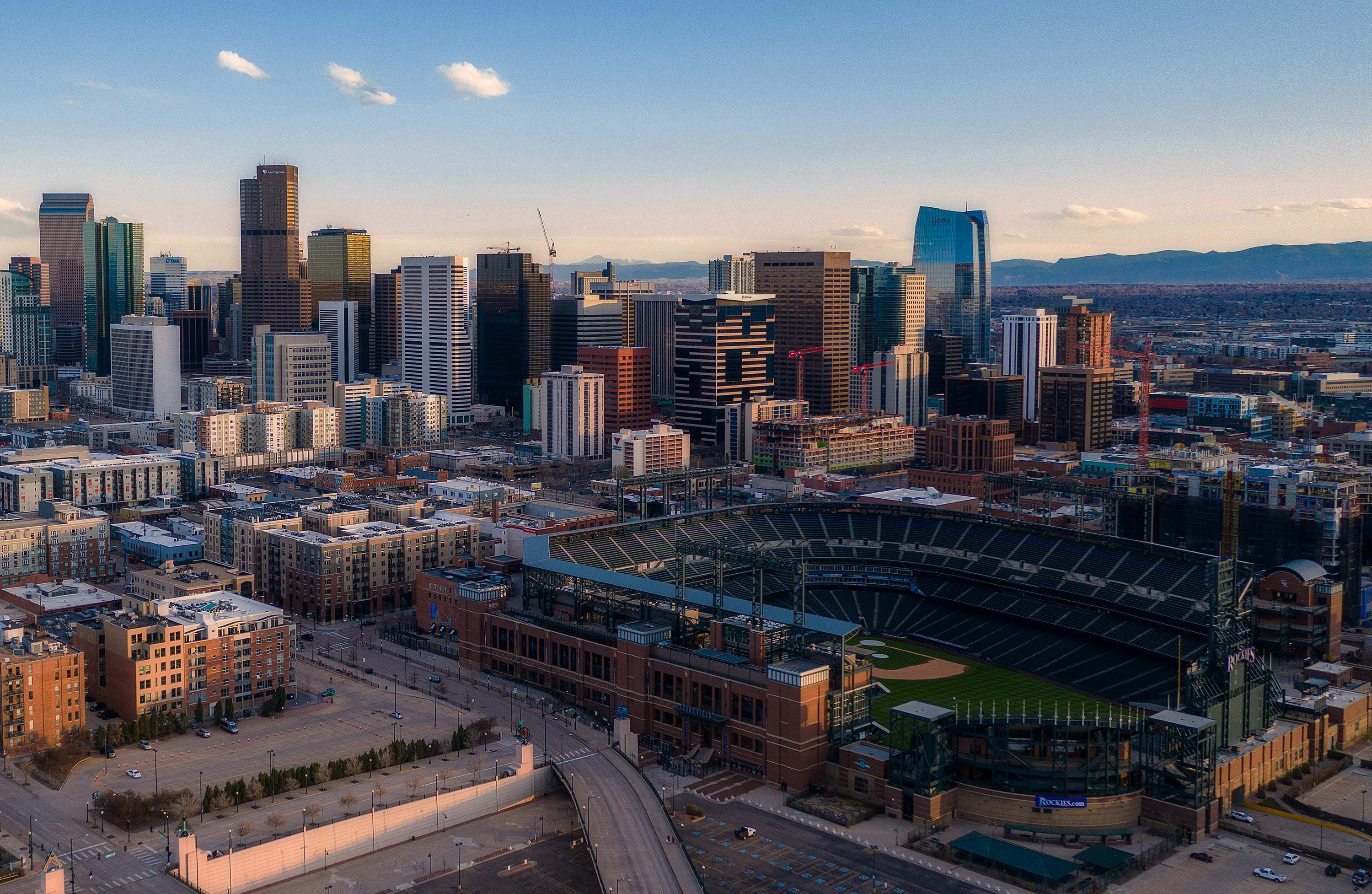
Federal Boulevard corridor in Federal Heights, Colorado. CGH Injury Lawyers represents pedestrians struck by vehicles in Federal Heights and Adams County from our Denver office.
Federal Heights, Colorado

Federal Heights Pedestrian Accident Lawyers Who Make the Driver's Insurer Pay What Your Injuries Are Worth

A pedestrian struck on Federal Boulevard, near Water World, or at any crosswalk in Federal Heights or Adams County faces severe injuries and an insurance company that will work to minimize every dollar you are owed. CGH Injury Lawyers serves Federal Heights from our Denver office, builds your claim to its full value under Colorado's right-of-way and comparative fault statutes, and files in Adams County District Court when an insurer refuses to be fair. No fee unless we win.

No fee unless we win

It's More Than Money.

Start my free Federal Heights case review

100% confidential. No fee unless we win.

Serving Federal Heights From Our Denver Office CGH Injury Lawyers 2701 Lawrence St., Suite 201 Denver, CO 80205 (303) 209-9395 Se habla espanol
5-star rated on Google ABOTA trial advocate on the team Bilingual EN / ES No fee unless we win
  • Federal Boulevard (CO-88) carries between 30,000 and 40,000 vehicles daily through Federal Heights with multi-lane high-speed traffic, frequent commercial driveways, and limited marked crosswalks. CDOT's Federal Design Study documents it as one of the most dangerous corridors in the Denver metro area for pedestrians, and every intersection along it is a legal crosswalk under C.R.S. 42-4-802 whether painted or not.
  • Colorado gives pedestrians strong right-of-way protections. Under C.R.S. 42-4-802, drivers approaching any crosswalk must yield to a pedestrian who is in or dangerously close to the crossing. A driver who passes a vehicle already stopped at a crosswalk on multi-lane Federal Boulevard and strikes you is committing a separate statutory violation, not just careless driving.
  • Even if you were crossing outside a marked crosswalk or stepping off a curb at the wrong moment, you may still recover under Colorado's modified comparative fault rule (C.R.S. 13-21-111), as long as your share of fault is less than 50 percent. A driver's speed, distraction, or failure to see you while turning left can easily outweigh a pedestrian's crossing error.

Federal Heights is a city of roughly 14,382 people in Adams County, where Federal Boulevard's dangerous corridor design and the commercial density along Pecos Street create a concentrated pedestrian risk that state safety data confirms year after year. When a driver strikes you on any of these roads, CGH Injury Lawyers handles your claim from our Denver office, files in Adams County District Court in Brighton when necessary, and advances every cost. You pay nothing unless we win.

Your right of way in Federal Heights

Colorado pedestrian right-of-way law and what it means on Federal Boulevard

Colorado Revised Statutes 42-4-802 is the cornerstone of every pedestrian accident claim in the state. It defines when and where a driver must yield, and it is the statute your attorney will cite when the at-fault driver's insurer argues the crash was your fault.

Under C.R.S. 42-4-802, a driver approaching a crosswalk must yield to any pedestrian who is already in the crosswalk or so close to it as to be in danger of being struck. Once you have entered a crosswalk, drivers in every lane moving the same direction must stop and remain stopped until you have cleared the lane. Critically, a driver in the second or third lane of Federal Boulevard who passes a vehicle that has already stopped at a crosswalk is committing a separate statutory violation. That pattern kills and injures people on multi-lane corridors like Federal Boulevard every year.

  • The duty to yield applies at marked crosswalks with painted lines or signage and at unmarked crosswalks at every intersection where sidewalks are present. The absence of paint does not erase the crosswalk or the driver's duty.
  • Pedestrians also have duties under C.R.S. 42-4-803. When crossing mid-block, a pedestrian must yield to vehicles. When a signal is present, the pedestrian must obey it. Crossing against a signal does not automatically end your right to compensation, but it can become a factor in how fault is divided.
  • Federal Boulevard's limited marked crosswalks and closely spaced driveways mean many pedestrians cross at intersections without painted stripes. An insurer calling that jaywalking is often wrong under the unmarked crosswalk doctrine.

Where Federal Heights pedestrian strikes happen

Federal Boulevard, Pecos Street, and Water World: the pedestrian risk map

Pedestrian accidents in Federal Heights cluster around predictable road designs and land uses. Understanding where your injury happened and why those conditions exist is part of how we build liability in your case.

  1. Federal Boulevard (CO-88)

    Federal Boulevard carries between 30,000 and 40,000 vehicles per day through Federal Heights at multi-lane highway speeds. CDOT's Federal Design Study documents it as one of the most dangerous corridors in the Denver metro area for pedestrians, citing the combination of limited marked crosswalks, frequent commercial driveways that cut pedestrian sightlines, and the speed differential between through traffic and turning vehicles. Every pedestrian strike on Federal Boulevard generates a CDOT safety record and an Adams County Sheriff or Colorado State Patrol report that we use to anchor your claim.

  2. Pecos Street and Water World

    Water World at 8801 N. Pecos St. is one of the largest water parks in the United States and draws heavy foot traffic through the surrounding Pecos Street corridor during summer months. Pedestrians moving between parking areas, bus stops, and the park entrance cross roads that carry high seasonal volumes. A driver who strikes a pedestrian on Pecos Street or in the Water World access area faces both general right-of-way liability and, in some cases, heightened duty-of-care arguments based on the known pedestrian density of the area.

  3. US-36 access corridors

    U.S. Route 36 (the Boulder Turnpike) passes through the Federal Heights area connecting Denver and Boulder with substantial commuter and commercial traffic. Pedestrians accessing bus stops and park-and-ride locations near US-36 interchanges must cross high-speed access roads where drivers frequently fail to watch for foot traffic. Signals and crosswalk markings at these interchange corridors are critical evidence in any pedestrian strike case along the US-36 frontage.

  4. Commercial strips and parking lot crossings

    The commercial areas along Federal Boulevard generate pedestrian traffic between businesses, bus stops, and parking areas throughout the day. Private parking lot crossings operate under different rules than public roads, but drivers still owe a duty of reasonable care to pedestrians. A driver backing out of a space without looking, speeding across a lot, or entering without yielding to foot traffic can be liable for a pedestrian strike even when formal crosswalk statutes do not apply.

After the strike

What to do after a pedestrian accident in Federal Heights

The minutes and days after a pedestrian strike shape your claim in ways that cannot be undone later. These steps protect your health, preserve the evidence your attorney will need, and keep your legal options open.

  1. Call 911 and stay at the scene

    A police report creates an official record of the scene before vehicles are moved and before stories change. On Federal Boulevard, Adams County Sheriff deputies or Colorado State Patrol typically respond. The report will include the officer's preliminary assessment of fault, witness contact information, and the driver's insurance details. Even if you feel you can walk away, request an ambulance, because many pedestrian injuries do not present symptoms immediately.

  2. Get immediate medical care

    HCA HealthONE Mountain Ridge, formerly North Suburban Medical Center, is the only CDPHE-designated Level II Trauma Center in Adams County and the primary trauma facility serving Federal Heights. For the most critical pedestrian injuries, Denver Health's Ernest E. Moore Shock Trauma Center in Denver is a Level I Adult Trauma Center designated by both the American College of Surgeons and the State of Colorado. Pedestrian impacts at vehicle speeds routinely cause internal bleeding, traumatic brain injury, and spinal fractures that are not obvious at the scene. Get a full evaluation, and keep every record, because those records are the foundation of your damages claim.

  3. Preserve the scene evidence

    If you or anyone with you is able, photograph the vehicle, its position, the crosswalk or intersection, any traffic signals, skid marks, and your visible injuries before anything is moved. On Federal Boulevard, note whether the intersection has a traffic or surveillance camera nearby. Many businesses along the commercial corridor have cameras with a view of the street. Request the police report number so we can retrieve the full report and any attached body camera footage quickly.

  4. Do not give a recorded statement

    The at-fault driver's insurer will contact you quickly and ask for a recorded statement. Do not agree. Do not accept any payment or sign any document before an attorney reviews it. The insurer is recording that statement looking for anything it can use to increase your share of fault, push you toward or past the 50-percent bar under C.R.S. 13-21-111, and reduce or eliminate what it owes you.

  5. Contact a Federal Heights pedestrian accident attorney

    Colorado's three-year filing deadline for motor vehicle injury claims (C.R.S. 13-80-101(1)(n)) means evidence preservation starts immediately. If a government vehicle or a road defect on a public road contributed to your strike, a written notice of claim must reach the public entity within 182 days of discovering the injury under C.R.S. 24-10-109(1), or the claim against the government is barred. Traffic camera footage on Federal Boulevard is often retained for only 30 to 90 days. Early legal involvement protects the evidence before it disappears.

Local knowledge

Federal Heights courts. Federal Heights trauma care. Federal Heights pedestrian roads.

A Federal Heights pedestrian accident case lives in Adams County: the road where the strike happened, the hospital that treated you, and the courthouse where a lawsuit would be filed. CGH Injury Lawyers knows all three.

Courthouse

Adams County District Court, 17th Judicial District

A Federal Heights pedestrian accident lawsuit that exceeds the county-court jurisdictional limit is filed in Adams County District Court at the Adams County Justice Center, 1100 Judicial Center Dr., Brighton, CO 80601, within the 17th Judicial District, which covers Adams County and Broomfield County. The local jury pool, the defense firms that regularly appear there, and the district's scheduling practices all differ from other Colorado districts. CGH Injury Lawyers handles Adams County District Court cases directly and does not sub out to local counsel.

Trauma Care

HCA HealthONE Mountain Ridge and Denver Health Shock Trauma

HCA HealthONE Mountain Ridge, formerly North Suburban Medical Center, is the only CDPHE-designated Level II Trauma Center in Adams County. For the most severe pedestrian impact injuries, including traumatic brain injury, spinal fractures, and internal hemorrhage, Denver Health's Ernest E. Moore Shock Trauma Center in Denver is a Level I Adult Trauma Center designated by both the American College of Surgeons and the State of Colorado. The trauma records from these facilities document the full scope and severity of your injuries and form the core of your damages claim in Adams County District Court.

High-Risk Pedestrian Roads

Federal Boulevard (CO-88), Pecos Street, and US-36

Federal Boulevard is Colorado State Highway 88, carrying 30,000 to 40,000 vehicles daily through Federal Heights. CDOT's Federal Design Study identifies it as one of the metro area's most dangerous pedestrian corridors, with limited marked crosswalks and frequent commercial driveway cuts that obscure sightlines between drivers and people on foot. Pecos Street north of 84th Avenue channels high seasonal foot traffic to Water World and Hyland Hills recreation facilities. U.S. Route 36 access corridors carry commuter traffic that frequently creates pedestrian exposure near bus stops and park-and-ride areas. These road characteristics directly shape how we build liability and investigation strategy in every Federal Heights pedestrian case.

Partly at fault?

What if you were crossing outside a crosswalk or against a signal in Federal Heights?

Colorado's comparative fault rule means a pedestrian's crossing error does not automatically end the right to compensation. What matters is how much fault a jury or adjuster assigns to each party and whether the pedestrian's share stays below the legal threshold.

The 50 percent bar rule (C.R.S. 13-21-111)

Colorado follows a modified comparative negligence system with a 50 percent bar. You recover only if you are found less than 50 percent at fault for the pedestrian accident. Your compensation is then reduced by your percentage of fault.

  • Found 0 percent at fault, you recover 100 percent of your damages.
  • Found 20 percent at fault, you recover 80 percent of your damages.
  • Found 49 percent at fault, you recover 51 percent of your damages.
  • Found 50 percent or more at fault, you recover nothing.

Insurance adjusters routinely label pedestrian victims as jaywalkers and use that label to inflate the pedestrian's fault percentage. On Federal Boulevard, where marked crosswalks are sparse and pedestrians routinely cross at legal unmarked intersections, that argument is often built on a misread of C.R.S. 42-4-802. We use traffic camera footage, accident reconstruction, witness statements, and the actual crosswalk geometry to show how much of the fault belongs to the driver, not the pedestrian.

I wish I could leave more than 5 stars!
Grace M., 5-star CGH Injury Lawyers client review

Compensation

What compensation can a Federal Heights pedestrian accident victim recover?

Colorado law lets an injured pedestrian recover two broad categories of damages: economic losses you can document with bills and records, and non-economic losses for the human cost of the injury. In serious pedestrian cases involving permanent injury, the uncapped categories often carry the most value.

Economic damages (never capped)

  • Medical expenses, past and future
  • Lost wages and lost income
  • Loss of earning capacity
  • Rehabilitation, physical therapy, and assistive devices
  • Home modification costs from permanent disability
  • Out-of-pocket expenses tied directly to the injury

Non-economic and other damages

  • Pain and suffering (capped at $1.5 million for claims accruing on or after January 1, 2025 under C.R.S. 13-21-102.5)
  • Emotional distress, anxiety, and PTSD
  • Loss of enjoyment of life
  • Compensation for physical impairment or disfigurement (not capped under C.R.S. 13-21-102.5)
  • Loss of consortium for a spouse
  • Punitive damages when the driver acted with willful and wanton disregard (C.R.S. 13-21-102)

For claims accruing on or after January 1, 2025, Colorado caps non-economic damages such as pain and suffering at $1.5 million under C.R.S. 13-21-102.5. Compensation for physical impairment or disfigurement is not capped at all, and economic damages such as medical bills, lost wages, and future care are never capped. In the most serious Federal Heights pedestrian cases, involving spinal cord injury, traumatic brain injury, limb loss, or permanent disability, the uncapped economic and physical-impairment categories are where the full value of the claim is built. When a pedestrian strike is fatal, surviving family members may pursue a wrongful death claim for funeral costs, loss of financial support, and loss of companionship under Colorado law.

Who pays

Insurance coverage for Federal Heights pedestrian accident victims

Most pedestrians assume only the at-fault driver's policy matters. In reality, multiple policies may be available to you, and identifying all of them is one of the first things we do in a Federal Heights pedestrian case.

  • The at-fault driver's bodily injury liability policy is the primary source. Colorado requires drivers to carry minimum liability of $25,000 per person, but drivers on Federal Boulevard and I-25 who carry only the minimum often leave a pedestrian victim with far less than the full value of the injury. We identify higher-limit policies, umbrella coverage, and commercial policies when the at-fault vehicle was a work vehicle.
  • Your own uninsured and underinsured motorist (UM/UIM) coverage can apply even though you were on foot. It provides compensation when the at-fault driver has no insurance, too little insurance, or flees the scene. Colorado UM/UIM claims are governed by C.R.S. 13-80-107.5 under Pham v. State Farm, 2013 CO 17.
  • If a government vehicle such as an RTD bus, an Adams County vehicle, or a city maintenance truck struck you, the Colorado Governmental Immunity Act applies. Claims against a public entity are capped at $505,000 per person and $1,421,000 aggregate for claims accruing on or after January 1, 2026 (C.R.S. 24-10-114). A written notice of claim must reach the public entity within 182 days of discovering the injury (C.R.S. 24-10-109(1)), or the claim is barred.
  • Health insurance and MedPay coverage on any auto policy in your household can cover early medical bills. Health insurers often hold subrogation rights and we negotiate those liens so you keep more of your recovery.

Your team

The attorneys handling your Federal Heights pedestrian accident case

CGH Injury Lawyers is a eight-attorney Colorado firm founded in 2016, formerly Cheney Galluzzi and Howard. Managing Partner Kevin Cheney is a member of the American Board of Trial Advocates (ABOTA) and has tried over 25 cases to verdict. Timothy G. Tarr has been recognized by Best Lawyers every year since 2023. We take a hands-on approach to pedestrian cases: we visit accident scenes, request traffic and commercial surveillance footage before it is overwritten, and challenge incomplete police reports. Every Federal Heights pedestrian case is handled by a licensed Colorado attorney, not a paralegal. CGH Injury Lawyers does not have a Federal Heights office. We serve Federal Heights from our Denver office at 2701 Lawrence St., Suite 201, and we are direct about that.

ABOTA member on the team Tim Tarr: Best Lawyers in America since 2023 Over 25 cases to verdict Adams County District Court experience Bilingual EN / ES Free consultation No fee unless we win

Frequently asked questions

Federal Heights pedestrian accident: frequently asked questions

Does CGH Injury Lawyers have an office in Federal Heights?

No. CGH Injury Lawyers has one office, at 2701 Lawrence St., Suite 201, Denver, CO 80205. We serve Federal Heights from our Denver office, file Federal Heights pedestrian accident cases in Adams County District Court in Brighton when necessary, and meet you where it is convenient. Call us at (303) 209-9395.

How long do I have to file a pedestrian accident lawsuit after a Federal Heights crash?

Colorado gives you three years from the date of the accident to file a personal injury lawsuit against the at-fault driver under C.R.S. 13-80-101(1)(n), because a pedestrian strike by a motor vehicle falls within the motor vehicle injury statute. If the vehicle that struck you was a government vehicle, a written notice of claim must reach the public entity within 182 days of discovering the injury under C.R.S. 24-10-109(1), or the claim against that entity is barred entirely. If the strike was fatal, a wrongful death claim carries a two-year deadline under C.R.S. 13-80-102. Contact an attorney as soon as possible because traffic camera footage and witness memories disappear quickly.

Can I recover if I was crossing outside a marked crosswalk on Federal Boulevard?

Yes, in many cases. Federal Boulevard has limited marked crosswalks, but every intersection where sidewalks meet the road creates a legal unmarked crosswalk under Colorado law. Even if you were crossing at a location without painted stripes, the driver still had a duty of care. Under Colorado's modified comparative fault rule (C.R.S. 13-21-111), you can recover as long as your share of fault is less than 50 percent. A driver's speed, distraction, or failure to see you while making a turn can outweigh a pedestrian crossing error and leave the majority of fault with the driver.

What hospital treats pedestrian accident injuries in Federal Heights?

HCA HealthONE Mountain Ridge, formerly North Suburban Medical Center, is the only CDPHE-designated Level II Trauma Center in Adams County and the primary facility treating serious pedestrian injuries in and near Federal Heights. For the most critical injuries, including traumatic brain injury, spinal fractures, and internal hemorrhage, Denver Health's Ernest E. Moore Shock Trauma Center in Denver is a Level I Adult Trauma Center designated by both the American College of Surgeons and the State of Colorado. The trauma records from either facility document the full severity of your injuries and anchor the damages portion of your claim.

Does Colorado cap the damages I can recover for a Federal Heights pedestrian accident?

Economic damages such as medical bills, lost wages, and future care costs are never capped. Non-economic damages such as pain and suffering are capped at $1.5 million for claims accruing on or after January 1, 2025 under C.R.S. 13-21-102.5. Compensation for physical impairment or disfigurement is not capped at all under C.R.S. 13-21-102.5. In the most serious Federal Heights pedestrian cases, the uncapped physical-impairment and economic categories drive the full value of the claim.

What if the driver who struck me in Federal Heights had no insurance or fled the scene?

If you carry uninsured or underinsured motorist (UM/UIM) coverage on a vehicle in your household, that coverage can apply even though you were on foot at the time of the strike. It provides compensation when the at-fault driver has no insurance, insufficient limits, or cannot be identified after a hit-and-run. Colorado UM/UIM claims are governed by C.R.S. 13-80-107.5 under Pham v. State Farm, 2013 CO 17. We evaluate every policy in your household at the start of your case to make sure no coverage is left on the table.

It's More Than Money.

You were struck on Federal Heights roads. We handle everything else.

Free consultation. No fee unless we win. Available in English and Spanish. Serving Federal Heights from our Denver office.

Tell us what happened

100% confidential. No fee unless we win.

Read next: Colorado pedestrian accident law

CGH Injury Lawyers · Serving Federal Heights from 2701 Lawrence St., Suite 201, Denver, CO 80205