
ClickCease
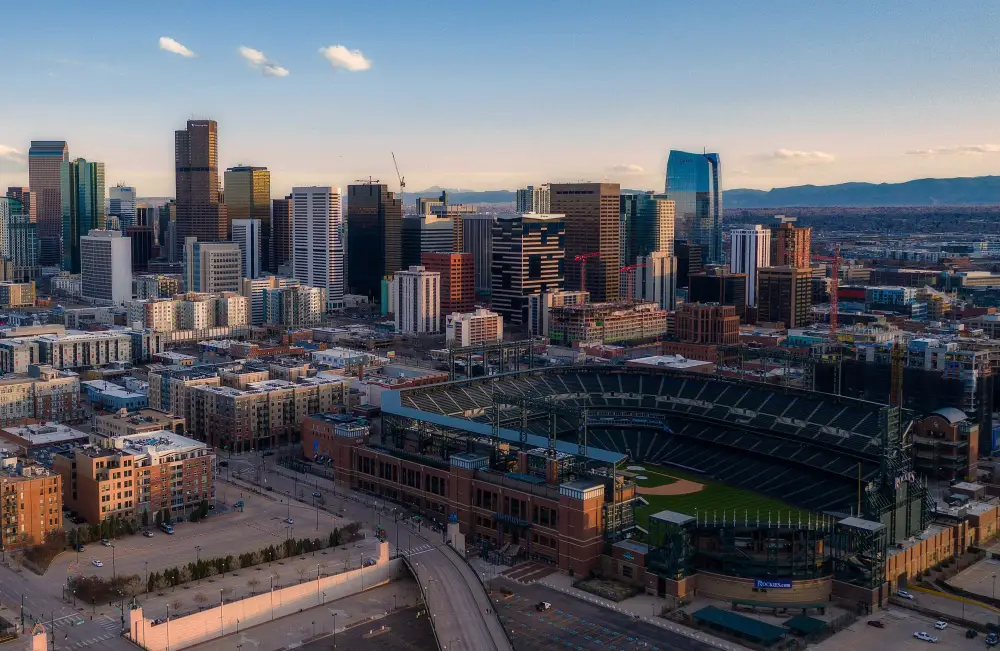
Interstate 70 corridor through Grand Junction, Colorado. CGH Injury Lawyers represents catastrophic injury victims in Grand Junction and Mesa County from our Denver office.
Grand Junction, Colorado

Grand Junction Catastrophic Injury Lawyers Who Build the Full-Value Claim for Western Slope Families

A spinal cord injury, traumatic brain injury, amputation, or severe burn suffered on I-70, Horizon Drive, or anywhere in Mesa County can impose lifetime costs that dwarf an insurer's first offer. CGH Injury Lawyers serves Grand Junction catastrophic injury victims from our Denver office, documents future care to its full value, and tries cases in Mesa County District Court when insurers refuse to pay what Colorado law requires. No fee unless we win.

No fee unless we win

It's More Than Money.

Get my free Grand Junction case review

100% confidential. No fee unless we win.

Serving Grand Junction from our Denver Office CGH Injury Lawyers 2701 Lawrence St., Suite 201 Denver, CO 80205 (303) 209-9395 Se habla espanol
5-star rated on Google Built for catastrophic-injury trials ABOTA trial advocate on the team No fee unless we win
  • Grand Junction catastrophic injury cases are filed in Mesa County District Court at the Mesa County Justice Center, 125 N. Spruce St., Grand Junction, CO 81501, in Colorado's 21st Judicial District. CGH Injury Lawyers files and tries catastrophic injury cases in that court directly from our Denver office, with no additional cost to Mesa County clients.
  • Most catastrophic injury claims arising from a motor vehicle crash carry a three-year filing deadline under C.R.S. 13-80-101(1)(n). Most other catastrophic injury claims carry a two-year deadline under C.R.S. 13-80-102. If a government vehicle, government employee, or a defect on a public road contributed to the crash, a written notice of claim must be served within 182 days of discovering the injury under C.R.S. 24-10-109(1). Missing that government-entity notice deadline bars the claim permanently.
  • In a catastrophic injury case, economic damages such as lifetime medical costs and projected future care are never capped under Colorado law. Compensation for physical impairment or disfigurement is not capped at all under C.R.S. 13-21-102.5. Non-economic damages such as pain and suffering are capped at $1,500,000 for claims accruing on or after January 1, 2025. Those two uncapped categories carry the largest share of a catastrophic injury recovery's total value.

Grand Junction is the largest city on Colorado's Western Slope, the commercial and medical hub for Mesa County, and the site of some of the most serious crashes in western Colorado. Interstate 70 carries a heavy volume of freight and commercial traffic through the region. Horizon Drive has been the site of multiple fatal and serious crashes in recent years. North Avenue intersections generate documented injury crash counts that rival the busiest urban corridors in Colorado. When a crash or other incident on these roads causes a permanent injury, a standard insurance demand is rarely enough. CGH Injury Lawyers documents the full scope of future care, builds the evidence a Mesa County jury needs to understand lifetime losses, and files in the 21st Judicial District when the insurer refuses to pay what the law requires. You pay nothing unless we win.

What qualifies

What counts as a catastrophic injury under Colorado law?

Colorado courts do not apply a single statutory definition of a catastrophic injury. The legal classification depends on whether the harm is permanent and life-altering, how the damage categories map to Colorado's cap structure, and whether a whole-person impairment evaluation under the AMA Guides to the Evaluation of Permanent Impairment supports the claim. A diagnosis alone does not determine the classification. What matters legally is permanence and life impact, not severity at the moment of the crash or incident.

Injuries that commonly qualify

  • Traumatic brain injury with lasting cognitive deficits, memory impairment, or behavioral change requiring lifetime supervision or support
  • Spinal cord injury, including paraplegia, quadriplegia, and incomplete cord injuries requiring ongoing mobility assistance and attendant care
  • Limb amputation requiring prosthetics, home modifications, vocational retraining, and prosthetic replacement across a working lifetime
  • Severe burns covering significant body surface area and requiring skin grafts, reconstructive surgery, and long-term wound management
  • Permanent organ damage requiring ongoing medication management, dialysis, or transplant evaluation
  • Permanent vision loss, hearing loss, or other sensory impairment affecting independence and earning capacity

Why the classification matters for your Grand Junction case

  • It determines which Colorado damage categories are uncapped and therefore where the largest components of a recovery come from
  • It shapes the scope of future-care documentation, the forensic work that turns a diagnosis into a dollar figure a Mesa County jury can award
  • It controls whether a government-entity notice under the Colorado Governmental Immunity Act must be filed within 182 days of discovering the injury under C.R.S. 24-10-109(1)
  • It determines whether a certified Life Care Planner with CLCP or CNLCP credentials must be retained or whether treating physician letters alone are sufficient
Where catastrophic injuries happen in Grand Junction

The Grand Junction roads and settings that produce the most serious permanent injuries

Catastrophic injuries in Grand Junction tend to concentrate around specific corridors where collision energy is highest. Identifying the road or setting where a crash occurred matters because it reveals not just the at-fault driver but every party with legal exposure, including government entities that may have failed to correct known dangerous conditions.

  1. Interstate 70: Western Slope freight corridor and highway-speed crash risk

    Interstate 70 is the main east-west corridor connecting Grand Junction to Denver via Glenwood Canyon. It carries a heavy volume of commercial freight and truck traffic through Mesa County. When Glenwood Canyon closes due to flash floods or rockfall, all of that traffic reroutes through Mesa County surface roads that were not designed for that volume, creating secondary crash surges. I-70 crashes at highway speed, particularly involving commercial trucks and vehicles entering from ramps, produce the highest collision energies and the most severe spinal cord and brain injuries we handle on the Western Slope. When a commercial carrier is involved, the claim may extend to the trucking company, the shipper, the maintenance contractor, and the carrier's commercial insurer.

  2. Horizon Drive: fatal and serious crashes in a documented pattern

    Horizon Drive in Grand Junction has been the site of multiple serious and fatal crashes, including a fatal motorcycle crash in April 2026 and a serious two-vehicle crash at G Road in February 2025. This corridor generates catastrophic injury cases including spinal cord and traumatic brain injuries. Motorcycle crashes and high-speed vehicle collisions on Horizon Drive frequently produce permanent injuries that require long-term medical care, rehabilitation, and significant changes to the injured person's living situation. The evidence from these crashes, crash reports, scene photos, road condition data, and any available camera footage, can disappear quickly and must be preserved early.

  3. North Avenue and the documented high-crash intersections

    Data compiled for the Mesa County Safety Action Plan recorded 19 injury crashes at North 12th Street and Patterson and 18 injury crashes at North Avenue and 7th Street during 2024 and 2025. North 12th Street and North Avenue recorded 14 more. These are not near-miss counts. They are documented injury-producing collisions at specific Grand Junction intersections. High-frequency crash intersections also raise the question of whether a government entity had notice of a dangerous condition and failed to act. If CDOT or Mesa County had prior knowledge of a defective signal, inadequate signage, or hazardous road geometry, the claim may extend to a government defendant, triggering the 182-day CGIA notice requirement under C.R.S. 24-10-109(1).

  4. Colorado National Monument, Rim Rock Drive, and cyclist and motorcycle exposure

    Colorado National Monument sits about five miles from downtown Grand Junction, with its 23-mile Rim Rock Drive drawing cyclists and motorcyclists from across the region. State Highway 340 (Broadway) connects the city to the east monument entrance. Crashes on these scenic roads frequently involve multiple parties: the at-fault driver, a vehicle manufacturer if a defect contributed, and potentially the National Park Service or another government entity if a road or trail condition played a role. Cyclist and motorcyclist injuries on these routes tend to be severe because there is little or no barrier between the rider and the road surface or canyon terrain.

  5. I-70 Business Loop, US 6, US 50, and downtown approach roads

    The I-70 Business Loop (I-70B) runs through downtown Grand Junction on Pitkin Avenue eastbound and Ute Avenue westbound. US 6 and US 50 run concurrent with I-70B through downtown before US 50 turns south across the Colorado River at 5th Street. These converging routes create conflict points where commercial vehicles, commuter traffic, and pedestrians share limited space. Pedestrian and bicycle collisions with vehicles at these downtown approach roads and crossings can produce the same catastrophic outcomes as highway crashes, often involving traumatic brain injuries and serious orthopedic trauma.

  6. Black ice, bridge refreeze, and the CGIA notice clock

    Grand Junction sits in high desert where overnight refreeze after daytime melt is common from October through April. Black ice on bridges and highway ramps is a documented crash contributor in Mesa County. When a road condition created or permitted by a government entity contributes to a catastrophic crash, the Colorado Governmental Immunity Act applies. Recovery from a government entity is capped under C.R.S. 24-10-114 at $505,000 per person and $1,421,000 aggregate for claims accruing on or after January 1, 2026. Equally important, the written notice of claim must be served within 182 days of discovering the injury, not 182 days from the crash date. That clock starts the day the injured person has knowledge of the injury and its cause, and missing it bars the government-entity claim entirely.

After a catastrophic injury

What to do after a catastrophic injury in Grand Junction

The decisions made in the first days and weeks after a catastrophic injury determine whether the full scope of future care is documented and recoverable. These steps protect the injured person's rights and preserve the evidence needed to build a defensible claim for a Mesa County jury.

  1. Get to the right level of trauma care

    Serious injuries in Grand Junction are treated at St. Mary's Regional Hospital (Intermountain Health) at 2635 North 7th Street, western Colorado's only Level II Trauma Center, verified by the American College of Surgeons. Community Hospital at 2351 G Road holds a Level III Trauma Center designation from the Colorado Department of Public Health and Environment and is also ACS-verified. For the most severe injuries, including complete spinal cord injuries and high-severity traumatic brain injuries, St. Mary's Regional Hospital has the specialized surgical and intensive care resources that stabilize the injury and begin the documentation CGH will need to build the claim. Every record from every facility, emergency department notes, operative reports, imaging studies, and discharge summaries, becomes part of the evidentiary foundation.

  2. Request a whole-person impairment evaluation

    AMA Guides whole-person impairment ratings are the measurement tool Colorado courts use to quantify permanent injury. A documented impairment rating from a qualified physician supports a defensible future-care projection and challenges any defense argument that the injury is not permanent. Treating physicians at St. Mary's Regional Hospital or Community Hospital may not routinely order a formal impairment evaluation unless requested. Do not assume the claim is fully documented simply because treatment is ongoing.

  3. Preserve scene evidence before it disappears

    Camera footage from I-70 commercial property, businesses along North Avenue, and dashcams from other vehicles is typically overwritten within days. The Grand Junction Police Department or Mesa County Sheriff report establishes the official record. Photographs of the road surface, vehicle damage, lane markings, skid marks, and weather or light conditions at the time of the crash are critical for establishing fault before the scene changes. If the crash happened at one of the documented high-crash intersections such as North 12th Street and Patterson, ask whether the intersection was flagged in any prior safety study.

  4. Watch the government-entity notice deadline

    If a Mesa County road defect, a CDOT maintenance failure, a government vehicle, or a defective traffic control device at a Grand Junction intersection contributed to the injury, a written notice of claim must be served within 182 days of discovering the injury under C.R.S. 24-10-109(1). That clock runs from the date of discovery of the injury, not from the crash date, but it moves quickly. Missing it bars the government-entity claim entirely, regardless of how strong the facts are. Call us before that window closes.

  5. Do not settle before the full picture is known

    Insurers sometimes make early settlement offers before the injured person has reached maximum medical improvement. Accepting a settlement before the treating team at St. Mary's Regional Hospital or Community Hospital has a clear picture of long-term needs almost always leaves money on the table, because future care costs cannot be accurately projected until treatment has stabilized. Future rehabilitation, home modification, adaptive equipment, and vocational retraining are often the largest categories of loss in a catastrophic case, and they are precisely the categories that disappear when a claim is closed too early.

  6. Contact CGH before talking to the insurer

    The at-fault party's insurer begins building its case from the moment the crash is reported. Do not give a recorded statement or sign any release before speaking with an attorney. CGH Injury Lawyers offers a free consultation at no cost and no obligation to injured people across Grand Junction and Mesa County.

Future-care documentation

How future-care proof turns a Grand Junction catastrophic injury into a documented dollar figure

Health insurance covers medically necessary treatment. It does not cover a life. Future-care documentation is the forensic economic work that captures everything health insurance will never pay: lifetime attendant care, adaptive vehicles, home modifications, vocational retraining, Colorado-specific medical cost inflation, and the long-term cost of living with a permanent impairment. Colorado courts expect these projections to be defensible, region-specific, and built by certified professionals who can withstand cross-examination by defense counsel.

  1. A certified planner, not a treating letter

    Qualified Colorado Life Care Planners hold credentials such as CLCP or CNLCP. They review medical records from St. Mary's Regional Hospital, Community Hospital, and any rehabilitation facilities the injured person has attended, interview treating physicians, and run functional capacity evaluations to determine future needs. A treating physician's letter stating that a patient will need future care is not a substitute for a certified Life Care Plan. It has no cost breakdown, no inflation adjustment, and no vendor-specific pricing. Defense counsel will challenge it, and it may be excluded at trial.

  2. Medical cost inflation, not general CPI

    General consumer price inflation runs roughly 2 to 3 percent annually. Medical cost inflation consistently outpaces it. A future-care projection that uses the wrong inflation rate can underestimate lifetime costs by a significant amount for a younger Grand Junction client with decades of care ahead. The gap between a correct medical inflation assumption and a general CPI assumption is often the largest single variable in a catastrophic case, and it is one of the first things a defense expert will attack on cross-examination.

  3. Western Slope geography and access costs

    National cost databases use U.S. average prices and systematically underestimate Colorado rates for rehabilitation, attendant care, and adaptive equipment. Grand Junction is about 240 miles from Denver by road, and specialized care facilities such as Craig Hospital in Englewood, nationally recognized for spinal cord and traumatic brain injury rehabilitation, are not accessible for routine outpatient visits without significant travel time and cost. A future-care projection for a Mesa County client must account for the premium pricing at Colorado's top facilities, the transportation burden that comes with western Colorado's geography, and the access challenges that arise when a permanent injury limits independent travel.

  4. Built to survive courtroom challenge

    Colorado applies strict admissibility standards for expert testimony. The Life Care Planner and any forensic economist behind the future-care projection must show specialized knowledge, a reliable methodology, and region-specific data that can withstand cross-examination. A plan that does not pass this gate is excluded at trial, and the case value collapses with it. CGH builds future-care claims that hold up in the 21st Judicial District.

  5. We advance the cost

    Building a comprehensive, defensible future-care projection takes time and expert resources. CGH Injury Lawyers advances the cost of that work. You pay nothing unless we win. The cost of preparing the expert documentation is recovered from the settlement or verdict, not from the injured person upfront.

Compensation

What you can recover after a catastrophic injury in Grand Junction

Colorado law creates two broad damage categories in a catastrophic injury case. The categories that drive the most recovery value are the uncapped ones: economic losses and compensation for physical impairment or disfigurement. Non-economic damages such as pain and suffering are subject to a statutory cap, but they are rarely where a catastrophic case is won or lost. The case is usually decided by how well the uncapped categories are documented.

Economic damages (never capped)

  • Past and future medical expenses, including all treatment at St. Mary's Regional Hospital, Community Hospital, and any Denver or Aurora facilities
  • Lifetime attendant and nursing care projected through a certified Life Care Plan
  • Home modifications such as ramps, widened doorways, accessible bathrooms, and structural reinforcement
  • Adaptive vehicles and specialized equipment with replacement cycles built into the projection
  • Lost wages and loss of future earning capacity, projected by a forensic economist
  • Vocational rehabilitation and retraining costs when a permanent injury prevents returning to prior work

Non-economic and other damages

  • Pain and suffering, capped at $1,500,000 for claims accruing on or after January 1, 2025, under C.R.S. 13-21-102.5
  • Compensation for physical impairment or disfigurement, which is not capped at all under C.R.S. 13-21-102.5
  • Emotional distress and loss of enjoyment of life
  • Loss of consortium when a spouse or family member is affected by the permanent injury

Comparative fault in a Grand Junction catastrophic case

Colorado follows modified comparative fault under C.R.S. 13-21-111. You can recover as long as you were less than 50 percent at fault, and your award is reduced by your share of fault. If you are found 50 percent or more at fault, you recover nothing. At a busy Grand Junction intersection or after an I-70 crash where fault is disputed, insurers routinely argue inflated fault percentages against the injured party to push claims toward or past the 50 percent bar. Defending against that tactic with physical evidence, crash data from the Mesa County Safety Action Plan, and qualified reconstruction experts is a core part of every catastrophic injury case we handle.

Government-entity claims and the CGIA cap

When a government entity, such as Mesa County, CDOT, or a municipality, contributed to the crash, recovery from that entity is separately limited under the Colorado Governmental Immunity Act. For claims accruing on or after January 1, 2026, the cap is $505,000 per person and $1,421,000 per occurrence under C.R.S. 24-10-114. This cap applies only to the government defendant. Claims against private parties in the same case are not limited by the CGIA. Identifying every potentially liable party, both private and governmental, is one of the first tasks in a Grand Junction catastrophic injury review.

Local knowledge

Grand Junction courts. Grand Junction trauma care. Grand Junction crash corridors.

A Grand Junction catastrophic injury case lives in Grand Junction: the road where the harm happened, the hospital that stabilized the injured person, and the courthouse where a life-changing award may be decided. Here is the ground we work on for every Mesa County catastrophic injury client.

Courthouse

Mesa County District Court (21st Judicial District)

Grand Junction catastrophic injury lawsuits above the county-court jurisdictional limit are filed in Mesa County District Court, inside the Mesa County Justice Center at 125 N. Spruce St., Grand Junction, CO 81501, in Colorado's 21st Judicial District. The 21st Judicial District covers Mesa County and the surrounding Western Slope region. Catastrophic injury trials in the 21st Judicial District draw a jury pool from Mesa County residents, face local defense firms with Western Slope practice experience, and apply Mesa County-specific procedural norms that differ from Denver or the Front Range. The distance from Denver does not change how CGH prepares or tries these cases. We file and try Mesa County catastrophic injury cases directly from our Denver office, at no additional cost to Grand Junction clients.

Trauma Care

St. Mary's Regional Hospital and Community Hospital

St. Mary's Regional Hospital (Intermountain Health) at 2635 North 7th Street is western Colorado's only Level II Trauma Center, verified by the American College of Surgeons. It provides the highest level of emergency trauma care available on the Western Slope for the most severe spinal cord, traumatic brain, and multi-system injuries. Community Hospital at 2351 G Road holds a Level III Trauma Center designation from the Colorado Department of Public Health and Environment and is also ACS-verified. These trauma records document the scope of the initial injury and form the evidentiary backbone of the claim. When a crash on I-70 or Horizon Drive sends someone to St. Mary's, the trauma chart, operative reports, and critical care notes are among the first records CGH requests when building the future-care documentation.

High-Crash Roads

I-70, Horizon Drive, North Avenue, and the I-70 Business Loop

Interstate 70 is the primary freight and travel corridor through Grand Junction, connecting to Denver via Glenwood Canyon. The I-70 Business Loop (I-70B) runs through downtown on Pitkin Avenue eastbound and Ute Avenue westbound, with US 6 and US 50 concurrent through the downtown core. State Highway 340 (Broadway) connects the city to Fruita and the east entrance of Colorado National Monument. Data compiled for the Mesa County Safety Action Plan recorded 19 injury crashes at North 12th Street and Patterson and 18 injury crashes at North Avenue and 7th Street during 2024 and 2025. Horizon Drive has been the site of multiple serious and fatal crashes, including a fatal motorcycle crash in April 2026 and a serious two-vehicle crash at G Road in February 2025. These corridors generate the catastrophic spinal cord and brain injury cases we handle most frequently for Mesa County clients.

Your team

The catastrophic injury team behind your Grand Junction case

CGH Injury Lawyers is a eight-attorney Colorado firm founded in 2016, formerly Cheney Galluzzi and Howard. Managing Partner Kevin Cheney is a member of the American Board of Trial Advocates (ABOTA) and has tried over 25 cases to verdict. Timothy G. Tarr has been recognized by Best Lawyers every year since 2023. Every Grand Junction catastrophic injury case is handled by a licensed Colorado attorney who files and tries cases in the 21st Judicial District, not by a paralegal. We are built for these cases, not for quick settlements.

ABOTA member on the team Tim Tarr: Best Lawyers in America since 2023 Over 25 cases to verdict 21st Judicial District experience Bilingual EN / ES We advance future-care documentation costs No fee unless we win

One thing we say upfront: CGH Injury Lawyers does not have a Grand Junction office. We serve Grand Junction and Mesa County catastrophic injury clients from our Denver office at 2701 Lawrence St., Suite 201, Denver, CO 80205. We come to you for meetings when needed, we file at Mesa County District Court inside the Mesa County Justice Center, and we try cases in the 21st Judicial District. What you get is the legal work and the result, not a storefront address on North Avenue.

I wish I could leave more than 5 stars!
Grace M., 5-star CGH Injury Lawyers client review
Frequently asked questions

Grand Junction catastrophic injury frequently asked questions

How long do I have to file a catastrophic injury lawsuit in Grand Junction?

The deadline depends on how the injury occurred. If a motor vehicle crash on I-70, Horizon Drive, or North Avenue caused the injury, Colorado gives you three years from the date of the crash under C.R.S. 13-80-101(1)(n). For most other catastrophic injury claims, such as a fall from elevation, a worksite incident, or a product defect, the general tort statute gives you two years under C.R.S. 13-80-102. If a Mesa County road defect, a CDOT vehicle, or any other government entity contributed to the injury, a written notice of claim must also be served within 182 days of discovering the injury under C.R.S. 24-10-109(1), or the government-entity claim is permanently barred. Because multiple deadlines can run simultaneously against different defendants, confirm your filing windows with an attorney as early as possible after the injury.

Does Colorado cap what I can recover in a Grand Junction catastrophic injury case?

Economic damages such as lifetime medical expenses, attendant care, adaptive equipment, and lost earning capacity are never capped under Colorado law. Compensation for physical impairment or disfigurement is not capped at all under C.R.S. 13-21-102.5. Non-economic damages such as pain and suffering are capped at $1,500,000 for claims accruing on or after January 1, 2025. In a catastrophic case, the uncapped economic and impairment categories are almost always the largest components of the recovery and are where the claim is built. If a government entity is involved, recovery from that entity is separately capped at $505,000 per person and $1,421,000 per occurrence for claims accruing on or after January 1, 2026, under C.R.S. 24-10-114.

Which hospital treats catastrophic injury patients in Grand Junction?

St. Mary's Regional Hospital (Intermountain Health) at 2635 North 7th Street is western Colorado's only Level II Trauma Center, verified by the American College of Surgeons. It handles the most severe spinal cord, traumatic brain, and multi-system injuries requiring the highest level of Western Slope emergency surgical care. Community Hospital at 2351 G Road is a Level III Trauma Center designated by the Colorado Department of Public Health and Environment and is also ACS-verified. Records from both facilities are central to documenting the scope of a catastrophic injury. CGH requests those records from the outset of every Grand Junction catastrophic injury case we handle.

What if I was partly at fault for the crash that caused my catastrophic injury?

You can still recover under Colorado's modified comparative fault rule, C.R.S. 13-21-111, as long as you were less than 50 percent at fault. Your award is reduced by your percentage of fault. If you are found 50 percent or more at fault, you recover nothing. After a crash at a high-volume Grand Junction intersection or on I-70, where conditions and right-of-way are often disputed, insurers work to push the injured party's assigned fault percentage as high as possible to reduce or eliminate the claim. Defending against that tactic with physical evidence, crash reconstruction, and Mesa County safety data is a central part of how CGH builds catastrophic injury cases in the 21st Judicial District.

Where would my Grand Junction catastrophic injury lawsuit be filed?

A Grand Junction catastrophic injury lawsuit above the county-court jurisdictional limit is filed in Mesa County District Court, inside the Mesa County Justice Center at 125 N. Spruce St., Grand Junction, CO 81501, in Colorado's 21st Judicial District. Most cases settle before trial, but where a case would be tried affects local rules, the jury pool drawn from Mesa County residents, and the defense firms you face. CGH Injury Lawyers files and tries catastrophic injury cases in Mesa County District Court directly from our Denver office, without any additional cost to Grand Junction clients.

Does CGH Injury Lawyers have an office in Grand Junction?

No. CGH Injury Lawyers has one office, at 2701 Lawrence St., Suite 201, Denver, CO 80205, (303) 209-9395. We serve Grand Junction and Mesa County catastrophic injury clients from that Denver office, file cases in Mesa County District Court at the Mesa County Justice Center, and meet with clients wherever is most convenient. There is no additional charge for Mesa County clients. We handle consultations in English and Spanish.

For the controlling text of any statute mentioned here, see the Colorado Revised Statutes.

Disclaimer: This page provides general legal information for Colorado readers and is not legal advice. Reading it does not create an attorney-client relationship. Medical issues, future-care projections, work capacity, deadlines, insurance coverage, and damages require case-specific review.

It's More Than Money.

A permanent injury changes everything. We handle the rest.

Free consultation. No fee unless we win. Serving Grand Junction and all of Mesa County from our Denver office. Available in English and Spanish.

Read next: Colorado catastrophic injury law: what future-care proof must establish statewide

CGH Injury Lawyers · 2701 Lawrence St., Suite 201, Denver, CO 80205 · Serving Grand Junction and Mesa County