
ClickCease
Free consultations · Se habla espanol
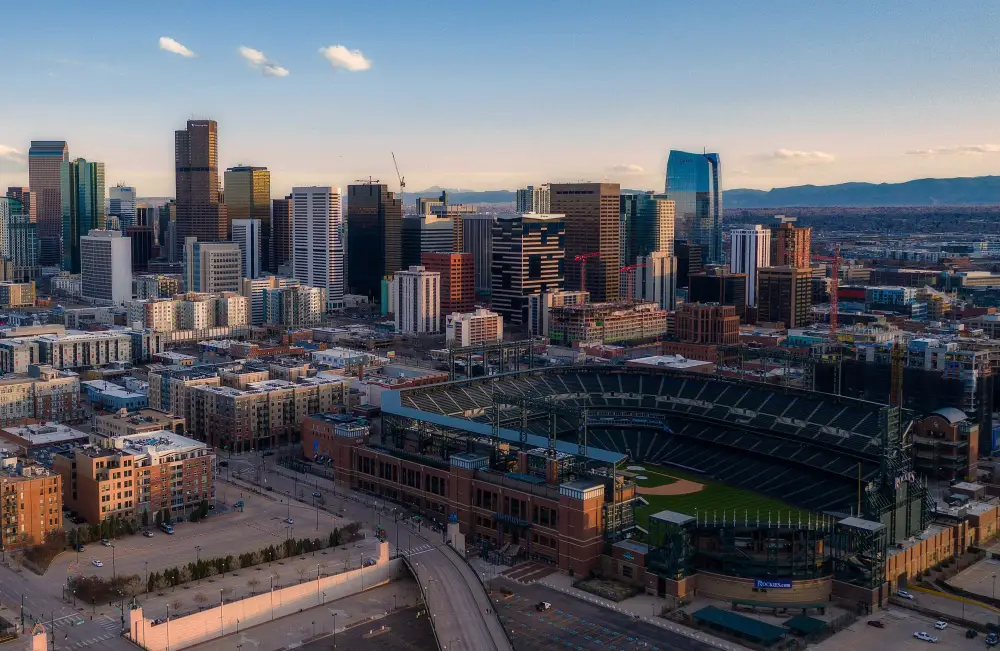
Interstate 70 corridor through Grand Junction, Colorado, a high-risk corridor for DUI crashes on the Western Slope. CGH Injury Lawyers represents DUI accident victims in Mesa County from our Denver office.
Grand Junction, Colorado

Grand Junction DUI Accident Lawyers Who Pursue the Driver, the Bar, and Every Dollar You Are Owed

Grand Junction sits where the Colorado River meets the I-70 freight corridor, and Western Slope bars and restaurants serve drivers who then get back on some of the most dangerous roads in the state. When an impaired driver ends up in your lane on I-70, the I-70 Business Loop, Horizon Drive, or North Avenue, the criminal case that follows is the DA's problem. Getting you paid is ours. CGH Injury Lawyers serves Grand Junction DUI accident victims from our Denver office, files in Mesa County District Court when insurers refuse to be fair, and collects nothing unless we win.

No fee unless we win

It's More Than Money.

Get my free Grand Junction DUI case review

100% confidential. No fee unless we win.

Serving Grand Junction From Our Denver Office CGH Injury Lawyers 2701 Lawrence St., Suite 201 Denver, CO 80205 (303) 209-9395 Se habla espanol
5-star rated on Google ABOTA trial advocate on the team Trial lawyers, not a settlement mill No fee unless we win
  • Grand Junction is the Western Slope's largest city, and I-70 is its main artery. When an impaired driver causes a crash on that corridor or on any Mesa County road, Colorado law gives you a civil claim entirely separate from the criminal case. The state prosecutes the driver. We recover your money.
  • You have three years from the crash date to file a claim against the at-fault driver (C.R.S. 13-80-101(1)(n)), but a dram shop claim against the bar or restaurant that overserved the driver must be commenced within one year after the alcohol was sold or served (C.R.S. 44-3-801(3)(a)(II)). Missing the shorter clock can wipe out a significant source of recovery.
  • There is no CGH Injury Lawyers office in Grand Junction. We serve Mesa County from our Denver office at 2701 Lawrence St., Suite 201, file in Mesa County District Court at the Mesa County Justice Center (125 N. Spruce St., Grand Junction, CO 81501) in Colorado's 21st Judicial District, and meet you where it works for you.

Interstate 70 and the I-70 Business Loop carry freight traffic, tourist traffic, and local commuters through a city of approximately 65,560 people. Horizon Drive, North Avenue, and State Highway 340 add to the picture. Impaired drivers on these roads cause some of the most severe collisions on Colorado's Western Slope, and the victims face large insurance companies with full legal teams. We level that playing field. No fee unless we win.

The law that governs your case

Why a DUI driver in Grand Junction is already presumed at fault: negligence per se

In an ordinary car crash you carry a real burden: you have to prove the other driver was careless. A DUI crash rewires that burden significantly. Driving while impaired violates a safety law written specifically to prevent the kind of harm an impaired driver causes, and that violation changes the fault analysis in your favor.

Colorado follows the doctrine of negligence per se. When a driver breaks a statute designed to protect the public from a specific category of harm, and you are within the class of people that statute was meant to protect, the violation itself does most of the work of establishing negligence. Impaired driving statutes exist for exactly this reason: to keep people who cannot safely operate a vehicle from doing so and injuring others on the road.

What this means practically is that a Mesa County jury considering your DUI crash case does not have to wrestle with whether the driver was acting carelessly. The impairment, once established, answers most of that question. The contested territory in nearly every Grand Junction DUI case is the scope of your damages and which insurance policies are available to pay them, not a debate about whether the driver was at fault.

We use the arrest record, toxicology results, crash reconstruction, and any surveillance footage from the roadway or nearby businesses along I-70, Horizon Drive, or North Avenue to lock in liability fast, then shift every resource to documenting the full value of what was taken from you.

Every source of recovery

Who can be held responsible beyond the drunk driver in a Grand Junction DUI crash

The impaired driver is the obvious target, but they are often not the only party with legal exposure, and they are frequently not the one with the deepest insurance coverage. Colorado law reaches further.

The bar or restaurant: dram shop liability

  • Colorado's Dram Shop Act (C.R.S. 44-3-801) allows an injured person to sue a licensed vendor that willfully and knowingly continued serving alcohol to a visibly intoxicated patron who then caused the crash. Downtown Grand Junction's bar and restaurant district feeds directly onto the I-70 Business Loop, a connection that drives the dram shop claims we see most often from Mesa County.
  • The same statute covers service to a minor. A vendor that serves someone under 21 faces liability under C.R.S. 44-3-801(4), and in that narrowly defined situation even a private social host can be reached.
  • A successful dram shop claim is additive: it sits on top of the driver's own liability and creates a second insurance source that can significantly expand your total recovery.
  • The one-year clock on dram shop claims is the sharpest deadline in these cases. A lawsuit must be commenced within one year after the alcohol was sold or served (C.R.S. 44-3-801(3)(a)(II)). Bar surveillance video and point-of-sale records disappear within weeks. We act immediately to preserve that evidence.

Your own policy: UM and UIM coverage

  • An impaired driver who causes a crash on I-70 or Horizon Drive may carry no liability insurance at all, or far too little for a serious injury. Your uninsured motorist (UM) coverage steps into the at-fault driver's position when they are uninsured.
  • When the driver's policy limits are not enough to cover your losses, underinsured motorist (UIM) coverage fills the gap up to your policy's limit.
  • UM and UIM claims run on their own deadline under C.R.S. 13-80-107.5, the statute the Colorado Supreme Court applied in Pham v. State Farm, 2013 CO 17. That clock is separate from the three-year deadline against the driver and must be tracked independently.
  • We identify every policy that could respond, including coverage you may not know you carry, before the dram shop window or the UM deadline closes.
Two separate cases

The criminal case against the drunk driver versus your civil claim in Mesa County

After an impaired driver causes a crash in Grand Junction, two completely separate legal processes start running. They have different goals, different timelines, and very different outcomes for you.

The criminal case in Mesa County

  • Brought by the State of Colorado through the Mesa County District Attorney, not by you.
  • The purpose is to punish the driver: jail time, fines, license revocation, probation.
  • You are a victim and a potential witness, but you do not control the prosecution and you do not receive the fine money.
  • The court may order the driver to pay restitution, but restitution is limited to documented out-of-pocket losses and is collected from the driver personally, which is often slow and partial.
  • A DUI conviction or guilty plea becomes powerful evidence in your civil case, but your civil claim does not depend on it.

Your civil claim in Mesa County District Court

  • Brought by you against the impaired driver and every other responsible party, including any bar that overserved them.
  • The goal is money: full compensation for your medical bills, lost income, pain, and every other loss the law recognizes.
  • You and your lawyer make the decisions. The District Attorney has no role in your civil case.
  • Recovery comes from insurance, which actually has the funds the driver personally may not.
  • Your civil claim proceeds whether or not the driver is ever convicted. The civil standard of proof (more likely than not) is far easier to meet than the criminal standard (beyond a reasonable doubt).

Many Grand Junction DUI victims wait for the criminal case to resolve before thinking about their civil rights. That wait can be fatal to a dram shop claim. The one-year filing window for a claim against an overserving bar or restaurant runs from the date the alcohol was served, not the date the criminal case ends. We open the civil file immediately and protect every deadline while the Mesa County DA handles the criminal docket.

Where DUI crashes happen in Grand Junction

Grand Junction roads where impaired driving produces the most serious injury claims

Mesa County's geography concentrates traffic on a small number of high-volume corridors. Impaired drivers on these roads do the most damage, and knowing those corridors helps us reconstruct what happened and find everyone who is responsible.

  1. Interstate 70: the Western Slope freight corridor and gateway to Glenwood Canyon

    I-70 is the main east-west artery through Grand Junction and the primary link between the Western Slope and the Denver metro, connecting through Glenwood Canyon. Commercial trucks, tourist vehicles, and local traffic all share the same lanes at highway speeds. When Glenwood Canyon closes due to floods or rockfall, all of that volume diverts onto Mesa County surface roads not designed for it. An impaired driver on I-70 at highway speed in a vehicle mix that includes commercial semi-trucks produces the most severe crash injuries we see in Western Slope cases. Freight carrier insurance, commercial policies, and the driver's personal coverage may all be in play when a DUI crash happens on this corridor.

  2. The I-70 Business Loop: downtown Grand Junction's connection between bars and the highway

    The I-70 Business Loop (I-70B) runs through downtown on Pitkin Avenue eastbound and Ute Avenue westbound. US 6 and US 50 share this corridor before US 50 turns south at 5th Street. Downtown Grand Junction's restaurant and bar district empties onto these streets, which then feed directly onto I-70. That geographic link between downtown alcohol service and highway access is the dram shop risk pattern we see most often in Mesa County DUI cases. When a patron leaves a downtown Grand Junction venue and enters I-70B, both the driver's auto policy and the serving establishment's commercial liquor liability coverage may be available to compensate you.

  3. Horizon Drive: documented fatal and serious crashes in a concentrated pattern

    Horizon Drive has been the site of multiple serious and fatal crashes in Grand Junction in recent years, including a fatal motorcycle crash in April 2026 and a serious two-vehicle collision at G Road in February 2025. The corridor's posted speeds, traffic volumes, and mix of residential driveways and commercial access points create conditions where an impaired driver rapidly loses control. Motorcyclists and cyclists on Horizon Drive face catastrophic consequences when an impaired driver crosses into their path, and those cases frequently involve the uncapped physical impairment and disfigurement damages that Colorado law preserves from the non-economic cap.

  4. North Avenue and the documented high-crash intersections

    Data compiled for the Mesa County Safety Action Plan recorded 19 injury crashes at North 12th Street and Patterson Road and 18 injury crashes at North Avenue and 7th Street during 2024 and 2025. North 12th Street and North Avenue added 14 more documented injury crashes in the same period. These are not near-misses. They are documented injury-producing collisions at specific Grand Junction intersections that local law enforcement already flags as high-concern locations. An impaired driver at one of these intersections faces overlapping evidence at trial: the crash reconstruction, the intersection safety record, and the DUI documentation itself.

  5. State Highway 340 and the Colorado National Monument approach

    State Highway 340 (Broadway) links downtown Grand Junction to Fruita and the east entrance of Colorado National Monument. The Monument is approximately five miles from downtown Grand Junction, and its 23-mile Rim Rock Drive generates significant tourist traffic on SH-340. Impaired drivers heading to or from recreational areas use this corridor, and motorcyclists and cyclists are particularly exposed. When a DUI crash occurs on SH-340, we investigate both the driver and every establishment that may have served them before they got behind the wheel.

After the crash

What to do after a drunk driving accident in Grand Junction

The steps you take in the hours and days after an impaired driver hits you in Grand Junction directly affect what you can recover. These are the steps that matter most.

  1. Call 911 and let police document the driver's condition

    Report the crash so officers can observe the driver, administer field sobriety tests, and make an arrest if warranted. The arrest report and any toxicology results become critical evidence in your civil case. If the driver mentions a bar, restaurant, or other venue they just came from, write it down. That detail starts the dram shop investigation, and the one-year clock on that claim runs from the moment they were served, not from the day you call a lawyer.

  2. Get evaluated at St. Mary's Regional Hospital or Community Hospital

    Grand Junction's two trauma facilities handle serious DUI crash injuries. St. Mary's Regional Hospital (Intermountain Health) at 2635 North 7th Street is western Colorado's only Level II Trauma Center, verified by the American College of Surgeons and designated by CDPHE. Community Hospital at 2351 G Road holds a Level III Trauma designation, also ACS-verified. Get evaluated even if you feel okay at the scene. Spinal damage, traumatic brain injuries, and internal bleeding often present with minimal early symptoms and worsen over days. The medical records these facilities generate become the evidentiary foundation of your damages claim.

  3. Document the scene before it clears

    Photograph your injuries, both vehicles, the road surface, skid marks, and any debris field. Collect names and contact numbers from every witness before they leave the scene. If the crash happened near a business with exterior security cameras, note the address so we can send a preservation letter before the footage is overwritten, which typically happens within 30 to 60 days.

  4. Call us before the insurance company calls you

    The at-fault driver's insurer may contact you within 24 to 48 hours of the crash. Do not provide a recorded statement, sign a medical authorization, or accept any settlement offer before speaking with an attorney. Your words in that first call can be used to minimize your claim. Call (303) 209-9395 for a free review of your Grand Junction case before you respond.

  5. We open your file and protect every deadline

    From the first call we map every deadline that applies: three years for the claim against the driver (C.R.S. 13-80-101(1)(n)), one year for any dram shop claim (C.R.S. 44-3-801(3)(a)(II)), and the separate UM and UIM deadline under C.R.S. 13-80-107.5. We issue preservation letters to any venue involved and request bar records, point-of-sale logs, and surveillance footage before retention schedules destroy them.

  6. We build the claim and try the case if the insurer will not be fair

    We assemble the complete medical record, document future care costs and lost earning capacity, and stack every available insurance source. Most DUI cases resolve before trial. When an insurer refuses to pay a fair amount, we file in Mesa County District Court at the Mesa County Justice Center, 125 N. Spruce St., Grand Junction, CO 81501, and try your case before a Mesa County jury in Colorado's 21st Judicial District.

Compensation

What you can recover after a DUI crash in Grand Junction

A drunk driving crash is not just a medical bill. Colorado law recognizes a wide range of losses, and impaired driving conduct can open the door to a category of damages that ordinary negligence cases cannot reach.

Economic damages (never capped under Colorado law)

  • Emergency care at St. Mary's Regional Hospital or Community Hospital, surgery, hospitalization, and all follow-up treatment
  • Future medical costs, rehabilitation, and long-term care needs documented by a life-care planner
  • Income lost during recovery and earning capacity permanently reduced by your injuries
  • Vehicle damage, rental costs, and out-of-pocket expenses
  • In a fatal DUI crash, the family's financial losses including income dependency and funeral costs

Non-economic and punitive damages

  • Pain and suffering, and the emotional aftermath of a violent, preventable collision
  • PTSD and psychological harm, common in high-impact DUI crashes
  • Physical impairment and disfigurement damages, which are not subject to the non-economic cap under Colorado law and can represent the largest component of value in catastrophic cases
  • Loss of enjoyment of activities and relationships that defined your life before the crash
  • Punitive damages where the evidence supports a willful and wanton finding, which drunk driving often does

The caps, the punitive damages rule, and the comparative fault cutoff

  • Non-economic damages such as pain and suffering are capped at $1.5 million for claims accruing on or after January 1, 2025, with inflation adjustments scheduled to begin in 2028 (C.R.S. 13-21-102.5). Economic damages and physical impairment or disfigurement damages are never capped. In a Grand Junction DUI crash with severe and lasting injury, the uncapped categories often represent the bulk of case value.
  • Drunk driving constitutes willful and wanton conduct, which means your case may support punitive damages on top of your compensatory award. Under C.R.S. 13-21-102, punitive damages generally cannot exceed the amount of actual damages awarded. They are not appropriate in every DUI case, but we evaluate whether the evidence supports the claim and pursue it where it does.
  • Colorado's modified comparative fault rule (C.R.S. 13-21-111) lets you recover even if you bore some share of responsibility for the crash, provided you were less than 50 percent at fault. At 50 percent or more, you recover nothing. Insurers routinely try to shift blame to victims because moving you past 49 percent erases the entire claim. Against a DUI driver, that argument is hard to sustain. We use crash reconstruction and the impairment evidence to keep the fault allocation accurate.
What the insurer will try

What happens if the insurer says you were partly at fault for the Grand Junction DUI crash?

Even when a DUI driver is criminally charged, the at-fault driver's insurer will look for any way to reduce the payout. Here are the tactics they use most often and how Colorado law and the facts answer them.

  1. “You contributed to this collision”

    The comparative fault argument is the insurer's primary lever. Under C.R.S. 13-21-111, if you were 50 percent or more at fault you recover nothing, so every point of fault they assign to you shrinks the payout or eliminates it entirely. Against a criminally impaired driver on I-70 or Horizon Drive, this argument typically falls apart on the facts. We counter with crash reconstruction, road geometry data, witness accounts, and the impairment evidence to keep the fault allocation where it belongs.

  2. “Your injuries are not as serious as you claim”

    Soft-tissue damage, concussions, and psychological trauma do not always appear on a single X-ray or in the initial emergency report, and insurers know it. They request recorded statements early, hoping you minimize your pain, then use those statements to dispute severity later. We build the complete medical record from St. Mary's Regional Hospital or Community Hospital through every follow-up, treating physician opinions, and in catastrophic cases a life-care plan that documents every future dollar of need through the full course of your recovery.

  3. “The criminal case will handle this”

    Criminal restitution covers a narrow slice of your losses, is paid by the driver personally at whatever pace their finances allow, and does not reach pain and suffering, future medical costs, or lost earning capacity. Your civil claim is a separate instrument paid by insurance. Waiting for the criminal case to conclude before pursuing your civil rights is one of the most costly mistakes a Grand Junction DUI victim can make, because the dram shop clock does not pause while the DA's case proceeds.

  4. “The driver had no meaningful insurance”

    When the driver who hit you on North Avenue or the I-70 Business Loop carries no insurance or limits too low for your injuries, the claim is not over. We look to your own UM and UIM coverage under C.R.S. 13-80-107.5, any commercial liquor liability policy held by an overserving Grand Junction venue, and any employer or commercial policy if the driver was on the job at the time of the crash. The claim that there is nothing to collect is wrong more often than insurers acknowledge.

Local knowledge

Grand Junction courts. Grand Junction trauma care. Grand Junction DUI crash corridors.

A Grand Junction DUI case lives in Grand Junction: the road where the crash happened, the hospital that treated you, and the courthouse where your case may be tried. Here is the ground we work on.

Courthouse

Mesa County District Court, 21st Judicial District

A Grand Junction civil personal-injury lawsuit exceeding the county court jurisdictional limit is filed in Mesa County District Court, located inside the Mesa County Justice Center at 125 N. Spruce St., Grand Junction, CO 81501, within Colorado's 21st Judicial District. That is the venue for Mesa County DUI injury cases that proceed to trial. The jury pool is drawn from Mesa County residents, the local rules differ from the Front Range metro courts, and the defense firms you face have experience before that bench. We file and try cases in Mesa County District Court directly. We do not hand off Western Slope cases to local contract counsel.

Trauma Care

St. Mary's Regional Hospital and Community Hospital

Grand Junction DUI crash victims receive trauma care at St. Mary's Regional Hospital (Intermountain Health) at 2635 North 7th Street, western Colorado's only Level II Trauma Center, verified by the American College of Surgeons and designated by CDPHE. Community Hospital at 2351 G Road is a Level III Trauma Center, also ACS-verified and CDPHE-designated. Both facilities generate the detailed trauma records that form the medical foundation of your damages case. When a DUI crash on I-70 or Horizon Drive activates a full trauma response at St. Mary's, those records document the severity and the cost in a way that is difficult for an insurer to minimize at the negotiation table or before a jury.

Crash Corridors

I-70, the I-70 Business Loop, Horizon Drive, and North Avenue

Interstate 70 is the primary east-west corridor through Grand Junction, linking the Western Slope to Denver via Glenwood Canyon. The I-70 Business Loop (I-70B) runs through downtown on Pitkin Avenue eastbound and Ute Avenue westbound, with US 6 and US 50 sharing the corridor before US 50 turns south at 5th Street. State Highway 340 (Broadway) connects downtown to Fruita and the east entrance of Colorado National Monument, approximately five miles from the city center. Mesa County Safety Action Plan data identified 19 injury crashes at North 12th Street and Patterson Road and 18 injury crashes at North Avenue and 7th Street during 2024 and 2025, with 14 additional crashes at North 12th Street and North Avenue in that same window. Horizon Drive recorded a fatal motorcycle crash in April 2026 and a serious two-vehicle crash at G Road in February 2025. These are the corridors we know because these are the corridors where our clients are harmed.

I wish I could leave more than 5 stars!
Grace M., 5-star CGH Injury Lawyers client review
Your team

The Grand Junction DUI accident team behind your case

CGH Injury Lawyers is a eight-attorney Colorado firm founded in 2016, formerly Cheney Galluzzi & Howard. Managing Partner Kevin Cheney is a member of the American Board of Trial Advocates (ABOTA) and has tried more than 25 cases to verdict. Timothy G. Tarr has been recognized by Best Lawyers every year since 2023. Every Grand Junction DUI injury case is handled by a licensed Colorado attorney who can file and try the case in Mesa County District Court. We do not have a Grand Junction office; we serve Mesa County from our Denver office at 2701 Lawrence St., Suite 201, and we travel to you.

ABOTA member on the team Tim Tarr: Best Lawyers in America since 2023 25+ cases to verdict Files in Mesa County District Court Bilingual EN / ES Free case review No fee unless we win
Questions

Grand Junction DUI accident: frequently asked questions

Does CGH Injury Lawyers have an office in Grand Junction?

No. CGH Injury Lawyers has one office, located at 2701 Lawrence St., Suite 201, Denver, CO 80205. There is no Grand Junction office. We serve Mesa County clients from our Denver office, file DUI injury cases in Mesa County District Court at the Mesa County Justice Center (125 N. Spruce St., Grand Junction, CO 81501) in Colorado's 21st Judicial District, and meet with you where it works for your situation. Call (303) 209-9395 for a free review of your case.

How long do I have to file a DUI accident claim in Grand Junction?

Three separate deadlines run after a DUI crash in Grand Junction, and they do not all start from the same date or run for the same length of time. The claim against the at-fault driver must be filed within three years of the crash under C.R.S. 13-80-101(1)(n). A dram shop claim against a bar or restaurant that overserved the driver must be commenced within one year after the alcohol was sold or served under C.R.S. 44-3-801(3)(a)(II). A claim under your own uninsured or underinsured motorist coverage is governed by a separate deadline under C.R.S. 13-80-107.5. Missing the one-year dram shop window is the most common and costly mistake in these cases. Call an attorney as soon as possible after the crash.

Can I sue the bar that served the drunk driver in Grand Junction?

Often, yes. Colorado's Dram Shop Act (C.R.S. 44-3-801) lets you pursue a licensed vendor that willfully and knowingly continued to serve alcohol to a visibly intoxicated patron who then caused the crash that injured you. The same statute covers service to anyone under 21. A successful dram shop claim is additive to the driver's own liability: it creates a second source of compensation and can significantly increase your total recovery. The key constraint is timing. The lawsuit must be commenced within one year after the alcohol was served (C.R.S. 44-3-801(3)(a)(II)). Bar surveillance footage and point-of-sale records are often deleted within 30 to 60 days. We act immediately to preserve that evidence.

What if the drunk driver who hit me on I-70 had no insurance?

An uninsured drunk driver does not end your claim. Your own uninsured motorist (UM) coverage steps into the at-fault driver's position when they carry no liability insurance. When the driver carried some insurance but not enough to cover your losses, your underinsured motorist (UIM) coverage fills the gap up to your policy's limit. Both UM and UIM claims run on their own deadline under C.R.S. 13-80-107.5, as applied by the Colorado Supreme Court in Pham v. State Farm, 2013 CO 17, and must be tracked independently from the main claim against the driver. We also investigate whether a dram shop claim against an overserving Grand Junction establishment adds a further layer of recovery.

Can I still recover if the insurer says I was partly at fault for the DUI crash?

Usually, yes. Colorado uses modified comparative fault under C.R.S. 13-21-111. You can still recover as long as your share of fault was less than 50 percent, though your award is reduced proportionally to your share. At 50 percent or more, you recover nothing. This is precisely why insurers invest effort in attributing blame to victims after DUI crashes: shifting you from 10 percent to 50 percent erases the entire claim. Against a driver who was criminally impaired, the argument that you bore the majority of fault usually does not survive the evidence, and we use crash reconstruction, the DUI record, and witness accounts to keep the fault allocation accurate.

Are there caps on what I can recover in a Grand Junction DUI crash case?

Economic damages including all medical bills, lost wages, and future care costs are not capped at any amount under Colorado law. Non-economic damages such as pain and suffering are capped at $1.5 million for claims accruing on or after January 1, 2025, with inflation adjustments beginning in 2028 (C.R.S. 13-21-102.5). Damages for physical impairment and disfigurement are explicitly excluded from the non-economic cap. In a serious Grand Junction DUI crash involving lasting disability, chronic pain, or disfigurement, the uncapped economic losses and physical impairment damages frequently drive total case value well above the non-economic ceiling. Drunk driving also supports a punitive damages claim in cases with appropriate evidence; punitive damages generally cannot exceed the actual damages awarded (C.R.S. 13-21-102).

It's More Than Money.

A drunk driver hurt you in Grand Junction. We handle everything else.

The dram shop clock starts running the night the driver was served, not the day you decide to hire a lawyer. Free consultation. No fee unless we win. Available in English and Spanish. We file in Mesa County District Court.

Read next: How Colorado DUI civil claims work statewide

CGH Injury Lawyers · Serving Grand Junction and Mesa County from 2701 Lawrence St., Suite 201, Denver, CO 80205