
ClickCease
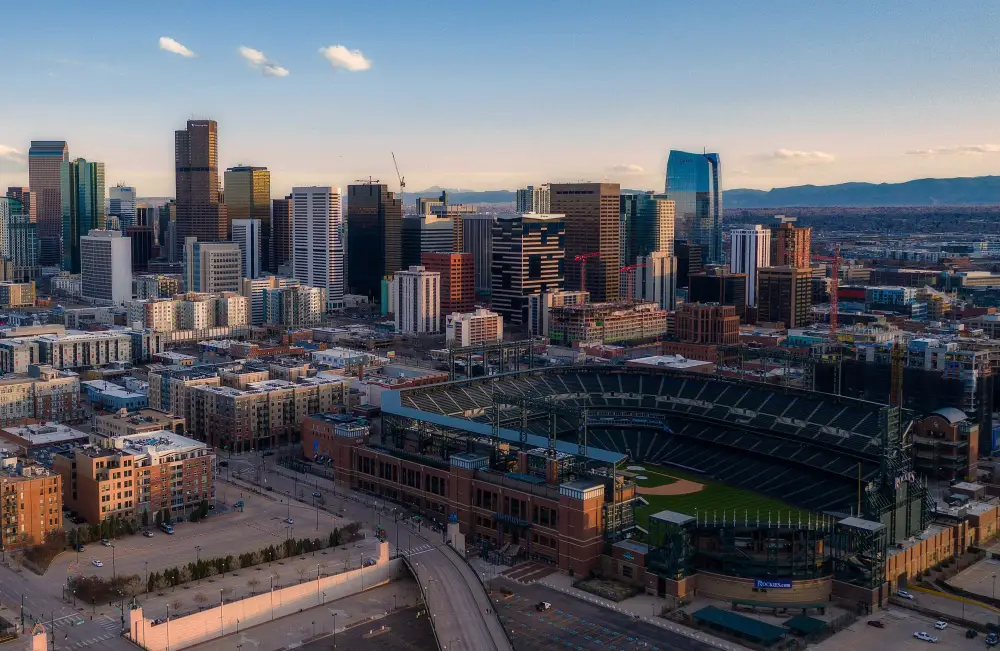
Lafayette commercial corridor near US 287. CGH Injury Lawyers represents premises liability victims across Lafayette and Boulder County from our Denver office.
Lafayette, Colorado

Lafayette Premises Liability Lawyers Who Make Negligent Property Owners Pay

A slip on an icy US 287 parking lot, a fall on a broken stairwell in a Lafayette apartment, or an assault at a business that should have had better security. Property owners owe you a legal duty, and when they breach it, CGH Injury Lawyers is ready to fight. We serve Lafayette and all of Boulder County from our Denver office. You pay nothing unless we win.

No fee unless we win

It's More Than Money.

Get my free premises liability case review

100% confidential. No fee unless we win.

Serving Lafayette From Our Denver Office CGH Injury Lawyers 2701 Lawrence St., Suite 201 Denver, CO 80205 (303) 209-9395 Se habla espanol
5-star rated on Google ABOTA trial advocate on the team Trial lawyers, not a settlement mill 8 attorneys, bilingual EN / ES

A fall in a Lafayette store, a crumbling stairwell in an apartment off Arapahoe Road, or an assault at a poorly lit parking lot near US 287 all come down to the same legal question: did the property owner fail the duty the Colorado Premises Liability Act (C.R.S. 13-21-115) placed on them?

  • The Colorado Premises Liability Act sets a property owner's duty by your visitor status at the time of injury: invitee, licensee, or trespasser. Customers in Lafayette stores and retail centers are invitees, owed the highest duty of care (C.R.S. 13-21-115).
  • The deadline to file most premises liability lawsuits in Colorado is two years from the date of injury (C.R.S. 13-80-102). If a Lafayette city-owned property or a Boulder County facility caused the harm, you may have only 182 days from the date you discovered the injury to file a written government claim notice (C.R.S. 24-10-109(1)).
  • Under Colorado's modified comparative fault rule, you can still recover damages even if you were partly at fault, as long as you were less than 50 percent responsible (C.R.S. 13-21-111). Your award is simply reduced by your share of fault.

CGH Injury Lawyers represents people hurt on unsafe property across Lafayette and Boulder County. We serve Lafayette clients from our Denver office, investigate the hazard and evidence before it disappears, and prepare every case for trial in Boulder County Combined Court. You pay nothing unless we recover for you.

The governing law

What the Colorado Premises Liability Act means for people hurt in Lafayette

The Colorado Premises Liability Act, codified at C.R.S. 13-21-115, defines when property owners can be held legally responsible for injuries that happen on their land or in their buildings. It replaced older common-law rules with a clear framework: the owner's duty is tied to why you were on the property and to what the owner actually knew or should have known about the dangerous condition that hurt you.

The Act applies broadly. It covers Lafayette's commercial buildings along US 287, retail stores near Arapahoe Road, apartment complexes off Baseline Road, shopping center parking lots, and any other private or business-owned property. Landlords, property management companies, retailers, restaurants, and individual homeowners can all be premises defendants. Government-owned properties in Lafayette, including city parks and public buildings, can also be subject to premises liability, though the Colorado Governmental Immunity Act (C.R.S. 24-10-101 and following) imposes strict notice deadlines and damages caps that apply only to government defendants.

The central question in every Lafayette premises case is not whether you got hurt, but whether the property owner met the legal duty they owed you. That question begins with your visitor status.

Visitor status

Invitee, licensee, or trespasser: which one were you in Lafayette?

Colorado law divides property visitors into three categories. Your category at the moment you were hurt determines what the owner owed you and how difficult it is to prove your case.

  1. Invitees: the highest protection

    If you were on the property for a purpose that benefits the owner, such as a customer at a Lafayette grocery store or retail center on Arapahoe Road, or under an open public invitation, you are an invitee. Property owners owe invitees the highest duty under C.R.S. 13-21-115. They must actively inspect for hazards, fix them in a reasonable time, and warn invitees about dangers they cannot yet repair. An owner cannot simply wait for a complaint.

  2. Licensees: permission, but fewer protections

    Social guests at a Lafayette home, delivery workers entering under implied permission, and others who are on the property with the owner's consent but for their own purposes are licensees. Owners must warn licensees about known dangers, but they are not required to inspect the property for hazards they do not know about. The duty is narrower, which is why status is frequently contested.

  3. Trespassers: minimal protection, but not zero

    Trespassers enter without permission and are owed very limited duties. The main obligation is that an owner cannot intentionally trap or harm them. The attractive-nuisance doctrine raises that duty for children who wander onto property because of a pool, construction site, or other foreseeable feature that draws them in. If your child was hurt on Lafayette property that should have been fenced or secured, that doctrine may apply.

Visitor status is not always obvious. A customer who wanders into an employee-only stockroom at a Lafayette business may lose invitee status. A social guest who remains on the property after being asked to leave can become a trespasser. Courts look at the specific facts at the exact moment of injury, which is exactly why insurers attack status as their first line of defense.

Duty and notice

How we prove a Lafayette property owner knew or should have known about the hazard

For invitees, reasonable care means active steps: regular inspections, prompt cleanup of spills, timely repair of broken stairs and handrails, sufficient lighting in common areas and parking lots, and snow and ice removal after storms. An owner cannot claim they did not know if the hazard had been there long enough that any reasonable inspection would have found it. That is constructive notice, and it is often the turning point in a Lafayette slip-and-fall case.

Why constructive notice matters in Lafayette premises cases

  • Duration matters. A spill that has been in a Lafayette store aisle for two hours is treated very differently from one that appeared two minutes before you fell. The longer a hazard sat unaddressed, the more likely the owner should have found it.
  • Location matters. A broken tile at the entrance of a busy Lafayette strip mall is far more likely to be noticed than one in a rarely used back corner. High-traffic zones demand more vigilance from owners.
  • Inspection records matter. Businesses that conduct regular safety checks have a documented defense. Owners who cannot produce a single inspection log often lose the argument that they ever inspected the property at all.
  • Colorado weather creates specific duties. Once a storm ends, property owners must clear ice and snow from walkways and parking lots within a reasonable time. Letting ice accumulate for days after a Front Range freeze-thaw cycle is a classic constructive-notice fact in Lafayette cases near US 287 and Baseline Road.

Beating the owner's "I didn't know" defense takes surveillance footage, maintenance logs, witness testimony, and sometimes expert analysis of the hazard. We move fast to preserve that evidence before it is erased, overwritten, or destroyed.

Where these injuries happen

The Lafayette properties and hazard patterns we see most often

Lafayette's commercial corridors, residential complexes, and public spaces create predictable hazard patterns. These are the property situations we encounter most often in Boulder County premises cases.

Commercial property along US 287 and Arapahoe Road

  • Slip and fall on unsalted entrances and sidewalks at retail centers near US 287 after winter storms
  • Spills and floor debris left in grocery and retail aisles along Arapahoe Road
  • Crumbling pavement, potholes, and inadequate lighting in shopping center parking lots
  • Tripping hazards from raised floor mats, uneven thresholds, and exposed cords in Lafayette businesses

Residential and multi-family property

  • Broken handrails, crumbling steps, and dark stairwells in Lafayette apartment buildings off Baseline Road
  • Neglected common areas, laundry rooms, and pool or fitness facilities in multi-family complexes
  • Negligent security at apartment complexes where prior incidents made criminal activity foreseeable
  • Uneven sidewalks and icy walkways in residential areas near Coal Creek that go unrepaired after freeze cycles

Negligent security is a premises liability claim too. When an owner knows of foreseeable criminal activity, they may need to provide working locks, adequate lighting, cameras, or patrols. Prior incidents on or near a Lafayette property establish the foreseeability that puts the owner on notice of the need to act.

After the injury

What to do after a premises injury in Lafayette

The steps you take in the minutes and hours after a property injury in Lafayette shape your ability to recover. Evidence disappears fast, and property owners and their insurers start building a defense immediately.

  1. Report the injury to the property owner or manager

    If you fell in a Lafayette store, ask the manager to complete an incident report before you leave. Get a copy or photograph it. If you were hurt in an apartment or residential complex, notify property management in writing. A dated report creates an official record that the hazard existed and that the owner was notified.

  2. Photograph the hazard and the scene

    Photograph the specific condition that caused your injury, whether it is a wet floor, a broken step, a missing handrail, or inadequate lighting in a Lafayette parking lot near US 287. Property owners repair or alter hazardous conditions quickly after an injury. Photographs taken at the scene are often the only evidence of what existed.

  3. Seek medical care immediately

    Intermountain Health Good Samaritan Hospital at 200 Exempla Cir, Lafayette, CO 80026 is a designated Level II Trauma Center and the closest major trauma facility to Lafayette's commercial and residential corridors. Go even if you feel fine. Hip fractures, spinal injuries, and traumatic brain injuries from falls can present with minimal pain at first and worsen over the following hours. A gap in your medical timeline is one of the first things an insurer uses to reduce your claim.

  4. Get witness information

    If anyone saw you fall or saw the condition of the property before you were hurt, get their name and phone number. Witnesses often leave a Lafayette store or parking lot within minutes. An independent witness who can describe how long the hazard existed is powerful evidence on constructive notice.

  5. Do not give a recorded statement to the insurer

    The property owner's insurer is not on your side. Do not give a recorded statement or sign any release without an attorney reviewing it first. Adjusters ask leading questions designed to lock in answers that undercut your claim before you understand your injuries or your rights.

  6. Contact a Lafayette premises liability attorney

    The two-year filing deadline (C.R.S. 13-80-102) sounds long, but surveillance footage from Lafayette businesses and apartment complexes is often overwritten within 30 to 90 days. The 182-day government notice deadline (C.R.S. 24-10-109(1)) is even more urgent if a public entity owns the property. A free consultation costs you nothing.

Local context

Your premises liability case lives in Lafayette

The property, the hospital, and the courthouse are all in Lafayette and Boulder County. Here is the ground we work on for premises cases in this city.

Courthouse

Boulder County Combined Court

A Lafayette premises liability lawsuit is filed in the 20th Judicial District at Boulder County Combined Court, 1777 6th St., Boulder, CO 80302, phone (303) 441-3750 (mailing: PO Box 4249, Boulder, CO 80306). Boulder County juries, the local judicial temperament, and the defense firms that represent Lafayette retailers and landlords all differ from other Front Range counties. We handle Boulder County Combined Court cases directly from our Denver office and do not need to be admitted pro hac vice to appear for you.

Trauma Care

Intermountain Health Good Samaritan Hospital

Intermountain Health Good Samaritan Hospital at 200 Exempla Cir, Lafayette, CO 80026 is a 234-bed acute-care hospital and a designated Level II Trauma Center. The Colorado Department of Public Health and Environment first designated it in 2006; the American College of Surgeons recertified it in February 2025. Premises injuries from serious falls can produce hip fractures, traumatic brain injuries, and spinal cord damage requiring the full range of trauma services. The hospital records from Good Samaritan form the backbone of a damages claim in a Lafayette premises case and document the long-term scope of the injuries sustained.

Property Corridors

US 287, Arapahoe Road, Baseline Road, and Residential Areas Near Coal Creek

Lafayette's commercial strip along US 287 is lined with retail centers, restaurants, and service businesses whose parking lots and entrances are premises liability exposure points year round, especially during the freeze-thaw cycles that deposit ice on pavement and sidewalks after Front Range winter storms. Arapahoe Road west of US 287 and Baseline Road east of US 287 pass directly in front of Centaurus High School and carry dense retail traffic. Residential complexes near Coal Creek and the surrounding neighborhoods produce apartment-fall and negligent-security claims. The geographic spread of Lafayette's development means premises claims come from every corner of the city, not just the main commercial corridor.

Compensation

What compensation can a Lafayette premises liability victim recover?

Colorado law lets injured people recover two broad categories of damages after a property injury: economic losses you can document with bills and records, and non-economic losses for the human cost of living with the injury.

Economic damages

  • Medical expenses, past and future, including Good Samaritan Hospital trauma care
  • Lost wages and lost income during recovery
  • Loss of earning capacity for permanent or serious injuries such as hip fractures or spinal cord damage from a fall
  • Rehabilitation, physical therapy, and long-term care costs
  • Out-of-pocket expenses tied to the injury, including assistive equipment and home modifications

Non-economic damages

  • Pain and suffering
  • Physical impairment or disfigurement, which is not capped under Colorado law
  • Loss of enjoyment of life
  • In fatal premises cases, funeral expenses and loss of companionship for surviving family members

Economic damages have no cap in Colorado. Non-economic damages such as pain and suffering are capped under C.R.S. 13-21-102.5 at $1.5 million for claims accruing on or after January 1, 2025, with inflation adjustments beginning in 2028. Importantly, compensation for physical impairment or disfigurement is not capped at all, which matters significantly in premises cases involving catastrophic falls resulting in permanent mobility loss or scarring. Economic damages, including all future medical costs, are also never capped regardless of when the injury occurred.

What if you were partly responsible for the fall?

Colorado follows a modified comparative fault rule under C.R.S. 13-21-111. You can still recover damages as long as your share of fault is less than 50 percent. Your award is reduced by your percentage of fault. If you are found 50 percent or more at fault, you cannot recover anything. Property owners and their insurers routinely argue that an injured person was not watching where they were going or ignored an obvious hazard. A trial-ready attorney can challenge that characterization with evidence of how dangerous the condition actually was and how inadequate the warning was.

I wish I could leave more than 5 stars!
Grace M., 5-star CGH Injury Lawyers client review

How it works

How a Lafayette premises liability claim works

A Lafayette premises case is won or lost on evidence that can disappear within weeks. We move immediately to preserve it, then build the case as if it will be tried in Boulder County Combined Court.

  1. Free case evaluation

    We review what happened in Lafayette, identify your visitor status under C.R.S. 13-21-115, and explain your rights. No cost, no obligation.

  2. Preserve the evidence

    We move to secure surveillance footage from Lafayette businesses and apartment cameras, incident reports, inspection logs, and maintenance records before they are erased or overwritten. Footage from the US 287 corridor, Arapahoe Road businesses, and apartment complex cameras often has retention windows of 30 to 90 days.

  3. Prove notice and duty

    We establish how long the hazard existed, what the property owner knew or should have known through reasonable inspection, and the specific duty the owner owed you under the Colorado Premises Liability Act. Inspection logs, maintenance records, and witness testimony are the primary tools for proving constructive notice.

  4. Demand and negotiate

    We calculate the full value of your claim, including future medical costs and long-term impact, and send a documented demand to the property owner's insurer. We negotiate from trial readiness, not from willingness to take a quick settlement offer.

  5. File suit in Boulder County Combined Court

    If the insurer refuses a fair offer, we file your premises liability lawsuit in the 20th Judicial District at Boulder County Combined Court, 1777 6th St., Boulder, CO 80302. We handle Boulder County cases directly without any additional admission requirement.

  6. Trial when needed

    Our trial attorneys are prepared to present your Lafayette case to a Boulder County jury when that is what full recovery requires. Managing Partner Kevin Cheney has tried over 25 cases to verdict and is a member of the American Board of Trial Advocates (ABOTA).

Your team

The team handling your Lafayette premises case

CGH Injury Lawyers is a eight-attorney Colorado firm founded in 2016, formerly Cheney Galluzzi & Howard. Managing Partner Kevin Cheney is a member of the American Board of Trial Advocates (ABOTA) and has tried over 25 cases to verdict. Timothy G. Tarr has been recognized by Best Lawyers every year since 2023. Every Lafayette premises liability case is handled by a licensed Colorado attorney, not a paralegal. CGH Injury Lawyers does not have a Lafayette office. We serve Lafayette and all of Boulder County from our office at 2701 Lawrence St., Suite 201, Denver, CO 80205, and we come to you.

ABOTA member on the team Tim Tarr: Best Lawyers in America since 2023 Over 25 cases to verdict Boulder County Combined Court Bilingual EN / ES Free consultation No fee unless we win

Frequently asked questions

Frequently asked questions about Lafayette premises liability claims

How long do I have to file a premises liability lawsuit after being hurt in Lafayette?

Colorado's statute of limitations for most premises liability claims is two years from the date of injury under C.R.S. 13-80-102. This is shorter than the three-year deadline that applies to car accident claims, so do not assume you have more time than you do. Exceptions exist for injuries to minors and for conditions that were not immediately discoverable. If the property was owned or operated by the City of Lafayette, Boulder County, or another government entity, a separate notice of claim must be filed within 182 days of the date you discovered the injury under C.R.S. 24-10-109(1). Missing either deadline typically eliminates your right to recover.

Can I recover if I slipped on ice at a Lafayette store or parking lot?

Possibly, yes. Colorado courts recognize that property owners cannot continuously clear ice and snow during an active storm. But once the precipitation stops, owners must take reasonable steps within a reasonable time to clear walkways, parking lots, and entrances. On the US 287 corridor and in Lafayette shopping centers, the freeze-thaw cycles that follow Front Range winter storms can leave ice on surfaces for days. If the owner left ice untreated for an unreasonable period after the storm ended, that can establish the constructive notice required to hold them responsible.

Does CGH Injury Lawyers have a Lafayette office?

No. CGH Injury Lawyers does not have a Lafayette office. Our single office is at 2701 Lawrence St., Suite 201, Denver, CO 80205, phone (303) 209-9395. We serve Lafayette and all of Boulder County as a service area from that office. We handle Boulder County Combined Court cases in the 20th Judicial District directly and travel to Lafayette clients when needed. You are not paying for a local storefront; you are paying for experienced trial attorneys who know Boulder County Combined Court and the law that governs your claim.

Can I still recover if I was partly at fault for the fall?

Yes, under Colorado's modified comparative negligence rule (C.R.S. 13-21-111). As long as you were less than 50 percent responsible for the fall, you can recover damages reduced by your share of fault. For example, if you were found 20 percent at fault and your damages total $200,000, you would recover $160,000. At 50 percent or more at fault, you cannot recover. Property owners and their insurers routinely argue that injured visitors were not paying attention or that the hazard was open and obvious. An attorney can challenge that characterization with evidence about the actual visibility and danger of the condition.

What if the property that hurt me is owned by the City of Lafayette or Boulder County?

Claims against government entities in Colorado are governed by the Colorado Governmental Immunity Act (C.R.S. 24-10-101 and following). If the City of Lafayette, Boulder County, or any other public entity owns or operates the property where you were hurt, you must file a written notice of claim within 182 days of the date you discovered the injury (C.R.S. 24-10-109(1)). That notice must be filed with the right government office in the right form. Damages against government entities are capped at $505,000 per person and $1,421,000 per occurrence for claims arising on or after January 1, 2026 (C.R.S. 24-10-114). Missing the 182-day notice deadline bars your claim entirely.

What compensation can I recover in a Lafayette premises liability case?

Colorado law allows recovery for medical expenses past and future, lost wages and lost earning capacity, rehabilitation and therapy costs, pain and suffering, physical impairment or disfigurement, and loss of enjoyment of life. In fatal premises cases, families can recover funeral expenses and loss of companionship. Economic damages such as medical bills and lost wages are never capped. Non-economic damages such as pain and suffering are capped at $1.5 million for claims accruing on or after January 1, 2025 under C.R.S. 13-21-102.5. Compensation for physical impairment or disfigurement is not capped at all, which is especially important in serious fall cases involving hip fractures or permanent mobility loss.

It's More Than Money.

You were hurt on unsafe property in Lafayette. We handle everything else.

Free consultation. No fee unless we win. Serving Lafayette and all of Boulder County in English and Spanish.

Tell us what happened

100% confidential. No fee unless we win.

Prefer to read first? See how Colorado premises liability law works.

CGH Injury Lawyers, serving Lafayette · 2701 Lawrence St., Suite 201, Denver, CO 80205