
ClickCease
Free consultations · Se habla espanol
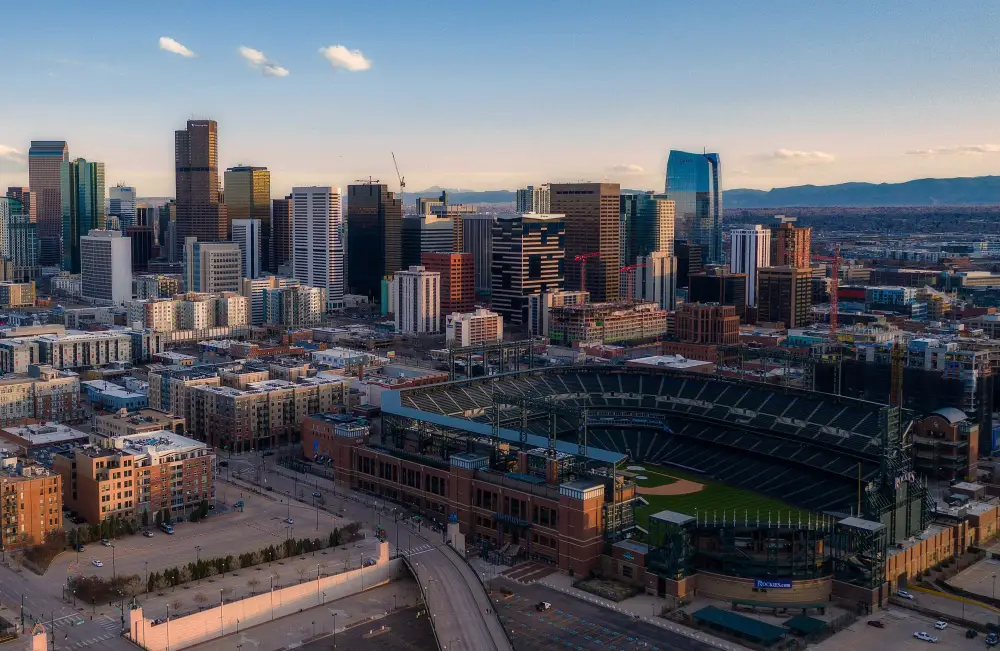
Commercial property in Lone Tree, Douglas County, Colorado. CGH Injury Lawyers handles premises liability claims for Lone Tree injury victims from our Denver office.
Lone Tree, Colorado

Lone Tree Premises Liability Lawyers Fighting for Injury Victims Under Colorado's Property Law

Colorado's Premises Liability Act sets clear rules about what property owners owe visitors who are injured on their land or in their buildings. CGH Injury Lawyers serves Lone Tree premises liability victims from our Denver office, advances all costs, and files at the Douglas County District Court when needed. No fee unless we win.

No fee unless we win

It's More Than Money.

Get my free Lone Tree case review

100% confidential. No fee unless we win.

Serving Lone Tree from our Denver Office CGH Injury Lawyers 2701 Lawrence St., Suite 201 Denver, CO 80205 (303) 209-9395 Se habla espanol
5-star rated on Google ABOTA trial advocate on the team We advance all expert and case costs No fee unless we win
  • Colorado's Premises Liability Act (C.R.S. 13-21-115) is the exclusive framework for property-injury claims in this state. It classifies injured visitors as invitees (customers, business guests), licensees (social guests), or trespassers, and assigns a different duty of care to the landowner for each classification. The duty owed to an invitee is the highest: the landowner must use reasonable care to inspect the property, discover dangers, and either fix the hazard or warn visitors of it.
  • Lone Tree is a heavily commercial community with retail centers, restaurants, office parks, and mixed-use developments along Lincoln Avenue and near the Park Meadows area. Most injured visitors at Lone Tree businesses are invitees entitled to the highest duty of care under the Act. When a property hazard injures an invitee and the owner knew or should have known about it, the Premises Liability Act provides the legal basis for a claim.
  • Lone Tree is in Douglas County, Colorado's 18th Judicial District. Premises liability claims above the county court limit are filed at the Douglas County District Court, 4000 Justice Way, Castle Rock, CO 80104. When the hazardous property is owned or maintained by a government entity, a 182-day written notice of claim from the date of discovery is required before any lawsuit (C.R.S. 24-10-109(1)). Government-owned premises claims also face per-person caps of $505,000 under the CGIA (C.R.S. 24-10-114(1)) for claims accruing January 1, 2026 through January 1, 2030.

Premises liability claims succeed or fail on the evidence of what the property owner knew or should have known and when. That evidence lives in inspection logs, maintenance records, prior incident reports, and surveillance footage that property owners are not required to preserve unless put on notice. CGH Injury Lawyers sends spoliation and preservation letters on the first day of representation to protect that evidence. If we wait, it disappears. Lone Tree commercial properties and their insurers have experienced attorneys working their side from the moment of the incident. We work yours from day one as well.

Colorado premises liability law

How Colorado's Premises Liability Act applies to Lone Tree injuries

The PLA replaced common-law premises liability in Colorado. Understanding which visitor category applies to your situation is the threshold question in every Lone Tree property-injury claim.

  1. Invitees: the highest duty of care

    An invitee is a person invited onto property for business purposes or as a member of the public when the land is open to the public. Customers at Lone Tree retail stores, restaurants, fitness centers, and offices are invitees. The landowner owes an invitee the duty to use reasonable care to inspect, discover unreasonable hazards, and either repair them or warn visitors of their existence. This is the highest duty under the Act and the one that applies to most Lone Tree commercial-property injury claims.

  2. Licensees: reasonable care not to create unreasonable risk

    A licensee enters with the owner's permission but for their own purposes, typically a social guest at a private home. The duty owed to a licensee is lower: the landowner must not unreasonably fail to exercise reasonable care with respect to dangers created by the landowner and must not fail to warn of dangers the landowner knows about and the licensee would not discover. Social gatherings in Lone Tree residential neighborhoods often produce licensee-status injuries. The lower duty does not mean no claim; it means the evidence of what the owner actually knew becomes more important.

  3. Government property: additional CGIA requirements

    When the hazardous property is owned by a government entity, including Lone Tree city property, Douglas County property, or public school facilities, the Colorado Governmental Immunity Act applies. The CGIA requires a written notice of claim filed within 182 days of discovering the injury (C.R.S. 24-10-109(1)). Missing this deadline bars the entire claim regardless of how clear the liability is. Government premises claims also face per-person damage caps ($505,000 for claims accruing January 1, 2026 through January 1, 2030 under C.R.S. 24-10-114(1)). We identify CGIA applicability on day one of representation so the notice deadline is never missed.

  4. Comparative fault reduces but does not automatically bar recovery

    Colorado's modified comparative fault rule (C.R.S. 13-21-111) applies to premises liability claims. A Lone Tree visitor who was partly responsible for the incident can still recover as long as their fault was less than 50 percent. The award is reduced by the visitor's percentage of fault. Property owners and their insurers frequently argue that victims were distracted, wearing improper footwear, or otherwise contributed to the accident. We anticipate those arguments and build the evidence record that counters them before negotiations begin.

Compensation

What a Lone Tree premises liability case can recover

Economic damages (no cap)

  • All medical bills from the incident, from the Sky Ridge Medical Center emergency visit through follow-on care, surgery, physical therapy, and any future treatment required by the injury
  • Lost wages from time away from work during recovery and reduced future earning capacity when the injury causes a lasting limitation on what the person can do professionally
  • Future medical costs projected by qualified experts when the injury requires ongoing treatment, rehabilitation, or additional procedures
  • Out-of-pocket costs directly caused by the injury, including transportation to appointments, home care, and adaptive equipment

Non-economic damages (capped at $1.5M for 2025+ claims)

  • Pain and suffering, capped at $1.5 million for claims accruing on or after January 1, 2025 under C.R.S. 13-21-102.5, with inflation adjustments beginning in 2028
  • Physical impairment and disfigurement, which are fully exempt from the non-economic cap under C.R.S. 13-21-102.5(5) and recoverable without limit
  • Emotional distress when documented and causally connected to the premises incident and resulting injury
  • Loss of enjoyment of life when the injury prevents activities, recreation, or relationships that were part of the person's daily existence before the incident
Local knowledge

Lone Tree courts, trauma care, and property liability context

Courthouse

Douglas County District Court (18th Judicial District)

Lone Tree is in Douglas County, Colorado's 18th Judicial District, which covers Douglas, Arapahoe, Lincoln, and Elbert counties. A premises liability lawsuit above the county court threshold is filed at the Douglas County District Court, 4000 Justice Way, Castle Rock, CO 80104. The 18th Judicial District draws from a Douglas County jury pool with characteristics distinct from urban Denver venues. Commercial-property defense firms in Douglas County are experienced and well-funded. CGH Injury Lawyers files and tries 18th Judicial District cases from our Denver office and knows this venue well.

Trauma Care

Sky Ridge Medical Center (Level II Trauma Center, in Lone Tree)

Sky Ridge Medical Center is a Level II Trauma Center located in Lone Tree and is the primary emergency care facility for serious property injuries in Douglas County. Falls, structural failures, inadequate lighting incidents, and other premises hazards that cause serious injury in Lone Tree typically result in emergency evaluation at Sky Ridge. The emergency records, imaging, and attending physician notes from the day of the incident are among the most important pieces of evidence in a premises liability claim. We request and analyze those records from the first day of representation.

Property Context

Lone Tree commercial properties, residential areas, and public spaces

Lone Tree is home to significant retail and commercial development, including properties along Lincoln Avenue and near the I-25 corridor. These commercial properties attract high foot traffic and must maintain safe conditions for the customers who are invitees under Colorado's PLA. Parking lots, entryways, stairwells, wet floors, inadequate lighting, and poorly maintained walkways are common hazard locations in Lone Tree's commercial environment. When a property hazard causes a serious injury, the owner's maintenance records, prior incident reports, and inspection logs are the documents that establish what the owner knew and when they knew it. We move to preserve and obtain that evidence from the first day we are retained.

Where injuries happen

Where premises liability injuries happen most often in Lone Tree

Lone Tree's mix of high-traffic commercial corridors and residential development creates predictable hazard patterns. These are the property settings that generate most of the premises liability claims we handle for Douglas County clients.

  1. Retail centers and restaurants along Lincoln Avenue and the I-25 corridor

    The Lincoln Avenue commercial zone and properties adjacent to I-25 include a dense concentration of retailers, restaurants, fitness centers, and medical offices that generate significant pedestrian movement throughout the day. Wet entryways from rain or snow-melt, bunched floor mats, cracked pavement at storefronts, and inadequate lighting in shared parking areas are documented hazard types at high-volume commercial properties. Owners of these facilities owe invitees an active duty to inspect and correct hazards, not merely to respond after someone complains. In Colorado, an owner who cannot produce regular inspection logs often cannot prove the property was being actively monitored for hazards.

  2. Apartment complexes, stairwells, and common areas near C-470

    Lone Tree's residential developments near C-470 include apartment and condominium communities with shared stairwells, fitness facilities, parking structures, and exterior walkways. Property management companies that defer maintenance on handrails, stair nosings, exterior lighting, and parking-lot surfaces generate premises liability exposure when deferred maintenance causes a tenant or guest injury. Colorado law does not require a prior written complaint before establishing constructive notice: if the condition was present long enough that a reasonable inspection would have found it, the owner can be liable even without a prior complaint on record. Broken exterior stair nosings, dark parking-lot corners, and unrepaired parking-lot potholes are the common evidence items in residential premises cases from Lone Tree apartment communities.

  3. Parking lots, parking structures, and high-traffic commercial entryways

    Commercial properties in Lone Tree serving large numbers of customers daily have corresponding obligations to maintain safe parking surfaces, clearly marked transitions between the lot and building entry, functioning lighting in covered structures, and visible wheel stops. Potholes, raised asphalt joints, missing wheel stops, and surface deterioration in commercial parking lots are hazards that property owners are legally required to identify and address through routine maintenance. Premises liability claims from parking lot injuries follow the same constructive-notice analysis as interior claims: how long was the defect visible, would a reasonable inspection have found it, and what did the maintenance records show about the owner's actual practices.

How it works

How a Lone Tree premises liability claim moves from incident to resolution

  1. Free case evaluation

    We review what happened on the Lone Tree property, your visitor status, the nature of the hazard, and what the property owner and their insurer have said. We identify whether CGIA applies (government property), which visitor classification controls, and what the law allows you to recover. This review is free and creates no obligation.

  2. Evidence preservation

    We send spoliation and preservation letters to the property owner or government entity on day one to protect surveillance footage, maintenance logs, inspection records, and prior incident reports. These documents establish what the owner knew and when, which is the center of the liability case under the PLA. Property owners routinely overwrite surveillance footage on 30-day or 60-day cycles. Preservation letters stop that clock before the evidence is gone.

  3. Demand and negotiation

    We prepare a demand covering all economic and non-economic losses the law allows, supported by the property records, medical documentation, and expert opinion on what the owner knew or should have known. Most commercial premises liability claims involve property insurers who have experienced adjusters. We negotiate from documented fact and genuine trial readiness.

  4. Trial in the 18th Judicial District

    When an insurer disputes liability or refuses a fair resolution, CGH Injury Lawyers tries the case at the Douglas County District Court in Castle Rock. Managing Partner Kevin Cheney has tried over 25 cases to verdict. We present the property evidence, medical records, and expert testimony to the Douglas County jury in a form they can evaluate clearly.

Your team

The CGH team handling your Lone Tree premises liability case

CGH Injury Lawyers is a eight-attorney Colorado firm founded in 2016. Managing Partner Kevin Cheney is a member of ABOTA and has tried over 25 cases to verdict. Timothy G. Tarr has been recognized by Best Lawyers every year since 2023. We do not have a Lone Tree office. We serve Lone Tree premises liability clients from our Denver office at 2701 Lawrence St., Suite 201, Denver, CO 80205, file at the Douglas County District Court in Castle Rock, and come to you for meetings when needed.

ABOTA member on the team Best Lawyers in America (Tim Tarr, 2023+) Over 25 cases to verdict We advance all expert costs 18th Judicial District experience Bilingual EN / ES No fee unless we win
CGH was there for us every step of the way. They knew exactly what to do and when to do it.
CGH Injury Lawyers client review
Frequently asked questions

Lone Tree premises liability frequently asked questions

I was injured at a Lone Tree store. Does the store automatically owe me compensation?

Not automatically. Colorado's Premises Liability Act (C.R.S. 13-21-115) requires showing that the property owner knew or should have known about the hazard and failed to exercise reasonable care to fix it or warn you about it. As a customer at a Lone Tree business, you are an invitee entitled to the highest duty of care under the Act. The key questions are whether the hazard existed, how long it had been there, and what the owner did or failed to do about it. An attorney review is the right first step to assess whether the facts support a viable claim.

How long do I have to file a premises liability claim in Lone Tree?

The two-year general statute of limitations applies to most premises liability claims (C.R.S. 13-80-102(1)(a)), running from the date of the incident or the date you discovered the connection between the property hazard and your injury. If the property is government-owned, the 182-day CGIA notice requirement (C.R.S. 24-10-109(1)) must be satisfied before the two-year deadline. Missing the CGIA notice deadline bars the claim entirely. Contact an attorney as soon as possible after any serious property injury in Lone Tree.

What if I was partly at fault for the fall or accident on Lone Tree property?

Colorado's modified comparative fault rule (C.R.S. 13-21-111) allows recovery as long as you were less than 50 percent responsible for the incident. Your award is reduced by your percentage of fault. Property owners and their insurers frequently argue that victims were distracted, looking at a phone, or wearing inappropriate footwear. The evidence of the hazard's condition, how long it existed, and whether it was adequately marked counters those arguments. We build that evidence record before any negotiation.

What if the property was owned by the City of Lone Tree or Douglas County?

Government-owned property triggers the Colorado Governmental Immunity Act (CGIA). You must file a written notice of claim within 182 days of discovering your injury (C.R.S. 24-10-109(1)). Missing this deadline eliminates the claim regardless of how clear the liability is. Government premises claims also face per-person damage caps of $505,000 for claims accruing January 1, 2026 through January 1, 2030 (C.R.S. 24-10-114(1)). We identify CGIA applicability on day one so the notice deadline is never missed.

The store said I signed a waiver when I joined. Does that bar my claim?

Not necessarily. Colorado courts scrutinize liability waivers carefully and have found many of them unenforceable, particularly when the waiver language is ambiguous, was not clearly communicated, or the injury resulted from gross negligence rather than ordinary negligence. A waiver signed on joining a gym or recreational facility is not automatically a complete bar to a premises liability claim. An attorney review of the specific waiver language and the circumstances of the injury is the right step to assess enforceability.

Does CGH Injury Lawyers have an office in Lone Tree?

No. CGH Injury Lawyers has one office, at 2701 Lawrence St., Suite 201, Denver, CO 80205, (303) 209-9395. We serve Lone Tree premises liability clients from that office, file at the Douglas County District Court in Castle Rock, and come to you when meetings are needed. There is no added charge for Lone Tree clients. We are available in English and Spanish.

For the controlling text of any statute cited here, see the Colorado Revised Statutes.

Keep reading

It's More Than Money.

A hazardous Lone Tree property injured you. Colorado law gives you a path to recovery.

Free consultation. No fee unless we win. Serving Lone Tree and Douglas County from our Denver office. Available in English and Spanish.

CGH Injury Lawyers · 2701 Lawrence St., Suite 201, Denver, CO 80205 · Serving Lone Tree and Douglas County