
ClickCease
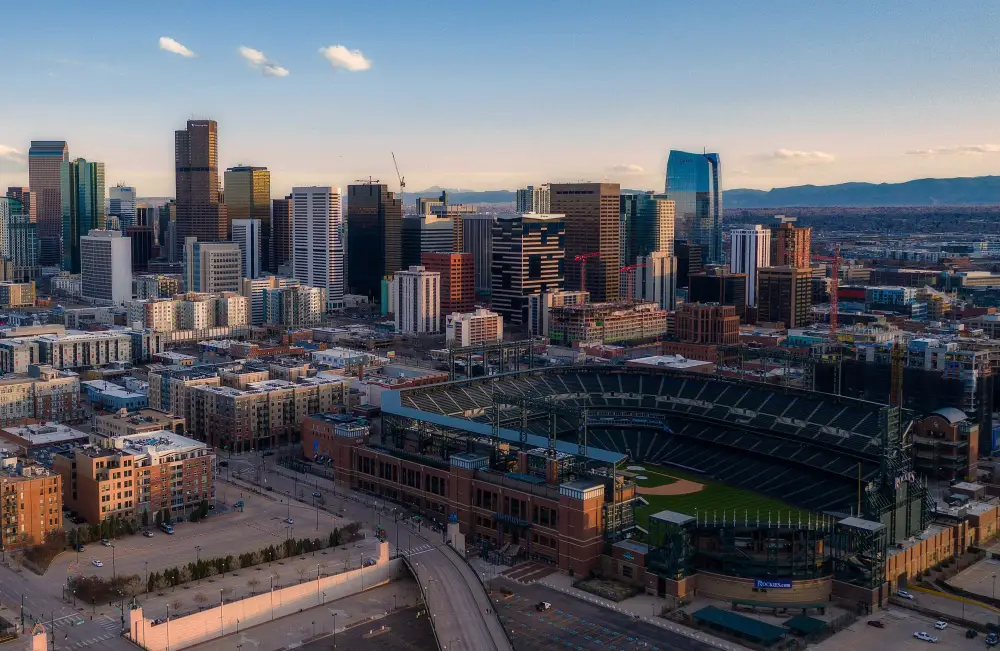
Loveland, Colorado commercial corridor on Eisenhower Boulevard. CGH Injury Lawyers represents people hurt on unsafe property in Loveland and Larimer County.
Loveland, Colorado

Loveland Premises Liability Lawyers Who Build Property-Injury Claims From Evidence, Not Guesswork

A slip on an unsalted Eisenhower Boulevard walkway, a fall on a broken staircase at a Loveland apartment complex, an assault at a commercial property that lacked basic security: when a property owner's failure puts you in the emergency room at UCHealth Medical Center of the Rockies, Colorado's Premises Liability Act gives you a legal path. CGH Injury Lawyers serves Loveland and Larimer County from our Denver office. No fee unless we win.

No fee unless we win

It's More Than Money.

Tell us what happened on the property

100% confidential. No fee unless we win.

Serving Loveland From Our Denver Office CGH Injury Lawyers 2701 Lawrence St., Suite 201 Denver, CO 80205 (303) 209-9395 Se habla espanol
5-star rated on Google ABOTA trial advocate on the team Trial lawyers, not a settlement mill 8 attorneys, bilingual EN / ES
  • Colorado's Premises Liability Act (C.R.S. 13-21-115) is the governing statute for property-injury claims in Loveland. It ties a property owner's legal duty directly to the visitor's status at the time of injury: invitee, licensee, or trespasser. Getting that classification right is the first decision in every Larimer County premises case.
  • Most premises liability lawsuits in Colorado must be filed within two years of the injury date (C.R.S. 13-80-102). For injuries on property owned or operated by a government entity, a separate written notice of claim must reach the correct government body within 182 days of discovering the injury (C.R.S. 24-10-109(1)). Missing the notice window eliminates the claim regardless of fault.
  • Under Colorado's modified comparative negligence rule (C.R.S. 13-21-111), a share of fault below 50 percent still allows recovery, with damages reduced in proportion. At 50 percent or more, recovery is barred entirely. Property-owner insurers routinely inflate plaintiff-fault arguments; documented evidence is the answer.

Loveland sits where I-25 meets US-34 at the base of the Rocky Mountain foothills, with a commercial corridor stretching along Eisenhower Boulevard that generates significant foot traffic at retail centers, restaurants, medical offices, and strip malls year-round. The same Northern Front Range location that makes Loveland attractive also means winter freeze-thaw cycles arrive early and linger, leaving walkways, parking lots, and building entries slick for months. When a Loveland property owner fails to maintain reasonably safe conditions and that failure hurts you, CGH Injury Lawyers investigates the evidence, identifies every responsible party, and builds the claim to its full value. CGH Injury Lawyers does not have a Loveland office. We serve Larimer County from our Denver office, file at the Larimer County District Court in Fort Collins when litigation is required, and collect no fee unless we recover for you.

Who can bring a claim

Your status on the property determines your rights in Loveland

The Colorado Premises Liability Act does not treat all property visitors the same. The duty a property owner owes you, and the standard required to prove a breach, both depend on why you were present when the injury occurred. That classification happens at the moment of injury, not before or after.

Invitees: the highest protection Colorado law provides

  • Shoppers and customers at retail businesses and strip malls along Eisenhower Boulevard (US-34) in Loveland
  • Restaurant and medical office patients entering commercial properties open to the public in Larimer County
  • Tenants, apartment residents, and their guests navigating common areas, stairwells, and parking lots managed by a landlord or property management company
  • Visitors at public parks and recreation facilities in Loveland or operated by Larimer County

Licensees and other visitors

  • Social guests at private homes and residential properties throughout Loveland and Larimer County
  • Contractors and tradespeople entering a property for their own work, not at the landowner's invitation for the landowner's direct benefit
  • Short-term rental guests at foothills-area or residential Loveland properties
  • Children drawn to hazardous features such as swimming pools or construction sites under the attractive-nuisance doctrine

Invitees receive the strongest protection the Act provides. The law imposes an affirmative duty on the owner to inspect for dangerous conditions and to repair or warn about them. Constructive notice, meaning the owner should have found the problem through a reasonable inspection program, can establish liability even when the owner claims ignorance. Licensees receive a narrower protection limited to warnings about hazards the owner actually knows about. Property-owner insurers dispute visitor status in nearly every case, particularly when an injury occurs in a mixed-use area. Getting that classification documented early in the claim makes a difference.

The governing law

The Colorado statutes that control every Loveland property-injury claim

Premises liability in Colorado runs on a specific set of statutes. The deadlines are not suggestions, the caps are not starting points for negotiation, and the government-notice requirement does not have flexible exceptions. Here is what governs a Loveland premises case from the moment of injury forward.

  1. C.R.S. 13-21-115: Colorado's Premises Liability Act

    This statute replaced older common-law negligence rules with a structured framework applying to all property types in Colorado: private homes, commercial buildings, parking lots, apartment complexes, restaurants, parks, and government facilities alike. The Act's central mechanism is visitor status. Invitees are owed the highest duty, requiring the property owner to exercise reasonable care to inspect and maintain the premises. Licensees are owed a duty of warning about known hazards. The duty owed to trespassers is more limited, though willful or deliberate harm remains prohibited. Larimer County properties, including those throughout Loveland, are subject to this framework without modification.

  2. Two-year filing deadline: C.R.S. 13-80-102

    A premises liability lawsuit in Colorado must ordinarily be filed within two years of the date the injury occurred. The statute of limitations is not extended because you were recovering, because you were negotiating with the insurer, or because the property owner's representative seemed cooperative. The two-year clock runs from the injury event itself. A fall in December 2024 on an Eisenhower Boulevard walkway generally must be in court before December 2026. Missing the deadline means losing the right to any recovery, no matter how clear the owner's fault. Evidence preservation starts at the beginning of that window, not the end.

  3. Government property: 182-day notice under C.R.S. 24-10-109(1)

    When the property where an injury occurred is owned or operated by a government entity, such as the City of Loveland, Larimer County, a school district, or a state facility, the Colorado Governmental Immunity Act adds a critical preliminary step. A formal written notice of claim must be served on the correct government entity within 182 days of discovering the injury. This is a separate, shorter window that runs independently of the two-year lawsuit deadline. Missing the 182-day bar has no generally applicable cure: the claim against that government entity is extinguished. If your fall happened at a city park, on a public sidewalk, or at any government-controlled facility in Loveland, we track and serve that notice from the first day we are retained. Damages against government entities for claims accruing on or after January 1, 2026 are capped at 05,000 per person and ,421,000 in the aggregate under C.R.S. 24-10-114.

  4. Constructive notice: liability for what the owner should have found

    The most common defense in a Loveland slip-and-fall claim is that the property owner had no knowledge of the hazard. Colorado law does not require proof of actual knowledge. A property owner can be held liable under a constructive notice theory when a dangerous condition existed long enough that a reasonable inspection program would have discovered it. Courts examine how long the condition had been present, how visible it was, what inspection frequency the property used, and whether prior complaints or incidents had been reported. An icy entryway at a commercial property on Eisenhower Boulevard untreated since the previous evening is a different situation from a spill that occurred two minutes before someone fell. The difference is time, and time is documented through maintenance logs, weather records, surveillance footage timestamps, and employee statements.

  5. Modified comparative negligence: C.R.S. 13-21-111

    Colorado's comparative fault system does not eliminate recovery because you were partly responsible. If your share of fault is less than 50 percent, you recover, with your damages reduced by your percentage. A person found 30 percent at fault on a verified 00,000 claim takes home 40,000. At 50 percent or more, recovery drops to zero. Property owners and their insurers push hard on this rule after every Loveland premises injury, arguing that the visitor was moving too fast, was distracted, or disregarded a posted warning. A well-documented case, with surveillance footage showing the hazard's duration, inspection logs showing when the area was last checked, and medical records connecting the fall to the injury, is what defeats inflated fault arguments.

Local knowledge

Loveland courts. Loveland trauma care. Loveland property corridors.

A Loveland premises liability case is rooted in Larimer County: the property where the injury happened, the hospital that treated you, and the courthouse where litigation is filed. These are the specific venues and facilities that frame every claim we handle in this corridor.

Courthouse

Larimer County District Court, 8th Judicial District (Fort Collins)

A Loveland premises liability lawsuit exceeding the county-court jurisdictional threshold is filed at the Larimer County District Court, 201 LaPorte Ave., Fort Collins, CO 80521. Loveland is a Larimer County city, so all district-court civil claims originating in Loveland are venued at the Fort Collins courthouse in the 8th Judicial District of Colorado. Larimer County juries are drawn from a Northern Front Range population that includes long-term residents, professionals, and university-affiliated community members. Most Loveland premises cases settle before any lawsuit is filed, but knowing the venue, the jury pool, and the procedural norms in the 8th Judicial District shapes how we structure every demand from the start.

Trauma Care

UCHealth Medical Center of the Rockies (Level II Trauma, Loveland) and McKee Medical Center

UCHealth Medical Center of the Rockies is a Level II Trauma Center located in Loveland, providing comprehensive around-the-clock trauma care including surgical services, intensive care unit capacity, and orthopedic and neurological specialist coverage. For serious property-injury falls producing fractures, traumatic brain injury, or spinal damage, this facility is the primary receiving center in the corridor. The trauma records created at Medical Center of the Rockies document the injury's severity and establish the mechanism of injury, connecting the harm directly to the property event. McKee Medical Center provides additional acute care capacity for Loveland-area patients. Both facilities generate records and billing that we collect at the outset of every serious Loveland premises case.

Property Corridors

Eisenhower Boulevard (US-34), Foothills Apartment Complexes, and US-287 Commercial Areas

US-34, known in Loveland as Eisenhower Boulevard, is the city's main east-west commercial artery. Retail centers, strip malls, restaurants, medical offices, and big-box stores line this corridor, generating heavy pedestrian traffic across parking lots, entry plazas, and shared walkways all subject to the property owner's duty of reasonable care. Northern Front Range weather means freeze-thaw cycles arrive in October and persist into March, creating recurring ice conditions on outdoor pedestrian surfaces. Apartment complexes near the foothills and along US-287 carry ongoing maintenance obligations for stairwells, parking lots, handrails, and common areas. Deferred maintenance in residential complexes is a recurring source of fall injuries producing clear constructive-notice claims. The I-25/US-34 interchange area where commercial development clusters near the Northern Front Range corridor brings additional retail and hospitality properties into the same premises-duty framework.

Where injuries happen

The Loveland property types and situations that generate premises liability claims

Loveland's commercial development pattern, foothills climate, and residential growth create a specific set of recurring property-injury scenarios. These are the situations we see most frequently from Larimer County residents and visitors who come to us after a property injury.

  1. Winter ice and snow on commercial walkways and entry plazas

    Loveland's Northern Front Range location means the commercial corridor along Eisenhower Boulevard deals with ice accumulation from October through March. Property owners and tenants at retail centers, restaurants, and medical facilities along US-34 have an obligation to address winter hazards within a reasonable time after a storm. Colorado's ongoing-storm doctrine provides limited protection during active precipitation, but once conditions clear, the duty to treat ice and clear snow applies. A commercial entry or parking-lot transition that remained unsalted through the morning after a night-time freeze is a textbook constructive-notice scenario. We subpoena maintenance records, request weather-station data, and compare timestamps on surveillance footage to document the window between when a storm ended and when an injury occurred.

  2. Apartment complex and residential common-area failures

    Loveland's residential growth has produced a substantial inventory of apartment complexes and managed properties, particularly near the foothills and along US-287. Landlords and property managers carry ongoing maintenance obligations for stairwells, exterior lighting, handrails, parking lots, and shared amenity spaces. A dark stairwell, a broken handrail, crumbling asphalt in a parking lot, or a neglected pool deck each represent conditions a reasonable inspection schedule would have identified and addressed. Colorado law does not require a prior written complaint before a residential property owner can be held liable under a constructive-notice theory. Tenant emails, maintenance-portal requests, and repair logs often provide exactly the documentation needed to show the owner had both knowledge and opportunity to act.

  3. Trip hazards in commercial parking areas

    Parking lots at Loveland commercial properties along Eisenhower Boulevard and US-287 develop predictable defects over time: pavement cracks, raised expansion joints, damaged wheel stops, poor lighting near pedestrian pathways, and abrupt grade changes between surfaces. These defects generate trip-and-fall injuries that fall squarely within the Premises Liability Act. The central question is the same constructive-notice analysis: how long was the defect visible, how often did people cross that area, and what would a reasonable inspection program have found? Owners who cannot produce current parking-lot inspection records face a difficult argument that they were maintaining the property properly. We photograph and measure parking-lot defects promptly after an injury, before the owner repairs the condition that caused it.

  4. Negligent security at commercial and mixed-use properties

    A premises liability claim does not require a physical slip or trip. When a property owner knows of prior criminal activity on or adjacent to their property and fails to take reasonable protective steps, such as adequate lighting, functioning access controls, cameras, or security staff, they can be liable when a visitor is assaulted. Foreseeability of crime is the central question. Prior police reports, incident logs, and the owner's own security assessments are often the best evidence that an assault at a Loveland commercial or mixed-use location was foreseeable and preventable. Retail corridors with high visitor volume and limited security infrastructure are the environments where this theory most often applies in the Loveland area.

  5. Dangerous conditions in retail stores, restaurants, and entertainment venues

    Interior premises claims at Loveland retail stores, restaurants, bars, and entertainment businesses typically involve wet or greasy floors, inadequate floor-mat placement, transition hazards between flooring types, merchandise obstructing pathways, or inadequate lighting. Customers at these businesses are invitees and receive the highest protection the Act provides. The business must actively maintain premises to a reasonable standard, and that duty extends to conditions created by employees and conditions that develop during business hours. An employee who mops a floor without placing a wet-floor sign, or a manager who ignores a water leak for several hours while customers pass through, has created the kind of documented failure that supports a claim.

After a property injury in Loveland

What to do after you are hurt on someone else's property in Loveland

Premises liability cases are built on evidence that disappears within days. Surveillance footage gets recycled. Witnesses move on. Conditions get repaired. Your health comes first, but protecting the evidence starts immediately after a property injury in Loveland.

  1. Get medical care at UCHealth Medical Center of the Rockies or McKee Medical Center

    Serious falls and property injuries in Loveland are treated at UCHealth Medical Center of the Rockies, a Level II Trauma Center in Loveland, and McKee Medical Center. Even if the injury does not feel severe at the scene, internal injuries, nerve damage, hairline fractures, and traumatic brain injuries are frequently missed in the first hours. Getting a prompt medical examination creates the record that documents both the fact and the nature of the injury, starting the chain of medical proof your claim depends on.

  2. Photograph and document everything at the scene

    Take photographs of the exact hazard that caused the injury from multiple angles and distances. Include something for scale. Capture the surrounding area to show lighting, signage or the absence of it, and foot-traffic patterns. If you fell on ice at a Loveland retail property, photograph the extent of accumulation and any nearby areas that were treated or untreated. Collect the names and contact information of anyone who witnessed the event. Ask the property manager or business to complete an incident report and obtain a copy on site. A contemporaneous written record has far more evidentiary value than a description assembled weeks later from memory.

  3. Watch the 182-day government-notice clock if public property is involved

    If the property is owned or controlled by a government entity, including the City of Loveland, Larimer County, a school district, or any public agency, a formal written notice of claim must be served within 182 days of discovering the injury under C.R.S. 24-10-109(1). This window runs from the date you discovered the injury, not from any other event. We serve this notice as soon as we identify a government entity's involvement, typically within the first days of the engagement. Missing it forfeits the claim against that entity with very limited exceptions.

  4. Do not give a recorded statement to the property owner's insurer

    After a property injury, a liability adjuster may contact you within days. Their objective is to get your account of the event on record before you understand the full scope of the legal issues. Adjuster questions are designed to surface statements that reduce the insurer's exposure: they will ask whether you saw the hazard, whether you were paying attention, whether you were wearing appropriate footwear. Do not give a recorded statement and do not accept an early settlement offer before speaking with us. Call (303) 209-9395. What an insurer offers in the first days does not reflect what the claim is actually worth.

  5. We immediately move to preserve critical evidence

    We issue written preservation letters to the property owner and any management company, directing them to retain all surveillance footage, maintenance logs, inspection records, cleaning schedules, employee shift records, and prior incident reports. We follow up with subpoenas when needed. Surveillance cameras at Loveland commercial properties often overwrite recordings on 72-hour to 14-day cycles. The letter needs to go out immediately. We also secure witness statements and identify any prior similar incidents at the same location that would establish the owner's knowledge of the risk.

  6. We build the claim across every damage category, then negotiate or file

    We calculate the full value of the claim across economic damages, non-economic damages, and physical impairment and disfigurement, and we do not open settlement negotiations until we understand what future medical care, lost earning capacity, and long-term functional limitations look like for you. If the property owner's insurer declines a fair resolution, we file at the Larimer County District Court, 201 LaPorte Ave., Fort Collins, in the 8th Judicial District, and try the case before a Larimer County jury. Most cases settle before trial. When they do not, we are ready to go.

Compensation

What a Loveland premises liability claim can recover

Colorado law divides compensation into economic losses, non-economic losses, and compensation for physical impairment and disfigurement. Each category is governed by different rules. Understanding the distinctions is the difference between a complete claim and one that leaves value on the table.

Economic damages: no cap

  • Past and future medical expenses: surgery, hospitalization at UCHealth Medical Center of the Rockies or McKee Medical Center, physical therapy, rehabilitation, follow-up specialist care, and adaptive equipment
  • Lost wages from the period of injury, treatment, and recovery, including time spent in follow-up appointments and physical therapy
  • Lost earning capacity when a Loveland premises injury limits the ability to work at the same level going forward
  • Out-of-pocket costs connected to the injury, including transportation, home modifications, and paid home-care assistance

Non-economic and impairment damages

  • Pain and suffering, capped at ,500,000 for claims accruing on or after January 1, 2025 under C.R.S. 13-21-102.5
  • Emotional distress, loss of enjoyment of life, and reduction in the ability to participate in activities, hobbies, and relationships
  • Physical impairment and disfigurement, which are NOT capped at all under Colorado law: the category that carries the most weight in serious fall cases involving permanent fracture, nerve damage, or lasting mobility limitation
  • In fatal premises cases, funeral and burial expenses, loss of companionship, and wrongful death non-economic damages capped at ,125,000 for claims accruing on or after January 1, 2025 under C.R.S. 13-21-203(1)(a)

Economic damages have no ceiling in Colorado. The pain-and-suffering cap under C.R.S. 13-21-102.5 sits at ,500,000 for claims accruing on or after January 1, 2025. That cap applies to general non-economic harm but leaves two significant categories completely uncapped: compensation for physical impairment and compensation for disfigurement. For a Loveland premises fall that produces a permanent hip fracture, chronic nerve damage, or long-term back injury, those uncapped categories can carry the largest share of the total recovery. The gap between what an insurer initially offers and the full value of a well-documented claim tends to be widest in exactly these cases.

I wish I could leave more than 5 stars!
Grace M., 5-star CGH Injury Lawyers client review
Why CGH

Why Loveland and Larimer County premises injury victims choose CGH Injury Lawyers

Trial-ready attorneys, bilingual service, and no fee unless we win. We are direct about one thing from the start: CGH Injury Lawyers does not have a Loveland office. We serve Larimer County from our Denver office and we come to you.

Trial-Ready

Prepared to try your case in Larimer County.

Managing Partner Kevin Cheney is a member of the American Board of Trial Advocates and has tried over 25 cases to verdict. Property owners and their insurers respond to demand letters from attorneys genuinely prepared to try a premises case at the Larimer County District Court in Fort Collins. That preparation is not a negotiating posture. It is the foundation of every serious demand we make for a Loveland client.

Honest About Location

Serving Loveland from Denver. No local office claim.

Our one office is at 2701 Lawrence St., Suite 201, Denver, CO 80205. CGH Injury Lawyers does not have a Loveland office or a Larimer County branch. We represent Loveland and Larimer County premises liability clients, file cases at the Larimer County District Court in Fort Collins, and meet you where it is most convenient. You can reach us at (303) 209-9395. We do not claim a local address that does not exist.

Evidence First

We move before footage disappears.

Premises cases are won or lost on surveillance footage, maintenance logs, and inspection records. We send preservation letters and subpoenas before that evidence is overwritten or lost. For Loveland commercial properties, that window can be as short as 72 hours.

Bilingual

Hablamos espanol.

Spanish-speaking staff and attorneys serve Loveland's Spanish-speaking community at every stage of the case, from the first consultation through trial preparation.

No Win, No Fee

Contingency only.

You pay nothing for legal fees. We advance the costs of investigation and litigation and collect only from a settlement or verdict in your favor. A property injury should not also mean a legal bill you cannot afford.

One Standard

8 attorneys. One level of preparation for every case.

Whether your Loveland premises case settles in three months or goes to a Larimer County jury at the 8th Judicial District courthouse in Fort Collins, the same trial-ready team and the same standard of preparation apply from day one. Timothy G. Tarr has been recognized by Best Lawyers every year since 2023. We have one track, and we prepare every case to go all the way.

ABOTA member on the team Tim Tarr: Best Lawyers in America since 2023 Over 25 cases to verdict 8th Judicial District coverage Bilingual EN / ES Free consultation No fee unless we win
Questions

Loveland premises liability, frequently asked questions

How long do I have to file a premises liability claim in Loveland?

Most premises liability lawsuits in Colorado must be filed within two years of the date of injury under C.R.S. 13-80-102. The clock starts on the day you were hurt, not the day you saw a doctor or hired an attorney. If the property is owned or operated by a government entity, such as the City of Loveland or Larimer County, you must also serve a formal written notice of claim within 182 days of discovering the injury under C.R.S. 24-10-109(1). That government-notice window is shorter than the lawsuit deadline and runs separately. Missing either deadline can eliminate the claim. Call an attorney as soon as possible after a property injury in Loveland.

Does CGH Injury Lawyers have an office in Loveland?

No. CGH Injury Lawyers has one office, at 2701 Lawrence St., Suite 201, Denver, CO 80205. We do not have a Loveland office or a Larimer County branch. We serve Loveland and Larimer County premises liability clients from Denver, file cases at the Larimer County District Court at 201 LaPorte Ave. in Fort Collins, and meet you where it is most convenient for you. Reach us at (303) 209-9395.

Can I recover damages if I was partly at fault for my fall in Loveland?

Often yes. Colorado's modified comparative negligence rule under C.R.S. 13-21-111 reduces your recovery by your percentage of fault but does not bar it entirely unless your share reaches 50 percent. If you are found 35 percent at fault on a 50,000 claim, you recover 7,500. At 50 percent or more at fault, recovery is zero. Insurers routinely inflate plaintiff-fault arguments after a Loveland commercial property fall, claiming the visitor was distracted, improperly dressed, or ignored visible signs. Evidence that documents the hazard's duration, the owner's inspection history, and the absence of adequate warning is how we push fault allocations back to reality.

Can a Loveland property owner be liable even if they did not know the hazard existed?

Potentially yes. Colorado law recognizes constructive notice as a basis for liability, meaning a property owner can be responsible for a dangerous condition they should have found through a reasonable inspection program, even if no one reported it to them directly. Courts look at how long the condition existed, how visible it was, what the owner's inspection schedule looked like, and whether prior incidents should have put them on notice. Commercial properties along Eisenhower Boulevard that are open to the public and subject to heavy foot traffic are held to a practical and regular inspection standard. Owners who cannot produce inspection logs often have difficulty arguing they met that standard.

What are the damages caps that apply to a Loveland premises liability case?

Economic damages such as medical bills, lost wages, and future care costs are not capped in Colorado. Non-economic damages such as pain and suffering are capped at ,500,000 for claims accruing on or after January 1, 2025 under C.R.S. 13-21-102.5. Compensation for physical impairment and disfigurement is completely uncapped. For claims against a government entity such as the City of Loveland or Larimer County, Colorado Governmental Immunity Act caps apply: for claims accruing on or after January 1, 2026, those are 05,000 per person and ,421,000 in the aggregate under C.R.S. 24-10-114.

What happens if I was hurt at a business along Eisenhower Boulevard in Loveland?

A customer injured at a retail store, restaurant, or commercial business along Eisenhower Boulevard (US-34) in Loveland is almost certainly an invitee under Colorado's Premises Liability Act. Invitees receive the highest level of protection. The business owner must actively maintain the premises to a safe standard, inspect for hazards, and either fix them or provide adequate warning. If you fell on an unsalted entryway, a wet floor without a sign, or a cracked parking-lot surface visible for days, the owner can be liable. Report the incident, photograph the condition, gather witness information, and call us before speaking with the business's insurer at (303) 209-9395.

For the controlling text of any statute cited here, see the Colorado Revised Statutes. This page provides general legal information for Colorado readers and is not legal advice. Reading it does not create an attorney-client relationship. Premises liability deadlines, damages, fault apportionment, and government-notice requirements are case-specific and require attorney review.

It's More Than Money.

You were hurt on unsafe property in Loveland. We handle everything else.

Free consultation. No fee unless we win. Available in English and Spanish.

Read next: Colorado premises liability statewide overview

CGH Injury Lawyers · Serving Loveland from 2701 Lawrence St., Suite 201, Denver, CO 80205