ClickCease
Free consultations · Se habla espanol
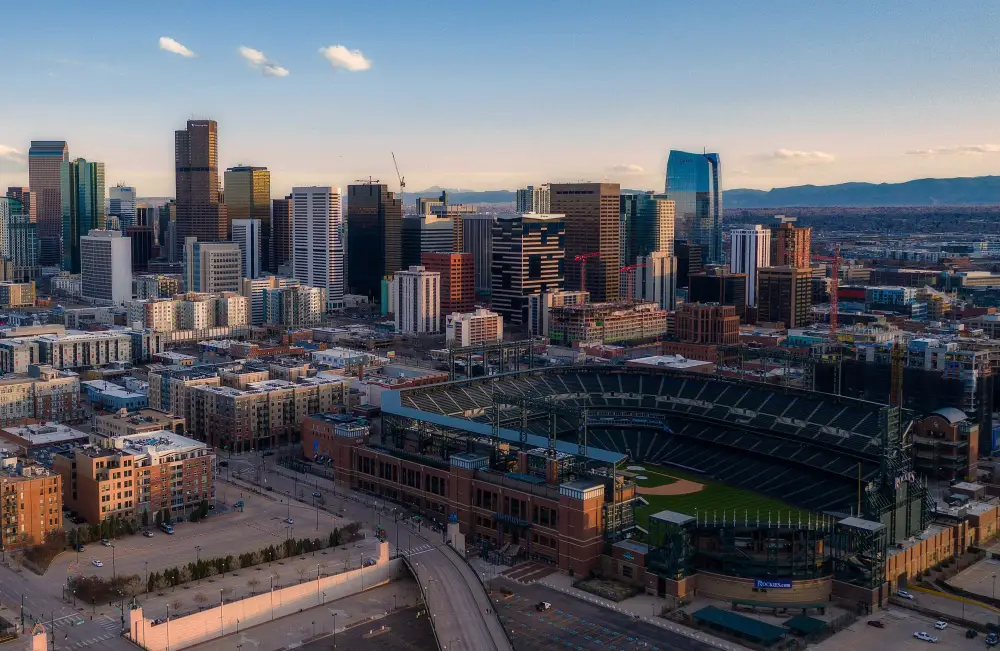
Sheridan Boulevard in Mountain View, Colorado. CGH Injury Lawyers represents motorcycle accident victims in Mountain View and Jefferson County.
Mountain View, Jefferson County, Colorado

Mountain View Motorcycle Accident Lawyers Who Fight the Bias Against Riders in Jefferson County

Sheridan Boulevard and West 44th Avenue carry heavy arterial traffic through Mountain View every day. When a driver cuts off a rider on those corridors, the insurer's first call is not to apologize. It is to build a case that the rider was at fault. Colorado law protects you. We enforce it. CGH Injury Lawyers serves Mountain View motorcycle accident victims from our Denver office. No fee unless we win.

No fee unless we win

It's More Than Money.

Get my free motorcycle accident case review

100% confidential. No fee unless we win.

Serving Mountain View from our Denver Office CGH Injury Lawyers 2701 Lawrence St., Suite 201 Denver, CO 80205 (303) 209-9395 Se habla espanol
5-star rated on Google ABOTA trial advocate on the team Built to fight rider bias No fee unless we win
  • Sheridan Boulevard is Mountain View's eastern boundary and one of the most dangerous arterial corridors in the northwest Denver metro, with 123 documented serious injuries or fatalities in recent years. Motorcyclists riding Sheridan or West 44th Avenue face traffic volumes that demand drivers pay attention. When they do not, Colorado law gives injured riders and their families the right to pursue full compensation. This is a Jefferson County matter, handled in Jefferson Combined Court.
  • A motorcycle crash caused by another driver is a motor vehicle tort under Colorado law. The filing deadline is three years from the date of the crash under C.R.S. 13-80-101(1)(n), not two years. If a government vehicle or public entity was involved, a written notice of claim is required within 182 days of discovering the injury (C.R.S. 24-10-109(1)).
  • Colorado's modified comparative negligence rule lets you recover as long as you were less than 50 percent at fault (C.R.S. 13-21-111). Insurers routinely try to pin 30, 40, or 50 percent of blame on the rider using gear choices, lane position, and speed. Defeating that tactic is where motorcycle cases are won or lost.

Mountain View covers just 12 square blocks with 541 residents, but it sits at the edge of one of the Denver metro's most congested commuter corridors. Riders on Sheridan Boulevard, West 44th Avenue, and the streets approaching the I-70 interchange face driver inattention, red-light runners, and commute-hour lane changes every day. When one of those situations turns into a crash, the insurer starts looking for ways to blame the rider before the ambulance leaves the scene. CGH Injury Lawyers serves Mountain View motorcycle accident victims from our Denver office at 2701 Lawrence St., Suite 201, Denver, CO 80205. We handle Jefferson County cases directly, appear in Jefferson Combined Court in Golden, and charge nothing unless we recover for you.

Why riders get blamed

How Jefferson County insurers use Colorado's gear and licensing rules against Mountain View riders

The moment a motorcycle crash is reported near Mountain View, the at-fault driver's insurer begins building a file. They are not building it to help you. They are building it to find the legal lever that reduces what they owe. For riders, that lever is almost always gear, licensing, or lane position.

The helmet and gear argument

  • Colorado law requires helmets only for riders under 18 (C.R.S. 42-4-1502). Riders 18 and older are free to ride without one.
  • Every rider and passenger must wear eye protection, glasses, goggles, or a face shield, regardless of age, unless the motorcycle has a compliant windscreen (C.R.S. 42-4-232). A violation of this rule is a Class A traffic infraction.
  • Defense attorneys routinely argue that riding without a helmet or without proper eye protection was a failure to mitigate damages, and then use that argument to reduce your injury compensation even when the other driver caused the crash.
  • Making a legal choice does not free the insurer from responsibility. We fight the mitigation defense directly.

The lane-filtering and license traps

  • Lane filtering became legal in Colorado on August 7, 2024 under SB24-079 (C.R.S. 42-4-1503), but only when traffic is completely stopped and the motorcycle moves at 15 mph or less. Lane splitting in moving traffic remains illegal.
  • Insurers routinely mischaracterize legal filtering as illegal lane splitting to deny claims outright. On a corridor like Sheridan Boulevard where multiple lanes stack up at signals, that mischaracterization is a tool adjusters use aggressively.
  • Operating a motorcycle without a valid Class M endorsement is illegal in Colorado and can be used as evidence of negligence per se, which hands the insurer a powerful argument to shift blame to the rider.
  • If you were cited for anything related to gear or licensing after a crash, contact an attorney before you speak to any insurer.

Here is how the math works on Sheridan Boulevard. A driver runs a red light and T-bones a rider who is legally crossing the intersection. The rider was not wearing a helmet. The at-fault driver's insurer argues that 40 percent of the injury severity was the rider's own responsibility for failing to mitigate. A 600,000 dollar jury verdict becomes 360,000. That reduction comes from a legal choice, not from anything the rider did to cause the crash. Knowing this before a crash, and having an attorney who fights it after one, changes the outcome.

The law that governs your case

Colorado motorcycle law decoded for Mountain View riders

Colorado motorcycle law changed in August 2024. If you are riding by rules from before that date, you may be violating a statute without knowing it, and a citation you receive after a crash can follow you into the claim. Here are the statutes that matter most for a Mountain View crash.

Helmets: C.R.S. 42-4-1502

  • Riders and passengers under 18 must wear a DOT-compliant helmet. Riders 18 and older may legally ride without one.
  • The legal right to ride without a helmet does not prevent an insurer from arguing you contributed to the severity of your own head or brain injury.
  • In Jefferson County cases where traumatic brain injury is at issue, this argument comes up early and often. We counter it with medical evidence and expert testimony.

Eye protection: C.R.S. 42-4-232

  • All operators and passengers must wear eye protection regardless of age. A compliant windscreen of adequate height and transparency satisfies the rule in place of glasses, goggles, or a face shield.
  • Riding without eye protection is a Class A traffic infraction. A citation after a crash is admissible in civil proceedings and can be used to argue negligence per se.
  • This is the most overlooked rule in Colorado motorcycle law, and it is the one adjusters check first when reviewing a claim.

Lane filtering: C.R.S. 42-4-1503

  • Legal in Colorado since August 7, 2024 under SB24-079, but only when traffic is completely stopped, not merely slow, on a road with at least two adjacent same-direction lanes, and the motorcycle travels 15 mph or less.
  • Lane splitting, riding between lanes of moving traffic, remains illegal in Colorado regardless of speed.
  • At Sheridan Boulevard signal queues during peak commute hours, the distinction between legal filtering and illegal splitting is the first thing a claims adjuster will review. Dashcam footage and traffic data lock down what actually happened.

Class M license endorsement

  • Operating a motorcycle in Colorado requires a Class M endorsement earned by passing a written and an on-cycle skills test. A motorcycle-only license is available for riders who do not also hold a standard vehicle license.
  • Riding without a valid Class M endorsement is illegal and gives the insurer grounds to argue you were operating the motorcycle unlawfully, which can be raised as evidence of negligence or as a basis to dispute coverage.
  • If you had a valid endorsement, we document it immediately so the insurer cannot use licensing as an excuse to delay or deny your claim.

Three-year deadline to file. Not two.

A motorcycle crash caused by a driver is a motor vehicle tort under Colorado law. The filing deadline is three years from the date of the crash under C.R.S. 13-80-101(1)(n). This is not the two-year general tort statute. The two-year window under C.R.S. 13-80-102 expressly excludes torts arising from the use or operation of a motor vehicle. If a government vehicle or a public entity played a role in your crash, a written notice of claim is also required within 182 days of discovering the injury under C.R.S. 24-10-109(1). Missing that notice bars the claim against the government entity entirely.

Local knowledge

Mountain View courts. Trauma care. Roads where motorcycle crashes happen.

Mountain View is a 0.09-square-mile enclave in Jefferson County, but its boundary streets carry arterial traffic that puts motorcyclists at real risk. The courthouse, the trauma centers, and the specific corridors where crashes occur are all local realities your claim depends on.

Where motorcycle crashes happen

Sheridan Boulevard and West 44th Avenue: the corridors that define Mountain View's risk

Sheridan Boulevard forms the eastern boundary of Mountain View and connects to the I-70 interchange to the north. City safety studies have documented 123 serious injuries or fatalities on the Sheridan corridor in recent years, with pedestrian crossing deficiencies, speeding, and red-light running identified as contributing factors. For motorcyclists, those same factors translate into left-turn crashes, rear-end collisions at signals, and lane-change impacts from commuters who do not check for riders. West 44th Avenue, Mountain View's northern boundary, absorbs peak commute overflow from Sheridan and I-70 from 7:30 to 9:00 a.m. eastbound and 4:30 to 6:00 p.m. in both directions. Mountain View itself spans from Sheridan Boulevard to the east, West 44th Avenue to the north, West 41st Avenue to the south, and Fenton Street to the west, covering just 12 square blocks. Every boundary street carries the kind of multi-lane arterial traffic that demands motorcyclists be visible and that drivers watch for them. Lakeside Amusement Park, immediately north in adjacent Lakeside, Colorado, adds documented seasonal traffic surges near Mountain View's northern boundary during summer evenings.

Courthouse

Jefferson Combined Court, Golden

Mountain View is in Jefferson County. A motorcycle accident lawsuit arising in Mountain View is filed in Jefferson Combined Court at 100 Jefferson County Parkway, Golden, CO 80401. Jefferson Combined Court is part of the First Judicial District, which serves Jefferson and Gilpin Counties. The local rules, the jury pool, and the defense attorneys active in that courthouse are all Jefferson County specifics. This is a different filing venue than Denver District Court, with different procedures and a different litigation environment. CGH Injury Lawyers handles Jefferson County motorcycle cases directly, including appearances at Jefferson Combined Court in Golden.

Trauma care

St. Anthony Hospital and Denver Health

The closest Level I Trauma Center to Mountain View is St. Anthony Hospital in Lakewood, designated by the Colorado Department of Public Health and Environment. Motorcycle crashes on Sheridan Boulevard and West 44th Avenue route serious injury victims to St. Anthony, which provides the highest level of emergency surgical and trauma care for the northwest Denver metro. Denver Health, a Level I Adult and Level II Pediatric Trauma Center verified by the American College of Surgeons and the State of Colorado, also serves crash victims from this corridor. The trauma records from both facilities document the full scope of your injuries, the treatment required, and the long-term medical picture. Those records become the foundation of the damages case we build.

Motorcycle-specific hazards

What makes Mountain View corridors especially dangerous for riders

Motorcyclists face risks on Sheridan Boulevard and West 44th Avenue that are different from car drivers. The lane widths, signal timing, and traffic volumes on Sheridan create left-turn conflicts where drivers entering or crossing Sheridan misjudge motorcycle speed or fail to see an approaching rider entirely. At peak commute hours, four-lane configurations on Sheridan give larger vehicles room to drift without noticing a motorcycle in an adjacent lane. Winter conditions bring snow and ice that make the road surface unstable for two wheels. Berkeley Lake Park, just east of Mountain View at Tennyson Street and West 46th Avenue, adds pedestrian and cyclist activity near the Sheridan corridor that increases conflict points for motorcyclists as well. These are the conditions an insurer can try to use against a rider by arguing heightened awareness was required. We use the same documented conditions to show why the at-fault driver carried a heightened duty to watch for riders.

After the crash

What to do after a motorcycle accident in or near Mountain View

The steps you take in the hours after a motorcycle crash on Sheridan Boulevard or West 44th Avenue determine how strong your claim will be. Insurance adjusters move quickly. So does evidence.

  1. Call 911 and stay at the scene

    A police report creates an official record naming the drivers and establishing what the responding officer observed. On a documented high-crash corridor like Sheridan Boulevard, the location record in a police report also provides context that connects your case to the road's known history of dangerous conditions. Get the report number and the responding officer's name before you leave.

  2. Get to St. Anthony Hospital or Denver Health immediately

    St. Anthony Hospital in Lakewood is the nearest Level I Trauma Center to Mountain View and the primary trauma destination for serious crashes on the Sheridan Boulevard and I-70 corridor. Denver Health, a Level I Adult and Level II Pediatric Trauma Center, is also reachable from this area. Motorcycle crash injuries routinely include internal bleeding, spinal trauma, and traumatic brain injury that are not immediately obvious. Get a full evaluation the same day. A gap in medical treatment is one of the first arguments an insurer raises to minimize your injury claim.

  3. Photograph and document before the scene is cleared

    Photograph your motorcycle, the at-fault vehicle, skid marks, road conditions, signal timing indicators, and any visible injuries. On Sheridan Boulevard, businesses and the I-70 corridor infrastructure may have surveillance cameras that captured the crash. That footage is overwritten within days or weeks. Get the names and contact information for any witnesses. Collect the other driver's license, registration, and insurance information.

  4. Do not give a recorded statement to the at-fault driver's insurer

    The other driver's insurance company is not working on your behalf. An adjuster's request for a recorded statement is an attempt to get you to say something that limits what they owe you. Do not agree to a recorded statement, sign a medical authorization, or accept any offer before consulting an attorney. A statement given in the first 24 hours after a crash is one of the primary tools used to argue you admitted partial fault.

  5. Contact CGH Injury Lawyers before the evidence disappears

    We send preservation letters to relevant parties and collect evidence immediately. Colorado's three-year filing deadline (C.R.S. 13-80-101(1)(n)) gives you time, but surveillance footage from Sheridan Boulevard businesses is gone in days. Witness memories fade. We act early to lock down the evidence that defeats the rider-blame defense. Call (303) 209-9395. The consultation is free and the review is immediate.

Compensation and comparative fault

What Mountain View motorcycle accident victims can recover, and how comparative fault affects the number

Colorado law recognizes two categories of damages in a motorcycle crash case: economic losses that can be documented with bills and records, and non-economic losses for the human cost of the injury. The comparative fault rule then adjusts how much you actually receive based on any share of fault the jury assigns to you.

Economic damages (never capped)

  • Emergency care at St. Anthony Hospital or Denver Health
  • All medical expenses, past and future, including surgery and rehabilitation
  • Lost wages and income during recovery
  • Loss of future earning capacity if injuries are permanent
  • Motorcycle damage and replacement costs
  • Out-of-pocket expenses tied to the crash and treatment

Non-economic damages (capped) and physical impairment (uncapped)

  • Pain and suffering
  • Emotional distress and mental anguish
  • Loss of enjoyment of life
  • Loss of consortium for a spouse or family member
  • Compensation for physical impairment or disfigurement is NOT subject to the non-economic cap and is frequently the largest single item in a serious motorcycle crash case

Colorado's comparative fault rule and the cap that matters most for riders

For claims accruing on or after January 1, 2025, Colorado caps non-economic damages such as pain and suffering at $1,500,000 under C.R.S. 13-21-102.5. Compensation for physical impairment or disfigurement is not subject to that cap. In a serious motorcycle crash where a rider loses partial use of a limb, suffers road rash scarring, or sustains a permanent orthopedic injury, the physical impairment category is uncapped and often represents the most significant part of the total recovery. Economic damages including medical bills and lost wages are never capped under any amount. Under C.R.S. 13-21-111, you can recover only if your share of fault is less than 50 percent. Insurers work hard to inflate a rider's fault percentage, which is why having an attorney who can challenge the fault assessment before a Jefferson County jury changes the outcome.

Insurance and uninsured drivers

What happens when the driver who hit you on Sheridan Boulevard had no insurance or too little

Colorado's minimum liability limits are 25,000 dollars per person, 50,000 dollars per accident, and 15,000 dollars for property damage. A serious motorcycle crash with surgery, rehabilitation, and lost wages can far exceed those limits. Your own uninsured and underinsured motorist coverage is often the most important policy in the case.

Why UM/UIM coverage matters for Mountain View riders

  • Uninsured motorist (UM) coverage pays your damages when the at-fault driver has no insurance at all. Underinsured motorist (UIM) coverage bridges the gap when their policy limits fall short of your actual damages.
  • Colorado UM/UIM claims for motorcycle accidents are governed by C.R.S. 13-80-107.5 under Pham v. State Farm, 2013 CO 17. These claims have their own procedural requirements and separate deadlines.
  • Do not settle with the at-fault driver's carrier before you understand how your own UM/UIM policy applies. A premature settlement can compromise or eliminate your ability to recover under your own coverage.
  • Without UM coverage and a driver who has no real assets, suing the individual is often an empty legal exercise. Your own policy is the practical recovery path.

What to expect from the at-fault driver's insurer

  • The at-fault driver's insurer has an immediate financial incentive to settle quickly, cheaply, and before you know the full extent of your injuries. A first offer is almost never a fair one.
  • After a motorcycle crash, expect the adjuster to review your gear, licensing, and lane position before making any offer. Those are the three levers they use to argue the rider's own negligence.
  • If the insurer disputes liability and you reach 50 percent or more of assigned fault, you recover nothing under C.R.S. 13-21-111. Avoiding that outcome requires a documented counter-narrative built from the crash scene evidence.
  • A rider found 49 percent at fault can still recover 51 percent of the full damages award. That margin is worth fighting for, and it is exactly what we do.
I wish I could leave more than 5 stars!
Grace M., 5-star CGH Injury Lawyers client review
Your team

The team handling your Mountain View motorcycle accident case

CGH Injury Lawyers is a Colorado personal injury firm founded in 2016, formerly Cheney Galluzzi and Howard, LLC. Managing Partner Kevin Cheney is a member of the American Board of Trial Advocates (ABOTA) and has tried over 25 cases to verdict, including in Jefferson County. Timothy G. Tarr has been recognized by Best Lawyers every year since 2023. Every motorcycle accident case is handled by a licensed Colorado attorney, not a paralegal or case manager. CGH Injury Lawyers does not have a Mountain View office. We serve Mountain View from our Denver office at 2701 Lawrence St., Suite 201, Denver, CO 80205. If a firm tells you they have a Mountain View address, look it up before you sign anything.

ABOTA member on the team Tim Tarr: Best Lawyers in America since 2023 Over 25 cases to verdict Jefferson County cases handled directly Bilingual EN / ES Free consultation No fee unless we win
Questions

Mountain View motorcycle accident: frequently asked questions

How long do I have to file a motorcycle accident lawsuit if I was hurt near Mountain View?

Colorado gives you three years from the date of the crash to file a lawsuit for injuries arising out of the use or operation of a motor vehicle (C.R.S. 13-80-101(1)(n)). A motorcycle crash caused by a driver is a motor vehicle tort, so the three-year deadline applies, not the two-year general tort statute. If a government vehicle or a public entity was involved, a written notice of claim is also required within 182 days of discovering the injury (C.R.S. 24-10-109(1)). Missing that notice bars the claim against the government entity. Do not wait until the deadline approaches to consult an attorney.

Can I recover damages if I was not wearing a helmet when the crash happened?

Yes, you can still file a claim and recover damages. Colorado does not require helmets for riders 18 and older (C.R.S. 42-4-1502), so you broke no law by riding without one. However, the defense will likely argue that not wearing a helmet contributed to the severity of your head or brain injuries, which can reduce your compensation under Colorado's modified comparative negligence rule (C.R.S. 13-21-111). If you are found less than 50 percent at fault overall, you can still recover, but your damages award is reduced by your assigned fault percentage.

Where is a Mountain View motorcycle accident lawsuit filed?

Mountain View is in Jefferson County, so a motorcycle accident lawsuit arising there is filed in Jefferson Combined Court at 100 Jefferson County Parkway, Golden, CO 80401. Jefferson Combined Court is part of the First Judicial District, which serves Jefferson and Gilpin Counties. This is a different venue from Denver District Court, with its own local rules, jury pool, and litigation environment. CGH Injury Lawyers handles Jefferson County motorcycle cases directly and appears at Jefferson Combined Court in Golden.

Is lane filtering legal in Colorado, and how does it affect a crash claim?

Lane filtering is legal in Colorado as of August 7, 2024 under SB24-079 (C.R.S. 42-4-1503), but only when traffic is completely stopped, the motorcycle travels at 15 mph or less, and the road has at least two adjacent same-direction lanes. Lane splitting in moving traffic remains illegal. After a crash, insurers frequently attempt to mischaracterize legal filtering as illegal splitting in order to deny or reduce claims. Dashcam footage, traffic data, and witness accounts are the tools we use to lock down what actually happened on the road.

Is there a cap on pain and suffering damages after a Mountain View motorcycle crash?

Yes, for claims accruing on or after January 1, 2025. Colorado caps non-economic damages such as pain and suffering at $1,500,000 under C.R.S. 13-21-102.5. However, compensation for physical impairment or disfigurement is not subject to that cap at all. In a serious motorcycle crash, the physical impairment category, covering a permanent limp, loss of range of motion, scarring, or loss of limb function, is uncapped and often the most significant component of the recovery. Economic damages such as medical bills, lost wages, and future care costs are never capped under any amount.

Does CGH Injury Lawyers have an office in Mountain View?

No. CGH Injury Lawyers has one office, at 2701 Lawrence St., Suite 201, Denver, CO 80205. We serve Mountain View and the rest of Jefferson County from that office. We handle Jefferson County motorcycle accident cases directly, file in Jefferson Combined Court in Golden when the case requires it, and meet you where it works. Call us at (303) 209-9395 for a free consultation.

It's More Than Money.

You were hurt riding in Mountain View. We fight the insurer who is already building a case against you.

Free consultation. No fee unless we win. Serving Mountain View from our Denver office. Jefferson County cases handled directly.

Tell us what happened on Sheridan or West 44th

100% confidential. No fee unless we win.

Prefer to read first? See how Colorado motorcycle accident law works statewide.

CGH Injury Lawyers · 2701 Lawrence St., Suite 201, Denver, CO 80205 · Serving Mountain View, Jefferson County