

The Colorado Premises Liability Act: Understanding Property Owner Duties Under C.R.S. § 13-21-115

The Colorado Premises Liability Act (C.R.S. § 13-21-115) establishes the legal duty property owners owe to individuals on their property. Under this statute, the level of care required depends on the visitor’s status—whether they are an invitee, licensee, or trespasser—and whether the property owner knew or should have known about dangerous conditions.
If you’ve been injured on someone else’s property in Colorado, understanding this law is the first step in determining whether the owner failed in their legal obligation to keep you safe. Property owners don’t have unlimited liability, but they also can’t ignore hazards that put visitors at risk.
What is the Colorado Premises Liability Act? (C.R.S. § 13-21-115)
The Colorado Premises Liability Act, codified in C.R.S. § 13-21-115, defines when property owners can be held legally responsible for injuries that occur on their land. This statute replaced older common law rules and created a more structured framework for determining liability.
Under the Act, property owners have different duties depending on why someone is on their property. The law recognizes that inviting customers into a business creates different obligations than allowing a neighbor to cut through your yard. The statute also addresses what property owners must do when they know about dangerous conditions versus when they should have discovered them through reasonable inspection.
The Act applies to all types of property in Colorado—residential homes, apartment buildings, commercial stores, restaurants, office buildings, parking lots, and recreational areas. It covers both private property owners and business entities, including landlords, property management companies, and retail establishments. Even government entities can be subject to premises liability under certain circumstances, though sovereign immunity rules may apply.
The Three Categories of Property Visitors in Colorado
Colorado law divides property visitors into three distinct categories, each receiving a different level of legal protection. Your status at the time of your injury determines what the property owner owed you.
Invitees are people who enter property for a purpose that benefits the owner or where the owner has extended an open invitation to the public. This includes customers in stores, diners in restaurants, patients in medical offices, and guests at hotels. When you walk into a grocery store or visit a business open to the public, you are an invitee. Property owners owe invitees the highest duty of care.
Licensees are people who enter property with the owner’s permission but for their own purposes rather than the owner’s benefit. Social guests at someone’s home are typically licensees. If you’re invited to a friend’s house for dinner or a party, you’re a licensee. Delivery drivers and repair workers may also fall into this category depending on the circumstances. Property owners must warn licensees about known dangers but don’t have to inspect for hidden hazards.
Trespassers are people who enter property without permission or legal right. Someone who cuts through private property without authorization is a trespasser. Property owners generally owe trespassers very limited duties—they cannot intentionally harm trespassers or create traps, but they don’t have to warn them about dangers or maintain the property for their safety. An important exception exists for child trespassers under the “attractive nuisance” doctrine, which imposes higher duties when property features like swimming pools or construction sites might attract children.
The distinction between these categories isn’t always clear-cut. A customer who wanders into an employee-only area might lose invitee status. A social guest who stays after being asked to leave becomes a trespasser. Courts examine the specific circumstances of each case to determine status at the moment of injury.
The Property Owner’s Duty of Care: A Comparative Matrix
The level of care a property owner must provide depends directly on your visitor status. Here’s how Colorado law defines these duties:
| Visitor Status | Property Owner’s Duty | What This Means in Practice |
| Invitee | Duty to use reasonable care to protect against dangers the owner knows about or should discover through reasonable inspection | Must actively inspect the property, identify hazards, fix them or warn about them, and take steps to prevent foreseeable injuries |
| Licensee | Duty to warn about known dangers that are not obvious | Must tell you about hazards the owner actually knows about, but doesn’t have to inspect or look for problems |
| Trespasser | Duty not to willfully or wantonly injure | Cannot set traps or intentionally harm, but no duty to maintain property or warn about dangers |
For invitees, “reasonable care” means property owners must take active steps to discover and address hazards. This includes regular inspections, prompt cleanup of spills, timely repairs of broken stairs or handrails, adequate lighting in walkways, and snow and ice removal. The owner can’t simply wait for someone to report a problem—they must look for issues before someone gets hurt.
For licensees, the duty is narrower. If a homeowner knows their back deck has a loose board, they must warn a social guest about it. But if they don’t know about the loose board, they have no duty to inspect the deck before the party to find out.
The “reasonable person” standard applies to invitee situations. Courts ask what a reasonable property owner would have done under similar circumstances. Would a reasonable store manager have noticed that spill? Would a reasonable landlord have fixed that broken stair? Would a reasonable restaurant owner have salted that icy entrance?
Constructive Notice: When Property Owners “Should Have Known”
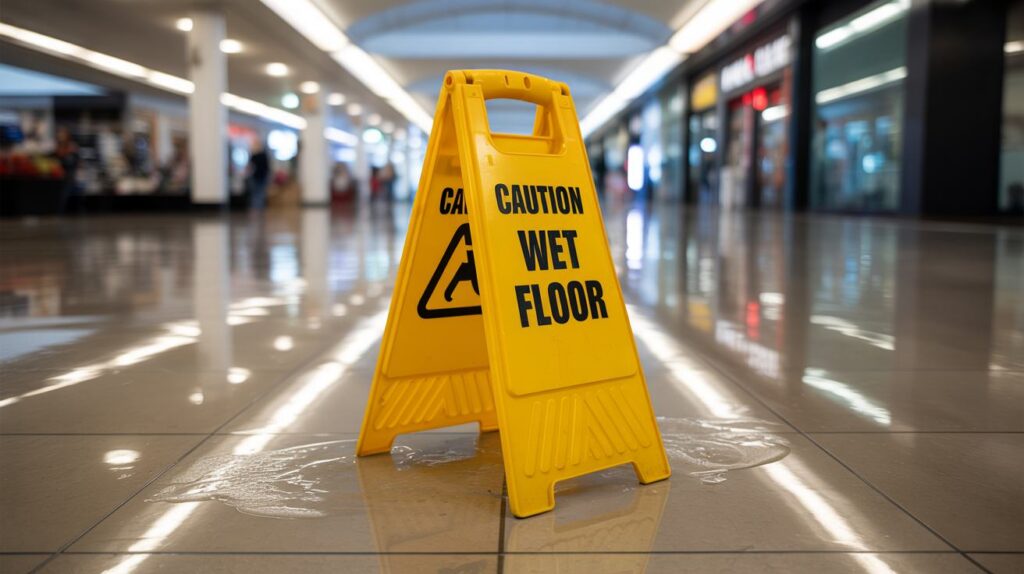
One of the most critical concepts in Colorado premises liability law is “constructive notice.” Property owners often defend themselves by claiming they didn’t know about the hazard that caused your injury. But under Colorado law, actual knowledge isn’t always required—owners can be liable for hazards they should have discovered through reasonable care.
Constructive notice exists when a dangerous condition has been present long enough that a reasonable property owner would have discovered it through proper inspection. If a puddle of water sits in a grocery store aisle for two hours, the store cannot escape liability by saying no employee saw it. A reasonable inspection schedule would have caught it.
Courts consider several factors when determining whether constructive notice existed. The length of time the hazard was present is crucial—a spill that just occurred seconds before someone slips is different from one that’s been there all morning. The visibility and location of the hazard matter—a broken tile in a high-traffic entrance is more likely to be noticed than one in a back corner. The property owner’s inspection procedures are examined—stores with regular “safety sweeps” every 30 minutes have stronger defenses than those with no system at all.
Property owners in Colorado are expected to implement reasonable inspection protocols based on their type of business. A busy grocery store should inspect high-traffic areas more frequently than a quiet office building. Restaurants must check restrooms regularly because wet floors are predictable. Landlords must inspect common areas like stairwells and hallways where tenants walk daily.
Weather conditions create constructive notice obligations in Colorado. Property owners know that snow and ice are foreseeable during winter months. While Colorado law provides some protection under the “ongoing storm” doctrine, once precipitation stops, owners must take reasonable steps to clear walkways within a reasonable time. Allowing ice to build up on an entrance for days after a storm ends can establish constructive notice.
The “mode of operation” rule applies in some cases. If a business operates in a way that makes certain hazards predictable, they may be liable even without specific notice. Self-serve food areas where spills are common, gas stations where slippery fluids are routine, or bars where intoxicated patrons create foreseeable risks all trigger heightened duties.
Documentation becomes critical in constructive notice cases. Incident reports, inspection logs, maintenance records, and surveillance footage can all prove how long a hazard existed. Property owners who cannot produce inspection records often lose the argument that they conducted reasonable inspections.
Common Premises Liability Scenarios in Colorado
Understanding how the Premises Liability Act applies in real situations helps illustrate when property owners fail in their duties. Colorado’s unique geography and urban environment create specific hazard patterns.
Urban Commercial Properties: Downtown Denver and Boulder’s Pearl Street Mall see frequent slip and fall cases during winter. Store owners must remove snow and ice from sidewalks and entrances. Union Station’s high foot traffic requires constant vigilance for spills, debris, and uneven surfaces. Parking garages throughout the Front Range must maintain adequate lighting and repair potholes or crumbling concrete. Retail stores must keep aisles clear, clean up spills promptly, and ensure floor mats don’t create tripping hazards.
Residential Multi-Family Properties: Capitol Hill’s older apartment buildings often have premises liability issues with inadequate stairwell lighting, broken handrails, and crumbling front steps. Property management companies must maintain common areas including hallways, laundry rooms, and outdoor spaces. Swimming pools and fitness centers in residential complexes require proper maintenance and safety equipment. Parking lots must be kept free of potholes and ice buildup.
Recreational and Mountain Properties: Breckenridge, Vail, and other mountain communities have unique premises liability concerns with short-term rental properties. Owners must ensure decks can handle snow loads, walkways are properly maintained during winter, and ski-in/ski-out areas are safe. Inadequate lighting on outdoor stairs and paths creates hazards when guests return after dark. Hot tubs and fire pits require proper barriers and warnings.
Negligent Security Cases: Property owners in areas with foreseeable criminal activity must take reasonable security measures. Apartment buildings with a history of break-ins may need to provide adequate locks, lighting, and security cameras. Bars and nightclubs must address foreseeable fights and assaults. Parking lots and garages in high-crime areas require proper lighting and security patrols. The owner’s knowledge of prior incidents on or near the property establishes foreseeability.
Each scenario requires examining whether the property owner met their duty based on the visitor’s status and whether the owner had actual or constructive notice of the hazard.
Property Owner Defenses and How They’re Challenged
Property owners and their insurance companies raise several common defenses in premises liability cases. Understanding these arguments helps injury victims recognize when they’re being unfairly blamed.
The “Open and Obvious” Defense: Property owners often claim a hazard was so obvious that they had no duty to warn about it or protect against it. Colorado courts recognize this defense but apply it narrowly. Just because a danger is visible doesn’t always absolve the owner. If the hazard is unreasonably dangerous despite being obvious, or if circumstances distract visitors from noticing it, the defense may fail. A large pothole in bright daylight might be obvious, but if it’s in a location where customers are looking at store displays rather than the ground, the owner may still be liable.
Comparative Negligence: Under C.R.S. § 13-21-111, Colorado follows a modified comparative negligence rule. If you’re partially at fault for your injury, your compensation is reduced by your percentage of fault. However, you can still recover as long as you’re not more than 50% responsible. Property owners often try to shift blame by claiming you weren’t watching where you were going, were wearing inappropriate footwear, or were distracted. These arguments don’t eliminate the owner’s liability if they failed in their duty—they just reduce your recovery proportionally.
Assumption of Risk: Property owners sometimes argue you voluntarily accepted the risk of injury. This defense applies most often in recreational activities. If you choose to ski on a clearly marked expert trail, you assume certain risks inherent in that activity. But assumption of risk doesn’t apply to dangers created by the property owner’s negligence. A ski resort can’t escape liability for a lift malfunction by claiming you assumed the risk of skiing.
Lack of Notice: As discussed earlier, property owners frequently claim they didn’t know about the hazard. Challenging this defense requires proving constructive notice through evidence of how long the condition existed, the owner’s inspection procedures, and whether the hazard was in a location requiring regular monitoring.
Contractual Liability Waivers: Some property owners require visitors to sign liability waivers. While these can be enforceable in Colorado, they must be clear, specific, and not violate public policy. Waivers for gross negligence or willful misconduct are generally unenforceable. Courts scrutinize waivers carefully, especially when there’s unequal bargaining power.
Successfully challenging these defenses requires thorough investigation, witness testimony, expert analysis, and often surveillance footage or other documentation that contradicts the owner’s version of events.
When Property Negligence Leads to Serious Injury
Need Legal Representation for a Premises Liability Injury?
When property owners fail in their duties under the Colorado Premises Liability Act, the consequences can be devastating. Understanding the law is one thing—proving a property owner’s negligence and securing fair compensation requires an experienced Colorado personal injury lawyer. Here are the most common types of claims arising from premises liability violations in Colorado:
- Slip and Fall Accidents – When property owners fail to maintain safe walking surfaces, victims suffer broken bones, back injuries, and soft tissue damage that can take months to heal.
- Brain Injury Cases – Falls on hard surfaces or being struck by falling objects can cause traumatic brain injuries with catastrophic, life-altering consequences requiring extensive medical care and rehabilitation.
- Wrongful Death Claims – When property negligence results in fatal accidents, families deserve accountability and compensation for their devastating loss.
Each of these cases requires proving that the property owner knew or should have known about the dangerous condition and failed to take reasonable action to protect visitors. The evidence must establish your visitor status, the owner’s specific duty, and how they breached that duty.
Slip and Fall Injury Lawyers
Premises liability law in Colorado governs when property owners can be held legally responsible for injuries caused by …
Brain Injury Lawyers
A traumatic brain injury (TBI) occurs when external force disrupts normal brain function, ranging from brief loss of …
Wrongful Death Lawyer
The Colorado Wrongful Death Act, codified at C.R.S. § 13-21-201, establishes the legal framework for surviving family members …
Frequently Asked Questions About Premises Liability
What should I do immediately after a premises injury?
First, seek medical attention to document your injuries. Report the incident to the property owner or manager and request a copy of any incident report. Take photos and videos of the hazard, your injuries, and the surrounding area. Collect witness contact information and preserve any clothing or shoes involved. Avoid giving recorded statements to insurance companies until you have legal advice from our premises liability attorneys who can protect your rights.
Why should I hire an attorney instead of handling the insurance company myself?
Insurance companies aim to minimize payouts in premises liability claims. An experienced premises liability attorney will investigate your case, calculate the true value of your claim—including future damages—and negotiate aggressively on your behalf. We level the playing field so you have the best chance of securing fair compensation after suffering injuries on someone else’s property. Our premises liability lawyers understand insurance tactics and how to counter them effectively.
How much does it cost to hire Cheney Galluzzi & Howard LLC for a premises liability case?
We handle premises liability cases on a contingency fee basis, meaning you owe us nothing upfront. Our fees come as a percentage of the settlement or verdict only if we win your case. This approach ensures that quality legal representation is accessible regardless of your financial situation. You can focus on recovery while our premises liability attorneys fight for your compensation.
How long do I have to file a premises liability claim in Colorado?
Colorado’s statute of limitations for premises liability cases is generally two years from the date of injury under C.R.S. § 13-80-102. However, exceptions exist for cases involving minors or when the injury wasn’t immediately discoverable. Missing this deadline typically means losing your right to compensation, so it’s critical to consult an attorney promptly after your injury.
Can I recover compensation if I was partially at fault for my accident?
Yes, under Colorado’s comparative negligence rule. As long as you’re 50% or less at fault, you can recover damages reduced by your percentage of responsibility. If you’re 20% at fault and your damages are $100,000, you’d recover $80,000. If you’re 51% or more at fault, you cannot recover anything.
What if I was injured in a parking lot—is the property owner liable?
Parking lot owners have the same duties as other property owners under C.R.S. § 13-21-115. If you’re a customer (invitee), they must maintain the lot in reasonably safe condition, which includes filling potholes, providing adequate lighting, removing snow and ice, and ensuring proper drainage. Liability depends on whether they knew or should have known about the hazard.
Does a “Caution: Wet Floor” sign protect the property owner from liability?
Not necessarily. While warning signs can help property owners meet their duty to warn, a sign doesn’t eliminate liability if the hazard is unreasonably dangerous or if the owner should have fixed the problem rather than just warning about it. If a store mops a floor and places a sign, that may be reasonable. If a pipe has been leaking for weeks creating a constant hazard, a sign isn’t enough—the owner must repair the leak.
What is the “ongoing storm” rule in Colorado?
Colorado courts recognize that property owners cannot be expected to continuously remove snow and ice during an active storm. However, once precipitation stops, owners must take reasonable steps within a reasonable time to clear walkways and entrances. What’s “reasonable” depends on factors like the amount of accumulation, the type of property, and how much time has passed since the storm ended.
Can I sue my landlord for an injury in my apartment?
It depends on where the injury occurred and who was responsible for maintenance. Landlords must maintain common areas like hallways, stairs, and entryways in safe condition. For hazards inside your apartment, liability depends on whether the landlord knew about the problem, whether it existed when you moved in, and what your lease says about maintenance responsibilities.
What damages can I recover in a premises liability case?
Colorado law allows recovery for medical expenses (past and future), lost wages and lost earning capacity, pain and suffering, disability and disfigurement, and loss of enjoyment of life. In wrongful death cases, families can recover funeral expenses, loss of financial support, and loss of companionship. Economic damages have no cap, but non-economic damages may be limited in certain cases under C.R.S. § 13-21-102.5.
How do I prove the property owner had constructive notice of the hazard?
Evidence can include surveillance footage showing how long the hazard existed, witness testimony about the condition, the owner’s inspection logs (or lack thereof), maintenance records, prior incident reports, and the nature of the hazard itself. An experienced attorney can subpoena records the property owner might not voluntarily provide.
What if the property owner blames their maintenance company or contractor?
Property owners cannot escape liability by delegating maintenance to third parties. While the contractor might share responsibility, the owner still has a duty to ensure the property is reasonably safe. In some cases, both the owner and the contractor can be held liable, which can actually benefit injury victims by providing multiple sources of recovery.
Should I accept the property owner’s insurance company’s settlement offer?
Insurance companies typically make quick, low settlement offers before you understand the full extent of your injuries and future medical needs. Once you accept and sign a release, you cannot recover additional compensation later. Consult with a Colorado personal injury attorney before accepting any settlement to ensure it fairly compensates you for all your damages, including future medical care and long-term impacts.
Legal Disclaimer: This article provides general information about Colorado premises liability law and should not be construed as legal advice. Every case is unique and depends on specific facts and circumstances. The outcome of your case will depend on the particular facts and legal issues involved. Consult with a licensed Colorado attorney to discuss your specific situation. At Cheney Galluzzi & Howard, Kevin Cheney and our team are here to help you navigate these complexities and protect your rights.