
Colorado Electric Scooter Regulations & Rider Safety: The 2026 Legal Guide
Electric scooters, legally classified as “low-power scooters” under Colorado Revised Statutes 42-1-102, are defined as vehicles with two or three wheels, electric motors under 2,000 watts, and maximum speeds of 20 mph. In Colorado, these devices occupy a complex legal space—regulated by both state law (House Bill 19-1221) and local municipal ordinances that often conflict with state provisions.
This comprehensive guide clarifies the regulatory framework governing electric scooter operation in Colorado, explains the “home rule” conflicts between state and municipal laws, and provides practical safety guidance for riders navigating Denver, Boulder, and other Colorado municipalities.
Understanding Colorado’s Electric Scooter Classification (CRS 42-1-102)
Colorado law distinguishes electric scooters from traditional motor vehicles, bicycles, and toys through specific statutory definitions. Under House Bill 19-1221, enacted in 2019, the state created a formal legal framework for what it terms “low-power scooters.”
The Legal Definition:
A low-power scooter must meet all of the following criteria:
- Two or three wheels
- Handlebars for steering
- An electric motor rated at 2,000 watts or less
- A maximum speed capability of 20 miles per hour on level ground
- A floorboard designed for standing (not sitting)
This definition matters because it determines which traffic laws apply. Low-power scooters are treated as vehicles under Colorado law, meaning riders must follow most of the same rules as bicyclists and motorists.
Licensing Requirements:
Colorado requires operators of low-power scooters to possess a valid driver’s license or instruction permit. This is a critical distinction from bicycles, which do not require licensing. Riders under 18 must wear protective headgear at all times while operating the scooter.
Why the Classification Matters:
The vehicle classification means electric scooters are subject to Colorado’s traffic laws, including rules against driving under the influence (DUI), reckless operation, and comparative negligence standards in accident cases. Insurance companies frequently use this classification to argue that standard auto insurance policies don’t cover scooter accidents, creating coverage gaps that leave injured riders without compensation.
The “Home Rule” Conflict: State Law vs. Municipal Ordinances
This is where Colorado’s electric scooter regulations become genuinely confusing—and where most riders unknowingly break the law. Colorado’s constitution grants municipalities “home rule” authority, allowing cities to enact local ordinances that supersede state law within their boundaries.
The Core Conflict:
State law (CRS 42-4-1412) permits low-power scooter operation on sidewalks at speeds not exceeding 6 mph. However, Denver, Boulder, and other municipalities have enacted ordinances that directly contradict this provision.
Jurisdiction Checker: State vs. Municipal Rules
| Regulation | Colorado State Law | City of Denver | City of Boulder |
| Maximum Speed | 20 mph (state roads) | 15 mph (most areas) | 15 mph |
| Sidewalk Riding | Permitted at ≤6 mph | BANNED (except when parking) | BANNED in business districts |
| Bike Lane Requirement | Recommended | Mandatory where available | Mandatory where available |
| Dismount Zones | None specified | 16th Street Mall, LoDo core | Pearl Street Mall |
| Helmet Law | Required under age 18 | Required under age 18 | Required under age 18 |
| Parking Rules | Not specified | Must use designated corrals | Must use designated areas |
What This Means for Riders:
If you’re riding in Aurora or unincorporated areas of Colorado, state law governs—sidewalk riding at low speeds is legal. But the moment you cross into Denver’s city limits, that same behavior becomes a citable offense. The 16th Street Mall, LoDo (Lower Downtown), and RiNo (River North Art District) are heavily enforced zones where Denver Police regularly issue citations for sidewalk riding.
The Legal Implications:
This jurisdictional complexity creates significant liability issues in accident cases. Insurance adjusters frequently argue that a rider was “breaking the law” by riding on a sidewalk in Denver, attempting to assign 100% fault to the injured rider. However, Colorado’s comparative negligence doctrine (explained below) means that even if you were technically violating a local ordinance, you may still be entitled to substantial compensation if another party’s negligence contributed to the crash.
Why Home Rule Exists:
Municipalities argue that their denser pedestrian traffic requires stricter scooter regulations than rural state highways. Denver’s ban on sidewalk riding stems from legitimate safety concerns on crowded downtown sidewalks. However, the lack of coordination between state and local law creates a confusing patchwork that even well-intentioned riders struggle to navigate.
Where You Can (and Cannot) Ride: Colorado’s Operational Rules
Colorado Revised Statutes 42-4-1412 establishes the baseline operational requirements for low-power scooters, though municipalities may impose additional restrictions.
State-Level Operational Rules:
Roadway vs. Sidewalk:
State law permits scooter operation on roadways, bike lanes, and sidewalks (at reduced speeds). When a bike lane or shoulder is available, riders should use it rather than the travel lane. On sidewalks, the speed limit drops to 6 mph, and riders must yield to pedestrians.
Traffic Law Compliance:
Scooter operators must obey all traffic control devices (stop signs, traffic lights, yield signs). Riders have the same rights and duties as bicyclists, including the right to occupy a full lane when necessary for safety.
Prohibited Areas:
State law prohibits scooter operation on interstate highways and limited-access roadways. Individual municipalities may designate additional prohibited zones.
Municipal “Dismount Zones”:
Denver:
- 16th Street Mall (entire length)
- Union Station plaza areas
- Certain sections of LoDo during special events
- Any area posted with “No Riding” signage
Boulder:
- Pearl Street Mall (between 11th and 15th Streets)
- University Hill commercial district sidewalks
- Boulder Creek Path during peak hours (posted)
Enforcement Reality:
Denver has significantly increased scooter enforcement since 2024, particularly in tourist-heavy areas. Citations typically range from $50 to $150 for sidewalk riding violations. More seriously, riding in a dismount zone can establish contributory negligence in accident cases, potentially reducing your compensation even if another party caused the crash.
The “Geospatial Vectors” Problem:
Scooter-share companies (Lime, Bird, Spin) use GPS geofencing to slow or disable scooters in certain zones. However, these digital boundaries don’t always align perfectly with legal boundaries. A scooter might allow full-speed operation on a sidewalk where city ordinance prohibits riding entirely. Don’t rely on the app’s permissiveness as proof of legality.
Safety Equipment & Best Practices for Colorado Riders
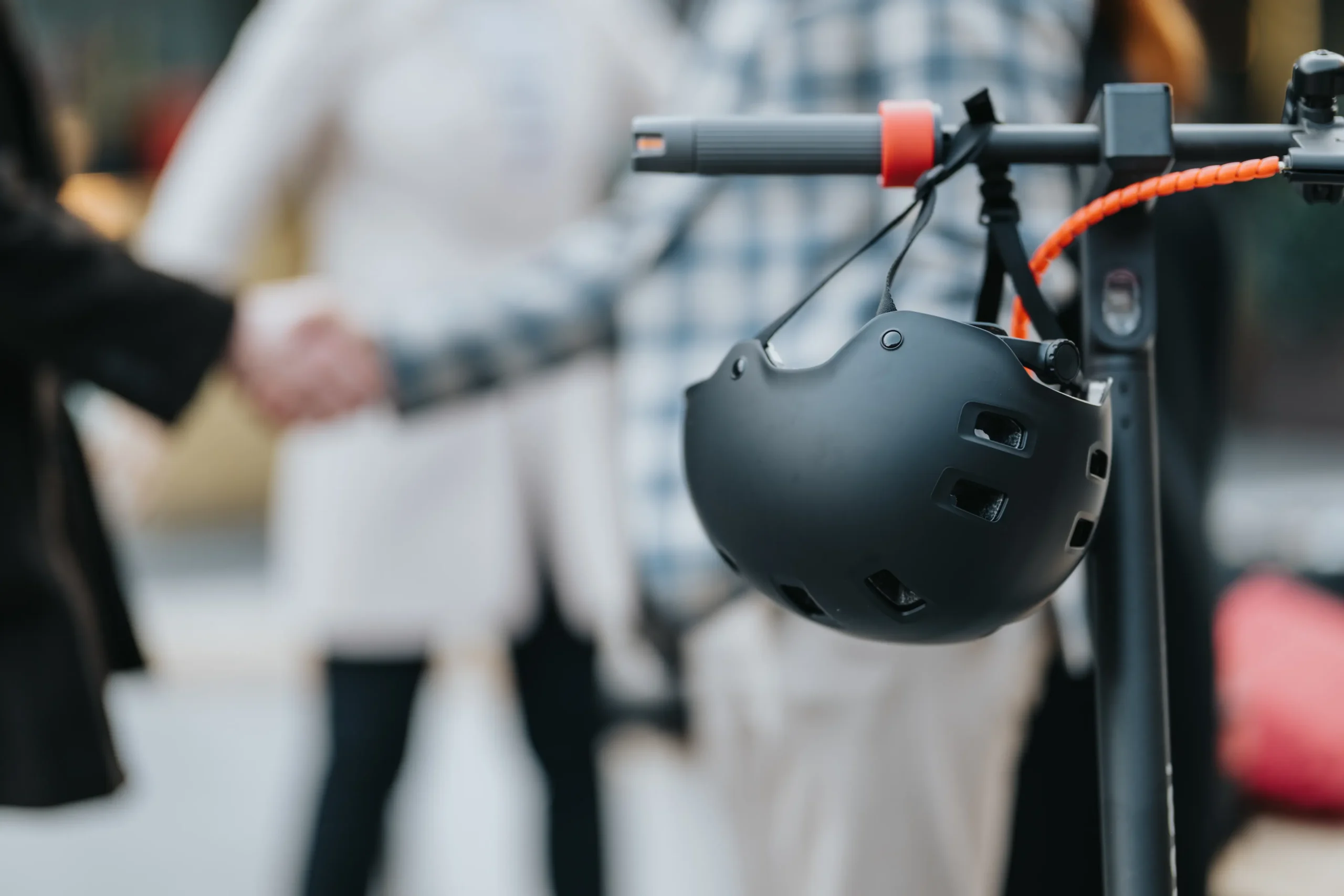
While Colorado’s equipment requirements for scooters are relatively minimal, following enhanced safety practices dramatically reduces injury risk.
Legally Required Equipment:
Lighting (CRS 42-4-1412):
- Front white light visible from 500 feet (required during darkness)
- Rear red reflector visible from 600 feet
- Side reflectors (amber or white)
Most rental scooters come equipped with basic lighting, but personal scooters must be retrofitted if purchased without these features.
Helmet Requirements:
Colorado law mandates helmet use for all riders under 18 years of age. Adults (18+) are not legally required to wear helmets, though it’s strongly recommended.
The Helmet Liability Question:
Here’s a critical point many riders don’t understand: even though adults aren’t required to wear helmets, insurance companies will aggressively argue that your failure to wear one contributed to your injuries. Under Colorado’s comparative negligence system, this argument can reduce your compensation by 10-30% even if the other party was clearly at fault for the crash.
Recommended Safety Practices:
The Rider Safety Checklist:
- ✓ Wear a helmet (even if not legally required)
- ✓ Use bright or reflective clothing during low-light conditions
- ✓ Test brakes before every ride
- ✓ Check tire pressure and tread (personal scooters)
- ✓ Verify UL 2272 battery certification (prevents fire risk)
- ✓ Keep both hands on handlebars
- ✓ Avoid riding in rain (reduced traction and visibility)
- ✓ Never ride under the influence of alcohol or drugs
High-Risk Corridors in Denver:
Local accident data shows elevated crash rates on:
- 15th Street bike lane (conflicts with right-turning vehicles)
- Speer Boulevard (high-speed traffic, limited separation)
- Cherry Creek Trail intersections (poor sightlines)
- Colfax Avenue (heavy bus traffic, frequent door zones)
Battery Safety (UL 2272 Certification):
If you own a personal scooter, verify that the battery meets UL 2272 safety standards. Non-certified batteries have caused numerous fires during charging. Rental companies (Lime, Bird) use certified batteries, but budget personal scooters often don’t.
Liability & Enforcement: Understanding Your Legal Exposure
Electric scooter accidents raise complex liability questions involving multiple potential defendants and Colorado’s comparative negligence doctrine.
Colorado’s Comparative Negligence System:
Colorado follows a “modified comparative negligence” rule (CRS 13-21-111). This means you can recover damages even if you were partially at fault for an accident, as long as your fault doesn’t exceed 50%. Your compensation is reduced by your percentage of fault.
Example: You’re riding in a Denver bike lane when a driver turns right without signaling, striking you. You weren’t wearing a helmet. The jury finds the driver 80% at fault and you 20% at fault (for not wearing protective gear). If your damages total $100,000, you recover $80,000.
Potential Liable Parties in Scooter Accidents:
The At-Fault Driver:
The most common scenario involves a motor vehicle striking a scooter rider. Typical crash patterns include:
- Left-turn collisions (driver turns across the scooter’s path)
- Right-hook crashes (driver turns right into a scooter in the bike lane)
- Dooring incidents (parked car occupant opens door into scooter’s path)
- Rear-end collisions (driver fails to see stopped scooter)
The Scooter Company (Product Liability):
Rental companies may be liable for:
- Malfunctioning brakes or throttle mechanisms
- Inadequate maintenance (worn tires, loose handlebars)
- Defective batteries or electrical systems
- Failure to warn about known hazards
The Municipality (Premises Liability):
Cities can be held liable for dangerous road conditions, including:
- Potholes or pavement defects in bike lanes
- Inadequate signage or traffic control
- Dangerous intersection design
- Failure to maintain dedicated scooter infrastructure
DUI on a Scooter:
Because electric scooters are classified as vehicles under Colorado law, you can be charged with DUI (CRS 42-4-1301) for operating one while impaired. The blood alcohol limit is 0.08%, identical to motor vehicles. A DUI conviction carries the same penalties regardless of vehicle type, including license suspension, fines, and potential jail time.
Insurance Coverage Gaps:
Most auto insurance policies exclude coverage for electric scooter accidents, arguing that scooters aren’t “motor vehicles” under the policy definition. Rental companies typically carry liability insurance, but coverage limits may be inadequate for serious injuries. Many injured riders discover too late that they’re relying on the at-fault driver’s insurance—which may be minimal or nonexistent.
What to Do After an Electric Scooter Accident in Colorado
The steps you take immediately after a crash significantly impact your ability to recover compensation.
Immediate Actions at the Scene:
1. Call 911:
Always request police response, even for seemingly minor crashes. A police report establishes an official record of the incident, including the officer’s preliminary fault determination. Without a report, insurance companies will claim the accident never happened or that you’re fabricating details.
2. Document Everything:
- Photograph all vehicles, the scooter, road conditions, and injuries
- Capture traffic control devices and signage
- Record the exact location (address or intersection)
- Get contact information for all witnesses
- Note weather and lighting conditions
3. Screenshot the App:
If you’re using a rental scooter, immediately screenshot your ride history, including start/end times, route map, and any in-app warnings or notifications. Scooter companies frequently lock users out of accounts after accidents, making this data impossible to retrieve later.
4. Preserve the Scooter:
If possible, photograph the scooter’s condition and any visible defects (damaged brakes, worn tires, cracked deck). If it’s a rental, note the scooter ID number visible on the deck or handlebars.
Critical Don’ts:
Don’t Admit Fault:
Even saying “I’m sorry” can be construed as an admission of liability. Provide only factual information to police—let investigators determine fault.
Don’t Give Recorded Statements:
Insurance adjusters will call within hours, asking you to provide a recorded statement “just to document what happened.” Politely decline. These statements are designed to lock you into a narrative before you fully understand your injuries or legal rights.
Don’t Accept Quick Settlement Offers:
Insurance companies routinely offer immediate settlements (often $500-$2,000) in exchange for releasing all claims. These offers are extended before you know the full extent of your injuries. Traumatic brain injuries, in particular, may not manifest symptoms for days or weeks.
When to Seek Legal Representation:
Contact an attorney immediately if:
- You sustained any injury requiring medical treatment
- The other party’s insurance is disputing liability
- You were cited for a traffic violation at the scene
- The accident involved a commercial vehicle or government entity
- You’re facing gaps in insurance coverage
Why Immediate Legal Action Matters:
Evidence disappears quickly. Nearby businesses delete security camera footage after 7-30 days. Witnesses forget details. Scooter companies perform maintenance that destroys evidence of defects. An experienced attorney can issue preservation letters and begin investigating immediately, protecting evidence that may be critical to your case.
Need Legal Representation After a Scooter Accident?
If you’ve been injured in an electric scooter accident, understanding the regulations is just the first step. Kevin Cheney and the team Cheney Galluzzi & Howard specializes in protecting the rights of vulnerable road users across Colorado.
Explore Related Legal Services:
- Colorado Bicycle Accident law – Learn about vulnerable road user protections under Colorado law
- Pedestrian Accident cases – Representation for injuries caused by scooter-pedestrian collisions
- Traumatic Brain Injury cases – Specialized counsel for traumatic brain injuries from scooter crashes
Free Scooter Injury case review. Call us at your convenience. We respond 24/7 and work on a 100% contingency basis—no upfront fees, ever.
Contact us
If you’ve been injured in an electric scooter accident, don’t let insurance companies use regulatory confusion to deny your claim. Cheney Galluzzi & Howard offers free case strategy sessions to evaluate your situation and explain your legal options. We work on a 100% contingency fee basis—you pay nothing unless we recover compensation for you. Contact us 24/7, because evidence disappears quickly and Colorado’s notice requirements are strict, early legal intervention can make the difference between full compensation and a denied claim.
Frequently Asked Questions About Scooter Accident Claims
What if I wasn’t wearing a helmet during my scooter accident?
Not wearing a helmet does not automatically prevent you from pursuing compensation. While it might be a factor insurance companies use to reduce your claim, the primary focus is on who was negligent in causing the crash. An experienced scooter accident attorney can help ensure your case emphasizes the other party’s responsibility. Many scooter riders aren’t aware that even without helmet use, they maintain important legal rights after an accident caused by someone else’s negligence.
Can I still recover damages if the accident was partially my fault?
Yes. Colorado law follows a comparative negligence principle, meaning you can recover compensation even if you share some fault. Your damages will simply be reduced in proportion to your percentage of fault. Never admit fault at the scene; instead, consult a lawyer to protect your interests. Our scooter accident lawyers will work to minimize your assigned percentage of fault and maximize your recovery even in complex liability situations.
Are scooter rental companies like Lime or Bird responsible if their scooter malfunctions?
Potentially, yes. If your accident was caused by mechanical issues such as brake failure or faulty acceleration, the scooter company may be liable. These cases often involve complex liability waivers, so it’s important to have an attorney who understands how to hold these companies accountable. Our scooter accident attorneys have experience investigating defective scooter claims and pursuing compensation from rental companies that failed to maintain safe equipment.
Should I accept a settlement offer from the insurance company?
Early settlement offers are usually low and designed to close your case quickly. They often fail to cover all your damages, including ongoing medical costs and pain and suffering. Before accepting any offer, speak with a scooter accident attorney to ensure you receive fair compensation. Insurance companies often take advantage of unrepresented accident victims, offering far less than the true value of their claim.
What kind of compensation can I expect after a scooter accident?
Compensation can cover medical bills, lost wages, rehabilitation costs, pain and suffering, and in some cases, mental health damages like PTSD. Your scooter accident lawyer will work to calculate the full value of your claim, including future expenses and long-term impacts. Every case is unique, but our firm has secured substantial settlements for clients with injuries ranging from road rash and broken bones to traumatic brain injuries resulting from scooter accidents.
What evidence is most important to collect after a scooter accident?
Document everything you can: photos of your injuries, the scooter (including its QR code), the accident scene, road hazards like potholes, and contact information for witnesses and other parties involved. Avoid admitting fault or downplaying injuries at the scene. This evidence will be crucial for your scooter accident attorney to build a strong case for compensation. Medical records documenting your injuries and treatment are also essential components of a successful claim.
Do I really need a lawyer for a scooter accident claim?
While minor injuries might not always require legal help, many scooter accident claims involve complex liability issues and insurance tactics aimed at minimizing payout. Having trusted legal counsel ensures your rights are protected and maximizes your chances for fair compensation. Electric scooter accidents in particular often involve multiple potentially liable parties, making professional legal representation valuable for securing the best possible outcome.
Can I ride an electric scooter on the sidewalk in Denver?
No. While Colorado state law permits sidewalk riding at speeds of 6 mph or less, Denver municipal ordinance prohibits all sidewalk riding except when parking the scooter. Riders must use bike lanes or roadways. Violation can result in citations ranging from $50-$150.
Do I need a driver’s license to operate an electric scooter in Colorado?
Yes. Colorado law (CRS 42-1-102) requires all electric scooter operators to possess a valid driver’s license or instruction permit. This applies to both rental and personal scooters.
What is the statute of limitations for filing a scooter accident lawsuit in Colorado?
Generally, you have three years from the date of injury to file a personal injury lawsuit (CRS 13-80-101). However, claims against government entities (city, county, or state) require filing a notice of claim within 180 days. Missing these deadlines permanently bars your claim, regardless of how severe your injuries.
Can I get a DUI on an electric scooter?
Yes. Because electric scooters are classified as vehicles under Colorado law, operating one while impaired by alcohol or drugs constitutes DUI (CRS 42-4-1301). The penalties are identical to motor vehicle DUI, including license suspension, fines up to $1,000, and potential jail time.
Am I still entitled to compensation if I wasn’t wearing a helmet?
Potentially, yes. Colorado uses a comparative negligence system, meaning you can recover damages even if you were partially at fault. While insurance companies will argue that not wearing a helmet contributed to your injuries, you can still receive compensation reduced by your percentage of fault—as long as you’re found less than 50% responsible for the accident.
Who pays for my medical bills after a scooter accident?
This depends on who caused the accident and what insurance coverage applies. If a motor vehicle struck you, the driver’s auto insurance should cover your injuries. If the scooter malfunctioned, the rental company’s product liability insurance may apply. If you were injured due to a road defect, the municipality may be liable. Many scooter accidents involve coverage disputes requiring legal intervention to resolve.