

Slip and Fall Laws & Dangerous Condition Claims in Colorado: A 2026 Legal Guide
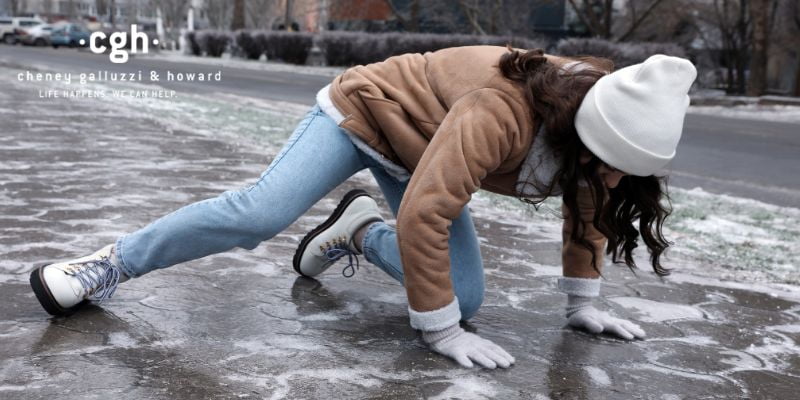
Premises liability law in Colorado governs when property owners can be held legally responsible for injuries caused by dangerous conditions on their property. Under C.R.S. § 13-21-115, the level of care owed depends on your visitor classification—whether you’re an invitee (business customer), licensee (social guest), or trespasser. Colorado’s unique “natural accumulation” rule and strict governmental immunity deadlines make these claims particularly complex.
Slip and Fall Injuries Often Result in Life-Changing Harm
Falls don’t just cause bruises. They can result in catastrophic injuries that change everything. If you or a loved one has suffered a serious injury from a slip and fall accident in Colorado, understanding your legal rights is the first step toward recovery.
Common severe injuries from falls include:
- Traumatic Brain Injuries – Even a “minor” fall can cause concussions, skull fractures, or long-term cognitive impairment
- Spinal Cord Injuries – Back and neck injuries from falls can lead to partial or complete paralysis
- Ski Resort Falls – Icy lodge walkways, poorly maintained stairs, and parking lot hazards at Colorado ski resorts
- Wrongful Death – Fatal falls, especially among elderly victims, due to negligent property maintenance
The information below will help you understand when property owners can be held accountable under Colorado law.
Understanding Premises Liability in Colorado
Premises liability is the legal principle that property owners and occupiers must maintain reasonably safe conditions for visitors. When they fail to do so, and someone gets hurt, they can be held financially responsible for medical bills, lost wages, pain and suffering, and other damages.
Colorado law doesn’t require property owners to guarantee your safety. But it does require them to act reasonably based on your legal status on their property. This is where the “tripartite system” becomes critical.
The Tripartite Visitor Classification System (C.R.S. § 13-21-115)
Colorado follows a three-tier system that determines how much care a property owner owes you. Your visitor status is the single most important factor in your claim.
Invitee (Highest Duty of Care)
An invitee is someone invited onto property for the mutual benefit of both parties. This includes customers at stores, restaurant patrons, hotel guests, and anyone conducting business.
Property owner’s duty: Must inspect the property for hazards, fix dangerous conditions, and warn invitees of any dangers they can’t immediately remedy. This is the highest standard of care under Colorado law.
Example: You slip on black ice in the parking lot of a Denver grocery store. As a customer (invitee), the store owes you a duty to inspect the lot for ice, salt or sand the lot, and post warnings if conditions are dangerous.
Licensee (Moderate Duty of Care)
A licensee is someone on the property for their own purpose, with the owner’s permission. This typically includes social guests, friends visiting your home, or door-to-door salespeople.
Property owner’s duty: Must warn licensees of known hazards that aren’t obvious. However, they don’t have a duty to inspect for hidden dangers.
Example: You’re invited to a friend’s Capitol Hill home for dinner and slip on their icy front steps. Your host must warn you if they know the steps are icy, but they don’t have to actively inspect and salt them before you arrive.
Trespasser (Lowest Duty of Care)
A trespasser enters property without permission or legal right.
Property owner’s duty: Generally, owners owe no duty to trespassers except to avoid willful or wanton harm. However, special rules apply to child trespassers under the “attractive nuisance” doctrine.
What Qualifies as a “Dangerous Condition” in Colorado?
Not every slip and fall creates legal liability. Colorado courts require proof that a dangerous condition existed and that the property owner knew or should have known about it.
Winter Hazards: Ice and Snow
Colorado’s freeze-thaw cycles create unique liability questions. Property owners aren’t automatically liable every time it snows. The natural accumulation rule (discussed below) protects owners from liability for naturally occurring ice and snow—up to a point.
Dangerous conditions include:
- Black ice on parking lots or walkways that results from poor drainage or negligent snow removal
- Melt-and-refreeze cycles on Breckenridge lodge aprons or Vail hotel entryways where foot traffic creates slush that refreezes overnight
- Uncleared walkways days after a storm when the owner had reasonable time to remove snow
- Ice dams or icicles falling from poorly maintained roofs
Structural Defects in Colorado’s Urban Centers
Historic districts and aging infrastructure create specific hazards:
LoDo (Lower Downtown Denver): Uneven brick pavers, cracked sidewalks, and poorly lit stairwells in converted warehouse buildings.
Capitol Hill: Code violations in older apartment buildings, including broken handrails, inadequate lighting in stairwells, and deteriorating steps.
Cherry Creek: Spills in food courts, freshly mopped floors without warning signs, and trip hazards from merchandise displays.
Transient Hazards
Temporary dangerous conditions can create liability if the property owner had sufficient time to discover and fix them:
- Spills in grocery stores or restaurants (the critical question: how long was it there?)
- Construction debris or equipment left in walkways
- Torn carpeting or loose floor mats
- Broken or missing handrails on stairs
The Natural Accumulation Rule: Snow, Ice, and Liability
Colorado follows the natural accumulation rule, which generally protects property owners from liability for ice and snow that naturally accumulates during a storm. The logic: we live in a winter climate, and people must exercise caution during and immediately after snowfall.
However, property owners CAN be liable when:
- They create or worsen the hazard – Poor drainage systems that channel meltwater across walkways, creating ice patches
- Sufficient time has passed – Days after a storm ends, owners must take reasonable steps to clear walkways
- Unnatural accumulation occurs – Leaking gutters, broken downspouts, or sprinkler systems that create ice where it wouldn’t naturally form
- They remove snow negligently – Piling snow in a way that creates hidden hazards or blocks visibility
Attorney Insight: Recent Colorado appellate decisions have narrowed the natural accumulation defense. If a property owner begins snow removal efforts but does so negligently (creating ice patches or hidden hazards), they can lose the protection of this rule.
Filing Claims Against Government Entities: The 182-Day Rule
If you fell on government property—a public sidewalk, RTD station, city building, or state park—you face a drastically shorter deadline under the Colorado Governmental Immunity Act (CGIA).
The Critical Deadline
You must file a written notice of your claim within 182 days (approximately six months) of your injury. This is NOT the same as filing a lawsuit—it’s a formal notice to the government entity.
Covered entities include:
- City and county governments (Denver, Boulder, Colorado Springs)
- RTD (Regional Transportation District) – Union Station, bus stops, light rail platforms
- Colorado Department of Transportation (CDOT) – State highways and rest areas
- Public schools and universities
- Parks and recreation departments
What the Notice Must Include
Your CGIA notice must specify:
- The date, time, and location of the incident
- The nature of your injuries
- The dangerous condition that caused your fall
- The damages you’re claiming
Missing this 182-day deadline will likely destroy your claim permanently. Most people assume they have two years (the standard statute of limitations for personal injury). By the time they consult an attorney, it’s often too late.
When Government Immunity Can Be Waived
The CGIA provides immunity for many government functions, but there are important exceptions:
- Dangerous conditions in public buildings and facilities (if the government had notice)
- Operation of motor vehicles by government employees
- Failure to maintain public roadways in a reasonably safe condition
Comparative Negligence in Slip and Fall Cases
Colorado follows a modified comparative negligence rule with a 50% bar. This means you can still recover damages even if you were partially at fault for your fall—as long as you’re less than 50% responsible.
How it works:
- You’re awarded $100,000 in damages
- The jury finds you 20% at fault for looking at your phone while walking
- Your recovery is reduced by 20% to $80,000
If you’re 50% or more at fault, you recover nothing.
Insurance companies will aggressively argue that you were careless, distracted, or should have seen the hazard. They’ll point to your footwear, claim you were rushing, or argue the danger was “open and obvious.” This is why working with experienced Colorado injury lawyers who understand insurance tactics is critical.
Common defense arguments:
- “You were texting while walking”
- “You were wearing inappropriate shoes”
- “The hazard was clearly visible”
- “You should have used the handrail”
This is why witness statements, surveillance footage, and photographs of the scene are critical. The narrative matters.
The “Open and Obvious” Defense
Property owners frequently argue that a hazard was so obvious that they had no duty to warn you. Colorado courts have traditionally been sympathetic to this defense.
The legal standard: If a dangerous condition is open and obvious to a reasonable person exercising ordinary care, the property owner may not be liable—even if the condition is genuinely dangerous.
Examples where this defense succeeds:
- A clearly visible step-down in bright lighting
- A large pothole in the middle of a parking lot on a sunny day
- A wet floor with multiple yellow warning cones
Examples where this defense fails:
- Black ice (by definition not visible)
- A hazard in a dark stairwell even if it would be visible in good lighting
- A distraction that draws your attention away from an otherwise obvious hazard
Attorney Insight: Recent Colorado Court of Appeals decisions have begun to limit the “open and obvious” defense when property owners create unreasonably dangerous conditions. Even if a hazard is visible, if it’s so dangerous that injury is foreseeable, liability may still attach.
Proving Notice: Actual vs. Constructive Knowledge
To win your claim, you must prove the property owner knew or should have known about the dangerous condition.
Actual Notice
The property owner was directly informed about the hazard. Examples:
- A customer reports a spill to store management
- An employee witnesses ice forming on a walkway
- Prior incident reports or complaints about the same hazard
Constructive Notice
The hazard existed long enough that a reasonable inspection would have discovered it. This requires evidence about:
- How long the hazard existed – A spill that’s been there for two hours vs. two minutes
- The owner’s inspection procedures – Do they have a regular maintenance schedule?
- Prior similar incidents – Has this happened before in the same location?
Surveillance footage, maintenance logs, and witness testimony become crucial evidence.
Damages Available in Colorado Slip and Fall Claims
If you prove liability, Colorado law allows you to recover both economic and non-economic damages.
Economic Damages
Tangible financial losses with documentation:
- Medical expenses – Emergency room, surgery, physical therapy, medications
- Future medical costs – Ongoing treatment for traumatic brain injuries, spinal cord damage, or chronic pain
- Lost wages – Time missed from work during recovery
- Loss of earning capacity – Reduced ability to work in the future due to permanent injuries
Non-Economic Damages
Subjective losses that don’t have receipts:
- Pain and suffering – Physical pain from your injuries
- Emotional distress – Anxiety, depression, PTSD following the incident
- Loss of enjoyment of life – Inability to participate in activities you once loved
- Disfigurement or disability – Permanent scarring or physical limitations
Colorado does not cap damages in most premises liability cases (caps apply only to medical malpractice claims against healthcare providers).
Related Legal Resources
Frequently Asked Questions About Slip and Fall Claims
What qualifies as a valid slip and fall case in Colorado?
A valid slip and fall case typically involves proving the property owner’s negligence — that they failed to maintain safe conditions or warn of known hazards, and that this failure directly caused your injury. Our attorneys evaluate each case’s unique facts to determine liability under Colorado premises liability law. We look for evidence that the property owner knew or should have known about a dangerous condition but failed to address it, creating an unsafe environment that led to your accident and resulting injuries.
What steps should I take immediately after a slip and fall accident?
Prioritize your health by seeking medical attention right away — some injuries are not immediately obvious. Report the accident to the property owner or manager and document the scene if possible (photos, witness contacts). Avoid giving statements to insurance adjusters before consulting an attorney. Documentation is crucial in these cases, so try to preserve evidence of what caused your fall, including the condition of the floor, lighting, any warning signs (or lack thereof), and anything else that might have contributed to your accident.
How long do I have to file a slip and fall claim in Colorado?
You generally have two years from the date of the accident to file a personal injury lawsuit in Colorado. It’s important not to delay because evidence can fade and witness memories may diminish over time. Early legal consultation strengthens your case. Our Colorado injury law attorneys will immediately begin gathering and preserving critical evidence, interviewing witnesses while their memories are fresh, and taking other steps to build the strongest possible case for your compensation claim.
What types of damages can I recover in a slip and fall case?
You may be entitled to compensation for medical bills, lost wages, pain and suffering, emotional distress, and future care needs related to your injury. Kevin Cheney and our attorneys thoroughly calculate and document all damages to ensure you receive fair compensation. This includes not only your immediate expenses but also long-term costs like rehabilitation, future medical treatments, and any permanent disability or diminished quality of life resulting from your injuries. We work with medical and economic experts when necessary to fully establish the value of your claim.
What if I was partially at fault for my fall?
Colorado’s comparative negligence rule allows you to recover damages as long as you’re less than 50% responsible. Your compensation will be reduced by your percentage of fault.
Can I sue if I fell on a public sidewalk?
Yes, but you must comply with the CGIA’s 182-day notice requirement. Cities and counties can be liable for dangerous sidewalk conditions if they had actual or constructive notice and failed to repair them.
What’s the difference between an invitee and a licensee?
An invitee is on the property for mutual benefit (like a customer), and the owner must actively inspect for hazards. A licensee is there for their own purpose (like a social guest), and the owner only needs to warn of known dangers.
What if the hazard was “open and obvious”?
Property owners often use this defense, but it’s not absolute. Even obvious hazards can create liability if they’re unreasonably dangerous or if circumstances prevent you from avoiding them.
How do I prove the property owner knew about the hazard?
Through actual notice (someone told them) or constructive notice (the hazard existed long enough that reasonable inspection would have found it). Surveillance footage, maintenance records, and witness testimony are critical evidence.
Does the property owner have to salt and shovel immediately after snow?
Not necessarily. The natural accumulation rule protects owners during and immediately after storms. However, once sufficient time has passed for reasonable snow removal, or if the owner creates or worsens an ice hazard, liability can attach.