
ClickCease
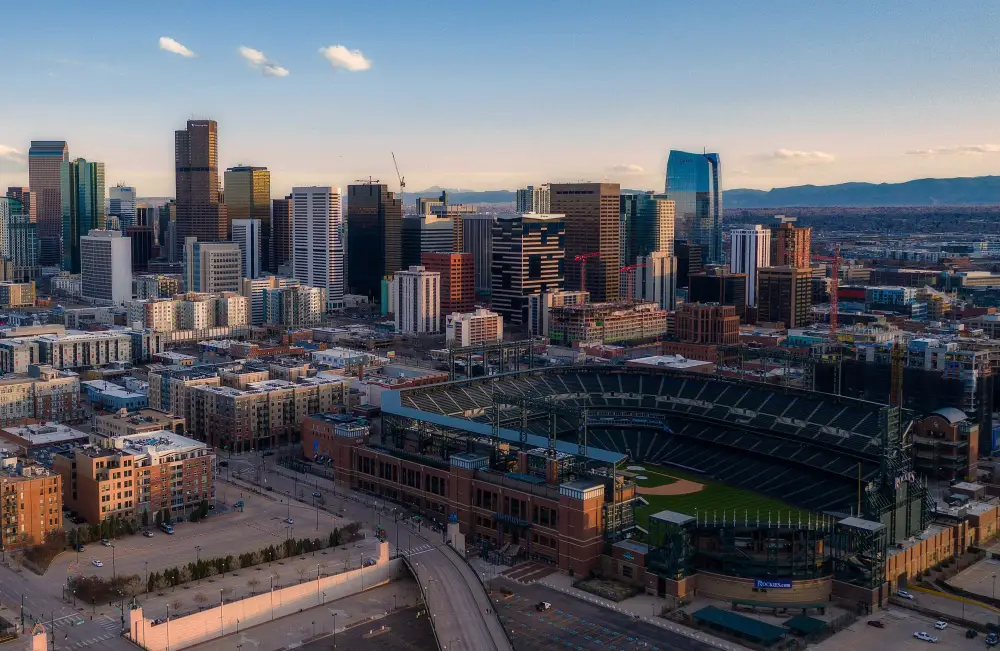
Bicycle lane near US-36 in Superior, Colorado. CGH Injury Lawyers represents cyclists injured in Superior and Boulder County from our Denver office.
Superior, Colorado

Superior Bicycle Accident Lawyers Who Fight for Injured Cyclists on US-36, McCaslin Boulevard, and Rock Creek Road

A driver who crosses into a cyclist's path on the US-36 commuter corridor, squeezes past a rider on McCaslin Boulevard, or fails to yield near the Rock Creek trailhead can cause life-altering injuries. CGH Injury Lawyers serves Superior cyclists from our Denver office, uses Colorado's Safety Stop law and three-foot passing rule to defeat bad-faith fault claims, and collects nothing unless we win your case.

No fee unless we win

It's More Than Money.

Get my free Superior case review

100% confidential. No fee unless we win.

Serving Superior from our Denver Office CGH Injury Lawyers 2701 Lawrence St., Suite 201 Denver, CO 80205 (303) 209-9395 Se habla espanol
5-star rated on Google CDOT Vulnerable Road User Safety Task Force ABOTA trial advocate on the team No fee unless we win
  • Superior bicycle accident cases are filed at the Boulder County District Court, 1777 Sixth St., Boulder, CO 80302, in Colorado's 20th Judicial District. CGH Injury Lawyers files and tries Boulder County bicycle crash cases directly from our Denver office. CGH Injury Lawyers does not have a Superior office. We serve Superior from our Denver office and come to you.
  • Colorado law gives cyclists the same rights as motor vehicle operators under Title 42. Drivers must give cyclists at least three feet of clearance when passing (C.R.S. 42-4-1003), and a violation is direct evidence of negligence in a crash case. Under the Colorado Safety Stop law (C.R.S. 42-4-1412.5), cyclists may treat stop signs as yield signs and proceed through a red light after stopping when it is safe to do so.
  • When a motor vehicle causes a bicycle crash in Superior, you have three years from the date of the crash to file suit under C.R.S. 13-80-101(1)(n). If a government entity or public road defect contributed, a written notice of claim must reach the right office within 182 days of discovering the injury (C.R.S. 24-10-109(1)). Missing that notice kills the government portion of the claim entirely.

Superior sits at the junction of US Highway 36 and McCaslin Boulevard in Boulder County, placing cyclists on one of the Denver-Boulder corridor's busiest commuter highways every time they ride near the interchange. The Rock Creek Community Park and trailhead areas draw cyclists and pedestrians year-round, yet those riders must cross McCaslin Boulevard and navigate commercial driveways with limited protection. When a driver's inattention or failure to yield puts a Superior cyclist on the pavement, CGH Injury Lawyers manages the claim from our Denver office, negotiates with the insurer, and files in Boulder County court when a fair settlement is refused. You pay nothing unless we recover for you.

Colorado cyclist law

The Colorado Safety Stop law and cyclist rights: what Superior riders need to know

Insurance adjusters handling Superior bicycle crash claims reach for the same script every time: the cyclist ran a stop sign, blew a red light, or was riding where they did not belong. Colorado's Safety Stop law and the rules of the road for cyclists are the first tools we use to dismantle that script before it does damage.

The Safety Stop law (C.R.S. 42-4-1412.5)

  • At a stop sign, you may treat it as a yield sign. Slow down, check for cross traffic, and yield to vehicles and pedestrians with the right of way. A full foot-down stop is not required when the intersection is clear.
  • At a red light, you must come to a complete stop. After stopping and yielding to all cross traffic and pedestrians, you may proceed when it is safe. This provision addresses traffic signals that fail to detect a bicycle, a common issue at suburban intersections like those along McCaslin Boulevard.
  • Using the Safety Stop correctly is following Colorado law, not violating it. An adjuster who says otherwise is wrong, and we document the distinction in every Superior bicycle claim we handle.

The three-foot passing rule (C.R.S. 42-4-1003)

  • Drivers must leave at least three feet of clearance when passing a cyclist. When a lane is too narrow to do that without crossing the center line, the driver must wait for a gap or change lanes entirely.
  • On McCaslin Boulevard, where stop-and-go commuter traffic and delivery vehicles mix with cyclists riding toward Rock Creek Community Park, impatient drivers who squeeze past a rider with less than three feet of space are violating this statute directly.
  • A documented three-foot rule violation is direct evidence of negligence in a civil claim. We use dashcam footage, witness accounts, and accident reconstruction to prove the clearance was inadequate.

Taking the lane and riding two abreast on Superior roads

Colorado law allows cyclists to occupy the center of a traffic lane when conditions make it the safest choice, and to ride two abreast when it does not impede the normal and reasonable flow of traffic. A driver who tailgates, leans on the horn, or tries to force a cyclist to the curb may be liable for aggressive driving or endangerment. When you rode lawfully on Rock Creek Road or McCaslin Boulevard and were hit anyway, our attorneys reconstruct how you were positioned and what the driver did to establish fault where it belongs.

CGH Injury Lawyers attorneys serve on the CDOT Vulnerable Road User Safety Task Force, working with state transportation officials and legislators on the policy and road design questions that determine cyclist safety in communities like Superior. That background means we understand traffic engineering at the level that matters when it is time to prove a Superior road created unreasonable danger for a cyclist.

Where Superior bike crashes happen

The Superior roads, intersections, and trail crossings behind the most serious bicycle injury claims

Cycling in Superior means sharing pavement with a US highway corridor that carries high-speed Denver-to-Boulder commuter traffic, a major arterial serving thousands of Rock Creek residents, and local roads where cyclists bound for the trailhead mix with fast-moving neighborhood traffic. These are the corridors where Superior bicycle crash cases most often begin.

  1. US-36 Commuter Corridor: High-Speed Approach, Abrupt Deceleration

    US Highway 36 runs directly through Superior and serves as the primary commuter artery connecting Boulder County communities to the Denver metro. At peak travel times, this corridor carries high-speed, high-volume traffic with lane merges and abrupt deceleration near the McCaslin Boulevard interchange. For cyclists who must cross US-36 access roads or who ride along the frontage areas near the interchange, the speed differential between motor vehicles and bicycles creates serious right-hook and sideswipe exposure. Crash severity is elevated because vehicles travel at highway speed, and the injuries that follow often require emergency care at Foothills Hospital in Boulder, approximately eight miles away.

  2. McCaslin Boulevard: Arterial Traffic Mixed with Cyclists and Pedestrians

    McCaslin Boulevard is the principal north-south arterial through Superior, connecting Rock Creek residential neighborhoods to US-36 and to Louisville to the north. As the main access road for thousands of Rock Creek residents, McCaslin carries concentrated stop-and-go traffic at key hours. Cyclists riding McCaslin toward Rock Creek Community Park or the trailhead areas face left-turn accidents at signalized intersections and close-pass violations from drivers impatient with the volume of local stops. Because McCaslin feeds directly into US-36 approaches, the transition between arterial and highway speed zones is abrupt, a known source of rear-end and merge-point collisions involving cyclists.

  3. Rock Creek Road and Park Access Points

    Rock Creek Road feeds Superior's interior neighborhoods and sees significant local traffic, pedestrian movement, and bicycle use near the Rock Creek Community Park and trailhead areas. Cyclists approaching the park from the Rock Creek Road corridor must navigate intersections where drivers turning into residential side streets or the park parking lot may not anticipate a cyclist's presence. Injuries from these right-of-way conflicts, where a turning driver fails to yield to a cyclist proceeding straight, are a common source of Superior bicycle claims. At uncontrolled or poorly marked trail access crossings, a crash that involved a missing sign or faded pavement marking may implicate the City of Superior or Boulder County, triggering the 182-day CGIA notice requirement under C.R.S. 24-10-109(1).

  4. Post-Marshall Fire Construction Zones: New Hazards on Familiar Roads

    Post-Marshall Fire rebuilding activity has added active construction zones throughout Superior along McCaslin Boulevard and near rebuild sites in the Rock Creek neighborhood. These zones create new traffic patterns, temporary lane configurations, and cyclist detours that increase crash exposure for riders who use familiar routes. Cyclists traveling routes they know well may encounter unmarked lane closures or temporary signal timing that changes right-of-way at intersections. When a construction-zone bicycle crash is caused by a contractor's failure to follow proper traffic control procedures, Colorado law provides a path to recovery separate from the driver's own liability.

  5. E-Bike Use on Superior Streets and the Class-Specific Rules

    Electric bicycle use has grown substantially in communities like Superior, where the flat terrain near Rock Creek and the proximity to Boulder make e-bikes practical for commuting and recreation. Colorado recognizes three e-bike classes. Class 1 pedal-assist bikes top out at 20 mph and are the most widely permitted, including on many trails. Class 2 throttle-assisted bikes stop assisting at 20 mph but face trail restrictions on many shared paths. Class 3 pedal-assist bikes reach 28 mph and face the most access limitations. If a car hits you while you ride an e-bike on a public Superior road, your e-bike class generally does not affect your right to recover damages, provided you were riding lawfully. An insurer who raises your e-bike class as a defense is usually wrong, and we know how to answer that argument in a Boulder County proceeding.

After the crash

What to do immediately after a bicycle accident in Superior

The decisions made in the hours after a Superior bicycle crash shape what you can recover. Cyclists who are upright and walking may not feel the full extent of their injuries for hours. These steps protect your health and preserve the evidence an insurer will later try to dispute in Boulder County court.

  1. Call 911 and request a police report

    A Boulder County Sheriff or Superior Police Department report creates an official record of the crash, the involved vehicle, and the other party's insurance information. Even a minor-seeming collision can involve spinal injury, concussion, or internal bleeding that is not apparent at the scene. Request both police and emergency medical response.

  2. Get evaluated at Foothills Hospital or Longmont United Hospital

    Superior does not have its own acute-care hospital. Foothills Hospital in Boulder is approximately eight miles from central Superior and is the nearest full-service hospital for many Superior crash and injury victims. Longmont United Hospital is approximately 14 miles away and provides additional care for Boulder County residents. Getting evaluated at one of these facilities within hours of the crash creates a medical record that directly ties your injuries to the collision. Cyclists are particularly vulnerable to traumatic brain injury and internal trauma that adrenaline can mask at the scene, so do not wait to feel worse before seeking care.

  3. Document the Superior scene

    Photograph your bicycle, your injuries, the vehicle that struck you, the road surface, lane markings, any signage, and the surrounding area. Note the exact location, whether it was on McCaslin Boulevard, near the Rock Creek Road and park access area, or along a US-36 frontage road. Collect witness names and contact information before they leave. Traffic camera footage and dashcam data from nearby vehicles can be overwritten within days.

  4. Preserve your bicycle and gear

    Do not repair or discard your bicycle, helmet, or clothing. The damage pattern on your bike and gear is physical evidence of how the crash happened and the force involved. We document that evidence from the start of every Superior bicycle claim we handle.

  5. Watch for government-entity involvement

    If a City of Superior vehicle, Boulder County road defect, or a CDOT maintenance failure contributed to your crash, a written notice of claim must be filed within 182 days of discovering the injury under the Colorado Governmental Immunity Act (C.R.S. 24-10-109(1)). The clock runs from the date you discovered the injury, not necessarily the date of the crash itself. Missing that notice bars the government-entity portion of your claim entirely, regardless of how clear the facts are.

  6. Contact a Superior bicycle accident attorney

    Colorado gives you three years from the date of the crash to file a bicycle accident lawsuit when a motor vehicle caused your injuries (C.R.S. 13-80-101(1)(n)). That window is long enough to feel comfortable, but evidence disappears fast. A free consultation with CGH Injury Lawyers costs you nothing and clarifies which deadlines apply to your specific Superior bicycle crash.

Compensation

What you can recover after a Superior bicycle crash, and how comparative fault affects it

Colorado law lets an injured cyclist pursue the full documented cost of the crash and the human cost of living with a serious injury. Two broad damage categories apply, and the comparative fault rule controls whether you can recover at all.

Economic damages (no cap)

  • Medical expenses, past and future, including emergency care at Foothills Hospital or Longmont United Hospital, surgery, and ongoing rehabilitation
  • Lost wages from time missed at work while recovering from crash injuries
  • Loss of future earning capacity when a crash injury affects your ability to work long-term
  • Bicycle replacement or repair and damage to other personal property
  • Physical therapy, assistive devices, and home care costs
  • Out-of-pocket transportation and caregiver costs directly caused by the crash

Non-economic and other damages

  • Pain and suffering from the crash and the recovery process
  • Emotional distress and anxiety, including the fear of cycling again after a traumatic collision on US-36 or McCaslin Boulevard
  • Loss of enjoyment of life when an injury limits cycling and other activities you valued, including use of the Rock Creek trail system
  • Loss of consortium when an injury affects a spouse or family relationship
  • Compensation for physical impairment or disfigurement, which carries no cap under Colorado law

The damages cap, the comparative fault rule, and the helmet defense

For claims accruing on or after January 1, 2025, Colorado caps non-economic damages such as pain and suffering at $1.5 million under C.R.S. 13-21-102.5. Economic damages such as medical bills and lost wages are never capped. Compensation for physical impairment or disfigurement is also uncapped under C.R.S. 13-21-102.5(5), which makes those categories the engine of serious Superior bicycle crash claims where injuries are permanent.

Colorado's modified comparative negligence rule (C.R.S. 13-21-111) means you can recover damages as long as you were less than 50 percent at fault. Your award is reduced by your share of fault. If you are found 50 percent or more at fault, you recover nothing. Insurers apply this rule aggressively on US-36 and McCaslin Boulevard, where disputed intersection facts can be leveraged to inflate a cyclist's fault percentage. The Safety Stop law and the three-foot rule are our principal tools for keeping fault where it belongs.

Colorado does not require adults to wear helmets while cycling. Not wearing a helmet is not automatic negligence. An insurer may argue that going without a helmet contributed to head injuries, and that argument can reduce your recovery under comparative negligence, but it does not bar your claim. We work with medical experts to show the driver's negligence caused the harm regardless of helmet use.

Insurance coverage

Your own auto policy may pay your Superior bicycle crash claim

Most Superior cyclists do not know that their own auto insurance can cover them while they are riding a bicycle. Understanding every available coverage source is what separates a partial recovery from a full one.

Uninsured and underinsured motorist (UM/UIM) coverage

If an uninsured driver hits you while you are on your bicycle in Superior, or if the at-fault driver's liability limits fall short of your damages, your own UM/UIM coverage may step in to pay your medical bills, lost wages, and pain and suffering. This is the coverage that matters most in hit-and-run crashes on US-36 frontage roads and whenever a driver carries the state minimum in liability insurance. We identify every available policy at the start of every Superior bicycle crash case, including UM/UIM, homeowner, and umbrella coverage.

Government-entity crashes and CGIA caps

When a City of Superior vehicle, a Boulder County road defect, or a CDOT maintenance failure contributed to your bicycle crash, the claim involves a public entity and the Colorado Governmental Immunity Act applies. For claims accruing on or after January 1, 2026, CGIA caps recovery from a public entity at $505,000 per person and $1,421,000 per occurrence (C.R.S. 24-10-114). The notice requirement, 182 days from the date of discovering the injury under C.R.S. 24-10-109(1), is strict and completely separate from the main filing deadline. Missing the notice bars the government claim entirely, even if the private driver's claim is still alive.

Local knowledge

Superior courts. Superior trauma care. Superior cycling corridors.

A Superior bicycle accident claim lives in Superior: the road or trail where the crash happened, the hospital that treated you, and the courthouse where a lawsuit would be filed. Here is the ground we work on for every Boulder County bicycle crash client from this community.

Courthouse

Boulder County District Court (20th Judicial District)

Superior bicycle accident lawsuits above the county court jurisdictional limit are filed in the 20th Judicial District of Colorado at the Boulder County District Court, 1777 Sixth St., Boulder, CO 80302. Superior sits entirely within Boulder County, so every Superior bicycle crash case that goes to litigation lands in this court. The 20th Judicial District handles all civil personal injury matters, and the jury pool draws from Boulder County communities. CGH Injury Lawyers handles 20th Judicial District bicycle crash cases directly from our Denver office, with no additional charge to Superior clients compared to our Denver-based cases.

Trauma Care

Foothills Hospital (Boulder) and Longmont United Hospital

Superior does not have its own acute-care hospital. Foothills Hospital in Boulder is approximately eight miles from central Superior and is the nearest full-service hospital for many Superior crash and injury victims. Longmont United Hospital is approximately 14 miles away and provides additional care for Boulder County residents. When a Superior bicycle crash sends someone to one of these facilities, the resulting trauma records and treatment notes become the foundation of the damages claim. We work with medical records from both hospitals to build a complete picture from first treatment through projected future care costs. Bicycle crash injuries, including traumatic brain injury, spinal fractures, and internal trauma, may require specialist consultations beyond what local urgent care can provide. When patients are transferred to a higher-level facility in Denver or Aurora, we coordinate records from every treating location.

Cycling Corridors

US-36, McCaslin Boulevard, and Rock Creek Road

US Highway 36 passes directly through Superior and serves as the primary commuter artery connecting Boulder County communities to the Denver metro. At peak travel times, this corridor carries high-speed, high-volume traffic, with lane merges and abrupt deceleration near the McCaslin Boulevard interchange creating documented crash exposure for cyclists who must cross or ride near the highway. McCaslin Boulevard is the principal north-south arterial through Superior, connecting Rock Creek residential neighborhoods to US-36 and to Louisville to the north. As the main access road for thousands of Rock Creek residents, McCaslin carries concentrated stop-and-go traffic, and its intersections are where bicycle-versus-motor-vehicle right-of-way conflicts most often occur. The Rock Creek Road corridor feeds Superior's interior neighborhoods and sees significant local traffic, pedestrian movement, and bicycle use near the Rock Creek Community Park and trailhead areas.

Your team

The Superior bicycle accident team behind your case

CGH Injury Lawyers is a eight-attorney Colorado firm founded in 2016, formerly Cheney Galluzzi and Howard. Our attorneys serve on the CDOT Vulnerable Road User Safety Task Force, working directly with state transportation officials and legislators on cyclist safety standards. Managing Partner Kevin Cheney is a member of the American Board of Trial Advocates (ABOTA) and has tried over 25 cases to verdict. Timothy G. Tarr has been recognized by Best Lawyers every year since 2023. Every Superior bicycle accident case is handled by a licensed Colorado attorney who files and tries cases in the 20th Judicial District, not by a paralegal.

ABOTA member on the team Tim Tarr: Best Lawyers in America since 2023 CDOT Vulnerable Road User Safety Task Force Over 25 cases to verdict 20th Judicial District experience Bilingual EN / ES Free consultation No fee unless we win

One thing we will tell you upfront: CGH Injury Lawyers does not have a Superior office. We serve Superior bicycle accident clients from our Denver office at 2701 Lawrence St., Suite 201, Denver, CO 80205. We come to you for meetings when needed, file at the Boulder County District Court in Boulder, and try cases in the 20th Judicial District. What you get is the work and the result, not a storefront on McCaslin Boulevard.

I wish I could leave more than 5 stars!
Grace M., 5-star CGH Injury Lawyers client review
Frequently asked questions

Superior bicycle accident frequently asked questions

How long do I have to file a bicycle accident lawsuit in Superior?

Colorado gives you three years from the date of the crash to file a bicycle accident lawsuit when a motor vehicle caused your injuries (C.R.S. 13-80-101(1)(n)). If a government entity such as the City of Superior, Boulder County, or CDOT was involved through a vehicle or a road defect, you must also serve a written notice of claim within 182 days of discovering the injury under C.R.S. 24-10-109(1), or the government-entity claim is barred entirely. Evidence from McCaslin Boulevard intersection cameras and nearby business security systems can be overwritten within days, so call us promptly after any Superior bicycle crash.

Where would my Superior bicycle accident lawsuit be filed?

A Superior bicycle accident case above the county court jurisdictional limit is filed in the 20th Judicial District of Colorado at the Boulder County District Court, 1777 Sixth St., Boulder, CO 80302. Superior sits entirely within Boulder County, so every Superior bicycle crash case that goes to litigation lands in this court. CGH Injury Lawyers files and tries 20th Judicial District bicycle crash cases directly from our Denver office, with no additional charge for Superior clients compared to our Denver-based cases.

What if the driver who hit me was partly at fault and I was partly at fault too?

Colorado follows a modified comparative fault rule (C.R.S. 13-21-111). You can recover as long as your share of fault is less than 50 percent, and your award is reduced by your percentage of fault. If you are found 50 percent or more at fault, you recover nothing. Adjusters regularly inflate a cyclist's fault percentage to approach or exceed that bar. We use the Safety Stop law (C.R.S. 42-4-1412.5) and the three-foot passing rule (C.R.S. 42-4-1003) to challenge that assessment with physical evidence and witness accounts specific to the Superior crash site, whether it was on McCaslin Boulevard, Rock Creek Road, or a US-36 access road.

Can I recover if I was not wearing a helmet when I was hit?

Yes. Colorado does not require adults to wear helmets while cycling, and not wearing one is not automatic negligence. An insurer may argue that the absence of a helmet contributed to head or facial injuries, a theory that can reduce your recovery under the comparative negligence rule, but it does not bar your claim entirely. We work with medical experts to establish the cause and extent of your injuries and to show that the driver's negligence, not your choice about headgear, is the reason you were hurt.

My own car insurance covers me while I am on a bicycle?

Often yes. If you carry uninsured or underinsured motorist (UM/UIM) coverage on your auto policy, that coverage may apply when an uninsured or underinsured driver causes a bicycle crash in Superior. This matters most in hit-and-run cases on US-36 frontage roads and when the at-fault driver has minimal liability limits. We identify every available policy at the start of every bicycle crash case, including UM/UIM, homeowner, and umbrella coverage.

Does CGH Injury Lawyers have an office in Superior?

No. CGH Injury Lawyers has one office, at 2701 Lawrence St., Suite 201, Denver, CO 80205, (303) 209-9395. CGH Injury Lawyers does not have a Superior office and does not claim one. We serve Superior and Boulder County bicycle accident clients from our Denver office, file cases at the Boulder County District Court in Boulder, and meet you wherever is convenient. We are available in English and Spanish.

It's More Than Money.

You were hit while riding in Superior. We handle everything else.

Free consultation. No fee unless we win. Serving Superior and all of Boulder County from our Denver office. Available in English and Spanish.

Tell us what happened in Superior

100% confidential. No fee unless we win.

Read next: Colorado bicycle accident law: what every rider needs to know statewide

CGH Injury Lawyers · 2701 Lawrence St., Suite 201, Denver, CO 80205 · Serving Superior and Boulder County