
ClickCease
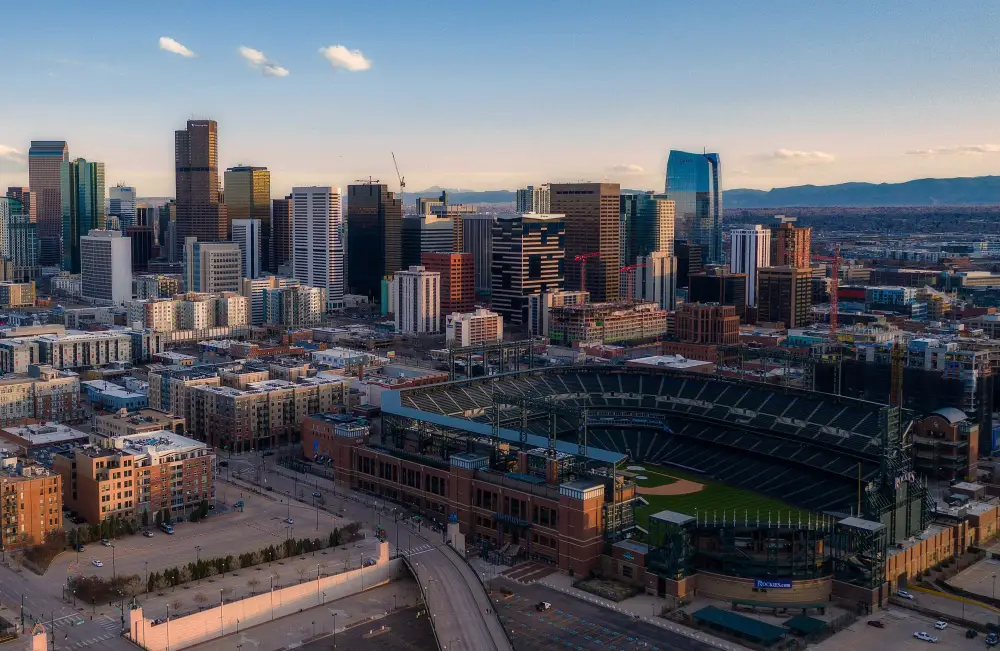
US-36 corridor through Superior, Colorado. CGH Injury Lawyers represents catastrophic injury victims in Superior and Boulder County from our Denver office.
Superior, Colorado

Superior Catastrophic Injury Lawyers Who Account for Every Dollar of Your Future

A spinal cord injury, traumatic brain injury, severe burn, or amputation suffered on the US-36 corridor, on McCaslin Boulevard, or in Superior's active post-fire construction zones can impose costs that run for a lifetime. CGH Injury Lawyers serves Superior catastrophic injury victims from our Denver office, documents the full economic and human cost through expert analysis, and files in the Boulder County District Court when insurers refuse to honor what the law requires. You pay nothing unless we win.

No fee unless we win

It's More Than Money.

Get my free Superior case review

100% confidential. No fee unless we win.

Serving Superior From Our Denver Office CGH Injury Lawyers 2701 Lawrence St., Suite 201 Denver, CO 80205 (303) 209-9395 Se habla espanol
5-star rated on Google Built for catastrophic-injury trials ABOTA trial advocate on the team No fee unless we win
  • Superior catastrophic injury lawsuits above the county-court jurisdictional limit are filed at the Boulder County District Court, 1777 Sixth St., Boulder, CO 80302, in Colorado's 20th Judicial District. Superior sits entirely within Boulder County, so every serious catastrophic injury claim that proceeds to litigation lands there. CGH Injury Lawyers files and tries 20th Judicial District cases directly from our Denver office. CGH Injury Lawyers does not have a Superior office.
  • Claims arising from a motor vehicle crash on US-36, McCaslin Boulevard, or Rock Creek Road carry a three-year filing deadline under C.R.S. 13-80-101(1)(n). Most other catastrophic injury claims carry a two-year deadline under C.R.S. 13-80-102. If a government entity, such as a state highway crew or the City of Superior, contributed to the injury, a written notice of claim must be served within 182 days of discovering the injury under C.R.S. 24-10-109(1), or the government claim is permanently barred.
  • Colorado does not cap economic damages such as lifetime medical costs, attendant care, or lost earning capacity. Compensation for physical impairment or disfigurement is also uncapped under C.R.S. 13-21-102.5(5). Non-economic damages such as pain and suffering are capped at $1,500,000 for claims accruing on or after January 1, 2025, under C.R.S. 13-21-102.5. In a serious catastrophic case, the uncapped economic and impairment categories carry the greatest weight.

Superior is a city of about 13,896 people in Boulder County, positioned at the midpoint of the US-36 commuter corridor between Denver and Boulder. That location, combined with the ongoing rebuilding effort following the December 2021 Marshall Fire, has created a specific pattern of catastrophic injury risk: high-speed highway crashes on US-36, intersection and arterial collisions on McCaslin Boulevard, and construction-zone incidents tied to post-fire residential and commercial reconstruction throughout Rock Creek and the surrounding neighborhoods. When a permanent injury results, the difference between a standard demand and a fully documented catastrophic claim can be hundreds of thousands of dollars. CGH Injury Lawyers builds those claims to their full value and tries them in Boulder County court when insurers refuse to act fairly. You pay nothing unless we win.

What qualifies

What makes an injury catastrophic under Colorado law, and why it matters for your Superior claim

Colorado law does not define catastrophic injury through a single statute. The practical test is whether the harm is permanent, whether it produces lasting impairment that affects independence and earning capacity, and how that impairment maps onto the damage categories that govern recovery. A diagnosis by itself does not settle the legal question. What matters is the permanence of the harm and the documented impact on the injured person's life going forward.

Injuries that commonly qualify

  • Traumatic brain injury with lasting cognitive deficits, behavioral change, or memory impairment that requires lifetime support or supervision
  • Spinal cord injury, including paraplegia and quadriplegia, where ongoing attendant care, adaptive equipment, and home modification are permanent needs
  • Limb amputation requiring prosthetics with replacement cycles across a working lifetime, home modifications, and vocational retraining
  • Severe burn injury covering significant body surface area and requiring skin grafts, reconstructive procedures, and extended wound management
  • Permanent organ damage that requires ongoing dialysis, transplant evaluation, or lifetime pharmaceutical management
  • Permanent vision or hearing loss, particularly when caused by construction-zone incidents or high-energy crash impact

Why the classification shapes the entire Superior claim

  • It determines which Colorado damage categories are uncapped, and therefore which categories carry the highest potential value in a Boulder County trial
  • It drives the scope of future-care documentation that must be built before any settlement discussion, because early offers almost never account for lifetime costs
  • It affects whether a government-entity notice under C.R.S. 24-10-109(1) must be filed within 182 days of discovery, which is especially relevant for crashes tied to road conditions on US-36 or construction-zone hazards on public rights-of-way in Superior
  • It determines the type of expert analysis, including whole-person impairment ratings under the AMA Guides, that a court will expect to see before awarding future-care damages
Where Superior's most serious injuries happen

The Superior locations and conditions that most often produce permanent injuries

The combination of a high-speed commuter highway, a concentrated arterial network, and an ongoing post-disaster reconstruction effort makes Superior's injury profile different from most comparable-size Colorado cities. Knowing the specific location and cause matters because it identifies not just the at-fault driver or property owner, but every party who may share legal responsibility, including contractors, utility operators, and government entities.

  1. US-36 High-Speed Corridor

    US Highway 36 passes directly through Superior and is one of the most heavily traveled commuter routes between the Denver metro and Boulder County. At peak travel hours this corridor carries vehicles at highway speeds, with lane merges and sudden deceleration near the McCaslin Boulevard interchange creating conditions for rear-end and sideswipe impacts that generate serious spinal and brain injury. The elevated speed at point of impact is what distinguishes US-36 crashes from lower-velocity arterial collisions. Victims are frequently transported to Foothills Hospital in Boulder, approximately eight miles from central Superior, because Superior has no acute-care hospital of its own. When a road design or maintenance failure on this federal highway contributed to a crash, the 182-day government-entity notice window under C.R.S. 24-10-109(1) may begin running from the date you discovered the injury.

  2. McCaslin Boulevard Intersection and Stop-and-Go Collisions

    McCaslin Boulevard is the primary north-south arterial through Superior, connecting the Rock Creek residential neighborhoods to US-36 and north to Louisville. As the main access road for thousands of Rock Creek residents, McCaslin carries concentrated stop-and-go traffic at signalized intersections during morning and afternoon commutes. Left-turn collisions and angle impacts at McCaslin's busier crossings are a documented pattern in high-traffic suburban arterials throughout Boulder County. Pedestrian and cyclist exposure is also elevated near the Rock Creek Community Park and trailhead areas, where the roadway narrows and crossing distances increase the time a person is exposed to moving traffic.

  3. Post-Marshall Fire Construction Zones and Rebuild Sites

    The December 2021 Marshall Fire destroyed large portions of Superior's Rock Creek neighborhood and surrounding areas, and the recovery effort has produced active construction zones throughout the city along McCaslin Boulevard, Rock Creek Road, and near individual rebuild sites. These zones introduce temporary lane configurations, pedestrian detours, altered traffic signals, and heavy construction vehicle traffic. Catastrophic injuries arising in construction zones can involve multiple responsible parties: the general contractor, individual subcontractors, equipment manufacturers, and in some cases the public entity responsible for the public right-of-way. Identifying every party with legal exposure before sending any demand is essential to preserving the full value of the claim.

  4. Rock Creek Area Trail and Premises Incidents

    The Rock Creek community in Superior includes extensive trail networks, parks, and shared open-space paths that draw pedestrian and cycling traffic throughout the year. Injuries on shared paths, in parking areas adjacent to Rock Creek Community Park, and at commercial properties within the Rock Creek development can give rise to premises liability claims when a property owner failed to maintain a reasonably safe condition. Colorado winters compound the risk on sidewalks, parking lots, and trailhead access points where ice accumulates and removal is delayed. When a failure to clear ice or address a known structural defect results in a fall that causes a permanent injury, the negligent property owner may be responsible for the full scope of catastrophic harm that follows.

  5. Marshall Fire Liability: Premises, Wrongful Death, and Utility Claims

    The December 2021 Marshall Fire produced its own category of injury claims for Superior residents, including premises liability claims against property owners whose fire-damaged structures later caused injury, and potential claims tied to utility infrastructure that may have contributed to the fire's ignition or spread. These are multi-party, multi-theory claims that require careful fact investigation. Applicable deadlines depend on the specific theory of recovery and the date on which the injury or its cause was discovered. Call us before making any assumptions about which deadline controls your situation.

After a catastrophic injury

What to do after a catastrophic injury in Superior

The choices made in the first days after a permanent injury can determine whether the full economic picture is ever captured. These steps protect your rights and preserve the evidence that future-care experts and courts will need to decide your Boulder County case.

  1. Get to the right level of trauma care immediately

    Superior has no acute-care hospital. After a serious crash or construction-zone injury in Superior, patients are typically transported to Foothills Hospital in Boulder, approximately eight miles from central Superior, or to Longmont United Hospital, approximately 14 miles away. For the most severe catastrophic presentations, including complete spinal cord injuries and high-severity traumatic brain injuries, stabilization may occur at one of those facilities before a transfer to a Level I or Level II trauma center in Denver or Aurora. Every treatment record from every facility is part of what proves the full human and economic cost of your injury.

  2. Request a permanent impairment evaluation before the file closes

    Whole-person impairment ratings under the AMA Guides are the measurement tool Colorado courts use to quantify permanent harm. A documented rating from a qualified physician supports future-care projections and directly challenges any defense argument that the injury is temporary or overstated. Do not wait for a treating physician to initiate this evaluation on their own. In a catastrophic case, the evaluation should be part of the formal medical plan, not an afterthought when a demand letter is due.

  3. Preserve scene evidence before it is gone

    Camera footage from the US-36 corridor, commercial properties on McCaslin Boulevard, and dashcams from nearby vehicles is typically overwritten within days of an incident. The Boulder County Sheriff's report or the Colorado State Patrol report establishes the official record for most Superior highway crashes. Photographs of road surfaces, lane markings, construction signage, vehicle positions, and weather conditions at the time of the incident are critical for establishing fault before evidence deteriorates or a construction site is modified for safety reasons after the injury occurred.

  4. Track the government-entity notice deadline from the date of discovery

    If a state highway maintenance failure on US-36, a public road defect on McCaslin Boulevard, or a City of Superior action or omission contributed to the injury, a written notice of claim must be served within 182 days of discovering the injury under C.R.S. 24-10-109(1). The 182-day clock runs from the date of discovery of the injury, not from the crash date, but discovery can happen quickly. Missing the notice permanently bars the government-entity claim regardless of how compelling the underlying facts are. In post-fire construction zones on public rights-of-way, government entities may share responsibility with private contractors, and both need to be identified early.

  5. Do not settle before the full picture of future care is known

    Insurers sometimes present early offers before the full scope of permanent injury is documented. Accepting a settlement before maximum medical improvement is reached, and before future care costs are projected by qualified experts, almost always closes out categories that were never properly counted. Future attendant care, home modifications, adaptive transportation, vocational retraining, and replacement of medical equipment across decades of life cannot be accurately valued from an emergency-room chart. We review the file and tell you honestly whether the picture is complete before any discussion with the insurer begins.

  6. Contact CGH before talking to the other party's insurer

    The at-fault party's insurer begins building its file from the moment the incident is reported. Do not give a recorded statement, sign any release, or accept any offer before speaking with an attorney. CGH Injury Lawyers offers a free consultation to injured people across Superior and Boulder County. There is no cost and no obligation to find out whether your claim is worth reviewing.

Compensation

What you can recover after a catastrophic injury in Superior

Colorado law divides catastrophic injury damages into categories with different rules. The categories that most often carry the greatest dollar value in a serious Superior case are the ones that have no cap at all. Understanding which categories apply, and which are subject to limits, is the foundation of an accurate damages analysis.

Economic damages (never capped in Colorado)

  • Past and future medical expenses, including all treatment at Foothills Hospital in Boulder, Longmont United Hospital, and any Denver or Aurora facility to which you were transferred
  • Lifetime attendant and nursing care costs, projected through the date the expert believes ongoing support will be required
  • Home modifications including ramps, widened doorways, accessible bathrooms, and structural reinforcement needed because of the permanent injury
  • Adaptive vehicles, wheelchairs, prosthetics, and other specialized equipment with replacement cycles built into the projected cost
  • Lost wages from time already missed and the projected loss of future earning capacity if the permanent injury prevents returning to prior work
  • Vocational rehabilitation and retraining costs when permanent restrictions make a prior occupation no longer possible

Non-economic, impairment, and other damages

  • Pain and suffering, capped at $1,500,000 for claims accruing on or after January 1, 2025, under C.R.S. 13-21-102.5, with inflation adjustments beginning in 2028
  • Compensation for physical impairment or disfigurement, which is not capped at all under C.R.S. 13-21-102.5(5). In serious highway crash and construction-zone cases, this is often the category that carries the most weight
  • Emotional distress, anxiety, depression, and loss of enjoyment of activities and relationships
  • Loss of consortium claims available to a spouse or close family member affected by the permanent injury
  • If a government entity is responsible, recovery from that entity is separately capped at $505,000 per person and $1,421,000 per occurrence for claims accruing on or after January 1, 2026, under C.R.S. 24-10-114

How comparative fault works in a Superior catastrophic case

Colorado follows modified comparative fault under C.R.S. 13-21-111. If the injured person is found partly responsible for the incident, the award is reduced by that percentage. The hard cutoff is 50 percent: a person found 50 percent or more at fault recovers nothing. A person found 49 percent at fault still recovers, but their award is reduced by their share. On US-36 and at McCaslin Boulevard intersections where facts are often disputed after a crash, insurers routinely argue inflated fault percentages against injured parties to push claims toward or past that cutoff. Defending against that tactic with physical evidence and qualified reconstruction analysis is a standard part of how we build catastrophic cases in Boulder County.

Why early settlement offers rarely reflect the full value

Health insurance covers medically necessary treatment as the insurer defines it. It does not cover a life. Lifetime attendant care, adaptive vehicles, home access modifications, vocational retraining, and the long-run cost of living with a permanent impairment fall outside standard health coverage. An early offer typically reflects only what the insurer can see in the immediate medical bills, not what a qualified expert would project over a working lifetime. We review the file before any settlement discussion begins, and we tell you honestly whether the offer accounts for what Colorado law allows.

Local knowledge

Superior courts. Superior trauma care. Superior crash corridors.

A Superior catastrophic injury case lives in Superior: the specific road or site where the harm happened, the hospital that stabilized you, and the courthouse where a life-changing award may ultimately be decided. Here is the ground we work on for every Superior catastrophic injury client.

Courthouse

Boulder County District Court, 20th Judicial District

Superior catastrophic injury lawsuits above the county-court jurisdictional limit are filed at the Boulder County District Court, 1777 Sixth St., Boulder, CO 80302, in Colorado's 20th Judicial District. Superior sits entirely within Boulder County, so every superior personal injury case that goes to trial is heard in that courthouse before a Boulder County jury pool. The 20th Judicial District handles civil claims, including catastrophic injury and wrongful death matters, for all Boulder County communities. CGH Injury Lawyers files and tries 20th Judicial District cases directly from our Denver office, with no additional charge to Superior clients. CGH Injury Lawyers does not have a Superior office. We serve Superior from our Denver office at 2701 Lawrence St., Suite 201, Denver, CO 80205.

Trauma Care

Foothills Hospital (Boulder) and Longmont United Hospital

Superior does not have its own acute-care hospital. After a serious crash, construction-zone injury, or premises incident in Superior, patients are typically taken to Foothills Hospital in Boulder, approximately eight miles from central Superior, or to Longmont United Hospital, approximately 14 miles away. When injury severity requires Level I or Level II trauma capabilities, including complete spinal cord injuries or severe traumatic brain injuries, further transfer to a Denver or Aurora facility may follow. The medical records from every facility that treats the injured person, from the initial trauma stabilization through rehabilitation and ongoing specialist care, form the foundation of the damages proof. We work with those records from the first day of every Superior catastrophic injury case.

Key Roads and Corridors

US-36, McCaslin Boulevard, and Rock Creek Road

US Highway 36 is the primary commuter artery through Superior, connecting Boulder County communities to the Denver metro at highway speeds. High approach speeds, lane changes near the McCaslin Boulevard interchange, and peak-hour congestion create conditions for rear-end, sideswipe, and merge-point crashes where the collision energy is sufficient to cause permanent spinal cord and brain injury. McCaslin Boulevard is the principal north-south arterial through Superior, serving thousands of Rock Creek residential area commuters daily, with concentrated stop-and-go traffic at key intersections. Rock Creek Road feeds Superior's interior neighborhoods and carries significant local traffic, pedestrian movement, and bicycle use near the Rock Creek Community Park and surrounding trailhead areas, particularly during the post-fire period when trail access patterns have shifted.

Your team

The attorneys who handle Superior catastrophic injury cases at CGH

CGH Injury Lawyers is a eight-attorney Colorado firm founded in 2016, formerly Cheney Galluzzi and Howard. Managing Partner Kevin Cheney is a member of the American Board of Trial Advocates (ABOTA) and has tried over 25 cases to verdict. Timothy G. Tarr has been recognized by Best Lawyers every year since 2023. Every Superior catastrophic injury case is handled by a licensed Colorado attorney who files and tries cases in the 20th Judicial District, not by a paralegal or a case manager. We prepare every case as though it will go before a Boulder County jury, because any case can.

ABOTA member on the team Tim Tarr: Best Lawyers in America since 2023 Over 25 cases to verdict 20th Judicial District experience Bilingual EN / ES No fee unless we win

One fact we always say upfront: CGH Injury Lawyers does not have a Superior office. We serve Superior and Boulder County catastrophic injury clients from our Denver office at 2701 Lawrence St., Suite 201, Denver, CO 80205. We come to you for meetings when needed, we file at the Boulder County District Court, and we try cases in the 20th Judicial District. What you get is the legal work and the result, not a storefront on McCaslin Boulevard.

I wish I could leave more than 5 stars!
Grace M., 5-star CGH Injury Lawyers client review
Frequently asked questions

Superior catastrophic injury frequently asked questions

How long do I have to file a catastrophic injury claim after a crash on US-36 or McCaslin Boulevard in Superior?

If a motor vehicle crash on US-36, McCaslin Boulevard, or Rock Creek Road caused the injury, Colorado gives you three years from the date of the crash under C.R.S. 13-80-101(1)(n). This three-year deadline also applies when a bicycle rider or pedestrian is injured by a motor vehicle. For most other catastrophic injury claims, such as a construction-zone fall or a premises incident, the general tort statute sets a two-year deadline under C.R.S. 13-80-102. If a government entity, such as a state highway crew or the City of Superior, contributed to the injury, a written notice of claim must also be served within 182 days of discovering the injury under C.R.S. 24-10-109(1). Multiple deadlines can run at the same time against different defendants, so confirm yours with an attorney as soon as possible.

Does Colorado cap what I can recover in a Superior catastrophic injury case?

Economic damages such as lifetime medical costs, attendant care, adaptive equipment, home modifications, and lost earning capacity are never capped under Colorado law. Compensation for physical impairment or disfigurement is also not capped at all under C.R.S. 13-21-102.5(5). Non-economic damages such as pain and suffering are capped at $1,500,000 for claims accruing on or after January 1, 2025, under C.R.S. 13-21-102.5. In a serious catastrophic case, the uncapped economic and impairment categories almost always represent the bulk of the recovery. If a government entity such as CDOT or the City of Superior is responsible, recovery from that entity is separately limited to $505,000 per person and $1,421,000 per occurrence for claims accruing on or after January 1, 2026, under C.R.S. 24-10-114.

What if I was partly at fault for the incident that caused my catastrophic injury in Superior?

You can still recover under Colorado's modified comparative fault rule, C.R.S. 13-21-111, as long as you were less than 50 percent at fault. Your award is reduced by your percentage of fault. If you are found 50 percent or more at fault, you recover nothing. On US-36 and at McCaslin Boulevard intersections where crash facts are often disputed, insurers routinely argue inflated fault percentages against the injured party to push claims toward or past that cutoff. Defending against those arguments with physical evidence and qualified analysis is a central part of every catastrophic case we build for Superior clients.

Which hospital treats catastrophic injury patients from Superior?

Superior does not have its own acute-care hospital. Patients with serious injuries are typically taken to Foothills Hospital in Boulder, approximately eight miles from central Superior, or to Longmont United Hospital, approximately 14 miles away. When the severity of the injury requires Level I or Level II trauma capabilities, including severe traumatic brain injuries or complete spinal cord injuries, transfer to a Denver or Aurora facility may follow. Records from every facility that provides care form the medical foundation of the damages claim, and we coordinate those records from the start of your case.

How does the Marshall Fire affect a Superior catastrophic injury claim?

The December 2021 Marshall Fire created unique legal situations in Superior. Claims involving fire-related property damage, structural failures on rebuilt or partially rebuilt properties, utility infrastructure liability, and construction-zone injuries on post-fire rebuild sites may involve multiple defendants with overlapping legal exposure. The deadline that applies depends on the specific theory of recovery and when the injured person discovered the injury or its cause. Some theories carry a two-year general tort deadline under C.R.S. 13-80-102, while claims tied to a government entity require a 182-day notice under C.R.S. 24-10-109(1) running from the date of discovery. Do not assume that a single deadline controls a Marshall Fire related claim without confirming the specific facts with an attorney.

Does CGH Injury Lawyers have an office in Superior?

No. CGH Injury Lawyers has one office, at 2701 Lawrence St., Suite 201, Denver, CO 80205, reachable at (303) 209-9395. CGH Injury Lawyers does not have a Superior office and does not claim one. We serve Superior and Boulder County catastrophic injury clients from our Denver office, file cases at the Boulder County District Court in Boulder, and meet you wherever is most convenient. There is no additional charge for Superior clients. We handle consultations in English and Spanish.

It's More Than Money.

A permanent injury changes what every day looks like. We handle the legal part.

Free consultation. No fee unless we win. Serving Superior and all of Boulder County from our Denver office. Available in English and Spanish.

Read next: Colorado catastrophic injury law: how the uncapped damage categories work statewide

CGH Injury Lawyers · 2701 Lawrence St., Suite 201, Denver, CO 80205 · Serving Superior and Boulder County