
ClickCease
Free consultations · Se habla espanol
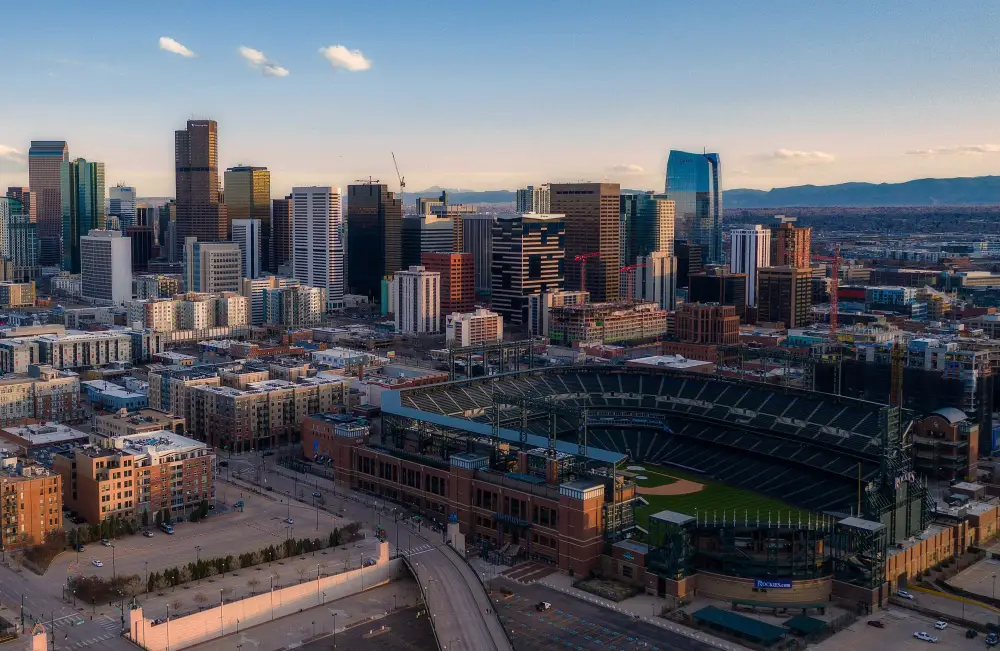
US-36 corridor through Superior, Colorado. CGH Injury Lawyers represents DUI accident victims in Superior and Boulder County from our Denver office.
Superior, Colorado

Superior DUI Accident Lawyers Who Pursue the Driver, the Bar, and Every Dollar You Are Owed

A drunk or drugged driver on US-36, McCaslin Boulevard, or any Superior road can shatter your life in seconds. The criminal case that follows punishes the driver. Your civil claim is the separate process that puts money in your hands for medical bills, lost income, and everything you have been through. CGH Injury Lawyers serves Superior DUI accident victims from our Denver office, files in Boulder County court when insurers refuse to be fair, and collects nothing unless we win for you.

No fee unless we win

It's More Than Money.

Get my free Superior DUI case review

100% confidential. No fee unless we win.

Serving Superior from our Denver Office CGH Injury Lawyers 2701 Lawrence St., Suite 201 Denver, CO 80205 (303) 209-9395 Se habla espanol
5-star rated on Google ABOTA trial advocate on the team Trial lawyers, not a settlement mill No fee unless we win
  • Superior DUI accident cases are filed in the 20th Judicial District of Colorado at the Boulder County District Court, 1777 Sixth St., Boulder, CO 80302. Superior sits entirely within Boulder County. CGH Injury Lawyers files and tries Boulder County DUI injury cases directly from our Denver office. CGH Injury Lawyers does not have a Superior office.
  • Colorado gives you three years from the date of the crash to file a lawsuit for injuries caused by a motor vehicle (C.R.S. 13-80-101(1)(n)). A dram shop claim against a bar or restaurant that overserved the driver runs on a much shorter clock: the lawsuit must be filed within one year after the alcohol was sold or served (C.R.S. 44-3-801(3)(a)(II)). Do not wait for the criminal case to close before pursuing either claim.
  • Colorado follows modified comparative fault (C.R.S. 13-21-111): you can recover as long as you were less than 50 percent at fault. If you are found 50 percent or more at fault, you recover nothing. Against an impaired driver, that argument rarely holds, but insurers use it anyway on high-volume corridors like US-36 and McCaslin Boulevard.

Superior's position on the US-36 corridor between Denver and Boulder means its roads carry heavy, fast-moving commuter traffic every day. When an impaired driver makes that risk a reality, you face emergency bills, lost wages, and an insurer that is already building its case against you. CGH Injury Lawyers pursues the drunk driver, any bar or restaurant that put them on the road, and your own UM and UIM coverage when no one else can pay. We serve Superior from our Denver office, and you owe nothing unless we recover for you.

The law that governs your case

Why a DUI driver in Superior is already presumed at fault: negligence per se

A crash on US-36 normally requires you to prove the other driver was careless. A DUI crash is different. Driving while impaired is a violation of a safety law written to protect the public, and that changes what you have to prove in your civil case.

Colorado follows the doctrine of negligence per se. When a person violates a safety statute designed to prevent the kind of harm that happened, to a person the statute was meant to protect, that violation can itself establish negligence. Drunk and drugged driving laws exist precisely to keep impaired drivers from injuring others on roads like the US-36 and McCaslin Boulevard corridor through Superior. An impaired driver who causes a crash fits that doctrine exactly.

In practical terms, you usually do not have to argue about whether the driver did something wrong. The fact of impairment, once established through toxicology reports and arrest records, does most of that work. The real fight in a Superior DUI injury case is almost always about the full value of your harm and which insurance policies have to pay it, not about who caused the crash. That is where we focus.

Every source of recovery

Who can be held responsible beyond the drunk driver in a Superior DUI crash

The impaired driver is the obvious defendant. But restaurants and bars in Superior, Louisville, and neighboring communities along the US-36 corridor sit minutes from the highway, and the establishment that overserved the driver may share responsibility. Your own insurance may also become the real source of recovery when the driver is uninsured or underinsured.

Dram shop liability: the bar or restaurant

  • Colorado's Dram Shop Act (C.R.S. 44-3-801) lets you sue a licensed vendor that willfully and knowingly served alcohol to a visibly intoxicated patron who then caused the harm.
  • The same statute covers serving anyone under 21. A private social host can also face liability under C.R.S. 44-3-801(4) for giving a minor alcohol or a place to drink.
  • A dram shop recovery is in addition to the driver's own liability, giving you a second source of compensation. The catch is the one-year filing deadline: the claim must be filed within one year after the alcohol was sold or served (C.R.S. 44-3-801(3)(a)(II)), regardless of when the criminal case ends.
  • Bar video and point-of-sale receipts are destroyed within weeks. If a venue along the US-36 corridor or in a neighboring community may have overserved the driver, we need to act immediately to preserve that evidence.

Your own coverage: UM and UIM

  • If the drunk driver had no insurance, your uninsured motorist (UM) coverage steps into the at-fault driver's shoes and pays your damages directly.
  • If the driver was insured but their limits fall short of your losses, your underinsured motorist (UIM) coverage fills the gap.
  • UM and UIM claims run on their own deadline under C.R.S. 13-80-107.5, the statute the Colorado Supreme Court applied in Pham v. State Farm, 2013 CO 17. That deadline is separate from the deadline against the at-fault driver and must be tracked independently.
  • We check every policy that could respond, including coverage on other vehicles in your household that you may not realize applies to your claim.

Many Superior DUI victims wait for the criminal case to conclude before thinking about who else to pursue. By then, the one-year dram shop window has often quietly closed. We map every potential defendant and every deadline on day one so nothing is forfeited by waiting.

Two separate legal tracks

The criminal case against the drunk driver versus your civil claim in Boulder County

After a DUI crash in Superior, two legal processes run on parallel tracks at the same time. They have different goals, different parties, and different outcomes. Knowing the difference is often the first thing our Superior clients need explained.

The criminal case

  • Brought by the State of Colorado through the Boulder County District Attorney, not by you personally.
  • The goal is to punish the driver: jail time, fines, license revocation, and probation.
  • You are a witness and a victim in the criminal case, not a party who controls the outcome.
  • A conviction or guilty plea becomes powerful evidence in your civil claim, but it is not required for you to win your civil case.
  • The court may order criminal restitution, but restitution is limited and almost never covers your full losses.

Your civil claim

  • Brought by you against the driver, any overserving bar or restaurant, and any other responsible party.
  • The goal is money: medical bills, lost income, pain and suffering, and the full range of harm the law recognizes.
  • You control the decisions about whether to settle or go to trial in the Boulder County District Court.
  • In the vast majority of cases, damages are paid by insurance, which has the funds that criminal restitution almost never does.
  • Your civil claim can proceed and win even if the criminal case results in a reduced charge or acquittal.

The criminal case must prove guilt beyond a reasonable doubt. Your civil claim only has to prove fault by a preponderance of the evidence, meaning more likely than not. That is a meaningfully lower standard, and it is why some drivers who avoid a criminal conviction are still fully liable to you in the civil case. We do not wait for the Boulder County District Attorney to finish before protecting your civil rights.

Where Superior DUI crashes happen

Superior roads where impaired driving produces the most serious injury claims

Impaired driving is dangerous on any road, but certain Superior corridors create conditions where a drunk driver's reduced reaction time turns a manageable situation into a catastrophic one. Understanding where your crash happened shapes how we build the case.

  1. US-36: The Primary Commuter Artery Through Superior

    US Highway 36 runs directly through Superior and serves as the primary commuter highway connecting Boulder County communities to the Denver metro. At peak travel times this corridor carries high-speed, high-volume traffic, with lane merges and abrupt deceleration near the McCaslin Boulevard interchange creating documented crash exposure. An impaired driver on US-36 has reduced reaction time at precisely the moments when merge decisions demand the most from a sober driver. Crash severity on US-36 is elevated because vehicles travel at highway speed, and the injuries that result often require treatment at Foothills Hospital in Boulder, approximately eight miles from central Superior, or at Longmont United Hospital, approximately 14 miles away. When a road design factor or a failure to maintain adequate signage contributed to a DUI crash on US-36, CDOT or a public entity may share responsibility, which triggers a 182-day written-notice requirement under the Colorado Governmental Immunity Act (C.R.S. 24-10-109(1)), measured from the date you discover the injury, not necessarily the crash date.

  2. McCaslin Boulevard: The Main Arterial Through Superior's Rock Creek Neighborhoods

    McCaslin Boulevard is the principal north-south arterial through Superior, connecting the Rock Creek residential neighborhoods to US-36 and to Louisville to the north. As the main access road for thousands of Rock Creek residents, McCaslin carries concentrated stop-and-go traffic at key hours, with intersection crossings that mix commuters, delivery vehicles, cyclists, and pedestrians. An impaired driver on McCaslin Boulevard faces signalized intersections, pedestrian crossings near Rock Creek Community Park, and cyclist traffic near the trailhead areas. The combination of residential density and through-traffic volume makes McCaslin a corridor where an impaired driver's impaired judgment produces serious collision risk, particularly at left-turn movements from parking lots and driveways feeding the Rock Creek development.

  3. The McCaslin Boulevard and US-36 Interchange

    The interchange where McCaslin Boulevard meets US-36 is a documented concentration point for crashes. Vehicles entering and exiting US-36 from McCaslin must navigate acceleration and deceleration lanes while adjusting to highway speed. An impaired driver who misjudges the merge, underestimates closing speeds, or fails to yield at on-ramp entries creates conditions for high-energy side-swipe and rear-end collisions. When the impaired driver entered US-36 from McCaslin or exited to McCaslin from US-36, the physical evidence at the interchange, including traffic control devices, lane markings, and any surveillance from commercial properties nearby, becomes important in building the liability picture.

  4. Rock Creek Road and Post-Marshall Fire Construction Zones

    The Rock Creek Road corridor feeds Superior's interior neighborhoods and sees significant local traffic, pedestrian movement, and bicycle use near Rock Creek Community Park and the surrounding trail network. Post-Marshall Fire rebuilding has added active construction zones throughout Superior along McCaslin Boulevard, Rock Creek Road, and near rebuild sites. These construction zones create temporary lane configurations, shifted lane boundaries, and pedestrian detours that increase the difficulty of the road environment for any driver. For a drunk or drugged driver whose hazard-response time is already compromised, construction-zone conditions compound the crash risk significantly. When a crash occurs in a construction zone, the contractor's failure to follow proper safety procedures may create a separate liability claim alongside the impaired driver's responsibility.

After a DUI crash in Superior

What to do after a drunk driving accident in Superior

The hours after a DUI crash in Superior determine how strong your case can be. Evidence that proves both the driver's impairment and your injuries must be captured before it disappears. These steps protect your health and your claim.

  1. Call 911 and make sure impairment is documented

    A Boulder County Sheriff or Superior police report that documents the driver's impairment, including field sobriety tests, a BAC result, or an arrest, becomes the foundation of both the criminal case and your civil claim. On US-36 or McCaslin Boulevard, move your vehicle off the travel lanes if it is safe before the next vehicle arrives at the scene.

  2. Get evaluated at Foothills Hospital or Longmont United Hospital

    Superior does not have its own acute-care hospital. Serious Superior DUI crash victims are typically treated at Foothills Hospital in Boulder, approximately eight miles from central Superior, or at Longmont United Hospital, approximately 14 miles away. The adrenaline and shock that follow a violent crash can mask serious injuries for hours. Traumatic brain injury, internal bleeding, and spinal damage often do not produce obvious symptoms at the scene. Getting evaluated immediately protects your health and creates a medical record that connects your injuries to the crash at the time they occurred.

  3. Document impairment evidence at the scene

    If it is safe, note any open containers, the smell of alcohol, the driver's speech and behavior, and the name of any bar, restaurant, or social gathering the driver came from. Photograph all vehicles, road conditions, traffic signals, construction-zone markings, and your injuries. Identify witnesses and collect their contact information before they leave. Ask the responding officer for the report number so you can retrieve it promptly.

  4. Act on the dram shop deadline immediately

    If you know or suspect the driver was drinking at a bar or restaurant before the crash, the one-year dram shop clock under C.R.S. 44-3-801(3)(a)(II) is already running. Surveillance video from venues along the US-36 corridor and in surrounding communities is typically overwritten within 30 to 90 days. Point-of-sale receipts may be retained longer but require a formal preservation request. We send those requests within days of taking a case, before the evidence window closes.

  5. Do not give a recorded statement to any insurer

    The at-fault driver's insurer is not on your side. Neither is your own insurer with a UM or UIM claim. Do not agree to a recorded statement or sign any release before an attorney has reviewed your situation. On high-volume corridors like US-36 and McCaslin Boulevard, adjusters move quickly to lock in a version of events that minimizes the payout.

  6. Call CGH Injury Lawyers for a free case review

    The three-year filing deadline under C.R.S. 13-80-101(1)(n) gives you time to recover before filing suit, but the dram shop clock and the evidence preservation window do not wait. A free consultation costs you nothing and starts the process of protecting every claim you have.

Compensation

What you can recover after a DUI crash in Superior

Colorado law recognizes two broad categories of damages after any serious crash, and DUI conduct opens the door to a third category that ordinary crash cases rarely reach. Understanding how each category works in your Boulder County claim shapes what your case is actually worth.

Economic damages (no cap)

  • Emergency treatment, surgery, and hospitalization at Foothills Hospital in Boulder or Longmont United Hospital, or at a Denver-area Level I trauma center if injuries required transfer
  • Future medical and rehabilitation costs, including physical therapy, neurological care, and assistive devices
  • Lost wages for time missed from work during recovery
  • Reduced future earning capacity when a crash injury permanently limits your ability to work
  • Property damage to your vehicle and other personal property
  • In a fatal DUI crash, funeral expenses and the surviving family's financial losses

Non-economic and other damages

  • Pain and suffering from the crash and the recovery process
  • Emotional distress and PTSD, which are common after violent DUI crashes on Superior's high-speed corridors
  • Loss of enjoyment of life when your injuries prevent activities you valued before the crash
  • Permanent scarring, disfigurement, and physical impairment. Colorado does not cap compensation for these categories at all, which often makes them the heart of a high-value DUI injury recovery in Boulder County.

Punitive damages for DUI conduct, and how the caps apply

  • Drunk driving is the kind of willful and wanton conduct that can support punitive, or exemplary, damages on top of your compensatory recovery. Punitive damages in Colorado generally cannot exceed the amount of actual damages awarded (C.R.S. 13-21-102), and they require proof of willful and wanton conduct. We evaluate whether the facts of your Superior case support a punitive claim and pursue it where the evidence allows.
  • For compensatory non-economic damages such as pain and suffering, Colorado caps recovery at $1.5 million for claims accruing on or after January 1, 2025 (C.R.S. 13-21-102.5). Economic damages such as medical bills and lost wages are never capped. Compensation for physical impairment or disfigurement is also not capped, which is why catastrophic DUI injury cases in Boulder County often build their core value in those uncapped categories.
Fault and the insurer playbook

What happens if the insurer says you were partly at fault for the Superior DUI crash?

Even when their driver was drunk, insurers look for ways to reduce what they owe you. The most common tool is comparative fault. Knowing how that rule actually works under Colorado law is how we keep your claim at full value.

Colorado follows modified comparative fault under C.R.S. 13-21-111. You can recover damages even if you were partly at fault for the crash, as long as your share of fault is less than 50 percent. If you are found 50 percent or more at fault, you recover nothing. If you are found 25 percent at fault and the jury awards $400,000, you collect $300,000, which is the award reduced by your 25 percent share. Against an impaired driver, the argument that you bear significant fault rarely holds up under crash reconstruction and DUI evidence, but insurers on US-36 and McCaslin Boulevard raise it routinely because it costs them nothing to try.

  1. "You were speeding on US-36"

    We use the toxicology report, the crash reconstruction, and the DUI arrest record to establish that the impaired driver's conduct was the primary cause of the collision. A DUI driver's reduced reaction time and compromised judgment are physical facts that survive a speed allegation against the victim when the evidence is properly presented.

  2. "You failed to yield at the McCaslin interchange"

    The McCaslin Boulevard and US-36 interchange is a documented crash concentration point. We obtain available surveillance footage and traffic data from the area promptly, before it is overwritten, and use it to establish what actually happened in the seconds before impact.

  3. "Your injuries were pre-existing"

    We build a complete medical record from Foothills Hospital or Longmont United Hospital forward, documenting the specific new injuries and the aggravation of any prior conditions, to make clear what the DUI crash actually caused and what it is worth.

Local knowledge

Superior courts. Superior trauma care. Superior DUI crash corridors.

A Superior DUI injury case lives in Superior: the road where the crash happened, the hospital that treated you, and the courthouse where the lawsuit would be filed. Here is the ground we work on for every Boulder County DUI client.

Courthouse

Boulder County District Court (20th Judicial District)

A Superior DUI injury lawsuit above the county-court jurisdictional limit is filed in the 20th Judicial District of Colorado at the Boulder County District Court, 1777 Sixth St., Boulder, CO 80302. Superior sits entirely within Boulder County, so every serious Superior DUI injury claim that goes to litigation lands in this court. The 20th Judicial District handles civil claims including all personal injury and wrongful death matters in Boulder County. The Boulder County District Court draws a local jury pool and involves the specific defense firms that insurers retain in Boulder County. CGH Injury Lawyers files and tries 20th Judicial District DUI injury cases directly from our Denver office, with no additional cost to Superior clients.

Trauma Care

Foothills Hospital (Boulder) and Longmont United Hospital

Superior does not have its own acute-care hospital. Foothills Hospital in Boulder is approximately eight miles from central Superior and is the nearest full-service hospital for many crash and injury victims in the area. Longmont United Hospital is approximately 14 miles away and provides additional care for Boulder County residents. When a Superior DUI crash sends someone to one of these facilities, the resulting trauma records and treatment notes become the foundation of the damages claim. We work with medical records from both hospitals to build a complete picture from first treatment through projected future care costs. When injuries are catastrophic and require Level I trauma care, patients may be transported to Denver-area facilities, and we coordinate records across every treating institution from day one.

High-Risk DUI Corridors

US-36, McCaslin Boulevard, and Rock Creek Road

US Highway 36 runs directly through Superior and is one of the busiest commuter highways in the Denver-Boulder corridor, with high approach speeds, frequent lane changes near the McCaslin Boulevard interchange, and peak-hour congestion that demand full driver attention. McCaslin Boulevard is the principal north-south arterial through Superior, connecting the Rock Creek residential neighborhoods to US-36 and to Louisville to the north. The interchange where McCaslin meets US-36 is a documented crash concentration point where impaired drivers merging at speed produce serious collisions. The Rock Creek Road corridor feeds Superior's interior neighborhoods and sees significant local traffic, pedestrian movement, and bicycle use near Rock Creek Community Park and the surrounding trailhead areas. Post-Marshall Fire reconstruction adds active construction zones along several of these corridors, creating temporary lane shifts and pedestrian detours that amplify crash exposure for any impaired driver.

Your team

The Superior DUI accident team behind your case

CGH Injury Lawyers is a eight-attorney Colorado firm founded in 2016, formerly Cheney Galluzzi and Howard. Managing Partner Kevin Cheney is a member of the American Board of Trial Advocates (ABOTA) and has tried over 25 cases to verdict. Timothy G. Tarr has been recognized by Best Lawyers every year since 2023. Every Superior DUI accident case is handled by a licensed Colorado attorney who files and tries cases in the 20th Judicial District, not by a paralegal.

ABOTA member on the team Tim Tarr: Best Lawyers in America since 2023 Over 25 cases to verdict 20th Judicial District experience Bilingual EN / ES Free consultation No fee unless we win

One thing we will tell you upfront: CGH Injury Lawyers does not have a Superior office. We serve Superior DUI accident clients from our Denver office at 2701 Lawrence St., Suite 201, Denver, CO 80205. We come to you for meetings when needed, we file at the Boulder County District Court at 1777 Sixth St., Boulder, CO 80302, and we try cases in the 20th Judicial District. What you get is the work and the result, not a storefront on McCaslin Boulevard.

I wish I could leave more than 5 stars!
Grace M., 5-star CGH Injury Lawyers client review
Frequently asked questions

Superior DUI accident: frequently asked questions

How long do I have to file a DUI injury claim after a crash in Superior?

The deadline depends on who you are pursuing. The claim against the at-fault driver must be filed within three years of the crash date under Colorado's motor vehicle statute (C.R.S. 13-80-101(1)(n)). A dram shop claim against any bar or restaurant that overserved the driver runs on a much shorter clock: you must file within one year after the alcohol was sold or served (C.R.S. 44-3-801(3)(a)(II)). A UM or UIM claim under your own policy runs on its own deadline under C.R.S. 13-80-107.5. Because these clocks start from different events and can run simultaneously, the safest step is to have an attorney confirm every deadline that applies to your case as early as possible.

Can I sue the bar or restaurant that served the drunk driver who hit me in Superior?

Often, yes. Colorado's Dram Shop Act (C.R.S. 44-3-801) lets you sue a licensed vendor that willfully and knowingly served alcohol to a visibly intoxicated patron, or served anyone under 21, who then caused a crash. This applies to bars and restaurants anywhere along the US-36 corridor or in neighboring communities where the driver was served before entering Superior's roads. A dram shop recovery is in addition to what you can recover from the driver, giving you a second source of compensation. The catch is the strict one-year filing deadline (C.R.S. 44-3-801(3)(a)(II)), which is why these claims must be investigated immediately while bar video and receipts still exist.

Should I wait for the criminal case to finish before starting my civil DUI claim in Superior?

No. The criminal case and your civil claim are separate legal tracks that run at the same time. Waiting for the criminal case to close is one of the most expensive mistakes a DUI victim can make because the one-year dram shop deadline can expire while you wait, and surveillance video from venues disappears within weeks. We start protecting your civil rights immediately while the Boulder County District Attorney handles the criminal prosecution on a separate schedule. Any conviction or guilty plea can later strengthen your civil case.

What if the drunk driver who hit me in Superior had no insurance?

This situation is common, and it is where your own uninsured motorist (UM) coverage becomes the real source of recovery. If you carry UM coverage, your insurer steps into the at-fault driver's shoes and pays your damages. If the driver had some insurance but not enough, underinsured motorist (UIM) coverage fills the gap. Both claims run on their own deadline under C.R.S. 13-80-107.5, the statute the Colorado Supreme Court applied in Pham v. State Farm, 2013 CO 17. We also check every available policy, including coverage on other vehicles in your household, to make sure no available dollar is left behind.

Can I recover punitive damages against the drunk driver who hit me on US-36 in Superior?

Sometimes. Drunk driving is the kind of willful and wanton conduct that can support punitive damages on top of your compensatory recovery. Under Colorado law, punitive damages generally cannot exceed the amount of actual compensatory damages awarded (C.R.S. 13-21-102), and they require proof of willful and wanton conduct. We evaluate whether the facts of your specific Superior case support a punitive claim and pursue it where the evidence is strong enough to meet that threshold.

Does Colorado cap what I can recover after a DUI crash in Superior?

Economic damages such as medical bills, lost wages, and future care costs are never capped. Non-economic damages such as pain and suffering are capped at $1.5 million for claims accruing on or after January 1, 2025 (C.R.S. 13-21-102.5). Compensation for permanent physical impairment or disfigurement is not capped at all, which is why serious DUI injury cases in Superior often build their core value in those uncapped categories. Punitive damages, if the evidence supports them, are separately governed by C.R.S. 13-21-102 and generally may not exceed your compensatory damages.

It's More Than Money.

A drunk driver hurt you in Superior. We handle everything else.

Free consultation. No fee unless we win. The dram shop clock is already running. Serving Superior and all of Boulder County from our Denver office. Available in English and Spanish.

Read next: Colorado DUI accident law: what you need to know statewide

CGH Injury Lawyers · 2701 Lawrence St., Suite 201, Denver, CO 80205 · Serving Superior and Boulder County