
ClickCease
Free consultations · Se habla espanol
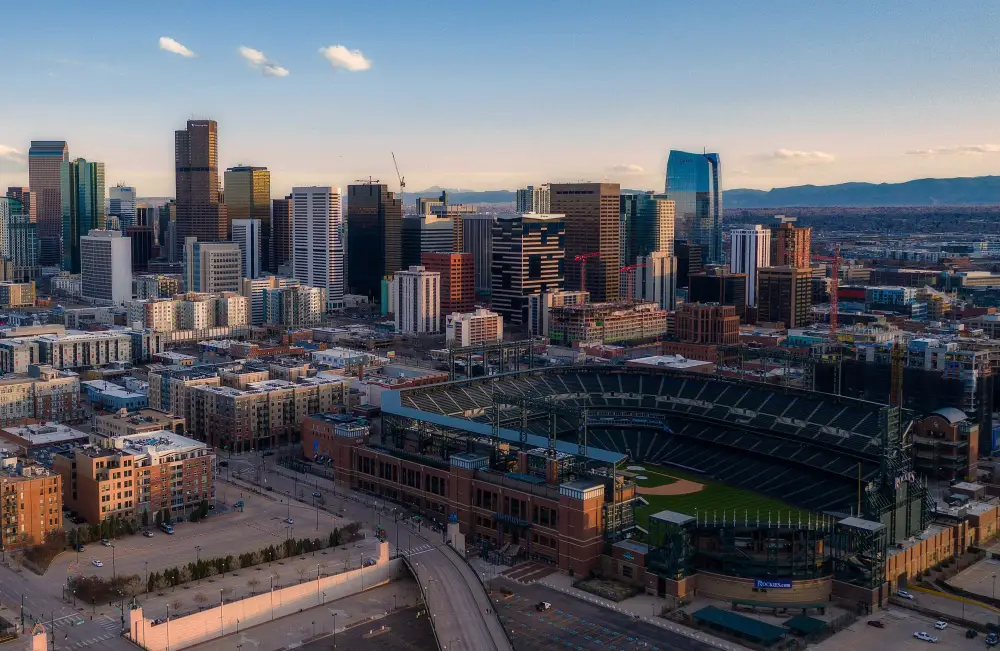
Superior, Colorado Rock Creek neighborhood and US-36 corridor. CGH Injury Lawyers represents people hurt on unsafe property in Superior and Boulder County.
Superior, Colorado

Superior Premises Liability Lawyers Who Hold Negligent Property Owners Accountable

A fall on an unsalted walkway in the Rock Creek neighborhood, a negligent-security assault at a commercial property off McCaslin Boulevard, ice left on a shared stairwell after a Colorado winter storm: when a Superior property owner fails to act and you pay the price, Colorado's Premises Liability Act decides what you are owed. CGH Injury Lawyers serves Superior and Boulder County from our Denver office. No fee unless we win.

No fee unless we win

It's More Than Money.

Tell us what happened on the property

100% confidential. No fee unless we win.

Serving Superior from our Denver Office CGH Injury Lawyers 2701 Lawrence St., Suite 201 Denver, CO 80205 (303) 209-9395 Se habla espanol
5-star rated on Google ABOTA trial advocate on the team Trial lawyers, not a settlement mill 8 attorneys, bilingual EN / ES
  • The Colorado Premises Liability Act (C.R.S. 13-21-115) governs property-owner responsibility in Superior and throughout Colorado. It ties the owner's legal duty to your status at the time of injury: invitee, licensee, or trespasser.
  • Most premises liability lawsuits in Colorado must be filed within two years of the date of injury (C.R.S. 13-80-102). If the property is owned or operated by a government entity, you must also serve a written notice of claim within 182 days of discovering the injury (C.R.S. 24-10-109(1)) or the claim is barred entirely.
  • Under Colorado's modified comparative negligence rule (C.R.S. 13-21-111), you can still recover even if you were partly at fault for your fall or injury, as long as your share of fault is less than 50 percent. At 50 percent or more, you recover nothing.

Superior is a Boulder County community of approximately 13,896 people whose location along the US-36 corridor, growing Rock Creek residential neighborhoods, and experience as one of the communities most affected by the December 2021 Marshall Fire create a distinctive set of property-liability risks. Apartment complexes and shared-amenity areas throughout Rock Creek carry ongoing maintenance obligations. Commercial properties along McCaslin Boulevard serve thousands of residents each week. And parcels that were rebuilt or remain under construction after the Marshall Fire present their own category of premises hazards. When an owner's failure to maintain safe property leaves you hurt, CGH Injury Lawyers builds your claim under Colorado law and fights for the full value of what you lost. No fee unless we win.

Who can bring a claim

Who can bring a premises liability claim in Superior?

Under the Colorado Premises Liability Act, the type of claim you can bring and the standard the property owner must meet both depend on why you were on the property when you got hurt. This is called visitor status, and it is the first question in every Superior premises case.

Invitees (highest protection)

  • Shoppers and patrons at grocery stores, restaurants, and retailers along the McCaslin Boulevard commercial corridor
  • Residents and guests using shared common areas, stairwells, laundry rooms, and parking lots in Rock Creek apartment complexes and managed communities
  • Visitors to Rock Creek Community Park, trailhead areas, and open-space amenities open to the public
  • Customers and employees at businesses and service providers throughout Superior's commercial areas

Licensees and others

  • Social guests invited to a private home or residential property in Superior's Rock Creek or other neighborhoods
  • Contractors and delivery workers entering a Superior property with permission for their own work purposes
  • Visitors at short-term rental properties within Superior whose hosts allowed access for personal use
  • Children near pools, active rebuild and construction sites, or other features that qualify under the attractive-nuisance doctrine

Invitees receive the highest protection under the Colorado Premises Liability Act. Owners must actively inspect for hazards and either repair them or provide adequate warning. It is not enough for an owner to claim they had no actual knowledge of a dangerous condition. If the hazard was present long enough that a reasonable inspection would have found it, the owner can still be held responsible under the doctrine of constructive notice. Licensees receive less protection and are owed warnings about known dangers, but not the active inspection duty. Status at the exact moment of injury is what counts, and it is commonly disputed by property-owner insurers in Boulder County cases.

The governing law

Colorado premises liability law, decoded for Superior property injury claims

The Colorado Premises Liability Act replaced older common-law rules with a structured framework. Several statutes directly affect what you can recover in a Superior case and how long you have to act. Here are the ones that matter most.

  1. C.R.S. 13-21-115: the Premises Liability Act and the duty framework

    The Colorado Premises Liability Act defines a property owner's duty based on visitor status. For invitees, owners must exercise reasonable care to inspect the property and either fix dangerous conditions or warn about them. For licensees, the duty is limited to warning about known dangers. The Act covers private residences, commercial property, apartment buildings, retail centers, parks, and parking lots alike. Government-owned property in Superior can be covered, subject to sovereign immunity rules under the Colorado Governmental Immunity Act discussed below.

  2. Two-year filing deadline (C.R.S. 13-80-102)

    Most premises liability claims in Colorado must be filed within two years of the date of injury. This is a strict deadline. Missing it means losing the right to any compensation, regardless of how clear the owner's fault is. The clock typically starts on the date of your fall or property-related injury in Superior, not the date you saw a doctor or retained an attorney. If you were hurt on someone else's property in Boulder County, the filing clock is already running.

  3. Government property: 182-day notice requirement (C.R.S. 24-10-109(1))

    If your premises injury happened on property owned or operated by a government entity, such as a Superior city park, a Boulder County facility, or public open space maintained by a government body, the Colorado Governmental Immunity Act requires you to serve a written notice of claim within 182 days of discovering the injury. The clock runs from the date you discovered the injury, not necessarily the date it occurred. This notice must be served on the proper entity before you can file a lawsuit. Missing the 182-day window bars the claim entirely, even if the injury would otherwise be compensable. Caps on damages against government entities under C.R.S. 24-10-114 also apply: for claims accruing on or after January 1, 2026, those caps are $505,000 per person and $1,421,000 in the aggregate.

  4. Constructive notice: what the owner should have known

    Property owners routinely claim they did not know about the dangerous condition that hurt you. Colorado law does not require proof of actual knowledge. An owner is legally responsible for a hazard they should have discovered through reasonable care and regular inspection. Courts examine how long the hazard was present, how visible it was, and what the owner's inspection practices were. In a Rock Creek apartment complex, a broken handrail that has been damaged for weeks is treated very differently from one that broke minutes before an injury. Inspection logs, surveillance footage, and prior incident reports are the evidence that answers the constructive-notice question in every Superior case.

  5. Modified comparative negligence (C.R.S. 13-21-111)

    Colorado follows a modified comparative negligence rule. If you were partly at fault for your injury, your damages are reduced by your percentage of fault. But you can still recover as long as your share is less than 50 percent. At 50 percent or more at fault, you recover nothing. This is the rule property-owner insurers exploit most aggressively after a Superior slip or fall. They argue you were distracted, wearing the wrong footwear, or ignored a warning sign. A well-built case with surveillance footage and witness testimony is the answer to that argument.

Local knowledge

Superior courts. Superior trauma care. Superior property corridors.

A Superior premises liability case lives in Boulder County: the property where it happened, the hospital that treated you, and the courthouse where your case may be filed. Here is the ground we work on.

Courthouse

Boulder County District Court, 20th Judicial District

A Superior premises liability lawsuit that exceeds the county-court jurisdictional limit is filed in the 20th Judicial District of Colorado at the Boulder County District Court, 1777 Sixth St., Boulder, CO 80302. Superior sits entirely within Boulder County, so every serious Superior premises claim that goes to litigation lands in this court. The Boulder County jury pool reflects an educated, evidence-driven community, which means building a clear, documented record of what the property owner knew or should have known is essential from day one. We handle 20th Judicial District premises cases directly, without referring them out.

Trauma Care

Foothills Hospital (Boulder) and Longmont United Hospital

Superior does not have its own acute-care hospital. Foothills Hospital in Boulder is approximately eight miles from central Superior and is typically the nearest full-service hospital for serious fall and property-injury victims in the area. Longmont United Hospital is approximately 14 miles away and provides additional care for Boulder County residents. Records from both facilities document injury severity and the mechanism of injury, which ties the harm directly to the property condition. We work with medical records from both hospitals to build a complete picture from first treatment through projected future care costs, and those records form the damages foundation of every serious Superior premises case.

Property Corridors and Hazard Zones

McCaslin Boulevard, Rock Creek Community, and Marshall Fire Rebuild Areas

McCaslin Boulevard is the primary north-south arterial through Superior and serves as the commercial spine connecting the Rock Creek residential neighborhoods to US-36. Commercial properties, retailers, and service businesses along McCaslin each carry premises-liability obligations for their parking areas, walkways, and entrances. The Rock Creek community includes extensive shared amenity areas, trail networks adjacent to Rock Creek Community Park, and multi-family residential developments where common-area maintenance is the landlord's legal responsibility. The December 2021 Marshall Fire burned through portions of Superior's Rock Creek neighborhood and the area near Marshall Road. Properties that were damaged, demolished, or rebuilt after the fire have presented their own category of premises hazard, including unstable terrain, construction-zone exposures, and questions about who controlled partially rebuilt or cleared sites. These are complex premises theories that require careful investigation.

Where injuries happen

The Superior property types and risks that turn into premises liability claims

Superior's residential density, US-36 corridor commercial activity, Marshall Fire aftermath, and Boulder County winters create a specific pattern of premises hazards. These are the situations we see most often when people come to us after a Superior property injury.

  1. Apartment complexes, stairwells, and Rock Creek common areas

    The Rock Creek community in Superior includes extensive multi-family residential development with shared stairwells, hallways, laundry rooms, garages, and outdoor amenity areas. Landlords and property management companies that defer maintenance to cut costs take on legal exposure when that deferral results in a tenant or guest injury. Dark stairwells with burned-out lighting, broken handrails, crumbling parking-lot pavement, and neglected pool or fitness facilities are each potential premises liability claims. Colorado law does not require a prior complaint before holding a residential owner responsible: if the condition was discoverable through reasonable inspection, constructive notice can still apply. A broken stair in a Rock Creek apartment building that has been reported to management and not repaired is among the clearest constructive-notice cases available.

  2. Commercial properties and parking areas along McCaslin Boulevard

    McCaslin Boulevard is the principal retail and commercial corridor serving Superior's roughly 13,896 residents. Businesses along McCaslin owe their customers, the highest-protected visitor class under Colorado law, an active duty to inspect for and address hazardous conditions. Ice and snow accumulation on walkways and parking lot entrances during Boulder County winters is among the most common hazard type on commercial property. The ongoing-storm doctrine gives property owners some limited protection during active precipitation, but once a storm ends, owners must clear walkways and entrances within a reasonable time. A parking-lot entrance that remained icy through the morning after an overnight storm is a textbook constructive-notice claim. We subpoena maintenance logs and weather station data to document the gap between the storm's end and the fall.

  3. Trail networks, park access points, and open-space areas

    Superior's Rock Creek neighborhood borders trail networks, open-space areas, and community park facilities that draw pedestrian and cycling traffic year-round. Trip hazards from uneven path surfaces, unsafe transitions from parking areas to trailheads, and poorly maintained facility access points all fall within the scope of the Premises Liability Act when the responsible party failed to inspect and address them. Government-owned parks and open space add an extra procedural layer: the 182-day written notice requirement under C.R.S. 24-10-109(1) runs from the date you discovered your injury and must be served before any lawsuit is filed. We track this clock from your first call and serve notice immediately when a government entity may be involved.

  4. Marshall Fire rebuild sites and post-fire property hazards

    The December 2021 Marshall Fire destroyed portions of Superior including parts of the Rock Creek neighborhood and the area near Marshall Road. In the years since, active demolition, lot clearing, and residential rebuild have created construction-zone exposures that overlap with traditional premises liability. When an adjacent or partially rebuilt property presents an unreasonable hazard to neighbors, visitors, or passersby, and the owner of that property controls the condition, a premises liability theory may apply. These cases require careful investigation into who owned and controlled the property at the time of the injury, what work was underway, and whether the hazard was discoverable. The timeline for filing depends on the theory and when you discovered the injury or its cause.

  5. Negligent security at residential and commercial properties

    A premises liability claim can arise from a criminal assault, not just a physical hazard. When a property owner in Superior knows of prior criminal activity on or near the property and fails to provide reasonable security measures, such as working locks, adequate lighting, functioning cameras, or security personnel, they can be liable for injuries that result from a foreseeable criminal act. The foreseeability of crime is established through prior incident reports and the owner's own knowledge, both of which we obtain through discovery. Multi-family residential complexes in Rock Creek, where access-control failures allow unauthorized entry into common areas, are the environment where this theory most often arises in Superior.

After a property injury

What to do after a premises injury in Superior

Premises liability claims are won or lost on evidence that disappears fast. Surveillance footage gets overwritten. Witnesses leave the scene. Maintenance logs get updated. Take care of your health first, then protect your case. Here is the path we walk with you.

  1. Get immediate medical care

    Serious property injuries in Superior are typically treated at Foothills Hospital in Boulder, approximately eight miles from central Superior, or at Longmont United Hospital, approximately 14 miles away. Even injuries that feel manageable at the scene can hide nerve damage, hairline fractures, or traumatic brain injury. Get examined promptly. Your medical records document both the severity of your injury and, critically, the mechanism of injury, which ties the harm directly to the property condition that caused it.

  2. Document the hazard and the scene

    Photograph the exact condition that caused your injury, the area around it, any posted signs or the absence of them, and your injuries. If you fell on ice in a Rock Creek parking lot, photograph the walkway and the accumulation from multiple angles. If you tripped on a defect in a stairwell or path, photograph it with something for scale. Get the names and contact information of any witnesses before they leave. Ask the property owner or manager to complete an incident report and request a copy. A written record created at the scene is far more powerful than a description written weeks later.

  3. Watch the 182-day notice window for government property

    If the property was owned or operated by a government entity, a formal written notice of claim must be served within 182 days of discovering the injury under C.R.S. 24-10-109(1). This window runs well before the general two-year lawsuit deadline and is entirely separate from it. Missing the 182-day notice bars the claim against the government entity entirely, with very limited exceptions. We track this deadline from your first call and serve notice immediately when a government entity may be involved in a Superior premises case.

  4. Do not give a recorded statement to the property owner's insurer

    After a property injury, the owner's liability insurer may contact you quickly. Their goal is to get a recorded statement that minimizes their exposure before you understand your rights. Do not give one. Do not accept a settlement offer without first speaking with us. Call (303) 209-9395. An early, low offer is not a reflection of what your claim is actually worth under Colorado law.

  5. We move quickly to preserve the evidence

    We issue preservation letters to the property owner, demand that surveillance footage not be overwritten, subpoena inspection logs and maintenance records, and secure witness statements. In a Superior apartment-complex case, common-area maintenance records and any prior complaints about the same condition are often decisive. Evidence in a premises case often disappears within days. The sooner we are involved, the more of it we save.

  6. We build the claim, negotiate, and try the case if needed

    We calculate the full value of your claim across every category Colorado law allows, including future medical expenses, lost earning capacity, pain and suffering, and physical impairment. We negotiate from a position of trial readiness. If the property owner's insurer refuses to offer fair value, we file in the Boulder County District Court, 1777 Sixth St., Boulder, CO 80302, in the 20th Judicial District, and try your case to a Boulder County jury. Most cases settle. When they do not, we are prepared.

Compensation

What compensation can you recover in a Superior premises liability case?

Colorado law lets injured people recover both the documented financial costs of an injury and the human cost of living with it. Here is what we build into every Superior premises liability claim.

Economic damages (no cap)

  • Medical expenses, past and future, including surgery, physical therapy, and follow-up care at Foothills Hospital or Longmont United Hospital
  • Lost wages from time missed at work during treatment and recovery
  • Lost earning capacity if your injuries limit your ability to work going forward
  • Out-of-pocket costs tied to the injury, including transportation to and from Foothills Hospital or other facilities and home-care expenses

Non-economic and impairment damages

  • Pain and suffering, capped at $1,500,000 for claims accruing on or after January 1, 2025 (C.R.S. 13-21-102.5)
  • Physical impairment and disfigurement, which are not capped at all under Colorado law
  • Loss of enjoyment of life, including activities, hobbies, and recreational pursuits around Superior's trail networks and open spaces that you can no longer do
  • In fatal premises cases, funeral expenses and loss of companionship under Colorado's wrongful-death framework (non-economic cap for claims accruing on or after January 1, 2025 is $2,125,000 under C.R.S. 13-21-203(1)(a))

Economic damages are never capped in Colorado. The pain-and-suffering cap under C.R.S. 13-21-102.5 is $1,500,000 for claims accruing on or after January 1, 2025. Compensation for physical impairment or disfigurement is entirely uncapped, which matters most in Superior cases involving permanent fractures, spinal damage, or long-term disability from a fall on a property that should have been safe. The gap between what an insurer first offers and what a fully built claim is actually worth is often substantial. We do not discuss settlement until we understand the complete scope of what you have lost, including what future medical needs and lost earning capacity look like over time.

Under Colorado's modified comparative negligence rule (C.R.S. 13-21-111), your damages are reduced by your percentage of fault if you were partly responsible for the hazard or the fall. But you can still recover as long as your share is less than 50 percent. A person found 30 percent at fault on a $200,000 claim recovers $140,000. Insurance companies know this rule and use it aggressively to inflate plaintiff-fault percentages after a Superior slip or fall. Evidence that documents the property condition, the owner's inspection history, and the absence of adequate warning is how we push that number down and protect the full value of your recovery.

I wish I could leave more than 5 stars!
Grace M., 5-star CGH Injury Lawyers client review
Why CGH

Why Superior premises liability victims choose CGH Injury Lawyers

Trial-ready attorneys, bilingual staff, and no fee unless we win. We are direct about one thing up front: CGH Injury Lawyers does not have a Superior office. We serve Boulder County from our Denver office and come to you. What you get is the legal work, not a storefront on McCaslin Boulevard.

Trial-Ready

Built to try your case in Boulder County.

Managing Partner Kevin Cheney is a member of the American Board of Trial Advocates and has tried over 25 cases to verdict. Property owners and their insurers respond differently to demand letters from attorneys who are genuinely prepared to try a Superior premises case in the Boulder County District Court within the 20th Judicial District.

Honest About Location

Serving Superior from Denver.

Our office is at 2701 Lawrence St., Suite 201 in Denver. CGH Injury Lawyers does not have a Superior office and does not claim one. We represent Boulder County premises liability clients, file in the Boulder County District Court at 1777 Sixth St., Boulder, CO 80302, and meet you wherever works for you, including at your home in Superior. Call (303) 209-9395.

Evidence First

We move before footage disappears.

Premises cases turn on surveillance footage, inspection logs, and maintenance records. We issue preservation letters and subpoenas before that evidence is overwritten or lost, often within days of the injury at a Rock Creek apartment complex or McCaslin Boulevard commercial property.

Bilingual

Hablamos espanol.

Spanish-speaking staff and attorneys serve Superior and Boulder County's Spanish-speaking community at every stage of the premises case, from the first call through trial.

No Win, No Fee

Contingency only.

You pay nothing out of pocket for legal fees. We advance costs and collect only from a settlement or verdict in your favor. There is no financial risk in calling us to find out whether you have a premises claim in Superior.

One Standard

8 attorneys. One promise.

Whether your Superior premises case settles in three months or goes to a Boulder County jury, the same trial-ready team and the same standard of preparation apply. Timothy G. Tarr has been recognized by Best Lawyers every year since 2023. We prepare every case as if it will be tried.

ABOTA member on the team Tim Tarr: Best Lawyers in America since 2023 Over 25 cases to verdict Boulder County coverage Bilingual EN / ES Free consultation No fee unless we win
Questions

Superior premises liability, frequently asked questions

How long do I have to file a premises liability claim in Superior?

Most premises liability lawsuits in Colorado must be filed within two years of the date of injury under C.R.S. 13-80-102. If the property belongs to a government entity, such as a Superior city park or Boulder County open space, you must also serve a written notice of claim within 182 days of discovering the injury under C.R.S. 24-10-109(1). That notice deadline is separate from the two-year lawsuit deadline and runs first. Missing either can bar your claim entirely. Contact an attorney as soon as possible after a property injury in Superior, Boulder County.

Does CGH Injury Lawyers have an office in Superior?

No. CGH Injury Lawyers has one office, at 2701 Lawrence St., Suite 201, Denver, CO 80205. CGH Injury Lawyers does not have a Superior office. We serve Superior and Boulder County clients from our Denver office, file premises liability cases at the Boulder County District Court, 1777 Sixth St., Boulder, CO 80302, and meet clients where it is convenient for them, including at their home in Superior. Reach us at (303) 209-9395.

Can I recover if I was partly at fault for my fall or property injury in Superior?

Often yes. Colorado's modified comparative negligence rule under C.R.S. 13-21-111 reduces your damages by your percentage of fault but does not bar recovery entirely unless your share of fault reaches 50 percent or more. If you are found 25 percent at fault on a $100,000 claim, you recover $75,000. At 50 percent or more at fault, you recover nothing. Property-owner insurers routinely argue inflated fault percentages against injured people after a Superior slip or fall, which is why documentation and evidence matter from day one.

Is a property owner responsible if they did not know about the hazard that hurt me?

Potentially yes. Colorado law does not require proof that the owner had actual knowledge of the dangerous condition. Constructive notice can establish liability when a hazard was present long enough that a reasonable inspection would have found it. Courts look at how long the condition existed, how visible it was, and whether the owner had a regular inspection program in place. A landlord in Superior's Rock Creek community who cannot produce inspection logs for a stairwell where someone fell often has a difficult time arguing the stairwell was regularly inspected at all.

What if I was hurt on a property that was part of the Marshall Fire rebuild area?

Claims arising from the December 2021 Marshall Fire and the ongoing rebuild in Superior's Rock Creek neighborhood and the Marshall Road area can involve premises liability, wrongful death, and questions about who controlled a damaged or rebuilt property at the time of the injury. These cases require careful fact investigation. Applicable deadlines depend on the specific theory of recovery and when you discovered the injury or its cause. Call us to confirm your timeline before acting. We evaluate these claims carefully, applying verified Colorado law, not assumptions, to the specific facts of your situation.

What are the damages caps that apply to a Superior premises liability case?

Economic damages such as medical bills, lost wages, and future care costs are not capped in Colorado. Non-economic damages such as pain and suffering are capped at $1,500,000 for claims accruing on or after January 1, 2025 (C.R.S. 13-21-102.5). Compensation for physical impairment or disfigurement is not capped at all. If the property is government-owned, damages caps under the Colorado Governmental Immunity Act apply: for claims accruing on or after January 1, 2026, those are $505,000 per person and $1,421,000 in the aggregate (C.R.S. 24-10-114). In wrongful death cases, the non-economic cap for claims accruing on or after January 1, 2025 is $2,125,000 (C.R.S. 13-21-203(1)(a)).

It's More Than Money.

You were hurt on unsafe property in Superior. We handle everything else.

Free consultation. No fee unless we win. Available in English and Spanish.

Read next: Colorado premises liability statewide overview

CGH Injury Lawyers · Serving Superior from 2701 Lawrence St., Suite 201, Denver, CO 80205