
ClickCease
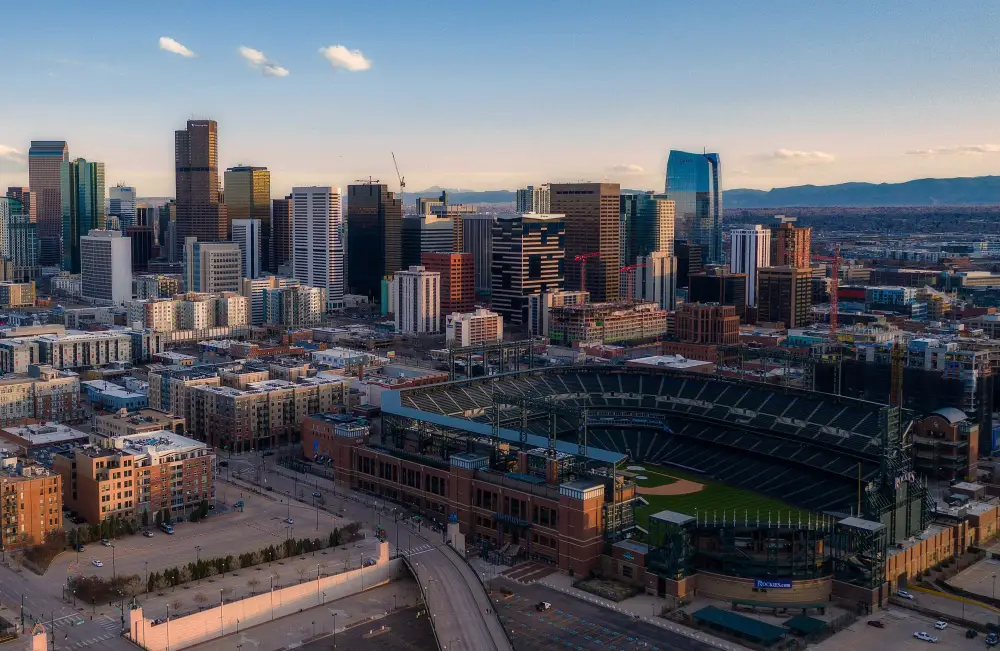
Denver skyline. CGH Injury Lawyers represents vehicle recall and auto defect victims across Denver, Colorado.
Denver, Colorado

Denver Vehicle Recall Lawyers Who Make the Manufacturer Answer

A defective airbag, failed brake, or blown tire on I-25 or I-70 changes everything. Colorado product liability law holds the manufacturer responsible, not you. We work from our Denver office at 2701 Lawrence St. and take no fee unless we win.

No fee unless we win

It's More Than Money.

Tell us what happened

100% confidential. No fee unless we win.

Our Denver Office CGH Injury Lawyers 2701 Lawrence St., Suite 201 Denver, CO 80205 (303) 209-9395 Se habla espanol
5-star rated on Google ABOTA trial advocate on the team Manufacturer pays your legal fees by statute No fee unless we win
  • Colorado product liability law under C.R.S. 13-21-401 et seq. lets a Denver driver or family sue a manufacturer for a design defect, a manufacturing defect, or a failure to warn, even when the part was sold years ago and even when NHTSA has already issued a recall.
  • A federal recall does not pay your medical bills. It can be evidence the manufacturer knew the part was dangerous, but your injury claim against the maker is entirely separate and must be pursued on its own track.
  • When a defective new or warranted vehicle cannot be fixed, Colorado's Lemon Law (C.R.S. 42-10-101) provides a buyback path, and both claims can be pursued at the same time. Product liability injury claims must be filed within two years (C.R.S. 13-80-106).

Denver sits at the center of Colorado's most dangerous interstate corridors. I-25 through the Mousetrap, I-70 eastbound near Peoria Street, and Federal Boulevard through northwest Denver are among the highest-crash corridors in the state. When a defective vehicle fails on those roads, the consequences are catastrophic. CGH Injury Lawyers serves Denver from our office at 2701 Lawrence St., Suite 201. We investigate the defect, preserve the vehicle, retain engineering experts, and take the case to trial in Denver District Court when the manufacturer refuses to be fair. You pay nothing unless we win.

Who we represent

Denver drivers hurt by a defective vehicle or recalled part

Not every vehicle problem gives rise to an injury claim. The cases we take are the ones where a manufacturer's failure, not driver error, caused the harm. If any of these situations describes what happened to you, a free review with our Denver team will tell you whether you have a claim worth pursuing.

Injury from a defective part

  • Airbag that failed to deploy, deployed late, or ruptured in a crash
  • Tire tread separation or blowout at highway speed on I-25 or I-70
  • Brake fade or failure on a high-traffic Denver corridor
  • Steering or suspension loss of control at The Mousetrap or on Federal Boulevard
  • Seatbelt or restraint that failed during the crash
  • Fuel system defect that caused a post-impact fire
  • Engine stall in traffic that caused a rear-end collision

Vehicle that cannot be fixed

  • Same defect repaired four or more times with the problem still present
  • Vehicle out of service for 30 or more cumulative business days for warranty repairs
  • Dealer keeps writing "no problem found" but the defect keeps returning
  • Defect substantially impairs the safety, use, or value of a new or warranted vehicle
  • Recall repair attempted but the vehicle still fails
The law that governs your case

Colorado product liability and Lemon Law, decoded for Denver drivers

Denver vehicle defect cases run on two distinct legal tracks. Understanding which one fits your situation determines the evidence we need, the claim we build, and who pays.

Track 1: Product liability injury claim

Colorado product liability law is codified at C.R.S. 13-21-401 et seq. It recognizes three separate theories of manufacturer liability, and a single case can rest on more than one.

  • Design defect: the product is dangerous as designed, before a single unit left the factory. Every vehicle of that model carries the same flaw, and a safer practical alternative design was available to the manufacturer.
  • Manufacturing defect: the design was sound, but something went wrong on the assembly line. Your specific vehicle or part differs from what the manufacturer intended to build, such as a bad weld, contaminated material, or a missing component.
  • Failure to warn: the manufacturer knew of a danger and did not warn you adequately. A delayed or inadequate recall notice can support this claim, because the recall itself can be evidence the maker knew the part was dangerous long before it issued any notice.

Crashworthiness: the second collision

Denver's busiest corridors see serious multi-vehicle crashes regularly. Even when another driver caused the collision, the vehicle itself still has to protect you in the impact. This duty is called crashworthiness. When a roof crushes in a rollover on I-70, a seatbelt unlatches, an airbag fails to fire, or a fuel tank ruptures, the manufacturer can be liable for the injuries the defect made worse, on top of whoever caused the original crash. The two claims are not mutually exclusive and are often pursued together.

Track 2: Lemon Law buyback

When a defective new or warranted vehicle substantially impairs its use, value, or safety and cannot be repaired, Colorado's Lemon Law (C.R.S. 42-10-101) requires the manufacturer to buy it back. For vehicles sold or leased on or after August 7, 2024, two thresholds trigger lemon status:

  • The 4-attempt rule: the same defect has been subject to repair four or more times and still is not fixed.
  • The 30-day rule: the vehicle has been out of service for a cumulative 30 or more business days for warranty repairs.
  • These attempts or days must fall within the warranty period or within one year of delivery to the original purchaser, whichever comes first.
  • If a dealer writes "no problem found" or "unable to duplicate," the repair attempt still counts under Colorado law, as long as you reported the defect and gave them the chance to inspect the vehicle.

A 2024 update to the Lemon Law (Senate Bill 24-192, effective August 7, 2024) changed how the reasonable allowance for use is calculated in a buyback in a way that can affect your refund. An attorney familiar with the current formula makes sure the manufacturer pays the correct amount.

Does a recall mean you cannot sue?

No. A recall and an injury claim are two entirely different things. The National Highway Traffic Safety Administration (NHTSA) can order a recall to fix a known danger, but a free repair does nothing for the medical bills, lost income, and pain caused when the defect already hurt someone. A recall can actually strengthen your case, because it is evidence the manufacturer knew the part was dangerous before you were injured. The product liability claim is yours to pursue under C.R.S. 13-21-401 et seq., separate from any recall the company issues.

Colorado's altitude and climate do not let manufacturers off the hook

Denver sits at 5,280 feet. Manufacturers know Colorado buyers drive at altitude, through hail seasons from May through August, and across the black-ice conditions that strike arterials and bridges from November through March. A vehicle must be fit for the roads and climate where it is sold and driven. If a defect manifests or worsens at altitude, in extreme cold, or on the I-70 grade below the Eisenhower Tunnel, that is the manufacturer's problem, not yours.

Local knowledge

Denver roads. Denver courts. Denver trauma care.

A vehicle defect case in Denver lives in Denver: the crash corridor where the defect failed, the Level I trauma center that treated you, and the courthouse where your case will be filed. Here is the ground we work on every day.

Courthouse

Denver District Court, 2nd Judicial District

Product liability and Lemon Law cases arising in Denver County are filed in Denver District Court, the 2nd Judicial District. Civil matters are heard at 1437 Bannock Street, Room 256, Denver, CO 80202. Denver District Court civil procedure differs from suburban courts. The local rules, the judges, and the defense firms you face all reflect Denver's specific litigation environment. We file and try cases there directly.

Trauma Care

Denver Health Medical Center

The most critically injured survivors of defective-vehicle crashes in Denver are typically transported to Denver Health Medical Center, home of the Ernest E. Moore Shock Trauma Center at 777 Bannock Street. It is the only Level I Adult Trauma Center located within Denver city limits (American College of Surgeons and State of Colorado verified). UCHealth University of Colorado Hospital, a Level I Trauma Center on the Anschutz Medical Campus in Aurora, and Children's Hospital Colorado, the region's only Level I Regional Pediatric Trauma Center, serve additional patients from the Denver metro. Those medical records document the full scope of your injuries and anchor your damages claim.

High-Risk Corridors

Denver's most dangerous roads

The I-25 northbound at West 6th Avenue interchange recorded 189 crashes in 2025 data, the highest crash volume of any interchange in Denver. The I-70 eastbound and North Peoria Street interchange recorded 130 crashes in the same period, with the highest fatal-crash concentration at I-70 WB and North Peoria. Federal Boulevard (US-287) has a fatality rate more than twenty times the urban street average for Colorado and accounted for 22 percent of all pedestrian-involved crashes in Denver between 2012 and 2017. The Mousetrap, where I-25 and I-70 meet in north Denver, carries the highest freight truck volume of any interchange in the state. Defects that might survive ordinary city driving fail with regularity on these corridors.

Event Congestion

Empower Field, Coors Field, Union Station

Empower Field at Mile High generates more than 70,000 vehicle movements on event days, surging traffic on I-25 and surrounding surface streets. Coors Field and the LoDo entertainment district create dense pedestrian and vehicle mixing on game nights. Union Station is a convergence point for light rail, commuter rail, bus, and rideshare traffic. When a braking defect or steering failure occurs in stop-and-go event traffic, the consequences are compounded by the density of people around the vehicle.

Why CGH

Why Denver vehicle recall victims choose CGH Injury Lawyers

A physical Denver office, trial-ready attorneys, bilingual service, and no fee unless we win. We do not publish vehicle defect settlement figures, because every case is different and a number on a page tells you nothing about what your case is worth. What we offer is the work, not a headline.

The Statute

C.R.S. 13-21-401 et seq.

Colorado product liability law holds the manufacturer responsible for design defects, manufacturing defects, and failure to warn. A recall does not bar your injury claim under this statute.

Real Denver Office

Not a virtual address.

Our office at 2701 Lawrence St., Suite 201 in Denver's RiNo and Cole area is where your attorney works. You can walk in, review the investigation file, and meet the team handling your case against the manufacturer.

Evidence Preservation

The vehicle is the case.

We act immediately to preserve the vehicle and the failed part before they are repaired, scrapped, or altered. That physical evidence is what defeats a manufacturer's defense team.

Fee Shifting

Maker pays your attorney.

In Lemon Law cases the manufacturer pays the prevailing consumer's attorney fees and costs. You keep your refund.

Trial-Ready

ABOTA advocate. 8 attorneys. Prepared for trial.

Managing Partner Kevin Cheney is a member of the American Board of Trial Advocates (ABOTA) and has tried over 25 cases to verdict. Car manufacturers keep teams of lawyers whose job is to delay, deny, and minimize. When CGH is genuinely ready to try your case in Denver District Court, those defense teams respond differently to a demand.

Bilingual

Hablamos espanol.

Spanish-speaking staff and attorneys serve Denver's Spanish-speaking community in every step of the vehicle defect process.

Honest Case Review

We say no when it is right.

We do not take vehicle defect cases we cannot honestly stand behind. If normal wear and tear, driver error, or a non-compensable maintenance failure is what actually happened, we will tell you that in the free review rather than sign you up and let the case stall.

After the failure

What to do after a vehicle defect injures you in Denver

Defect cases turn on evidence the manufacturer would rather you never gather. The steps you take in the first hours and days after the failure can make or break the case.

  1. Get medical care immediately

    Denver Health Medical Center at 777 Bannock Street is the closest Level I Adult Trauma Center within Denver city limits. UCHealth University of Colorado Hospital on the Anschutz Medical Campus in Aurora is also a Level I Trauma Center. Get to the appropriate facility for your injuries and keep every record, discharge summary, and bill.

  2. Preserve the vehicle and the failed part

    Do not allow the vehicle to be repaired, scrapped, or returned to a dealer or manufacturer before an attorney has seen it. The defective part is the centerpiece of the case. Photograph everything at the scene and at the repair shop. If you cannot prevent a repair from starting, call us first so we can issue a preservation demand.

  3. Gather the documentation

    Locate all service records, repair orders, recall notices, and warranty documents. If a dealer or manufacturer representative contacted you after the incident, note exactly what was said. These communications can show the manufacturer was aware of the danger.

  4. Do not speak with the manufacturer's insurer

    An adjuster or representative from the manufacturer or its insurer may contact you quickly. Do not give a recorded statement, sign any release, or accept any offer before speaking with a Denver attorney. A quick settlement offer is designed to close your case for less than it is worth.

  5. Call CGH for a free case review

    We will review what happened, explain whether you have a product liability injury claim, a Lemon Law buyback claim, or both, and answer your questions at no cost. Call (303) 209-9395 or use the form on this page. The two-year product liability deadline (C.R.S. 13-80-106) and the 30-month Lemon Law deadline (C.R.S. 42-10-107) run from different events, so getting your specific dates confirmed early protects your rights.

  6. We investigate, build, and file

    We secure the vehicle, pull NHTSA recall and complaint history, gather service and warranty records, retain engineering experts, document your full damages, and send a demand to the manufacturer. We negotiate from a position of trial readiness. When the manufacturer refuses a fair resolution, we file in Denver District Court and litigate the defect.

Compensation

What can a Denver vehicle defect victim recover?

What you can recover depends on which claim fits your situation. An injury caused by a defect and a buyback for a lemon vehicle are valued in very different ways. In many cases both are pursued together.

Injury claim (product liability)

  • Medical expenses, past and future
  • Lost wages and loss of earning capacity
  • Pain and suffering
  • Emotional distress and loss of enjoyment of life
  • Loss of consortium for a spouse or family
  • Rehabilitation and long-term care costs
  • Damages for physical impairment or disfigurement, which are not capped under Colorado law

Buyback claim (Lemon Law)

  • The full purchase price, including taxes, registration, and dealer fees
  • Minus a reasonable allowance for use, calculated under the current 2024 formula
  • Plus incidental costs such as towing and rental cars during repairs
  • Your attorney's fees and costs, paid by the manufacturer

Under Colorado's Lemon Law, a refund equals the full purchase price (including taxes and fees) minus a reasonable allowance for your use of the vehicle, calculated by statute as the contract price multiplied by the qualifying miles driven divided by 100,000 (C.R.S. 42-10-103(4), for vehicles sold or leased on or after August 7, 2024), and the manufacturer pays the prevailing consumer's attorney fees (C.R.S. 42-10-103(3)). If a defect caused an injury, non-economic damages in a product liability claim are subject to Colorado's general cap of $1.5 million for claims accruing on or after January 1, 2025 (C.R.S. 13-21-102.5). Compensation for physical impairment or disfigurement is not capped under that statute. Economic damages such as medical bills and lost wages are never capped.

I wish I could leave more than 5 stars!
Grace M., 5-star CGH Injury Lawyers client review
What manufacturers argue

Defenses Denver manufacturers use, and how we answer them

Automakers and their insurers have practiced defenses. Understanding them before you file is how we keep a valid claim from being dismissed on a technicality.

  1. "Driver error caused the crash, not our part"

    Colorado uses modified comparative negligence (C.R.S. 13-21-111). If a plaintiff is 50 percent or more at fault, they cannot recover. If they are less than 50 percent at fault, recovery is reduced by their share of fault. Manufacturers often try to assign driver error to reduce or eliminate the claim. We counter this with expert reconstruction, NHTSA complaint data, and evidence of the defect's independent role in the outcome.

  2. "Colorado's altitude or hail caused the failure, not our design"

    Manufacturers sometimes blame Colorado's environment for failures that would reveal a design defect in any market. A vehicle must be fit for the roads and climate where it is sold and driven. Hail seasons from May through August, black ice on Denver arterials from November through March, and high-altitude thin air are not excuses. They are conditions the manufacturer was required to account for when it chose to sell vehicles in Colorado.

  3. "You modified the vehicle"

    Aftermarket modifications can affect a product liability claim if they caused or contributed to the failure. We retain engineering experts to isolate whether the defect in the original design or the original build is what failed, and whether any modification had any causal connection to the injury. Most Denver drivers who modify their vehicles have done nothing that releases the manufacturer from its responsibility for an independent defect in the original part.

  4. "You missed the deadline to file"

    Product liability injury claims in Colorado must be filed within two years after the claim for relief arises (C.R.S. 13-80-106). Lemon Law claims for vehicles sold or leased on or after August 7, 2024 must be commenced within 30 months following the date of the original delivery (C.R.S. 42-10-107). These deadlines run from different events. We confirm your specific dates at the outset so a deadline is never the reason a valid Denver claim fails.

Who pays and how

Suing the manufacturer's insurer, not hoping for a recall reimbursement

The most common misunderstanding Denver vehicle defect victims have is that a recall or a warranty claim is all that is available to them. It is not. A product liability claim targets the manufacturer's own liability coverage, which in most cases is far larger than a recall repair budget.

  • A manufacturer's insurer will assign an adjuster to your claim quickly. Their job is to minimize the payout, not to make you whole. Statements you give without counsel become weapons against your claim.
  • Manufacturer liability policies typically carry limits large enough to cover significant injury claims. Getting to those limits requires building the case to the point where settling is cheaper for the insurer than going to trial in Denver District Court.
  • In Lemon Law cases the statute itself shifts legal fees to the manufacturer (C.R.S. 42-10-103(3)), so the firm representing you has the same economic interest in pursuing the claim fully that you do.
  • Your own uninsured or underinsured motorist coverage may be a secondary source of recovery in a crashworthiness case where another driver is also at fault. We identify every policy in play before we build the demand.
Questions

Denver vehicle recall, frequently asked questions

Can I sue the manufacturer if my car was under a recall and I was hurt before the repair?

Yes. A recall and an injury claim are two separate things. A recall fixes the part for free, but it does nothing for the medical bills, lost income, and pain caused by the defect before you knew about it. You can bring a product liability claim against the manufacturer under C.R.S. 13-21-401 et seq. The recall itself can actually strengthen your case, because it is evidence the manufacturer knew the part was dangerous.

How long do I have to file a vehicle defect or Lemon Law claim in Denver?

Product liability injury claims in Colorado must be filed within two years after the claim for relief arises (C.R.S. 13-80-106). That two-year rule applies even when the defect involves a vehicle, because the motor-vehicle three-year rule does not extend to strict liability or failure-to-warn claims. Lemon Law claims for vehicles sold or leased on or after August 7, 2024 must be commenced within 30 months following the date of the original delivery (C.R.S. 42-10-107), with different rules for older purchases. Because these deadlines run from different starting events, getting your specific dates confirmed early is critical.

What makes a vehicle a lemon under Colorado law?

Under Colorado's Lemon Law (C.R.S. 42-10-101), a new or warranted vehicle is a lemon when a defect substantially impairs its use, value, or safety and the manufacturer cannot fix it. That is shown when the same defect has been repaired four or more times without success, or when the vehicle has been out of service for a cumulative 30 or more business days for warranty repairs, within the warranty period or one year of delivery, whichever comes first. A dealer writing "no problem found" still counts as a repair attempt under Colorado law, as long as you reported the defect and gave them the chance to inspect the vehicle.

Where would a Denver vehicle defect lawsuit be filed?

Product liability and Lemon Law cases arising from an incident or purchase in Denver County are filed in Denver District Court, the 2nd Judicial District. Civil matters are heard at 1437 Bannock Street, Room 256 in Denver. Most cases settle before a lawsuit is ever filed, but where a case would be filed affects the local rules, the jury pool, and which defense firms and adjusters you face. We file and try cases in Denver District Court directly.

Another driver caused my crash. Can I still sue the manufacturer?

Yes. This is the crashworthiness doctrine. Even when another driver caused the collision, the vehicle manufacturer is still responsible for the injuries a defect made worse during the crash. If an airbag failed to deploy, a roof crushed in a rollover on I-70, a seatbelt unlatched, or a fuel tank ruptured and caught fire, the manufacturer can be liable for the harm the defect added beyond what the collision itself would have caused. Both the negligent driver and the manufacturer can be pursued at the same time.

Should I keep driving a vehicle I think is defective?

If the defect poses a safety risk, such as brake failure, steering loss, or engine stalling in traffic, do not drive it on Denver's high-volume corridors. Rent a vehicle if you need to, and keep the receipts because those costs may be recoverable. Preserve the vehicle and the failed part rather than having them repaired or scrapped. The physical evidence of the defect is the center of the product liability case, and allowing it to be repaired or destroyed before an expert inspects it can seriously damage your claim.

Who pays my attorney fees in a Lemon Law case?

In a Colorado Lemon Law case, the manufacturer pays the prevailing consumer's attorney fees and costs (C.R.S. 42-10-103(3)). You keep the full refund. Across our injury work, you pay nothing out of pocket and no fee unless we win. We advance the costs of the case, including expert fees, against any future recovery.

Does Colorado's hail season or black ice affect a vehicle defect claim?

Not in the way manufacturers claim. Denver's hail season runs from May through August, with golf-ball to softball size hailstones recorded in the metro. Black ice is common on arterials and bridges from November through March. Manufacturers who sell vehicles in Colorado are required to design and build them for the roads and climate where they will be driven. If a defect is triggered or worsened by Colorado conditions, that does not release the manufacturer from liability under C.R.S. 13-21-401 et seq. It may actually strengthen the failure-to-warn theory, because the manufacturer should have known how the defect would perform in Colorado's environment.

It's More Than Money.

A defect put you at risk on Denver roads. We hold the maker accountable.

Free consultation. No fee unless we win. Available in English and Spanish.

Tell us what happened

100% confidential. No fee unless we win.

Prefer to read first? See how Colorado auto defect law works statewide.

CGH Injury Lawyers · 2701 Lawrence St., Suite 201, Denver, CO 80205 · (303) 209-9395