Boulder Personal Injury Lawyer
You’re hurt. Confused. Overwhelmed by medical bills and insurance adjusters who are already blaming you for the accident. You need someone who knows Boulder—not just the law, but the streets, the hazards, and the tactics insurance companies use to deny claims here.
At Cheney Galluzzi & Howard, dedicated personal injury attorney in Denver, Boulder isn’t just another market. It’s where we learned to be lawyers.
We Didn’t Just Learn the Law. We Learned It Here.
Founding partners Kevin Cheney and Tim Galluzzi are proud graduates of the University of Colorado School of Law. We spent years in Boulder—studying, cycling, and yes, dealing with the same dangerous intersections and environmental hazards our clients face today. Tim still serves on the CU Law Alumni Board, keeping us connected to the legal community we came from.
When an insurance company tries to use Boulder’s unique geography against you—blaming the sun glare, the mag-chloride slickness, or the “assumption of risk” because you were on a bike—we don’t just argue the law. We argue about physics. And we win.
Why Generic Legal Arguments Fail in Boulder County Courts
Insurance adjusters love Boulder. Why? Because they can use our city’s unique conditions as excuses to deny claims or reduce payouts. But those excuses only work if your attorney doesn’t understand the local environment.
We do. Here’s how we shut down the most common defenses:
The “Sun Glare” Defense (US-36 & Arapahoe Avenue)
Every evening, the sun sets directly over the Flatirons, creating blinding glare for westbound drivers on US-36 and Arapahoe Avenue. We’ve seen it a hundred times: a negligent driver rear-ends someone and claims they “couldn’t see” the stopped traffic ahead.
Our response: Sun glare is a predictable hazard in Boulder. Under Colorado law, drivers have a duty to adjust their speed and following distance for known environmental conditions. We don’t let them use the sunset as a free pass. We analyze traffic patterns, accident reports, and sight-line studies to prove the other driver had time to react—and chose not to.
The “Mag-Chloride” Slickness (Foothills Parkway & The Diagonal)
Boulder drivers know the danger of the “first mist.” When CDOT or the City treats roads like Foothills Parkway or The Diagonal (CO-119) with magnesium chloride, a light rain turns that chemical into a greasy, soap-like film that’s often slicker than ice.
Insurance companies love to call these “weather-related accidents” and deny liability. We call it negligence. We pull weather reports, road maintenance logs, and sometimes even chemical analysis to prove that a “spin-out” wasn’t an Act of God—it was a failure to drive safely on known slick surfaces.
The “Canyon Shadow” Black Ice (Flagstaff Road & Boulder Canyon)
Accidents on Flagstaff Road or Boulder Canyon often happen in “shadow pockets”—areas where the sun never hits the pavement in winter, even when it’s 50 degrees in town.
Our counter: We use forensic meteorology and road-surface temperature data to prove the danger was real. Just because the radio said it was sunny doesn’t mean the canyon road wasn’t icy. We make sure adjusters (and juries) understand that local knowledge matters.
Who We Fight For in Boulder County
Cyclists Facing the “Assumption of Risk” Trap
Boulder is the cycling capital of the Front Range. But that also makes it a target for insurance companies, who argue cyclists “assumed the risk” by being on the road.
We see it constantly: a cyclist gets “right-hooked” near 28th Street, or clipped by a car door on Pearl Street, and the insurance company immediately tries to shift blame. They’ll point to Colorado’s comparative negligence rule and argue the cyclist was partially at fault just for being there.
We’ve successfully represented cyclists in NoBo, Gunbarrel, and downtown Boulder, securing compensation for medical bills, lost wages, and long-term injuries.
CU Students Fighting the “Naivety Bias”
Insurance adjusters see a CU Boulder student and assume they can lowball the settlement. They figure the student doesn’t know better, or they’re about to graduate and leave town, so they won’t fight back.
That’s where we come in. We act as the “older brother” you don’t want to mess with. Whether your accident happened on The Hill, in a rideshare near campus, or in a crosswalk on Broadway, we make sure you get the medical care you need without wrecking your financial future.
You’re not just a case number to us. You’re a person trying to finish your degree, and we’ll fight to make sure this accident doesn’t derail your life.
Commuters on The Diagonal & US-36
The ongoing construction on CO-119 (The Diagonal) and the express lanes on US-36 have turned the Boulder commute into a high-speed obstacle course. Lane shifts, sudden stops, and aggressive commercial truck traffic have made these roads some of the most dangerous in Colorado.
If you’ve been hit by a semi, rear-ended in stop-and-go traffic, or sideswiped during a lane merge, we know how to handle these cases. We work with accident reconstruction experts to prove liability, and we fight to recover compensation for medical expenses, lost income, and long-term rehabilitation.
Navigating Boulder’s Medical and Legal Systems
Winning your case isn’t just about proving who caused the accident. It’s about managing the complex aftermath—medical bills, insurance liens, and court deadlines.
Boulder Community Health (BCH) Medical Liens
If you were treated at Foothills Hospital or another BCH facility, you know their billing can be complicated. Medical liens can eat up a significant portion of your settlement if they’re not negotiated properly.
We have extensive experience working with Boulder Community Health to resolve medical liens, ensuring you keep more of your recovery. We don’t let hospital billing departments take what you’ve fought for.
Boulder County Courts (20th Judicial District)
We’ve tried cases and secured verdicts right here in the 20th Judicial District. We know the judges, the procedures, and the local legal culture. That matters when it comes time to negotiate a settlement or take your case to trial.
Recent Boulder County Results:
- $1,654,629 verdict for a car crash victim in Boulder County
- $1,100,000 verdict for a car accident in Boulder County
- $699,999 settlement for a premises liability case (falling icicle) in Boulder
What Types of Compensation Can You Recover?
Under Colorado law, you may be entitled to both economic and non-economic damages:
Economic Damages (The Bills You Can Count)
- Medical expenses (past and future treatment)
- Lost wages and reduced earning capacity
- Property damage (vehicle repair or replacement)
- Out-of-pocket costs (transportation to appointments, home modifications)
Non-Economic Damages (The Impact on Your Life)
- Physical pain and suffering
- Emotional distress and mental anguish
- Loss of enjoyment of life (hobbies, activities, relationships)
- Permanent disfigurement or disability
Colorado follows a Modified Comparative Negligence rule (the 50% Bar Rule). If you’re found to be 50% or more at fault for the accident, you recover nothing. That’s why it’s critical to have an attorney who can aggressively defend against fault-shifting tactics.
Example: If your damages total $100,000 and the insurance company convinces a jury you were 20% at fault, your recovery drops to $80,000. If they can push your fault percentage to 50% or higher, you get zero.
We fight to minimize your percentage of fault and maximize your recovery.
Serving Boulder County Communities
Proudly representing injured clients in:
Boulder | Gunbarrel | Longmont | Lafayette | Louisville | Superior | Erie | Nederland | Niwot | Ward | Jamestown
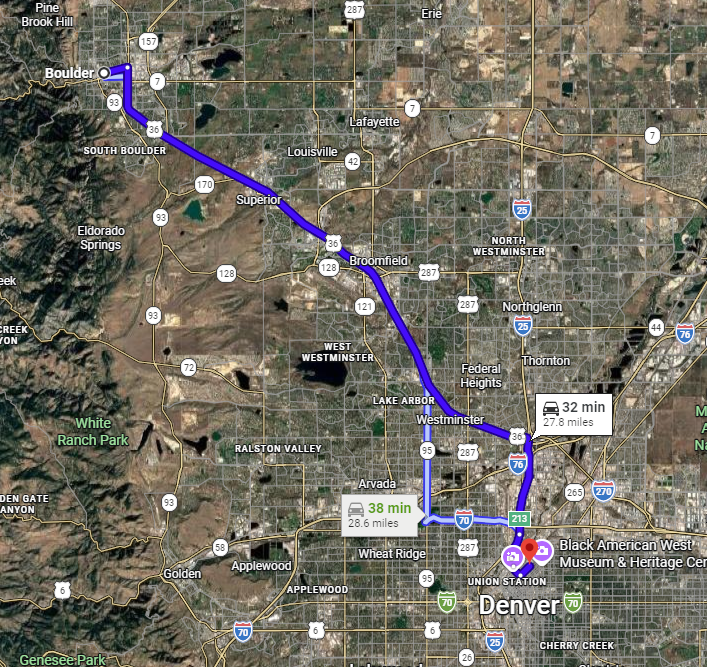
Click On The Image Below To Get Driving Directions
Don’t Let an Insurance Company Push You Around. Call the Buffs.
You didn’t ask to be injured. You shouldn’t have to fight a billion-dollar insurance company alone—especially when they’re using Boulder’s unique geography and conditions against you.
At Cheney Galluzzi & Howard, we offer trial-tested experience, local expertise, and a genuine commitment to helping you rebuild your life. We know the roads. We know the courts. And we know how to win.
Here’s what you get when you work with us:✓ No upfront fees – You pay $0 unless we win
✓ Free consultation – We’ll review your case, the police report, and your medical records
✓ Local knowledge – We’re CU Law alumni who understand Boulder’s unique hazards
✓ Aggressive representation – We stand up to insurance companies and fight relentlessly
Frequently Asked Questions About Boulder Injury Claims
What is the statute of limitations for a personal injury case in Boulder?
For most motor vehicle accidents in Colorado, you have three years from the date of the crash to file a lawsuit (C.R.S. § 13-80-101). However, if your accident involved a government entity—like an RTD bus or a City of Boulder maintenance vehicle—you must file a formal notice of claim within 182 days (C.R.S. § 24-10-109).
Missing these deadlines can kill your case instantly, no matter how strong your claim is. Don’t wait. Get a free consultation now so we can protect your rights.
I was hit by a car while biking in a designated bike lane. Can I still be found partially at fault?
Yes. Colorado’s comparative negligence rule means insurance companies will always try to assign some percentage of fault to cyclists—even when you were following all the rules.
They’ll argue you were going too fast, didn’t signal, or “should have been more aware” of traffic. That’s why you need a firm that understands Boulder’s specific cycling ordinances and knows how to defend your rights. We’ve successfully fought these arguments in dozens of Boulder bicycle accident cases.
Do you handle cases in Gunbarrel, Longmont, and other Boulder County communities?
Absolutely. While our roots are in Boulder, we represent injured clients throughout Boulder County, including:
- Gunbarrel
- Lafayette
- Louisville
- Longmont
- Superior
- Erie
- Nederland
If you were injured anywhere in Boulder County, we can help.
How much does it cost to hire Cheney Galluzzi & Howard?
Nothing upfront. We work on a contingency fee basis, which means you don’t pay us unless we win your case. We cover all the upfront costs of investigation, expert witnesses, and litigation. You only pay a percentage of the settlement or verdict we recover for you.
It’s more than money—it’s about making sure everyone has access to justice, regardless of their financial situation.