
ClickCease
Free consultations · Se habla espanol
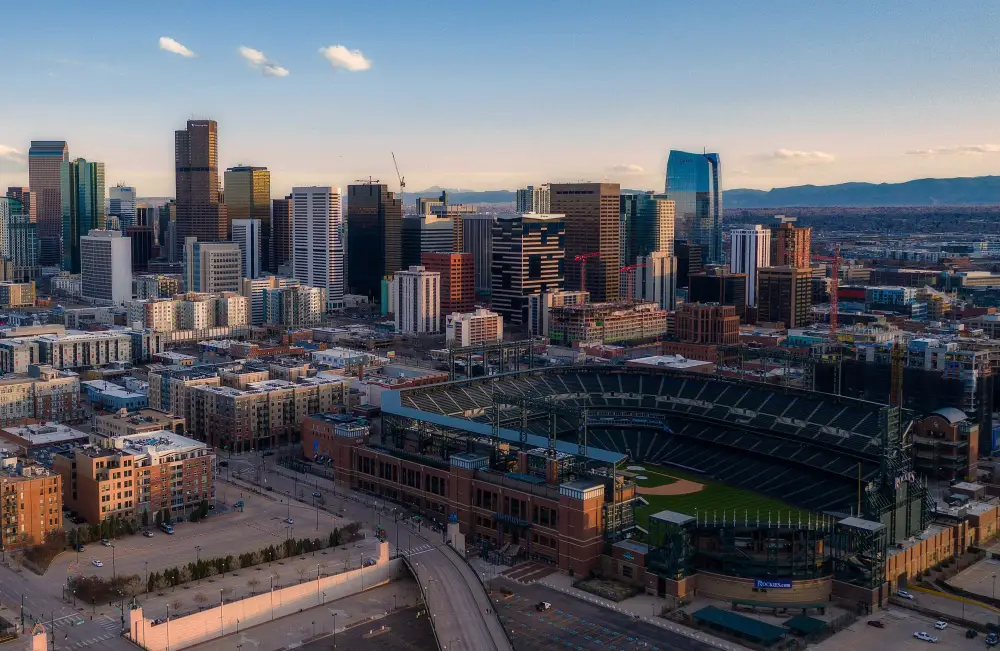
Denver skyline at dusk. CGH Injury Lawyers represents bicycle accident victims across Denver, Colorado.
Denver, Colorado

Denver Bicycle Accident Lawyers Who Put the Fault Back on the Driver

Injured on Denver's streets, trails, or corridors? Colorado's Safety Stop law and the 3-foot passing rule are your shield. Our attorneys work from our Denver office at 2701 Lawrence St. to use every tool the law gives cyclists. No fee unless we win.

No fee unless we win

It's More Than Money.

Get my free bike accident case review

100% confidential. No fee unless we win.

Our Denver Office CGH Injury Lawyers 2701 Lawrence St., Suite 201 Denver, CO 80205 (303) 209-9395 Se habla espanol
5-star rated on Google CDOT Vulnerable Road User Safety Task Force ABOTA trial advocate on the team 8 attorneys, bilingual EN / ES
  • Colorado's Safety Stop law (C.R.S. 42-4-1412.5) lets cyclists treat stop signs as yield signs and proceed through a stopped red light when safe. If a driver blames you for "running a stop sign," that claim may simply be wrong under Colorado law.
  • Drivers must leave at least three feet of clearance when passing a cyclist on any Denver street (C.R.S. 42-4-1003). A violation is direct evidence of negligence and goes straight into your claim.
  • Colorado uses modified comparative fault (C.R.S. 13-21-111): you can recover as long as you were less than 50 percent at fault, and your own auto insurance UM/UIM coverage may pay even when you were on a bike.

Denver's bike lanes on Colfax Ave, Speer Blvd, and the Cherry Creek Trail crossings see real conflicts between cyclists and drivers. When a crash happens, the insurer's first move is to shift the blame onto the rider. CGH Injury Lawyers operates out of Denver's RiNo neighborhood, minutes from the corridors where most Denver bike crashes happen. We use the Safety Stop law, the 3-foot rule, and Colorado's comparative negligence framework to put the fault back where it belongs. You pay nothing unless we win.

The law on your side

Colorado cycling laws that protect Denver riders

Colorado law gives cyclists the same rights and responsibilities as motor-vehicle drivers under Title 42. Several statutes give injured Denver cyclists specific leverage against at-fault drivers and their insurers.

  1. The Safety Stop law (C.R.S. 42-4-1412.5)

    Colorado's Safety Stop law lets a cyclist treat a stop sign as a yield sign and proceed through a red light after stopping when it is safe to do so. Denver insurers regularly claim a rider "ran a stop sign" or "blew a red light" to inflate the cyclist's share of fault. The Safety Stop is the statutory rebuttal. If you slowed, checked for cross-traffic, and entered the intersection safely, you were following Colorado law, not breaking it. We reconstruct the scene, obtain witness accounts, and build the factual record that proves your compliance.

  2. The 3-foot passing rule (C.R.S. 42-4-1003)

    A driver who passes a cyclist must leave at least three feet of clearance. If the lane is too narrow to do that without crossing into the adjacent lane, the driver must wait or change lanes. On narrow Denver streets such as those in LoDo, Capitol Hill, and RiNo, drivers often squeeze past at speed rather than waiting. A violation of C.R.S. 42-4-1003 is direct evidence of negligence in a civil crash case. We use dashcam footage, accident-reconstruction analysis, and police reports from Denver Police Department to prove the violation.

  3. Modified comparative fault (C.R.S. 13-21-111)

    Colorado's modified comparative negligence rule lets you recover damages as long as your share of fault is less than 50 percent. If an insurer assigns you 30 percent of the blame for a narrow turn, your recovery is reduced by 30 percent, but you still recover. The rule bars recovery entirely only when you are found to be 50 percent or more at fault. Adjusters inflate cyclist fault as a standard negotiating tactic in Denver bike cases. The Safety Stop law and the 3-foot rule are the tools we use to push that number back down.

  4. Your own auto insurance may cover you

    If you carry uninsured or underinsured motorist (UM/UIM) coverage on a vehicle you own, that coverage can follow you onto your bicycle. When a hit-and-run driver on I-25 or a minimally insured driver on Colfax Ave causes your crash, your UM/UIM policy may be the primary source of recovery. We confirm every policy in play, including homeowner and umbrella coverage, before we go to the at-fault driver's insurer.

Local knowledge

Denver corridors. Denver courts. Denver trauma care.

A Denver bicycle accident case plays out in Denver: the intersection where it happened, the hospital that treated you, and the courthouse where your case may be filed. Here is the ground we work on every day.

High-Crash Corridor

Colfax Ave, Speer Blvd, and Federal Blvd

East Colfax Ave through Capitol Hill and Five Points, Speer Blvd through LoDo, and Federal Blvd through West Denver are among the most active cycling corridors in the city and also among the most dangerous for riders. Dooring from parked cars on Colfax, right-hook collisions at Speer Boulevard crossings of the Cherry Creek Trail, and drivers failing to yield to cyclists at uncontrolled intersections on Federal are the crash patterns we see most often in Denver bike cases. Our attorneys are familiar with the sight lines, signal timing, and CDOT corridor data on each of these streets.

Trauma Care

Denver Health Medical Center

Cyclists with severe injuries from crashes on I-25, I-70, or the downtown dooring zone are typically transported to Denver Health Medical Center, the region's Level I trauma center, at 777 Bannock St. The medical records generated there document your fractures, traumatic brain injuries, spinal cord injuries, and soft-tissue damage with the clinical specificity that becomes the backbone of your damages claim. Saint Joseph Hospital, Presbyterian/St. Luke's Medical Center, and Rose Medical Center also treat cyclists with serious but non-life-threatening injuries across the metro.

Courthouse

Denver District Court, 2nd Judicial District

Personal injury cases arising in Denver County are filed in Denver District Court, the 2nd Judicial District, with civil matters heard at the City and County Building at 1437 Bannock St. Denver civil procedure has its own local rules, and the defense firms and adjusters who handle Denver bike cases either know your counsel or they do not. We handle Denver District Court cases directly from our office less than two miles from that courthouse.

Fault and liability

Who pays after a bicycle crash in Denver?

The short answer is: the party whose negligence caused the crash. The harder question is proving it before the insurer decides the story for you.

Common at-fault parties in Denver bike crashes

  • Drivers who fail to give three feet of clearance on Colfax Ave, Federal Blvd, or Speer Blvd (C.R.S. 42-4-1003)
  • Drivers who door cyclists by opening a car door into the bike lane without checking
  • Drivers who make right turns into a cyclist's path at controlled intersections on I-25 on-ramps and Pena Blvd access roads
  • Drivers who run red lights or fail to yield at crossings of the Cherry Creek Trail
  • Hit-and-run drivers, which may shift recovery to your own UM/UIM coverage
  • Denver city or state entities where a road defect, missing signage, or dangerous bike lane design contributed to the crash

The helmet defense: what insurers claim

  • Colorado does not require adults to wear helmets while cycling. Not wearing one is not automatic negligence.
  • An insurer may argue the absence of a helmet added to your head injuries, reducing your recovery under the comparative fault rule.
  • That argument does not bar your claim. We use medical experts to separate the injuries caused by the driver's negligence from any failure-to-mitigate argument.
  • Spinal fractures, internal injuries, and broken bones are not injuries a helmet prevents. We document that distinction for the insurer and, if needed, for Denver District Court.

When a government entity may share fault

If your crash involved a dangerous road condition maintained by the City and County of Denver, CDOT, or another public entity, the Colorado Governmental Immunity Act (CGIA) creates a separate track. Claims against a public entity require written notice within 182 days after you discover the injury (C.R.S. 24-10-109), and recovery is capped at $505,000 per person and $1,421,000 per occurrence for claims accruing on or after January 1, 2026 (C.R.S. 24-10-114, as certified by the Colorado Secretary of State). The notice deadline is a jurisdictional requirement. Missing it bars the claim entirely. We identify potential government-entity defendants early so no deadline is missed.

Compensation

What you can recover after a Denver bicycle accident

A bike crash can mean weeks in Denver Health or months of rehabilitation at a facility near Wash Park or Cherry Creek. Colorado law recognizes every category of harm a rider suffers, and none of the economic categories are capped.

Economic damages (uncapped)

  • Emergency care and surgery at Denver Health or Saint Joseph Hospital
  • Inpatient rehabilitation, physical therapy, and follow-up treatment
  • Lost wages during recovery and loss of future earning capacity
  • Future medical costs, including assistive devices and long-term care
  • Replacement or repair of your bicycle and damaged gear
  • Out-of-pocket transportation and accommodation costs tied to treatment

Non-economic damages

  • Pain and suffering
  • Emotional distress, anxiety, and PTSD, all common after a violent collision
  • Loss of enjoyment of life, including the ability to ride in the future
  • Permanent scarring or disfigurement

Non-economic damages such as pain and suffering are capped in Colorado at $1.5 million for claims accruing on or after January 1, 2025 under C.R.S. 13-21-102.5, with inflation adjustments beginning in 2028. Compensation for physical impairment or disfigurement is not subject to that cap under C.R.S. 13-21-102.5(5). Economic damages are never capped. In serious Denver bike crash cases, the combined value of uncapped economic damages and uncapped physical-impairment recovery often far exceeds the non-economic cap, which is why we document every future cost from the first day we take a case.

Why CGH

Why Denver cyclists choose CGH Injury Lawyers

A real Denver office, attorneys who serve on the CDOT Vulnerable Road User Safety Task Force, trial-ready counsel, and no fee unless we win.

The Task Force

CDOT Vulnerable Road User Safety Task Force

Our attorneys serve on the CDOT task force that works with state legislators and transportation officials to improve protections for cyclists and pedestrians statewide. We know the law from the inside.

Real Denver Office

We work in Denver. Not a satellite office.

Our office at 2701 Lawrence St., Suite 201 in RiNo is where your attorney works. You can come in, walk through the crash reconstruction, review the police report and medical records, and meet the team handling your case. Denver District Court is less than two miles away.

The Safety Stop

We know how to use it.

C.R.S. 42-4-1412.5 is one of the strongest tools against bad-faith fault claims. We use it to rebut false "ran a stop sign" allegations in Denver bike cases.

UM/UIM Recovery

Your own policy may cover you.

Hit-and-run crashes on Denver streets leave riders without a named defendant. We identify every available source, including your UM/UIM and umbrella coverage.

Trial-Ready

8 attorneys. Over 25 trials to verdict.

Managing Partner Kevin Cheney is a member of the American Board of Trial Advocates and has tried over 25 cases to verdict. Timothy G. Tarr has been recognized by Best Lawyers every year since 2023. When your attorneys are genuinely prepared to try a Denver bicycle case, the insurer's posture changes.

Bilingual

Hablamos espanol.

Spanish-speaking staff and attorneys serve Denver's large Spanish-speaking cycling community in Five Points, Globeville, and Elyria-Swansea.

No Win, No Fee

Contingency only.

You pay nothing out of pocket for legal fees. We advance costs and collect only from a settlement or verdict.

After the crash

What to do after a bicycle accident in Denver

The minutes and hours after a Denver bike crash shape the case. Protect your health first, then protect the evidence the insurer will later try to dispute.

  1. Call 911

    Request police and medical help. A Denver Police Department Traffic Crash Report is critical evidence. Even if adrenaline makes you feel fine, concussions, internal bleeding, and spinal injuries may not be apparent immediately. If your injuries are severe, Denver Health Medical Center is the city's Level I trauma center.

  2. Stay and preserve evidence

    Photograph the crash scene, the vehicle, your bike, and your injuries before anything moves. Note the exact intersection or address, the direction you were traveling, and where the vehicle came from. On Colfax or Speer, nearby businesses and traffic cameras may have footage. Note where any cameras are located so your attorney can request the footage quickly.

  3. Do not negotiate or apologize

    Do not discuss fault with the driver or accept anything from their insurer before speaking with an attorney. Statements like "I did not see you" or even "are you okay?" can be misrepresented. Get the driver's name, license number, and insurance information.

  4. Get full medical evaluation

    See a doctor within 24 to 48 hours even if the ER cleared you. TBIs, soft-tissue injuries, and internal bleeding often present symptoms days later. Every medical visit creates a record that supports your claim.

  5. Call CGH Injury Lawyers

    Our Denver attorneys review the police report, contact the at-fault driver's insurer, check for your UM/UIM coverage, and identify any government-entity deadlines. Call (303) 209-9395 or use the form on this page. No fee unless we win.

  6. We build the claim and negotiate or litigate

    We gather the crash reconstruction, medical records, witness statements, and dashcam footage. We apply the Safety Stop law and the 3-foot rule to the specific facts of your Denver crash. Most cases settle before trial. When an insurer refuses to be fair, we file in Denver District Court.

I wish I could leave more than 5 stars!
Grace M., 5-star CGH Injury Lawyers client review
Deadlines

How long do you have to file a bicycle accident lawsuit in Denver?

Missing a filing deadline in Colorado means losing the right to any recovery. The deadlines that apply depend on who caused the crash.

  1. Motor vehicle crash: 3 years (C.R.S. 13-80-101(1)(n))

    When a driver in a motor vehicle hits you, Colorado gives you three years from the date of the crash to file a lawsuit for bodily injury arising out of the use or operation of a motor vehicle. This is the most common scenario in a Denver bike accident case. Three years is longer than many states, but evidence disappears quickly on Denver streets, dashcam footage gets overwritten, and witnesses move away. Starting early protects the record.

  2. Government entity: 182-day notice, then file within 3 years (C.R.S. 24-10-109)

    If your crash involved a dangerous condition on a Denver city street or a CDOT-maintained road, the CGIA requires a written notice of claim within 182 days after you discover the injury. That notice is a jurisdictional prerequisite. Missing it bars the claim entirely, regardless of how strong the underlying case is. The civil lawsuit deadline runs separately. We watch both.

  3. UM/UIM claims: separate accrual rule (C.R.S. 13-80-107.5)

    Uninsured and underinsured motorist claims in Colorado are governed by a separate limitations statute, C.R.S. 13-80-107.5, with a distinct accrual rule. When your hit-and-run case or underinsured-driver case involves your own auto policy, the deadline for making that claim differs from the third-party tort deadline. We confirm the right deadline for every source of recovery from the first consultation.

Questions

Denver bicycle accident, frequently asked questions

The driver says I ran a stop sign. Does that end my case?

Not necessarily. Colorado's Safety Stop law (C.R.S. 42-4-1412.5) lets cyclists treat a stop sign as a yield sign and proceed through a stopped red light when the intersection is clear and safe. If you slowed, checked for cross-traffic, and entered the intersection safely, you were following Colorado law. We reconstruct the scene and prove your compliance with the statute. Even if you are assigned some fault, Colorado's modified comparative negligence rule (C.R.S. 13-21-111) lets you recover as long as your share of fault is less than 50 percent.

I was not wearing a helmet. Can I still sue the driver?

Yes. Colorado does not require adults to wear helmets while cycling, and going without one is not automatic negligence. An insurer may argue that the absence of a helmet added to your head injuries, which can reduce your recovery under the comparative fault rule, but it does not bar your claim. We work with medical experts to show which injuries the driver's negligence caused and to refute claims that a helmet would have prevented your specific harm. Spinal fractures, broken collarbones, and internal injuries are not injuries a helmet prevents.

How long do I have to file a bicycle accident lawsuit in Denver?

When a driver in a motor vehicle caused your crash, you generally have three years from the date of the collision to file a lawsuit under C.R.S. 13-80-101(1)(n). If a dangerous road condition maintained by the City and County of Denver or CDOT contributed to the crash, you must also file a written notice of claim within 182 days of discovering the injury under the CGIA (C.R.S. 24-10-109), and missing that notice bars the claim entirely. UM/UIM claims under your own auto policy follow a separate accrual rule (C.R.S. 13-80-107.5). We confirm every applicable deadline at the initial consultation.

A car doored me on Colfax Ave. Who is responsible?

In Colorado, the person who opens a car door into traffic is responsible for checking that it is safe to do so before opening it. A dooring on Colfax Ave, in LoDo, or along any Denver street is typically the fault of the car's occupant who opened the door, not the cyclist riding lawfully in the bike lane. The at-fault party's auto or homeowner liability coverage is usually the first source of recovery. We identify which policy applies, gather any nearby business or city traffic-camera footage, and build the claim from there.

The driver who hit me had minimal insurance. What are my options?

If you carry uninsured or underinsured motorist (UM/UIM) coverage on your own auto policy, that coverage may pay your medical bills, lost wages, and pain and suffering even though you were on a bike when the crash happened. Most Denver cyclists do not know this. We also check homeowner and umbrella policies and, in hit-and-run cases, pursue the UM claim under your own coverage. If the at-fault driver does have a policy, we negotiate with both insurers to maximize the total recovery available to you.

Where would my Denver bicycle accident lawsuit be filed?

Personal injury cases arising from crashes in Denver County are filed in Denver District Court, the 2nd Judicial District, with civil matters heard at the City and County Building at 1437 Bannock St. Most bike accident cases settle before a lawsuit is ever filed, but where a case would be filed affects local procedural rules, the jury pool, and which defense firms and adjusters you face. We handle Denver District Court bicycle accident cases directly from our office in RiNo, less than two miles from that courthouse.

What damages can I recover if the city's road design contributed to my crash?

If the City and County of Denver or CDOT maintained a road defect, missing signage, or a dangerous bike-lane configuration that contributed to your crash, claims against a public entity follow the Colorado Governmental Immunity Act. You must file a written notice of claim within 182 days after discovering the injury (C.R.S. 24-10-109). Recovery from a government entity is capped at $505,000 per person and $1,421,000 per occurrence for claims accruing on or after January 1, 2026 (C.R.S. 24-10-114, SOS-certified). We identify potential government defendants early and watch both the notice deadline and the civil filing deadline.

Is there a cap on what I can recover in a Denver bike accident case?

Economic damages, including medical bills, lost wages, and future care costs, are not capped in Colorado. Non-economic damages such as pain and suffering are capped at $1.5 million for claims accruing on or after January 1, 2025 under C.R.S. 13-21-102.5, with inflation adjustments starting in 2028. Compensation for physical impairment or disfigurement is not subject to that cap under C.R.S. 13-21-102.5(5). In serious Denver bike crash cases involving TBIs, spinal cord injuries, or permanent limb impairment, the uncapped economic and physical-impairment categories are usually where the full value of the case lies.

It's More Than Money.

You were hit. We handle everything else.

Free consultation. No fee unless we win. Available in English and Spanish.

Tell us what happened

100% confidential. No fee unless we win.

Prefer to read first? See how Colorado bicycle accident law works.

CGH Injury Lawyers · 2701 Lawrence St., Suite 201, Denver, CO 80205