
ClickCease
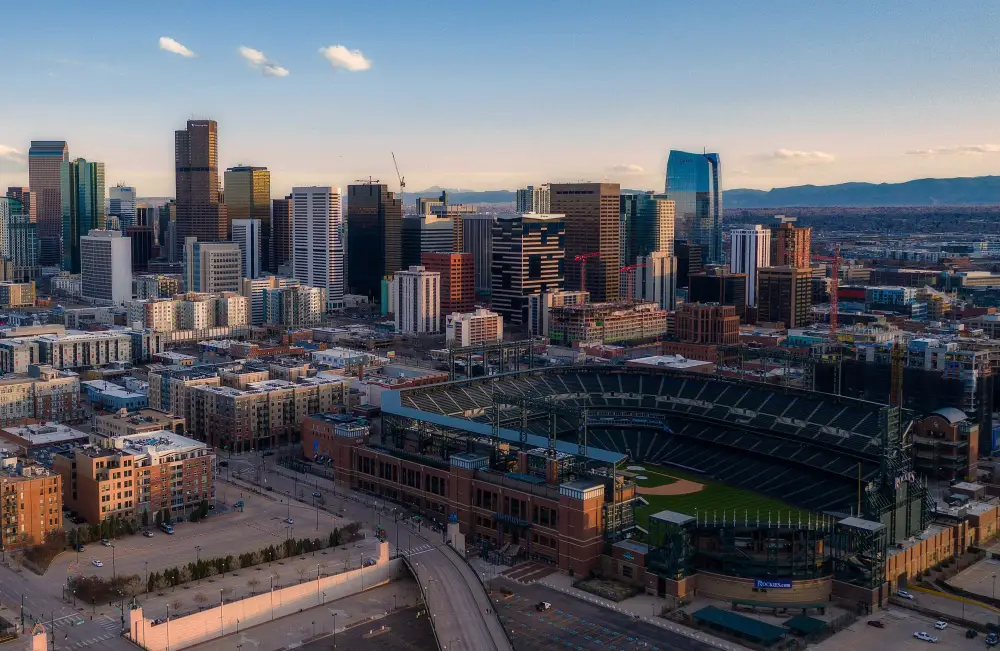
Denver skyline. CGH Injury Lawyers represents pedestrian accident victims across Denver, Colorado.
Denver, Colorado

Denver Pedestrian Accident Lawyers Who Get You Back on Your Feet

If a driver struck you while you were walking on Colfax Ave., Federal Blvd., or anywhere in Denver, Colorado law was almost certainly on your side. We work from our Denver office at 2701 Lawrence St. in the RiNo and Five Points area to prove it. No fee unless we win.

No fee unless we win

It's More Than Money.

Get my free pedestrian accident case review

100% confidential. No fee unless we win.

Our Denver Office CGH Injury Lawyers 2701 Lawrence St., Suite 201 Denver, CO 80205 (303) 209-9395 Se habla espanol
5-star rated on Google ABOTA trial advocate on the team Trial lawyers, not a settlement mill 8 attorneys, bilingual EN / ES
  • Every intersection in Denver is a legal crosswalk. Under C.R.S. 42-4-802, drivers must yield to pedestrians at both painted and unmarked crossings, so a driver who says "there were no lines" is not off the hook.
  • You can still recover even if you were partly at fault for the crash. Colorado's modified comparative negligence rule (C.R.S. 13-21-111) bars recovery only when you are 50 percent or more at fault. If the driver's speed or distraction pushed your share below 50 percent, you recover, reduced by your percentage.
  • Your own auto insurance may cover you on foot. Uninsured and underinsured motorist coverage can apply to pedestrian injuries under C.R.S. 13-80-107.5 when the driver has too little insurance or flees the scene.

CGH Injury Lawyers keeps a physical office minutes from Colfax Ave. and I-70 in the RiNo and Five Points area of Denver. When a car, truck, or bus strikes you on Federal Boulevard, Speer Blvd., or any Denver street, we visit the scene, request traffic camera footage before the city deletes it, and challenge police reports that got the facts wrong. You pay nothing unless we win.

Your right of way

Colorado pedestrian right-of-way law in Denver (C.R.S. 42-4-802)

Colorado Revised Statutes 42-4-802 is the foundation of pedestrian protection. It tells drivers when and where they must yield to someone on foot, and it applies to every street in Denver, from Colfax Ave. to the light-rail station approaches on Federal Boulevard.

Under C.R.S. 42-4-802, a driver approaching a crosswalk must yield the right of way to any pedestrian who is in the crosswalk or close enough to be in danger. Once you have entered the crosswalk, every driver traveling the same direction must stop and remain stopped until you have safely cleared the lane. A second-lane driver who passes a vehicle already stopped for a pedestrian violates the statute and bears significant liability.

  • The duty to yield applies at marked crosswalks with painted lines or signage and at unmarked crosswalks at intersections, including countless Denver intersections with no striping at all.
  • Pedestrians crossing mid-block or outside an intersection must yield to vehicles under C.R.S. 42-4-803, but a driver who saw you, or should have seen you, and still struck you may share or carry most of the fault.
  • Insurers routinely call pedestrians jaywalkers to reduce or deny valid claims. We answer that argument with the law and the evidence.
Where Denver pedestrian accidents happen

The Denver corridors our attorneys know

Denver pedestrian accidents concentrate where traffic volume, crossing distances, and speed limits collide. These are the corridors and neighborhoods our attorneys work in directly.

  1. Colfax Avenue

    Running east to west through Capitol Hill, LoDo, and into Aurora, Colfax carries heavy pedestrian traffic across high-speed multi-lane sections with uneven signal timing and limited refuge islands. Left-turning drivers focused on oncoming traffic routinely fail to see walkers already in the crosswalk.

  2. Federal Boulevard

    Federal Blvd. runs north-south through some of Denver's most active pedestrian neighborhoods. The road is wide and fast, signal phases are short in places, and the wave-through pattern described in C.R.S. 42-4-802, where one lane stops and the next lane does not, is a recurring source of serious pedestrian strikes.

  3. Speer Boulevard and 6th Avenue (US-6)

    Speer follows Cherry Creek through LoDo and the Cherry Creek neighborhood. At points where pedestrian paths cross Speer's one-way lanes, turning movements create blind spots for drivers who are watching for merging vehicles rather than walkers. US-6 (6th Ave.) carries freeway-speed traffic close to residential areas of Washington Park and the neighborhoods around it.

  4. I-25 and I-70 on-ramp and off-ramp areas

    Where I-25, I-70, I-225, and I-76 intersect surface streets near residential areas, pedestrians cross ramp traffic where drivers are accelerating or distracted by merging. These intersection types generate some of the most serious pedestrian injuries because of vehicle speeds at impact.

  5. RiNo, Five Points, and LoDo

    Our office is located at 2701 Lawrence St., Suite 201, in the heart of the RiNo and Five Points neighborhoods. These areas have seen significant density growth, and the mix of construction, bar and restaurant foot traffic, rideshare pickup zones, and vehicles turning off I-25 creates dangerous conditions for pedestrians at night and on weekends.

  6. Pena Boulevard corridor

    Pena Blvd. connects Denver International Airport to the I-70 corridor. Pedestrians struck near transit stops and hotel crossings in the airport corridor often face complicated liability questions involving commercial vehicles and public transit, which is where knowing Denver's local courts and the CGIA notice rules becomes critical.

Partly at fault?

What if you were partly at fault for the accident?

Even if you were crossing against a signal, stepping off a curb mid-block, or crossing outside a marked crosswalk on Colfax Ave., you may still be owed compensation under Colorado's modified comparative negligence rule.

The 50 percent bar rule (C.R.S. 13-21-111)

Colorado follows a modified comparative negligence system with a 50 percent bar. As long as you are found to be less than 50 percent at fault, you can still recover, but your compensation is reduced by your share of the fault.

  • Found 0 percent at fault, you recover 100 percent of your damages.
  • Found 30 percent at fault, you recover 70 percent of your damages.
  • Found 49 percent at fault, you recover 51 percent of your damages.
  • Found 50 percent or more at fault, you recover nothing.

Denver insurance adjusters use the word jaywalking to push injured pedestrians toward lowball offers or outright denials. The truth is that a driver who was speeding on Federal Blvd., texting at a Colfax Ave. intersection, or failing to check before a left turn can carry most of the fault even when the pedestrian made a crossing mistake. We use traffic camera footage, accident reconstruction, and witness statements to show the driver had time and distance to stop.

Local knowledge

Denver courts. Denver trauma care. Denver corridors.

A Denver pedestrian case is resolved in Denver: the hospital that treated you, the court where your case would be filed, and the corridors where the crash happened. Here is the local ground we work on.

Trauma Care

Denver Health Medical Center

After a serious pedestrian strike in Denver, the most critically injured patients are transported to Denver Health Medical Center, the region's Level I trauma center. The comprehensive medical records generated at Denver Health document head injuries, fractures, internal injuries, and long-term care needs. Those records become the foundation of your damages claim. Saint Joseph Hospital, Presbyterian/St. Luke's Medical Center, and Rose Medical Center also serve Denver pedestrian accident patients across the metro.

Courthouse

Denver District Court, 2nd Judicial District

Personal injury cases that arise in Denver County are filed in Denver District Court, the 2nd Judicial District, with civil matters heard at the City and County Building, 1437 Bannock St. Denver civil procedure has its own local rules, its own jury pool, and its own set of defense firms and adjusters. We handle Denver District Court cases directly and prepare every pedestrian accident case for trial, which is the reason insurers respond differently to our demands.

Key Corridor

Colfax Avenue and Federal Boulevard

Colfax Ave. running through Capitol Hill and Federal Blvd. running north-south through northwest Denver are among the most active pedestrian corridors in the city. Both roads feature multi-lane segments with high traffic volumes, left-turn movements where drivers watch oncoming cars rather than crosswalks, and transit stops that put pedestrians on the street at all hours. We know these roads, the signal timing patterns, and the local conditions that support liability arguments in a pedestrian case.

Building your case

How we prove fault in a Denver pedestrian accident case

Pointing to the statute is not enough. Winning a pedestrian case in Denver requires evidence that holds up against a defense team that has worked these corridors before. We move fast because some of that evidence disappears within weeks.

  1. Traffic camera footage

    Denver intersections on Colfax Ave., Federal Blvd., and many downtown streets have cameras that can show whether you were in the crosswalk and whether the driver ran a light or turned without yielding. The City and County of Denver typically retains footage for 30 to 90 days. We request it immediately.

  2. Accident reconstruction

    When the driver's speed, visibility, or reaction time is disputed, we retain reconstruction experts who recreate the collision using vehicle damage, road conditions, skid marks, and physics to show the driver had time and distance to stop.

  3. Witness statements

    Independent witnesses who saw the crash from the sidewalk or a nearby business carry significant credibility with Denver jurors. We locate and interview them while memories are fresh and before the defense does the same.

  4. Challenging the police report

    A Denver Police Department officer arriving after the fact often makes a preliminary fault call based on the driver's version of events. A police report is not the final word, and we challenge a wrong one with camera footage, witness accounts, and the physical evidence the officer did not see.

  5. Denver Health and hospital records

    The emergency and trauma records from Denver Health Medical Center and other treating facilities document the full extent of your injuries at the moment they were most acute. We review those records with medical experts to connect the injury to the crash and to project future care costs accurately.

  6. Negotiating with the insurer or trying your case

    Most pedestrian cases settle. When Denver insurers refuse a fair offer, we file in Denver District Court, 2nd Judicial District, and try your case before a Denver jury. Managing Partner Kevin Cheney is a member of the American Board of Trial Advocates and has tried more than 25 cases to verdict.

Compensation

What compensation can you recover after a Denver pedestrian accident?

Being struck by a vehicle while on foot in Denver can cause injuries far more severe than a car-to-car crash, because a pedestrian has no protective shell. Colorado law recognizes two broad categories of damages, and economic damages are never capped.

Economic damages

  • Emergency care, surgery, and hospitalization at Denver Health or Saint Joseph
  • Future medical expenses and rehabilitation
  • Lost wages and lost earning capacity
  • In-home care and assistive devices
  • Out-of-pocket expenses tied to the crash

Non-economic damages

  • Pain and suffering
  • Emotional distress and PTSD, common after pedestrian strikes
  • Disfigurement and scarring
  • Loss of enjoyment of life
  • Loss of consortium for a spouse

Colorado caps non-economic damages such as pain and suffering at $1.5 million for claims accruing on or after January 1, 2025 (C.R.S. 13-21-102.5), with inflation adjustments beginning in 2028. Compensation for physical impairment or disfigurement is not capped at all under the statute. Economic damages, including medical bills, lost wages, and future care costs, are never capped. Because pedestrian strikes commonly produce severe and permanent injuries, the uncapped economic and physical-impairment categories are often where the largest recoveries are built.

When a pedestrian accident takes a life, surviving family members can pursue a wrongful death claim for funeral and burial expenses, loss of financial support, and loss of companionship. We handle wrongful death cases arising from Denver pedestrian accidents.

Who pays

Insurance coverage for Denver pedestrian accident victims

Many Denver pedestrian accident victims do not realize that more than one insurance policy may cover their injuries. Knowing where all the coverage sits is how we build the strongest possible recovery.

  • The at-fault driver's liability coverage is the primary source. Colorado requires drivers to carry minimum bodily injury liability coverage of $25,000 per person, but many Denver drivers carry more, and commercial vehicles often carry significantly higher limits.
  • Your own uninsured and underinsured motorist coverage can apply even when you were on foot. It adds compensation when the at-fault driver has too little insurance or leaves the scene. Colorado UM/UIM claims are governed by C.R.S. 13-80-107.5 under Pham v. State Farm, 2013 CO 17.
  • When a Denver Regional Transportation District (RTD) bus or a city vehicle strikes you, the Colorado Governmental Immunity Act applies. Claims against a public entity require written notice within 182 days after discovery of the injury (C.R.S. 24-10-109), and recovery is capped at $505,000 per person and $1,421,000 per occurrence for claims accruing on or after January 1, 2026 (C.R.S. 24-10-114).
  • Health insurance and any MedPay coverage on an auto policy can pay early medical bills. Health insurers often hold subrogation rights, and we negotiate those liens so you keep more of your recovery.

Before you give a recorded statement to any insurer, including your own, consult an attorney. Insurance companies are in the business of minimizing payouts, and a statement made before you understand the full scope of your injuries can permanently limit your recovery.

Why CGH

Why Denver pedestrian accident victims choose CGH Injury Lawyers

A physical office in Denver, trial-ready attorneys, bilingual service, and no fee unless we win. We do not publish pedestrian accident settlement figures because every injury is different. What we offer is the work.

The Statute

C.R.S. 42-4-802

At every Denver intersection, painted or not, drivers must yield to pedestrians in the crosswalk. We know how to make that duty stick in Denver District Court.

Real Denver Office

Not a P.O. box.

Our office at 2701 Lawrence St., Suite 201 is in the RiNo and Five Points neighborhood, minutes from Colfax Ave. and I-70. Your attorney works here. You can walk in, review your file, and meet the team.

Fault Share

Partly at fault? Still recover.

Colorado's 50 percent bar means crossing mid-block does not automatically end your case. The driver's speed and distraction still matter.

Hit-and-Run

We find coverage.

When a driver flees, your own UM coverage can still compensate you. We identify every policy before the deadline.

Trial-Ready

8 attorneys, prepared for trial in Denver.

Managing Partner Kevin Cheney is a member of the American Board of Trial Advocates and has tried more than 25 cases to verdict. When attorneys are genuinely ready to try a pedestrian case in Denver District Court, insurance companies respond differently to demand letters.

Bilingual

Hablamos espanol.

Spanish-speaking staff and attorneys serve Denver's Spanish-speaking community with the full range of our pedestrian injury practice.

No Win, No Fee

Contingency only.

You pay nothing out of pocket for legal fees. We advance costs and collect only from a settlement or verdict in your favor.

I wish I could leave more than 5 stars!
Grace M., 5-star CGH Injury Lawyers client review
After the crash

What to do after a pedestrian accident in Denver

The steps you take in the first hours and days after a pedestrian strike in Denver have a direct effect on the strength of your case. Take care of your health first, then protect the evidence.

  1. Get emergency medical care

    If you are seriously injured, you may be transported to Denver Health Medical Center, the city's Level I trauma center, or to Saint Joseph Hospital. Even if you feel able to walk away, see a doctor the same day. Traumatic brain injuries and internal injuries may not be obvious at the scene, and a gap in treatment gives insurers a reason to argue your injuries were not serious.

  2. Call 911 and wait for Denver Police

    A Denver Police Department report creates an official record of the crash. Get the report number, the officer's name, and the driver's insurance information. If the driver leaves the scene, try to note the vehicle description and license plate and report it to police immediately.

  3. Photograph the scene and preserve evidence

    If you are physically able, photograph your injuries, the vehicle, the crosswalk markings (or absence of them), traffic signals, and skid marks or debris. Note nearby businesses and intersections that may have cameras. Footage from Denver city cameras is typically retained only 30 to 90 days.

  4. Collect witness information

    People who watched the crash from the sidewalk or a nearby vehicle are among your best evidence. Get names and phone numbers before they leave the scene. Witnesses tend to forget details quickly, and their early account is the most credible.

  5. Call before you talk to the insurer

    The driver's insurer may call within 24 hours. Do not give a recorded statement, accept a fast settlement offer, or sign any documents before speaking with us. Call (303) 209-9395. We take the call and all further communication with insurers so you can focus on recovering.

Questions

Denver pedestrian accident, frequently asked questions

Do pedestrians always have the right of way in Denver?

Not in every situation, but more often than insurers acknowledge. Under C.R.S. 42-4-802, pedestrians have the right of way in marked crosswalks and in unmarked crosswalks at intersections across Denver, whether or not there are painted lines. When crossing mid-block or outside an intersection, pedestrians must yield to vehicles under C.R.S. 42-4-803, but even then a driver who was speeding, distracted, or impaired can still bear most of the fault under Colorado's comparative negligence rules.

How long do I have to file a pedestrian accident lawsuit in Denver?

In most cases you have three years from the date of the crash to file a personal injury lawsuit for injuries arising out of the use or operation of a motor vehicle (C.R.S. 13-80-101(1)(n)). If the driver was a government employee, such as an RTD bus driver or a city vehicle operator, you may need to file a written notice of claim within 182 days after discovery of the injury under the Colorado Governmental Immunity Act (C.R.S. 24-10-109). That notice is a jurisdictional prerequisite, and missing it bars the claim. Different rules can apply when the injured person is a minor. Consult an attorney as soon as possible so your specific deadline can be confirmed.

Can I recover if I was crossing outside a marked crosswalk on Colfax or Federal Blvd.?

Yes, in many cases. Colorado's modified comparative negligence rule (C.R.S. 13-21-111) allows you to recover as long as you are found to be less than 50 percent at fault. Crossing mid-block raises your share of fault, but a driver who was speeding, looking at a phone, or failed to see you in time can still carry most of the liability. The word jaywalking is not a defense when the driver had time to stop. Your damages are simply reduced by your percentage of fault.

Does my own car insurance cover me as a pedestrian in Denver?

It can. If you carry uninsured or underinsured motorist coverage on a Colorado auto policy, that coverage may apply even though you were on foot at the time. It can provide compensation when the at-fault driver has too little insurance or fled the scene. Colorado UM/UIM claims are governed by C.R.S. 13-80-107.5 under Pham v. State Farm, 2013 CO 17. Check your policy declarations page, and then call us so we can confirm what coverage is available before any deadlines pass.

What if I was hit by an RTD bus or a city vehicle in Denver?

Claims against a public entity like RTD or the City and County of Denver are governed by the Colorado Governmental Immunity Act (CGIA). The most important rule is the notice requirement: you must file a written notice of claim within 182 days after you discover the injury (C.R.S. 24-10-109). Missing that deadline bars the claim entirely. Recovery from a government entity is also capped at $505,000 per person and $1,421,000 per occurrence for claims accruing on or after January 1, 2026 (C.R.S. 24-10-114). Call an attorney as soon as possible after a government-vehicle strike.

Where is a Denver pedestrian accident lawsuit filed?

Personal injury cases arising in Denver County are filed in Denver District Court, the 2nd Judicial District, with civil matters heard at the City and County Building, 1437 Bannock St. Denver civil procedure has its own local rules, its own jury pool, and its own defense bar. Most pedestrian accident claims settle before a lawsuit is filed, but which court a case would be tried in shapes how insurers respond to demands. We handle Denver District Court cases directly.

How is fault determined in a pedestrian accident in Denver?

Fault is determined by analyzing police reports, traffic camera footage from Denver intersections, witness accounts, vehicle damage, injury patterns, and the traffic laws in effect at the location. An attorney examines whether the driver violated C.R.S. 42-4-802 by failing to yield at a crosswalk, was traveling above the posted speed, was impaired or distracted, or passed a vehicle stopped for a pedestrian. A reconstruction expert may be retained when speed or visibility is disputed. The police report is not the final word and can be challenged with physical and video evidence.

What should I do immediately after being hit by a car in Denver?

Seek emergency care first, even if you believe you are not seriously injured. Call 911 to request police and medical response. If you are physically able, photograph the scene, the vehicle, your injuries, and any crosswalk markings or signals. Collect the driver's name and insurance information, and get contact details for any witnesses. Do not give any recorded statement to an insurer before consulting an attorney. You can reach our Denver office at (303) 209-9395.

It's More Than Money.

You were walking. We handle the fight.

Free consultation. No fee unless we win. Available in English and Spanish.

Tell us what happened

100% confidential. No fee unless we win.

Prefer to read first? See how Colorado pedestrian accident law works.

CGH Injury Lawyers · 2701 Lawrence St., Suite 201, Denver, CO 80205