ClickCease
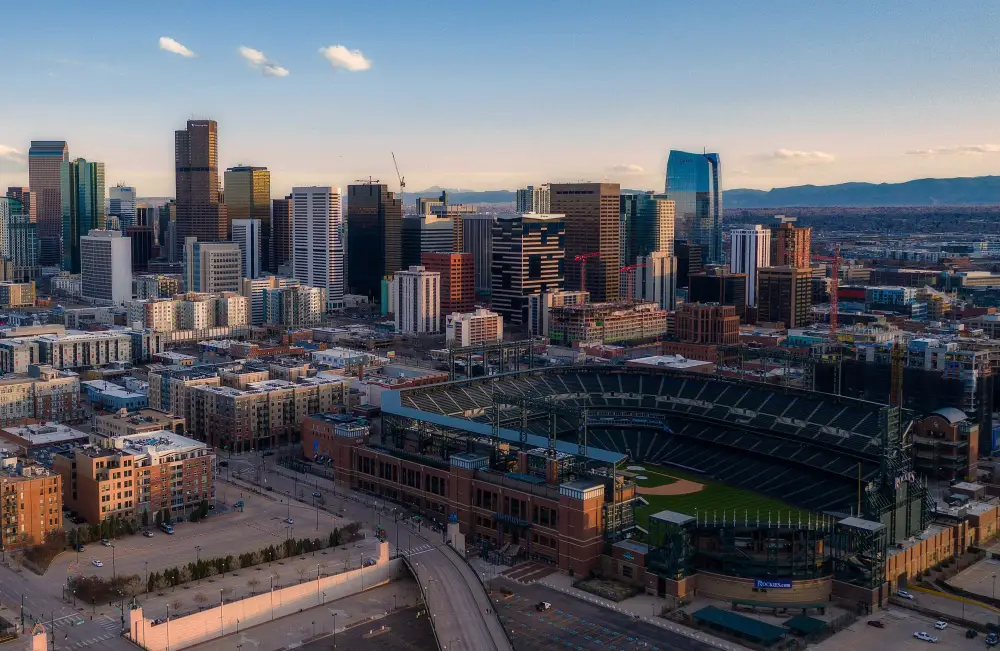
Denver skyline. CGH Injury Lawyers represents rear-end accident victims across Denver, Colorado.
Denver, Colorado

Denver Rear-End Accident Lawyers Who Take the Fight to the Insurer

Rear-end crashes on I-25, I-70, and Colfax Ave send Denver drivers to Denver Health and UCHealth every day. The at-fault driver's insurer will minimize your claim from the first call. We fight back, serving Denver from our Denver office. No fee unless we win.

No fee unless we win

It's More Than Money.

Get my free rear-end case review

100% confidential. No fee unless we win.

Our Denver Office CGH Injury Lawyers 2701 Lawrence St., Suite 201 Denver, CO 80205 (303) 209-9395 Se habla espanol
5-star rated on Google $3,000,000 car crash settlement, Montrose County ABOTA trial advocate on the team No fee unless we win
  • A rear-end collision is a motor-vehicle negligence case under Colorado law. The driver who struck you had a duty of care, and breaching that duty makes them liable for the harm they caused.
  • You have three years from the date of the crash to file a lawsuit for injuries arising out of the use or operation of a motor vehicle in Colorado (C.R.S. 13-80-101(1)(n)). Missing that deadline ends your right to sue.
  • Colorado is a modified comparative fault state. Even if the insurer claims you share some blame, you can still recover as long as your share of fault is less than 50 percent (C.R.S. 13-21-111).

Denver's stop-and-go traffic on I-25, the I-70 mountain corridor, and high-volume surface roads like Colfax Ave and Federal Boulevard produce rear-end collisions every day. Soft-tissue whiplash, herniated discs, traumatic brain injuries, and spinal fractures are all common outcomes. Insurance adjusters begin building their defense immediately. CGH Injury Lawyers serves Denver from our Denver office at 2701 Lawrence St., Suite 201, and we handle the insurer, the investigation, and trial in Denver District Court when a settlement offer falls short. You pay nothing unless we win your case.

Is this you?

Who we represent after a Denver rear-end crash

Rear-end crash victims in Denver come from every direction. The common thread is that the driver behind them failed to stop in time and left them dealing with injuries, lost work, and an insurance claim they did not ask for.

We represent people who

  • Were stopped or slowing in traffic when another driver struck them from behind
  • Suffered whiplash, neck or back injuries, disc herniations, or spinal fractures
  • Developed headaches, concussion, or traumatic brain injury symptoms after the crash
  • Were rear-ended by a distracted, speeding, or tailgating driver on I-25, I-70, or a Denver surface road
  • Were struck in a chain-reaction or multi-vehicle pile-up
  • Received a low-ball offer from the at-fault driver's insurer

Cases we do not accept

  • Claims where the evidence clearly shows you were 50 percent or more at fault for the collision
  • Crashes resulting in property damage only, with no physical injury
  • Matters outside our competence: we handle personal injury only, not criminal defense or traffic tickets

We tell you in the free review whether we can take your case. If we cannot, we say so clearly and promptly so you can find help elsewhere.

The law that governs your case

Colorado law decoded for Denver rear-end crash victims

A rear-end collision in Denver is a motor-vehicle negligence case. Three statutes shape every claim, and understanding them before you talk to an insurer protects your recovery.

Negligence: the four elements you must prove

To recover in a Colorado rear-end case, you establish that the driver behind you (1) owed you a duty of care as a fellow road user, (2) breached that duty by following too closely, driving distracted, or failing to stop in time, (3) caused the collision through that breach, and (4) caused you measurable harm as a result. In a classic rear-end scenario, elements one through three are usually clear. The fight is almost always over the nature and extent of damages.

Three-year filing deadline: C.R.S. 13-80-101(1)(n)

Colorado gives you three years from the date of the crash to file a lawsuit for injuries arising out of the use or operation of a motor vehicle (C.R.S. 13-80-101(1)(n)). This is not a soft guideline. Missing the deadline permanently bars your lawsuit. Two important exceptions: if the at-fault driver was a government employee operating a government vehicle, a written notice of claim must be filed within 182 days of discovering the injury under the Colorado Governmental Immunity Act (C.R.S. 24-10-109(1)) and if the at-fault driver carried no insurance, your UM/UIM claim against your own insurer has its own separate deadline under C.R.S. 13-80-107.5. Do not assume three years covers every angle of your case.

Modified comparative fault: C.R.S. 13-21-111

Colorado's modified comparative fault rule under C.R.S. 13-21-111 means you can still recover damages even if you were partly at fault, as long as your share of the fault is less than 50 percent. Your award is reduced in proportion to your fault. If you are found 50 percent or more at fault, you recover nothing. Insurance adjusters routinely inflate the injured driver's fault percentage to shrink or eliminate payouts. An attorney challenges those inflated numbers with crash reconstruction evidence, dash-cam footage, and witness accounts.

Punitive damages: C.R.S. 13-21-102

Punitive damages are available in Colorado when a defendant acted with fraud, malice, or willful and wanton disregard for others (C.R.S. 13-21-102(1)(a)). In rear-end cases involving a driver who was texting, street racing, or severely impaired, punitive damages are a live issue worth evaluating. Under C.R.S. 13-21-102(1)(a), punitive damages may not exceed the amount of actual damages awarded. A court may increase that award up to three times the actual damages when a defendant continues willful and wanton conduct during the litigation (C.R.S. 13-21-102(3)).

Local knowledge

Denver roads, Denver courts, Denver trauma care

A rear-end case rooted in Denver lives in Denver: the crash corridor that produced it, the trauma center that treated it, and the courthouse where it may be resolved. Serving Denver from our Denver office means we work on this ground every day.

Courthouse

Denver District Court, 2nd Judicial District

Personal injury cases arising in Denver County are filed in Denver District Court, the 2nd Judicial District, with the Civil Division clerk's office at 1437 Bannock Street, Room 256, Denver, CO 80202. Denver civil practice has its own local rules, jury pool, and defense firms. We handle Denver District Court cases directly from our Denver office.

Level I Trauma Care

Denver Health Medical Center

Denver Health's Ernest E. Moore Shock Trauma Center is an ACS-verified Level I Adult Trauma Center and Level II Pediatric Trauma Center. Victims of serious rear-end collisions on Denver's interstates are often transported here. Those trauma records, imaging studies, and operative notes are the bedrock of a serious injury claim. UCHealth University of Colorado Hospital, an ACS-verified Level I Trauma Center, serves the I-225 and Colfax corridor near Anschutz Medical Campus in Aurora. Children's Hospital Colorado at Anschutz is a Level 1 Regional Pediatric Trauma Center for injured children.

High-Crash Corridors

Denver's rear-end hot spots

Denver's rear-end crash corridors are well documented. Interstate 25 and Interstate 70 carry the metro's highest-volume through traffic, and the DRCOG region sees roughly 220 traffic accidents per day with approximately 5 serious injuries daily. Interstate 225 connects I-25 in Denver to I-70 in Aurora through Adams, Arapahoe, and Denver counties, creating a secondary congestion corridor prone to chain-reaction crashes. Interstate 270 links I-25 and US-36 to I-70 through the north metro. East Colfax Avenue (US-40) from Moline Street to Peoria Street is a CDOT-identified top crash hotspot corridor. Federal Boulevard is a CDOT-designated high-density serious-injury and fatal crash corridor. Event-day traffic at Mile High stadium (capacity 76,125 on Bryant St) and Ball Arena near Union Station drives sudden stop-and-go conditions on I-25 and adjacent streets that are a known rear-end risk. Denver averages 56.9 inches of snow annually, with snow possible from mid-October through late April, and black ice conditions across the metro create a seasonal surge in rear-end collisions on every major corridor.

Why CGH

Why Denver rear-end crash victims choose CGH Injury Lawyers

A real Denver office, trial-ready attorneys, bilingual staff, and a direct answer in the free review on whether we can take your case. We do not publish rear-end settlement averages, because your injury and available insurance limits are not average. What we offer is the work.

The Filing Deadline

Three years. One shot.

Colorado's motor-vehicle SOL under C.R.S. 13-80-101(1)(n) is absolute. We start preserving evidence before the insurer can make it disappear.

Real Denver Office

Not a referral hub.

Our office at 2701 Lawrence St., Suite 201 is where your attorney works. You can come in, review the police report and insurance file, and meet the team handling your rear-end case before a single document is signed.

Fault Fights

We challenge inflated fault percentages.

Under C.R.S. 13-21-111, every percentage point of fault they pin on you cuts your recovery. We use accident reconstruction and witness statements to fight back.

Delayed Injuries

Whiplash shows up late. We plan for it.

Neck injuries, disc problems, and TBI symptoms can emerge days after impact. Settling before maximum medical improvement costs real money. We build the long-term picture first.

Trial-Ready

25+ verdicts. ABOTA member on the team.

Managing Partner Kevin Cheney is a member of the American Board of Trial Advocates and has tried over 25 cases to verdict. Timothy G. Tarr has been recognized by Best Lawyers every year since 2023. When attorneys are genuinely prepared to try a rear-end case in Denver District Court, insurers respond differently to a demand letter.

Bilingual

Hablamos espanol.

Spanish-speaking staff and attorneys serve Denver's Spanish-speaking community throughout the entire case, not just the intake call.

No Win, No Fee

Contingency only.

You pay nothing out of pocket for legal fees. We advance case costs and collect only from a settlement or jury verdict.

One thing we tell you up front: we do not take rear-end cases we cannot honestly stand behind. If the evidence shows your fault is 50 percent or more under C.R.S. 13-21-111, we will say so in the free review rather than sign you up and waste your time. When the law supports your claim, we push hard. When it does not, you hear that clearly and for free.

After the crash

What to do after a rear-end collision in Denver

The actions you take in the first 72 hours after a Denver rear-end crash shape your entire claim. These six steps protect your health and preserve the evidence an insurer will later try to dispute.

  1. Move to safety and call 911

    If the vehicles are drivable and you can safely move them off I-25 or the surface road, do so. A police report creates an official account of the crash scene, the vehicles involved, and any statements made at the scene. Get the report number before you leave.

  2. Get medical care the same day

    Whiplash, disc injuries, and traumatic brain injury can feel minor at the scene and worsen over hours or days. Denver Health Medical Center and UCHealth University of Colorado Hospital can evaluate serious trauma. Even if you go to an urgent care clinic, get examined and keep every record. A treatment gap in your medical history becomes a weapon for the insurer.

  3. Document the scene

    Photograph the damage to both vehicles, the position of the cars, any skid marks, road conditions, traffic signals, and your visible injuries. Collect witness names and phone numbers. If there is dash-cam footage in either vehicle, preserve it before it overwrites.

  4. Do not give a recorded statement

    The other driver's insurer is not working for you. Do not agree to a recorded statement, and do not discuss the crash on social media. Anything you say becomes part of the claim record and will be used to limit your recovery.

  5. Do not accept an early settlement

    Insurers sometimes contact rear-end victims within days with a settlement check. Accepting it before you know the full scope of your injuries waives your right to future compensation, even if your condition worsens. We do not let that happen.

  6. Call CGH before the insurer calls back

    Colorado's three-year filing deadline under C.R.S. 13-80-101(1)(n) means evidence preservation starts now. A free consultation costs you nothing and puts an attorney between you and the adjuster from day one.

Compensation

What compensation can you recover after a Denver rear-end crash?

Colorado law lets injured drivers recover two broad categories of damages: economic losses you can document with bills and records, and non-economic losses for the human cost of the injury. Neither category is something you automatically get. You have to build and prove the claim.

Economic damages (no cap)

  • Emergency room and hospital bills
  • Diagnostic imaging, specialist visits, and physical therapy
  • Future medical costs and long-term care
  • Lost wages and lost earning capacity
  • Vehicle repair or replacement
  • Out-of-pocket expenses such as rental car and transportation costs

Non-economic damages (capped)

  • Pain and suffering
  • Emotional distress and anxiety
  • Loss of enjoyment of life
  • Loss of consortium for a spouse or family member

How the non-economic damages cap works in Colorado

For claims accruing on or after January 1, 2025, Colorado caps non-economic damages such as pain and suffering at $1.5 million under C.R.S. 13-21-102.5, with inflation adjustments beginning in 2028. Lower, inflation-adjusted caps apply to older claims based on when the claim accrued. Compensation for physical impairment or disfigurement is not capped at all under C.R.S. 13-21-102.5(5), and economic damages such as medical bills and lost wages are never capped. In a catastrophic rear-end injury case, the uncapped physical impairment and economic categories often represent the largest share of the total recovery.

I wish I could leave more than 5 stars!
Grace M., 5-star CGH Injury Lawyers client review
What the other side argues

Defenses used against Denver rear-end crash victims

Even in a clear-cut rear-end collision, the at-fault driver's insurer will deploy standard defenses to reduce or eliminate your payout. Knowing each one ahead of time is how we prepare to defeat them.

  1. "You contributed to the crash"

    Under Colorado's modified comparative fault rule (C.R.S. 13-21-111), assigning you even 20 or 30 percent of the fault cuts your recovery by that same percentage. Insurers push this argument in nearly every rear-end case, claiming you stopped suddenly, changed lanes improperly, or had defective brake lights. We counter with police report findings, crash reconstruction, and physical evidence from the scene.

  2. "Your injuries are pre-existing"

    If you had prior neck or back issues, the insurer will argue the crash did not cause your current condition. Colorado law allows you to recover for the aggravation of a pre-existing injury, not just for brand-new injuries. We use your medical history and expert testimony to establish what the crash specifically caused or worsened, so that a pre-existing condition does not become a blanket excuse to deny the claim.

  3. "Your injuries are too minor for the impact speed"

    A common tactic in soft-tissue rear-end cases is to hire a biomechanical expert who testifies that low-speed impacts cannot produce serious injuries. Peer-reviewed medical literature does not support a blanket correlation between vehicle speed and injury severity. Our attorneys have countered this defense before and know how to challenge the methodology these experts use.

  4. "You waited too long to seek treatment"

    A gap between the crash and your first medical visit is often used to argue the injuries were not serious or were not caused by the collision. We document the full timeline of your symptoms and treatment decisions and present it in a way that explains any gap rather than letting the insurer define it.

The insurance layer

How insurance works in a Denver rear-end case

Colorado is not a no-fault state. You pursue your claim against the at-fault driver's liability insurer, not your own. The at-fault driver's policy limits are the ceiling on what that insurer will pay, and those limits are often not enough when injuries are serious.

  • The at-fault driver's liability policy pays for your bodily injury damages up to the policy limits. When those limits are exhausted, the insurer has no obligation to pay more.
  • If the at-fault driver is underinsured or has no insurance at all, your own uninsured and underinsured motorist (UM/UIM) coverage becomes the source of recovery. Colorado UM/UIM claims have their own separate statute and deadline under C.R.S. 13-80-107.5, and that deadline can differ from the standard three-year motor-vehicle SOL.
  • Your own health insurance or personal injury protection coverage may pay medical bills as they arise. Those carriers may have reimbursement rights out of your settlement, and how those liens are handled directly affects how much money you take home.
  • Adjusters are trained to offer fast, low settlements before injured people fully understand their medical situation. Do not accept an offer without knowing whether it covers your future medical costs and long-term impact on your ability to work.
Questions

Denver rear-end collision, frequently asked questions

How long do I have to file a lawsuit after a rear-end crash in Denver?

Colorado gives you three years from the date of the crash to file a lawsuit for injuries arising out of the use or operation of a motor vehicle (C.R.S. 13-80-101(1)(n)). That deadline is firm. Two important exceptions apply in Denver: if a government vehicle or agency is involved, you must file a written notice of claim within 182 days of discovering the injury under the Colorado Governmental Immunity Act (C.R.S. 24-10-109(1)), and UM/UIM claims against your own insurer follow a separate deadline under C.R.S. 13-80-107.5. Consult an attorney to confirm which deadlines apply to your specific crash.

What if the driver who hit me was uninsured or underinsured?

If you carry uninsured or underinsured motorist (UM/UIM) coverage on your own policy, you can file a claim with your own insurer to cover the gap. Colorado UM/UIM claims are governed by their own separate deadline under C.R.S. 13-80-107.5, which can differ from the standard three-year motor-vehicle statute of limitations. We confirm both the available coverage and the applicable deadlines before any claim is made.

What if I was partly at fault for the rear-end crash?

You can still recover in Colorado as long as your share of the fault is less than 50 percent (C.R.S. 13-21-111). Your damages are reduced by your percentage of fault. If you are found 50 percent or more at fault, you recover nothing. Insurers routinely overstate the front driver's fault in rear-end cases. We challenge those assessments with police reports, physical evidence, and accident reconstruction when needed.

Can I recover for whiplash and soft-tissue injuries from a rear-end collision?

Yes. Whiplash, cervical strain, disc bulges, and other soft-tissue injuries are compensable under Colorado negligence law when they are caused by the crash. The challenge is that insurers often argue these injuries are minor or pre-existing. Strong medical documentation starting from the date of the crash is the best evidence to counter those arguments. Do not wait to seek treatment, and do not settle before your doctors have established your full diagnosis and prognosis.

Is there a cap on pain and suffering damages in a Denver rear-end case?

Yes. For claims accruing on or after January 1, 2025, Colorado caps non-economic damages such as pain and suffering at $1.5 million under C.R.S. 13-21-102.5, with inflation adjustments starting in 2028. Lower, inflation-adjusted caps apply to older claims. Compensation for physical impairment or disfigurement is not capped at all (C.R.S. 13-21-102.5(5)), and economic damages such as medical bills and lost wages are never capped. In serious injury cases, the uncapped categories often represent the largest share of total recovery.

Where would my Denver rear-end crash lawsuit be filed?

Personal injury cases arising in Denver County are filed in Denver District Court, the 2nd Judicial District, with the Civil Division clerk's office at 1437 Bannock Street, Room 256, Denver, CO 80202. Most rear-end cases settle before a lawsuit is filed, but where a case would be litigated affects local rules, the jury pool, and which defense firms you face. We handle Denver District Court cases directly from our Denver office.

How long does a rear-end accident claim take to settle in Denver?

Straightforward rear-end claims with clear liability and fully documented injuries can settle in a few months. Cases involving serious or disputed injuries, multiple vehicles, or an insurer unwilling to offer a fair amount can take one to three years or more. Settling before you reach maximum medical improvement almost always leaves money on the table. We tell you honestly where your case stands at every stage so you can make an informed decision about whether to accept a given offer.

Can punitive damages be awarded in a Denver rear-end crash case?

Yes, in the right circumstances. Punitive damages are available under Colorado law when a defendant acted with fraud, malice, or willful and wanton disregard for others (C.R.S. 13-21-102(1)(a)). In rear-end cases involving a street-racing driver, a driver who was severely impaired, or a driver texting at highway speed, punitive damages are a realistic issue. Under C.R.S. 13-21-102(1)(a), punitive damages may not exceed the amount of actual damages awarded. We evaluate whether the facts of your crash support a punitive claim as part of the initial case review.

It's More Than Money.

You were rear-ended. We handle everything else.

Free consultation. No fee unless we win. Serving Denver from our Denver office.

Tell us what happened

100% confidential. No fee unless we win.

Prefer to read first? See how Colorado car accident law works.

CGH Injury Lawyers · 2701 Lawrence St., Suite 201, Denver, CO 80205 · (303) 209-9395