
ClickCease
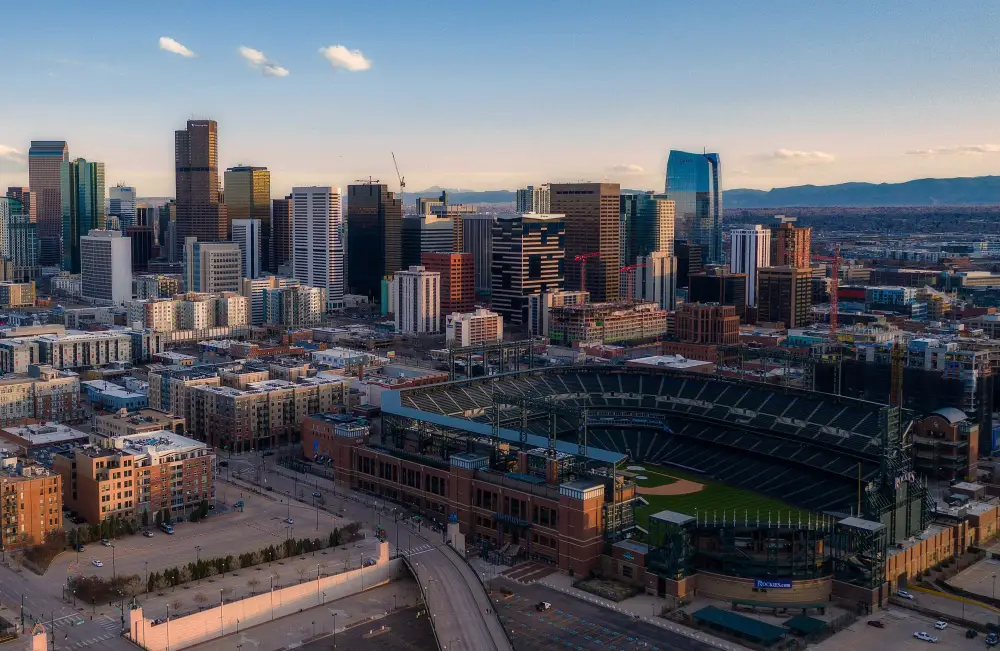
Interstate 70 mountain corridor near Lakewood, Colorado. CGH Injury Lawyers represents truck accident victims serving Lakewood from our Denver office.
Lakewood, Colorado

Lakewood Truck Accident Lawyers Who Go After the Carrier, Not Just the Driver

I-70, C-470, Wadsworth Boulevard, and West Colfax Avenue carry heavy commercial freight through Lakewood every day. When a driver or a carrier cuts a corner and you pay for it, CGH Injury Lawyers pursues every responsible party from our Denver office, serving Lakewood and all of Jefferson County. You pay nothing unless we win.

No fee unless we win

It's More Than Money.

Get my free truck accident case review

100% confidential. No fee unless we win.

Serving Lakewood from our Denver Office CGH Injury Lawyers 2701 Lawrence St., Suite 201 Denver, CO 80205 (303) 209-9395 Se habla espanol
5-star rated on Google ABOTA trial advocate on the team Built for trial No fee unless we win
  • Interstate trucks traveling I-70 through Lakewood answer to Federal Motor Carrier Safety Administration (FMCSA) rules in Title 49 of the Code of Federal Regulations, Parts 350 to 399, covering driver hours, brakes, and electronic logging devices. A violation of those rules can establish negligence per se against the carrier.
  • Colorado adds its own duties. C.R.S. 42-4-235 sets minimum commercial vehicle safety equipment standards, and the CDOT Code 16 chain law requires trucks to chain up when activated on I-70, the same corridor that runs directly through Lakewood toward the Eisenhower Tunnel. Failure to comply removes the bad-weather defense entirely.
  • Evidence disappears fast. Engine control module (ECM) black box data can be overwritten in 30 days, and dashcam footage in 30 to 90 days. A spoliation letter must go to the carrier within 72 hours of the crash, before the truck rolls again.

CGH Injury Lawyers serves Lakewood and Jefferson County from our Denver office at 2701 Lawrence St., Suite 201. We investigate the carrier, the maintenance record, and the hiring history, not just the driver. Every Lakewood truck case is prepared for trial from the first day. Free consultation. No fee unless we win.

Who qualifies

Who we represent after a Lakewood commercial truck crash

Truck crashes cause a different category of harm than a typical car collision. We represent people who have been seriously injured, and the families of those killed, in commercial truck crashes anywhere in Lakewood and Jefferson County.

We represent these victims

  • Drivers and passengers in vehicles struck by 18-wheelers, semis, or other commercial trucks on I-70, C-470, Wadsworth Blvd, or West Colfax Avenue
  • Pedestrians and cyclists hit by commercial vehicles at high-traffic locations like Colorado Mills and the West Colfax corridor
  • Victims of jackknife, rollover, and underride crashes on the I-70 mountain grades approaching and leaving Lakewood
  • People injured in rear-end crashes at the C-470 and Wadsworth Boulevard interchange
  • Families of those killed in fatal truck crashes, pursuing wrongful death claims in Jefferson Combined Court

Common causes in Lakewood truck crashes

  • Fatigued driving in violation of FMCSA Hours of Service limits (49 CFR Part 395)
  • Failure to chain up during a Code 16 activation on I-70 between September 1 and May 31
  • Brake failure from deferred maintenance on the steep I-70 grades near Floyd Hill and into the mountains
  • Black ice from Chinook wind freeze-thaw cycles catching drivers who ignored road conditions
  • Overweight trucks exceeding Colorado's 80,000-pound gross weight limit causing reduced braking distance
  • Distracted or speeding drivers at the West Colfax Avenue and Kipling Street intersections
The law that governs your case

Federal and Colorado truck law decoded for Lakewood victims

Lakewood sits at the junction where I-70 transitions from metro Denver into the mountain corridor. That geography places Lakewood crashes inside a dual-jurisdiction legal framework: federal FMCSA rules govern interstate carriers, and Colorado statutes add mountain-specific duties on top. Knowing which rule was broken is how liability gets proven.

Federal FMCSA rules (49 CFR Parts 350-399)

  • Hours of Service: 11 hours of driving maximum after 10 consecutive hours off duty, within a 14-hour on-duty window, with a 30-minute break after 8 cumulative driving hours (49 CFR Part 395)
  • Weekly limit: 60 hours on duty in 7 consecutive days, or 70 hours in 8 days
  • Electronic logging devices (ELDs) required since December 2017 to record real drive time, replacing paper logs that could be falsified (49 CFR Part 395, Subpart B)
  • Federal maintenance and inspection requirements under 49 CFR Part 396; carriers must retain maintenance records for at least one year
  • ELD data must be retained by the carrier for six months under federal law, but it is often overwritten without a spoliation demand

Colorado-specific standards

  • C.R.S. 42-4-235 sets minimum commercial vehicle safety equipment standards; a breach is negligence per se, meaning the violation itself proves the duty was broken
  • CDOT Code 16 chain law requires commercial trucks to install chains on at least two drive wheels when Code 16 is activated on I-70, which runs directly through Lakewood toward the mountains
  • Chains must be carried on I-70 between September 1 and May 31, covering every winter month and the shoulder seasons when Chinook-driven freeze-thaw cycles create sudden ice
  • Colorado gross vehicle weight limit of 80,000 pounds on interstate highways, with limits of 20,000 per single axle and 34,000 per tandem axle; overweight trucks have longer stopping distances
  • C.R.S. 42-4-1010 governs mandatory brake check stations before major downgrades; compliance records can show whether a carrier treated the mountain approach as the regulatory checkpoint it is

Code 16 ends the bad-weather defense on I-70 at Lakewood

When a carrier fails to equip a truck with chains during a Code 16 activation and a crash follows on I-70 near Lakewood, the "Act of God" defense is gone. Colorado law treats winter driving on I-70 as a foreseeable, manageable risk, not an excuse. The FMCSA adverse-driving-conditions exception under 49 CFR 395.1(b)(1) is also frequently misused: it does not excuse a fatigued driver who should have planned for predictable mountain weather before reaching Lakewood's foothills gateway.

Lakewood, Jefferson County

The roads, courts, and trauma center that matter after a Lakewood truck crash

A truck accident case in Lakewood is decided by Lakewood geography: where the crash happened, which court has jurisdiction, and where the injured are taken. Every one of these facts shapes how the claim is built.

High-Risk Roads

I-70, C-470, Wadsworth, and West Colfax

Lakewood is the gateway to the I-70 Mountain Corridor, the most freight-traveled mountain highway in Colorado, with documented high crash frequency on steep grades, shaded ice patches, and unpredictable weather between Denver foothills and passes including Floyd Hill, the Eisenhower Tunnel, and Vail Pass. C-470 (SH 470) forms the southwestern Denver beltway, where the Wadsworth Boulevard interchange generates heavy stop-and-go rear-end crashes. West Colfax Avenue (Business Loop I-70 / US 40) is a documented pedestrian and bicycle danger corridor between Wadsworth and Sheridan, with intersections at Kipling Street, Lamar Street, and Wadsworth among the most dangerous in the city. US Highway 6 (6th Avenue) and Wadsworth Boulevard (CO 121) are primary commercial delivery corridors with large truck volume at Colorado Mills and the surrounding industrial zones.

Trauma Care

St. Anthony Hospital, Level I Trauma Center

St. Anthony Hospital is designated a Level I Trauma Center by the Colorado Department of Health and is the primary destination for critically injured victims of crashes along the I-70 Mountain Corridor, including crashes in Lakewood. It is located on the western edge of Lakewood's urban core. Those trauma records document the severity of your injuries and become the foundation of the damages claim. We work with your treatment team and review the complete medical record from first transport through ongoing rehabilitation.

Courthouse

Jefferson Combined Court, 1st Judicial District

Personal injury cases arising in Lakewood are filed in Jefferson Combined Court (Jefferson County District Court), part of the 1st Judicial District, at 100 Jefferson County Parkway, Golden, CO 80401. Jefferson County has its own civil bench, its own local rules, and its own jury pool drawn from a population of residents across the county, including Lakewood's 155,984 residents counted in the 2020 U.S. Decennial Census. We handle Jefferson County cases directly and prepare every file for trial in Golden when a carrier refuses a fair resolution.

Lakewood hazards that appear in truck crash investigations

The I-70 Mountain Corridor ski traffic generates concentrated, predictable crash risk on steep grades and in shaded zones where ice forms without precipitation warning. Chinook wind events, documented to produce temperature swings of 70 degrees Fahrenheit or more in a matter of hours, create rapid freeze-thaw cycles that deposit black ice on Lakewood roads with no rain or snow visible to the driver. These conditions are not surprises, and they are not defenses. Carriers that send trucks into predictable winter conditions on I-70 without chains, adequate rest periods, or properly maintained brakes are liable for what happens on those roads through Lakewood's elevation transition zone at 5,440 feet. High-traffic locations including Colorado Mills at the I-70 and Colfax interchange and the Belmar Shopping and Arts District on West Alaska Drive add pedestrian and bicycle exposure to the equation. Red Rocks Amphitheatre events drive heavy traffic onto C-470 and US 285, creating surge conditions on corridors that feed Lakewood from the southwest.

Why CGH

Why Lakewood truck accident victims choose CGH Injury Lawyers

Jefferson County carriers and their insurers know which firms will try a case and which ones will fold under pressure. Here is what we bring to Lakewood truck accident claims.

Trial Authority

Over 25 cases taken to verdict.

Managing Partner Kevin Cheney is a member of the American Board of Trial Advocates (ABOTA) and has tried over 25 cases to jury verdict. Timothy G. Tarr has been recognized by Best Lawyers every year since 2023. Carriers that know we try cases negotiate differently.

72-Hour Evidence Lock

Spoliation letters go out within 72 hours.

ECM black box data can be overwritten in 30 days. Dashcam footage often disappears in 30 to 90 days. ELD records are kept for only six months under federal law. We send a written demand for preservation of every piece of evidence before any of it can be legitimately erased, and we do it within the first 72 hours after you call.

One Honest Promise

We will say no when we have to.

If your case does not hold up against the facts and the law, we tell you in the free review rather than sign you up and let it stall. We do not take cases we cannot honestly stand behind. When the law is on your side, we fight hard.

Jefferson County Reach

Serving Lakewood from Denver.

We serve Lakewood and all of Jefferson County from our Denver office at 2701 Lawrence St., Suite 201, Denver, CO 80205. There is no Lakewood office and we will never imply otherwise.

Carrier Investigation

The driver is often the smallest part of the case.

We look past the driver to the carrier's hiring records, training program, maintenance logs, CSA safety scores, and any pattern of FMCSA violations. The company behind the truck carries deeper pockets and broader liability than the driver alone. We build the claim to reach every defendant and every insurance policy in the chain.

Bilingual

Hablamos espanol.

Spanish-speaking staff and attorneys serve Lakewood's Spanish-speaking community from our Denver office.

No Win, No Fee

Contingency only.

You pay nothing out of pocket for legal fees. We advance costs and collect only from a settlement or verdict. If we do not recover for you, you owe nothing.

After the crash

What to do after a truck accident in Lakewood

The first 72 hours after a commercial truck crash are the most important for your claim. Take care of your health first, then protect the evidence before the carrier's team arrives.

  1. Get emergency medical care

    St. Anthony Hospital is a Level I Trauma Center designated by the Colorado Department of Health and the primary trauma destination for serious I-70 corridor crashes near Lakewood. Accept transport if offered, and get examined even if you feel fine. Adrenaline masks serious injury, and delayed diagnosis weakens your claim.

  2. Call 911 and wait for the report

    A Lakewood police or Jefferson County crash report creates an official record that cannot be retracted. Get the report number and the responding officer's name. That report will document road conditions, the truck's position, and any citations issued at the scene.

  3. Document everything at the scene

    Photograph the truck's license plates and DOT number, the trailer ID, skid marks, the position of both vehicles, road conditions, any warning signs or Code 16 postings on I-70, and your injuries. Identify the driver and the motor carrier named on the truck's placard. Get the contact information of every witness.

  4. Call us before the carrier's adjuster calls you

    The carrier's insurance team is often on scene within hours. Their job is to minimize the company's liability. Do not give a recorded statement or agree to anything before speaking with us at (303) 209-9395. What you say in the first conversation with an adjuster can be used to reduce your recovery.

  5. We send preservation demands within 72 hours

    Once retained, we send a written spoliation letter demanding preservation of ECM black box data, ELD logs, dashcam footage, maintenance records, driver qualification files, and cargo loading records before any of it can be overwritten or destroyed.

  6. We build the full carrier case

    We work with accident reconstruction specialists to map the crash, pursue every defendant in the chain of responsibility, and document your complete damages for negotiation or trial in Jefferson Combined Court in Golden.

Compensation

What compensation can you recover after a Lakewood truck accident?

Because commercial truck crashes tend to cause severe, long-term injuries, the damages reach well beyond the first hospital bill. Colorado lets injured people recover documented economic losses and the human cost of the injury, with specific rules about what is and is not capped.

Economic damages (no cap)

  • Emergency treatment at St. Anthony Hospital and all follow-up care
  • Future care, long-term rehabilitation, and life-care plan costs
  • Lost wages from missed workdays during recovery
  • Diminished earning capacity when injuries permanently affect your ability to work
  • Property damage to your vehicle
  • Out-of-pocket costs including transportation and household assistance

Non-economic and additional damages

  • Physical pain and suffering: capped at $1.5 million for claims accruing on or after January 1, 2025 under C.R.S. 13-21-102.5, with inflation adjustments beginning in 2028
  • Emotional distress and trauma
  • Loss of enjoyment of life
  • Compensation for physical impairment or disfigurement: not subject to the cap at all under C.R.S. 13-21-102.5(5)
  • Punitive (exemplary) damages when carrier conduct was willful and wanton: limited to the amount of actual damages awarded under C.R.S. 13-21-102(1)(a), with potential increase up to three times actual damages under C.R.S. 13-21-102(3) for continued willful and wanton conduct during litigation

The motor vehicle statute of limitations in Colorado is three years from the date of the crash (C.R.S. 13-80-101(1)(n)). That clock applies to your truck accident claim. Missing it bars the case entirely. Three years sounds long, but the 72-hour evidence window for ECM data and the 30-day window for dashcam footage mean that the practical deadline for starting the claim is today, not the day before the court deadline. We also handle the early financial pressure of recovery. MedPay coverage on your own auto policy often covers immediate medical bills, and we work with treating providers to arrange payment from the eventual settlement so care is not interrupted while the claim moves forward.

Carrier defenses

Defenses carriers use in Lakewood truck cases, and how we answer them

Carrier defense teams appear early and push the same arguments in Jefferson County truck cases. Knowing the defense playbook is how we stay ahead of it.

  1. "The weather caused it, not the driver"

    When a crash happens on I-70 near Lakewood during winter or a Chinook event, the carrier's first argument is often weather. It usually fails. Code 16 chain law on I-70 treats winter driving as a managed duty, not an act of God. If the truck was not chained up during a Code 16 activation, the carrier cannot hide behind the weather. And the FMCSA adverse-driving-conditions exception under 49 CFR 395.1(b)(1) does not excuse a fatigued driver who chose to push through predictable mountain conditions rather than rest.

  2. "The driver is an independent contractor, not our employee"

    Carriers frequently label drivers as independent contractors to avoid vicarious liability under respondeat superior. Courts look past the label to the real relationship. When the carrier controls dispatch, routes, and working conditions, it can be held vicariously liable. Even a driver who is genuinely independent does not shield the carrier from direct claims for negligent hiring, training, supervision, or maintenance. Federal leasing regulations under 49 CFR Part 376 also impose recordkeeping and control duties that often reveal a carrier's real operational relationship with the truck.

  3. "You share the blame"

    Colorado uses modified comparative negligence. Under C.R.S. 13-21-111, a plaintiff who is 50 percent or more at fault recovers nothing. A plaintiff who is less than 50 percent at fault recovers damages reduced in proportion to their share. Carriers and their adjusters often inflate the victim's alleged fault early in the investigation, before all the evidence is in. We use accident reconstruction, ELD data, and scene documentation to establish the real fault percentages and protect your recovery.

  4. "The Graves Amendment protects us"

    The Graves Amendment (49 U.S.C. 30106) protects truck rental and leasing companies from vicarious liability in some circumstances. It does not cover a lessor that was negligent in maintenance or knew the driver was unqualified, and it does not apply to the carrier itself. We pierce this defense by documenting the lessor's operational control over the truck and its maintenance history.

The insurance picture

The truck insurance landscape behind a Lakewood crash

Commercial trucking insurance is layered, and claims do not work the way a typical car accident claim does. Understanding the structure is how we reach full value for Lakewood victims.

  • Interstate carriers are required to carry minimum liability coverage under FMCSA regulations, but the minimums are often insufficient for the severity of injuries a large truck can cause. Most commercial trucking policies carry substantially higher limits, and we confirm the full available coverage before any demand is made.
  • The carrier's insurer will investigate aggressively and look for ways to limit exposure. Their adjusters often contact victims within hours of a crash. We handle all insurer communications on your behalf from the moment you call us.
  • When multiple parties are liable, multiple insurance policies may be in play: the driver's personal policy, the carrier's commercial policy, a shipper's cargo policy, and a trailer owner's separate policy. We identify and pursue every policy that applies to your Lakewood crash.
  • Your own auto MedPay or underinsured motorist (UIM) coverage may provide an additional source of compensation, especially if the carrier's policy limits do not cover your full damages. We review your own policy alongside the carrier's from the start.
I wish I could leave more than 5 stars!
Grace M., 5-star CGH Injury Lawyers client review
Questions

Lakewood truck accident, frequently asked questions

How long do I have to file a truck accident lawsuit after a crash in Lakewood?

Colorado gives you three years from the date of the crash to file a lawsuit for injuries arising out of the use or operation of a motor vehicle, including commercial trucks (C.R.S. 13-80-101(1)(n)). But the practical deadline is much shorter. ECM black box data can be overwritten in 30 days and dashcam footage in 30 to 90 days. Waiting to act means losing the best evidence in your case. Call us immediately so a spoliation letter can go out within 72 hours of the crash.

The trucking company says their driver is an independent contractor. Does that end my claim against them?

No. Courts look past the independent contractor label to the real relationship. When a carrier controls the driver's work, routes, and conditions, it can still be vicariously liable under respondeat superior. Even when the driver is genuinely independent, the carrier can face direct liability for negligent hiring, training, supervision, or maintenance. Federal leasing regulations under 49 CFR Part 376 often reveal operational control that the carrier would rather not acknowledge. The label is not the end of the analysis; it is usually the beginning.

The crash happened on I-70 near Lakewood during a winter storm. Can the trucking company blame the weather?

Usually not on I-70 near Lakewood. The CDOT Code 16 chain law requires commercial trucks to install chains during a Code 16 activation on I-70, and failure to comply strips the bad-weather defense. Chains must be carried on I-70 between September 1 and May 31. The FMCSA adverse-driving-conditions exception under 49 CFR 395.1(b)(1) also does not excuse a driver who should have rested before reaching the mountain corridor. Colorado treats winter driving on I-70 as a foreseeable, manageable risk that carriers are paid to handle safely.

Where is a Lakewood truck accident lawsuit actually filed?

Personal injury cases that arise in Lakewood are filed in Jefferson Combined Court, the Jefferson County District Court, which is part of Colorado's 1st Judicial District and located at 100 Jefferson County Parkway, Golden, CO 80401. Jefferson County has its own civil bench, its own local procedures, and its own jury pool drawn from the county's residents, including Lakewood. We handle Jefferson County cases directly and have the case trial-ready from day one.

What evidence disappears fastest after a truck crash in Lakewood?

Engine control module (ECM) black box data recording speed, braking, and throttle input can be overwritten in as little as 30 days once the truck returns to service. Dashcam footage, both forward-facing and driver-facing, is typically deleted on a 30 to 90 day loop. Electronic logging device records are kept for six months under federal law but will not be preserved past that window without a written demand. We send spoliation letters demanding preservation of all of this within the first 72 hours, before the truck rolls again.

Is there a cap on how much I can recover for pain and suffering after a Lakewood truck accident?

For claims accruing on or after January 1, 2025, Colorado caps non-economic damages such as pain and suffering at $1.5 million under C.R.S. 13-21-102.5, with inflation adjustments beginning in 2028. Economic damages such as medical bills, lost wages, and future care costs are never capped. Importantly, compensatory damages for physical impairment or disfigurement are also not subject to the cap at all under C.R.S. 13-21-102.5(5). If the carrier's conduct was willful and wanton, punitive damages may also be available under C.R.S. 13-21-102.

The adjuster called me the day after the crash and offered a settlement. Should I take it?

Do not accept any early offer without first speaking with an experienced truck accident attorney. Carriers send adjusters to Lakewood crash scenes quickly, and early offers are made before your full injuries are known and before the evidence has been gathered. Accepting a settlement releases your right to pursue more compensation later, even if your injuries prove more serious than they appeared. We evaluate any offer against the documented evidence and negotiate from a position of trial readiness, not a willingness to take what is offered early.

Does CGH have an office in Lakewood?

No. CGH Injury Lawyers has one office, at 2701 Lawrence St., Suite 201, Denver, CO 80205. We serve Lakewood and all of Jefferson County from that Denver office. You can reach us at (303) 209-9395. We handle Jefferson County filings in Golden directly, and we meet with clients at our Denver office or by arrangement when the client cannot travel.

It's More Than Money.

A carrier hurt you on a Lakewood road. We hold them accountable.

Free consultation. No fee unless we win. Serving Lakewood and Jefferson County from our Denver office.

Tell us what happened

100% confidential. No fee unless we win.

Read next: How Colorado truck accident law works statewide

CGH Injury Lawyers · 2701 Lawrence St., Suite 201, Denver, CO 80205 · Serving Lakewood and Jefferson County