
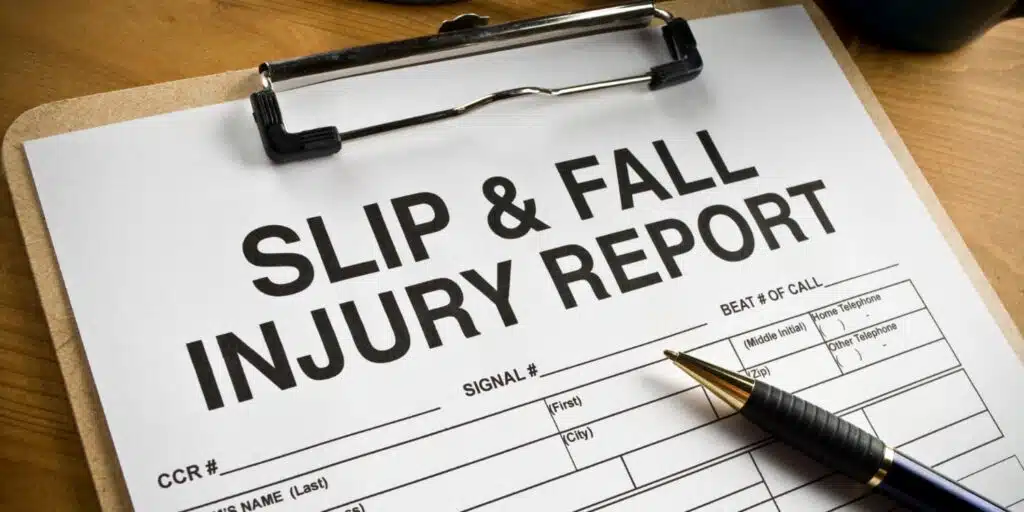
Colorado gives you two years to file most slip and fall lawsuits. That is the headline answer, and for a fall in a grocery store, an apartment stairwell or a restaurant, it is usually the right one.
The complication is that two years is not the only clock, and it is not always the one that matters. A claim against a public entity requires written notice within 182 days, under six months, and missing that notice ends the claim permanently, no matter how strong it was.
Who you would be claiming against changes the deadline before anything else about the case is considered.
This article explains which deadline applies, when it starts running, and the situations that change it. If you want your own circumstances looked at, CGH Injury Lawyers is based in Denver and handles premises cases across Colorado. You can contact our office or call (303) 209-9395.
The content on this page is provided for general informational purposes only and does not constitute legal advice. Reading this page does not create an attorney-client relationship. Laws vary by jurisdiction and change frequently. Always consult a licensed attorney for advice specific to your situation.
Table of Contents
- The Short Answer, and the Exception That Undoes It
- Why a Slip and Fall Is Two Years When a Car Crash Is Three
- When the Clock Actually Starts Running
- The 182-Day Deadline When a Public Entity Is Involved
- Who Owned the Property Changes More Than the Deadline
- When the Deadline Can Run Longer
- What Happens When the Deadline Passes
- Talk to a Denver Slip and Fall Attorney
- Frequently Asked Questions
Key Takeaways
- Two years is the general rule. Colorado requires most tort actions, including negligence, to be commenced within two years after the cause of action accrues.
- A claim against a public entity is different. Written notice must be filed within 182 days of discovering the injury, and that requirement is jurisdictional rather than procedural. The trigger is who the claim is against, not simply where the fall happened.
- The clock starts on discovery, not always on the fall. A cause of action accrues when both the injury and its cause are known or should have been known through reasonable diligence.
- Slip and fall claims run on a different statute from car crashes. The two-year provision expressly excludes motor vehicle actions, which carry three years.
- Your legal status on the property decides the standard of care, and Colorado’s Premises Liability Act is the only route to recovery against a landowner.
The Short Answer, and the Exception That Undoes It
Colorado’s general limitation statute provides that certain civil actions “must be commenced within two years after the cause of action accrues, and not thereafter.” The list includes “Tort actions, including but not limited to actions for negligence, trespass, malicious abuse of process, malicious prosecution, outrageous conduct, interference with relationships, and tortious breach of contract.”
A slip and fall claim is a negligence claim against a property owner, so it falls inside that two-year window.
The exception that undoes the simple answer is ownership. If the property belongs to a public entity, such as a city sidewalk, a government building, a public transit station, a school or a municipal park, a separate statute imposes a much shorter notice requirement, and it operates before the two-year period is anywhere near expiring. That is covered below, and it is the single most common way a sound premises claim is lost in Denver.
Why a Slip and Fall Is Two Years When a Car Crash Is Three
People frequently assume Colorado has one personal injury deadline. It does not, and the difference is written into the statute itself.
The two-year tort provision carries an express carve-out. It applies to tort actions “except that this paragraph (a) does not apply to any tort action arising out of the use or operation of a motor vehicle as set forth in section 13-80-101(1)(n).”
That cross-referenced section is the three-year rule, covering “all tort actions for bodily injury or property damage arising out of the use or operation of a motor vehicle.”
So the two periods are not competing interpretations of one rule. They are two separate provisions, and the shorter one names the longer one to hand off anything involving a vehicle. A fall in a parking lot is a premises claim on two years. A person struck by a car in that same parking lot is on three. The surface is identical; the statute is not.
This matters because advice written for car accident claimants circulates far more widely than premises-specific guidance, and a reader who applies the three-year figure to a slip and fall can lose a year they never had.
When the Clock Actually Starts Running
Two years from when, exactly, is a separate question from how long you have.
Colorado’s accrual provision states that “a cause of action for injury to person, property, reputation, possession, relationship, or status shall be considered to accrue on the date both the injury and its cause are known or should have been known by the exercise of reasonable diligence.”
Two elements have to be present, and both are qualified by what a person reasonably should have known:
- The injury. Some fall injuries announce themselves. Others surface over weeks: a disc injury, a subtle head injury, a fracture that reads as a sprain.
- Its cause. Knowing you are hurt is not the same as knowing what caused it, which can matter where a hazard was not obvious at the time.
The safe assumption is that the clock started on the day of the fall. The discovery language exists for genuine cases of delayed knowledge; it is not a general extension, and whether it applies to a particular set of facts is exactly the kind of question worth putting to an attorney early rather than late.
The 182-Day Deadline When a Public Entity Is Involved
Denver is a city where a great many falls happen on ground the public owns or maintains: sidewalks, transit platforms, government buildings, recreation centers and parks.
Where a public entity or its employee is involved, the Colorado Governmental Immunity Act requires written notice “within one hundred eighty-two days after the date of the discovery of the injury.”
The statute states the consequence in unusually plain terms. Compliance “shall be a jurisdictional prerequisite to any action brought under the provisions of this article, and failure of compliance shall forever bar any such action.”
Two words in that sentence carry the weight. Jurisdictional means a court has no power to hear the case regardless of its merits. This is not a deadline a judge can excuse for good reason. Forever means what it says.
One hundred eighty-two days is about six months. Someone with a serious fracture can spend that period in surgery, immobilization and physical therapy, reasonably assuming they have two years, and discover afterwards that the window closed while they were recovering.
If a public entity might be responsible for where you fell, treat the deadline as six months until someone confirms otherwise. Call (303) 209-9395 or request a case evaluation to have the ownership question answered early.
Who Owned the Property Changes More Than the Deadline
Ownership decides the deadline. Your legal status on the property decides what you have to prove.
Colorado’s Premises Liability Act is the exclusive route to recovery against a landowner, providing that “the landowner is liable only as provided in subsection (4).” A general negligence theory does not survive alongside it.
The Act sorts entrants into three categories, and the duty owed rises with each:
- Trespasser: “a person who enters or remains on the land of another without the landowner’s consent.” A trespasser “may only recover damages willfully or deliberately caused by the landowner.”
- Licensee: “a person who enters or remains on the land of another for the licensee’s own convenience… pursuant to the landowner’s permission.” A licensee may recover for the landowner’s failure to exercise reasonable care regarding dangers the landowner actually knew about.
- Invitee: “a person who enters or remains on the land of another to transact business… or in response to… express or implied representation.” An invitee “may recover for damages caused by the landowner’s unreasonable failure to exercise reasonable care to protect against dangers the landowner actually knew about or should have known about.”
The gap between the licensee and invitee standards is where most disputed cases live. An invitee, whether a shopper, a restaurant customer or a tenant’s guest in a common area, does not have to prove the owner knew about the hazard, only that a reasonable owner should have. A licensee has to prove actual knowledge, which is a materially harder thing to establish.
Our slip and fall page and premises liability page go further into how those categories work in practice.
When the Deadline Can Run Longer
Colorado provides for people who cannot bring a claim themselves. Where a person is under a legal disability, which includes being a minor, the statute allows action “within the period fixed by the applicable statute of limitations or within two years after the removal of the disability, whichever period expires later.”
Where a legal representative has been appointed, that representative gets “not less than two years after his appointment within which to take action.” Where the person under disability dies, an executor or administrator generally has one year from the death.
These provisions are narrower than they sound, and the statute closes with an absolute cutoff after which no one may act on the person’s behalf. Tolling is also not the same thing as the CGIA notice period, and assuming one covers the other is a mistake worth avoiding.
What Happens When the Deadline Passes
A limitation period is a defense the other side raises, and it is close to unanswerable once it applies. A defendant who establishes that the claim was filed late will normally have it dismissed without the court reaching the fall, the hazard, or the injuries at all.
That is why the deadline is worth resolving first. The strength of a premises claim is irrelevant if the filing window has closed, and the questions that determine which window applies are answerable long before a claim is ready to file: who owned the ground, whether a public entity maintained it, and when the injury and its cause became known.
Talk to a Denver Slip and Fall Attorney
If you fell in Denver and are unsure which deadline applies to you, that is a question worth resolving now rather than later. Ownership is not always obvious from standing on the ground. A walkway can be privately owned, city-maintained, or the responsibility of an adjacent business, and each answer points at a different clock.
CGH Injury Lawyers is a Denver personal injury firm founded in 2016, based at 2701 Lawrence St., Suite 201. Our attorneys handle slip and fall and premises liability claims throughout Colorado, including falls causing traumatic brain injury.
Call (303) 209-9395 or request a case evaluation to find out which deadline applies to your fall.
Frequently Asked Questions
How long do I have to file a slip and fall lawsuit in Colorado?
Colorado requires most tort actions, including negligence claims such as slip and fall, to be commenced within two years after the cause of action accrues. Shorter requirements apply where a public entity is involved, and the applicable date should be confirmed for the specific circumstances.
Is the slip and fall deadline the same as the car accident deadline in Colorado?
No. The two-year tort provision expressly excludes tort actions arising out of the use or operation of a motor vehicle, which are governed by a separate three-year provision. A premises claim and a motor vehicle claim run on different statutes.
When does the two-year period start?
Colorado provides that a cause of action accrues on the date both the injury and its cause are known or should have been known by the exercise of reasonable diligence. In many falls that is the date of the fall itself, but where an injury or its cause was not reasonably knowable at the time, the analysis is fact-specific.
What if I fell on a public sidewalk or in a government building?
Where the claim is against a public entity or its employee, a much shorter requirement applies. The Colorado Governmental Immunity Act requires written notice within 182 days after the date of discovery of the injury, and compliance is a jurisdictional prerequisite. Failure to comply forever bars the action. A public location does not by itself decide this. Some publicly accessible ground is privately owned or maintained, so responsibility has to be established.
Does it matter why I was on the property?
Yes. Colorado’s Premises Liability Act sorts entrants into trespassers, licensees and invitees, and the standard of care owed differs for each. An invitee may recover for dangers the landowner actually knew about or should have known about; a licensee must generally show the landowner actually knew.
Can the deadline be extended for a child?
Colorado’s disability provisions allow a person under a legal disability, which includes a minor, to act within the applicable limitation period or within two years after the disability is removed, whichever expires later, subject to an absolute outer cutoff. These provisions are narrow and do not extend the separate public-entity notice requirement.
Written by CGH Injury Lawyers.
Last updated: August 31, 2026.
Attorney Advertising. CGH Injury Lawyers.
This article is general information for Colorado injury readers. It is not legal advice, does not create an attorney-client relationship, and does not promise that any deadline, rule, or outcome applies to your case. Statute-of-limitations, comparative negligence, insurance, and compensation questions require case-specific legal review.
Related articles
-
How to Prove Negligence in a Slip and Fall in Denver Under Colorado’s Premises Law
Last Updated: October 23, 2026 Table of Contents Colorado Uses a Premises Law Instead of Plain Negligence Step 1: Show Why You Were on the Property Step 2:…
-
Is a Slip and Fall Lawsuit Worth It? How to Weigh a Denver Claim
One Colorado law controls these claims. In a suit over an injury on someone else’s property, the landowner “is liable only as provided” in the Colorado Premises Liability…
-
When Should You Hire a Truck Accident Lawyer in Denver? Before the Records Run Out
Last Updated: October 22, 2026 Table of Contents The Short Answer: Within the First Few Weeks How Long Trucking Companies Have to Keep Records Other Evidence That Can…


