Last Updated: November 20, 2026
- Yes, traffic cameras are legal in Colorado. State law lets the state, counties, and cities use photo radar and red light cameras, with limits on where cameras can ticket and warning signs required ahead of speed and red light cameras.
- A camera ticket is a civil penalty sent to the registered owner. It adds no points to your license, and for violations on or after August 12, 2026, the owner pays unless one of four exceptions applies.
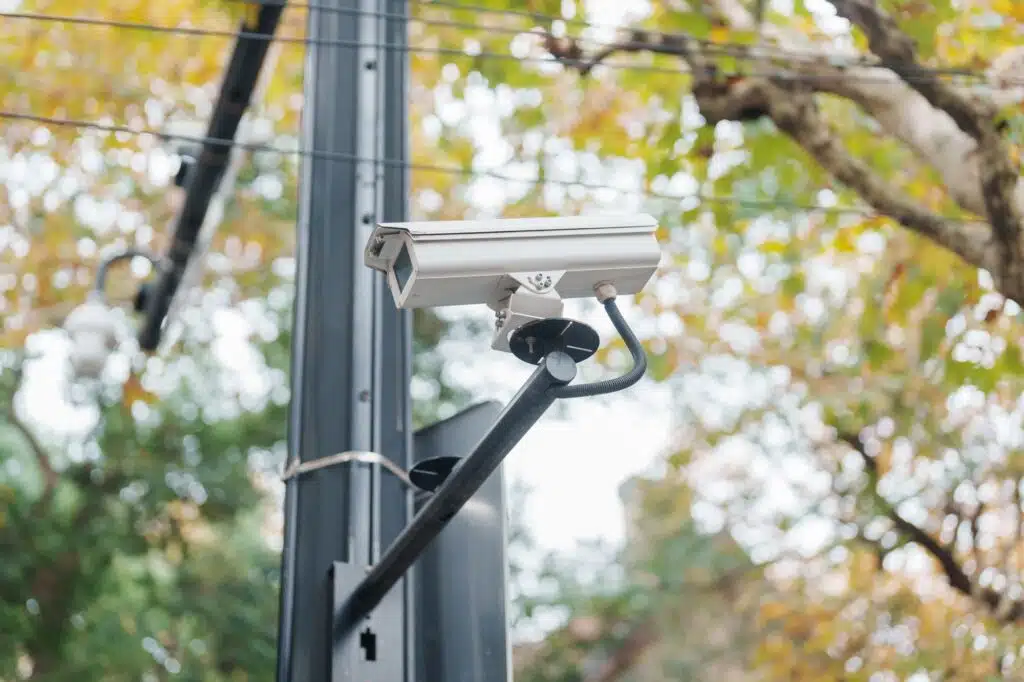
- Not every camera on a signal writes tickets. Some, like Thornton’s vehicle detection cameras, only help run the light, and others show live traffic. A red light camera can’t be used unless a sign warns that one is in use ahead.
- Ticket-camera footage is confidential. A Colorado Open Records Act request won’t get it, but the law allows disclosure under a court order for use in unrelated legal proceedings, so talk to a lawyer early if a camera may have seen your crash.
Are traffic cameras legal in Colorado? Yes. State law lets cities, counties and the state use photo radar and red light cameras if they follow its rules on signs, locations, notices, and penalty amounts, and for violations on or after August 12, 2026, the registered owner is responsible for paying a camera ticket unless an exception applies.
If a crash at a camera intersection hurt you, CGH Injury Lawyers, based in Denver, offers a free case review, and there’s no fee unless we win. That covers the attorney’s fee; your written agreement handles case expenses. Call (303) 209-9395 to tell us what happened.
This page provides general information only and does not constitute legal advice. Reading this page does not create an attorney-client relationship. Laws vary by jurisdiction and change frequently. Always consult a licensed attorney for advice specific to your situation.
What Colorado Law Says About Traffic Cameras
Colorado’s automated vehicle identification law, C.R.S. 42-4-110.5, lets a county, city and county, or municipality authorize cameras by ordinance and lets the state and local governments use them to detect traffic violations under state law. The law sets rules for the notices, warning signs, locations, and penalty amounts.
Under the statute, a system counts when a machine automatically detects a traffic violation and records a photograph of the vehicle and its license plate, and a notice can go to the registered owner. That covers speed cameras, cameras for traffic signals and signs, bus lane and bike lane cameras, school bus stop-arm cameras added in 2025, and cameras for moving violations in school zones and along designated safe routes to school, which were added by a 2026 law.
The definition doesn’t include automated license plate readers, which the legislature describes as used mainly for law enforcement and investigations, such as locating stolen vehicles.
Where Cameras Can Ticket
Red light cameras, school bus cameras, and cameras for moving violations along a safe route to school can operate without the location limits below. For other camera violations, the state or a local government can issue a notice only if the violation occurred in one of these places:
- A school zone.
- A residential neighborhood is defined as a block where most of the buildings on both sides of the street are homes and the speed limit is 35 mph or less.
- A maintenance, construction, or repair zone.
- A street that borders a municipal park is also included.
- A street that a county or city, by ordinance or resolution, designates as an automated vehicle identification corridor.
Cities and counties can’t put cameras or camera corridors on interstate highways, but the state can place cameras on an interstate and issue notices for violations of state law. Since a 2024 change, the state may use cameras on any portion of a state highway, and a city or county must notify the Colorado Department of Transportation (CDOT) before designating a camera corridor on a state highway, unless it designated the corridor before January 1, 2025.
Signs, Warning Periods, and License Points
A speed camera can’t be used unless a sign is posted at least 300 feet before the area where it’s used, and the sign has to warn that a camera is in use ahead. A sign at the city or county border doesn’t meet that rule.
For a new camera system that doesn’t replace an existing one, the agency has to announce it on its website and social media accounts, if any, for at least 30 days and post a sign at the location at least 30 days before using it. For the first 30 days after the system is installed or deployed, only warnings can be issued, and they have to be in writing. These new-system rules don’t apply to a mobile camera moved to a new spot within the same camera corridor.
Camera tickets add no points to your license. The state’s motor vehicle department also can’t keep a record of a camera violation in its official driver records. None of that decides who caused a crash: fault in a Colorado car accident claim comes down to evidence, and a camera image can be one piece of it.
Do Cameras on Traffic Lights Give Tickets?
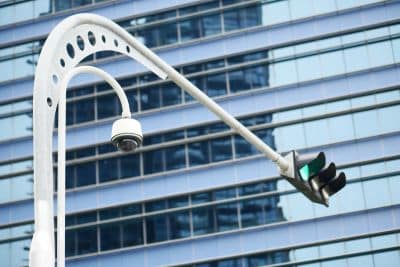 Only some do. A camera at a signal can send you a ticket only if it’s part of an automated vehicle identification system, and state law bars using a red light camera unless a sign warns that one is in use ahead. Other cameras at signals may help run the lights or let traffic staff watch conditions in real time.
Thornton’s police department, for example, says its vehicle detection cameras “do not record images, they only detect vehicle movement and, in some cases, count vehicles moving through a traffic signal.” Thornton also uses closed-circuit cameras that staff watch to monitor congestion and roadway incidents.
On highways, CDOT said in April 2026 that it operates more than 1,000 cameras statewide that give the public and operators real-time views of road and weather conditions through COtrip.org.
Red Light Camera vs Traffic Sensor: How to Tell Them Apart
One clue is the sign: state law says a red light camera’s warning sign must stand 200 to 500 feet before the camera, with lettering at least 4 inches high for capital letters and 3 inches high for lowercase letters.
Boulder’s photo enforcement page describes how one city’s enforcement cameras work. Its red light cameras are mounted on traffic poles at certain high-collision intersections, use radar to monitor traffic, and aren’t activated until the light turns red; a vehicle that crosses the stop line after that triggers a picture of the driver and the license plate.
A detection camera has a different job. Thornton describes its vehicle detection cameras as cameras that “detect the presence of vehicles at traffic signals,” and the data is used to manage the signals, reduce congestion, and improve travel times.
Do Traffic Signal Cameras Flash?
Red light enforcement cameras can flash. Colorado Springs’ red light safety camera page explains that a vehicle stopping fast, or slowing instead of stopping before it turns, can trigger a camera and cause the flash to discharge. The city adds that a flash doesn’t equal a citation, because staff review each captured event.
Do You Have to Pay Tickets From Traffic Cameras?
Generally, yes. A camera ticket is a civil penalty. If you don’t ask for a hearing by the deadline on the notice, you give up the right to contest the violation or the amount, and if the penalty isn’t paid in full by the deadline on the follow-up notice, a final order of liability is entered against the registered owner.
The statute sets out the steps:
- The notice of violation goes to the registered owner by first-class mail, personal service, or a comparable delivery service, within 30 days of the violation for a vehicle registered in Colorado, or 60 days for a vehicle registered elsewhere.
- The notice must give the date, time, and location; the penalty; the deadline to pay or dispute; and how to ask for a hearing or pay.
- The deadline can’t be less than 45 days after the notice is issued. If neither the payment nor a hearing request arrives by then, the owner gets a civil penalty assessment notice no later than 30 days after that deadline.
- A final order can be appealed to the county court in the county or the municipal court in the municipality where the violation happened.
Before it can start a collection action for an unpaid camera penalty, the government has to personally serve the owner with the notice of violation or the final order of liability. It also can’t boot your car to collect.
The Denver Police Department’s photo enforcement page says that if the owner takes no action after 45 days, a Penalty Assessment Notice is served by personal service or certified mail, with an added fee of at least $29 when personal service is required. To dispute a notice, follow the hearing instructions printed on it.
What Camera Tickets Cost in Colorado
Colorado’s current caps come from Senate Bill 26-152, which changed them for violations on or after August 12, 2026. These are the most the state or a local government can charge, surcharges included, before January 1, 2035:
| Violation caught by camera | Maximum penalty |
|---|---|
| Speeding less than 6 mph over | No penalty, though a warning may be mailed; up to $40 in a school zone or work zone |
| First speeding violation of 6 to under 10 mph over | No penalty; the owner gets a mailed warning. Up to $40 in a school zone or work zone |
| Repeat speeding of 6 to under 10 mph over, or any speeding of 10 to under 25 mph over | $40, doubled to $80 in a school zone or work zone |
| Speeding 25 mph or more over | $120 |
| Running a red light | $75; this cap doesn’t apply in a school zone or work zone |
| Passing a stopped school bus with its signal lights on | $300, including surcharges or fees |
From January 1, 2035, the same law raises the caps, for example to $95 for a red light violation and $150 for speeding 25 mph or more over.
Who Pays When Someone Else Was Driving
The registered owner of the vehicle detected by the camera is responsible for paying the penalty for violations on or after August 12, 2026, unless one of these exceptions applies:
- The vehicle had been sold or leased before the violation, shown with a bill of sale or other documents.
- The vehicle or its license plate had been stolen before the violation, shown with a copy of the police report.
- Police issued a separate traffic citation to the owner or driver for the same violation.
- The owner had died before the violation, which a representative of the estate or a family member establishes.
To use an exception, the owner, or the estate’s representative or a family member, must send an affidavit showing it applies to the agency that issued the notice within 30 days after the notice was issued; an owner whose leased vehicle was registered in the lessee’s name doesn’t need one. With the affidavit and enough supporting documents, the agency must dismiss the notice, and a person who submits a false affidavit commits a class 2 misdemeanor traffic offense.
Not being the driver isn’t on that list. Denver’s page still describes a “Not Pictured Driver Affidavit,” and Boulder’s describes an “Affidavit of Non-Responsibility,” so compare any notice for a violation on or after August 12, 2026, with the current state law.
If a camera intersection crash hurt you and you’re not sure what any footage might show, a free case review is a helpful place to start. There’s no fee unless we win, and your written agreement handles case expenses.
Do Traffic Cameras Record? What the Footage Means After a Crash
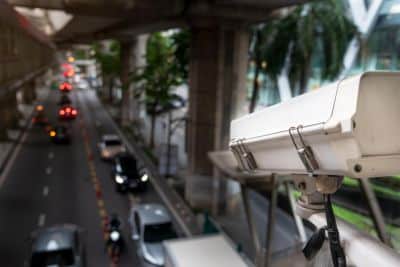 Ticket cameras do record, but the law limits what they keep. State law tells the government and any vendor to program the system to keep data only when a traffic violation occurs, so an enforcement camera may hold nothing about your crash unless it captured a violation at that moment.
When a violation is captured, the clip can be short. Colorado Springs says its red light cameras take still images and “record a 12-second digital video of the violation, including six seconds prior to and six seconds after running the red light.”
Those photos and videos are confidential and exempt from the Colorado Open Records Act. The law allows them to be used or disclosed only to run the program, for other law enforcement purposes, when moving data to a new vendor or system, or under a court order for use in unrelated legal proceedings.
Violation photos and video have to be destroyed within three years after the violation is finally resolved, unless they’re kept in a separate system for another purpose the law allows.
Detection cameras like Thornton’s don’t record images, and CDOT says its highway cameras give real-time views of road and weather conditions. Nearby businesses, doorbell cameras, and other drivers’ dashcams may have caught the crash, and video that no one saves may be recorded over, so ask the owners to keep it as soon as you can.
A lawyer can send a preservation letter to a city, CDOT or a business. The letter tells them the footage is evidence in a claim and asks them to keep it. For other government records, CDOT says it provides public records for inspection under the Colorado Open Records Act, except where the law provides otherwise.
Whether an officer writes up the crash or you’re filing a police report after a car accident in Colorado yourself, ask whether the report will note any video.
How Footage Fits Colorado’s Comparative Fault Rule
In an injury claim, fault comes down to evidence, and when the question is who is at fault in a side-impact collision, footage can show who had the light.
Under C.R.S. 13-21-111, you can recover if your negligence “was not as great as” the other driver’s, but your damages are reduced in proportion to your share.
Under Colorado’s modified comparative negligence rule, if your share is equal to or greater than the other driver’s, you recover nothing from that driver. For illustration only, say a jury values a claim at $50,000 and, after a clip shows you were going a little fast, puts 20% of the fault on you: your recovery drops to $40,000, and at 50% you recover nothing.
Can You Block a Speed Camera?
Not legally. Under C.R.S. 42-3-202, you can’t drive with a device or substance on your plate that makes all or part of it unreadable by a system that automatically identifies vehicles, including a cover that distorts the viewing angle or is tinted or dirty enough to impair the plate’s legibility. It’s a class A traffic infraction with a $100 fine.
The same statute requires the rear plate, unless the law allows otherwise, to be in a place and position to be clearly visible, free from foreign materials, and clearly legible. The front plate also has to be kept free from foreign materials and clearly legible, unless the law allows otherwise.
When a driver with an unreadable plate leaves the scene of a hit-and-run accident and can’t be identified, the injured person may have to turn to uninsured motorist coverage.
The Colorado Division of Insurance says that coverage pays for the insured’s bodily injury losses caused by a hit-and-run driver, and it’s optional, included in your policy unless you reject it in writing.
Where Denver and the Front Range Use Cameras
Denver, Aurora, Boulder, Fort Collins and Colorado Springs all describe camera enforcement programs on their city websites, and CDOT runs speed cameras in some state highway work zones. These are the details each agency published as of November 2026, and locations can change, so watch for the posted signs.
- Denver: The police department lists four red light camera intersections: 6th and Kalamath (eastbound), 6th and Lincoln (eastbound), 8th and Speer (westbound), and 36th and Quebec (northbound). It also runs five photo speed vans on residential streets with limits of 35 mph or less, on streets bordering parks, and in school zones and work zones.
- Denver’s speed safety cameras: Denver’s transportation department says installation of speed safety cameras along Federal Boulevard and Alameda Avenue is to be completed in 2026, and the cameras will ticket drivers going 10 mph or more over the speed limit.
- Aurora: The city uses two mobile speed cameras, restricted to residential areas with limits of 35 mph or less, school zones, streets bordering municipal parks, and work zones, and it treats vehicles going 11 mph or more over the limit as violations.
- Boulder: The city uses photo radar vans, red light cameras, and speed-on-green cameras, which sit at the same intersections as its red light cameras.
- Fort Collins: Fort Collins Police Services issues camera radar and red light citations.
- Colorado Springs: The city runs a red light safety camera program and marks each camera intersection with signs.
- CDOT: The state’s speed enforcement camera locations page lists active civil penalties on CO 119 between Boulder and Longmont, on I-25 between Mead and Berthoud, and in the I-25 and US 50B work zone in Pueblo.
What to Do After a Crash at a Camera Intersection
Get medical care first, then focus on evidence while it still exists. Ask the officer about video, note every camera you can see at the scene, and ask nearby businesses and drivers to save their footage. A lawyer can send preservation letters and, where the law allows, ask a court to order the release of ticket-camera images.
Under the Colorado car accident statute of limitations, you generally have three years to file an injury or property damage lawsuit over a car crash, counted from when the legal claim arises (C.R.S. 13-80-101). That deadline doesn’t tell you how long any camera keeps its video, so deal with the footage first.
Talk to a Colorado Injury Lawyer for Free
CGH Injury Lawyers offers a free case review in English or Spanish, and there’s no fee unless we win. That covers the attorney’s fee, and your written agreement handles case expenses. If any camera may have seen your crash, we can look at what evidence may exist.
We’re “Colorado trial lawyers who prepare every case to be tried, not just settled.” Call (303) 209-9395 or tell us what happened online.
Frequently Asked Questions
Is photo radar legal in Colorado?
Yes. Colorado allows photo radar and red light cameras under C.R.S. 42-4-110.5, as long as the government posts the required warning signs, uses speed cameras only in the places the law allows, such as school zones, residential neighborhoods and work zones, and sends the notice to the registered owner on time. Camera tickets carry no license points.
Do the cameras on traffic lights give tickets?
Only automated enforcement cameras do, and state law requires a warning sign 200 to 500 feet before a red light camera. Other cameras at signals may be vehicle detection cameras that help run the light; Thornton, for example, says its detection cameras do not record images. CDOT’s highway cameras give real-time views of road and weather conditions.
Do you have to pay tickets from traffic cameras?
Generally, yes. A camera ticket is a civil penalty sent to the registered owner, and if you don’t request a hearing by the deadline on the notice, you give up the right to contest it. For violations on or after August 12, 2026, the owner pays unless the owner (or, if the owner has died, the estate’s representative or a family member) shows, by affidavit sent to the issuing agency within 30 days of the notice, that the vehicle was sold or leased, the vehicle or its plate was stolen, police wrote a separate citation, or the owner had died.
Written by CGH Injury Lawyers.
Attorney Advertising. CGH Injury Lawyers.
This article is general information for Colorado injury readers. It is not legal advice, does not create an attorney-client relationship, and does not promise that any deadline, rule, or outcome applies to your case. Statute-of-limitations, comparative negligence, insurance, and compensation questions require case-specific legal review.
Related articles
-
Why Do People Drive Slow in the Left Lane?
A slow driver camped in the left lane of a 65+ mph Colorado highway can be ticketed and can share the fault for a crash. Here's what the…
-
Downshifting vs Braking: What Actually Slows Your Car
For a normal stop, use your brakes. On a long Colorado mountain grade, a lower gear lets the engine help hold your speed, and here's how that works…
-
Is It Illegal to Put On Makeup at a Stop Light in Colorado?
No Colorado state traffic statute names makeup, but doing it at a red light can still get you a ticket if it leads you to drive carelessly. Here's…