
ClickCease
Free consultations · Se habla espanol
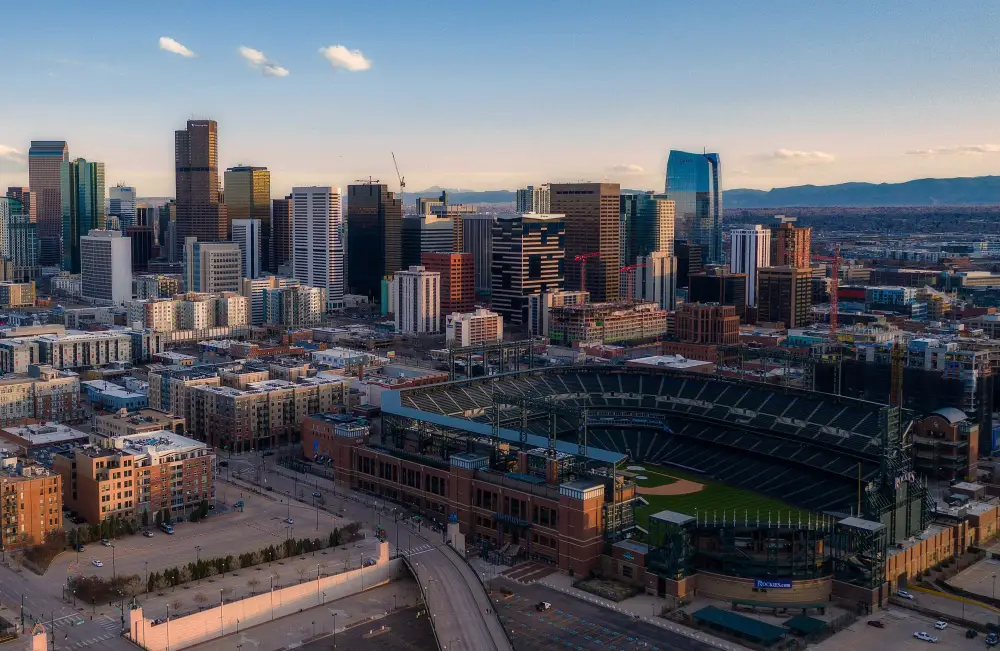
US 287 corridor in Lafayette, Colorado. CGH Injury Lawyers represents motorcycle accident victims across Lafayette and Boulder County from our Denver office.
Lafayette, Colorado

Lafayette Motorcycle Accident Lawyers Who Fight the Rider-Blame Defense

A crash on US 287, Arapahoe Road, or SH 42 can leave a rider facing surgery, a totaled bike, missed work, and an insurance adjuster who already decided the rider was at fault before the scene was cleared. We serve Lafayette and all of Boulder County from our Denver office. You pay nothing unless we win.

No fee unless we win

It's More Than Money.

Get my free motorcycle accident case review

100% confidential. No fee unless we win.

Serving Lafayette From Our Denver Office CGH Injury Lawyers 2701 Lawrence St., Suite 201 Denver, CO 80205 (303) 209-9395 Se habla espanol
5-star rated on Google ABOTA trial advocate on the team Trial lawyers, not a settlement mill 8 attorneys, bilingual EN / ES

A motorcycle crash on US 287 or Arapahoe Road in Lafayette is almost never treated the same as a car crash by an insurer. The adjuster's first instinct is to blame the rider, reach for Colorado's gear and licensing rules, and cut what they owe. The law gives riders real rights. Knowing those rights before you speak to anyone is what protects them.

  • Colorado does not require helmets for riders 18 and older, but it requires eye protection for every rider regardless of age (C.R.S. 42-4-232). Both choices become ammunition in a "failure to mitigate" argument that can cut your compensation even when the other driver caused the crash.
  • Lane filtering became legal on August 7, 2024 under SB24-079 (C.R.S. 42-4-1503), but only when traffic is completely stopped, not just slow, and only at 15 mph or less. Insurers routinely mislabel legal filtering on US 287 as illegal lane splitting to deny Lafayette claims.
  • Colorado's modified comparative negligence rule lets an insurer assign you a fault percentage for the severity of your injuries, not just how the crash happened, and bar all recovery if they push your share to 50 percent or more (C.R.S. 13-21-111). On a corridor like US 287 where left-turn conflicts and commercial traffic are frequent, that fight begins the moment a claim is reported.

CGH Injury Lawyers represents injured riders and their families across Lafayette and Boulder County. We serve Lafayette clients from our Denver office, document the evidence that defeats rider-blame defenses, and prepare every case for trial in Boulder County Combined Court. No upfront fees. Free first consultation.

Where Lafayette riders get hurt

The Lafayette roads and conditions that make motorcycle crashes so serious

Motorcycles give riders almost no protection when another driver fails to yield or misjudges a gap. On Lafayette's high-traffic corridors, that physics problem is compounded by road conditions, weather patterns, and intersection designs that have produced documented crashes for years.

  1. US 287 and the left-turn gap problem

    US Highway 287 is Lafayette's main north-south arterial and its most documented fatal-crash corridor. The stretch from Dillon Road south through the Northwest Parkway interchange concentrates left-turn traffic from commercial side streets. Drivers making unprotected left turns across US 287 frequently misjudge the closing speed of a motorcycle because bikes are narrower and appear farther away than they are. The result is a T-bone or head-on collision at speed. Intermountain Health Good Samaritan Hospital, which treated you or your family member, sits at that same interchange, a fact that tells you something about how often those crashes send riders to trauma care.

  2. Arapahoe Road and the SH 7 corridor

    State Highway 7 runs as Arapahoe Road west of US 287 and as Baseline Road east of it, passing in front of Centaurus High School. The hub for this city notes motorcycle riders are especially exposed on US 287 and Arapahoe Road. The school-zone volume, the mix of teen and commuter drivers, and cross-street turning conflicts combine to create conditions where riders are frequently hit by drivers who looked for cars but not for bikes. The US 287 and Arapahoe Road intersection has its own documented collision history separate from the Dillon Road corridor.

  3. SH 42 (95th Street) and rear-end exposure

    State Highway 42 runs as 95th Street along Lafayette's eastern boundary and connects US 287 to the broader Front Range grid. Commercial and commuter traffic moving at highway speeds on SH 42 rear-ends stopped or slowing motorcycles at the interchange and at cross-street signals. Rear-end impacts are especially dangerous for riders because there is no crumple zone and the rider is launched forward or off the bike entirely.

  4. Hailstorms, gravel, and Front Range road surface hazards

    Lafayette has recorded 65 Doppler-detected hail events. Hailstorms scatter road debris and cover pavement with hail pellets that act like ball bearings under a motorcycle tire. Winter freeze-thaw cycles deposit black ice on US 287 and Baseline Road at dawn, and spring melt carries gravel and sand from shoulder areas onto travel lanes. These surface hazards that a car driver might not notice can put a motorcycle down in a fraction of a second. When a road defect, late-cleared debris, or poor shoulder design contributed to a Lafayette rider's crash, there may be an additional claim against the public entity responsible for that road.

  5. Coal Creek crossings and flash-flood road hazards

    Coal Creek and the low-lying road crossings in Lafayette are subject to flash flooding documented by the National Weather Service, including the catastrophic September 2013 flooding. Water across the roadway, debris fields, and sudden lane closures after storms are especially dangerous for riders who lack the vehicle mass to push through standing water. Discovering that road conditions caused or contributed to a Lafayette motorcycle crash opens an investigation path that goes beyond the other driver's insurer.

The legal landscape

The Colorado motorcycle laws that shape every Lafayette rider's injury claim

Colorado's motorcycle rules live mostly in C.R.S. Title 42. They changed in August 2024 with the lane-filtering law. Riding by the old rules risks a ticket. More importantly, every one of these rules becomes a weapon in an insurer's hands when you file a claim after a Lafayette crash.

Helmets: C.R.S. 42-4-1502

  • Riders and passengers under 18 must wear a DOT-compliant helmet. Riders 18 and older may legally ride without one, placing Colorado among the minority of partial helmet-law states.
  • Legal does not mean consequence-free. If a Lafayette rider suffers a head injury while riding without a helmet, the defense will argue the choice contributed to the severity of the injury, calling it a "failure to mitigate damages."
  • We fight that argument directly. A legal choice by the rider is not a defense to the other driver's negligence, and we show the jury exactly what the at-fault driver did wrong regardless of what the rider was wearing.

Eye protection: C.R.S. 42-4-232

  • Every operator and passenger must wear eye protection, glasses, goggles, or a face shield, unless the motorcycle is equipped with a compliant windscreen of adequate height and transparency. There is no age exception to this rule.
  • A violation is a Class A traffic infraction, and that citation can become evidence in a Lafayette liability dispute even when the eye-protection choice had nothing to do with how the crash happened.
  • If you received a citation after the crash, contact an attorney before you speak to any insurer.

Lane filtering: C.R.S. 42-4-1503

  • Legal since August 7, 2024 under SB24-079, but only when traffic is completely stopped, not slow. The motorcycle must travel at 15 mph or less, on a road with at least two adjacent same-direction lanes, without exceeding the posted speed limit.
  • Lane splitting, riding between lanes of moving traffic at speed, remains illegal in Colorado. Insurers routinely mischaracterize legal filtering on US 287 as illegal splitting to deny Lafayette rider claims.
  • Dashcam footage, traffic-camera data, and witness accounts are what prove the distinction. We move quickly to preserve them after a Lafayette crash.

Class M endorsement

  • Operating a motorcycle in Colorado requires a Class M endorsement earned by passing a written test and an on-cycle skills test. A motorcycle-only license is available for riders who do not also operate a standard passenger vehicle.
  • Riding without a valid endorsement can result in criminal charges and gives an insurer grounds to argue negligence per se, meaning the unlicensed operation itself was a breach of the legal duty of care.
  • If you held a valid endorsement, we document that clearly in the investigation file so the insurer cannot use it against you.

Why the filtering-versus-splitting distinction decides Lafayette claims

After a crash on US 287, the first question a Lafayette adjuster asks is whether you were complying with C.R.S. 42-4-1503. If you were filtering at 20 mph because you thought traffic was moving slowly enough, the insurer will argue you were breaking the law and were therefore at fault. We have seen this argument used to deny claims outright by insurers who know most riders do not know the difference. Dashcam video from nearby businesses, traffic-signal phase logs, and GPS data from the bike are what disprove it, and we move to lock that evidence down before it disappears.

After the crash

What to do after a motorcycle accident in Lafayette

The hours after a Lafayette motorcycle crash shape your injury claim more than almost anything that happens later. These steps protect your health and preserve the evidence an insurer will try to reinterpret against you.

  1. Get to safety and call 911

    Move out of the travel lane if you can. A Lafayette Police Department or Colorado State Patrol report creates the official record of what happened, who was at the scene, and what the road conditions were at the time of the crash. Get the report number before anyone leaves.

  2. Seek trauma care immediately

    Intermountain Health Good Samaritan Hospital at 200 Exempla Circle in Lafayette is a 234-bed Level II Trauma Center and the closest major facility to the US 287 corridor. Go even if you think you feel fine. Traumatic brain injuries, spinal injuries, and internal bleeding from a motorcycle crash can take hours or days to produce obvious symptoms, and a gap in your medical timeline becomes a gap in your claim.

  3. Document the scene before it changes

    Photograph the vehicles, the bike, skid marks, road surface, any lane markings, and your visible injuries. On US 287 and Arapahoe Road, note which lanes each vehicle occupied and the signal phase if it is safe to observe. Collect the other driver's insurance card, plate, and license. Get names and contact information for any witnesses before they leave.

  4. Say nothing to the other driver's insurer

    The at-fault driver's insurance company is not on your side. Do not agree to a recorded statement. Do not sign any release. Do not accept a quick settlement offer before you understand the full scope of your injuries. This applies whether the Lafayette crash happened on US 287, on SH 42, or in a parking lot at Waneka Lake Park.

  5. Call a Lafayette motorcycle accident attorney

    Colorado's three-year deadline to file a motorcycle accident lawsuit (C.R.S. 13-80-101(1)(n)) sounds long, but camera footage from US 287 businesses, CDOT traffic records, and weather logs can disappear within days or weeks. A free consultation costs you nothing and starts the evidence-preservation clock.

Compensation

What a Lafayette motorcycle accident victim can recover under Colorado law

Colorado law lets injured riders recover two broad categories of damages: economic losses you can document with records and bills, and non-economic losses for the human cost of the injury. The nature of motorcycle crashes, where serious injury is common, means both categories can be substantial.

Economic damages

  • Medical expenses, past and future, including trauma care at Good Samaritan Hospital, surgery, orthopedic care, neurological treatment, and rehabilitation
  • Lost wages and lost income during the recovery period
  • Loss of future earning capacity when injuries are permanent
  • Motorcycle repair or replacement and riding gear destroyed in the crash
  • Physical therapy, ongoing care, adaptive equipment, and home modifications for catastrophic injuries
  • Out-of-pocket transportation and other crash-related expenses

Non-economic damages

  • Pain and suffering from crash injuries and the recovery process
  • Emotional distress and anxiety, particularly common after a violent crash
  • Loss of enjoyment of life when injuries prevent riding or other activities
  • Loss of consortium for a spouse or family member
  • Compensation for physical impairment or disfigurement, which is not subject to any cap under Colorado law

For claims accruing on or after January 1, 2025, Colorado caps non-economic damages such as pain and suffering at $1,500,000 under C.R.S. 13-21-102.5. Compensation for physical impairment or disfigurement is not capped, which matters significantly in motorcycle cases where permanent scarring, road rash, orthopedic injury, and limb damage are common outcomes. Economic damages such as medical bills and lost wages are never capped. When an at-fault driver acted with fraud, malice, or willful and wanton disregard, punitive damages of up to the amount of the actual damages award may also be available under C.R.S. 13-21-102.

Fault and coverage

Comparative fault and insurance coverage for Lafayette motorcycle riders

Colorado follows a modified comparative negligence rule under C.R.S. 13-21-111. You can recover damages as long as your share of fault is less than 50 percent. Your award is reduced by your percentage. At 50 percent or more, you recover nothing. Because insurers inflate rider fault routinely, understanding this rule is the first line of protection.

How insurer bias works against Lafayette riders

  • Colorado is not a no-fault state. After a Lafayette motorcycle crash, you pursue your claim against the at-fault driver's liability insurer. The adjuster's job is to pay as little as possible, and on a motorcycle claim, the bias starts from the assumption that the rider did something to cause it.
  • Uninsured and underinsured motorist coverage becomes the practical lifeline when the at-fault driver on US 287 carries only Colorado's minimum limits of $25,000 per person. Colorado's minimum rarely covers the medical bills from a serious Lafayette motorcycle crash. Colorado UM/UIM claims are governed by C.R.S. 13-80-107.5 under Pham v. State Farm, 2013 CO 17.
  • If a government vehicle or a Lafayette city road crew's failure to maintain the road contributed to the crash, a written notice of claim must be filed within 182 days of discovering the injury (C.R.S. 24-10-109(1)). The 2026 CGIA caps for government-entity claims are $505,000 per person and $1,421,000 per occurrence (C.R.S. 24-10-114). Missing the 182-day notice period bars the claim entirely regardless of fault.
  • A rider found 49 percent at fault recovers 51 percent of a verdict. That math is exactly why insurers push hard to inflate a rider's fault percentage on US 287 and Arapahoe Road. An attorney who can counter that argument with dashcam footage, crash reconstruction, and witness statements changes the calculus of every negotiation.
5-star rated on Google

I wish I could leave more than 5 stars!

Grace Macaluso, 5-star Google review

How it works

How a Lafayette motorcycle accident claim is built

A Lafayette motorcycle accident claim moves through six stages, each one shaped by evidence gathered in the last. Most cases resolve before a courtroom, but we prepare every case as if it will be tried before a Boulder County jury.

  1. Free case evaluation

    We review the crash facts, explain your rights under Colorado motorcycle law, and answer your questions at no cost and no obligation. We identify which statutes apply to your crash and where the insurer is likely to attack.

  2. Preserve the evidence fast

    We secure dashcam footage from businesses along US 287 and Arapahoe Road, CDOT traffic-camera data, the Lafayette Police or Colorado State Patrol report, weather records from the Doppler network that covers Lafayette, and witness statements. Evidence from the US 287 corridor goes stale within days.

  3. Counter the rider-blame defense

    We document compliance with the gear rules (C.R.S. 42-4-1502 and C.R.S. 42-4-232), the lane-filtering rules (C.R.S. 42-4-1503), and the Class M endorsement requirement before the insurer can build its "failure to mitigate" or "negligence per se" case around those points.

  4. Build the full damages picture

    We gather Good Samaritan Hospital records, specialist treatment notes, and work and wage records, and we bring in life-care planners and vocational experts when injuries are permanent. We calculate future care costs, lost earning capacity, and the non-economic harm that motorcycle injuries impose on a rider's life.

  5. Negotiate from trial readiness

    Most Lafayette motorcycle cases settle during negotiation. We negotiate as lawyers who are prepared to try the case in Boulder County Combined Court, not as lawyers eager to accept the first offer an insurer puts on the table. That posture changes what insurers offer.

  6. Try the case in Boulder County Combined Court

    If the insurer refuses a fair offer, we file in the 20th Judicial District at Boulder County Combined Court, 1777 6th Street, Boulder, CO 80302, and take the case to a Boulder County jury. Managing Partner Kevin Cheney has tried over 25 cases to verdict.

Local context

Your motorcycle accident case lives in Lafayette

The injury case lives in Lafayette: the road where it happened, the hospital that treated you, and the courthouse where your case may be filed. Here is the ground we work on for Lafayette motorcycle claims.

Courthouse

Boulder County Combined Court, 20th Judicial District

A Lafayette motorcycle accident lawsuit is filed in the 20th Judicial District at Boulder County Combined Court, 1777 6th St., Boulder, CO 80302, phone (303) 441-3750. The local jury pool, the Boulder County judges, and the defense firms that appear there all differ from Denver or Jefferson County courts. We appear directly in Boulder County Combined Court on behalf of Lafayette clients and do not need to be admitted pro hac vice. The local rules, jury instructions, and judicial temperament of the 20th Judicial District shape how we build and present a motorcycle case from the first day of investigation.

Trauma Care

Intermountain Health Good Samaritan Hospital

Intermountain Health Good Samaritan Hospital at 200 Exempla Cir, Lafayette, CO 80026, is a 234-bed acute-care hospital and a designated Level II Trauma Center. The American College of Surgeons recertified it in February 2025. The hospital sits directly at the US 287, Dillon Road, and Northwest Parkway interchange, the same intersection that has produced documented fatal crashes and that riders on the US 287 corridor reach first when emergency care is needed. Those trauma records become the clinical backbone of a damages claim and document the full scope of injuries a Lafayette motorcycle crash can produce.

High-Crash Roads for Riders

US 287, Arapahoe Road, and SH 42

Three state-designated routes carry the bulk of Lafayette motorcycle traffic. US Highway 287 is the main north-south arterial and a documented fatal-crash corridor where CDOT and Boulder County initiated safety improvements in 2019. The city hub for Lafayette specifically identifies US 287 and Arapahoe Road as corridors where riders are especially exposed. State Highway 7 runs as Arapahoe Road west of US 287 and as Baseline Road east of it, passing directly in front of Centaurus High School where school-zone volume adds to intersection conflict. State Highway 42, running as 95th Street along the city's eastern edge, carries rear-end crash exposure for stopped and slowing motorcycles at interchange signals.

Your team

The team handling your Lafayette motorcycle case

CGH Injury Lawyers is a eight-attorney Colorado firm founded in 2016, formerly Cheney Galluzzi & Howard. Managing Partner Kevin Cheney is a member of the American Board of Trial Advocates (ABOTA) and has tried over 25 cases to verdict. Timothy G. Tarr has been recognized by Best Lawyers every year since 2023. Every Lafayette motorcycle accident case is handled by a licensed Colorado attorney, not a paralegal. CGH Injury Lawyers does not have a Lafayette office. We serve Lafayette and Boulder County from our single office at 2701 Lawrence St., Suite 201, Denver, CO 80205, and we come to you.

ABOTA member on the team Tim Tarr: Best Lawyers in America since 2023 Over 25 cases to verdict Boulder County Combined Court Bilingual EN / ES Free consultation No fee unless we win

Frequently asked questions

Frequently asked questions about Lafayette motorcycle accident claims

How long do I have to file a motorcycle accident lawsuit after a Lafayette crash?

Colorado gives you three years from the date of the crash to file a personal injury lawsuit arising from the use or operation of a motor vehicle, including a motorcycle (C.R.S. 13-80-101(1)(n)). Shorter deadlines apply in some situations. If a Lafayette city vehicle, a Boulder County vehicle, or any other government-operated vehicle was at fault, you must file a written notice of claim within 182 days of discovering the injury (C.R.S. 24-10-109(1)). Missing that notice deadline typically bars the claim entirely. Contact an attorney as early as possible to preserve evidence from the US 287 and Arapahoe Road corridors before it disappears.

Can I still recover compensation if I was not wearing a helmet at the time of the Lafayette crash?

Yes. Colorado does not require helmets for riders 18 and older (C.R.S. 42-4-1502), so riding without one is not a legal violation for an adult. You can still file a claim. However, the defense will argue that your choice to ride without a helmet contributed to the severity of your injuries, which under Colorado's modified comparative fault rule (C.R.S. 13-21-111) can reduce your recovery. We fight that argument directly by showing the jury exactly what the at-fault driver did and that a legal gear choice by the rider does not excuse negligent driving.

Is lane filtering legal in Lafayette, and how does it affect my claim if I was filtering when the crash happened?

Lane filtering became legal in Colorado on August 7, 2024 under SB24-079 (C.R.S. 42-4-1503), but only when traffic is completely stopped and only at 15 mph or less. Lane splitting in moving traffic remains illegal. If you were filtering legally on US 287 when the crash happened, the insurer may still try to mislabel your action as illegal lane splitting. We counter that argument with dashcam footage, traffic-signal data, and witness accounts that show exactly what the traffic conditions were. If you were not complying with the filtering rules, that can be used to assign a portion of fault to you under Colorado's comparative negligence framework, which is why we investigate the facts carefully before any communication with the insurer.

Does CGH Injury Lawyers have a Lafayette office?

No. CGH Injury Lawyers does not have a Lafayette office. Our single office is at 2701 Lawrence St., Suite 201, Denver, CO 80205. We serve Lafayette and all of Boulder County as a service area from that office. We handle Boulder County Combined Court cases in the 20th Judicial District directly and travel to Lafayette clients. You are not paying for a storefront on US 287. You are paying for the legal work, which is the same whether a firm has two offices or twenty.

What if the at-fault driver was uninsured or underinsured after a Lafayette motorcycle crash?

If the at-fault driver carries only Colorado's minimum liability limits of $25,000 per person, and your medical bills from Intermountain Health Good Samaritan Hospital alone exceed that, your own uninsured or underinsured motorist (UM/UIM) coverage becomes the practical recovery path. Colorado UM/UIM claims are governed by C.R.S. 13-80-107.5 under Pham v. State Farm, 2013 CO 17. If you declined UM/UIM coverage in writing, the options narrow, which is why we also evaluate whether the at-fault driver has other assets worth pursuing through a judgment. Motorcycle crashes on high-traffic US 287 produce injuries that routinely exceed minimum policy limits.

Where is a Lafayette motorcycle accident lawsuit filed and what court handles it?

Lafayette sits in Boulder County, so a personal injury lawsuit from a Lafayette motorcycle crash is filed in the 20th Judicial District at Boulder County Combined Court, 1777 6th Street, Boulder, CO 80302, phone (303) 441-3750. The 20th Judicial District has its own local rules, jury instructions, and judicial characteristics that differ from Denver or Broomfield County courts. We appear directly in Boulder County Combined Court on behalf of Lafayette motorcycle accident clients without any additional admission requirement.

It's More Than Money.

You were hurt riding in Lafayette. We handle everything else.

Free consultation. No fee unless we win. Serving Lafayette and all of Boulder County in English and Spanish.

Prefer to read first? See how Colorado motorcycle accident law works statewide.

CGH Injury Lawyers, serving Lafayette · 2701 Lawrence St., Suite 201, Denver, CO 80205