
ClickCease
Free consultations · Se habla espanol
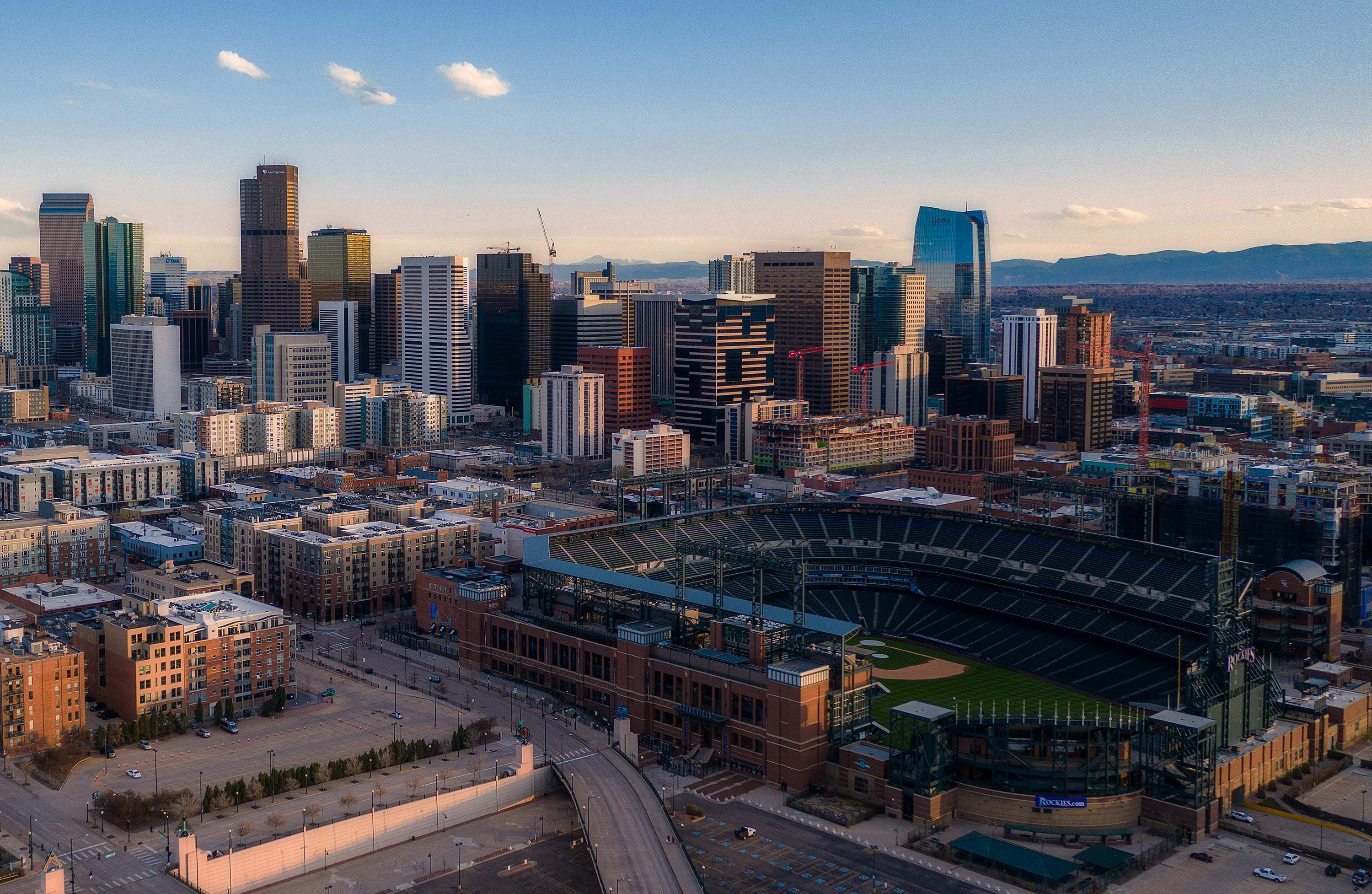
Aurora, Colorado road corridor. CGH Injury Lawyers represents injured cyclists across Arapahoe County.

IT'S MORE THAN MONEY.

Aurora Bicycle Accident Lawyers Who Shift Fault Back to the Driver

A driver hit you on East Colfax, near the Cherry Creek Trail, or at a Havana Street intersection, and now the insurer wants to blame the rider. CGH Injury Lawyers serves Aurora cyclists from our Denver office, files in the 18th Judicial District, and uses Colorado's Safety Stop and 3-foot passing laws to put the fault where it belongs. No fee unless we win.

No fee unless we win
Or speak with our team now (303) 209-9395

Tell us what happened in Aurora

100% confidential. No fee unless we win.

5-star rated on Google CDOT Vulnerable Road User Safety Task Force ABOTA trial advocate on the team No fee unless we win

A bicycle crash in Aurora puts you up against an insurance company that moves fast to blame the rider, whether it happened on East Colfax, at a Havana Street intersection, or where a road crosses the Cherry Creek Trail. CGH Injury Lawyers represents injured Aurora cyclists in Arapahoe County District Court, serving you from our Denver office with no upfront cost.

  • Under Colorado's Safety Stop law (C.R.S. 42-4-1412.5), cyclists may treat stop signs as yield signs and proceed through a red light after stopping when it is safe. Doing so is following the law, not breaking it, and it defeats the insurer's reflex claim that you ran the sign.
  • Drivers must give cyclists at least three feet of clearance when passing (C.R.S. 42-4-1003). A violation is direct evidence of negligence in an Aurora crash case.
  • Colorado uses modified comparative fault. You can recover damages as long as your share of fault is less than 50 percent (C.R.S. 13-21-111), and your own UM/UIM auto coverage may apply even though you were on a bike.

CGH Injury Lawyers does not have an Aurora office. We serve Aurora and Arapahoe County cyclists from our Denver office and file in the 18th Judicial District. Our attorneys serve on the CDOT Vulnerable Road User Safety Task Force, and we use the Safety Stop law, the 3-foot rule, and Colorado's e-bike statutes to move fault back onto the driver. Free first consultation, and no fee unless we win.

Colorado law

The Colorado Safety Stop law and what it means for Aurora cyclists

Colorado's most misunderstood cycling law is the Safety Stop (C.R.S. 42-4-1412.5), sometimes called the Idaho Stop. It changes how bicycles interact with stop signs and red lights, and it is one of the strongest tools we have for defeating a bad-faith fault claim after an Aurora crash.

At stop signs

  • You may treat a stop sign as a yield sign.
  • You must slow down and check for traffic.
  • You must yield to anyone with the right of way.
  • No full foot-down stop is required when the intersection is clear.

At red lights

  • You must come to a complete stop.
  • After stopping, yield to all cross-traffic and pedestrians.
  • You may then proceed if it is safe to do so.
  • This addresses stale red lights that do not detect bicycles.

Why this matters in an Aurora crash case

Insurance adjusters often claim a cyclist ran a stop sign or blew a red light to shift fault after a collision. The Safety Stop law is your shield. If you slowed, checked for traffic, and yielded, you were complying with Colorado law. We reconstruct the scene and gather witness statements to prove you used the discretion the statute grants, which matters under the modified comparative negligence rule where being found 50 percent or more at fault bars any recovery. The Safety Stop is not a free pass, though: entering an intersection without slowing or checking is still illegal and can be used against you.

Rights and duties

Rules of the road: cyclist rights and driver duties in Colorado

Colorado law gives cyclists the same rights as motor vehicles under Title 42, and it places specific duties on drivers to protect vulnerable road users. These rules drive the liability analysis in an Aurora bicycle crash.

  1. The 3-foot passing rule (C.R.S. 42-4-1003)

    Drivers must leave at least three feet of clearance when passing a cyclist. If the lane is too narrow to do that while staying in the lane, the driver must change lanes or wait. A violation is direct evidence of negligence, and we use dashcam footage, witnesses, and accident reconstruction to prove it on Aurora's wide arterials.

  2. Taking the lane and riding two abreast

    Cyclists may occupy the center of a lane when conditions make it the safe choice, and may ride two abreast unless it impedes the normal movement of traffic. Drivers who honk, tailgate, or squeeze past a cyclist who is legally in the lane may be liable for harassment or endangerment.

  3. Required equipment

    Bicycles ridden between sunset and sunrise must have a front light and a rear reflector. Failure to use lights can reduce your recovery in a nighttime crash, though it rarely eliminates liability on its own.

E-bikes

E-bike laws in Colorado: Class 1, 2, and 3 explained

Electric bicycles are regulated separately from traditional bikes in Colorado. The state recognizes three classes based on motor assistance and top assisted speed, and the class can matter in an Aurora trail-adjacent crash.

Class 1

Pedal-assist only. The motor helps while you pedal and stops assisting at 20 mph. Class 1 e-bikes are the most widely permitted, including on many trails.

Class 2

Throttle-assisted. The motor can move the bike without pedaling and stops assisting at 20 mph. Many trails restrict Class 2 e-bikes.

Class 3

Pedal-assist up to a higher 28 mph top assisted speed. Class 3 e-bikes face the most trail restrictions and are usually limited to roads and bike lanes.

Many Colorado trails restrict Class 2 and Class 3 e-bikes, including the Cherry Creek Trail that reaches into the Aurora area. If a car hits you while you ride an e-bike on a public Aurora road, your e-bike class generally does not affect your right to recover damages, as long as you were riding lawfully. If you were on a Class 3 e-bike on a trail that bans them, an insurer may argue you were trespassing or acting recklessly. We know how to answer that argument.

5-star rated on Google

I wish I could leave more than 5 stars!

Grace Macaluso, 5-star Google review

Liability and compensation

Who pays after an Aurora bicycle crash, and what you can recover

When a driver hits a cyclist, the law lets the injured rider pursue the full cost of the harm. The question is how fault is divided and which insurance sources apply.

Comparative negligence in Colorado

Colorado follows a modified comparative negligence rule (C.R.S. 13-21-111). You can recover damages as long as your share of fault is less than 50 percent, with your recovery reduced by your percentage of fault. If you are found 50 percent or more at fault, you recover nothing. This is why the Safety Stop law and the 3-foot rule matter so much: they let us push fault back onto the Aurora driver where it belongs.

What an Aurora cyclist can recover

  • Economic damages such as medical bills, future care, lost wages, lost earning capacity, and the cost of your damaged bike and gear are never capped under Colorado law.
  • Non-economic damages such as pain and suffering are capped at $1.5 million for claims accruing on or after January 1, 2025 (C.R.S. 13-21-102.5), with inflation adjustments beginning in 2028.
  • Compensation for physical impairment or disfigurement is not capped at all (C.R.S. 13-21-102.5(5)), which is the category that drives the most value in a serious Aurora bicycle crash.

Your own auto coverage may pay (UM/UIM)

Many cyclists do not know this: your own auto insurance policy may cover you while you ride your bike. If an uninsured or underinsured driver hits you in Aurora, your uninsured and underinsured motorist (UM/UIM) coverage can pay for medical bills, lost wages, and pain and suffering, which matters most in hit-and-run cases and when the at-fault driver carries minimal limits. Colorado UM/UIM claims are governed by C.R.S. 13-80-107.5 under Pham v. State Farm, 2013 CO 17. We identify every available source, including homeowner's and umbrella policies, to reach a full recovery.

The helmet defense myth

Can you still sue if you were not wearing a helmet? Yes. Colorado does not require adults to wear helmets while cycling, and not wearing one is not automatic negligence. Insurers will still argue that going without a helmet added to your injuries, a theory called failure to mitigate damages. It will not bar your claim, but it can reduce recovery under the comparative negligence rule. We work with medical experts to show the driver caused harm a helmet would not have prevented, such as spinal injuries, broken bones, or internal trauma.

One Aurora-specific deadline to watch: if a city of Aurora vehicle or a government agency was involved, or a road or signal defect contributed to your crash, the Colorado Governmental Immunity Act requires written notice of the claim within 182 days after you discover the injury (C.R.S. 24-10-109(1)). That notice is a jurisdictional prerequisite, and missing it can bar the claim against the government entity. We confirm every deadline that applies to your specific facts.

Local knowledge

Aurora courts. Aurora trauma care. Aurora cycling roads.

An Aurora bicycle accident case lives in Aurora: the road where it happened, the hospital that treated you, and the courthouse where your claim may be filed. Here is the ground we work on.

Courthouse

Arapahoe County District Court, 18th Judicial District

An Aurora bicycle accident lawsuit that exceeds the county-court jurisdictional limit is filed in Arapahoe County District Court, part of the 18th Judicial District, at the Arapahoe County Justice Center, 7325 S. Potomac Street, Centennial, CO 80112. Aurora spans Arapahoe, Adams, and Douglas counties, and the county where the crash occurred determines which court handles the case; most Aurora crash sites fall within Arapahoe County. We handle Arapahoe County District Court cases directly from our Denver office.

Trauma Care

UCHealth University of Colorado Hospital and Children's Hospital Colorado, Anschutz Medical Campus

Aurora cyclists with serious injuries are typically transported to UCHealth University of Colorado Hospital, a Level I Trauma Center on the Anschutz Medical Campus at E. 16th Avenue and Fitzsimons Parkway. The campus also houses Children's Hospital Colorado, the only Level I Regional Pediatric Trauma Center in the region, which matters when a child is hurt on a bike. UCHealth Aurora Medical Center, a Level II Trauma Center, also treats injured riders across the city. Trauma records from these facilities document the full scope of your injuries and anchor the damages portion of your Aurora claim.

High-Conflict Roads

East Colfax, Havana Street, and Cherry Creek Trail crossings

Aurora's cycling risk concentrates where bikes meet fast vehicle traffic. East Colfax Avenue (US Highway 40 and US Highway 287) is a high-speed commercial arterial with wide lanes and frequent uncontrolled crossings. Havana Street's commercial strip draws heavy traffic where left-turning drivers often fail to check for a cyclist while watching oncoming cars. Road crossings of the Cherry Creek Trail produce crashes when drivers fail to yield to trail users. CGH serves injured cyclists from all of these locations.

Serving Aurora From Denver

CGH Injury Lawyers does not have an Aurora office

Our office is at 2701 Lawrence St., Suite 201, Denver, CO 80205, (303) 209-9395. We serve Aurora and Arapahoe County bicycle accident clients from that office, file in Arapahoe County District Court, and come to you for meetings, depositions, and site inspections. There is no Aurora storefront. What you get is the work of a trial-ready team, not a local address.

After the crash

What to do immediately after a bicycle accident in Aurora

The minutes and hours after a crash can make or break your case. These steps protect your health and preserve the evidence an insurer will later try to dispute.

  1. Call 911

    Request both police and medical help. The Aurora Police Department responds to injury crashes, and a Colorado Traffic Crash Report is critical evidence. Even if you feel fine, adrenaline can mask serious injuries.

  2. Do not negotiate or apologize

    Do not discuss fault with the driver or their insurer. Statements like "I'm sorry" or "I didn't see the car" can be used against you later, especially when the insurer is already trying to blame the rider.

  3. Preserve evidence

    Photograph the scene, your bike, your injuries, and the vehicle. Note the intersection or corridor, on East Colfax or Havana for instance, and collect witness names and contacts. Keep your damaged gear; do not repair or discard it.

  4. Seek medical attention

    Delayed symptoms such as concussions, internal bleeding, and soft-tissue injuries are common. UCHealth University of Colorado Hospital and UCHealth Aurora Medical Center treat injured cyclists. See a doctor within 24 to 48 hours even if you feel okay.

  5. Call CGH Injury Lawyers

    Our attorneys review the police report, communicate with insurers, and protect your rights while you focus on recovery. Call (303) 209-9395. No fee unless we win.

Your team

The team handling your Aurora bicycle accident case

CGH Injury Lawyers is a eight-attorney Colorado firm founded in 2016, formerly Cheney Galluzzi and Howard. Our attorneys serve on the CDOT Vulnerable Road User Safety Task Force, working to improve cyclist protections. Managing Partner Kevin Cheney is a member of the American Board of Trial Advocates (ABOTA) and has tried over 25 cases to verdict. Timothy G. Tarr has been recognized by Best Lawyers every year since 2023. Every Aurora case is handled by a licensed Colorado attorney, not a paralegal.

ABOTA member on the team Tim Tarr: Best Lawyers in America since 2023 CDOT Vulnerable Road User Safety Task Force Over 25 cases to verdict Arapahoe County District Court Bilingual EN / ES Free consultation No fee unless we win

Frequently asked questions

Aurora bicycle accident: frequently asked questions

Where would my Aurora bicycle accident lawsuit be filed?

An Aurora bicycle accident lawsuit that exceeds the county-court jurisdictional limit is filed in Arapahoe County District Court, 18th Judicial District, at the Arapahoe County Justice Center, 7325 S. Potomac Street, Centennial, CO 80112. Aurora spans Arapahoe, Adams, and Douglas counties; the county where the crash occurred determines which court handles the case, and most Aurora crash sites fall within Arapahoe County. Most bicycle claims settle before a lawsuit is filed, but venue affects the local rules and jury pool. CGH handles Arapahoe County District Court cases directly.

The insurer says I ran a stop sign on my bike. Does that end my Aurora case?

Not automatically. Colorado's Safety Stop law (C.R.S. 42-4-1412.5) lets a cyclist treat a stop sign as a yield sign and proceed through a red light after stopping when it is safe. If you slowed, checked for traffic, and yielded to anyone with the right of way, you were following the law, not breaking it. Insurers reflexively claim a rider blew the sign to shift fault. We reconstruct the intersection, gather witness statements, and show you used the discretion the statute grants.

I was partly at fault for the Aurora crash. Can I still recover?

Often, yes. Colorado follows a modified comparative negligence rule (C.R.S. 13-21-111). You can recover as long as your share of fault is less than 50 percent, and your award is reduced by your percentage of fault. If you are found 50 percent or more at fault, you recover nothing. Aurora insurers commonly inflate a cyclist's fault to cut payouts, and we use the Safety Stop law and the 3-foot rule to challenge that assignment.

Can my own car insurance cover an Aurora bicycle crash?

Often, yes. If you carry uninsured or underinsured motorist (UM/UIM) coverage, it may pay your medical bills, lost wages, and pain and suffering when an uninsured or underinsured driver hits you, even though you were on a bike. This matters most in hit-and-run cases and when the at-fault driver has minimal limits. Colorado UM/UIM claims are governed by C.R.S. 13-80-107.5 under Pham v. State Farm, 2013 CO 17.

How long do I have to file a bicycle accident claim after an Aurora crash?

Colorado gives you three years from the date of the crash to file a lawsuit for injuries arising out of the use or operation of a motor vehicle (C.R.S. 13-80-101(1)(n)), which covers a driver who hits a cyclist. If a city of Aurora vehicle or a government agency was involved, or a road or signal defect contributed, you must also provide written notice within 182 days of discovering the injury (C.R.S. 24-10-109(1)). Because evidence on corridors like East Colfax degrades quickly, do not wait to consult an attorney.

Does CGH Injury Lawyers have an office in Aurora?

No. CGH Injury Lawyers has one office, at 2701 Lawrence St., Suite 201, Denver, CO 80205. We serve Aurora and Arapahoe County bicycle accident clients from that office, file in Arapahoe County District Court at the 18th Judicial District, and meet you wherever is convenient. Call (303) 209-9395 or submit the form on this page. Consultations are free and confidential.

IT'S MORE THAN MONEY.

You were riding lawfully in Aurora. We prove the driver was at fault.

Free consultation. No fee unless we win. Serving Aurora and Arapahoe County from our Denver office.

Start your free Aurora case review

100% confidential. No fee unless we win.

Read next: Colorado bicycle accident lawyers statewide

CGH Injury Lawyers · Serving Aurora from our Denver office at 2701 Lawrence St., Suite 201, Denver, CO 80205