
ClickCease
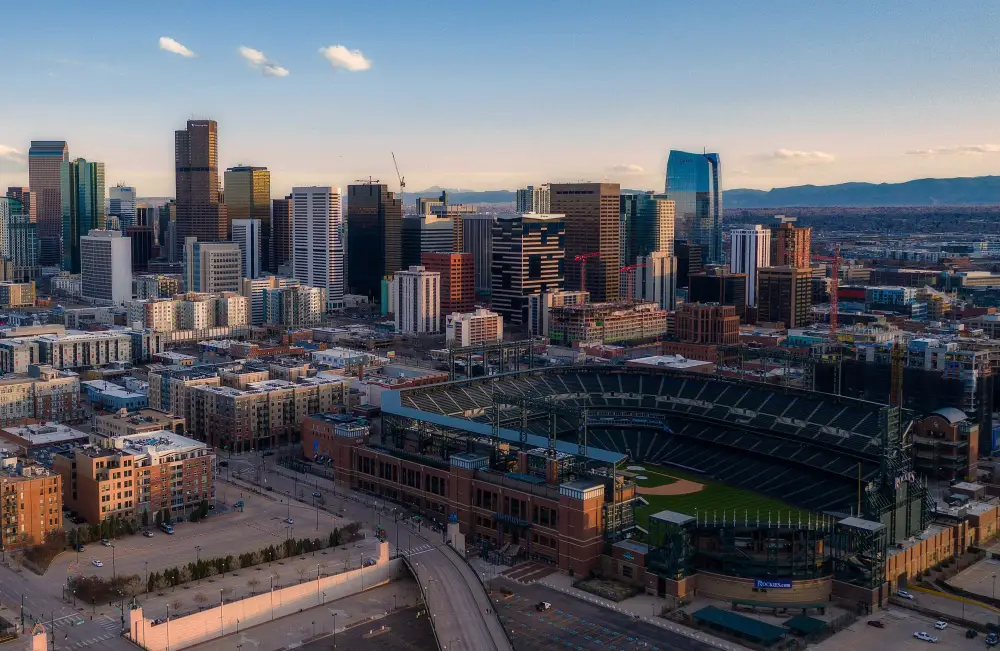
Aurora, Colorado roadway. CGH Injury Lawyers represents bus accident victims in Aurora.

IT'S MORE THAN MONEY.

Aurora Bus Accident Lawyers Who Stop the Clock Before It Runs Out

Aurora is one of the heaviest RTD-served cities in the metro. When a crash injures you on the R Line, Colfax, Havana, or any Aurora bus route, the Colorado Governmental Immunity Act starts a 182-day clock that permanently bars your claim if missed. CGH Injury Lawyers acts immediately to preserve bus camera footage, identify the true operator, and file the Notice of Claim. We serve Aurora from our Denver office. You pay nothing unless we win.

No fee unless we win
Or call us now (303) 209-9395

Tell us what happened

100% confidential. No fee unless we win.

Serving Aurora from our Denver office CGH Injury Lawyers 2701 Lawrence St., Suite 201 Denver, CO 80205 (303) 209-9395 Se habla espanol
5-star rated on Google ABOTA trial advocate on the team 182-day notice handled from day one No fee unless we win

A bus crash in Aurora is not a standard car accident. When RTD or another public agency operates the bus, the Colorado Governmental Immunity Act controls your claim with its own deadlines and damage caps. CGH Injury Lawyers does not have an Aurora office, but we handle RTD and transit cases for Aurora residents from our Denver office at 2701 Lawrence St., Suite 201, and we file in Arapahoe County District Court when the case requires it.

  • If RTD or another public transit agency operated the bus, you must file a written Notice of Claim within 182 days of discovering your injury under C.R.S. 24-10-109. Miss that window and the claim is permanently barred, regardless of how strong the evidence is.
  • Bus operators are common carriers held to the highest degree of care for passenger safety, which makes negligence easier to prove than in an ordinary car accident and extends to sudden stops, door closures, and failure to secure mobility devices.
  • When a private contractor operates the route under contract with RTD, the government damage caps may not apply and commercial insurance with substantially higher limits becomes the primary recovery source.

With 395,052 residents as of July 2023, Aurora is one of the largest cities in Colorado and carries some of the metro area's highest bus traffic volume. I-225, E. Colfax Avenue, and the corridors around the Anschutz Medical Campus all see documented crash concentrations. CGH acts immediately to preserve bus camera footage, identify whether RTD or a private contractor employed the driver, and protect your claim before the clock runs out. You pay nothing unless we win.

Colorado law decoded

The Colorado Governmental Immunity Act and how it controls your Aurora claim

The Colorado Governmental Immunity Act (C.R.S. 24-10-101 et seq.) changes how an injury claim works the moment a public entity is involved. It gives government entities sovereign immunity, meaning they generally cannot be sued for their employees' governmental functions. The Act includes a key waiver for motor vehicle crashes under C.R.S. 24-10-106, which is what allows an injured rider to bring a claim against RTD, Aurora Public Schools, or another public transportation provider.

RTD directly operates the bus

  • RTD employs the driver and owns the vehicle
  • Your claim falls under the CGIA in full
  • Government immunity, damage caps under C.R.S. 24-10-114, and the 182-day notice requirement all apply
  • The Notice of Claim must go to RTD's legal department before day 182

A private contractor operates the route

  • RTD contracts many Aurora routes to companies such as Transdev, First Transit, and MV Transportation
  • The contractor provides the bus and employs the driver
  • The CGIA damage caps may not apply to the contractor's share of liability
  • The contractor's commercial general liability insurance, which often carries far higher limits, becomes the primary source of recovery

An RTD-branded bus may be driven by a Transdev or First Transit employee. The exterior branding is not proof of who employs the driver or holds the insurance. Determining the true operator requires examining driver employment records, vehicle registration and insurance documents, and the service contracts between RTD and its private contractors. That investigation must happen immediately, before evidence disappears and before the 182-day window closes. The operator question is often the difference between a claim capped at $505,000 and one with access to multi-million-dollar commercial coverage. When another vehicle helped cause the crash, that driver may also share liability and their insurer is not subject to the CGIA limits.

Higher duty of care

Why bus operators are held to a higher standard in Aurora than ordinary drivers

Colorado law treats bus operators as common carriers and holds them to the highest degree of care for passenger safety. This is a more demanding standard than what ordinary drivers face. Riders entrust their safety to the carrier and have little ability to protect themselves once the bus is moving. Because of this elevated standard, you do not have to prove recklessness, only that the operator failed to exercise the extraordinary care the law requires of common carriers.

Where the elevated standard applies

  • Sudden stops and starts that throw standing passengers to the floor even when the bus hit nothing
  • Door closures on passengers boarding or exiting without verifying clearance
  • Failure to properly secure wheelchairs and mobility devices before moving
  • Inadequate precautions in Aurora winter conditions, on ice on Colfax Avenue and Havana Street, and in construction zones generated by Aurora's rapid growth

Why it matters for your claim

  • The bar is not reasonable care, it is the highest degree of care
  • This makes negligence easier to prove than in an ordinary Aurora car accident
  • The standard applies to RTD, private contractors, charter companies, and Aurora Public Schools buses alike
  • A passenger partly at fault for not holding a handrail during a sudden stop may still recover, as long as their fault is less than 50 percent under C.R.S. 13-21-111

Colorado's strictest deadline

The 182-day Notice of Claim requirement for Aurora bus crash victims

If you plan to bring a claim against RTD or another Colorado public transit agency for a crash in Aurora, the 182-day Notice of Claim is the most important deadline you face. The clock is set by C.R.S. 24-10-109(1). Miss it and the case is over before it begins, regardless of how strong the evidence is. The statute calls compliance a jurisdictional prerequisite: failure to comply bars the action forever.

  1. The clock starts at discovery of the injury

    The 182 days run from the date you discover the injury under C.R.S. 24-10-109(1), not the date you learned the full extent of your damages. In most crash cases discovery happens at or near the crash itself, so treat the crash date as your outer limit and call an attorney immediately.

  2. It must be received, not just mailed

    Mailing by the deadline is not enough. The written Notice of Claim must actually be received by the correct office: RTD's legal department for RTD crashes, or the school district attorney for an Aurora Public Schools bus.

  3. What the notice must include

    Your name and address, the date, time, and location of the Aurora crash, a description of the injury and how it happened, the names of any public employees involved, and the compensation you are seeking.

  4. This is not the statute of limitations

    The 182-day notice is a prerequisite to filing suit, separate from the underlying personal injury statute of limitations. File on day 183 and RTD can move to dismiss before discovery even begins, with very little room for a court to extend it.

  5. After the notice: RTD has 90 days to respond

    Once RTD receives the notice, it has 90 days to accept, deny, or offer settlement. If it denies the claim or the 90 days pass without response, you may file suit in Arapahoe County District Court while the underlying statute of limitations still controls.

Many Aurora riders do not realize a government vehicle was involved until a denial letter arrives from RTD's insurer weeks later, when precious time has already burned. The safest move is to call an attorney the same week as the crash so the notice and evidence-preservation demands go out at once.

Local knowledge

Aurora courts, trauma centers, and crash corridors we know

An Aurora bus accident case lives in Aurora. The courthouse, the hospitals, and the roads where crashes happen are the ground this claim is built on.

Courthouse

Arapahoe County District Court, 18th Judicial District

After the Notice of Claim process runs its course, bus accident lawsuits from the Arapahoe County portion of Aurora are filed in the Arapahoe County District Court, 18th Judicial District. The court's primary civil complex is the Arapahoe County Justice Center at 7325 S. Potomac Street, Centennial, CO 80112. A second courthouse sits at 1790 W. Littleton Blvd., Littleton, CO 80120. CGH handles transit cases in this district and understands its civil case management procedures. Aurora portions falling within Adams County are filed in Adams County District Court.

Level I Trauma Care

UCHealth University of Colorado Hospital

Seriously injured bus crash victims in Aurora are often transported to UCHealth University of Colorado Hospital Trauma Center on the Anschutz Medical Campus, a CDPHE-designated Level I Trauma Center (ACS-verified, designated October 12, 2018). The campus sits at the junction of I-225 and Colfax Avenue at Aurora CO 80045. Children's Hospital Colorado, also on the Anschutz campus, is a Level I Regional Pediatric Trauma Center. HCA HealthONE Aurora (Medical Center of Aurora) is a Level II Trauma Center. Those medical records from these facilities become the foundation of your damages claim.

Crash Corridors

I-225, Colfax Avenue, E-470, and Iliff

Aurora's major arterials are also its documented crash corridors. I-225 runs through the city's core alongside the R Line and carries a documented fatal crash concentration. E. Colfax Avenue (US-40) is among the highest-accident-rate roads in the Denver metro. Iliff Avenue between I-225 and Chambers Road logged 57 reported crashes in a single year. I-70 runs along Aurora's northern edge and generates substantial bus and commercial traffic. E-470, the 47-mile eastern toll beltway connecting I-25 south to I-25 north through Aurora, adds high-speed traffic near Denver International Airport, which sits on Aurora's northeastern boundary. Parker Road (CO-83), Buckley Space Force Base commuter volume on East Sixth Avenue, and construction zone hazards from Aurora's rapid population growth round out the local risk picture.

Why CGH

Why Aurora bus accident victims choose CGH Injury Lawyers

Trial-ready attorneys, a real Denver office minutes from Aurora, bilingual service, and no fee unless we win. We do not publish bus accident settlement figures because every injury is different and a number on a page tells you nothing about your case. What we offer is the work.

The Deadline

182 days. We file on time.

C.R.S. 24-10-109 gives you 182 days from the date you discover the injury to file a Notice of Claim against RTD or any Colorado public transit agency. We begin that process the same week you call, not the week before it expires.

Denver Office, Aurora Cases

Serving Aurora from 2701 Lawrence St.

CGH does not have an Aurora address. Our office at 2701 Lawrence St., Suite 201, Denver, CO 80205 is where your attorney works. We appear in Arapahoe County District Court, meet clients at locations convenient to them, and handle the full case from investigation through trial. Distance is not a barrier.

Operator Investigation

The bus branding can lie.

RTD exterior markings do not prove RTD employed the driver. We pull the service contracts and employment records first, because finding Transdev or First Transit as the operator can unlock commercial insurance far above the CGIA cap.

Evidence Preservation

Bus footage overwrites in 30 days.

Bus cameras record the crash, but RTD systems routinely overwrite footage on a 30-day cycle. We send preservation demands within the first week, before the evidence disappears for good.

Trial-Ready

ABOTA advocate on the team. 25+ verdicts. Built for trial.

Managing Partner Kevin Cheney is a member of the American Board of Trial Advocates and has tried over 25 cases to verdict. Timothy G. Tarr has been recognized by Best Lawyers every year since 2023. When attorneys are genuinely prepared to try a case in Arapahoe County District Court, RTD's adjusters respond differently to a demand.

Honest Case Review

We say no when the law says no.

We decline Aurora bus accident cases we cannot honestly stand behind. If the evidence shows your fault at or above 50 percent under C.R.S. 13-21-111, or the CGIA exemption squarely bars the claim, we tell you that in the free review rather than take your case and let it stall. When the law is on your side, we fight hard. When it is not, you deserve to hear it early, for free.

Bilingual

Hablamos espanol.

Spanish-speaking staff and attorneys serve Aurora's large Spanish-speaking community. No interpreter required.

After the crash

What to do after a bus accident in Aurora

The first 24 to 72 hours after an Aurora bus crash are the most important. Evidence disappears, memories fade, and the 182-day clock is already moving. Here is the sequence that protects your claim.

  1. Get medical care immediately

    For serious injuries, UCHealth University of Colorado Hospital on the Anschutz Medical Campus is Aurora's Level I Trauma Center. Children's Hospital Colorado on the same campus is the regional pediatric Level I center. HCA HealthONE Aurora is a Level II center. Even injuries that seem minor at the scene can involve internal damage or soft tissue injuries that worsen within days. Get examined and keep every record.

  2. Document the scene

    Photograph your injuries, the bus, the intersection or road segment where the crash happened, the bus number, and the route. Note the exact time and location. Collect the names and contact information of other passengers and witnesses. The bus number and driver identification are critical for the operator investigation.

  3. Do not give a recorded statement to RTD's insurer

    RTD's claims adjuster may call quickly. You are not obligated to give a recorded statement, and anything you say can be used to reduce your recovery. Speak with an attorney before any contact with the agency or its insurer.

  4. Call CGH as early as possible

    The sooner we are involved, the more time we have to send a preservation demand for bus camera footage, investigate the true operator, and prepare the Notice of Claim well inside the 182-day window. Call (303) 209-9395 or use the form on this page. The first consultation is free.

  5. Follow your medical treatment plan

    Gap in treatment is one of the most common arguments insurers use to reduce or deny a claim. Attend every appointment, follow your doctor's recommendations, and keep all bills and records. Gaps create the appearance that your injuries were not serious, even when they were.

Compensation

What you can recover and when the caps do not apply

When the CGIA applies, C.R.S. 24-10-114 caps what you can recover from a public entity. For claims accruing on or after January 1, 2026, the Secretary of State-certified statutory limits are $505,000 per person and $1,421,000 in total per incident. These figures are adjusted for inflation periodically and the amounts that apply depend on when the injury occurred. Confirm the current figures at the time your claim is filed.

What you can recover

  • Emergency care, surgery, and follow-up treatment at UCHealth, Children's Hospital Colorado, or HCA HealthONE Aurora
  • Future medical costs and long-term rehabilitation
  • Lost wages and lost earning capacity
  • Pain, suffering, and loss of enjoyment of life
  • Out-of-pocket expenses tied to the crash

When the government cap may not apply

  • A private contractor such as Transdev, First Transit, or MV Transportation employed the driver, opening access to commercial liability insurance
  • A third-party driver contributed to the crash, and that driver's insurer is not subject to CGIA limits
  • Federal funding requirements mandate minimum coverage exceeding the state caps

For a catastrophic injury requiring lifetime medical care, the $505,000 per-person government cap can fall far short of the full economic cost. That is exactly why the operator investigation in the first weeks matters most. Finding a private contractor or a third-party driver at fault can be the difference between a capped recovery and a full one.

Defenses to expect

Common defenses RTD and its insurers raise, and how we answer them

RTD and private transit contractors raise predictable defenses designed to reduce or eliminate your recovery. Knowing what each one actually requires under Colorado law is how we keep a valid claim alive.

  • Comparative fault. Colorado follows a modified comparative negligence rule under C.R.S. 13-21-111. If you are less than 50 percent at fault, you still recover, but your damages are reduced by your percentage of responsibility. At 50 percent or more, you recover nothing. Transit agencies often argue passengers contributed to their own injuries by not holding handrails, crossing against the signal, or distracting the driver. We challenge inflated fault percentages with bus camera footage, witness statements, and the elevated common carrier standard.
  • Lawful presence. The CGIA motor vehicle waiver requires that you were lawfully present where the incident occurred. Insurers scrutinize where you were standing, whether you were boarding within a marked zone, and whether you had a valid fare. We document your lawful presence from the start.
  • Notice defects. RTD may challenge whether your Notice of Claim was received on time, delivered to the correct office, or contained all required elements. We draft and deliver the notice to the verified correct recipient, by traceable means, with full documentation of its receipt.
  • Pre-existing injuries. Insurers routinely argue that prior conditions caused your current symptoms. Medical records showing new injury mechanisms, worsened conditions, or accelerated impairment answer that argument.

Who actually pays

How insurance works in an Aurora RTD or transit bus claim

Aurora bus accident claims pull from several potential insurance sources at once. Getting the full recovery available depends on identifying every policy in play, not just the first one that responds.

  • RTD self-insurance and state insurance. When RTD directly operates the bus, your claim runs through RTD's risk management and is subject to the CGIA caps under C.R.S. 24-10-114. The cap is a ceiling, not a guarantee of that amount.
  • Private contractor commercial liability. When Transdev, First Transit, MV Transportation, or another contractor employed the driver, their commercial general liability policy, which often carries limits in the millions, is the primary source. This policy is not subject to the CGIA caps that apply to RTD.
  • Third-party driver coverage. When another vehicle contributed to the crash, that driver's auto liability policy is a separate and additional recovery source. If the other driver is underinsured, your own uninsured or underinsured motorist coverage may also respond.
  • Stacking. In multi-vehicle or contractor-plus-RTD crashes, CGH structures the claim to pursue every available coverage source simultaneously, not sequentially, so the fullest possible recovery is on the table.
I wish I could leave more than 5 stars!
Grace M., 5-star CGH Injury Lawyers client review

Frequently asked questions

Aurora bus accident: frequently asked questions

What is the deadline to file a claim against RTD after a bus crash in Aurora?

You must file a written Notice of Claim within 182 days of discovering the injury under C.R.S. 24-10-109(1). The notice must describe the crash, your injuries, and the compensation you are seeking, and it must actually be received by RTD's legal department before day 182. The clock runs from the date of discovery of the injury. In most crash cases that is the crash itself, so treat that date as your outer limit. Missing this deadline permanently bars your claim regardless of its merit; the statute calls compliance a jurisdictional prerequisite.

How much can I recover from RTD for an Aurora bus crash?

When the Colorado Governmental Immunity Act applies, C.R.S. 24-10-114 caps recovery from a public entity at $505,000 per person and $1,421,000 per incident for claims accruing on or after January 1, 2026 (Secretary of State-certified figures, adjusted periodically for inflation). If a private contractor operated the bus, or if a third-party driver shares liability, those parties are not capped by the CGIA and may carry commercial insurance with substantially higher limits.

Which court handles Aurora bus accident lawsuits?

After the Notice of Claim process runs its course, bus accident lawsuits from the Arapahoe County portion of Aurora are filed in the Arapahoe County District Court, 18th Judicial District, at 7325 S. Potomac Street, Centennial, CO 80112. Aurora's primary county is Arapahoe, though portions also fall within Adams and Douglas counties. Cases from the Adams County portion of Aurora are filed in Adams County District Court. CGH handles transit cases in both venues.

What if the bus was branded RTD but operated by a private company like Transdev or First Transit?

RTD contracts a significant portion of Aurora routes to private operators including Transdev, First Transit, and MV Transportation. When the contractor employed the driver and provided the bus, the CGIA damage caps may not apply and the contractor's commercial liability insurance becomes the primary recovery source. We investigate the true operator immediately by examining driver employment records, vehicle registration, and the service contracts between RTD and its contractors.

Does CGH have an office in Aurora?

CGH Injury Lawyers does not have an Aurora office. We are located at 2701 Lawrence St., Suite 201, Denver, CO 80205, and we handle Aurora bus accident cases from that office. We meet clients at locations convenient to them, and we file and appear in Arapahoe County District Court when the case requires it. Call (303) 209-9395 to get started.

I fell on an RTD bus after a sudden stop in Aurora. Can I still file a claim?

Yes. Bus operators are common carriers held to the highest degree of care for passenger safety, a more demanding standard than ordinary drivers face. A sudden stop that throws a standing passenger to the floor may constitute a breach of that elevated duty even if the bus did not collide with another vehicle. You do not have to prove recklessness, only that the operator failed to exercise the highest level of care. Colorado's comparative negligence rule under C.R.S. 13-21-111 may reduce your recovery if you were partly at fault, but only bars the claim entirely if your fault reaches 50 percent or more.

Does the 182-day deadline apply if an Aurora Public Schools bus was involved?

Aurora Public Schools is a public entity and claims against APS fall under the CGIA, including the 182-day Notice of Claim requirement under C.R.S. 24-10-109 and the damage caps under C.R.S. 24-10-114. A privately owned charter or tour bus company is not a public entity, so an ordinary personal injury claim against its insurance applies instead. Identifying the bus operator in the first days after a crash is essential to protecting the correct deadline.

What does it cost to hire CGH for an Aurora bus accident case?

CGH handles bus accident cases on contingency. You pay no attorney fees unless we win. There are no upfront costs and no hourly billing. The first consultation is free. Because the 182-day window runs from the date you discover the injury, the sooner you call, the more time we have to investigate the operator, preserve bus camera footage, and file the notice. Call (303) 209-9395 or use the form on this page.

Related pages

Many Aurora bus crashes overlap with other serious injury claims. If your case is broader than a single collision, these pages connect directly to it.

Start your claim

Get a free case review today

The 182-day window runs from discovery of the injury. Treat the crash date as your outer limit and act immediately.

Free case review

100% confidential. No fee unless we win.

IT'S MORE THAN MONEY.

Injured on an Aurora bus? The 182-day clock is already running.

Free consultation. No fee unless we win. Serving Aurora from our Denver office at (303) 209-9395.

Read next: Colorado bus accident law and the CGIA explained

CGH Injury Lawyers · 2701 Lawrence St., Suite 201, Denver, CO 80205