
ClickCease
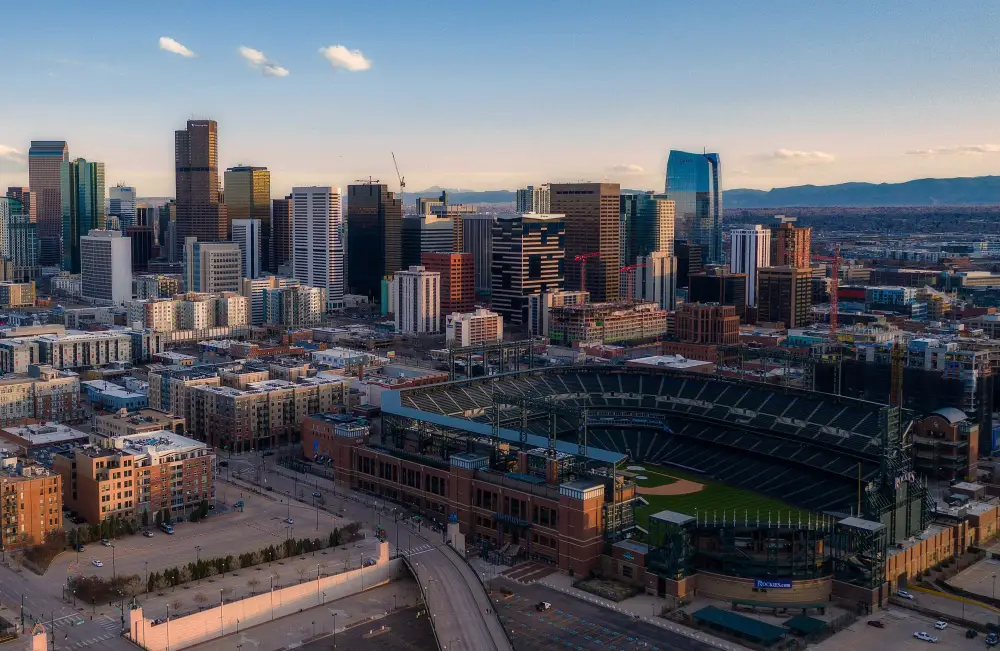
Denver skyline. CGH Injury Lawyers represents bus accident victims across Denver, Colorado.
Denver, Colorado

Denver Bus Accident Lawyers Who Act Before the 182-Day Clock Runs Out

Denver runs one of the largest RTD networks in the state, with buses on Colfax, Federal, I-25, I-70, and Pena Blvd. When a crash injures you, the Colorado Governmental Immunity Act starts a 182-day clock that permanently bars your claim if missed. CGH Injury Lawyers works from our Denver office at 2701 Lawrence St. to preserve bus camera footage, identify the true operator, and file the Notice of Claim well inside that window. You pay nothing unless we win.

No fee unless we win

It's More Than Money.

Get my free bus accident case review

100% confidential. No fee unless we win.

Our Denver Office CGH Injury Lawyers 2701 Lawrence St., Suite 201 Denver, CO 80205 (303) 209-9395 Se habla espanol
5-star rated on Google ABOTA trial advocate on the team Trial lawyers, not a settlement mill 8 attorneys, bilingual EN / ES
  • When RTD or another Denver public transit agency operates the bus, your claim is governed by the Colorado Governmental Immunity Act. A written Notice of Claim must be filed within 182 days of the discovery of the injury (C.R.S. 24-10-109). Miss that window and the claim is permanently barred.
  • For claims against RTD accruing on or after January 1, 2026, the CGIA caps recovery at $505,000 per person and $1,421,000 per occurrence (C.R.S. 24-10-114, as certified by the Colorado Secretary of State). Those caps may not apply if a private contractor, not RTD itself, operated the bus.
  • Bus operators are common carriers held to the highest degree of care for passenger safety, a stricter standard than ordinary drivers face. A sudden stop on Colfax, a door closed too soon on Federal Blvd, or a failure to secure a wheelchair user can each violate that duty.

Denver is RTD's home hub. Buses run every corridor in the city, from the 16th Street Mall through RiNo, Five Points, Capitol Hill, and out to Denver International via Pena Blvd. CGH Injury Lawyers keeps a physical office in Denver's RiNo neighborhood at 2701 Lawrence St., minutes from I-25 and I-70. When you are hurt on a Denver bus, we move at once to identify the true operator, send a preservation demand for onboard camera footage before it is overwritten, and protect your claim before the 182-day clock closes. You pay nothing unless we recover for you.

Why Denver bus cases are different

The Colorado Governmental Immunity Act and your Denver bus accident claim

The Colorado Governmental Immunity Act (C.R.S. 24-10-101 et seq.) changes how an injury claim works the moment RTD or another public entity is involved. It gives public entities sovereign immunity, meaning they generally cannot be sued for governmental functions. The Act includes a key waiver for motor vehicle crashes under C.R.S. 24-10-106, which is what allows an injured Denver rider to bring a claim against RTD or a municipal transit agency in the first place.

Three restrictions that do not apply to ordinary Denver car accident claims

  • Strict notice requirement. You must file a formal written Notice of Claim within 182 days of the discovery of the injury (C.R.S. 24-10-109). That is far shorter than the three-year statute of limitations for ordinary motor vehicle injury claims (C.R.S. 13-80-101(1)(n)), and missing it permanently bars your claim.
  • Damage caps. Colorado law sets statutory limits on what you can recover from a public entity like RTD, no matter how severe your injuries are (C.R.S. 24-10-114).
  • Limited discovery. Government entities carry certain procedural protections during investigation and litigation that private defendants do not.

A procedural miss in a Denver RTD claim can permanently bar an otherwise strong case. That is why transit cases call for action from the very first week, not after an insurer sends a denial letter.

Who is actually liable

Who operated the Denver bus changes everything

One of the most misunderstood parts of a Denver transit case is figuring out who actually drove and operated the bus. An RTD-branded bus rolling on Colfax or Federal Blvd may in fact be run by a private contractor. That distinction is not a technical detail. It decides which legal framework and which insurance governs your recovery.

RTD direct operations

  • RTD employs the driver and owns the bus
  • Your claim falls under the CGIA in full
  • Government immunity, damage caps, and the 182-day notice all apply
  • The Notice of Claim goes to RTD's legal department
  • Recovery from RTD is capped at $505,000 per person for claims accruing on or after January 1, 2026 (C.R.S. 24-10-114)

Private contractor operations

  • RTD often contracts Denver routes to companies like Transdev, First Transit, and MV Transportation
  • The contractor provides the bus and employs the driver
  • The CGIA damage caps may not apply to the contractor's share of liability
  • Commercial general liability insurance, often with much higher limits, becomes the primary source of recovery

A Denver bus's exterior branding can mislead you. Determining the true operator means examining the driver's employment records, the vehicle registration and insurance documents, and the service contracts between RTD and any third-party operators. This investigation has to begin immediately, before evidence disappears and before the 182-day window closes. When a third-party driver in another vehicle also contributed to the crash, their insurer is not subject to the CGIA caps at all.

The common carrier standard

Why Denver bus operators are held to a higher duty of care

Colorado law does not treat all drivers the same. A private motorist must use reasonable care under the circumstances. Bus operators, as common carriers, are held to the highest degree of care for passenger safety. Riders entrust their lives to the carrier and have little ability to protect themselves once the bus is moving through downtown Denver or merging onto I-70.

Where that higher standard shows up on Denver routes

  • Sudden stops and starts. When a Denver RTD bus brakes hard at a Colfax Ave stop or accelerates from a Federal Blvd intersection, standing passengers can be thrown to the floor even when nothing was hit. The common carrier duty applies to jerk-and-jolt injuries as much as collisions.
  • Door closures. Closing doors on a boarding or exiting passenger without verifying the doorway is clear can violate the duty of care, especially at busy downtown Denver stops near the 16th Street Mall.
  • Failure to secure mobility devices. Wheelchair users and riders with mobility aids on Denver buses are entitled to proper securement before the vehicle moves.
  • Inadequate winter precautions. Denver winters are real. Bus operators are expected to adjust to icy conditions on Speer Blvd or I-76 and to clear steps before passengers board or exit.

Because of this elevated standard, you do not have to prove recklessness. You only need to show the Denver bus operator failed to exercise the extraordinary care the law requires of common carriers, which often makes negligence easier to establish than in a standard Denver car accident case.

Colorado's strictest deadline

The 182-day Notice of Claim requirement for Denver RTD claims

If you plan to bring a claim against RTD or another Denver public transit agency, the 182-day Notice of Claim is the most important deadline you face. Miss it and the case is over before it begins, no matter how strong the evidence. The clock is set by C.R.S. 24-10-109.

  1. The clock starts at discovery of the injury

    The 182 days run from the date of discovery of the injury, not the date you learned the full extent of your damages. A crash on January 1 where the injury is discovered that day means the notice must be received by July 2.

  2. It must be received, not just mailed

    Mailing by the deadline is not enough. The written Notice of Claim must be received by the correct office. For RTD, that means RTD's legal department. For a city-operated shuttle or municipal transit system, the notice goes to the appropriate city attorney's office.

  3. What the notice must include

    Your name and address, the date, time, and location of the crash, a description of the injury and how it happened, the names of any public employees involved, and the compensation you are seeking.

  4. This is not the statute of limitations

    The 182-day notice is a jurisdictional prerequisite to suing, separate from the underlying statute of limitations. File the notice on day 183 and the public entity can move to dismiss. Courts have very little room to extend this deadline.

  5. What happens after you file

    Once RTD or the public entity receives the notice, it has 90 days to accept, deny, or offer a settlement. If it denies the claim or the 90 days pass without a response, you may file suit, while the underlying statute of limitations still controls.

Many injured Denver riders do not realize RTD or a public entity was involved until a denial letter arrives weeks later, when precious time has already passed. Some may assume that because an RTD-branded bus was at the scene, they simply file a normal injury claim and wait. The safest move is to call an attorney immediately so the notice and evidence preservation begin before the 182-day clock takes any more of its days.

Compensation

Damage caps and the paths that can lift them in Denver bus cases

When the CGIA applies, C.R.S. 24-10-114 caps what you can recover from RTD or another Denver public entity. For claims accruing on or after January 1, 2026, the statutory limits are $505,000 per person and $1,421,000 in total when several people are hurt in the same incident. These figures are certified by the Colorado Secretary of State and are adjusted periodically, so confirm the current amounts when your claim is filed.

What counts toward the CGIA cap

  • Medical bills, past and future
  • Lost income and reduced earning capacity
  • Rehabilitation and ongoing care costs
  • Pain, suffering, and loss of quality of life
  • The cap applies only to the public entity's share of liability

When the caps may not apply

  • A private contractor operated the Denver bus, opening access to commercial insurance with potentially higher limits
  • A third-party vehicle, such as a car that cut off the bus on I-25 or I-70, shares fault, and that driver's insurer is not capped
  • Federal funding requirements may require minimum coverage that exceeds state caps on certain routes

For a catastrophic injury that requires lifetime care, the government caps can fall far short of total need. That is exactly why the operator investigation in the first weeks of a Denver bus case matters so much. Identifying a private contractor, a third-party driver, or a road-design defect on a city corridor can be the difference between a capped recovery and a full one.

Local Knowledge

Denver District Court. Denver Health. Denver's bus corridors.

A Denver bus accident case lives in Denver. The courthouse where your suit may be filed, the trauma center where serious injuries are treated, and the corridors where RTD crashes most often occur are the specific ground we work on every day from our office in RiNo.

Courthouse

Denver District Court, 2nd Judicial District

Personal injury cases arising in Denver County are filed in Denver District Court, the 2nd Judicial District. Civil matters are heard at the City and County Building, 1437 Bannock St., Denver, CO 80202. After the CGIA notice-and-response process runs its course, any lawsuit against RTD for a Denver crash is litigated here. Denver civil procedure is distinct from suburban courts, and the judges, opposing counsel, and adjusters in transit cases either know your firm or they do not. CGH Injury Lawyers handles Denver District Court cases directly from our 2701 Lawrence St. office.

Level I Trauma Care

Denver Health Medical Center

Denver Health Medical Center is the region's designated Level I trauma center and the facility where the most critically injured bus crash victims in Denver are taken. Those medical records, including imaging, surgical notes, and discharge summaries, document the full scope of your injuries and form the backbone of your damages claim. Saint Joseph Hospital, Presbyterian/St. Luke's Medical Center, and Rose Medical Center also treat crash injuries across the Denver metro.

Crash Corridors

Colfax Ave, Federal Blvd, I-25, I-70, and Pena Blvd

RTD routes in Denver run some of the highest-volume corridors in the state. Colfax Avenue (US-40) carries multiple bus lines through Capitol Hill and Five Points. Federal Blvd serves North Denver neighborhoods with heavy ridership. I-25, I-70, I-76, and US-6 (6th Ave) see RTD Flatiron Flyer, SkyRide, and crosstown expresses. Pena Blvd carries the University of Colorado A Line toward Denver International. Speer Blvd connects downtown to Cherry Creek. We know these routes, the transfer stations along them, and where crashes happen most often.

Causes and evidence

Common causes and the evidence that wins Denver transit claims

Denver bus crashes come from many causes, and building a strong claim depends on evidence that is not part of an ordinary car accident. Some of that evidence disappears fast.

Common causes in Denver

  • Driver error: distraction, fatigue, speeding, or failure to yield at Denver intersections
  • Mechanical failures: brake faults, tire blowouts, or steering problems on aging RTD fleet vehicles
  • Insufficient driver training for Denver's high-volume urban routes, mountain approaches, or winter conditions
  • Road design and traffic control issues, which can shift liability to CDOT or the City of Denver
  • Third-party drivers who cut off RTD buses, run red lights, or fail to yield on congested Denver arterials

Evidence that matters

  • Bus camera footage, often overwritten on a 30-day cycle, so a preservation demand must go out within days of the crash
  • Electronic data recorders that log the bus's speed, braking, and acceleration in the seconds before impact
  • Operator logs showing shift schedules, breaks, and total hours on duty
  • RTD maintenance and inspection records for the specific vehicle involved
  • Witness statements from other passengers and bystanders at Denver stops and intersections

Onboard camera footage is the single most objective record of what happened on a Denver bus, and it can be erased in 30 days or less. CGH sends a litigation hold and preservation demand immediately after signing a new client. Waiting even a few weeks can mean the most valuable evidence is already gone.

Shared fault

What if you were partly at fault in a Denver bus accident?

Colorado follows a modified comparative negligence rule under C.R.S. 13-21-111. If you were partly responsible for the crash, your compensation is reduced by your percentage of fault, but only if you were less than 50 percent responsible. At 50 percent or more, you recover nothing.

In Denver transit cases, RTD or its insurers often argue that a passenger was not holding a handrail during a sudden stop, that a pedestrian crossed outside the crosswalk on Colfax Ave, or that a rider distracted the driver. Even when those arguments have some basis, you may still recover as long as the operator shares fault and your percentage falls below 50 percent. A passenger who was not holding a handrail but is found 20 percent at fault can still recover 80 percent of full damages. An attorney can challenge inflated fault assignments before they reduce your recovery.

Why CGH

Why Denver bus accident victims choose CGH Injury Lawyers

A real Denver office, trial-ready attorneys, bilingual staff, and no fee unless we win. Denver is our home city. We do not publish bus accident settlement figures because every crash is different and a number on a page tells you nothing about your case. What we offer is the work.

The Deadline

182 days.

The CGIA Notice of Claim window runs from discovery of the injury (C.R.S. 24-10-109). We file it correctly, on time, to the right office.

Real Denver Office

Not a P.O. box.

Our office at 2701 Lawrence St., Suite 201 in Denver's RiNo neighborhood is where your attorney works. You can walk in, meet your team, and review the file in person.

Operator Investigation

RTD or contractor?

We identify the true operator immediately. The answer determines which caps apply and which insurance to pursue.

Camera Footage

Preserved before it's gone.

Onboard footage is overwritten in 30 days or less. We send preservation demands on day one.

Trial-Ready

8 attorneys, prepared for Denver District Court.

Managing Partner Kevin Cheney is an ABOTA member who has tried over 25 cases to verdict. When attorneys are genuinely ready to try a case in Denver District Court, RTD's adjusters and defense counsel respond differently to a demand.

Bilingual

Hablamos espanol.

Spanish-speaking attorneys and staff serve Denver's large Spanish-speaking community.

No Win, No Fee

Contingency only.

You pay nothing out of pocket for legal fees. We advance costs and collect only from a settlement or verdict.

How it works

How we handle your Denver bus accident case

A Denver transit claim moves through six stages, from a free case review to trial in Denver District Court when an insurer or RTD refuses to be fair. Most cases resolve before a courtroom, but we prepare every one as if it will be tried.

  1. Free case review at our Denver office

    We review the facts, explain how the CGIA affects your specific Denver claim, and answer your questions at no cost or obligation. You can come in to 2701 Lawrence St. or call (303) 209-9395.

  2. Identify the operator and preserve evidence

    We move at once to determine whether RTD or a private contractor operated the bus, and we send preservation demands for onboard camera footage and electronic data before the footage is overwritten.

  3. File the Notice of Claim

    When RTD or another Denver public entity is involved, we prepare and deliver the formal written Notice of Claim well inside the 182-day window, to the correct office, with every required element in place.

  4. Build and present the demand

    We document the full extent of your injuries using records from Denver Health, your treating physicians, and any specialists, and we present a comprehensive demand to RTD's legal team or the contractor's insurer.

  5. Negotiate or file suit

    Most cases settle here. When RTD or a contractor's insurer refuses a fair offer, we file suit in Denver District Court, 2nd Judicial District.

  6. Trial in Denver District Court

    Our trial lawyers are ready to present your case to a Denver jury when that is what full recovery requires. We try cases in Denver District Court and know the court's civil case management procedures from the inside.

I wish I could leave more than 5 stars!
Grace M., 5-star CGH Injury Lawyers client review
Questions

Denver bus accident, frequently asked questions

Can I sue RTD for a bus accident in Denver?

Yes, but with significant restrictions. The Colorado Governmental Immunity Act waives immunity for motor vehicle accidents, which allows lawsuits against RTD under C.R.S. 24-10-106. However, you must file a written Notice of Claim within 182 days of discovering the injury (C.R.S. 24-10-109), and damage caps limit recovery from RTD to $505,000 per person for claims accruing on or after January 1, 2026 (C.R.S. 24-10-114). If a private contractor rather than RTD directly operated the bus, different rules and higher insurance limits may apply.

What is the 182-day deadline for a Denver RTD bus accident claim?

Before you can sue RTD or another Denver public transit agency, you must submit a formal written Notice of Claim within 182 days of the discovery of your injury (C.R.S. 24-10-109). The notice must describe the accident, your injuries, and the compensation you are seeking, and it must be received by the correct government office. Missing this deadline permanently bars your claim, regardless of how strong the evidence is.

How much can I recover from RTD in a Denver bus accident case?

When the CGIA applies, you can recover up to $505,000 per person from a public entity like RTD, or up to $1,421,000 in total for a single incident that injures multiple people (C.R.S. 24-10-114, SOS-certified figures for claims accruing on or after January 1, 2026). These caps may not apply if a private contractor operated the bus or if a third-party driver shares fault, which can open access to higher insurance limits. If you have a catastrophic injury, identifying every defendant and every policy is essential.

What if an RTD-branded bus was actually run by a private contractor?

RTD contracts many Denver routes to private companies like Transdev, First Transit, and MV Transportation. When a private contractor employs the driver and provides the bus, the CGIA damage caps may not apply to the contractor's share of liability, and the contractor's commercial general liability insurance can be the primary source of recovery. Identifying the true operator is one of the first things we do after signing a new Denver bus accident client, because the answer can significantly change the value of your claim.

What if I was partly at fault for the Denver bus accident?

Colorado's modified comparative negligence rule under C.R.S. 13-21-111 allows you to recover as long as your share of fault is less than 50 percent. Your compensation is reduced by your percentage of responsibility. For example, if you are found 20 percent at fault for not holding a handrail during a sudden stop, you still recover 80 percent of your total damages. If you are 50 percent or more at fault, you recover nothing. Transit agencies often argue inflated fault percentages, which is why having an attorney challenge that allocation matters.

Where is a Denver bus accident lawsuit filed?

After the CGIA notice-and-response process runs its course, bus accident lawsuits arising in Denver County are filed in Denver District Court, the 2nd Judicial District. Civil matters are heard at 1437 Bannock St. in downtown Denver. Denver civil procedure differs from suburban courts, and knowing the court's practices and the defense firms that routinely handle RTD cases gives our clients an advantage.

Does the 182-day deadline also apply to school bus and charter bus crashes in Denver?

It depends on who operated the bus. A Denver Public Schools bus is operated by a public entity, so the CGIA notice deadline and damage caps generally apply. A privately owned charter or tour bus company is not a public entity, so a standard personal injury claim against its commercial insurance may apply instead. Identifying the operator at the start of the case is essential to protecting the correct deadline, which can differ significantly between those two tracks.

What should I do right after a bus accident in Denver?

Get medical care first, whether at Denver Health, Saint Joseph, or the nearest ER. Photograph your injuries, the scene, and any visible bus damage. Get the bus route number, the driver's name if possible, and contact information for any witnesses. Do not give a recorded statement to RTD or an insurer before speaking with an attorney. The 182-day Notice of Claim clock starts from the date you discover the injury, so calling an attorney quickly gives you the most time to build the claim properly. Reach our Denver office at (303) 209-9395.

It's More Than Money.

Hurt on a Denver bus? The 182-day clock is already running.

Free consultation. No fee unless we win. We act immediately to preserve footage and protect your claim. Available in English and Spanish.

Tell us what happened

100% confidential. No fee unless we win.

Read next: How Colorado bus accident law works statewide.

CGH Injury Lawyers · 2701 Lawrence St., Suite 201, Denver, CO 80205