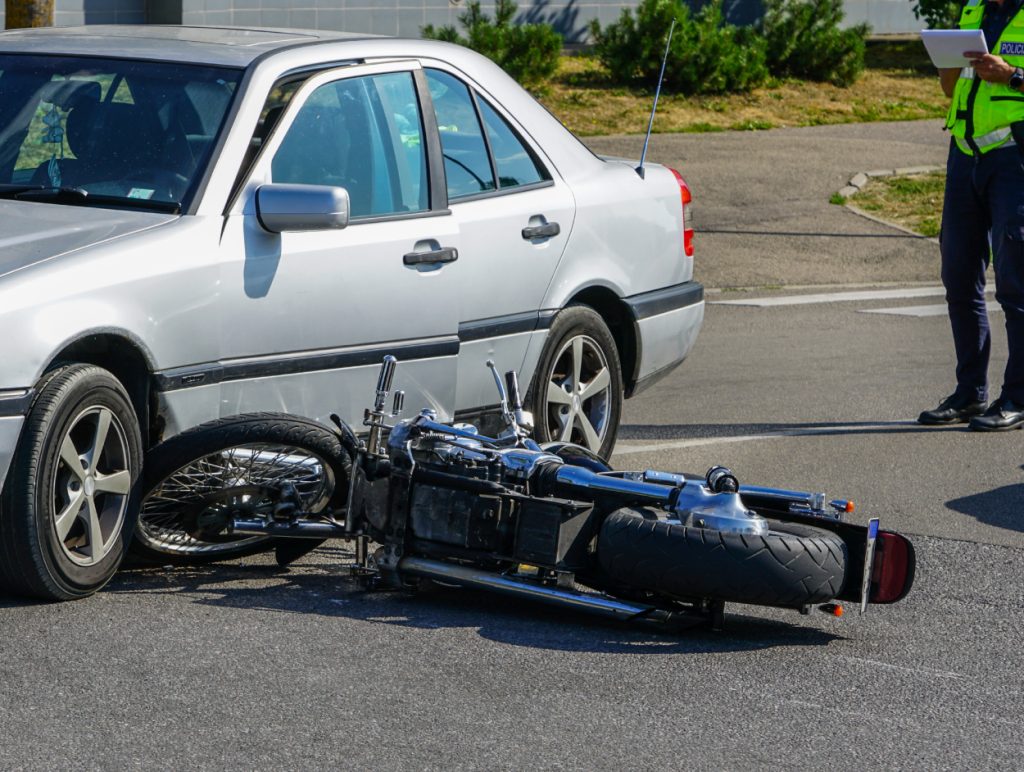
- Insurance companies routinely open with offers worth 10 to 20% of a claim’s true value, especially on motorcycle cases.
- Adjusters use automated software (like Colossus) to suppress invisible injuries like road rash complications and traumatic brain injuries before a human ever reviews your file.
- Colorado’s modified comparative negligence rule gives adjusters a legal lever to blame you for the crash and reduce your payout, even if you were not at fault.
You have three years from the crash date to file a personal injury lawsuit in Colorado, but waiting can cost you critical evidence and negotiating power.
If you just received a settlement offer after your Denver motorcycle crash and something feels wrong, trust that instinct. That first check is almost never a fair reflection of what your claim is actually worth. Insurance adjusters are trained to close cases fast and cheap, and motorcycle riders are one of their primary targets.
Here’s what’s actually happening, and what you can do about it.
Why Is the First Settlement Offer Almost Always Too Low?
Insurance companies are businesses. Their financial interest is in paying out as little as possible, as quickly as possible. Ideally they move before you’ve had time to understand the full scope of your injuries or consult an attorney.
The most common tactic is the quick check strategy: sending an initial offer within days of the crash, while you’re still in the hospital, still in shock, and before the true cost of your recovery is even knowable. Once you cash that check, in most cases you’ve permanently waived your right to seek additional compensation, even if your injuries turn out to be far more serious than initially thought.
For Denver riders specifically, this plays out on corridors like I-25 near the Santa Fe Drive merge, the tight intersections around LoDo, and the winding stretches of Speer Boulevard. Crashes on those roads may look contained at the scene but the injuries are not.
If you’re unsure what your claim may actually be worth, read CGH’s Denver motorcycle accident lawyer page for an overview of how these claims are evaluated.
How Do Insurance Adjusters Use Software to Lowball Denver Riders?
Most people don’t realize that a human adjuster isn’t the one setting the value of your claim. In a significant number of large insurance companies, the initial valuation is generated by automated claims software, most notably a program called Colossus, before a human ever reviews your file in depth.
Here’s how it works against you: the adjuster inputs your medical records and diagnostic codes into the system. Colossus then cross-references those codes against its database to assign a dollar range for your injuries. The problem is that the system is only as accurate as the data fed into it, and adjusters have wide discretion over how they code your injuries.
What Invisible Injuries Look Like Inside the Algorithm
Road rash is one of the most systematically undervalued injuries in motorcycle claims. To the adjuster entering data, it may be coded as a minor soft-tissue abrasion. The software doesn’t account for the reality: debridement procedures, infection risk, skin grafting, scar revision surgeries, and the long-term neuropathy that can develop months after the initial wound closes.
Traumatic brain injuries (TBI) face a similar problem. A mild TBI, the kind that doesn’t show on an initial CT scan, may be coded in a way that generates a fraction of its true long-term value. Cognitive deficits, chronic headaches, and lost earning capacity rarely make it into the algorithm at all.
The documentation required to override a Colossus valuation is specific: specialist referrals, detailed diagnostic coding from treating physicians (not just ER notes), and documented evidence of future care needs. Without that paper trail, the software’s lowball number becomes the adjuster’s opening position.
How Does Colorado’s Comparative Negligence Rule Affect Your Offer?
This is one of the most important, and most misused, legal concepts in motorcycle accident claims. Colorado follows a modified comparative fault rule, which means that if you are found to be 50% or more at fault for the crash, you recover nothing. If you’re found to be less than 50% at fault, your award is reduced by your percentage of fault.
Adjusters know this, and they use it aggressively. The most common tactic against motorcyclists is assigning partial blame for lane position or excessive speed, even in crashes where the at-fault driver ran a red light or made an unsafe turn. The anti-rider bias is real, and it’s baked into how adjusters approach these files.
A 20% fault assignment on a $200,000 claim reduces your payout by $40,000. That’s not a rounding error. That’s the adjuster’s playbook.
Challenging a comparative fault assignment typically requires accident reconstruction analysis, witness testimony, and often dashcam or traffic camera footage. This is one of the clearest reasons why attempting to negotiate a motorcycle claim without legal representation puts you at a structural disadvantage.
For a deeper look at how fault allocation works in Colorado, read CGH’s comparative negligence guide.
Unsure whether the adjuster’s fault assessment is accurate? We offer free case evaluations and will give you a straight answer about what your claim may actually be worth.
What Should You Do When You Receive a Lowball Offer?
The single most important thing: do not respond immediately, and do not accept. You have time. Colorado gives you three years from the crash date to file a personal injury lawsuit, so the adjuster’s urgency is manufactured pressure, not a legal deadline.
Your first step is to formally reject the offer in writing. This is not a hostile act. It’s a standard part of the negotiation process. A rejection letter preserves your legal options and signals that you are not a quick-close target.
The Counter-Demand Letter: What Goes In It
A counter-demand letter is more than a number. It’s a documented argument for the true value of your claim. A strong counter-demand typically includes:
- Complete medical records from every treating provider, including specialist notes and therapy records
- Documentation of future care costs, projected surgeries, physical therapy, scar revision, long-term medication
- Lost wage and earnings calculation, not just what you’ve missed, but what you may lose if your injuries affect your earning capacity going forward
- Non-economic damages, including pain and suffering, loss of enjoyment of life, and emotional distress. These are real, compensable losses under Colorado law, and they’re almost always missing from the initial offer.
One real-world example from a Denver motorcycle case: an initial offer came in at roughly 10% of the claim’s eventual value. After a formal counter-demand backed by specialist documentation and a projected neuropathy treatment timeline, the insurer settled for a figure that covered the rider’s full medical costs, lost wages, and long-term care needs. The adjuster’s first offer had excluded every one of those categories.
For background on how first offers compare to actual claim value, read CGH’s low first settlement offer guide.
How Long Do You Have to Respond to a Settlement Offer in Colorado?
There is no legal deadline to respond to an initial settlement offer. The adjuster’s offer expires in 10 days language is a pressure tactic, not a legal constraint.
When you have a hard deadline is your right to file a lawsuit. In Colorado, the statute of limitations for motorcycle accident personal injury claims is generally three years from the date of the crash (C.R.S. 13-80-101(1)(n)). If you miss that window, you lose the right to pursue compensation in court entirely, regardless of how clear-cut the liability is.
This deadline matters for negotiation, too. An insurer that knows you’re approaching the statute of limitations has less incentive to settle fairly. Starting the process early, with an attorney, keeps maximum pressure on the other side.
For a full breakdown of lawsuit deadlines in Colorado, see CGH’s Colorado car accident statute of limitations article, which covers the same three-year motor vehicle rule that applies to motorcycle crashes.
When Should You Stop Negotiating and File a Lawsuit?
Not every claim settles at the negotiation table, and that’s not always a bad outcome. Insurers take claims more seriously when they know the attorney across the table is prepared to go to trial. Trial-tested preparation forces better settlements from the start. It’s not a last resort. It’s a strategy.
There are specific situations where escalating to litigation may make sense:
- The insurer refuses to move meaningfully from the initial offer after a counter-demand
- The adjuster is engaging in bad faith tactics, including unreasonable delays, misrepresenting policy terms, or failing to communicate in good faith, all of which may be actionable under Colorado law
- The gap between their offer and your documented damages is substantial and cannot be bridged through negotiation alone
Filing a lawsuit doesn’t mean going to trial. The majority of personal injury cases resolve before a courtroom date. But filing, or credibly threatening to file, fundamentally changes the insurer’s calculus.
If you believe the insurance company is acting in bad faith, CGH’s bad faith insurance page explains the statutory remedies available under Colorado law.
What To Do Next
You don’t have to figure this out alone, and you shouldn’t have to negotiate against a team of adjusters and software algorithms by yourself.
If you’ve received a settlement offer that doesn’t come close to covering your medical bills, lost wages, or what you’ve been through, let us review it. We’ll tell you exactly what your claim may actually be worth, explain the fee structure without the legal jargon, and take over all communication with the adjuster so you can focus on recovering.
Call us or book a free case evaluation online. There’s no obligation, and the conversation is confidential.
Frequently Asked Questions
Why is the first settlement offer for a motorcycle accident almost always too low?
Insurance companies use automated valuation software like Colossus to set an initial number before a human adjuster deeply reviews your file. The software often under-codes injuries like road rash and traumatic brain injury because it relies on the diagnostic codes the adjuster enters, not the real-world cost of your recovery. The result is an opening offer worth 10 to 20% of what the claim may actually be worth.
Do I have to respond to a settlement offer right away?
No. There is no legal deadline to respond to an insurance company’s initial offer. An adjuster’s claim that the offer expires in 10 days is a pressure tactic, not a legal constraint. In Colorado, you generally have three years from the crash date to file a lawsuit for a motorcycle accident injury claim (C.R.S. 13-80-101(1)(n)).
How does Colorado’s comparative fault rule affect a motorcycle accident settlement?
Colorado follows a modified comparative fault rule. If you are found to be 50% or more at fault for the crash, you recover nothing. If you are less than 50% at fault, your payout is reduced by your percentage of fault. Adjusters often assign partial blame for lane position or speed to reduce the offer, even when the other driver caused the crash.
What goes into a counter-demand letter after a lowball offer?
A strong counter-demand includes complete medical records from all treating providers, documentation of future care costs (surgeries, therapy, medication), a lost wage and earning-capacity calculation, and a claim for non-economic damages such as pain and suffering and loss of enjoyment of life. The goal is to replace the adjuster’s software number with a documented, evidence-backed figure.
When does it make sense to file a lawsuit instead of continuing to negotiate?
Filing or credibly threatening to file a lawsuit changes the insurer’s calculation. It often makes sense when the insurer refuses to move meaningfully after a counter-demand, when bad faith tactics are present such as unreasonable delays or misrepresenting policy terms, or when the gap between their offer and your documented damages cannot be closed through negotiation alone. Most cases still settle before trial, but the threat of litigation drives better results.
This article is general information for Colorado injury readers. It is not legal advice, does not create an attorney-client relationship, and does not promise that any deadline, rule, or outcome applies to your case. Statute-of-limitations, comparative negligence, insurance, and compensation questions require case-specific legal review.
Related articles
-
After an Electric Scooter Accident in Denver: Your Next Steps, and Who May Pay
Seek care and a police report. Denver’s guidance after a crash on a shared scooter is to call 911 or go to urgent care if anyone is hurt,…
-
No Denver Wrongful Death Lawyer Can Tell You the Odds Here Is What They Can Tell You
Colorado’s wrongful death rules were changed by House Bill 24-1472, signed June 3, 2024 and effective January 1, 2025. Who may sue depends on whether you are in…
-
What It Really Costs to Hire a Denver Truck Accident Lawyer, Line by Line
Injury work in Colorado is usually done on a contingent fee, which ties the fee to the outcome rather than billing you up front. The rule allows a…