You panicked. You left. Now you’re terrified about what comes next.
Leaving the scene of a car accident in Colorado is a crime under C.R.S. § 42-4-1601. Whether you hit a parked car in a LoDo parking garage, sideswiped someone on the I-25 Mousetrap, or were involved in a crash with injuries on I-70 near Georgetown, Colorado law imposes a strict duty: you must stop, exchange information, and render aid.
If you didn’t, you’re facing criminal charges, a driver’s license revocation, skyrocketing insurance costs, and potential civil lawsuits. And with traffic cameras blanketing Denver metro corridors, doorbell cameras in every neighborhood, and witnesses armed with smartphones, the chances of being identified are higher than they’ve ever been.
Here’s the reality of what you’re facing—and what you need to do right now.
What Colorado Law Requires After Any Accident
Colorado Revised Statute § 42-4-1601 is unambiguous: every driver involved in a crash must stop immediately at the scene or as close to it as safely possible.
You are legally required to:
- Provide your name, address, and vehicle registration number to the other driver, any injured person, or the owner of damaged property
- Show your driver’s license upon request
- Render reasonable assistance to anyone injured, including calling 911 or arranging transport to a medical facility
- Notify law enforcement immediately if the crash resulted in injury, death, or property damage that appears to exceed $1,000
It doesn’t matter if the accident was your fault. It doesn’t matter if you were scared, confused, or didn’t think the damage was serious. The duty to stop is absolute.
Failing to stop and comply with these duties is commonly known as a “hit-and-run,” and it triggers both criminal and administrative consequences under Colorado law.
The Criminal Penalties: Misdemeanor vs. Felony
Colorado categorizes hit-and-run offenses based on the harm caused in the collision. The classification determines whether you’re facing months in jail or years in prison.
Property Damage Only: Class 2 Misdemeanor Traffic Offense
If the crash involved only property damage—no injuries—leaving the scene is a Class 2 Misdemeanor Traffic Offense under C.R.S. § 42-4-1601(4)(a).
Penalties include:
- Up to 90 days in jail
- Fines up to $300, plus court costs and surcharges that can push the total over $1,000
- 12 points added to your driving record, which triggers an automatic license suspension (more on that below)
- A permanent criminal record
Even a “minor” hit-and-run carries consequences that follow you for years.
Injury to Another Person: Class 1 Misdemeanor or Class 4 Felony
If anyone was injured—even with minor injuries like whiplash or a cut requiring stitches—leaving the scene becomes a Class 1 Misdemeanor under C.R.S. § 42-4-1601(3)(a).
Penalties include:
- Up to 1 year in county jail
- Fines up to $1,000
- 12-point license suspension
- Potential restitution to the victim for medical expenses
If the injuries are more serious, prosecutors may charge the offense as a Class 4 Felony under C.R.S. § 42-4-1601(2)(a).
Felony penalties include:
- 2 to 6 years in state prison
- Fines ranging from $2,000 to $500,000
- Mandatory parole period after release
- Loss of voting rights and firearm ownership while incarcerated
- Difficulty finding employment, housing, and professional licenses for life
Death: Class 3 Felony with Mandatory Prison Time
If someone died as a result of the crash and you left the scene, you face a Class 3 Felony under C.R.S. § 42-4-1601(1)(a).
Penalties include:
- 4 to 12 years in state prison
- Fines ranging from $3,000 to $750,000
- Mandatory minimum of 1 year in prison—no probation, no deferred sentence
- A lifelong felony conviction
Even if you were not at fault for the crash itself, leaving the scene after a fatal collision is treated as one of the most serious traffic-related crimes in Colorado.
How the Police Investigation Actually Works
Twenty years ago, you might have driven away and never been identified. Today, that’s almost impossible.
Colorado law enforcement agencies use a multi-layered investigative approach to track down hit-and-run drivers, and the technology available to them is more sophisticated than most people realize.
Traffic and Surveillance Cameras
The Colorado Department of Transportation (CDOT) operates hundreds of traffic cameras along I-25, I-70, I-225, and other major corridors. These cameras capture license plates, vehicle make and model, and timestamps.
Investigators routinely pull footage from:
- CDOT highway cameras
- City-operated red-light and speed cameras
- Parking garage security systems
- Business exterior cameras (gas stations, retail plazas, restaurants)
- Residential doorbell cameras (Ring, Nest, Arlo)
Even if your plate wasn’t visible at the crash scene, investigators can track your route before and after the collision using sequential camera footage.
License Plate Readers (LPRs)
Law enforcement agencies across Colorado use Automated License Plate Reader (LPR) systems that scan thousands of plates per hour and store the data in searchable databases.
If a witness provides even a partial plate number, investigators can cross-reference LPR databases to identify vehicles matching the description that were in the area at the time of the crash.
Body Shop and Repair Records
Investigators contact auto body shops, dealerships, and parts suppliers in the region to identify recent repairs matching the damage profile of the hit-and-run.
If you take your vehicle in for repairs within days or weeks of the crash, that repair order can become evidence against you.
Paint transfer analysis, broken parts left at the scene, and damage patterns are used to match your vehicle to the collision.
Colorado’s Medina Alert System
For serious hit-and-run crashes involving injury or death, Colorado activates the Medina Alert system, which broadcasts the suspect vehicle description on electronic highway signs across the state.
Named after a young man killed in a hit-and-run, the system enlists the public’s help in identifying suspects. Tips pour in from drivers, businesses, and neighbors who recognize the vehicle.
Social Media and Digital Footprints
Investigators monitor social media for any posts, photos, or comments related to the crash. Even a vague reference—”had a rough night” or “got into a fender bender”—can become part of the case file.
If you posted anything online, deleted it, or discussed the crash in a text or DM, assume investigators will find it.
Registered Owner Interviews
Once a vehicle is identified, police visit the registered owner’s address. Even if you weren’t driving, you may be questioned about who had access to the vehicle.
Bottom line: The investigation doesn’t stop just because you drove away. In many cases, it’s just beginning.
What Happens to Your Driver’s License
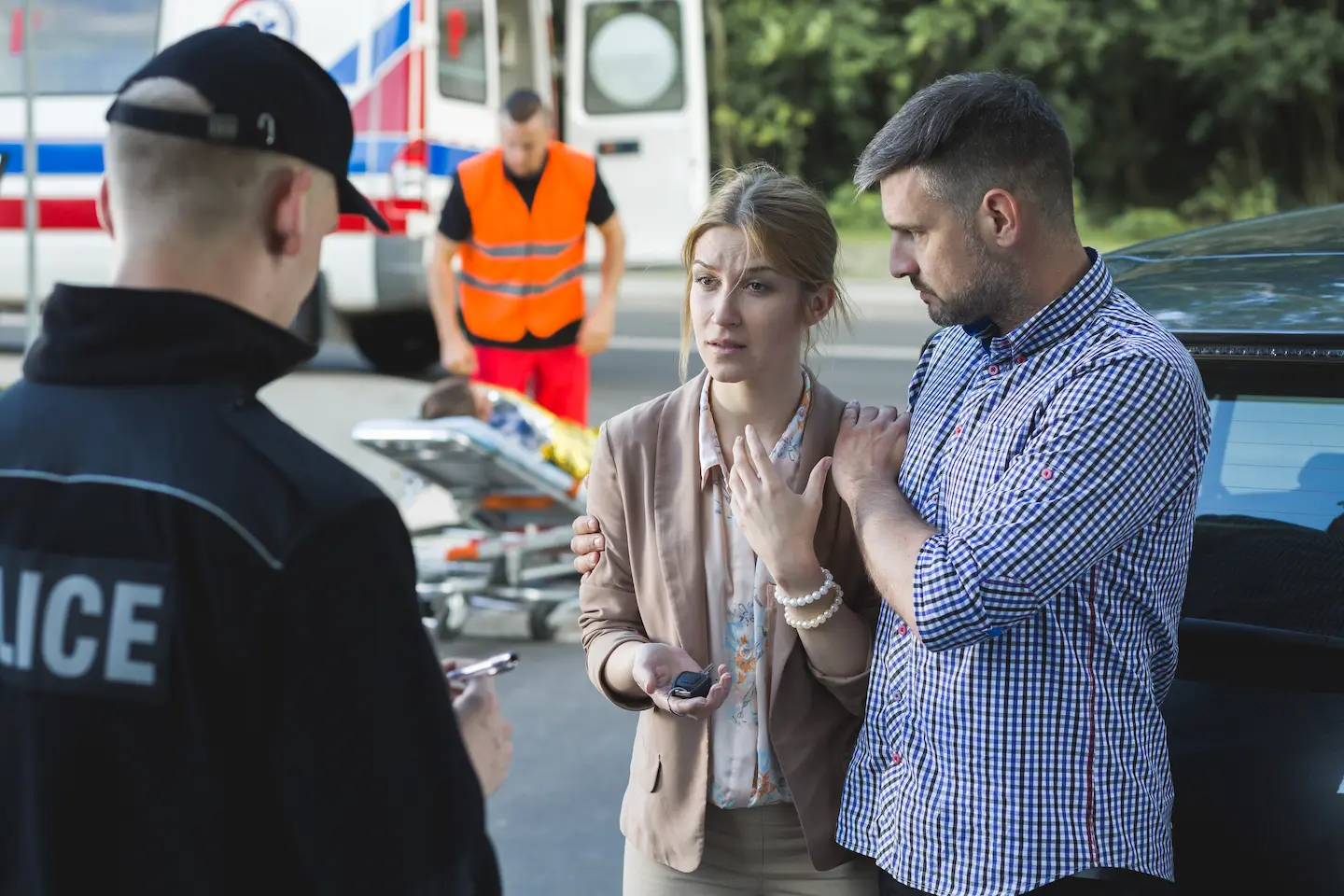
Even before you’re convicted of a criminal charge, the Colorado Division of Motor Vehicles (DMV) will take action against your driving privileges.
Automatic 12-Point Suspension
Leaving the scene of an accident—whether a misdemeanor or felony—results in 12 points being assessed against your driving record upon conviction.
Under Colorado’s point system, accumulating 12 or more points in 12 months triggers an automatic suspension of your driver’s license.
The suspension period depends on your driving history:
- First suspension: typically 1 year
- Subsequent suspensions: longer periods, potentially indefinite
Additional Suspensions for Felony Convictions
If you’re convicted of a felony hit-and-run involving injury or death, the DMV may impose an additional discretionary suspension that can extend for years or even result in permanent revocation.
SR-22 Insurance Requirement
Once your suspension period ends, you’ll be required to file an SR-22 certificate with the Colorado DMV before your license is reinstated.
An SR-22 is not insurance—it’s a certificate filed by your insurance company proving you carry the state-required minimum liability coverage.
SR-22 requirements typically last 3 years, and the cost of SR-22 insurance is often 2 to 3 times higher than standard rates because you’re classified as a high-risk driver.
If your SR-22 lapses for even one day, your license is automatically re-suspended, and the 3-year clock resets.
The Insurance Consequences You’re Facing
The financial hit from insurance alone can be devastating—and it lasts for years.
Your Insurer Will Deny Coverage
Most auto insurance policies contain exclusions for criminal acts and intentional conduct. Leaving the scene of an accident is a crime, and insurers use that fact to deny claims.
What that means:
- Your insurer will refuse to pay for damage to your vehicle
- They will refuse to pay for damage or injuries you caused to others
- You’ll be personally liable for all damages, medical bills, and legal fees
Policy Cancellation or Non-Renewal
Once your insurer learns you’ve been charged with or convicted of a hit-and-run, they will cancel your policy or refuse to renew it at the end of the term.
Finding new coverage is difficult and expensive. You’ll likely need to seek coverage through Colorado’s assigned risk pool or a high-risk specialty insurer.
Premium Increases of 50% to 100%
Even if you find a new insurer willing to cover you, expect your premiums to double or triple.
A driver with a hit-and-run conviction on their record is statistically more likely to file future claims, and insurers price policies accordingly.
Long-Term Financial Impact
Between the SR-22 filing fees, higher premiums, and potential out-of-pocket liability for damages you caused, the total cost over 3 to 5 years can easily exceed $20,000 to $50,000—even for a “minor” property-damage hit-and-run.
If You’ve Already Left: What to Do Right Now
If you’ve already left the scene, your next move is critical.
Do Not Contact the Police Directly
Do not call the police. Do not return to the scene. Do not try to “explain” what happened.
Anything you say to law enforcement—even if you’re trying to cooperate—can and will be used against you in both the criminal case and any civil lawsuit.
Call a Criminal Defense Attorney Immediately
Your first call should be to an experienced Colorado criminal defense attorney.
An attorney can:
- Advise you on whether and when to come forward
- Negotiate with prosecutors on your behalf before charges are filed
- Protect your constitutional rights during questioning
- Explore options for voluntary disclosure that may lead to reduced charges
Coming forward voluntarily with a lawyer by your side can sometimes result in lesser charges or more favorable plea agreements. Waiting until the police show up at your door makes everything worse.
Do Not Discuss the Crash with Anyone
Do not talk about the accident with friends, family, coworkers, or on social media. Do not post photos of your vehicle. Do not delete anything from your phone—that can be considered destruction of evidence.
Assume that anything you say or do will be discovered.
Do Not Attempt to Repair Your Vehicle Immediately
If you take your car to a body shop right after the crash, that repair order can become evidence. Investigators routinely contact repair facilities as part of their investigation.
Your attorney will advise you on how to handle vehicle damage in a way that doesn’t compromise your defense.
Possible Defenses to a Hit-and-Run Charge
A hit-and-run charge is serious, but it’s not insurmountable. An experienced criminal defense attorney will examine every element of the prosecution’s case and explore defenses that may apply to your situation.
You Didn’t Know an Accident Occurred
If the contact was so minor that a reasonable person would not have noticed it—such as brushing a parked car’s bumper in a tight parking space—you may not have committed a knowing violation.
The law requires awareness. If you genuinely didn’t know a collision occurred, that may be a viable defense.
You Stopped, But the Other Party Was Gone
If you stopped, looked for the other driver, left a note, and the other party had already left the scene, that’s different from fleeing.
Colorado law requires you to make a reasonable effort to locate the other party. If you did so and they were unavailable, your attorney can argue you fulfilled your legal duty.
You Left Because of an Immediate Safety Threat
If you were in a dangerous area—such as a remote highway shoulder at night, a high-crime neighborhood, or a situation where the other driver was behaving aggressively or threatening you—you may have a partial defense based on necessity.
This doesn’t erase the charge, but it can be a powerful mitigating factor during plea negotiations or sentencing.
The Prosecution Cannot Prove You Were the Driver
Even if your vehicle was involved, the prosecution must prove you were driving at the time of the crash.
If there’s no eyewitness identification, no camera footage showing your face, and no admission from you, your attorney may be able to challenge the sufficiency of the evidence.
Every case is unique. An experienced attorney will analyze the evidence, challenge weak links in the prosecution’s case, and fight for the best possible outcome.
If You Were the Victim of a Hit-and-Run

If someone hit you and fled, you’re not powerless.
Call 911 and File a Police Report Immediately
The sooner you report the crash, the better the chances of identifying the at-fault driver. Provide as much detail as you can:
- Vehicle make, model, color
- License plate number (even a partial plate helps)
- Direction of travel
- Description of the driver, if you saw them
Seek Medical Attention Right Away
Even if you feel fine, some injuries—like concussions, internal bleeding, or soft tissue damage—don’t show symptoms for hours or days.
Getting medical attention immediately creates a documented record that links your injuries to the crash, which is critical for insurance claims and potential lawsuits.
Document Everything
Take photos of:
- Your vehicle damage
- The crash scene
- Any visible injuries
- Debris, skid marks, or other evidence
Get contact information from any witnesses. If nearby businesses or homes have security cameras, ask if they’ll preserve the footage.
File a Claim with Your Own Insurance Company
If the hit-and-run driver isn’t immediately identified, you can file a claim under your uninsured motorist (UM) coverage.
UM coverage is designed for exactly this situation—when the at-fault driver can’t be found or doesn’t have insurance.
You may be able to recover compensation for:
- Medical bills
- Lost wages
- Pain and suffering
- Property damage (if you have collision coverage)
Contact a Personal Injury Attorney
Dealing with your own insurance company after a hit-and-run can be frustrating. Adjusters may try to minimize your claim or argue that your injuries aren’t related to the crash.
An experienced Colorado personal injury attorney can:
- Negotiate with your insurer to maximize your UM claim
- Help track down the at-fault driver through investigative resources
- File a civil lawsuit against the driver if they’re later identified
At Cheney Galluzzi & Howard, we’ve helped hundreds of Coloradans recover compensation after hit-and-run crashes. We know how to fight insurance companies, and we know how to hold negligent drivers accountable—even when they try to run.
What to Do Next
The consequences of leaving the scene of an accident don’t go away on their own. The longer you wait, the worse your situation becomes.
If you left the scene of an accident:
Call a criminal defense attorney before you do anything else. Do not contact the police. Do not discuss the crash with anyone. An experienced attorney will guide you through the process, protect your rights, and explore every option for reducing the charges or minimizing the penalties.
If you were the victim of a hit-and-run:
Call the police immediately, document the scene, seek medical attention, and contact a personal injury attorney who can help you recover compensation through your uninsured motorist coverage or by tracking down the at-fault driver.
At Cheney Galluzzi & Howard, we’ve spent decades helping Coloradans navigate the aftermath of car accidents—whether you’re facing criminal charges or fighting for the compensation you deserve.
We don’t judge. We don’t lecture. We just fight for you.
It’s more than money—it’s about helping you put your life back together. Contact us today for a free consultation.
Frequently Asked Questions
How quickly do I have to report an accident in Colorado?
You must stop immediately at the scene and exchange information. If the crash involved injury, death, or property damage exceeding $1,000, you’re also required to file a written accident report with the Colorado DMV within 10 days using the DR 3447 form. Failing to file the report can result in additional penalties, including license suspension.
Will I lose my license if I’m charged with a hit-and-run?
In most cases, yes. A hit-and-run conviction results in 12 points being added to your driving record, which triggers an automatic license suspension by the Colorado DMV. The suspension typically lasts at least 1 year for a first offense. If the crash involved serious injury or death, you may face a longer suspension or even permanent revocation.
Can I be charged with a felony even if no one was seriously hurt?
Yes. Under Colorado law, leaving the scene of an accident where any injury occurred—even minor injuries like bruising or whiplash—can be charged as a Class 1 Misdemeanor or Class 4 Felony. Prosecutors have discretion in how they charge the case based on the severity of the injuries and the circumstances of your flight from the scene.
What if I was scared and didn’t know what to do?
Panic and fear are understandable human reactions, but they are not legal defenses to a hit-and-run charge. Colorado law imposes a strict duty to stop regardless of your emotional state. However, an experienced attorney may be able to use your fear and confusion as mitigating factors during plea negotiations or sentencing, which can result in reduced penalties.
Can my insurance deny my claim if I left the scene?
Yes. Most auto insurance policies contain exclusions for losses arising from criminal acts. Because leaving the scene is a crime under Colorado law, your insurer will likely deny any claims related to the accident—including coverage for your own vehicle damage and liability for injuries or property damage you caused to others. Your policy may also be canceled or not renewed.
What if the other driver left the scene and I was the victim?
You can still recover compensation through your uninsured motorist (UM) coverage. File a police report immediately, document the scene and your injuries, and contact a personal injury attorney. If the hit-and-run driver is later identified, you can also pursue a direct claim or lawsuit against them. UM coverage is designed to protect you when the at-fault driver can’t be found or doesn’t have insurance.
How do police track down hit-and-run drivers?
Colorado law enforcement uses a combination of technology and investigative techniques, including:
- Traffic and surveillance cameras (CDOT, city red-light cameras, business security footage, doorbell cameras)
- Automated License Plate Readers (LPRs) that scan and store plate data
- Body shop and repair facility inquiries to identify recent repairs matching the crash damage
- Colorado’s Medina Alert system, which broadcasts suspect vehicle descriptions on highway signs
- Social media monitoring for posts or comments related to the crash
- Forensic analysis of paint transfers, vehicle parts, and damage patterns
The odds of being identified are significantly higher than they were even a decade ago.
Should I go back to the scene if I’ve already left?
No—not without talking to an attorney first. Returning to the scene does not erase the hit-and-run charge, and anything you say or do at that point can be used as evidence against you. Call a criminal defense attorney immediately. They will advise you on whether and how to come forward in a way that protects your legal rights and may improve your chances of a favorable outcome.
Can I still be sued even if I’m facing criminal charges?
Yes. Criminal charges and civil lawsuits are separate proceedings. Even if you’re convicted of a hit-and-run, the victim can file a civil lawsuit against you for:
- Medical expenses
- Lost wages
- Pain and suffering
- Property damage
Leaving the scene makes the civil case stronger because it can be used as evidence of consciousness of guilt. You may be personally liable for tens or even hundreds of thousands of dollars in damages.
What’s the difference between a misdemeanor and a felony hit-and-run in Colorado?
Yes. Criminal charges and civil lawsuits are separate proceedings. Even if you’re convicted of a hit-and-run, the victim can fMisdemeanor hit-and-run applies when the crash involved only property damage. It’s a Class 2 Misdemeanor Traffic Offense punishable by up to 90 days in jail, fines, and a 12-point license suspension.
Felony hit-and-run applies when the crash involved injury or death. Depending on the severity, it can be charged as a Class 1 Misdemeanor, Class 4 Felony, or Class 3 Felony, with penalties ranging from 1 year in jail to 12 years in prison, plus fines, license revocation, and a permanent felony record.
The difference is significant—not just in the length of potential incarceration, but in the lifelong consequences of a felony conviction, including loss of voting rights, firearm ownership, and barriers to employment and housing.
 Colorado Motor Vehicle Accident Statistics: What the Numbers Mean for Your Safety and Rights
