- Colorado law creates a strong presumption that the driver who strikes from behind is at fault, based on C.R.S. 42-4-1008 (Following Too Closely).
- Real exceptions exist: brake checking, broken brake lights, sudden reversals, and Denver’s winter conditions (black ice, sun glare) can shift fault to the lead driver.
- Colorado’s modified comparative negligence rule bars recovery if you are 50% or more at fault. Reducing your fault percentage is critical to your recovery.
If you have been rear-ended on I-25 during rush hour or hit someone after hitting a patch of black ice on I-70, you are probably asking: Who is at fault in a rear-end collision in Denver, CO? The answer is not as simple as “the rear driver is always to blame.” While Colorado law creates a strong presumption that the driver who strikes from behind is negligent, there are real exceptions, especially when weather, aggressive driving, or mechanical failures are involved.
Understanding how fault is determined matters. It affects your insurance claim, whether you will face a traffic citation, and whether you can recover compensation for your injuries. At Cheney Galluzzi & Howard, we have spent decades helping Denver drivers navigate rear-end collision claims, fighting back against insurance companies that try to pin blame on injured people.
CGH Injury Lawyers has represented injured Coloradans since 2016 from one Denver office at 2701 Lawrence Street. Kevin Cheney is Managing Partner, a member of the American Board of Trial Advocates, and Treasurer of the Colorado Trial Lawyers Association.
The General Presumption: Why the Rear Driver Is Usually at Fault in Colorado
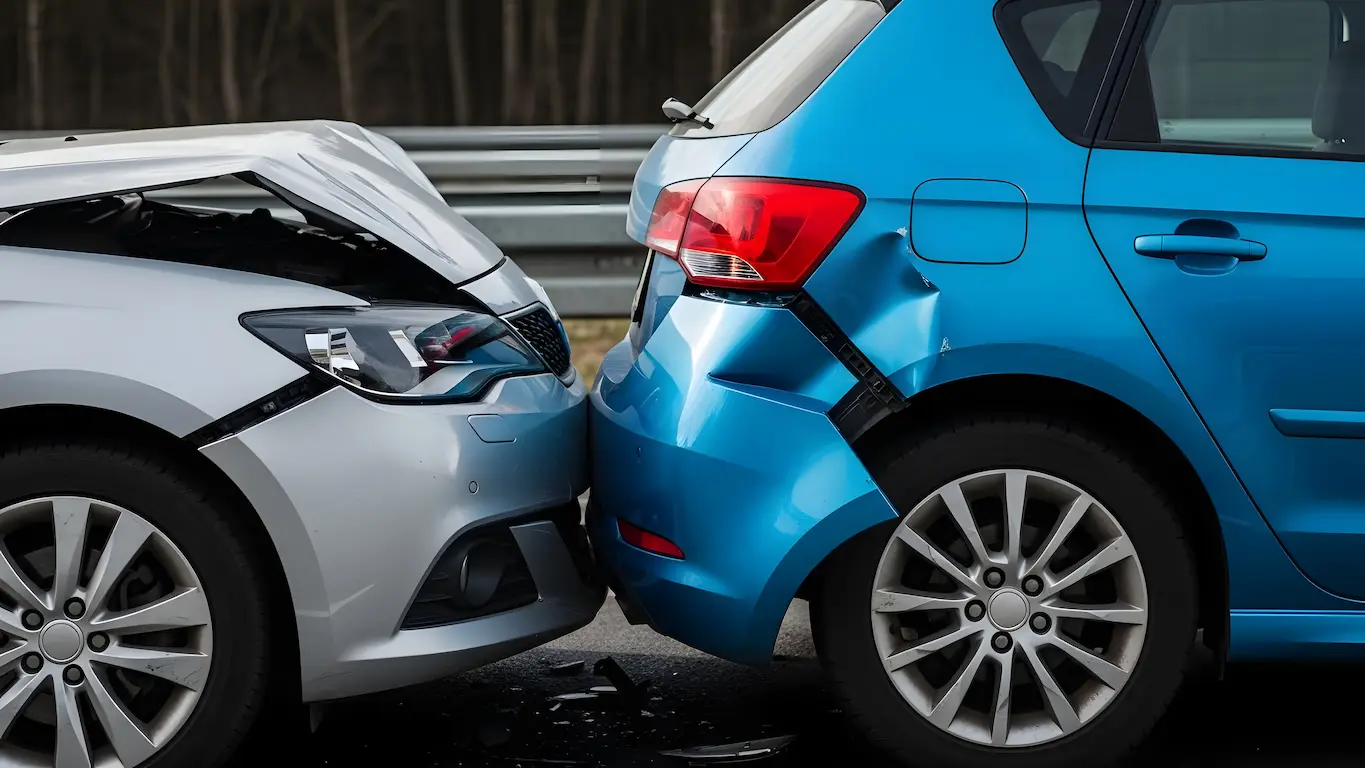
In most rear-end collisions in Denver and across Colorado, the driver who hits the vehicle in front is presumed to be at fault. This presumption is rooted in a basic duty every driver has: to maintain a safe following distance and stay alert to changing traffic conditions.
Colorado roads, especially I-25 during morning commutes or I-70 in winter, demand constant vigilance. Sudden stops happen. Traffic slows without warning. Drivers are expected to leave enough space to react.
Colorado’s Following Too Closely Statute (CRS 42-4-1008)
Colorado law spells this out clearly. CRS 42-4-1008 (Following Too Closely) states:
“The driver of a motor vehicle shall not follow another vehicle more closely than is reasonable and prudent, having due regard for the speed of such vehicles and the traffic upon and the condition of the highway.”
This statute creates a legal standard: if you rear-end someone, the law assumes you were either:
- Following too closely (tailgating),
- Driving too fast for conditions, or
- Distracted and failed to brake in time.
But here is what most people do not realize: A presumption is not the same as a guarantee. Presumptions can be challenged with evidence. If the lead driver did something negligent or reckless, like slamming on their brakes for no reason or reversing suddenly, the fault equation changes.
Common Myth vs. Colorado Law: Is the Rear Driver Always at Fault?
Myth: “If you hit someone from behind, you are automatically 100% at fault. End of story.”
Colorado Law: Not true. While the rear driver starts with a presumption of fault, Colorado recognizes that the front driver can share or even bear full responsibility depending on the circumstances.
You are not just a case file. You are a person who deserves to be heard and helped. If the lead driver contributed to the crash, through reckless behavior, a sudden illegal maneuver, or a vehicle defect, you have the right to challenge the presumption and fight for a fair outcome.
Exceptions That Shift Liability in Denver Rear-End Crashes
Let us talk about the scenarios where the front driver may be partially or fully at fault. These exceptions are critical if you are being blamed unfairly.
Sudden Reversing or Lane Changes
If the driver in front of you suddenly reverses, say, in a parking lot or after missing a turn, you may not be liable. The same applies if a driver cuts into your lane abruptly, leaving you no time to brake.
Example: You are stopped at a red light on Colfax. The car in front suddenly shifts into reverse to back into a parking spot and hits your front bumper. In this case, the front driver’s unexpected maneuver caused the collision, not your following distance.
Brake Checking and Aggressive Driving
“Brake checking” is when a driver intentionally slams on their brakes to intimidate or retaliate against the car behind them. In Colorado, this is considered aggressive driving and can shift fault to the lead driver.
The challenge? Proving it. Without dashcam footage or witness testimony, it is your word against theirs. That is why we always recommend installing a dashcam if you drive frequently on Denver’s congested highways.
Mechanical Failures (Broken Brake Lights)
What if the car in front of you had broken brake lights, and you had no visual warning that they were stopping? Colorado courts recognize that malfunctioning brake lights can reduce or eliminate the rear driver’s fault.
That said, drivers are still expected to maintain awareness of traffic flow and leave enough space to react to sudden stops, even without brake lights. This often results in shared fault under Colorado’s comparative negligence rule (more on that below).
The Sudden Emergency Doctrine: Denver’s Weather Defense
Here is the exception most generic legal articles miss: the Sudden Emergency Doctrine.
Colorado law recognizes that drivers faced with a sudden, unexpected emergency, something they did not cause and could not have anticipated, are not held to the same standard of care.
Why this matters in Denver: Our roads are uniquely dangerous in winter. Black ice forms without warning on I-25 and I-70, especially in shaded areas or overpasses. Sun glare coming off the Rockies during morning and evening commutes can blind drivers for critical seconds. Sudden snowstorms reduce visibility to near zero.
If you rear-ended someone because you hit an unexpected patch of ice or were blinded by glare, the Sudden Emergency Doctrine may apply as a legal defense. This does not automatically eliminate your liability, but it can reduce your fault percentage. That reduction can mean the difference between recovering compensation and walking away with nothing.
Real-world scenario: You are driving eastbound on I-70 near the Eisenhower Tunnel. A sudden gust blows snow across the highway, obscuring your view. You brake, but your car slides on the ice and taps the vehicle ahead. An experienced Denver injury attorney can argue that the emergency conditions, not negligence, caused the collision.
How Colorado’s Modified Comparative Negligence Rule Affects Your Claim
Colorado operates under a Modified Comparative Negligence system. Here is what that means in plain English:
- You can still recover damages even if you are partially at fault, as long as your fault is less than 50%.
- Your compensation is reduced by your percentage of fault.
Example: You are rear-ended at a stoplight, but the other driver claims you stopped short. After investigation, the insurance company assigns you 20% fault and the other driver 80% fault. If your total damages (medical bills, lost wages, pain and suffering) are $100,000, you can recover $80,000 (your damages minus your 20% share).
But here is the catch: If you are found 50% or more at fault, you recover nothing. That is why fighting to reduce your fault percentage is so important, and why insurance companies work so hard to shift blame onto you.
We do not take the insurance company’s word for anything. We investigate independently, gather evidence, and fight relentlessly to minimize your fault and maximize your recovery. For a broader look at how fault allocation works in Colorado, read our guide on comparative negligence in Colorado.
Evidence You Need to Gather at the Scene (Checklist Format)
If you are involved in a rear-end collision in Denver, the evidence you collect in the moments after the crash can make or break your claim. Here is what to do:
Call 911 and request a police report. Officers will document the scene, measure skid marks, and interview witnesses. Their report often carries significant weight in fault determinations.
Take photos and videos. Capture:
- Damage to all vehicles (front, rear, side angles)
- Skid marks or debris on the road
- Traffic signals, signs, and road conditions
- Weather conditions (ice, snow, rain, glare)
Get witness contact information. Bystanders or other drivers who saw the crash can provide critical third-party accounts.
Check for traffic or dashcam footage. Many Denver intersections have traffic cameras. If you or the other driver has dashcams, preserve that footage immediately.
Document your injuries. Seek medical attention right away, even if you feel fine. Whiplash, concussions, and soft tissue injuries often do not show symptoms for hours or days.
Do NOT admit fault at the scene. Even saying “I’m sorry” can be twisted into an admission of liability. Stick to the facts when speaking with the police and the other driver.
What Happens If You’re Partially at Fault? (Scenario Walkthrough)
Let us walk through a real-world example of how comparative negligence plays out in a Denver rear-end collision.
The Crash: You are driving south on I-25 near the Broadway exit during afternoon rush hour. Traffic suddenly stops. You brake hard but slide slightly on a wet patch and tap the car ahead. The other driver claims you were tailgating. You believe the road conditions and sudden stop contributed to the crash.
The Investigation: Your attorney gathers:
- Weather reports showed rain that afternoon
- Traffic camera footage showing congested stop-and-go conditions
- Your dashcam shows you maintained a reasonable following distance
- An accident reconstruction expert who testifies about braking distance on wet pavement
The Outcome: The insurance company initially claims you are 100% at fault. After presenting your evidence, fault is reassigned: you are 30% at fault (for not adjusting speed sufficiently for wet conditions), and the other driver is 70% at fault (for braking abruptly without cause).
Your Recovery: Your damages total $50,000 (medical bills, car repairs, lost wages). Under Colorado’s comparative negligence rule, you recover $35,000 ($50,000 minus your 30% share).
Without an attorney? You likely would have accepted the insurance company’s initial determination and received nothing.
When to Speak With a Denver Injury Attorney
You do not need a lawyer for every fender-bender. But if any of the following apply, it is time to speak with a Denver car accident attorney:
- You have been seriously injured (whiplash, concussions, broken bones, back or neck injuries).
- The insurance company is blaming you unfairly or claiming you are more than 50% at fault.
- There are disputes about what happened (no clear evidence, conflicting witness statements).
- The other driver is claiming you caused the crash (brake-checking accusations, sudden stop claims).
- You are being pressured to settle quickly before you know the full extent of your injuries.
At Cheney Galluzzi & Howard, we offer free consultations and we work on contingency, which means you do not pay us unless we win. We have recovered millions for Denver drivers in rear-end collision cases, and we know how to stand up to insurance companies that try to minimize payouts and shift blame.
For help understanding Colorado’s following too closely statute and how it applies to your case, or if you need support filing a claim in Colorado, we are here to help you put your life back together.
Read more about Colorado Car Accident Law here.
We Stand Up to Insurance Companies And We Have Your Back
You’re Hurt. Confused. Scared. We Have Your Back.
Being involved in a rear-end collision in Denver can turn your life upside down. You are dealing with injuries, missed work, insurance adjusters who do not seem to care, and the fear that you will be blamed for something that was not entirely your fault.
It is more than money. It is about justice, healing, and being treated with dignity. You deserve the opportunity to seek fair compensation, and you deserve attorneys who will fight relentlessly on your behalf.
We have helped hundreds of Denver drivers navigate rear-end collision claims, from minor impacts to catastrophic injuries. We investigate every angle, consult with accident reconstruction experts, and fight to reduce your fault percentage under Colorado’s comparative negligence law.
Do not let the insurance company bully you into accepting less than you deserve. Call Cheney Galluzzi & Howard today for a free consultation. We will review your case, explain your options, and help you understand your rights under Colorado law.
Call us now or contact us online. No upfront fees. You do not pay unless we win.
Frequently Asked Questions
Is the rear driver always at fault in a rear-end collision in Colorado?
No. While Colorado law creates a strong presumption that the rear driver is at fault under C.R.S. 42-4-1008 (Following Too Closely), that presumption can be rebutted. Exceptions include brake checking by the front driver, a sudden reversal, malfunctioning brake lights, or dangerous road conditions that triggered the Sudden Emergency Doctrine. Each case depends on the specific facts and available evidence.
What is Colorado’s 50% rule in a rear-end crash?
Colorado uses a modified comparative negligence system. You can recover damages only if your share of fault is less than 50%. If you are found 50% or more at fault, you recover nothing. Below that threshold, your compensation is reduced by your exact fault percentage. This is why fighting to lower your assigned fault percentage matters so much.
Can black ice or bad weather reduce my fault in a Denver rear-end collision?
Possibly. The Sudden Emergency Doctrine can reduce or eliminate a driver’s liability when a sudden, unexpected hazard, such as black ice on I-70 or a whiteout on I-25, causes the collision and the driver did not create that hazard. This does not automatically clear all fault, but it can reduce the percentage assigned to you and may be the difference between recovering compensation and receiving nothing.
What should I do immediately after a rear-end collision in Denver?
Call 911 and get a police report. Take photos of vehicle damage, skid marks, road conditions, and weather. Get witness contact information and check for nearby traffic or dashcam footage. Seek medical attention right away, even if you feel fine, as whiplash and soft tissue injuries can take hours or days to appear. Do not admit fault or apologize at the scene, as statements can be used against you later.
How does brake checking affect fault in a Colorado rear-end collision?
If the front driver intentionally slammed on their brakes to intimidate or retaliate (brake checking), Colorado law may shift fault to that driver. This is considered aggressive driving. The challenge is proving it: dashcam footage, witness statements, or evidence of a prior road-rage incident are typically needed. Without that evidence, you may face a your-word-against-theirs situation that benefits from experienced legal representation.
This article is general information for Colorado injury readers. It is not legal advice, does not create an attorney-client relationship, and does not promise that any deadline, rule, or outcome applies to your case. Statute-of-limitations, comparative negligence, insurance, and compensation questions require case-specific legal review.
Related articles
-
After an Electric Scooter Accident in Denver: Your Next Steps, and Who May Pay
Seek care and a police report. Denver’s guidance after a crash on a shared scooter is to call 911 or go to urgent care if anyone is hurt,…
-
No Denver Wrongful Death Lawyer Can Tell You the Odds Here Is What They Can Tell You
Colorado’s wrongful death rules were changed by House Bill 24-1472, signed June 3, 2024 and effective January 1, 2025. Who may sue depends on whether you are in…
-
What It Really Costs to Hire a Denver Truck Accident Lawyer, Line by Line
Injury work in Colorado is usually done on a contingent fee, which ties the fee to the outcome rather than billing you up front. The rule allows a…