
ClickCease
Free consultations · Se habla espanol
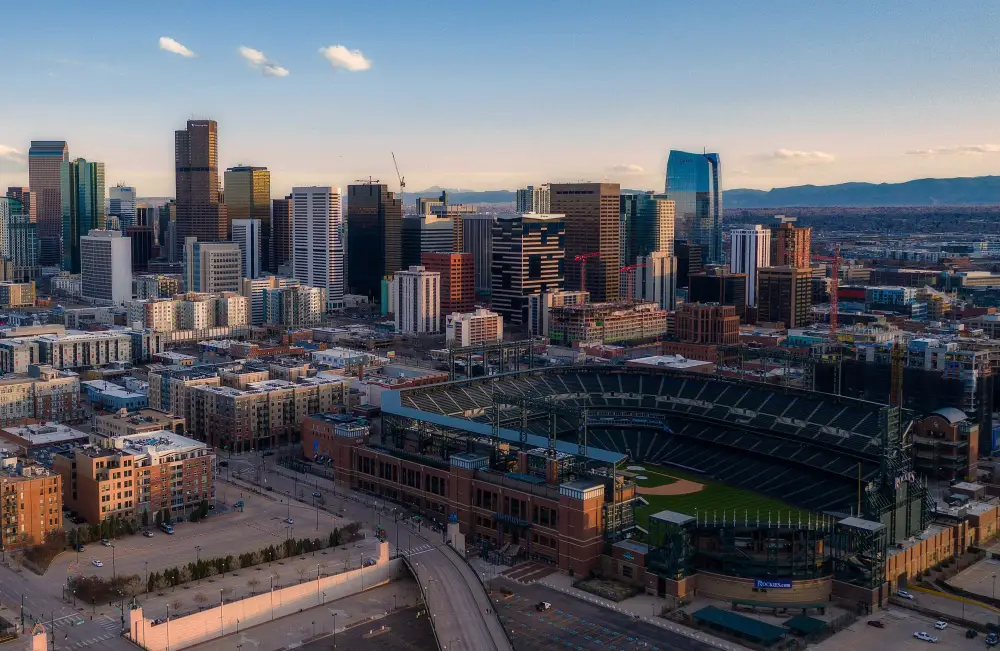
Castle Rock, Colorado. CGH Injury Lawyers represents injured motorcyclists in Castle Rock and Douglas County.
Castle Rock, Colorado

Castle Rock Motorcycle Accident Lawyers Who Fight the Bias Against Riders

A crash on I-25, SH-86, or the Palmer Divide approaches hits a motorcyclist differently than it hits a car driver. The injuries are more severe, the insurer blames the rider first, and Colorado's gear rules give adjusters an extra weapon. CGH Injury Lawyers serves Castle Rock and Douglas County from our Denver office and goes to work the same day you call. No fee unless we win.

No fee unless we win

It's More Than Money.

Tell us about your Castle Rock motorcycle crash

100% confidential. No fee unless we win.

Serving Castle Rock from our Denver Office CGH Injury Lawyers 2701 Lawrence St., Suite 201 Denver, CO 80205 (303) 209-9395 Se habla espanol
5-star rated on Google ABOTA trial advocate on the team Built for trial, not settlement mills No fee unless we win
  • Colorado gives you three years from the date of a motorcycle crash to file a lawsuit when a motor vehicle caused the collision (C.R.S. 13-80-101(1)(n)). That clock does not pause while you recover, and evidence from an I-25 or SH-86 scene degrades quickly.
  • Colorado does not require helmets for riders 18 and older (C.R.S. 42-4-1502), but every rider and passenger must wear eye protection, glasses, goggles, or a face shield, unless a compliant windscreen is fitted (C.R.S. 42-4-232). Both choices become weapons in an insurer's hands after a Castle Rock crash.
  • Under Colorado's modified comparative negligence rule, you recover damages as long as your share of fault is less than 50 percent, but your award is reduced by that percentage (C.R.S. 13-21-111). Adjusters routinely inflate rider fault on Douglas County claims to push the number toward the 50-percent bar.

Castle Rock's I-25 Palmer Divide corridor, the SH-86 commuter route, and the Exit 184 interchange near The Outlets at Castle Rock all produce motorcycle crash conditions: sudden ice, Chinook wind gusts, distracted drivers merging at speed, and turning conflicts in high-pedestrian retail zones. Riders who survive those crashes face a second fight with insurance adjusters who assume a motorcyclist is at fault before they read a single witness statement. CGH Injury Lawyers serves Castle Rock and Douglas County riders from our Denver office. There is no Castle Rock office, but we file in Douglas County Combined Courts, manage the investigation, and take no fee unless we win.

Who we represent

Who can bring a motorcycle accident claim in Castle Rock?

If you were injured while riding and another driver was at fault, the law is on your side, but you have to fight for it. We represent a range of Castle Rock and Douglas County riders who come to us after collisions on these roads.

We represent

  • Motorcyclists struck by drivers on I-25 through the Castle Rock corridor, including merging and lane-change crashes near Exits 181, 182, 184, and 185
  • Riders hit at the SH-86 (Founders Parkway) and I-25 interchange, one of the most conflict-heavy intersections in Douglas County
  • Riders injured on Plum Creek Parkway, Castle Rock Parkway, or Meadows Parkway in turning-movement or left-turn crashes
  • Families of riders killed in Douglas County fatal motorcycle crashes, including wrongful death claims
  • Riders hurt by uninsured or underinsured drivers and pursuing UM/UIM claims under their own policy
  • Passengers injured on motorcycles operated by third parties in Castle Rock or on the I-25 corridor

Cases we do not accept

  • Riders found 50 percent or more at fault under Colorado's modified comparative negligence rule, where recovery is barred entirely
  • Claims filed after Colorado's three-year motor vehicle filing deadline (C.R.S. 13-80-101(1)(n)) without a valid exception
  • Incidents involving only property damage to the motorcycle with no documented physical injury

We tell you exactly where you stand in the free review. If your case has a fundamental barrier, you hear that early at no cost and no obligation.

The law that governs your case

Colorado motorcycle law decoded for Castle Rock riders

Colorado's motorcycle statutes changed in 2024. They determine whether your gear choices can be turned into an argument against you, whether your riding behavior was legal, and what you can recover if another driver causes your crash. Knowing these rules before you talk to an insurer changes everything.

  1. Helmet law: C.R.S. 42-4-1502

    Colorado requires a DOT-compliant helmet only for riders and passengers under 18. Adult riders 18 and older may legally ride without one. That legal right does not protect you from an insurer arguing you failed to mitigate your injuries by going without a helmet on I-25. We fight that argument directly, because a lawful choice is not a basis to slash your recovery.

  2. Eye protection: C.R.S. 42-4-232

    Every Castle Rock rider and every passenger must wear eye protection, glasses, goggles, or a face shield, regardless of age. A motorcycle equipped with a windscreen of adequate height and optical quality is an alternative. A violation is a Class A traffic infraction, and an adjuster will cite it as evidence that you contributed to the severity of your own injuries. We address this head on by documenting exactly what protection you had and why it bears no causal connection to the crash mechanism.

  3. Lane filtering: C.R.S. 42-4-1503 (SB24-079, effective August 7, 2024)

    Lane filtering became legal in Colorado on August 7, 2024, but only under narrow conditions: traffic must be completely stopped, not merely slow; the motorcycle must travel at 15 mph or less; the road must have at least two adjacent same-direction lanes; and the rider must not exceed the posted speed limit. Lane splitting, riding between lanes of moving traffic at speed, remains illegal. On Castle Rock's I-25 stop-and-go commuter congestion, this distinction is frequently at issue. We document speed, traffic conditions, and lane configuration to prove legal filtering when an insurer argues otherwise.

  4. Class M license endorsement

    Operating a motorcycle in Colorado requires a valid Class M license endorsement, obtained by passing both a written test and an on-cycle skills evaluation. Riding without a valid Class M endorsement can expose you to criminal charges and gives an insurer grounds to argue negligence per se, meaning that your unlicensed status constitutes a per-law breach of duty that contributed to the crash. We review licensing status early in every case so nothing surprises us later.

  5. Three-year filing deadline: C.R.S. 13-80-101(1)(n)

    A motorcycle crash caused by another driver is a motor vehicle tort under Colorado law, giving you three years from the date of the crash to file a lawsuit. This is not the general two-year personal injury deadline; bicycles, motorcycles, and pedestrians struck by drivers all fall under C.R.S. 13-80-101(1)(n). Missing it ends your claim entirely. If a government entity or government-owned vehicle was involved, a written notice of claim must be filed within 182 days of discovering the injury under C.R.S. 24-10-109(1). That shorter clock runs from the date of discovery, not the date of the crash, and missing it bars the claim regardless of fault.

Local knowledge

Castle Rock courts. Castle Rock trauma care. Castle Rock roads.

A Castle Rock motorcycle crash case is built on the ground where it happened. The courthouse that hears your case, the hospital that treated you, and the road corridors that produce crashes in Douglas County all shape how we investigate and present your claim.

Courts

Douglas County Combined Courts, 23rd Judicial District

Personal injury lawsuits arising in Castle Rock, including motorcycle crash claims, are filed in Douglas County Combined Courts at 4000 Justice Way, Suite 2009, Castle Rock, CO 80109. Douglas County sits in Colorado's 23rd Judicial District, which became an independent district effective January 14, 2025, carved from the former 18th Judicial District under HB20-1026, covering Douglas, Elbert, and Lincoln counties. Local court rules, the Douglas County jury pool, and the defense firms active in this district all differ from Denver-metro courts. CGH Injury Lawyers files and tries cases in the 23rd Judicial District directly. When an insurer knows our attorneys will walk your case through those courthouse doors, settlement negotiations start from a different place.

Trauma Care

AdventHealth Castle Rock, Level III Trauma Center

The primary trauma facility serving Castle Rock motorcycle crash victims is AdventHealth Castle Rock at 2350 Meadows Boulevard, Castle Rock, CO 80104, designated a Level III Trauma Center by the Colorado Department of Public Health and Environment. The hospital opened August 1, 2013 and provides initial evaluation, resuscitation, emergency surgery, and stabilization. Motorcycle crashes on I-25 and SH-86 produce the kinds of orthopedic, neurological, and soft-tissue injuries that require immediate trauma care. Patients with injuries exceeding a Level III facility's capacity transfer to a Level I or Level II center in the Denver area, generating medical records at multiple institutions. Every record from every facility is part of the damages picture we build, and we know how to gather them from AdventHealth Castle Rock and from Denver-area trauma centers that receive transfers from Douglas County.

Roads and Motorcycle Crash Corridors

I-25, SH-86, Plum Creek Pkwy, and the Exit 184 interchange

Interstate 25 (concurrent with US-87) is the spine of Castle Rock traffic and the most crash-prone road in Douglas County for motorcyclists. Four CDOT interchanges define the Castle Rock stretch: Exit 181 at Plum Creek Parkway, Exit 182 at Wolfensberger Road and Wilcox Street, Exit 184 at Meadows Parkway, Founders Parkway, and State Highway 86, and Exit 185 at Castle Rock Parkway (opened August 2016). State Highway 86, known locally as Founders Parkway, begins at Exit 184 and runs eastward toward Franktown, carrying heavy commuter and outlet-center traffic where left-turn and merging conflicts are a persistent crash source. The Exit 184 interchange near The Outlets at Castle Rock concentrates pedestrian and vehicle turning movements at a scale that creates daily conflict zones for two-wheel traffic. Castle Rock sits on the Palmer Divide ridge at approximately 6,202 feet, and weather systems concentrate there, producing localized ice, fog, and blizzard conditions that drivers do not anticipate, creating crash chains where a motorcyclist has almost no margin to escape. A documented 20-vehicle pileup on southbound I-25 near Plum Creek Parkway on December 31, 2024 illustrates the kind of multi-vehicle crash dynamics that can sweep in a rider who did nothing wrong.

How we handle your case

What to do after a motorcycle crash in Castle Rock

The first hours after a Castle Rock motorcycle crash are the most important for the legal claim. Evidence disappears fast on I-25 and SH-86. These steps protect your health and preserve what we need to win your case.

  1. Get to safety and call 911

    Move out of the travel lane if you can do so safely, then call 911 immediately. On I-25 or SH-86, a crash scene left in the roadway is a secondary collision risk, particularly with the Chinook wind gusts and fog conditions that reduce visibility on the Palmer Divide. The police report establishes the official record of the crash location, the parties involved, and initial observations about what caused the collision.

  2. Seek medical care at AdventHealth Castle Rock

    AdventHealth Castle Rock at 2350 Meadows Boulevard is the closest Level III Trauma Center and the primary receiving facility for Douglas County motorcycle crash injuries. Go even if you feel functional. Adrenaline masks pain. Traumatic brain injury, internal bleeding, and spinal damage from a motorcycle crash can present hours or days after the collision. A gap in treatment gives an insurer grounds to argue your injuries were not caused by the crash, a defense we have seen used on Castle Rock cases where a rider left the scene without seeking immediate care.

  3. Document the scene before you leave

    Photograph the road surface, your motorcycle, the other vehicle, road markings, skid marks, weather and lighting conditions, and your protective gear. On I-25 or the Outlets corridor at Exit 184, traffic camera and CDOT camera footage may exist but will not be preserved automatically. We move quickly to send evidence preservation letters and subpoenas to lock down footage before it is overwritten. Witness names and contact information are also critical; collect them before people leave the scene.

  4. Do not give a recorded statement

    The other driver's insurer will call you quickly, sometimes the same day. Do not describe the crash, your gear choices, your riding path, or your pain level to any adjuster before speaking with an attorney. Every word becomes part of the claim record. An insurer asking about your helmet, your eye protection, or whether you were filtering will use your answer as raw material for a fault-inflation argument against you.

  5. Watch the CGIA notice deadline if a government entity is involved

    If a CDOT vehicle, a Douglas County road defect, or any government-owned property contributed to your crash, a written notice of claim must be filed within 182 days of the date you discovered the injury, under C.R.S. 24-10-109(1). That is not the same as the crash date. Miss it and the claim against the government entity is permanently barred, regardless of how clear the fault is. Call us immediately when a government party may be involved.

  6. Call CGH Injury Lawyers

    Colorado's three-year filing deadline under C.R.S. 13-80-101(1)(n) means evidence preservation starts now, not when you feel better. Call (303) 209-9395 for a free, no-obligation review of your Castle Rock motorcycle crash. We serve Douglas County from our Denver office at 2701 Lawrence St., Suite 201 and can connect with you by phone or video from anywhere in the county.

Compensation

What can you recover after a Castle Rock motorcycle crash?

Colorado law separates damages into economic and non-economic categories with different rules for each. For serious motorcycle injuries, the uncapped categories often carry the most weight, because the medical and long-term care bills on a catastrophic crash case can far exceed what insurance tries to offer.

Economic damages (never capped)

  • Emergency trauma care at AdventHealth Castle Rock or a Denver-area Level I or Level II transfer facility
  • Surgeries, hospitalization, rehabilitation, and future medical care costs
  • Lost wages from all time missed during recovery
  • Loss of earning capacity when injuries are permanent and affect your ability to work
  • Motorcycle repair or replacement costs
  • Out-of-pocket expenses tied to the crash and recovery, including transportation to medical appointments

Non-economic and additional damages

  • Pain and suffering: capped at $1.5 million for claims accruing on or after January 1, 2025 (C.R.S. 13-21-102.5)
  • Emotional distress and loss of enjoyment of life
  • Physical impairment and disfigurement: not capped at all under C.R.S. 13-21-102.5, which is critical in serious crash cases
  • Loss of consortium for a spouse or family member
  • Punitive damages when the at-fault driver acted with fraud, malice, or willful and wanton disregard for others, generally limited to the amount of actual damages under C.R.S. 13-21-102

On a serious Castle Rock motorcycle crash, the economic damages from emergency care at AdventHealth, surgery, extended rehabilitation, and months of lost wages often exceed what the at-fault driver's insurance policy can cover. That is when your own uninsured and underinsured motorist coverage (UM/UIM) steps in. Colorado UM/UIM claims are governed by C.R.S. 13-80-107.5 under Pham v. State Farm, 2013 CO 17. We identify every coverage source available to you before advising on strategy, including the at-fault driver's policy, any umbrella coverage, and your own UM/UIM limits.

Defenses to expect

Defenses Castle Rock insurers use against injured riders, and how we answer them

Insurance adjusters handling Castle Rock motorcycle claims do not come in neutral. They start from the assumption that the rider contributed to the crash, and they use Colorado's gear and licensing rules to build that case. Here is what we see most often and how we counter it.

  1. "You failed to mitigate your injuries by not wearing a helmet"

    Colorado does not require adult riders to wear a helmet (C.R.S. 42-4-1502), but insurers argue that riding without one is a failure to mitigate damages that shifts part of the injury severity onto you. Under Colorado's modified comparative negligence rule (C.R.S. 13-21-111), a successful mitigation argument reduces your award by the percentage of fault assigned to you for the severity of your injury. We challenge these arguments by establishing that a lawful gear choice is not negligence and by using crash biomechanics and medical evidence to sever the claimed link between the helmet absence and the specific injuries actually suffered.

  2. "You were lane splitting, not lane filtering"

    Since August 7, 2024, lane filtering is legal in Colorado under C.R.S. 42-4-1503 (SB24-079) when specific conditions are met: traffic is fully stopped, speed is 15 mph or less, and the road has at least two same-direction lanes. Lane splitting, riding between lanes of moving traffic, is still illegal. Adjusters routinely mischaracterize legal filtering as illegal splitting to manufacture a fault argument. We document the traffic state, the speed at the time of the crash, and the lane configuration to prove exactly which rule applied at the moment of impact.

  3. "The Palmer Divide weather caused the crash"

    Castle Rock's Palmer Divide position at approximately 6,202 feet produces localized ice, fog, and blizzard conditions that drivers and truckers using I-25 daily are expected to anticipate and adjust for. Colorado law requires all drivers to reduce speed and increase following distance for road conditions. A crash during a documented I-25 ice or fog event is not automatically a weather event that excuses an at-fault driver. We use CDOT road condition records, Colorado State Patrol incident data, and weather station logs to establish what a reasonable driver would have done and what the at-fault driver actually did on the same stretch of road at the same time.

  4. "You had a pre-existing condition"

    Insurers pull prior medical records and argue that back pain, a previous knee surgery, or a prior head injury existed before the Castle Rock crash and accounts for your current symptoms. Colorado law permits recovery for aggravation of a pre-existing condition, covering the crash-caused worsening rather than the entire underlying condition. We work with treating physicians and qualified medical experts to isolate the component of your injury that the crash caused and to quantify it precisely so the insurer cannot use your medical history to eliminate a claim that the law recognizes.

5-star rated on Google

I wish I could leave more than 5 stars!

Grace Macaluso, 5-star Google review
Why CGH

Why Castle Rock motorcycle riders choose CGH Injury Lawyers

We are honest about one thing up front: CGH Injury Lawyers does not have a Castle Rock office. We serve Douglas County riders from our Denver office at 2701 Lawrence St., Suite 201. What you get is trial-ready legal work, Douglas County court experience, and bilingual staff, without a fee unless we win.

Trial-Ready

Built to try your case in Douglas County.

Managing Partner Kevin Cheney is a member of the American Board of Trial Advocates (ABOTA) and has tried over 25 cases to verdict. When our attorneys are genuinely prepared to walk a motorcycle case into Douglas County Combined Courts, insurers respond differently to every demand letter.

Colorado-Licensed Attorneys

Not a paralegal. Not a settlement mill.

Every Castle Rock motorcycle case is handled by a licensed Colorado attorney. Timothy G. Tarr has been recognized by Best Lawyers every year since 2023. We do not sign up cases to collect fees on lowball settlements. Every case is prepared as if it will be tried in Douglas County Combined Courts.

23rd Judicial District

Douglas County courts.

Motorcycle lawsuits in Castle Rock are filed in Douglas County Combined Courts. We file there when insurers refuse fair value.

Honest Evaluation

We decline cases we cannot win.

If a Castle Rock motorcycle case has a fundamental barrier, you hear it in the free review, not after months of delay. We do not take cases for fees on unwinnable claims.

Serving Castle Rock from Denver

Denver office. Statewide reach.

Our office is at 2701 Lawrence St., Suite 201 in Denver. We investigate, negotiate, and litigate in Douglas County without requiring you to travel. Many consultations happen by phone or video. CGH Injury Lawyers does not maintain a Castle Rock office.

Bilingual

Hablamos espanol.

Spanish-speaking staff and attorneys serve Castle Rock and Douglas County's Spanish-speaking community.

No Win, No Fee

Contingency only.

You pay nothing out of pocket for legal fees. We advance costs and collect only from a settlement or verdict in your favor.

Questions

Castle Rock motorcycle accident, frequently asked questions

How long do I have to file a motorcycle accident lawsuit in Castle Rock?

A motorcycle crash caused by another driver is a motor vehicle tort under Colorado law. You have three years from the date of the crash to file a lawsuit under C.R.S. 13-80-101(1)(n). This three-year deadline applies specifically to injuries arising out of the use or operation of a motor vehicle, which covers motorcycle crashes caused by other drivers. If a government entity or government-owned vehicle was involved, a separate written notice of claim must be filed within 182 days of the date you discovered the injury under C.R.S. 24-10-109(1), and that shorter deadline is not extended by the general three-year rule. Missing either deadline bars the claim entirely. Contact an attorney promptly to confirm which clock applies to your specific case.

Does not wearing a helmet mean I cannot recover for my injuries in Castle Rock?

No. Colorado does not require helmets for riders 18 and older (C.R.S. 42-4-1502), and the absence of a helmet does not bar your claim. What it does is give the at-fault driver's insurer an argument that you failed to mitigate your damages, which under Colorado's modified comparative negligence rule (C.R.S. 13-21-111) can reduce your award by the percentage of fault the insurer succeeds in assigning to that choice. We fight mitigation arguments directly, using medical and biomechanical evidence to challenge the causal link between helmet absence and the specific injuries you sustained.

What is the difference between lane filtering and lane splitting in Colorado?

Lane filtering became legal in Colorado on August 7, 2024 under SB24-079 (C.R.S. 42-4-1503), but only when traffic is completely stopped, the motorcycle travels at 15 mph or less, the road has at least two adjacent same-direction lanes, and the rider does not exceed the posted speed limit. Lane splitting, riding between lanes of moving traffic at speed, remains illegal. On Castle Rock's I-25 commuter corridor where stop-and-go conditions are common, the distinction matters for liability. We document traffic state, speed, and lane configuration at the time of the crash to prove which rule applied.

What if I was partly at fault for the Castle Rock motorcycle crash?

Colorado follows a modified comparative negligence rule (C.R.S. 13-21-111). If your share of fault is less than 50 percent, you can recover damages, but your award is reduced by your percentage. If you are found 50 percent or more at fault, you recover nothing. Because adjusters routinely inflate fault percentages on motorcycle claims, often by citing gear choices or riding behavior, having an attorney who can challenge those assignments with evidence frequently makes the difference between a fair recovery and a denied claim. A rider found 35 percent at fault recovers 65 percent of total damages; that outcome depends entirely on how fault is documented and argued.

Where would a Castle Rock motorcycle accident lawsuit be filed?

A motorcycle accident lawsuit arising in Castle Rock would be filed in Douglas County Combined Courts at 4000 Justice Way, Suite 2009, Castle Rock, CO 80109. Douglas County is part of the 23rd Judicial District, which became an independent district effective January 14, 2025 under HB20-1026, covering Douglas, Elbert, and Lincoln counties after separating from the former 18th Judicial District. Local rules, the Douglas County jury pool, and the defense firms active in that courthouse all differ from Denver-area courts. CGH Injury Lawyers files and tries cases in the 23rd Judicial District directly.

Does CGH Injury Lawyers have an office in Castle Rock?

No. CGH Injury Lawyers has one office, at 2701 Lawrence St., Suite 201, Denver, CO 80205. We do not maintain a Castle Rock branch or local office. We serve Castle Rock and all of Douglas County from our Denver office, file in Douglas County Combined Courts within the 23rd Judicial District, and meet you wherever is convenient, including by phone or video. Call (303) 209-9395 for a free, no-obligation review of your Castle Rock motorcycle case.

Start your claim

Get a free Castle Rock motorcycle accident case review

Tell us what happened. We will review your Castle Rock motorcycle crash at no cost and no obligation and tell you exactly where you stand under Colorado law.

Free case review

100% confidential. No fee unless we win.

It's More Than Money.

You were hurt riding in Castle Rock. We fight the bias against you.

Free consultation. No fee unless we win. Serving Castle Rock from our Denver office, in English and Spanish.

Read next: How Colorado motorcycle accident law works statewide

CGH Injury Lawyers · 2701 Lawrence St., Suite 201, Denver, CO 80205 · Serving Castle Rock and Douglas County