
ClickCease
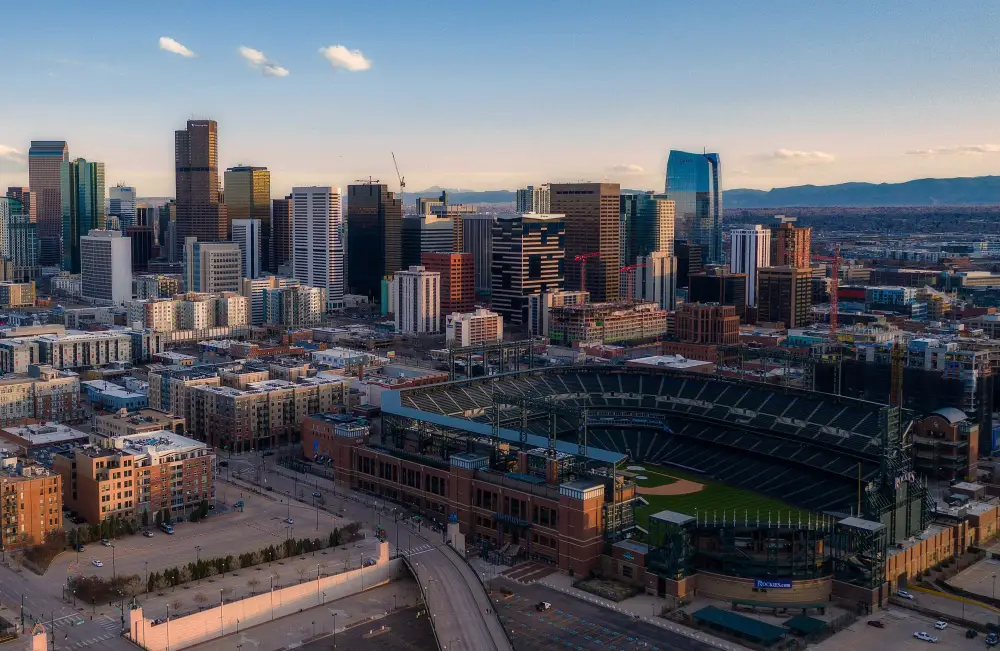
Denver skyline. CGH Injury Lawyers represents restaurant and bar injury victims across Denver, Colorado.
Denver, Colorado

Denver Restaurant and Bar Injury Lawyers Who Move Fast Before the Evidence Disappears

If a Denver bar overserved a drunk driver who hit you, or a dangerous condition at a restaurant caused your injury, Colorado law gives you a path to compensation beyond what the drunk driver alone can provide. The one-year dram shop deadline is unforgiving. We serve Denver from our office at 2701 Lawrence St. No fee unless we win.

No fee unless we win

It's More Than Money.

Tell us what happened

100% confidential. No fee unless we win.

Our Denver Office CGH Injury Lawyers 2701 Lawrence St., Suite 201 Denver, CO 80205 (303) 209-9395 Se habla espanol
5-star rated on Google ABOTA trial advocate on the team Trial lawyers, not a settlement mill 8 attorneys, bilingual EN / ES
  • Colorado's Dram Shop Act (C.R.S. 44-3-801) lets an injured person sue a licensed bar or restaurant that willfully and knowingly served alcohol to a visibly intoxicated patron, or to anyone under 21, who then caused the harm.
  • Dram shop claims carry a strict one-year deadline built into the statute itself: the lawsuit must be commenced within one year after the alcohol was sold or served (C.R.S. 44-3-801(3)(a)(II)), far shorter than the three-year window for most motor vehicle injury claims.
  • Colorado caps total dram shop liability at a statutory amount adjusted for inflation every two years. The certified amount is $465,730 for claims accruing in 2026 and 2027 (C.R.S. 44-3-801(3)(c), as certified by the Colorado Secretary of State). A dram shop recovery is in addition to anything you pursue from the drunk driver, so the total available compensation is larger than either source alone.

Denver's bar and restaurant scene is concentrated along Colfax Avenue, in the LoDo and RiNo districts near Coors Field and Union Station, and around Empower Field at Mile High on game days. When one of those venues puts profit over the safety of its guests and the public, CGH Injury Lawyers moves fast to preserve video and point-of-sale records before they are overwritten, and we pursue every responsible party. Your first consultation is free. You owe no fee unless we win your case.

Who we help

Denver restaurant and bar injury cases we handle

Not every injury at a Denver venue is a dram shop case, and not every dram shop case is the same. These are the scenarios we see most often, and the legal path each one follows.

Alcohol-related harm by third parties

  • People hit by a drunk driver who left a Denver bar or restaurant after being visibly overserved
  • Pedestrians struck near LoDo, RiNo, Colfax Ave., or Empower Field on game days by drivers who were overserved before leaving
  • Victims of bar fights or assaults carried out by a patron the venue kept serving despite visible intoxication
  • Anyone injured when a liquor store sold to a visibly impaired customer who then caused a crash

Dangerous premises and food

  • Slip and fall injuries on wet floors, icy entrances, or poorly lit stairs inside a Denver restaurant or bar
  • Assaults that inadequate security failed to prevent, including incidents in crowded Union Station bars or LoDo nightclubs
  • Food poisoning from unsafe handling or cross-contamination at any Denver restaurant
  • Burns, falling objects, or other hazardous-condition injuries sustained by a guest on the premises

One important limit: Colorado does not let an intoxicated person sue a bar for their own injuries. The Dram Shop Act protects third parties harmed by the intoxicated person's conduct, not the drinker. A slip and fall, assault, or food-poisoning claim brought by an injured guest against the venue, however, follows premises liability law and is not subject to that restriction.

The law that governs your case

Colorado Dram Shop law decoded for Denver victims

Colorado's Dram Shop Act gives injury victims a direct path to sue the licensed establishment that overserved the person who harmed them. The term comes from 18th-century England, where spirits were sold by the spoonful, called a dram. Today it gives families a source of compensation the at-fault driver often cannot provide alone. Here is what the law actually requires.

Three things the law requires you to prove

  • The defendant must be a licensed commercial establishment. A bar, restaurant, nightclub, liquor store, concert venue, or any other holder of a Colorado liquor license qualifies. Private social hosts generally do not.
  • The service must be willful and knowing. The vendor must have served the patron while already knowing, or having reason to know, the patron was visibly intoxicated or under 21. An honest mistake about the person's sobriety does not meet this standard, which is one reason why the video and transaction record matters so much.
  • The patron must have been visibly intoxicated when served. Colorado does not define visible intoxication scientifically. Courts look at observable signs a reasonable person would recognize, such as slurred speech, stumbling, swaying, or bloodshot eyes. A blood alcohol reading taken later is helpful evidence but is not, by itself, proof the person appeared intoxicated when still at the bar.

The one-year deadline that cannot be ignored

The one-year filing window is not a general statute of limitations that can be tolled or paused in most circumstances. It is a condition written into the dram shop statute itself: the lawsuit must be commenced within one year after the alcohol was sold or served (C.R.S. 44-3-801(3)(a)(II)). Many Denver victims wait for the drunk driver's criminal case to finish before consulting an attorney, by which time the window to sue the bar has closed. Do not wait.

Licensed commercial vendors versus private social hosts

Colorado treats licensed vendors and private hosts very differently. A commercial vendor holds a liquor license, profits from alcohol sales, and bears legal duties to the public. It can be liable for overserving a visibly intoxicated adult. A private social host generally is not liable for the conduct of an intoxicated adult guest under Colorado law. The narrow exception is serving alcohol to someone under 21: a social host who knowingly serves alcohol to a minor, or gives a minor a place to drink, can face liability under C.R.S. 44-3-801(4), even if the minor did not appear intoxicated.

Local knowledge

Denver courts, Denver trauma centers, Denver roads

A Denver restaurant or bar injury case is tried in Denver courts, treated at Denver hospitals, and often arises near Denver's busiest corridors and entertainment districts. Here is the ground we work on every day.

Courthouse

Denver District Court, 2nd Judicial District

Restaurant and bar injury cases that arise in Denver County are filed in Denver District Court, the 2nd Judicial District, with civil and domestic matters heard at 1437 Bannock Street, Room 256, Denver, CO 80202. Denver is the only city-county in Colorado, meaning it is both the city and the county of record. Denver civil procedure, local rules, and the specific judges assigned to injury cases differ from suburban courts, and which adjusters and defense firms your case faces depends entirely on jurisdiction. We file and litigate directly in Denver District Court.

Trauma Care

Denver Health Medical Center, Ernest E. Moore Shock Trauma Center

Denver Health at 777 Bannock St. is the only Level I Adult Trauma Center located within the city of Denver (American College of Surgeons and State of Colorado verified). It is where the most critically injured victims of bar fights, drunk driving crashes, and other serious incidents are transported. Those records document the full scope of your injuries and become the foundation of your damages claim. UCHealth University of Colorado Hospital, a Level I Trauma Center at 12505 E. 16th Avenue in Aurora, and Children's Hospital Colorado, the region's only Level I Pediatric Trauma Center at 13123 E. 16th Avenue in Aurora, also serve patients across the Denver metro when injuries require specialized care.

Where crashes happen

Denver's highest-risk corridors near bars and restaurants

Colfax Avenue (U.S. Route 40 / Business Loop I-70) runs directly through Denver's bar and restaurant districts. CDOT has identified the stretch from Moline Street to Peoria Street as a top crash hotspot in the Denver metro for bike and pedestrian crashes. Federal Boulevard (U.S. Route 287 north of Colfax, State Highway 88 south of it) has been identified as the most dangerous street in Denver, with a fatality rate more than twenty times the urban street average for Colorado. The I-25 / I-70 Mousetrap interchange carries heavy truck and event-day traffic near Empower Field at Mile High. Interstate 225 connects into Aurora, and Interstate 270 runs northeast. On game days, Coors Field in the LoDo District and Empower Field generate 70,000 or more event-day pedestrians and vehicles, concentrating overserved patrons on Colfax Ave., I-25, and surrounding streets in exactly the corridors where serious crashes happen.

Why CGH

Why Denver restaurant and bar injury victims choose CGH Injury Lawyers

Dram shop cases are evidence-intensive and time-critical. The firm that wins them is the one that moves first, documents everything, and does not flinch from taking the case to Denver District Court.

The Statute

C.R.S. 44-3-801

Colorado's Dram Shop Act. We know every element the law requires and every defense an insurer will raise. We build the case before the evidence disappears.

Denver Office

We serve Denver from Denver.

Our office at 2701 Lawrence St., Suite 201 is where your attorney works. You can walk in, review your medical records and the insurance file, and meet the team handling your case. This is not a call center that ships files to another city.

Honest Evaluation

We say no when the law says no.

We do not take restaurant or bar injury cases we cannot honestly stand behind. If your situation does not meet the legal standard, we will tell you in the free review rather than sign you up and let the case stall. When the law is on your side, we fight hard.

Speed Matters

Preservation letters go out first.

Security footage at bars and restaurants is typically overwritten within 30 to 90 days. We send preservation letters immediately so the venue cannot destroy the record.

Trial-Ready

8 attorneys prepared for Denver District Court.

Managing Partner Kevin Cheney is a member of the American Board of Trial Advocates and has tried over 25 cases to verdict. When a jury sees footage of a visibly intoxicated patron being served repeatedly, the venue faces real consequences. Insurers respond differently when the lawyers across the table genuinely try cases in Denver District Court.

Bilingual

Hablamos espanol.

Spanish-speaking staff and attorneys serve Denver's Spanish-speaking community. Language is never a barrier to getting answers.

No Win, No Fee

Contingency only.

You pay no fee unless we recover for you. We advance investigation costs and collect only from a settlement or verdict in your favor.

After the injury

What to do after a Denver restaurant or bar injury

The one-year dram shop deadline and the 30-to-90-day surveillance footage overwrite cycle mean time is working against you from the moment the incident happens. Here is the sequence that protects your case.

  1. Get medical care

    If you are seriously injured, Denver Health Medical Center at 777 Bannock St. is Denver's only Level I Adult Trauma Center. For severe injuries involving children, Children's Hospital Colorado in Aurora is the region's only Level I Pediatric Trauma Center. Get examined regardless of how you feel at the scene. Internal injuries and concussions are not always immediately apparent, and a gap in medical care is the first thing an insurer will use against you.

  2. Preserve the scene and the people involved

    Photograph or video the venue, your injuries, any hazardous conditions, the person who harmed you, and the surrounding area. Identify the bar or restaurant, its name, address, and any staff you can observe. Get the names and contact information of witnesses, because bartenders change jobs quickly and witnesses scatter.

  3. Report the incident

    If the incident involved a drunk driving crash, call Denver Police from the scene. If it involved an assault at a bar, file a Denver Police report. These official records establish a timeline and preserve witness statements your attorney can later use in the civil case.

  4. Call before the insurer does

    The venue's liquor liability insurer may contact you quickly with an offer or a request for a recorded statement. Do not provide a statement and do not accept any offer before speaking with an attorney. Early offers are calibrated to close the claim before you understand its value. Call us at (303) 209-9395.

  5. We build the case immediately

    Within the first days we send preservation letters to the venue, subpoena point-of-sale records showing the patron's tab and drink timing, secure police and toxicology reports, and line up alcohol-service experts. We also check Colorado's Liquor Enforcement Division records for any history of overserving violations at the specific venue.

  6. Negotiate, then litigate if necessary

    We present a documented demand to the venue's insurer. Most insurers start low and count on victims accepting less than their case is worth. We prepare every case as if it will go to trial in Denver District Court, because that preparation is what produces fair settlements and verdicts when necessary.

I wish I could leave more than 5 stars!
Grace M., 5-star CGH Injury Lawyers client review
Compensation

What compensation can Denver victims recover, and how the dram shop cap works

A dram shop recovery can stack on top of the drunk driver's own liability. You do not have to choose between suing the driver and suing the bar. The point most Denver victims miss is that both paths are available at the same time.

Economic damages

  • Medical expenses, past and future, including emergency care at Denver Health
  • Lost wages and lost earning capacity
  • Rehabilitation and long-term care costs
  • Out-of-pocket expenses tied to the injury

Non-economic damages

  • Pain and suffering
  • Emotional distress
  • Loss of enjoyment of life
  • Loss of companionship for a spouse or family member

How the dram shop damages cap works in Denver

  • Colorado caps total dram shop liability at a statutory amount adjusted for inflation every two years. The certified amount is $465,730 for claims accruing in 2026 and 2027 (C.R.S. 44-3-801(3)(c), as certified by the Colorado Secretary of State). The amount that applies to your case depends on when the injury occurred.
  • A dram shop recovery is in addition to the drunk driver's own liability. You can pursue the driver for their policy limits and the bar up to the statutory cap, so the total available compensation is larger than either source alone.
  • Punitive damages in Colorado generally cannot exceed the amount of actual damages awarded (C.R.S. 13-21-102), and they require proof of willful and wanton conduct, which is a high standard in overservice cases.

The cap exists to limit liability for licensed vendors while still giving victims a meaningful path to recovery. We explain honestly how it applies to your specific losses, and we pursue every available source of compensation so the dram shop cap does not become a cap on your entire case.

How the defense fights back

Defenses Denver bars and restaurants use, and how we answer them

Liquor liability insurers defend these cases aggressively because they know the visible intoxication standard is difficult to prove without strong evidence. These are the arguments we face most often, and what we use to answer them.

  1. "The patron did not look intoxicated"

    This is the most common defense in every Denver dram shop case. The bar claims its staff served responsibly and the patron showed no signs. We counter with the objective record: security footage showing stumbling or slurred speech, point-of-sale records showing the volume and pace of drinks, expert analysis connecting the later blood alcohol test to the patron's state at the time of service, and testimony from other patrons or staff. A documented timeline is far harder to dismiss than a server's recollection.

  2. "The patron drank elsewhere first"

    Venues frequently claim the patron arrived already intoxicated and their service did not cause the harm. Our toxicologists use the documented drink count and timing to show what portion of the patron's intoxication occurred on the venue's premises, and what happened after leaving. Where multiple venues contributed, all of them may share responsibility.

  3. "Our staff followed all training"

    A history of prior overserving citations from Colorado's Liquor Enforcement Division, staff training records that were ignored in practice, or management policies that prioritized rapid drink service over responsible service can each undercut this defense. We request those records early in every case.

  4. Comparative negligence

    Colorado follows modified comparative negligence rules: a plaintiff recovers only if their own negligence is less than 50 percent of the total fault (C.R.S. 13-21-111). If you are found 50 percent or more at fault, you recover nothing. If you are found partially at fault but less than 50 percent, your damages are reduced in proportion. Insurers frequently argue that a victim was partly responsible, which is why building a complete factual record of the bar's conduct matters from the start.

Who actually pays

How Denver bar and restaurant insurance claims work

Most people are surprised to learn that a dram shop claim is not filed against a bartender personally. Here is how the money actually moves.

  • Licensed Colorado bars and restaurants are required to carry liquor liability insurance. That policy is the primary source of dram shop recovery, not the personal assets of the owner or server.
  • The at-fault driver's auto liability insurance is a separate source. We pursue both simultaneously so neither cap becomes a ceiling on your total recovery.
  • Large Denver hospitality groups operating near Empower Field, Coors Field, or Union Station often carry higher policy limits than small neighborhood bars. Policy limits are not public information, so we request them as part of our investigation.
  • The insurer will contest the claim aggressively regardless of how clear the evidence looks to you. Having counsel is how you force the insurer to honor its obligation, rather than paying a fraction of what the case is worth.
Frequently asked questions

Denver restaurant and bar injury questions, answered

How long do I have to file a dram shop claim in Denver?

One year from the date the alcohol was sold or served, not from the date of your injury. That deadline is written directly into the statute (C.R.S. 44-3-801(3)(a)(II)) and is far shorter than the three-year window for most motor vehicle injury claims. Many Denver victims wait until the drunk driver's criminal case concludes, by which time the window to sue the bar has already closed. If you suspect a venue overserved the person who hurt you, do not wait to consult an attorney.

Can I sue the bar and the drunk driver at the same time in Denver?

Yes. A dram shop claim against the venue is separate from and in addition to any claim against the drunk driver. You can pursue the driver for their liability policy limits and the bar up to the statutory dram shop cap simultaneously. The total available recovery is larger than either source alone. We structure Denver cases to pursue every responsible party in parallel.

Is there a cap on dram shop damages in Colorado?

Yes. Colorado caps total dram shop liability at a statutory amount adjusted for inflation every two years. The certified amount is $465,730 for claims accruing in 2026 and 2027 (C.R.S. 44-3-801(3)(c), as certified by the Colorado Secretary of State). The cap applies to the dram shop claim only and does not limit what you can pursue from the drunk driver. The amount that applies to your case depends on when the injury occurred, so contact us to confirm which figure governs your claim.

What does "visibly intoxicated" mean under Colorado law?

Colorado does not define it by a blood alcohol number. Courts look at observable signs a reasonable person would recognize, such as slurred speech, stumbling, swaying, bloodshot eyes, or difficulty handling money. The standard is what was visible to the server at the time of service. A high blood alcohol reading from a later test is helpful evidence but is not, by itself, proof the patron appeared intoxicated when served. This is why security footage and point-of-sale timing records are so critical.

Where is a Denver bar injury lawsuit filed?

Cases arising in Denver County are filed in Denver District Court, the 2nd Judicial District, with civil matters heard at 1437 Bannock Street, Room 256, Denver, CO 80202. Because Denver is a combined city-county, all civil injury cases arising within city limits, whether from a bar in LoDo, a restaurant on Colfax Ave., or a nightclub near Coors Field, go to Denver District Court. We handle Denver District Court cases directly.

I slipped and fell inside a Denver restaurant. Do I have a dram shop claim?

Probably not a dram shop claim, but likely a premises liability claim. Dram shop law covers harm caused by a third party who was overserved by the venue. A slip and fall on a wet floor, icy entrance, or poorly lit staircase at a Denver restaurant or bar is a direct premises liability claim brought by the injured guest against the property owner or operator. Premises liability claims are not subject to the one-year dram shop deadline or the dram shop cap, though they have their own deadlines. We evaluate both tracks in the free review.

Can a private party host be liable if one of their guests drank too much and hurt someone?

Generally no. Colorado does not impose liability on a private social host whose adult guest becomes intoxicated. The narrow exception is serving alcohol to someone under 21: a social host who knowingly serves alcohol to a minor, or gives a minor a place to drink, can face liability under C.R.S. 44-3-801(4), even if the minor did not appear intoxicated. Licensed commercial vendors are held to a different, more demanding standard because they profit from alcohol sales and hold a state-issued liquor license.

What does it cost to hire CGH for a Denver restaurant or bar injury case?

Nothing upfront. We handle these cases on a contingency basis: you pay no fee unless we recover for you, and your first consultation is free. We advance investigation costs including evidence preservation, expert witness fees, and court filing costs, and we collect only from a settlement or verdict in your favor. We also offer a bilingual English and Spanish path so language is never a barrier to getting answers.

It's More Than Money.

A Denver venue put profit over safety. We hold it accountable.

The one-year dram shop deadline is unforgiving and surveillance footage disappears fast. Free consultation. No fee unless we win. English and Spanish.

Prefer to read first? See how Colorado's Dram Shop Act works statewide.

CGH Injury Lawyers · 2701 Lawrence St., Suite 201, Denver, CO 80205 · (303) 209-9395