
ClickCease
Free consultations · Se habla espanol
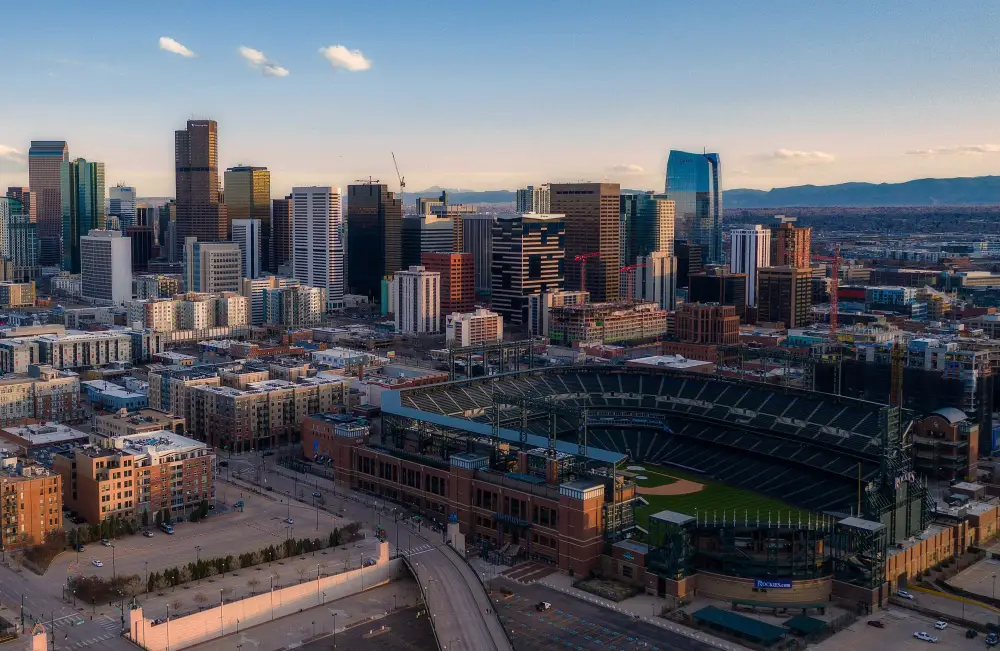
Denver cityscape. CGH Injury Lawyers represents slip and fall victims across Denver, Colorado.
Denver, Colorado

Denver Slip And Fall Lawyers Who Make Property Owners Answer

When a dangerous property condition knocks you down in Denver, whether on an icy parking lot off Colfax Ave, a broken step in a Capitol Hill apartment, or a wet floor in a LoDo restaurant, Colorado law gives you a path to hold the owner responsible. We work from our Denver office at 2701 Lawrence St. and handle everything from evidence preservation through trial in Denver District Court. No fee unless we win.

No fee unless we win

It's More Than Money.

Get my free slip and fall case review

100% confidential. No fee unless we win.

Our Denver Office CGH Injury Lawyers 2701 Lawrence St., Suite 201 Denver, CO 80205 (303) 209-9395 Se habla espanol
5-star rated on Google ABOTA trial advocate on the team Trial lawyers, not a settlement mill 8 attorneys, bilingual EN / ES
  • Colorado slip and fall cases are governed by the Premises Liability Act (C.R.S. 13-21-115). What the Denver property owner owes you depends on whether you were an invitee, a licensee, or a trespasser when you fell.
  • If you fell on Denver city property, such as a public sidewalk, an RTD station near Union Station, or a building owned by the City and County of Denver, you have only 182 days from the date you discover the injury to file a written notice under the Colorado Governmental Immunity Act (C.R.S. 24-10-109). Missing that deadline will almost certainly end your claim.
  • Colorado follows modified comparative fault (C.R.S. 13-21-111). You can still recover damages from the Denver property owner as long as you were less than 50 percent responsible. At 50 percent or more, you recover nothing.

Whether you slipped on black ice in a Cherry Creek parking garage, tripped on a broken paver on the 16th Street Mall, or fell down poorly lit stairs in a Five Points apartment, the path to compensation runs through the same premises liability framework. CGH Injury Lawyers has a physical office in Denver's RiNo neighborhood, minutes from I-70 and I-25. We handle the evidence preservation, the notice filings, the negotiation with the property insurer, and trial in Denver District Court when an owner refuses to be fair. You pay nothing unless we recover for you.

The law that governs your case

Colorado's Premises Liability Act, decoded for Denver slip and fall victims

Colorado does not simply say a property owner must keep their property safe for everyone. The Premises Liability Act (C.R.S. 13-21-115) creates three separate tiers of duty based on why you were on the property. That tier determines what you have to prove, how hard the case is, and what defenses the owner can raise.

The core question at the start of every Denver slip and fall case is not simply where you fell, but why you were on the property. That answer determines the owner's legal duty to you.

Visitor status Who it covers What the Denver owner owes you
Invitee (highest duty) Customers, restaurant patrons, hotel guests, and anyone there for the mutual benefit of both parties Must inspect for hazards, fix dangerous conditions, and warn of dangers that cannot be immediately fixed
Licensee (moderate duty) Social guests, friends visiting a home, or door-to-door salespeople on the property with permission Must warn of known hazards that are not obvious; no duty to actively inspect for hidden dangers
Trespasser (lowest duty) Anyone on the property without permission or legal right Owed only protection from willful or wanton harm; special rules protect child trespassers under the attractive nuisance doctrine

Example: if you slip on black ice in a Denver grocery store parking lot on Federal Blvd, you are a customer and therefore an invitee. The store owes you a duty to inspect the lot, salt or sand it, and post warnings when conditions are dangerous.

Dangerous conditions across Denver

Where Denver slip and fall injuries happen most often

Denver's mix of older commercial corridors, high-density apartment stock, and harsh winter conditions creates a specific set of hazards that show up in premises liability cases again and again. Not every fall creates legal liability, but the conditions below regularly do when owners fail to act.

Winter and structural hazards

  • Ice and snow that an owner failed to clear within a reasonable time after a storm along Speer Blvd or I-25 corridor commercial lots
  • Uneven brick pavers and cracked sidewalks in LoDo and the historic RiNo warehouse district
  • Broken handrails and deteriorating steps in aging Capitol Hill apartment buildings
  • Poorly lit stairwells and shared hallways in older Wash Park and Five Points residential buildings

Commercial and transient hazards

  • Spills and freshly mopped floors with no warning sign in Cherry Creek shops and restaurants
  • Merchandise and display hazards in busy Colfax Ave retail corridors
  • Wet entryways and tracked-in snow at high-foot-traffic locations near Union Station and the 16th Street Mall
  • Loose mats, torn carpet, and cluttered walkways in older commercial buildings throughout downtown Denver

A temporary hazard can still create liability if the Denver owner had enough time to discover and fix it. The legal question is notice, covered in the next section.

Building the case

Proving the Denver property owner knew about the hazard

To win a slip and fall case in Denver, you must prove the property owner knew or should have known about the dangerous condition. That comes down to two kinds of notice, and Denver property owners fight both with predictable defenses.

Actual notice

  • The owner or their staff were directly told about the hazard before you fell
  • A prior complaint or incident report is on file with the property manager
  • A staff member saw the spill, ice patch, or structural defect before your fall

Constructive notice

  • The hazard existed long enough that a reasonable inspection would have found it
  • Maintenance logs show inspections were skipped or delayed
  • Surveillance footage from the Denver property shows how long the danger was present before your fall

The open-and-obvious defense in Denver cases

Denver property owners and their insurers frequently argue that a hazard was open and obvious, meaning visible to any reasonable person, and therefore they had no duty to warn you. Colorado courts have historically been receptive to this argument. The standard is that if a danger is open and obvious to a reasonable person using ordinary care, the owner may not be liable.

That defense is not absolute. Recent Colorado Court of Appeals decisions have begun to limit it when owners create unreasonably dangerous conditions. Even a visible hazard can support liability when it is so dangerous that injury is foreseeable regardless of whether you saw it. This is why surveillance footage, maintenance records, witness statements, and scene photographs from the Denver location matter so much in these cases. The narrative is what wins or loses them.

Denver winters and slip and fall liability

The natural accumulation rule and when a Denver property owner is still liable for ice and snow

Colorado follows the natural accumulation rule, which generally protects property owners from liability for ice and snow that naturally accumulates during a storm. Denver winters create hazardous conditions across parking lots, sidewalks, and building entrances, and the law acknowledges that owners cannot respond instantly to every snowfall. An owner is not automatically liable every time Denver gets snow.

When a Denver property owner can still be liable after a winter fall

  • Enough time has passed after a storm for reasonable snow and ice removal along the Denver property, and the owner did nothing.
  • The owner created or worsened the hazard, for example by piling shoveled snow from a parking lot on Speer Blvd that refroze overnight into a hidden ice patch near the entrance.
  • The owner began snow removal but did it negligently, leaving ice patches or hidden hazards behind in walkways or on building steps.

Recent Colorado appellate decisions have narrowed the natural accumulation defense. When a Denver owner starts clearing snow and does it carelessly, they can lose the protection of this rule. The analysis is fact-specific, and the photographs and timestamps taken on the day of your fall are often the deciding evidence.

Government property in Denver

The 182-day deadline if you fell on Denver government property

If you fell on property owned or controlled by the City and County of Denver, Denver Public Schools, Regional Transportation District, the State of Colorado, or another public entity, you face a much shorter deadline than the standard two-year period. Most people assume they have time and consult an attorney too late.

  1. File written notice within 182 days of discovering the injury

    Under the Colorado Governmental Immunity Act (C.R.S. 24-10-109), you must file a written notice of your claim within 182 days after the date you discover the injury. This is a formal written notice to the government entity, not the same as filing a lawsuit. It is a jurisdictional prerequisite, meaning that missing it will almost certainly bar your claim permanently.

  2. Identify the correct Denver-area entity

    Denver area public entities include the City and County of Denver, Denver Public Schools, RTD (which operates stations throughout downtown Denver and along the I-25 and I-225 corridors), and various state agencies. The notice must reach the correct entity, and that is not always obvious when a fall happens near a shared right-of-way or a transit stop.

  3. Include what the statute requires

    A valid CGIA notice must describe the time, place, and circumstances of the fall and the nature of the injury with the specificity the statute requires. A deficient notice can have the same effect as no notice at all.

  4. Confirm an immunity exception applies

    The CGIA grants immunity from suit for many government functions, but important exceptions exist, including dangerous conditions of public buildings and certain public roadways and sidewalks. We evaluate whether your Denver fall fits one of those exceptions before any notice is filed.

  5. Understand the damage caps that apply to government defendants

    When the CGIA applies and an exception covers your claim, the Colorado Governmental Immunity Act caps the total recovery. For claims accruing on or after January 1, 2026, those caps are $505,000 per person and $1,421,000 per occurrence (C.R.S. 24-10-114(1)(b), as certified by the Colorado Secretary of State). These caps do not apply to claims against private Denver property owners.

If your Denver fall happened on or near any government property, do not wait to call us. The 182-day CGIA notice deadline runs from the date you discover the injury, not necessarily from the fall itself, but it moves faster than people expect. Call (303) 209-9395.

Local knowledge

Denver courts. Denver trauma care. Denver corridors we know.

A Denver slip and fall case lives in Denver: the courthouse where your case may be filed, the hospital that documented your injuries, and the specific corridors where falls most commonly occur. Here is the ground we work on.

Courthouse

Denver District Court, 2nd Judicial District

Personal injury cases arising in Denver County are filed in Denver District Court at the City and County Building, 1437 Bannock St. As the 2nd Judicial District, Denver's civil court has its own local rules, its own docket, and a pool of Denver jurors who understand the city's property conditions. Most slip and fall claims settle before a lawsuit is filed, but where a case would be filed shapes every negotiation. We handle Denver District Court cases directly from our Lawrence St. office.

Trauma Care

Denver Health Medical Center

Serious fall injuries in Denver, including traumatic brain injuries, spinal fractures, and severe hip breaks, are often treated at Denver Health Medical Center, the region's Level I trauma center. Those medical records document the full scope of your injury and become the backbone of your damages claim. Saint Joseph Hospital, Presbyterian/St. Luke's Medical Center, and Rose Medical Center also treat fall injuries throughout the metro. We gather and organize every record from every treating facility.

High-Risk Corridors

Colfax Ave, Federal Blvd, and the I-25 / I-70 Commercial Strip

East Colfax Ave and Federal Blvd carry high pedestrian and commercial foot traffic across aging commercial property stock with inconsistent maintenance. The I-25 and I-70 interchange corridor is lined with parking lots, retail centers, and apartment complexes where winter ice accumulation and inadequate lighting regularly contribute to falls. We are familiar with the property ownership patterns, the insurers that cover them, and the defense firms they typically retain.

Compensation

What you can recover from a Denver slip and fall, even if you were partly at fault

Colorado follows modified comparative negligence with a 50 percent bar (C.R.S. 13-21-111). You can still recover damages from the Denver property owner as long as you were less than 50 percent responsible for the fall. Your award is reduced by your share of fault. At 50 percent or more, you recover nothing. Denver property insurers know this rule and will aggressively argue that you were distracted or should have seen the hazard, which is exactly why documenting the scene matters from the first moments after a fall.

Economic damages

  • Emergency care, surgery, and follow-up treatment at Denver Health or another metro hospital
  • Lost wages and lost earning capacity
  • Rehabilitation, physical therapy, and future medical needs
  • Out-of-pocket costs tied to the fall and the recovery

Non-economic damages

  • Pain and suffering
  • Emotional distress and anxiety following a serious fall
  • Permanent disability and diminished quality of life
  • Loss of enjoyment of life

Colorado does not cap economic damages such as medical bills and lost wages in premises liability cases. Non-economic damages are subject to the general statutory cap under C.R.S. 13-21-102.5, currently $1.5 million for claims accruing on or after January 1, 2025, with inflation adjustments starting in 2028. Importantly, damages for physical impairment or disfigurement are not capped at all under C.R.S. 13-21-102.5(5). We work with medical and economic experts when a case requires it to document the full value of your claim against the Denver property owner or their insurer.

Why CGH in Denver

Why Denver slip and fall victims choose CGH Injury Lawyers

A real Denver office, trial-ready attorneys, bilingual help, and no fee unless we win. We do not publish slip and fall settlement figures, because every fall injury is different and a number on a page tells you nothing about your case. What we offer is the work: the evidence preservation, the notice filings, the depositions, and the courtroom when that is what full recovery requires.

The Statute

C.R.S. 13-21-115

Colorado's Premises Liability Act is the framework for your case. Your visitor status at the time of the fall determines what the Denver owner owed you and what you must prove to win.

Real Denver Office

Not a virtual address.

Our office at 2701 Lawrence St., Suite 201, in the RiNo and Five Points area is where your attorney works. You can walk in, review your medical records, and meet the people handling your case. We know Denver District Court, the local defense firms, and the insurers that cover Denver commercial properties.

Evidence First

Footage gets overwritten fast.

We send preservation letters for surveillance footage and maintenance logs immediately. In Denver's busy commercial corridors, security footage cycles in 24 to 72 hours.

182-Day Deadline

Government falls move fast.

If you fell on Denver city, RTD, or state property, we protect the CGIA notice deadline before it passes so your claim is not barred before it begins.

Trial-Ready

8 attorneys, prepared for trial.

Managing Partner Kevin Cheney is a member of the American Board of Trial Advocates and has tried over 25 cases to verdict. When attorneys are genuinely ready to try a slip and fall case in Denver District Court, property insurers respond differently to a demand letter.

Bilingual

Hablamos espanol.

Spanish-speaking attorneys and staff serve Denver's Spanish-speaking community in their first language throughout the case.

No Win, No Fee

Contingency only.

You pay nothing out of pocket for legal fees. We advance costs and collect only from a settlement or verdict. If we do not win, you owe us nothing.

After the fall

What to do after a slip and fall in Denver

Evidence disappears fast in Denver. Footage gets overwritten, spills get cleaned, and ice melts. Protect your rights from the first moments after a fall. Here is the path we walk with you.

  1. Get medical care

    Denver Health Medical Center treats serious fall injuries including traumatic brain injuries and spinal fractures. Saint Joseph Hospital, Presbyterian/St. Luke's, and Rose Medical Center also serve Denver residents. Even a fall that feels minor can involve internal injury, fracture, or head trauma. Get examined the same day, and keep every record and receipt.

  2. Document the scene immediately

    Photograph the exact spot where you fell, the hazard that caused it, your injuries, any warning signs or the absence of them, and the surrounding area. Get the names and contact information of any witnesses. On private property, ask to speak with a manager and request that an incident report be completed.

  3. Identify who owns and controls the Denver property

    Property ownership is not always obvious in Denver. A retail tenant may be separate from the commercial landlord. An RTD station is different from the private property adjacent to it. Identifying the right defendant early prevents the claim from being misdirected to the wrong insurer or entity.

  4. Call before the insurer does

    The property owner's insurer may contact you quickly with a recorded statement request or a low settlement offer. Do not give a recorded statement or accept anything before speaking with us. The first offer is rarely the fair one. Call (303) 209-9395.

  5. We preserve the evidence and file any required notices

    We send preservation letters for surveillance footage and maintenance logs, photograph the scene, interview witnesses, and if your fall involved Denver government property, we protect the 182-day CGIA written notice deadline before it passes.

  6. We negotiate, and litigate when needed

    Most Denver slip and fall claims settle. We negotiate from a position of trial readiness, and when the property owner or insurer refuses a fair offer, we file in Denver District Court and try your case.

5-star rated on Google

I wish I could leave more than 5 stars!

Grace Macaluso, 5-star Google review
Questions

Denver slip and fall, frequently asked questions

How long do I have to file a slip and fall claim in Denver?

You generally have two years from the date of the fall to file a personal injury lawsuit in Colorado. If you fell on Denver government property, such as a city sidewalk, a Denver Public Schools building, or an RTD station, a much shorter 182-day written notice deadline applies under the Colorado Governmental Immunity Act (C.R.S. 24-10-109). That clock runs from the date you discover the injury, not necessarily the fall date. Missing either deadline will almost certainly end your claim, so consult an attorney as soon as possible after the fall.

Can I sue the City of Denver if I fell on a public sidewalk?

Yes, in certain situations. Claims against the City and County of Denver are governed by the Colorado Governmental Immunity Act (C.R.S. 24-10-109). You must file a formal written notice within 182 days of discovering the injury, and an immunity exception must cover your claim. Cities can be liable for dangerous sidewalk conditions if they had actual or constructive notice and failed to repair them. We evaluate the specific facts of your Denver fall against the applicable CGIA exceptions before any notice is filed.

What if I was partly at fault for my fall in Denver?

Colorado's modified comparative negligence rule (C.R.S. 13-21-111) lets you recover damages as long as you were less than 50 percent responsible for the fall. Your compensation is reduced by your percentage of fault. At 50 percent or more, you recover nothing. Denver property insurers commonly argue that you were distracted, wearing inappropriate footwear, or should have noticed the hazard. That is why scene documentation, witness statements, and surveillance footage are so critical to preserving your recovery.

Where would my Denver slip and fall lawsuit be filed?

Personal injury cases arising in Denver County are filed in Denver District Court, the 2nd Judicial District, with civil matters heard at 1437 Bannock St., the City and County Building. Most slip and fall claims settle before a lawsuit is filed, but the court where a case would be tried shapes every negotiation. We handle Denver District Court cases directly from our Lawrence St. office.

Is a Denver property owner liable every time someone slips on ice?

Not automatically. Colorado follows the natural accumulation rule, which generally protects property owners from liability for ice and snow that naturally accumulates during a storm. However, once enough time has passed for reasonable snow removal after a storm, or if the Denver owner created or worsened the hazard, for example by piling shoveled snow that refroze into an ice patch near building entrances, liability can attach. Recent Colorado appellate decisions have narrowed the natural accumulation defense when owners begin snow removal but do it carelessly.

What damages can I recover in a Denver slip and fall case?

You may be entitled to compensation for medical bills, lost wages, rehabilitation costs, pain and suffering, emotional distress, and future care needs. Colorado does not cap economic damages such as medical bills and lost wages in premises liability cases. Non-economic damages are subject to the general statutory cap under C.R.S. 13-21-102.5, currently $1.5 million for claims accruing on or after January 1, 2025. Damages for physical impairment or disfigurement are not capped at all under that statute. If the fall was on Denver government property, the CGIA caps apply instead at $505,000 per person and $1,421,000 per occurrence for claims accruing on or after January 1, 2026 (C.R.S. 24-10-114(1)(b)).

What does my visitor status have to do with my Denver slip and fall case?

Under Colorado's Premises Liability Act (C.R.S. 13-21-115), your visitor status at the time of the fall determines what duty the Denver property owner owed you. An invitee, such as a customer at a Cherry Creek store or a patron at a LoDo restaurant, is owed the highest duty: the owner must actively inspect for hazards and fix them. A licensee, such as a social guest at someone's home, is owed a duty to warn of known dangers only. A trespasser is owed almost nothing. This classification is where every Denver slip and fall case begins.

The property owner says the hazard was open and obvious. Does that end my claim?

Not necessarily. The open-and-obvious defense is frequently raised by Denver property owners and their insurers, but it is not absolute. Colorado courts have begun limiting it in cases where the hazard was so unreasonably dangerous that injury was foreseeable regardless of its visibility. The facts of how the hazard was created, how long it existed, and whether the owner took any steps to address it all matter. We use surveillance footage, maintenance records, and witness testimony to challenge this defense when the circumstances support it.

It's More Than Money.

You were hurt on someone else's Denver property. We handle everything else.

Free consultation. No fee unless we win. Available in English and Spanish.

Tell us what happened

100% confidential. No fee unless we win.

Prefer to read first? See how Colorado's Premises Liability Act works.

CGH Injury Lawyers · 2701 Lawrence St., Suite 201, Denver, CO 80205