
ClickCease
Free consultations · Se habla espanol
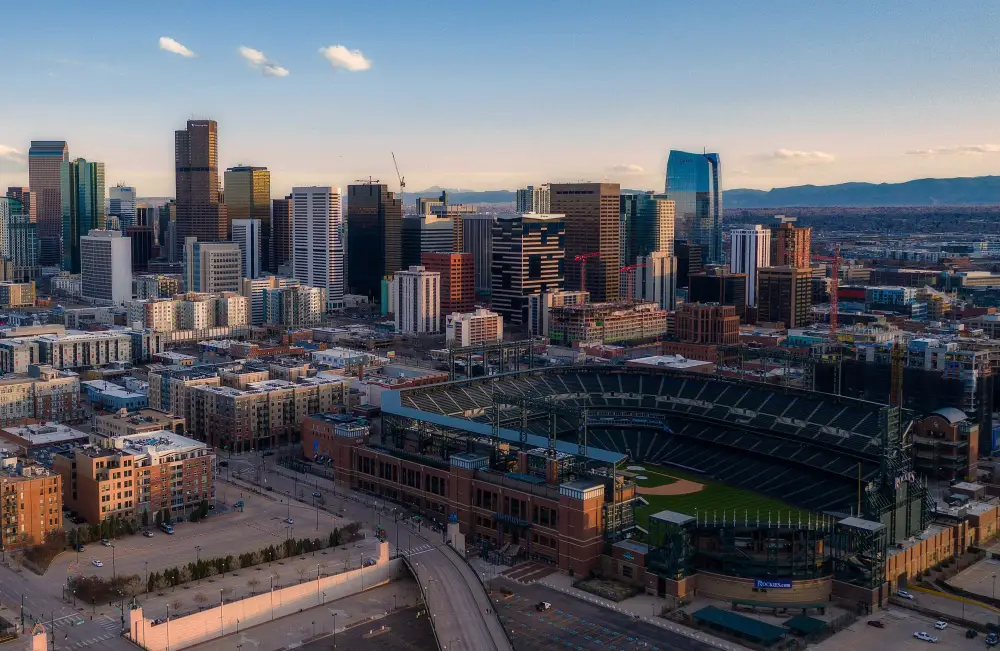
Commercial property along Federal Boulevard in Federal Heights, Colorado. CGH Injury Lawyers represents premises liability victims in Federal Heights and Adams County from our Denver office.
Federal Heights, Colorado

Federal Heights Premises Liability Lawyers Who Make Property Owners Answer for Unsafe Conditions

A fall at Water World, a slip on an icy parking lot along Federal Boulevard, or an assault in a poorly lit commercial property in Federal Heights can leave you with serious injuries and an owner whose insurer's first move is to minimize your claim. CGH Injury Lawyers serves Federal Heights from our Denver office, investigates the hazard, proves the owner's duty and notice, and files in Adams County District Court when a fair settlement is refused. No fee unless we win.

No fee unless we win

It's More Than Money.

Start my free Federal Heights case review

100% confidential. No fee unless we win.

Serving Federal Heights From Our Denver Office CGH Injury Lawyers 2701 Lawrence St., Suite 201 Denver, CO 80205 (303) 209-9395 Se habla espanol
5-star rated on Google ABOTA trial advocate on the team Trial lawyers, not a settlement mill No fee unless we win
  • The Colorado Premises Liability Act (C.R.S. 13-21-115) is the law that decides whether a Federal Heights property owner is legally responsible for your injury. It ties the owner's duty of care directly to your status as an invitee, licensee, or trespasser at the time you were hurt. Federal Heights commercial properties along Federal Boulevard and recreational facilities such as Water World and the Hyland Hills Park and Recreation District attract thousands of visitors each week, and the duty owed to those visitors is the highest level the Act provides.
  • The deadline to file a premises liability lawsuit in Colorado is generally two years from the date of injury (C.R.S. 13-80-102). If a public entity owns or maintains the property where you were hurt, a written notice of claim must reach that entity within 182 days of discovering the injury (C.R.S. 24-10-109(1)) or the claim against the government is completely barred.
  • Colorado uses a modified comparative fault rule (C.R.S. 13-21-111). You can still recover damages as long as your share of fault is less than 50 percent, and your award is reduced only by your percentage of responsibility. Property owners and their insurers routinely argue that you were watching your phone instead of the floor, that the hazard was obvious, or that you assumed the risk. Our job is to contest those arguments with hard evidence.

Federal Heights is a city of roughly 14,382 people in Adams County, home to some of the metro area's most heavily visited commercial and recreational properties. When a fall at a water park, a slip on an unsalted parking lot along Federal Boulevard, or an assault in a commercial building without proper lighting leaves you injured and facing medical bills, CGH Injury Lawyers handles the claim from our Denver office, builds the evidence the Act requires, and files in Adams County District Court when insurers refuse to be fair. You pay nothing unless we recover for you.

The governing law

The Colorado Premises Liability Act: what it means for Federal Heights injury victims

The Colorado Premises Liability Act, codified at C.R.S. 13-21-115, replaced older common-law negligence rules and created a structured framework that governs every property injury claim in Colorado, including those that happen in Federal Heights at Water World, in a commercial strip along Federal Boulevard, or at a Hyland Hills recreation facility. Understanding how the Act works is the first step in knowing whether a claim is worth pursuing.

The Act applies to virtually every type of property in Colorado: retail stores, restaurants, parking lots, apartment buildings, water parks, recreational facilities, and private homes. It covers both private owners and commercial entities. When a government entity, such as Adams County or a public school district, owns or maintains the property where you were hurt, additional rules under the Colorado Governmental Immunity Act apply alongside the Premises Liability Act, including a shorter notice deadline and caps on what you can recover from that government entity.

The Act's core question is simple: did the property owner meet the duty they owed you? That duty is not the same for every visitor, and it is not the same across every type of hazard. Whether an owner failed their duty is determined by your visitor status, what the owner knew or reasonably should have known, and what steps they took or failed to take in response.

Visitor status

Invitee, licensee, or trespasser: which category applies to your Federal Heights injury?

Colorado law divides property visitors into three categories under C.R.S. 13-21-115, and the category you fall into at the moment of injury determines what the property owner legally owed you. In Federal Heights, the distinction matters most in commercial and recreational settings where visitor flow is high and the hazard patterns are predictable.

  1. Invitees

    People who enter a property for a purpose that benefits the owner or under a general invitation to the public. Shoppers in a Federal Boulevard retail store, visitors at Water World, and guests at Hyland Hills recreation facilities are all invitees. Property owners owe invitees the highest duty of care under the Act: they must actively inspect the property, fix dangerous conditions, and warn about hazards they know about or should have discovered through reasonable inspection. The invitee standard is why a store cannot simply say it did not know about the spill that caused your fall.

  2. Licensees

    People on the property with the owner's permission but for their own purpose, such as a social guest at a private home. Owners must warn licensees about known dangers, but they are not required to inspect the property for hazards they are not already aware of. The licensee standard is narrower than the invitee standard and is the source of many disputes when an injury occurs in a residential or semi-private setting.

  3. Trespassers

    People on the property without permission. Owners generally owe trespassers only the duty to refrain from willfully or deliberately harming them. One significant exception is the attractive nuisance doctrine, which raises the duty when a child trespasser is drawn to a feature, such as an unsecured pool or an accessible construction site, that a child would not appreciate as dangerous. Federal Heights properties with active water features or heavy machinery may carry attractive nuisance exposure during construction or off-season periods.

Visitor status is not always obvious, and it can change the moment you step outside the area you were invited to use. A shopper who drifts into an employee-only stockroom can lose invitee status. A Water World guest who climbs over a fence into a closed attraction may become a trespasser. Insurers frequently dispute visitor status as an early defensive move because it shifts the duty analysis. We examine the specific facts to establish what status applied at the precise moment of injury.

Where these injuries happen in Federal Heights

Federal Heights courts. Federal Heights trauma care. Federal Heights property hazards.

Federal Heights sits at the intersection of several documented property-hazard patterns, from the seasonal crowd density of Water World to the year-round commercial traffic along Federal Boulevard and the winter conditions that turn Adams County parking lots into liability traps. These are the settings we see most often in Federal Heights premises cases.

Courthouse

Adams County District Court, 17th Judicial District

A Federal Heights premises liability lawsuit that exceeds the county-court jurisdictional limit is filed in Adams County District Court, located at the Adams County Justice Center, 1100 Judicial Center Dr., Brighton, CO 80601, within the 17th Judicial District, which covers Adams County and Broomfield County. The local jury pool, the defense firms that regularly appear there, and the district's procedural rules all differ from other Colorado courts. CGH Injury Lawyers handles Adams County District Court filings directly and does not refer Adams County cases out to local counsel.

Trauma Care

HCA HealthONE Mountain Ridge and Denver Health Shock Trauma

HCA HealthONE Mountain Ridge (formerly North Suburban Medical Center) is the only CDPHE-designated Level II Trauma Center in Adams County and the primary facility treating serious property-injury victims in and near Federal Heights. For catastrophic injuries involving spinal damage, severe head trauma, or multiple fractures from a fall, Denver Health's Ernest E. Moore Shock Trauma Center in Denver is a Level I Adult Trauma Center designated by both the American College of Surgeons and the State of Colorado. Trauma records from both facilities document the scope and severity of your injuries and form the backbone of your damages claim in Adams County District Court.

Recreational and Commercial Properties

Water World, Hyland Hills, and Federal Boulevard Commercial Corridor

Water World at 8801 N. Pecos St. is one of the largest water parks in the United States and a major source of seasonal premises liability exposure in Federal Heights. Wet surfaces, crowded walkways, and the concentration of visitors at the park create predictable fall and impact hazards throughout the summer season. Hyland Hills Park and Recreation District facilities add year-round foot traffic and recreational surfaces that require active maintenance. Federal Boulevard (CO-88), carrying 30,000 to 40,000 vehicles per day, is flanked by commercial properties, parking lots, and retail stores where lighting deficiencies and ice accumulation in winter generate a significant share of slip-and-fall claims in Adams County. Adams County averages 55 to 60 inches of snowfall per year, and commercial owners along Federal Boulevard who fail to clear ice and snow within a reasonable time after a storm have created the conditions for a premises claim.

Duty, notice, and the defenses owners raise

What the property owner owed you and how we prove they failed

For invitees, the duty to exercise reasonable care is active. It means regular inspections, prompt cleanup of hazards, timely repair of broken walkways, functional lighting in parking structures and corridors, and snow and ice removal after a storm ends. A Federal Heights property owner cannot satisfy that duty by waiting for a customer to report the problem. The duty to inspect and act belongs to the owner, not the visitor.

Actual notice and constructive notice

Property owners almost always claim they did not know about the condition that caused your injury. Colorado law does not require proof that the owner knew. An owner can be liable for a hazard they reasonably should have discovered through regular inspection. That is constructive notice, and it is one of the most important concepts in a Federal Heights premises case.

  • Duration. A water spill that sat for two hours in a Federal Boulevard grocery aisle is treated very differently from one that appeared moments before your fall. The longer a hazard exists without correction, the stronger the constructive-notice argument becomes.
  • Location and visibility. A broken floor tile at the entrance to a Federal Heights retail store is harder to explain away than one in a rarely visited corner. High-traffic areas carry a higher inspection obligation.
  • Inspection records. Commercial property owners who cannot produce dated inspection logs often lose the argument that they were performing regular safety sweeps. We subpoena those records.
  • Winter weather. Colorado courts recognize the ongoing-storm doctrine, which gives owners some protection during active snowfall. But once precipitation stops, owners must clear Federal Heights parking lots and walkways within a reasonable time. Ice that remains for days after a storm is evidence of constructive notice.

Defenses the owner will raise and how we counter them

  • Open and obvious. Owners argue the hazard was visible enough that a reasonable person would have avoided it. Colorado courts apply this defense narrowly. A danger that is unreasonably hazardous, or one that appears in a location where visitors are naturally looking at displays rather than the floor, can still support liability even if someone might have noticed it.
  • Comparative negligence. Under C.R.S. 13-21-111, your recovery is reduced by your share of fault, but you can still recover as long as your fault is less than 50 percent. Adjusters frequently inflate your percentage to shrink the payout. We contest that strategy with evidence of how long the hazard existed and what the owner was or should have been doing about it.
  • Liability waivers. Some Federal Heights recreational facilities, including water parks, use liability waivers. Waivers can be enforceable in Colorado, but they must be clear and specific. Waivers for gross negligence or willful misconduct are generally unenforceable, and waivers that are buried in fine print or presented in a way that does not give a reasonable person fair notice are subject to challenge.
  • No prior incidents. An owner argues that because nobody has been hurt there before, the hazard was not foreseeable. Prior incident reports and maintenance records we can subpoena often tell a different story.

After the injury

What to do after a property injury in Federal Heights

Premises liability cases are won or lost on evidence that disappears quickly. Surveillance footage at Federal Heights commercial properties is typically overwritten within days. Incident reports get filed and sometimes lost. The steps you take in the first hours shape the strength of your claim.

  1. Get medical care without delay

    Serious fall injuries and assaults in Federal Heights are treated at HCA HealthONE Mountain Ridge, the only CDPHE-designated Level II Trauma Center in Adams County. For the most critical injuries, Denver Health's Ernest E. Moore Shock Trauma Center is a Level I Adult Trauma Center available in Denver. Even injuries that feel minor at the scene can hide fractures, spinal damage, or traumatic brain injury. Get examined the same day and keep every record. Those records are the foundation of your damages claim.

  2. Report the incident and get documentation

    Report the injury to the property owner or manager before you leave. Ask for a copy of any incident report they complete. At Water World or a Hyland Hills facility, ask for the incident number. At a Federal Boulevard retail store, get the manager's name and note the time. That paperwork is the owner's own record of what happened and where, and it cuts off later arguments that they had no notice.

  3. Document the scene immediately

    Photograph the exact condition that caused your injury before it is cleaned up or repaired. Capture the lighting, the surface condition, any warning signs or their absence, and your visible injuries. On Federal Boulevard commercial properties and at Water World, camera footage may exist. Record the location precisely so we can send a preservation letter to the owner quickly, before footage is overwritten.

  4. Collect witness information

    Get the names and phone numbers of anyone who saw the fall or the hazard before your injury. Witness accounts of how long a condition existed, whether other people avoided the area, or whether the property showed visible signs of neglect are critical to establishing constructive notice. Witnesses leave the scene and are hard to find later.

  5. Do not give a recorded statement to the owner's insurer

    The property owner's insurance company will reach out quickly. Do not agree to a recorded statement, accept any payment, or sign any document without an attorney reviewing it first. Early statements about how you feel or what you were doing become part of the claim record and are used to minimize your recovery.

  6. Contact a Federal Heights premises liability attorney

    Colorado's two-year filing deadline for most premises liability claims (C.R.S. 13-80-102) runs from the date of injury. If a government entity owns the property, a written notice of claim must reach that entity within 182 days of discovering the injury (C.R.S. 24-10-109(1)) or the claim is barred. Evidence preservation starts the day of the injury. A free consultation costs nothing and protects your options before the evidence is gone.

Compensation

What can a Federal Heights premises liability victim recover?

Colorado law allows injured people to recover two broad categories of damages after a property injury: economic losses documented with bills and records, and non-economic losses for the human cost of living with an injury. In serious Federal Heights premises cases involving fractures, spinal damage, or traumatic brain injury from a fall, the uncapped categories typically drive the most value in the claim.

Economic damages (never capped)

  • Medical expenses, past and future
  • Lost wages and lost income
  • Loss of earning capacity
  • Rehabilitation and physical therapy costs
  • Future care and medical equipment
  • Out-of-pocket expenses tied directly to the injury

Non-economic and other damages

  • Pain and suffering (capped at $1.5 million for claims accruing on or after January 1, 2025, under C.R.S. 13-21-102.5, with inflation adjustments beginning in 2028)
  • Emotional distress
  • Loss of enjoyment of life
  • Loss of consortium for a spouse or family member
  • Compensation for permanent physical impairment or disfigurement (not capped under C.R.S. 13-21-102.5)

Economic damages have no cap in Colorado. Non-economic damages such as pain and suffering are capped at $1.5 million for claims accruing on or after January 1, 2025, under C.R.S. 13-21-102.5. Compensation for permanent physical impairment or disfigurement is not capped at all under that statute, and in the most serious Federal Heights fall cases involving permanent disability or disfigurement, those uncapped categories are where the full value of the claim is built.

Comparative fault applies. Under C.R.S. 13-21-111, your recovery is reduced by your percentage of fault, but you can still recover as long as your share of fault is less than 50 percent. At 50 percent or more, you recover nothing. We build the case to document the owner's responsibility and contest any effort to shift an unfair share of the blame to you.

5-star rated on Google

I wish I could leave more than 5 stars!

Grace Macaluso, 5-star Google review

How it works

How a Federal Heights premises liability claim works

A Federal Heights premises liability case moves through several stages, from a free initial evaluation to trial in Adams County District Court when an insurer refuses to offer fair compensation. Evidence disappears fast. We move quickly to preserve it, then build the claim as if a jury will see it.

  1. Free case evaluation

    We review the facts of your Federal Heights property injury, identify your visitor status under C.R.S. 13-21-115, and explain your rights at no cost and no obligation.

  2. Preserve the evidence

    We send a preservation letter to the property owner or manager immediately to secure surveillance footage, incident reports, maintenance records, and inspection logs before they are erased, overwritten, or destroyed. Surveillance footage at Federal Boulevard commercial properties and at Water World can be overwritten within 24 to 72 hours. We do not wait.

  3. Prove the duty and the notice

    We establish the specific duty the owner owed you as an invitee, licensee, or other visitor under the Act. We document how long the hazard existed, what the owner's inspection practices were, and whether the owner had actual or constructive notice of the condition. Inspection records, prior incident reports, and maintenance logs subpoenaed from the owner are central to this stage.

  4. Build and send the demand

    We calculate the full value of your claim across every category Colorado law allows, including future medical care and long-term impact, and send a documented demand to the property owner's insurer. We do not propose a number designed to settle quickly. We propose what full recovery looks like.

  5. Negotiate from a position of trial readiness

    Most Federal Heights premises cases settle before any lawsuit is filed. We negotiate knowing that we are prepared to try the case. Insurers respond differently to attorneys who have demonstrated they will walk into Adams County District Court.

  6. File in Adams County District Court when necessary

    If the insurer refuses a fair offer, we file in Adams County District Court at the Adams County Justice Center, 1100 Judicial Center Dr., Brighton, CO 80601, within the 17th Judicial District. Managing Partner Kevin Cheney is an ABOTA member who has tried over 25 cases to verdict. When full recovery requires presenting your Federal Heights premises case to an Adams County jury, we are prepared to do that.

Your team

The attorneys handling your Federal Heights premises liability case

CGH Injury Lawyers is a eight-attorney Colorado firm founded in 2016, formerly Cheney Galluzzi and Howard. Managing Partner Kevin Cheney is a member of the American Board of Trial Advocates (ABOTA) and has tried over 25 cases to verdict. Timothy G. Tarr has been recognized by Best Lawyers every year since 2023. Every Federal Heights premises liability case is handled by a licensed Colorado attorney, not a paralegal. CGH Injury Lawyers does not have a Federal Heights office. We serve Federal Heights from our Denver office at 2701 Lawrence St., Suite 201, and we are direct about that: no local storefront, just the quality of the legal work.

ABOTA member on the team Tim Tarr: Best Lawyers in America since 2023 Over 25 cases to verdict Adams County District Court experience Bilingual EN / ES Free consultation No fee unless we win

Frequently asked questions

Federal Heights premises liability: frequently asked questions

Does CGH Injury Lawyers have an office in Federal Heights?

No. CGH Injury Lawyers has one office, at 2701 Lawrence St., Suite 201, Denver, CO 80205. We serve Federal Heights from our Denver office, file Federal Heights premises cases in Adams County District Court in Brighton when necessary, and meet you where it is convenient. Call us at (303) 209-9395.

How long do I have to file a premises liability lawsuit after an injury in Federal Heights?

Most premises liability claims in Colorado must be filed within two years of the date of injury under C.R.S. 13-80-102. If the property where you were hurt is owned or maintained by a government entity, such as Adams County or a public recreation district, a different and shorter deadline applies: you must serve that government entity with a formal written notice of claim within 182 days of discovering the injury under C.R.S. 24-10-109(1). Failure to serve that notice bars the claim against the government entirely. Consult an attorney as soon as possible after a Federal Heights property injury.

Can I still recover if the property owner says the hazard was obvious?

Possibly. Colorado courts apply the open-and-obvious defense narrowly. A danger can be visible and still create liability if it is unreasonably dangerous or if it appears in a location where a reasonable visitor would be looking at displays, merchandise, or an attraction rather than watching their feet. The fact that another person might have seen and avoided the hazard does not automatically protect the owner. We evaluate the specific circumstances of your Federal Heights injury to determine whether the open-and-obvious defense is likely to hold up under scrutiny.

What if I was partly at fault for the property injury?

You can still recover under Colorado's modified comparative fault rule (C.R.S. 13-21-111) as long as your share of fault is less than 50 percent. Your award is reduced by your percentage of responsibility. If a jury finds you were 25 percent at fault, you recover 75 percent of your damages. At 50 percent or more at fault, you recover nothing. Property owners and their insurers routinely try to push your share of fault to minimize the payout. Having an attorney who contests that strategy with hard evidence of the owner's negligence protects the full value of your claim.

Does Colorado cap the damages I can recover in a Federal Heights premises liability case?

Economic damages such as medical bills, lost wages, and future care costs are never capped in Colorado. Non-economic damages such as pain and suffering are capped at $1.5 million for claims accruing on or after January 1, 2025, with inflation adjustments beginning in 2028 (C.R.S. 13-21-102.5). Compensation for permanent physical impairment or disfigurement is not subject to any cap at all. In serious Federal Heights fall cases involving permanent disability, the uncapped economic and physical-impairment categories are where the most significant recovery is built. If the property is publicly owned and CGIA applies, separate and lower damage caps under C.R.S. 24-10-114 may limit recovery against that government entity.

I was hurt at Water World or a Hyland Hills facility. Can I still have a claim even if I signed a waiver?

Possibly. Liability waivers at recreational facilities like Water World can be enforceable in Colorado, but enforcement is not automatic. The waiver must be clear, specific, and fairly presented to the visitor. A waiver does not eliminate liability for gross negligence or willful and wanton conduct. If the hazard that hurt you resulted from something worse than ordinary carelessness, or if the waiver language does not clearly cover the type of harm you suffered, the waiver may not protect the property owner. We evaluate each waiver on its specific language and the facts of the incident.

It's More Than Money.

You were hurt on unsafe property in Federal Heights. We handle everything else.

Free consultation. No fee unless we win. Available in English and Spanish. Serving Federal Heights from our Denver office.

Tell us what happened

100% confidential. No fee unless we win.

Read next: Colorado premises liability law: a complete guide

CGH Injury Lawyers · Serving Federal Heights from 2701 Lawrence St., Suite 201, Denver, CO 80205