ClickCease
Free consultations · Se habla espanol
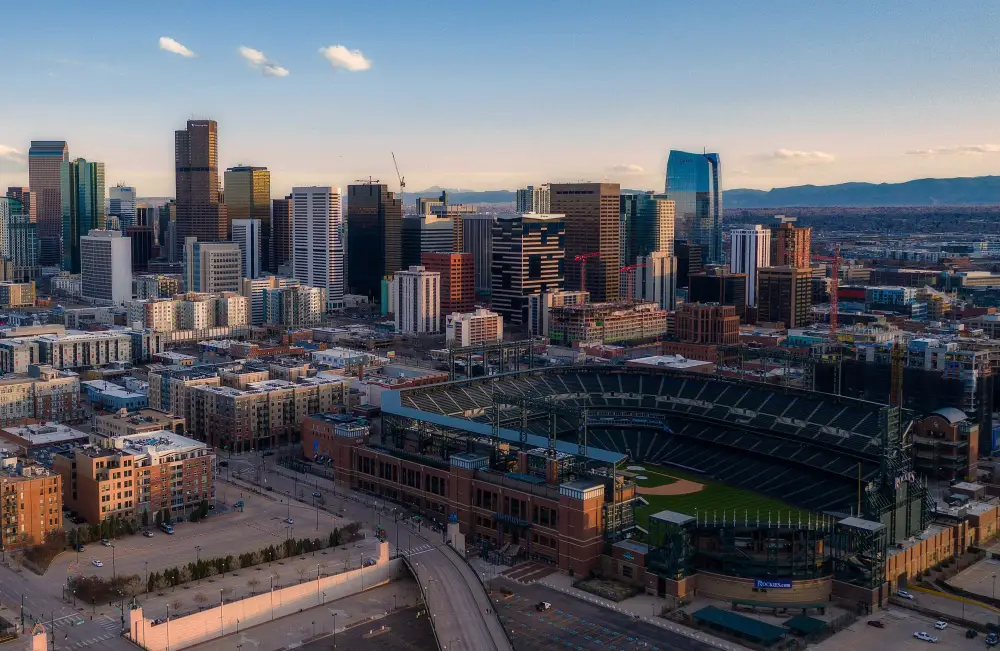
US-36 commuter corridor near Superior, Colorado, where high-speed traffic on the Denver-Boulder highway creates serious brain injury crash risk. CGH Injury Lawyers represents Superior TBI victims from our Denver office.
Superior, Colorado

Superior Brain Injury Lawyers Who Build the Case an Insurer Cannot Dismiss

A traumatic brain injury from a crash on US-36 or McCaslin Boulevard can leave no mark on a standard scan while rearranging every part of how you think, work, and live. CGH Injury Lawyers serves Superior brain injury victims from our Denver office, assembles the neurological proof that standard imaging misses, and files at the Boulder County District Court when an insurer refuses to pay full value. You pay nothing unless we win.

No fee unless we win

It's More Than Money.

Get my free Superior case review

100% confidential. No fee unless we win.

Serving Superior from our Denver Office CGH Injury Lawyers 2701 Lawrence St., Suite 201 Denver, CO 80205 (303) 209-9395 Se habla espanol
5-star rated on Google ABOTA trial advocate on the team Built for trial No fee unless we win
  • CGH Injury Lawyers does not have a Superior office. We serve Superior and all of Boulder County from our Denver office at 2701 Lawrence St., Suite 201, and we file Superior brain injury lawsuits at the Boulder County District Court, 1777 Sixth St., Boulder, CO 80302, in Colorado's 20th Judicial District.
  • A brain injury lawsuit from a motor vehicle crash on US-36 or McCaslin Boulevard must be filed within three years of the crash under C.R.S. 13-80-101(1)(n). If a government road defect or public entity contributed to the injury, a separate written notice of claim must reach the responsible entity within 182 days of discovering the injury under C.R.S. 24-10-109(1). Missing either deadline can end the claim.
  • Colorado caps non-economic damages such as pain and suffering at $1.5 million for claims accruing on or after January 1, 2025 (C.R.S. 13-21-102.5). Medical costs, lost wages, and future care expenses are uncapped. Permanent physical impairment and disfigurement compensation is also uncapped, and in serious TBI cases those uncapped categories carry the highest dollar value.

Superior sits where US Highway 36 descends from the foothills into the Denver metro. Commuters from Rock Creek neighborhoods merge onto a highway carrying 60,000-plus vehicles per day. When a crash at that speed generates the rotational and linear forces that tear axonal fibers deep inside the brain, the damage is real and permanent while appearing nowhere on the emergency department CT ordered at Foothills Hospital eight miles away. CGH Injury Lawyers represents Superior TBI victims from our Denver office, assembles the neurological, neuropsychological, and economic proof that bridges that gap, and litigates at the Boulder County District Court when insurers use a clean scan as a reason to deny fair compensation. You pay nothing unless we recover for you.

Local knowledge

Superior courts. Superior trauma care. Superior crash corridors.

Winning a Superior brain injury case requires knowing the three systems that govern it: the courthouse where the lawsuit is filed, the hospitals that treat the victim, and the roads where the crash occurred. These ground facts shape every strategic decision before a jury is ever seated.

Courthouse

Boulder County District Court, 20th Judicial District

Superior is a statutory town within Boulder County. Every serious brain injury lawsuit from Superior, one that exceeds the county-court jurisdictional ceiling, is filed at the Boulder County District Court, 1777 Sixth St., Boulder, CO 80302, in Colorado's 20th Judicial District. The jury pool that decides a Superior TBI case, the defense firms that appear there routinely, and the judicial temperament of that court shape how an insurer evaluates settlement offers. We file and try 20th Judicial District cases directly from our Denver office and know that courtroom environment well.

Trauma Care

Foothills Hospital (Boulder, ~8 miles) and Longmont United Hospital (~14 miles)

Superior has no acute-care hospital within its boundaries. When a crash on US-36 or McCaslin Boulevard produces a serious injury, the typical destination is Foothills Hospital in Boulder, roughly eight miles from central Superior. Longmont United Hospital, about 14 miles away, serves as a second option for Boulder County residents. Emergency department records from both facilities, including the initial Glasgow Coma Scale score, the imaging reports, and the admission notes, form the medical anchor for any brain injury claim originating in Superior. Transport distance and initial triage notes matter: the time between impact and the first neurological assessment is part of the story we tell.

High-Risk Roads

US-36, McCaslin Boulevard, and the Rock Creek corridor

US Highway 36 is the spine of Superior's geography, running directly through the city as the primary route between Denver and Boulder. Traffic volumes and highway speeds at the McCaslin Boulevard interchange create the conditions for high-force rear-end collisions and merge-point impacts that generate diffuse axonal injury. McCaslin Boulevard is the main north-south arterial through the city, connecting Rock Creek neighborhoods to US-36 and Louisville. Rock Creek Road threads through the interior residential areas near Rock Creek Community Park and the trailhead corridors, where cyclists and pedestrians share space with vehicles traveling local-road speeds. The December 2021 Marshall Fire destroyed large portions of Superior including Rock Creek neighborhood near Marshall Road. Active reconstruction and post-fire rebuilding along McCaslin and Rock Creek Road have introduced construction-zone conditions, altered sight lines, and new traffic patterns that continue to affect crash risk years after the fire.

Why these cases are harder

Why a Superior brain injury claim is unlike any other personal injury case

A fractured leg from a US-36 crash appears on the first X-ray taken at Foothills Hospital. A traumatic brain injury from the same crash can produce a normal CT result, a normal MRI result, and a discharge from the emergency department with no neurological finding, while the person walks out with permanently damaged white-matter tracts that will disrupt cognitive function for years. That gap between the scan and the lived reality is the central challenge in every Superior TBI claim.

The physics of a US-36 corridor brain injury

The brain sits in cerebrospinal fluid inside the skull, unattached to the bone that surrounds it. When a vehicle decelerates suddenly during a rear-end impact at highway speed, the skull stops while the brain continues moving forward, then rebounds backward. That rapid deceleration-rotation cycle stretches and severs axonal fibers, the long neural cables that carry signals between brain regions. Diffuse axonal injury, the name for this pattern of microscopic tearing, does not produce bleeding large enough to register on a standard CT. It does produce persistent headaches, problems with concentration and memory, emotional dysregulation, and sensitivity to light and noise that can prevent a Superior resident from doing their job for months or years after the crash.

  • An insurance adjuster who receives a clean CT result from Foothills Hospital may use it to justify a denial or a low offer. A clean CT is not evidence that the brain was not injured; it is evidence that the injury did not cause bleeding large enough to see on that type of scan.
  • Symptoms from a mild TBI frequently worsen in the days following the crash and may not fully emerge until the person attempts to return to work or resume demanding cognitive tasks.
  • An estimated 15 to 30 percent of people with a mild TBI develop post-concussion syndrome, a condition where headaches, cognitive difficulties, and psychological symptoms persist beyond the expected recovery window.

The Superior workforce factor

Superior's 13,896 residents include a high concentration of professionals in technology, scientific research, and education who use the US-36 corridor to reach employers in Denver and Boulder. For these workers, a mild TBI that impairs working memory, processing speed, or executive function can interrupt a career trajectory in ways that a standard wage-replacement calculation does not fully capture. When cognitive impairment prevents a software engineer from passing code review, stops a researcher from synthesizing complex data, or keeps a professional from meeting client deadlines for six months, the financial harm extends well beyond missed paychecks. A vocational expert can model that earning-capacity gap and put a dollar figure on it for a Boulder County jury.

TBI severity levels

How doctors grade a traumatic brain injury and why the grade does not define your Superior claim

Emergency physicians assign a Glasgow Coma Scale score at the point of care, rating eye opening, verbal response, and motor response on a 15-point scale. That number tells the treating team how severe the injury appears in the first hours. It does not predict what the next year or decade looks like for the person who was injured.

  1. Mild TBI (GCS 13 to 15)

    The clinical category that includes concussion. Loss of consciousness, if it happens at all, lasts under 30 minutes. The person at Foothills Hospital may score 15 out of 15 on the Glasgow Coma Scale and still have suffered the kind of axonal fiber damage that derails cognitive performance for a year. An insurer who sees GCS 15 in the hospital chart will point to it as evidence of a minor event. The neuropsychological testing and advanced imaging ordered weeks later may tell a very different story.

  2. Moderate TBI (GCS 9 to 12)

    Unconsciousness lasting between 30 minutes and 24 hours, often accompanied by structural abnormalities visible on imaging. Recovery from a moderate TBI is measured in months, involves significant rehabilitation, and can leave permanent deficits in cognitive processing, physical coordination, or the ability to regulate emotions and behavior. Life-care planning becomes essential in these cases to project the full scope of ongoing medical need.

  3. Severe TBI (GCS 3 to 8)

    Extended unconsciousness, coma, or profound neurological disruption. A Superior resident who survives a severe TBI from a high-speed US-36 crash may face permanent limitations in movement, speech, memory, and independent living. These cases demand a certified life-care plan projecting decades of medical expenses, adaptive equipment, attendant care needs, and lost earning capacity. Craig Hospital in Englewood, nationally recognized for brain and spinal cord rehabilitation, is a common benchmark for appropriate care in severe TBI life-care plans.

The Glasgow score recorded on the day of the injury is a triage tool, not a verdict on outcomes. Two Superior TBI victims with identical GCS scores at Foothills Hospital can have dramatically different functional results six months later. We build the legal case around what the injury has actually done to this person's life, not around the triage number in the emergency chart.

Immediate steps

What to do after a traumatic brain injury in Superior

The choices made in the first hours and days after a Superior TBI affect the medical outcome and the legal outcome simultaneously. What you document, what you decline to say, and how quickly you contact a lawyer determines what is available to prove later.

  1. Accept transport and get evaluated at Foothills or Longmont United without delay

    Emergency responders to US-36 and McCaslin Boulevard crashes typically route serious injury victims to Foothills Hospital in Boulder, about eight miles from central Superior. Longmont United Hospital, about 14 miles away, is a second option. Never decline the ambulance because you feel able to move. TBI symptoms can be absent or mild at the scene and worsen significantly within 12 to 72 hours. The emergency department record created that day becomes the first link in the chain of medical evidence that the legal case is built on.

  2. Preserve the crash scene evidence before it disappears

    US-36 and major McCaslin Boulevard intersections may have traffic cameras. Vehicles involved in the crash carry event data recorders. Other drivers may have dashcam footage. Photographs of vehicle damage, road conditions, debris patterns, and skid marks taken at the scene capture information that cannot be recovered later. On Rock Creek Road near residential neighborhoods, witness contact information is especially valuable because surveillance coverage thins out. Get names before anyone leaves.

  3. Keep a written symptom log starting the day of the crash

    Record every symptom each day: headaches and intensity, confusion or disorientation episodes, memory failures, sensitivity to light or noise, sleep difficulty, and any work or daily task you attempted and could not complete. This contemporaneous record becomes evidence in a mild TBI case where the subjective experience of cognitive impairment is the primary harm and imaging is unhelpful. Juries understand a daily log written in real time in a way they cannot rely on memory alone months later.

  4. Identify the government-entity notice clock before you assume you have time

    If CDOT's maintenance of US-36, a Boulder County road defect, or a Superior public facility contributed to your injury, Colorado's Governmental Immunity Act requires a written notice of claim delivered to the appropriate government entity within 182 days of discovering the injury (C.R.S. 24-10-109(1)). The window runs from discovery of the injury, not from the crash date. It is 182 days, not 180. Missing that notice permanently bars the government portion of the claim regardless of how strong the liability evidence is. Call before that window closes.

  5. Talk to an attorney before you talk to the other driver's insurer

    An insurer's first call often comes within days of the crash, when the full extent of a TBI is still unknown. A recorded statement given before a complete diagnosis is established can limit the claim permanently. Do not agree to give one. Call (303) 209-9395 first and get a free case review before any contact with the at-fault driver's insurer.

Compensation categories

What you can recover after a Superior brain injury

Colorado law organizes TBI compensation into categories with different rules. Two of the three most important categories carry no ceiling. Understanding which damages are capped and which are not is essential to accurately valuing a serious case.

Economic damages (uncapped)

  • Emergency department and hospital bills from Foothills Hospital or Longmont United Hospital
  • Neurologist, physiatrist, neuropsychologist, and rehabilitation specialist fees
  • Lost wages during treatment and cognitive recovery
  • Reduced lifetime earning capacity from permanent cognitive impairment
  • Future medical expenses projected in a life-care plan
  • Cognitive, physical, occupational, and speech rehabilitation
  • Home modifications and assistive technology

Non-economic and impairment damages

  • Pain and suffering (capped at $1.5 million for claims accruing on or after January 1, 2025, under C.R.S. 13-21-102.5)
  • Loss of enjoyment of life and daily activities
  • Emotional distress and psychological harm
  • Compensation for permanent physical impairment or disfigurement (uncapped under Colorado law)
  • Spousal loss of consortium
  • Loss of companionship and family support

In a serious Superior TBI case involving a professional whose cognitive impairment interrupts a technology or research career, the lifetime earning-capacity loss can reach magnitudes that far exceed the non-economic cap. Medical expenses projected over decades add more. Physical impairment compensation, also uncapped, reflects what the injury has taken from this person's ability to function. The strategy we build maximizes recovery in all uncapped categories before addressing the capped one.

The legal framework

Colorado brain injury law: fault, deadlines, and the rules governing your Superior claim

Four Colorado statutes directly control what a Superior brain injury victim can recover, how long they have to act, and whether shared fault eliminates any recovery at all. Getting these rules wrong before the insurer exploits them is a recoverable mistake only some of the time.

Three-year filing deadline for motor vehicle TBIs (C.R.S. 13-80-101(1)(n))

Colorado's motor vehicle tort statute gives victims of car, truck, and motorcycle crashes three years from the date of the collision to file suit. This three-year window also covers pedestrians and cyclists whose TBI resulted from a collision with a motor vehicle. It does not apply to a TBI from a fall on a Superior premises or a slip on a sidewalk. For those non-vehicle injuries, the two-year general tort deadline in C.R.S. 13-80-102 controls instead. Knowing which deadline governs the specific claim is the first step a Colorado TBI attorney takes when a new case comes in.

Modified comparative fault at 50 percent (C.R.S. 13-21-111)

Colorado's modified comparative negligence rule allows a TBI victim to recover even when they share some fault for the crash, as long as their fault percentage is below 50. The recovery is reduced in proportion to their share. If the fact-finder determines the victim was 50 percent or more at fault, recovery is barred entirely under C.R.S. 13-21-111. On US-36 and at the McCaslin Boulevard interchange, where lane changes and speed variations are constant, insurers investigate fault allocation aggressively, looking for any basis to push the number to 50 percent or above. Locking in the evidence immediately, before events data recorders are overwritten and before witnesses become unavailable, is the primary defense against that strategy.

Non-economic damages cap (C.R.S. 13-21-102.5)

Colorado limits non-economic damages, the category covering pain, suffering, emotional distress, and loss of enjoyment of life, to $1.5 million for claims accruing on or after January 1, 2025. This cap does not touch economic losses or compensation for permanent physical impairment or disfigurement. Both of those categories remain uncapped. When an insurer cites the cap in negotiations, it is often omitting the categories that are not subject to it. In high-earning-capacity TBI cases, the uncapped economic and impairment categories typically drive the largest portion of case value.

Government entity notice within 182 days of discovery (C.R.S. 24-10-109(1))

When the Colorado Governmental Immunity Act applies because a government entity is partially responsible for a Superior TBI, a written notice of claim must be delivered to the correct entity within 182 days of discovering the injury. The count begins from discovery, not from the date of the crash. This covers scenarios where CDOT maintenance of US-36, a Boulder County road defect, or a Superior public facility created a condition that contributed to the brain injury. Missing the 182-day deadline extinguishes the government claim permanently, regardless of how clearly liability can be established. If government infrastructure played any role in your injury, contact us before the window closes.

Case construction

Proving an invisible brain injury: how CGH builds a Superior TBI case

The central evidentiary challenge in any Superior mild TBI case is closing the gap between a clean CT scan and a life that stopped working the way it used to. We close that gap through a structured proof stack that pairs objective testing with the human story of change.

  1. Neuropsychological evaluation

    A full neuropsychological assessment, several hours of standardized testing, measures memory, attention, processing speed, executive function, and emotional regulation against age- and education-matched norms. For a Superior professional whose work depends on sustained concentration and rapid problem-solving, the gap between their pre-injury baseline and their post-injury test scores is a quantifiable loss that connects directly to the economic damages calculation.

  2. Advanced imaging: DTI and functional MRI

    Diffusion Tensor Imaging traces white-matter tracts through the brain and reveals the microscopic axonal tears that diffuse axonal injury leaves behind, tears that a standard CT ordered in the Foothills Hospital emergency department is not designed to find. Functional MRI shows which brain regions are working abnormally hard to perform tasks that once felt automatic. Both provide visible, objective evidence that directly answers the insurer's clean-scan argument.

  3. Treating physicians and neurological specialists as witnesses

    The neurologist, physiatrist, or neuropsychologist treating the Superior TBI victim serves as a key case witness. We work with treating providers to ensure the medical record captures not just the diagnosis but the functional limitations it imposes, the trajectory of recovery, and the long-term prognosis, the language that maps directly onto the legal categories for economic harm and physical impairment.

  4. Life-care plans for moderate and severe Superior TBI cases

    A certified life-care planner projects every medical cost from settlement date through the claimant's life expectancy: specialist visits, rehabilitation therapies, medication regimens, adaptive equipment, home modifications, and attendant care hours. Craig Hospital in Englewood, one of the nation's highest-regarded brain and spinal cord rehabilitation centers, provides a recognized benchmark that life-care plans for serious Superior TBI cases regularly reference when projecting long-term care costs.

  5. Vocational and economic expert testimony

    A vocational rehabilitation expert evaluates what work the Superior TBI victim can still perform and at what compensation level, then measures that against the career they were on before the crash. An economist converts the resulting difference into a present-value lifetime figure. Together these experts translate the neuropsychological record into the uncapped economic damages category that often represents the largest segment of case value in a Superior professional's TBI claim.

  6. Before-and-after witnesses from the Superior victim's actual life

    Coworkers, family members, neighbors, and friends who knew the person before the crash and can describe the specific changes they have witnessed provide the human evidence that grounds the technical proof. Before-and-after testimony from people embedded in the victim's daily life translates neuropsychological test scores into human terms that a Boulder County jury can weigh directly.

5-star rated on Google

I wish I could leave more than 5 stars!

Grace Macaluso, 5-star Google review
Your legal team

The Superior brain injury team behind your case

CGH Injury Lawyers is a eight-attorney Colorado personal injury firm founded in 2016. Managing Partner Kevin Cheney holds membership in the American Board of Trial Advocates (ABOTA) and has tried more than 25 cases to verdict in Colorado courts. Timothy G. Tarr has been recognized in Best Lawyers in America every year since 2023. Every Superior TBI case is handled by a licensed Colorado attorney, evaluated as if it is going to trial, and filed at the Boulder County District Court when an insurer refuses a fair outcome.

ABOTA member on the team Tim Tarr: Best Lawyers in America since 2023 25+ cases tried to verdict 20th Judicial District cases filed directly Bilingual EN / ES Free consultation No fee unless we win
Questions answered

Superior brain injury frequently asked questions

Does CGH Injury Lawyers have a Superior office?

No. CGH Injury Lawyers has one office, at 2701 Lawrence St., Suite 201, Denver, CO 80205. We do not have a Superior office. We serve Superior brain injury victims from Denver, file their cases at the Boulder County District Court in Boulder, and come to clients wherever is most convenient. Call (303) 209-9395 to start a free review.

How long do I have to file a brain injury claim after a crash on US-36 near Superior?

A TBI caused by a motor vehicle crash on US-36, McCaslin Boulevard, or anywhere else in Superior is governed by Colorado's three-year motor vehicle tort deadline under C.R.S. 13-80-101(1)(n). This applies to drivers, passengers, pedestrians, and cyclists injured by a vehicle. If a government entity such as CDOT or Boulder County played a role in the crash through a road defect or maintenance failure, a written notice of claim must also be delivered within 182 days of discovering the injury under C.R.S. 24-10-109(1). The government notice deadline runs from discovery, not the crash date, and is separate from the three-year filing window. Missing either one can end that portion of the claim.

My CT scan at Foothills Hospital came back normal. Can I still have a real TBI?

Yes, and this situation is common. Standard CT scans detect bleeding and structural damage but cannot visualize the diffuse axonal injury that causes the most persistent symptoms after a mild TBI from a high-speed US-36 crash. Diffuse axonal injury involves microscopic tears in white-matter nerve fibers that are invisible to CT and often invisible even to conventional MRI. Diffusion Tensor Imaging and formal neuropsychological testing are the tools that document TBI-related impairment when the emergency scan is negative. Colorado courts recognize that a normal CT does not rule out a real brain injury, and juries in the 20th Judicial District have compensated victims whose scans showed nothing.

What happens if I was partially at fault for the Superior crash that caused my TBI?

Under Colorado's modified comparative negligence statute (C.R.S. 13-21-111), you can recover compensation even if you share some fault for the crash, provided your share is less than 50 percent. Your recovery is reduced by your fault percentage. If your share reaches 50 percent or more, Colorado law bars recovery entirely. On US-36 and at the McCaslin Boulevard interchange, insurers frequently investigate fault allocation aggressively to push the claimant's percentage to or above the 50-percent bar. Securing vehicle event data, crash reconstruction analysis, and witness accounts early is how we protect the fault assignment.

Does Colorado cap what I can recover for a Superior brain injury?

Colorado caps non-economic damages, specifically pain, suffering, emotional distress, and loss of enjoyment of life, at $1.5 million for claims accruing on or after January 1, 2025, under C.R.S. 13-21-102.5. Economic damages, which include all medical bills, lost wages, and projected future care costs, face no cap under Colorado law. Compensation for permanent physical impairment or disfigurement is also uncapped. In a serious Superior TBI case, the uncapped categories frequently represent the larger portion of total recovery. Insurers sometimes reference the cap as though it limits the entire case; it does not.

Where would a Superior brain injury lawsuit be filed and tried?

Superior is within Boulder County, so a brain injury lawsuit exceeding the county-court jurisdictional threshold is filed at the Boulder County District Court, 1777 Sixth St., Boulder, CO 80302, in Colorado's 20th Judicial District. That court draws its jury pool from Boulder County residents. The local defense bar and the courtroom practices there shape how cases are evaluated and negotiated. Most TBI claims resolve before a lawsuit is filed, but the realistic prospect of a Boulder County jury trial is what gives a well-built case its settlement leverage. We file and handle 20th Judicial District matters directly from our Denver office.

It's More Than Money.

You suffered a brain injury in Superior. We handle everything else.

Free consultation. No fee unless we win. Serving Superior and all of Boulder County from our Denver office. Available in English and Spanish.

Tell us what happened in Superior

100% confidential. No fee unless we win.

Read next: Colorado brain injury law: what you need to know statewide

CGH Injury Lawyers · 2701 Lawrence St., Suite 201, Denver, CO 80205 · Serving Superior and Boulder County