
ClickCease
Free consultations · Se habla espanol
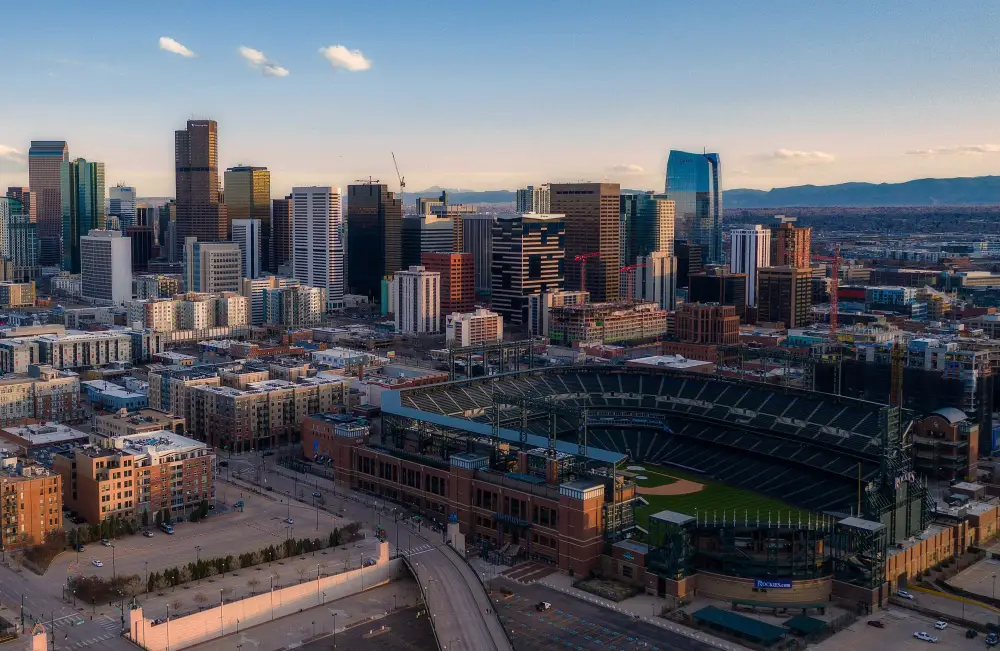
Arvada, Colorado road corridor. CGH Injury Lawyers represents injured pedestrians across Jefferson County.

IT'S MORE THAN MONEY.

Arvada Pedestrian Accident Lawyers Who Shift Fault Back to the Driver

A driver struck you on Wadsworth Boulevard, on Ralston Road through Olde Town, or at a quiet residential intersection, and now the insurer wants to call you a jaywalker. CGH Injury Lawyers serves injured Arvada pedestrians from our Denver office, files in Jefferson Combined Court, and uses Colorado's crosswalk law to put the fault where it belongs. No fee unless we win.

No fee unless we win
Or speak with our team now (303) 209-9395

Tell us what happened in Arvada

100% confidential. No fee unless we win.

5-star rated on Google CDOT Vulnerable Road User Safety Task Force ABOTA trial advocate on the team No fee unless we win

If a driver struck you while you were walking in Arvada, the law was almost certainly on your side, even if the police report or an insurance adjuster suggested otherwise. CGH Injury Lawyers represents injured Arvada pedestrians in Jefferson Combined Court, serving you from our Denver office with no upfront cost.

  • Every intersection in Arvada is a legal crosswalk. Under C.R.S. 42-4-802, drivers must yield to pedestrians at both painted and unmarked crossings, so "there were no lines" is not a defense.
  • You can still recover even if you were partly at fault. Colorado uses a modified comparative fault rule with a 50 percent bar (C.R.S. 13-21-111), so a driver's speed or distraction can outweigh a crossing mistake.
  • Your own auto policy may cover you on foot. Uninsured and underinsured motorist coverage often applies to pedestrian injuries when the at-fault driver has too little insurance or flees the scene.

CGH Injury Lawyers does not have an Arvada office. We serve Arvada and Jefferson County pedestrians from our Denver office and file in the First Judicial District at Jefferson Combined Court. Our attorneys serve on the CDOT Vulnerable Road User Safety Task Force. We visit accident scenes, pull traffic camera footage, and challenge incomplete police reports, with no upfront fees and a free first consultation.

Your right of way

Colorado pedestrian right-of-way law (C.R.S. 42-4-802) in Arvada

Colorado Revised Statutes 42-4-802 is the cornerstone of pedestrian protection in the state, and it governs your Arvada case. It sets out when and where a driver must yield to a person on foot, and it is the basis for most pedestrian accident liability claims.

Under C.R.S. 42-4-802, a driver approaching a crosswalk must yield the right of way to any pedestrian who is in the crosswalk or so close to it as to be in danger. Once you have entered the crosswalk, drivers in every lane moving the same direction must stop and stay stopped until you have safely crossed, and they may not pass a vehicle that has stopped to let you cross.

  • The duty to yield applies at marked crosswalks with painted lines or signage and at unmarked crosswalks at intersections, which describes most corners across Arvada.
  • Pedestrians have duties too. C.R.S. 42-4-803 requires people crossing outside a crosswalk to yield to vehicles and to obey traffic signals when present.
  • Even when a pedestrian breaks one of those rules, it does not automatically end the right to compensation. Comparative negligence still applies.

The unmarked crosswalk trap

Why paint does not decide who is at fault in Arvada

One of the most common and costly myths in pedestrian cases is that a crosswalk only exists where there are painted white lines. That myth is how insurers deny valid claims by calling the victim a jaywalker.

In Colorado, every intersection where two roadways meet and sidewalks are present creates an implied crosswalk. That is true whether the Arvada intersection has traffic signals, stop signs, or no controls at all. The absence of painted stripes does not erase the crosswalk or the driver's duty to yield.

If a driver struck you at an Arvada intersection without painted lines, their insurance company will likely argue you were crossing illegally. By citing C.R.S. 42-4-802 and showing you were crossing at a legal unmarked crosswalk, your attorney can shift liability back to the driver who failed to yield.

Common scenarios

Common Arvada crosswalk accident scenarios and who is usually at fault

Pedestrian accidents happen in predictable patterns. Recognizing the pattern in your case helps explain who violated their duty under Colorado law.

  1. The left-hook turn

    A driver turning left watches oncoming traffic, never sees the person in the crosswalk, and turns into them. Colorado law requires turning drivers to yield to pedestrians, so the turning driver is usually at fault. This is a recurring pattern at Ralston Road's signalized intersections in central Arvada.

  2. The wave-through

    A car in the first lane stops to let you cross, then a car in the second lane that did not stop strikes you. C.R.S. 42-4-802 bars passing a vehicle stopped at a crosswalk, so the second-lane driver is typically at fault. This is common on Arvada's multi-lane arterials such as Wadsworth Boulevard and Kipling Street.

  3. School zones

    Drivers carry a heightened duty of care near schools, where Colorado imposes reduced speed limits and stiffer penalties. A driver who speeds, gets distracted, or ignores a crossing guard bears significant liability when a child is struck walking to a neighborhood Arvada school.

  4. Parking lot and transit-station crossings

    Liability in a parking lot can be complex because the rules differ on private property, but drivers still must watch for people on foot. Foot traffic also concentrates near the RTD G Line stations at Olde Town Arvada, Arvada Gold Strike, and Arvada Ridge/Ward Road, where a driver who speeds, backs up without looking, or is distracted is likely at fault.

  5. Mid-block crossings

    Under C.R.S. 42-4-803, a pedestrian crossing mid-block must yield to vehicles. Even so, a driver who saw you, or should have seen you, and had time to stop may share fault, and a speeding, texting, or impaired driver may carry most of it.

Partly at fault?

What if you were partly at fault for the Arvada accident?

Even if you made a mistake, crossing against a signal, stepping off a curb suddenly, or crossing mid-block, you may still be owed compensation under Colorado's modified comparative negligence rule.

The 50 percent bar rule (C.R.S. 13-21-111)

Colorado follows a modified comparative negligence system with a 50 percent bar. As long as you are less than 50 percent at fault, you can still recover, but your compensation is reduced by your share of fault.

  • Found 0 percent at fault, you recover 100 percent of your damages.
  • Found 20 percent at fault, you recover 80 percent of your damages.
  • Found 40 percent at fault, you recover 60 percent of your damages.
  • Found 50 percent or more at fault, you recover nothing.

Adjusters lean hard on the word jaywalking to push injured pedestrians toward a lowball offer. The truth is that a driver who was speeding, distracted, or careless can still bear most of the fault even when the pedestrian crossed outside a marked crosswalk. We use accident reconstruction, witness testimony, and traffic camera footage to show the driver had time and distance to stop.

5-star rated on Google

I wish I could leave more than 5 stars!

Grace Macaluso, 5-star Google review

Building your case

How we prove fault in an Arvada pedestrian accident case

Winning a pedestrian case takes more than pointing to the statute. It takes evidence that shows what happened and who broke their legal duty. We move fast because some of that evidence disappears within weeks.

  1. Traffic camera and signal footage

    Many intersections along Arvada corridors such as Wadsworth Boulevard and Ralston Road have cameras that can show whether you were in the crosswalk and whether the driver ran a light. We request it immediately, since footage is often kept only a short time before it is overwritten.

  2. Witness statements

    Independent witnesses have no stake in the outcome, which makes them credible to adjusters and juries. We locate and interview them while memories are fresh.

  3. Accident reconstruction

    When speed, visibility, or reaction time is disputed, reconstruction experts recreate the collision using physics, vehicle damage, and road conditions to show the driver had time to stop.

  4. Challenging the police report

    The Arvada Police Department responds to injury crashes on city streets and prepares a Colorado Traffic Crash Report, often from limited information after the fact. A police report is not the final word, and we challenge an incorrect one with the evidence above.

  5. Injury and biomechanics analysis

    The location of your injuries and the point of vehicle damage can corroborate that the driver turned into you rather than that you darted out.

Compensation

What compensation can you recover after an Arvada pedestrian accident?

Colorado law lets injured pedestrians recover two broad categories of damages: economic losses you can document with bills and records, and non-economic losses for the human cost of a serious injury.

Economic damages

  • Medical expenses, past and future
  • Lost wages and lost income
  • Lost earning capacity
  • Rehabilitation and assistive devices
  • Property damage to personal items
  • Out-of-pocket costs tied to the crash

Non-economic damages

  • Pain and suffering
  • Emotional distress, anxiety, and PTSD
  • Loss of quality of life
  • Disfigurement and scarring
  • Loss of consortium for a spouse

When a pedestrian accident takes a life, surviving family members can pursue a wrongful death claim under Colorado law for funeral and burial expenses, loss of financial support, and loss of companionship and guidance. No amount of money undoes what happened, but fair compensation pays for the best care and gives a family room to rebuild.

Who pays

Insurance coverage for an Arvada pedestrian accident

Many pedestrian accident victims are surprised that more than one policy may cover their injuries, not just the at-fault driver's policy.

  • The at-fault driver's liability coverage is the primary source. Colorado requires drivers to carry minimum liability coverage of $25,000 per person for bodily injury, and a driver with higher limits gives you more to recover against.
  • Your own uninsured and underinsured motorist coverage can apply even though you were on foot. It adds compensation when the at-fault driver has no insurance, too little insurance, or flees the scene. Colorado UM/UIM claims are governed by C.R.S. 13-80-107.5 under Pham v. State Farm, 2013 CO 17.
  • Health insurance and any MedPay coverage on an auto policy can pay early medical bills. Health insurers often hold subrogation rights, and we negotiate those liens so you keep more of your recovery.

One Arvada-specific deadline to watch: if a city of Arvada vehicle, an RTD bus, or another government agency was involved, or a road or signal defect contributed to your crash, the Colorado Governmental Immunity Act requires written notice of the claim within 182 days after you discover the injury (C.R.S. 24-10-109(1)). That notice is a jurisdictional prerequisite, and missing it can bar the claim against the government entity. We confirm every deadline that applies to your specific facts.

Insurance companies, including your own, are businesses built to minimize payouts. Before you give a recorded statement, sign a medical authorization, or accept a fast settlement, talk to an attorney who can handle those conversations for you.

Local knowledge

Arvada courts. Arvada trauma care. Arvada crossing roads.

An Arvada pedestrian accident case lives in Arvada: the road where it happened, the hospital that treated you, and the courthouse where your claim may be filed. Here is the ground we work on.

Courthouse

Jefferson Combined Court, First Judicial District

An Arvada pedestrian accident lawsuit that exceeds the county-court jurisdictional limit is filed at Jefferson Combined Court (District Court), located at 100 Jefferson County Parkway, Golden, CO 80401, in the First Judicial District. Jefferson County is the primary county for Arvada; a small portion of Arvada also falls within Adams County, and the county where the crash occurred determines which court handles the case. Local procedure, the Jefferson County jury pool, and the defense firms you will face all differ from courts in other districts. We handle Jefferson Combined Court cases directly from our Denver office.

Trauma Care

Intermountain Health Lutheran Hospital and UCHealth University of Colorado Hospital

Seriously injured Arvada pedestrians are frequently transported to Intermountain Health Lutheran Hospital, a CDPHE-designated Level II Trauma Center that opened a new facility in August 2024. The most critical injuries may require transport to UCHealth University of Colorado Hospital, a CDPHE-designated and American College of Surgeons verified Level I Trauma Center. Trauma records from these facilities document the full scope of your injuries, the treatment required, and the projected future care costs, and they anchor the damages portion of your Arvada claim.

High-Conflict Roads

Wadsworth Boulevard, Kipling Street, Ralston Road, and Ward Road

Arvada's pedestrian risk concentrates where people on foot meet fast vehicle traffic. Wadsworth Boulevard (SH 121), Arvada's primary north-south spine, is a documented corridor for fatal hit-and-run crashes and pedestrian fatalities, with poor nighttime lighting at intersections including W 72nd Ave and W 80th Ave flagged as contributing factors. Kipling Street (SH 391) carries high-speed suburban traffic with documented pedestrian and vehicle crashes. Ralston Road, Arvada's primary east-west arterial through the central city and Olde Town, is another consistent source of collision claims, particularly at signalized intersections where drivers run red lights or fail to yield on left turns. Ward Road (SH 72) transitions from an urban arterial to a foothills grade with documented crash risk. CGH serves injured pedestrians from all of these locations.

Serving Arvada From Denver

CGH Injury Lawyers does not have an Arvada office

Our office is at 2701 Lawrence St., Suite 201, Denver, CO 80205, (303) 209-9395. We serve Arvada and Jefferson County pedestrian accident clients from that office, file in Jefferson Combined Court, and come to you for meetings, depositions, and site inspections. There is no Arvada storefront. What you get is the work of a trial-ready team, not a local address.

After the crash

What to do immediately after a pedestrian accident in Arvada

The minutes and hours after a crash can make or break your case. These steps protect your health and preserve the evidence an insurer will later try to dispute.

  1. Call 911

    Request both police and medical help. The Arvada Police Department responds to injury crashes on city streets, and the resulting Colorado Traffic Crash Report is critical evidence. Even if you feel fine, adrenaline can mask serious injuries like internal bleeding or a traumatic brain injury.

  2. Do not negotiate or apologize

    Do not discuss fault with the driver or their insurer. Statements like "I'm sorry" or "I didn't see the car" can be used against you later, especially when the insurer is already trying to blame the pedestrian.

  3. Preserve evidence

    If you are able, photograph the scene, the vehicle, your injuries, and any signals or crosswalk markings. Note the intersection or corridor, on Wadsworth Boulevard or Ralston Road for instance, and collect witness names and contacts.

  4. Seek medical attention

    Delayed symptoms such as concussions, internal bleeding, and soft-tissue injuries are common. Intermountain Health Lutheran Hospital and UCHealth University of Colorado Hospital treat injured pedestrians. See a doctor even if you feel okay.

  5. Call CGH Injury Lawyers

    Our attorneys review the police report, communicate with insurers, and protect your rights while you focus on recovery. Call (303) 209-9395. No fee unless we win.

Your team

The team handling your Arvada pedestrian accident case

CGH Injury Lawyers is a eight-attorney Colorado firm founded in 2016, formerly Cheney Galluzzi and Howard. Our attorneys serve on the CDOT Vulnerable Road User Safety Task Force, working to improve protections for people on foot. Managing Partner Kevin Cheney is a member of the American Board of Trial Advocates (ABOTA) and has tried over 25 cases to verdict. Timothy G. Tarr has been recognized by Best Lawyers every year since 2023. Every Arvada case is handled by a licensed Colorado attorney, not a paralegal.

ABOTA member on the team Tim Tarr: Best Lawyers in America since 2023 CDOT Vulnerable Road User Safety Task Force Over 25 cases to verdict Jefferson County trial experience Bilingual EN / ES Free consultation No fee unless we win

Frequently asked questions

Arvada pedestrian accident: frequently asked questions

Where would my Arvada pedestrian accident lawsuit be filed?

An Arvada pedestrian accident lawsuit that exceeds the county-court jurisdictional limit is filed at Jefferson Combined Court (District Court), 100 Jefferson County Parkway, Golden, CO 80401, in the First Judicial District. Jefferson County is the primary county for Arvada; a small portion of Arvada also falls within Adams County, and the county where the crash occurred determines which court handles the case. Most pedestrian claims settle before a lawsuit is filed, but venue affects the local rules and jury pool. CGH handles Jefferson Combined Court cases directly.

Do pedestrians always have the right of way in Arvada?

No. Pedestrians have the right of way in marked and unmarked crosswalks at intersections, but they must yield to vehicles when crossing mid-block, and they must obey traffic signals when present (C.R.S. 42-4-802 and C.R.S. 42-4-803). Even when a pedestrian breaks one of those rules, the driver still has a duty to use reasonable care to avoid striking them, so an Arvada driver who was speeding or distracted can still bear most of the fault.

I was hit at an Arvada intersection with no painted crosswalk lines. Do I still have a case?

Often, yes. In Colorado, an intersection where two roadways meet and sidewalks are present creates an implied, unmarked crosswalk, and the driver's duty to yield under C.R.S. 42-4-802 applies there just as it does at a painted crossing. Insurers commonly argue that the absence of stripes makes you a jaywalker. We answer that by citing the unmarked crosswalk rule and showing you were crossing legally.

I was partly at fault for the Arvada accident. Can I still recover?

Often, yes. Colorado follows a modified comparative negligence rule (C.R.S. 13-21-111). You can recover as long as your share of fault is less than 50 percent, and your award is reduced by your percentage of fault. If you are found 50 percent or more at fault, you recover nothing. A driver's speed, distraction, or intoxication can shift the majority of fault to the driver despite a crossing mistake, and we use reconstruction and witnesses to prove it.

Does my own car insurance cover me as a pedestrian in Arvada?

It can. If you carry uninsured or underinsured motorist (UM/UIM) coverage, it applies even when you are on foot and can provide compensation when the at-fault driver has too little insurance or flees the scene. This matters most in hit-and-run cases and when the at-fault driver carries minimal limits. Colorado UM/UIM claims are governed by C.R.S. 13-80-107.5 under Pham v. State Farm, 2013 CO 17.

How long do I have to file a pedestrian accident claim after an Arvada crash?

In most cases you have three years from the date of the crash to file a lawsuit for injuries arising out of the use or operation of a motor vehicle (C.R.S. 13-80-101), which covers a driver who hits a pedestrian. If a city of Arvada vehicle, an RTD bus, or another government agency was involved, or a road or signal defect contributed, you must also provide written notice within 182 days of discovering the injury (C.R.S. 24-10-109(1)). Because evidence on corridors like Wadsworth Boulevard degrades quickly, do not wait to consult an attorney.

What if an RTD bus or City of Arvada vehicle hit me while I was walking?

RTD and the City of Arvada are public entities subject to the Colorado Governmental Immunity Act. Claims against a government entity require a written notice of claim filed within 182 days of discovering the injury (C.R.S. 24-10-109(1)); missing that deadline bars the claim entirely, regardless of how serious the injuries are. RTD's G Line runs through Arvada with stations at Olde Town Arvada, Arvada Gold Strike, and Arvada Ridge/Ward Road, generating vehicle and pedestrian conflict near station areas. Call us immediately if a public vehicle was involved so the notice deadline is met.

IT'S MORE THAN MONEY.

You were hurt crossing the street in Arvada. We prove the driver was at fault.

Free consultation. No fee unless we win. Serving Arvada and Jefferson County from our Denver office.

Start your free Arvada case review

100% confidential. No fee unless we win.

Read next: Colorado pedestrian accident lawyers statewide

CGH Injury Lawyers · Serving Arvada from our Denver office at 2701 Lawrence St., Suite 201, Denver, CO 80205