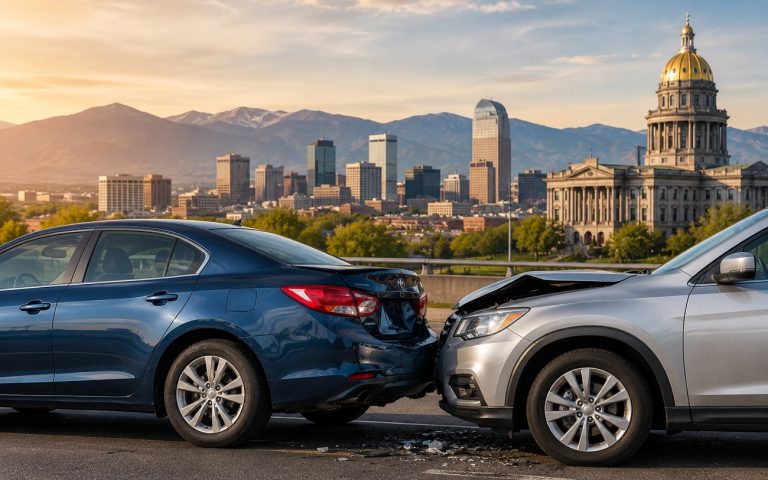
- Colorado’s minimum auto insurance limits ($25,000 per person/$50,000 per accident for injury and $15,000 for property damage) are legally required but often insufficient for serious accidents.
- Personal injury protection requires understanding liability coverage limits and the limits of your own medical bill coverage under Colorado law.
- Drivers risk being personally liable beyond minimum limits if injured parties’ expenses exceed those amounts.
- Uninsured/Underinsured Motorist coverage and Medical Payments coverage are critical protections to consider in Colorado’s high uninsured driver environment.
When considering how much auto insurance do I need in Colorado, it is essential to understand the state’s minimum requirements and why they may not fully protect you after a serious accident. Colorado law mandates liability coverage of $25,000 per person, $50,000 per accident for bodily injury, and $15,000 for property damage. This “25/50/15” standard covers damages you cause to others, including their medical expenses and vehicle damage.
However, if medical bills exceed these limits, which is common after serious injuries, you risk personal exposure. Colorado is an “at-fault” state, so the driver responsible must cover all damages, even beyond insurance limits. This can include wage garnishment or asset claims. The minimum limits rarely cover hospital stays, surgeries, lost wages, or long-term care after moderate to severe injuries.
Also critical is understanding that liability coverage does not pay for your own medical bills. That protection usually comes from your health insurance, Medical Payments (MedPay) coverage, or Uninsured/Underinsured Motorist (UM/UIM) coverage, which is especially important given Colorado’s nearly 16.3% uninsured driver rate. These coverages fill gaps the minimum liability limits leave open.
Simply put, meeting Colorado’s minimum auto insurance requirements is often not enough to protect yourself from the financial fallout of a serious injury accident. Planning your coverage with higher limits and first-party protections offers essential peace of mind.
How Much Auto Insurance Do I Need in Colorado? Understanding Personal Injury Protection
Colorado requires all drivers to carry minimum auto insurance coverage, but these minimums may not be sufficient to protect you financially after a car accident. As experienced personal injury attorneys, we recommend understanding your options beyond the basic requirements.
Colorado’s Minimum Auto Insurance Requirements
Colorado law mandates that drivers carry liability insurance with minimum coverage of 25/50/15:
- $25,000 per person for bodily injury
- $50,000 per accident for bodily injury
- $15,000 per accident for property damage
These minimums are often inadequate for serious accidents, potentially leaving you financially exposed. For comprehensive protection, consider higher liability limits such as 100/300/50.
Understanding Personal Injury Protection
Unlike “no-fault” states, Colorado does not require Personal Injury Protection (PIP). Instead, Colorado operates under a “fault” system where the at-fault driver’s insurance pays for damages. Without PIP, medical payment coverage (MedPay) becomes an important optional coverage to consider.
Additional Coverage Options to Consider
For comprehensive protection, we recommend:
- Uninsured/underinsured motorist coverage (matching your liability limits)
- Medical payments coverage ($5,000 to $10,000)
- Comprehensive and collision coverage (especially for newer vehicles)
- Gap insurance (if leasing or financing)
These additional coverages help protect you against uninsured drivers and unexpected costs that basic liability insurance won’t cover.
What Are the Minimum Auto Insurance Requirements in Colorado?
Colorado law requires all drivers to carry minimum liability insurance coverage to legally operate a vehicle. These requirements ensure that drivers can cover costs if they’re responsible for an accident that causes injury or property damage.
Colorado’s minimum auto insurance requirements include:
- Bodily Injury Liability: $25,000 per person and $50,000 per accident
- Property Damage Liability: $15,000 per accident
These minimums are often expressed as 25/50/15 coverage. The bodily injury coverage helps pay for medical expenses, lost wages, and pain and suffering for others injured in an accident you cause. The property damage coverage helps pay for repairs to another person’s vehicle or property damaged in an accident you cause.
While these are the minimum requirements, many Colorado drivers choose higher coverage limits for better protection. Minimum coverage may not be sufficient to cover all costs in a serious accident, potentially leaving you personally responsible for amounts exceeding your policy limits.
Additional coverage options that aren’t required but worth considering include:
- Comprehensive coverage
- Collision coverage
- Uninsured/underinsured motorist coverage
- Medical payments coverage
Remember that driving without the minimum required insurance in Colorado can result in serious penalties, including a minimum $500 fine and license suspension for a first offense, with higher fines and longer suspensions for repeat violations.
What Does “25/50/15” Mean for Drivers and Injury Victims?
“25/50/15” refers to the minimum auto liability insurance coverage required by law in Colorado. This notation represents the three key coverage components:
- $25,000 – bodily injury coverage per person
- $50,000 – total bodily injury coverage per accident
- $15,000 – property damage coverage per accident
This means if you’re at fault in an accident, your insurance will pay up to $25,000 for injuries to a single person, up to $50,000 total for all injuries in the accident, and up to $15,000 for damage to others’ property.
For drivers, this represents the absolute minimum protection required to legally drive in Colorado. However, these limits may be inadequate for serious accidents. Medical bills can quickly exceed $25,000, and modern vehicle repairs often cost more than $15,000.
For injury victims, these limits represent the maximum compensation available if the at-fault driver carries only minimum coverage. If your injuries and damages exceed these amounts, you may face challenges recovering full compensation unless:
- The at-fault driver has personal assets
- You have underinsured motorist coverage
- Other liable parties exist
Most insurance professionals recommend carrying higher limits (such as 100/300/100) to adequately protect yourself financially. While minimum coverage keeps you legal, it might not fully protect your assets or provide adequate compensation in serious accidents.
Why Colorado’s State Minimums Aren’t Enough to Protect You After a Serious Accident
Colorado law requires all drivers to carry liability insurance, but the state minimum requirements fall far short of providing adequate protection after a serious accident. While meeting legal obligations is essential, understanding the limitations of minimum coverage can help you make informed decisions about your insurance needs.
Colorado’s minimum liability requirements include:
- $25,000 per person for bodily injury
- $50,000 per accident for bodily injury
- $15,000 per accident for property damage
These minimums quickly become insufficient in real-world accident scenarios. A serious collision resulting in hospitalization can easily generate medical bills exceeding $100,000. Vehicle repair or replacement costs frequently surpass the $15,000 property damage minimum, especially considering today’s average new car price exceeds $45,000.
If you cause an accident with damages exceeding your policy limits, you become personally responsible for the difference. This financial exposure puts your savings, home, and future wages at risk.
Additionally, minimum policies typically lack comprehensive coverage for your own vehicle and medical expenses. Without uninsured/underinsured motorist protection, you’re vulnerable if hit by a driver with inadequate insurance.
Insurance experts generally recommend liability coverage of at least $100,000/$300,000 for bodily injury and $100,000 for property damage, along with comprehensive, collision, and uninsured/underinsured motorist coverage.
The cost difference between minimum coverage and recommended protection is often less significant than most drivers expect, frequently just $30 to $50 more per month for substantially greater security.
When evaluating your insurance needs, consider your assets, financial situation, and potential risks rather than simply meeting state minimums. Proper coverage provides both legal compliance and genuine financial protection.
Real-World Example: Medical Costs After a Moderate Accident
To illustrate how quickly expenses accumulate following an accident, consider this realistic scenario based on our experience with actual personal injury cases.
A 35-year-old driver was struck at an intersection, suffering whiplash, a broken wrist, and moderate concussion. Here’s how the medical costs broke down:
- Emergency room visit: $3,500 to $5,000
- Diagnostic imaging (X-rays, CT scan): $2,000 to $3,500
- Ambulance transport: $1,000 to $2,500
- Physician services: $500 to $1,000
- Surgical intervention for wrist fracture: $7,500 to $12,000
- Hospital stay (2 days): $4,000 to $8,000
- Prescription medications: $500 to $1,500
- Physical therapy (12 sessions): $1,800 to $3,600
- Follow-up appointments: $800 to $1,500
- Medical equipment (wrist brace, etc.): $200 to $500
Total medical expenses: $21,800 to $39,100
This doesn’t include:
- Lost wages (approximately $4,500)
- Transportation to medical appointments
- In-home assistance
- Potential long-term care costs
Without proper legal representation, this accident victim might have settled for far less than the actual expenses incurred, leaving them with significant out-of-pocket costs despite not being at fault for the accident.
The Risk to Your Personal Finances: Lawsuits and Asset Exposure
In today’s litigious society, your personal assets face constant exposure to potential lawsuits. Whether you’re a business owner, professional, or individual with substantial assets, legal claims can threaten everything you’ve worked to build.
Personal liability extends beyond obvious risks like car accidents or workplace incidents. Medical professionals face malpractice claims, business owners may encounter contract disputes, and homeowners could face premises liability suits. Even a seemingly minor incident can escalate into significant financial exposure.
Without proper protection, lawsuits can reach your personal savings, investments, real estate holdings, and future earnings. Courts may place liens on your property, garnish wages, or force liquidation of investments to satisfy judgments. Even if you ultimately prevail in litigation, legal defense costs alone can devastate your finances.
The conventional approach of purchasing liability insurance provides only a partial solution. Policy limits, coverage exclusions, and claim denials create significant vulnerabilities, leaving your personal wealth exposed when you need protection most.
Asset protection planning creates legal barriers between potential claims and your personal wealth. Through strategic use of business entities, trusts, retirement accounts, and other legal structures, you can establish protection that insurance alone cannot provide.
The key is implementing these strategies proactively, before problems arise. Asset protection measures put in place after a claim emerges may be challenged as fraudulent transfers, potentially leaving you without protection when you need it most.
Penalties for Driving Without Insurance in Colorado
Driving without insurance in Colorado carries significant legal consequences. The state maintains a strict graduated penalty system that becomes increasingly severe with repeated offenses.
For a first offense, drivers face a minimum $500 fine and their license will be suspended until they can prove insurance coverage. The court may also mandate community service.
Second violations within five years result in a minimum $1,000 fine and a four-month license suspension. Even after reinstatement, drivers must file an SR-22 certificate with the DMV for three years, increasing insurance premiums.
Third and subsequent offenses carry minimum $1,000 fines and license suspensions lasting eight months. The court may also impose up to 40 hours of community service, and SR-22 requirements extend for 5+ years.
Beyond these standard penalties, uninsured drivers face additional consequences:
- Vehicle registration suspension
- Possible vehicle impoundment
- Class 1 misdemeanor charges for driving during suspension
- Points added to your driving record
- Personal financial liability for any accident damages
Colorado law enforcement can verify insurance electronically during traffic stops. If you’re involved in an accident without insurance, you’ll face immediate citation, regardless of who was at fault.
The financial impact extends beyond fines. Uninsured drivers remain personally liable for all damages and medical expenses from accidents they cause. This financial exposure can lead to lawsuits, wage garnishment, and property liens.
Remember that Colorado requires minimum liability coverage of $25,000 per person for bodily injury, $50,000 per accident for bodily injury, and $15,000 for property damage. Maintaining proper insurance coverage is far less expensive than facing these severe penalties.
Whose Insurance Pays First in Colorado?
Colorado follows a “tort-based” insurance system, meaning the at-fault driver’s insurance is primarily responsible for covering damages. This differs from “no-fault” states where each driver’s insurance covers their own damages regardless of who caused the accident.
When determining which insurance pays first after an accident in Colorado, the process follows this order:
- The at-fault driver’s liability insurance covers damages to the other party’s vehicle and medical expenses up to policy limits
- Underinsured/uninsured motorist coverage applies if the at-fault driver lacks sufficient insurance or has none
- Medical payments coverage (MedPay) can help cover your immediate medical expenses regardless of fault
- Health insurance typically becomes the secondary payer after auto insurance benefits are exhausted
- Collision coverage pays for your vehicle repairs if you were at fault or if the other driver was underinsured
For accidents involving multiple vehicles with shared fault, Colorado’s “modified comparative negligence” rule applies. This means compensation is reduced by your percentage of fault, and you cannot recover damages if you’re 50% or more at fault.
If you’re involved in a work-related accident while driving, workers’ compensation insurance generally pays first, followed by auto insurance policies.
Understanding these insurance priorities is crucial when navigating the claims process after a Colorado accident. When multiple insurance policies potentially apply, determining the correct payment order can affect your ability to recover full compensation.
If you were hurt in a crash involving an uninsured or hit-and-run driver, our uninsured motorist accident attorneys can help you identify all available coverage. For general questions about your rights after a crash, visit our car accident practice area page.
What Insurance Pays for My Medical Bills? Liability vs. First-Party Coverages
After an injury, understanding which insurance covers your medical expenses is critical. The key distinction is between liability insurance (paid by the at-fault party) and first-party coverage (your own insurance).
When another party is at fault for your injury, their liability insurance should cover your medical expenses. However, this payment typically only comes after settlement, which could be months or years away. In the meantime, your medical providers will still expect payment.
To bridge this gap, you may need to rely on your own insurance options:
- Health Insurance: Your primary medical coverage, though you may face deductibles and co-pays
- Medical Payments Coverage (MedPay): Optional auto insurance that pays medical bills regardless of fault, typically with limits of $5,000 to $10,000
- Personal Injury Protection (PIP): Required in some states, provides broader coverage than MedPay, including lost wages
- Worker’s Compensation: Covers medical expenses for injuries occurring on the job
Each of these first-party coverages may have a right to reimbursement (subrogation) from your eventual settlement. This means part of your settlement may go toward repaying these insurers.
Understanding these distinctions early can prevent financial hardship while your case progresses.
The Role of Your Own Health Insurance After an Accident
Your health insurance is an important safety net following an accident, even when another party is at fault. While the at-fault party’s liability insurance should ultimately cover your medical expenses, this process can take months or even years to resolve through a settlement or court judgment.
In the meantime, your health insurance can:
- Provide immediate coverage for necessary medical treatment without waiting for liability claims to settle
- Network benefits that give you access to healthcare providers at negotiated rates
- Cover treatments that the at-fault party’s insurance might dispute or deny
Many health insurance policies include a “subrogation clause” giving them the right to seek reimbursement from any settlement you receive. This means if you later recover damages from the at-fault party, you may need to reimburse your health insurer for expenses they covered.
Using your health insurance after an accident can reduce your out-of-pocket expenses, as you’ll typically only be responsible for copayments, coinsurance, and deductibles rather than full medical bills. It can also prevent medical debt from accumulating while your personal injury claim progresses.
How to Cover Your Medical Bills Immediately: Understanding Medical Payments (MedPay) Coverage
Medical Payments coverage, commonly called MedPay, is an optional auto insurance coverage that pays for immediate medical expenses after an accident, regardless of who was at fault. This coverage can be crucial for handling urgent medical costs while waiting for other insurance claims to process.
MedPay typically covers:
- Medical and hospital bills
- Health insurance deductibles and co-pays
- Necessary dental procedures resulting from an accident
- Professional nursing care and services
- Funeral expenses in fatal accidents
The key benefit of MedPay is its immediate availability. Unlike liability claims that may take weeks or months to resolve, MedPay can be accessed right away to cover treatment costs. Coverage typically ranges from $1,000 to $10,000, though higher limits are available.
In Colorado, MedPay works alongside your health insurance. It can cover your deductibles, co-pays, and even costs your health insurance won’t cover. For those with high-deductible health plans, MedPay can be particularly valuable by bridging financial gaps when you need medical care most.
Unlike health insurance networks, MedPay has no provider restrictions. You can see any medical professional necessary for your recovery. It also follows you as a pedestrian, cyclist, or passenger in someone else’s vehicle.
We recommend reviewing your auto policy to confirm whether you have MedPay coverage. If you don’t, consider adding this relatively inexpensive protection to ensure immediate financial support after an accident.
MedPay vs. Health Insurance: What’s the Difference?
MedPay (Medical Payments Coverage) and health insurance serve different purposes in your overall protection strategy. MedPay is a car insurance add-on that covers medical expenses after an auto accident regardless of fault, while health insurance is a comprehensive plan covering general medical needs unrelated to accidents.
MedPay typically pays quickly with no deductibles, covering you and your passengers for immediate medical costs, ambulance fees, and funeral expenses if necessary. It works alongside health insurance, often covering deductibles and co-pays your health plan would normally charge.
Health insurance, by contrast, requires network compliance, pre-authorizations for certain treatments, and includes deductibles and co-pays. It covers a broader range of medical services but processes claims more slowly and may deny accident-related claims if they believe auto insurance should pay instead.
For Colorado drivers, the key advantage of MedPay is its immediate payment without fault determination, making it valuable in covering initial costs while waiting for insurance settlements. Unlike health insurance, MedPay has no networks. You can see any provider. However, MedPay has lower coverage limits (typically $1,000 to $10,000) compared to health insurance plans.
We recommend carrying both types of coverage for maximum protection, as they complement each other to ensure your medical needs are fully covered after an accident.
When and How to Use MedPay After an Accident
Medical Payments Coverage (MedPay) is a valuable insurance option that covers medical expenses after an accident, regardless of fault. Knowing when and how to properly utilize this coverage can help you maximize its benefits while navigating recovery.
MedPay should be used immediately after an accident to cover:
- Emergency medical treatment
- Hospital stays and procedures
- Follow-up doctor visits
- X-rays and diagnostic tests
- Ambulance fees
- Necessary dental procedures
- Surgical procedures
To properly use your MedPay coverage:
- Seek medical attention first. Your health is priority; MedPay documentation comes later
- Notify your insurance company promptly. Report the accident to activate your coverage
- Gather and submit documentation. Collect all medical bills and treatment records
- Understand your policy limits. MedPay has specific coverage amounts that vary by policy
- Coordinate with health insurance. MedPay often works as primary coverage before health insurance
MedPay offers distinct advantages as it has no deductibles, covers passengers in your vehicle, protects you as a pedestrian, and processes claims quickly. Unlike liability coverage, it pays regardless of who caused the accident.
Remember that MedPay typically has limits between $1,000 and $25,000. Once exhausted, additional costs shift to health insurance or liability claims against the at-fault driver.
We recommend reviewing your policy limits and understanding how MedPay coordinates with your health insurance to ensure comprehensive protection after an accident.
The Most Important Coverage for Injury Victims: Uninsured/Underinsured Motorist (UM/UIM)
Uninsured/Underinsured Motorist (UM/UIM) coverage is arguably the most critical protection for injury victims on the road. This coverage steps in when you’re injured by a driver who either has no insurance or insufficient coverage to pay for your damages.
In Colorado, approximately 16.3% of drivers operate without insurance, despite state law requiring minimum liability coverage of $25,000 per person and $50,000 per accident. Even these minimum amounts often fall short when serious injuries occur, leaving victims with substantial unpaid medical bills and lost wages.
UM/UIM coverage offers essential protection in several scenarios:
- When you’re hit by a completely uninsured driver
- When the at-fault driver’s insurance limits are too low to cover your damages
- In hit-and-run accidents where the responsible driver cannot be identified
- When you’re injured as a passenger in someone else’s vehicle
- When you’re struck as a pedestrian by an uninsured or underinsured motorist
Many Colorado residents mistakenly believe they have adequate protection through their standard auto policy. However, without specifically selecting UM/UIM coverage, you could face devastating financial consequences after an accident with an uninsured or underinsured driver.
We strongly recommend purchasing UM/UIM coverage with limits of at least $100,000 per person and $300,000 per accident. While this increases your premium slightly, the protection it provides is invaluable if you’re seriously injured by an uninsured or underinsured driver.
What Does UM/UIM Coverage Protect You From?
Uninsured/Underinsured Motorist (UM/UIM) coverage protects you when you’re involved in an accident with a driver who either has no insurance or insufficient insurance to cover your damages. This essential coverage acts as a safety net in situations where you might otherwise face significant financial hardship.
UM/UIM coverage typically protects you from:
- Medical expenses resulting from injuries sustained in the accident
- Lost wages if your injuries prevent you from working
- Pain and suffering compensation not covered by the at-fault driver
- Funeral expenses in the tragic event of a fatal accident
- Property damage in some states (though this varies by policy)
This coverage is particularly valuable when dealing with hit-and-run accidents where the at-fault driver cannot be identified. It also applies when you’re struck as a pedestrian or cyclist by an uninsured driver.
Without UM/UIM coverage, you might be forced to pay out-of-pocket for expenses that exceed the at-fault driver’s policy limits or file a lawsuit against an uninsured driver who likely has limited assets to recover.
In Colorado, minimum liability insurance requirements are relatively low ($25,000 per person/$50,000 per accident for bodily injury), meaning many insured drivers are actually underinsured for serious accidents. Your UM/UIM coverage helps bridge this gap, so you’re not left financially vulnerable due to another driver’s inadequate coverage.
Remember that UM/UIM coverage follows you, not just your vehicle, protecting you even when you’re a passenger in someone else’s car or as a pedestrian.
How Much UM/UIM Should You Carry? Matching Liability Limits
When determining how much Uninsured/Underinsured Motorist (UM/UIM) coverage to carry, a good rule of thumb is to match your liability limits. If you carry $100,000 in liability coverage, aim for $100,000 in UM/UIM protection as well.
The rationale is simple: if you believe others should have a certain amount of coverage to protect you, you should maintain that same level to protect yourself. Remember that UM/UIM coverage protects you and your family when others fail to carry adequate insurance.
Many insurance professionals recommend carrying at least $100,000 per person/$300,000 per accident in UM/UIM coverage. However, if you can afford higher limits, consider increasing your coverage to $250,000/$500,000 or even higher.
For those with substantial assets or income, umbrella policies with UM/UIM extensions can provide coverage of $1 million or more. This added protection ensures you’re covered for catastrophic injuries that exceed standard policy limits.
When evaluating costs, you’ll find UM/UIM coverage is relatively inexpensive compared to the protection it provides. The premium difference between minimum limits and substantially higher coverage is often just a few dollars per month, a small price for significant peace of mind.
We’ve seen countless accident victims left with insufficient compensation because they lacked adequate UM/UIM coverage. Don’t make the same mistake. Protect yourself with coverage levels that reflect the true potential costs of serious injuries.
How to Decide: Choosing the Right Coverage Limits for Your Situation
Selecting the right insurance coverage limits is critical for protecting your financial future. While the decision might seem overwhelming, understanding a few key factors can help you make informed choices suited to your specific needs.
When determining appropriate coverage limits, start by assessing your personal risk exposure. Consider your assets, including property value, savings, and investments that would need protection in case of a lawsuit. Generally, your liability coverage should at least match your net worth to properly safeguard your assets.
Your life circumstances also affect coverage needs. Homeowners with swimming pools or trampolines, frequent hosts, or dog owners typically require higher liability limits due to increased risk exposure. Similarly, drivers with long commutes or teenage drivers may need more extensive auto coverage.
Budget constraints are realistic concerns, but remember that higher limits often cost surprisingly little more than minimum coverage. The difference between $100,000 and $300,000 in liability protection might only be a few dollars monthly but provides substantially more security.
For comprehensive protection, consider an umbrella policy that extends beyond your standard homeowners and auto insurance. These policies typically offer $1 million or more in additional coverage at relatively affordable rates, filling potential gaps in your protection plan.
We recommend reviewing your coverage limits annually or whenever significant life changes occur. This ensures your protection grows alongside your assets and evolving risks, providing peace of mind and financial security for whatever life brings your way.
“Good, Better, Best” Guide to Recommended Liability Limits
When selecting auto insurance liability coverage, the “good, better, best” approach helps you understand appropriate protection levels:
Good (Minimum Starting Point)
- Bodily Injury: $100,000 per person/$300,000 per accident
- Property Damage: $100,000 per accident
This baseline exceeds state minimums but provides reasonable protection for minor to moderate accidents. However, it may not fully cover severe incidents involving luxury vehicles or significant injuries.
Better (Recommended for Most Drivers)
- Bodily Injury: $250,000 per person/$500,000 per accident
- Property Damage: $250,000 per accident
This mid-tier option offers substantial protection against most accident scenarios, including serious injuries and damage to expensive vehicles. It represents a balance between affordability and comprehensive coverage.
Best (Maximum Protection)
- Bodily Injury: $500,000 per person/$1,000,000 per accident
- Property Damage: $500,000 per accident
- Alternative: $1,000,000 combined single limit policy
This premium protection is ideal for individuals with significant assets requiring protection from potential lawsuits. The small premium increase from “better” to “best” coverage often provides excellent value considering the substantially higher protection level.
Your ideal coverage depends on your assets, financial situation, and risk tolerance. Remember that hospital bills can easily exceed $100,000 for serious injuries, and luxury vehicle repairs can cost $50,000 or more. We recommend at least the “better” tier for most clients to ensure adequate protection in today’s litigious environment.
How Much More Does It Cost to Get Better Coverage?
The cost difference for improved insurance coverage depends on several factors including the type of insurance, your current coverage limits, and personal risk factors. For auto insurance, upgrading from minimum liability coverage to comprehensive coverage typically increases premiums by 30 to 50%. Raising liability limits from state minimums to 100/300/100 often costs just $15 to $30 more per month.
For homeowners insurance, increasing coverage limits by $100,000 might add only $20 to $40 annually to your premium. Umbrella policies, which provide extra liability protection beyond standard policies, generally cost $150 to $300 per year for each $1 million in coverage, one of the most cost-effective insurance values available.
Medical insurance premium increases vary widely, but moving from a high-deductible plan to one with lower out-of-pocket costs might increase premiums by $100 to $200 monthly per person. However, these higher premiums can result in significant savings if you require frequent medical care.
When evaluating the cost of better coverage, consider the risk-to-premium ratio. For example, paying an additional $100 annually for $100,000 more in homeowners coverage represents just 0.1% of the additional protection you’re receiving, a small price for substantial security. Most insurance experts agree that the relatively modest premium increases for higher coverage limits offer excellent value compared to the potential financial devastation of being underinsured.
Remember that many insurers offer multi-policy discounts that can offset some costs of improved coverage when you bundle different insurance types together.
Quick Facts: Colorado’s Unique Car Insurance Landscape
Colorado’s auto insurance requirements and regulations create a distinct environment for drivers that differs from other states. Understanding these nuances is essential for adequate protection on Colorado’s roads.
Colorado requires all drivers to carry liability insurance with minimum coverage of 25/50/15 ($25,000 per person for bodily injury, $50,000 per accident for bodily injury, and $15,000 for property damage). These minimums increased from previous 25/50/10 limits to address rising medical costs and vehicle repair expenses.
The state operates under a tort-based insurance system after switching from no-fault coverage. This means the at-fault driver’s insurance pays for damages and injuries in accidents, making adequate coverage crucial.
Colorado ranks among the highest in the nation for auto insurance rates, with an average annual premium of approximately $2,115 (compared to the national average of $1,771). This elevated cost stems from several factors unique to the state:
- Extreme weather conditions including hailstorms, snow, and flash floods that generate high claim volumes
- Population growth outpacing infrastructure development, leading to increased traffic density
- Higher-than-average vehicle theft rates, particularly in metro Denver
- Mountain driving hazards requiring specialized coverage options
- Legalized marijuana potentially contributing to impaired driving incidents
Insurance companies in Colorado must offer uninsured/underinsured motorist coverage and medical payments coverage of at least $5,000, though drivers can reject these in writing.
With approximately 16.3% of Colorado drivers uninsured (higher than the national average of 12.6%), optional coverages become particularly important for comprehensive protection on Colorado’s roads.
Why Colorado Drivers Face Higher Risks
Colorado’s roadways present unique challenges that increase accident risks for drivers. The state’s combination of mountainous terrain, extreme weather conditions, and growing population create a perfect storm for potential crashes.
Mountain Driving Hazards
Colorado’s mountainous landscape features steep grades, tight curves, and narrow passes that test even experienced drivers. The Continental Divide creates dramatic elevation changes that can affect vehicle performance and driver response times. Reduced oxygen at higher elevations can also impact judgment and reaction speed, particularly for visitors unaccustomed to altitude.
Extreme Weather Conditions
Colorado weather changes rapidly and dramatically. Winter brings heavy snowfall, black ice, and whiteout conditions, especially in mountain corridors like I-70. Summer monsoons can cause flash flooding and reduced visibility. These sudden weather shifts catch many drivers unprepared, leading to accidents when vehicles aren’t properly equipped or operated for conditions.
Population Growth Factors
Colorado’s population grew by nearly 15% over the past decade, with the Denver metro area seeing some of the nation’s fastest urban expansion. This growth has increased traffic density on roadways not designed for such volume. The influx of new residents unfamiliar with local driving conditions further compounds risk factors, particularly on mountain highways and during winter conditions.
Understanding these unique Colorado driving challenges helps residents and visitors prepare appropriately, whether through vehicle maintenance, driving skill development, or simply knowing when to postpone travel during extreme conditions.
How Auto Insurance Company Practices in Colorado May Affect You
Insurance companies in Colorado employ various tactics that directly impact policyholders. Understanding these practices helps you navigate claims better and protect your rights after an accident.
Colorado auto insurers often use specific strategies to minimize payouts. These include quick settlement offers before you understand the full extent of your injuries, requesting recorded statements that may be used against you later, and employing software programs that systematically undervalue claims. Insurers might also delay processing legitimate claims hoping you’ll accept less out of frustration or financial pressure.
Some companies conduct extensive investigations into your background seeking information to dispute your claim. They might monitor your social media for posts that contradict your injury claims or assign your case to adjusters known for minimizing settlements.
Colorado’s modified comparative negligence law allows insurers to reduce payments if they can prove you were partially at fault for the accident. If you’re found 50% or more at fault, you may receive nothing at all.
Insurance companies also know that most individuals lack the resources to challenge their decisions. They count on this power imbalance when making settlement offers that may not fully cover your medical expenses, lost wages, or pain and suffering.
An experienced personal injury attorney can level this legal playing field by understanding these tactics and countering them. They can handle communications with the insurance company, accurately value your claim, and fight for fair compensation that truly reflects your damages.
If an insurer has delayed or denied your claim without a reasonable basis, our Denver car accident lawyers can review your situation. For a broader look at your rights after a crash, visit our Colorado car accident page.
What to Do After an Accident: Understanding Your Insurance Options and Protecting Your Injury Claim
After an accident, taking the right steps can affect your ability to recover compensation for injuries and damages. Immediately following an accident, document everything. Take photos of the scene, vehicles, and injuries. Gather contact information from witnesses and exchange insurance details with other involved parties.
The actions you take in the first hours and days can determine the success of your insurance claim or personal injury case. While your health should be your priority, understanding how to navigate insurance matters will protect your financial recovery.
Get medical attention promptly, even if injuries seem minor. Some injuries, like whiplash or concussions, may not show symptoms immediately. Medical records create documentation linking your injuries to the accident.
Report the accident to your insurance company as soon as possible, but be cautious about providing recorded statements to any insurance adjuster without legal advice. Remember that insurance companies, even your own, are focused on minimizing payouts.
Keep detailed records of all accident-related expenses, including medical bills, property damage, lost wages, and any other costs resulting from the accident. This documentation strengthens your claim and ensures you seek appropriate compensation.
Consider consulting with a personal injury attorney before accepting any settlement offers. Insurance companies often make quick, lowball offers hoping you’ll settle before understanding the full extent of your damages or legal rights.
We help accident victims navigate these complex processes daily, so they receive fair compensation while focusing on their recovery.
Does Using Your Own Coverage Raise Your Rates?
Using your own auto insurance coverage after an accident typically will impact your rates, but the specific circumstances matter. When you file a claim against your own policy, your insurance company may view this as an increased risk, potentially leading to higher premiums at renewal time.
For collision claims where you’re at fault, rate increases are common since you represent a higher risk to the insurer. Most insurance companies use a rating system that factors in your claims history when calculating premiums. One at-fault accident could increase your rates by 20 to 40% depending on your insurer, state regulations, and previous driving record.
However, comprehensive claims (like damage from fallen trees or theft) generally have less impact on your rates than collision claims. Many insurers treat these events as outside your control and may not raise rates, or at all, for isolated comprehensive claims.
Some policies include “accident forgiveness” features that prevent rate increases after your first accident. Additionally, if the claim amount is small, you might consider paying out-of-pocket instead of filing a claim to avoid potential rate increases.
It’s important to note that even when using uninsured/underinsured motorist coverage (where you weren’t at fault), some insurers may still adjust your rates based on statistical risk factors. The good news is that many states have regulations limiting how much insurers can increase rates for not-at-fault accidents.
Before filing any claim, consider consulting with your insurance agent to understand how it might affect your specific policy and premiums.
Can I Be Sued for More Than My Insurance Covers?
Yes, you can absolutely be sued for more than your insurance policy limits. Insurance coverage has specific limits, and if a judgment against you exceeds these limits, you become personally responsible for the remaining amount. This means your assets, including your home, savings, investments, and even future wages, could be at risk.
For example, if you have an auto insurance policy with a $100,000 liability limit and cause an accident resulting in $250,000 in damages, you would be personally responsible for the $150,000 difference. This potential financial gap highlights why selecting appropriate coverage limits is crucial.
Several factors increase your risk of facing a lawsuit exceeding your insurance:
- Causing serious injuries requiring extensive medical treatment
- Accidents involving multiple injured parties
- Property damage to expensive vehicles or structures
- Incidents where you’re found grossly negligent
To protect yourself:
- Increase your liability limits on existing policies
- Purchase umbrella insurance for additional protection (typically $1 to $5 million)
- Review your coverage regularly as your assets grow
- Consider asset protection strategies for high-net-worth situations
Remember that insurance isn’t just about meeting minimum requirements. It’s about protecting your financial future from unexpected events.
How Does Comparative Negligence Affect My Injury Compensation?
Comparative negligence is a legal principle that can affect the amount of compensation you receive in a personal injury case. Under this doctrine, your compensation may be reduced by the percentage of fault attributed to you.
In states following “pure comparative negligence,” you can recover damages even if you’re 99% responsible for the accident, though your award will be reduced proportionally. For example, if you’re awarded $100,000 but found 30% at fault, you’ll receive $70,000.
Other states apply “modified comparative negligence,” which prevents recovery if your fault exceeds a certain threshold, typically 50% or 51%. If you’re found 51% or more at fault in these states, you cannot collect any compensation.
Colorado follows the “modified comparative negligence, 50% bar” rule. This means you can recover damages as long as you’re less than 50% responsible for your injuries. Your compensation is reduced by your percentage of fault, and if you’re 50% or more at fault, you cannot recover anything.
This system makes determining fault percentages crucial in personal injury cases. Insurance companies often try to shift blame to reduce their payout obligations, making skilled legal representation essential to protecting your right to fair compensation.
For more on how fault is shared in Colorado crashes, see our car accident practice area page.
Frequently Asked Questions
What is the minimum auto insurance required in Colorado?
Colorado requires all drivers to carry liability insurance with minimum coverage of 25/50/15: $25,000 per person for bodily injury, $50,000 per accident for bodily injury, and $15,000 per accident for property damage. Driving without this minimum coverage can result in fines, license suspension, and personal liability for accident damages.
Is Colorado a no-fault or at-fault auto insurance state?
Colorado is an at-fault auto insurance state. The driver who caused the accident is responsible for covering damages and medical expenses for those injured. This means the at-fault driver’s liability insurance pays first, up to policy limits. If damages exceed those limits, the at-fault driver may be personally responsible for the difference.
Does Colorado require uninsured motorist coverage?
Uninsured motorist (UM/UIM) coverage is optional in Colorado, but insurance companies must automatically include it on your policy unless you reject it in writing. Given that approximately 16.3% of Colorado drivers are uninsured, carrying UM/UIM coverage is strongly recommended. Without it, you could be left without compensation if you’re injured by a driver who has no insurance or insufficient coverage to pay for your damages.
What is MedPay and do I need it in Colorado?
Medical Payments (MedPay) coverage is an optional auto insurance add-on that pays for medical and funeral expenses after a crash, regardless of fault. It typically covers $1,000 to $10,000 in medical expenses, with no deductibles or network restrictions. Because Colorado is an at-fault state without mandatory PIP, MedPay fills an important gap by providing immediate payment for medical treatment while fault and liability are determined.
How does Colorado’s comparative negligence rule affect my claim?
Colorado uses a modified comparative negligence rule with a 50% bar. If you are 50% or more at fault for an accident, you cannot recover any damages. If you are less than 50% at fault, your compensation is reduced in proportion to your share of fault. For example, if you are 20% at fault and your total damages are $100,000, you can recover $80,000. Insurance companies often try to increase your fault percentage to reduce their payout, which is why legal representation matters.
Can I be held personally responsible if my insurance doesn’t cover all the damages?
Yes, you can be held personally responsible for any remaining costs if your insurance coverage limits do not fully pay for the damages you caused. This means your savings, home, investments, and future wages could be at risk. This is why carrying adequate liability coverage, and considering an umbrella policy, is so important. Colorado’s minimum limits are often not enough to protect your personal assets in a serious accident.
This article is general information for Colorado injury readers. It is not legal advice, does not create an attorney-client relationship, and does not promise that any deadline, rule, or outcome applies to your case. Statute-of-limitations, comparative negligence, insurance, and compensation questions require case-specific legal review.
Related articles
-
How Long Does a TBI Lawsuit Take in Denver? What Sets the Pace of a Brain Injury Case
There’s no fixed timeline. A TBI case moves through stages, and each one depends on your recovery, the evidence, the insurers involved, and whether the case settles. Brain…
-
How Long After an Accident Can You Sue in Denver?
Colorado sets different deadlines for different kinds of injury claims. There is no single number. A crash involving a motor vehicle gets three years. A fall in a…
-
Average Wrongful Death Settlement in Colorado: What Families Need to Know in 2026
If someone handed you a number and told you it's what your family's loss is worth, you deserve to know whether that number is anywhere close to fair.