ClickCease
Free consultations · Se habla espanol
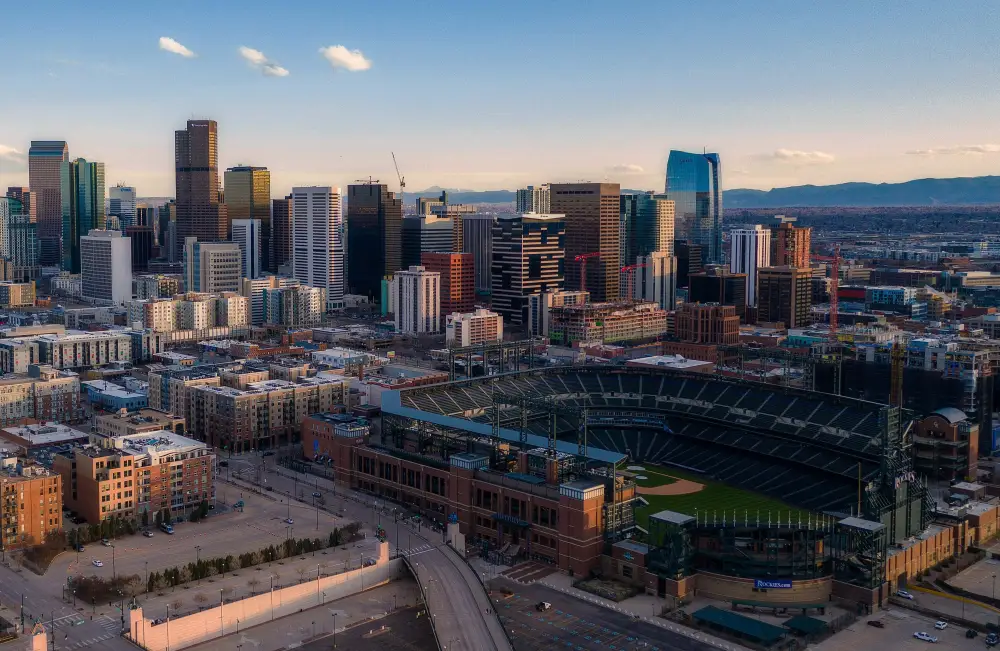
Traffic at the I-25 and Lincoln Avenue interchange in Lone Tree, Colorado. CGH Injury Lawyers represents rear-end crash victims in Lone Tree.

IT'S MORE THAN MONEY.

Lone Tree Rear-End Accident Lawyers Who Know The Lincoln Avenue Backup

I-25 and C-470 meet at the top of the city, Lincoln Avenue carries the retail and hospital traffic across them, and RidgeGate Parkway feeds the eastern growth. CGH Injury Lawyers serves Lone Tree from our Denver office and files at the Douglas County Combined Courts in the Twenty-Third Judicial District. No fee unless we win.

No fee unless we win
Or speak with our team now (303) 747-4817

Tell us what happened in Lone Tree

100% confidential. No fee unless we win.

5-star rated on Google ABOTA trial advocate on the team No fee unless we win Free consultation
  • The driver behind is usually at fault. Colorado requires drivers not to follow another vehicle more closely than is reasonable and prudent, having due regard for the speed of the vehicles and the traffic and condition of the highway (C.R.S. 42-4-1008). Retail and interchange traffic is exactly the condition that standard is measured against.
  • Partial blame reduces a claim rather than ending it. Under C.R.S. 13-21-111 a share of fault below 50 percent reduces the award in proportion, and at 50 percent or more recovery is barred.
  • Three years is the general deadline, and 182 days is the trap. Colorado allows three years for tort actions for bodily injury arising out of the use or operation of a motor vehicle (C.R.S. 13-80-101(1)(n)). A claim touching a public entity generally needs written notice within 182 days of discovering the injury (C.R.S. 24-10-109(1)).
  • The trauma center is in Lone Tree and the courthouse is in Castle Rock. CGH Injury Lawyers files Douglas County cases at 4000 Justice Way in the Twenty-Third Judicial District and serves the city from the Denver office.

Lone Tree concentrates a regional shopping center, a Level II trauma hospital and two freeways into a few square miles. The traffic that produces the crashes is destination traffic rather than through traffic.

That matters to the file, because destination drivers slow for entrances the vehicle behind cannot see. The trigger for the stop is often off the roadway entirely. Our Colorado injury attorneys document that geometry early.

Who is at fault

Why the following driver usually carries a Lone Tree rear-end crash

Colorado asks drivers to keep a distance suited to the speed of the vehicles, the traffic and the condition of the highway (C.R.S. 42-4-1008). Striking the vehicle ahead is, in most cases, evidence that the distance was not enough.

Destination traffic sharpens that duty. A driver slowing to turn into a retail entrance or a hospital campus is doing something entirely ordinary, and the following driver is expected to allow for it.

Clear liability rarely ends the dispute. Once fault is hard to contest, insurers reach for three familiar arguments:

  • The collision was too light to have caused a genuine injury.
  • The symptoms come from an earlier condition rather than the crash.
  • The lead driver stopped abruptly and shares the blame.

We build fault and injury together. That means securing the Lone Tree Police Department, Douglas County Sheriff or Colorado State Patrol report early, and identifying the retail and campus cameras covering the approach before the footage cycles.

The wider collision practice for the city sits on our Lone Tree car accident lawyer page.

Where Lone Tree rear-end crashes cluster

The corridors and conditions that produce the impacts

A rear-end crash needs one condition: a vehicle slowing faster than the driver behind expected. Lone Tree produces that in five ways, and most of them involve a driver leaving the road.

  1. I-25 at the Lincoln Avenue interchange

    The interchange handles freeway traffic, retail traffic and hospital traffic through the same ramps, and the queues that form on the connectors extend back into higher-speed lanes.

    Ramp backups onto a mainline are among the most dangerous rear-end conditions on any road, because the closing speed is widest exactly where the stopped vehicles sit.

  2. C-470 and the I-25 junction

    Two limited-access facilities meet at the northern edge of the city, and drivers weaving between them change lanes over short distances at sustained speed.

    A lane change made to reach a ramp puts a decelerating vehicle in front of traffic that has no warning of it, which is a recurring mechanism at this junction.

  3. Lincoln Avenue and the retail approaches

    Lincoln Avenue carries heavy turning movements into the shopping center and the surrounding commercial frontage, with queues forming at the entrances rather than at the signals.

    A vehicle stopping for a driveway rather than a signal is the hardest stop for a following driver to anticipate, and it is the pattern that produces the most disputed liability here.

  4. RidgeGate Parkway and the eastern growth

    RidgeGate Parkway serves the hospital campus and the newer development east of I-25, carrying traffic at arterial speed past frequent access points.

    Emergency vehicle movements around a hospital campus add sudden stops that ordinary traffic modeling does not capture.

  5. County Line Road, Yosemite Street and Park Meadows Drive

    The northern grid carries the overflow from the retail core, and the signal spacing produces stop-and-go conditions through most of the day.

    Where a road authority is implicated in a surface condition or traffic control, the 182-day notice under C.R.S. 24-10-109(1) can come into play, running from discovery of the injury.

Local knowledge

Lone Tree courts Lone Tree trauma care Lone Tree roads

A Lone Tree rear-end case is grounded in three places, and the hospital is the one inside the city.

Courthouse

Douglas County Combined Courts, Twenty-Third Judicial District, 4000 Justice Way, Suite 2009, Castle Rock, CO 80109

The Twenty-Third Judicial District was established in January 2025 and covers Douglas, Elbert and Lincoln counties, which previously sat in the Eighteenth. Venue usually follows the county where the crash happened, though Colorado rules can also allow filing where a defendant resides or may be found.

Trauma care

HCA HealthONE Sky Ridge Medical Center, 10101 RidgeGate Parkway, Lone Tree, CO 80124, is a Level II trauma center and it sits inside the city on the eastern side of I-25

A Level II center in town means most serious injuries are treated locally rather than transferred toward central Denver. Where a transfer does happen, both record sets belong in the file, and the transfer decision documents how severe the injury looked at the scene.

High-crash corridors

I-25, C-470, Lincoln Avenue, RidgeGate Parkway, Yosemite Street, Park Meadows Drive and County Line Road carry the volume between them

CGH Injury Lawyers takes rear-end cases from every one of those corridors, including the freeway segments where the Colorado State Patrol takes the report rather than the Lone Tree Police Department.

What to do after

The first hours after a rear-end crash in Lone Tree

Neck and disc injuries commonly feel manageable at the roadside and considerably worse two or three days later. On a retail corridor the first days also decide which cameras still hold the footage.

  1. Call 911 and get the report started

    Colorado requires the driver of a vehicle involved in a crash resulting in injury, serious bodily injury, death, or any property damage to give immediate notice to the nearest police authority (C.R.S. 42-4-1606). The Lone Tree Police Department responds on city streets and the Colorado State Patrol handles I-25 and C-470.

    A separate provision of that section lets an officer skip a written report on a minor property-damage-only crash. That limits the officer duty and does not remove the driver duty to give notice.

  2. Note the retail cameras before you leave

    Shopping center frontages, parking structures and the hospital campus all run exterior cameras, and most overwrite on a short cycle.

    Write down the business names and the nearest entrance while you are still at the scene. A preservation request sent within days is far more likely to succeed than a subpoena sent months later.

  3. Photograph what the lead vehicle was turning into

    Photograph the front of the other vehicle and the rear of yours, the resting position of both, and the driveway or entrance involved.

    Where the stop was made for an access point rather than a signal, the entrance itself is the evidence that the stop was expected.

  4. Get examined the same day

    Sky Ridge Medical Center handles emergency and trauma presentations in the city, and urgent care or a primary physician covers everything below that threshold. A gap between the crash and the first medical visit is the first thing an adjuster will raise.

  5. Decline the recorded statement

    Do not give a recorded statement and do not sign a release before an attorney has read it.

    In rear-end files the recorded statement is where an adjuster works toward two admissions: that the injury was mild, and that the stop was sudden.

    What an adjuster is doing on that first call is set out in the insurance adjuster trap.

Compensation

What a Lone Tree rear-end claim can recover

Colorado divides recoverable losses into two groups, and the caps treat them very differently.

Economic damages, which the non-economic cap does not limit

  • Emergency treatment, imaging, surgery and follow-up care
  • Physical therapy and chiropractic treatment for neck and back injury
  • Lost wages and lost income during recovery
  • Reduced earning capacity going forward
  • Vehicle damage and related out-of-pocket cost

Non-economic damages, which are capped

  • Pain and suffering
  • Emotional distress
  • Loss of enjoyment of life
  • Loss of consortium

Colorado caps non-economic damages under C.R.S. 13-21-102.5, amended by House Bill 24-1472 with effect from 1 January 2025 to set the figure at $1.5 million. The statute begins adjusting that figure for inflation on 1 January 2028 and every two years after.

Two separate routes reach the raised cap. A civil action filed during calendar 2025 qualified regardless of when the crash happened, and independently any claim accruing on or after 1 January 2025 qualifies, which is the route covering a crash today.

Physical impairment and disfigurement sit outside that cap, economic damages are not limited by it either, and wrongful death claims fall under a separate section. Exemplary damages may be available under C.R.S. 13-21-102 where the conduct involved fraud, malice, or willful and wanton disregard.

A claim against a public entity works differently. The Governmental Immunity Act caps the total recoverable amount, economic and non-economic together. For claims accruing on or after 1 January 2026 the Secretary of State certified $505,000 for one person and $1,421,000 for two or more in a single occurrence, with no individual exceeding $505,000.

Which figure governs a particular crash turns on the accrual date, the parties and the theory pleaded, so it is worth confirming rather than assuming. How car accident settlements are calculated in Colorado walks through how the categories add up.

Defenses insurers use

The five arguments that show up in Douglas County files

Fault on a rear-end crash is usually the easy part. Douglas County files get fought over the severity of the injury and over whether the stop was reasonable.

You stopped for no reason. Where the lead vehicle slowed for a driveway rather than a signal, insurers argue the stop was arbitrary.

Turning into an access point on a commercial corridor is ordinary driving, and the geometry of the entrance usually establishes that. Photographs and camera footage answer it better than testimony.

The impact was too minor to injure anyone. Bumper systems are engineered to absorb and rebound from low-speed impacts rather than to record them, so visible damage tracks occupant injury poorly.

Same-day documentation, imaging and a treating physician opinion answer that directly. It surfaces most often in the retail approach crashes, where speeds genuinely are low.

Comparative fault should cut the claim in half. Under C.R.S. 13-21-111 an insurer needs to move only 50 percent of the fault to defeat the claim completely, which is why this argument is pushed hard even when it is weak.

Witness accounts and the scene evidence are what establish the sequence. On a corridor with constant turning movements the sequence is usually recoverable.

The symptoms come from an earlier condition. Prior records get requested to build an alternative explanation for neck and back findings.

A treating physician who can separate a pre-existing finding from an acute post-crash change is what answers it. The distinction is medical, and it needs to be documented as such.

The other driver had no coverage. Colorado is a fault-based state, so the claim runs against the at-fault driver liability insurer, and where that driver carries minimum limits or nothing, uninsured and underinsured coverage on your own policy or an employer commercial policy may apply.

Those questions come up often at an interchange carrying as much through traffic as I-25 and C-470 do.

Those questions are worked through in is Colorado a no-fault state and in hit by an uninsured driver in Colorado.

The law behind your claim

What a Lone Tree rear-end claim has to establish

A rear-end claim is a negligence claim. The following driver begins in a difficult position, and the elements still have to be proved:

  • Duty. Every Colorado driver owes other road users reasonable care, including the duty to follow at a reasonable and prudent distance (C.R.S. 42-4-1008).
  • Breach. The following driver fell short, usually by following too closely, driving too fast for conditions, or failing to watch the road ahead.
  • Causation. The breach caused the collision and the collision caused the injury. This is where most Lone Tree files are genuinely contested.
  • Damages. The injury produced losses the law recognizes, economic and non-economic.

Comparative fault runs across all four. Under C.R.S. 13-21-111 a plaintiff below 50 percent recovers a reduced award, and at 50 percent or above recovers nothing.

These elements govern every collision claim in the state. Our statewide Colorado car accident page sets them out in more depth.

How the claim works

From first call to resolution

A Lone Tree rear-end claim moves through six stages. Most resolve before a courtroom, and each is prepared as though it will not.

  1. Free case review

    We go through what happened, explain how Colorado law applies, and answer questions at no cost and with no obligation.

  2. Investigation and preservation

    We collect the Lone Tree Police Department, Douglas County Sheriff or Colorado State Patrol report, and send preservation requests to the retail and campus operators whose cameras cover the scene.

  3. Treatment and documentation

    A claim cannot be valued until the medical picture is stable. Rushing this stage is the most common way a rear-end injury gets undervalued.

  4. Demand

    We calculate damages across every category Colorado allows and present a documented demand tying the injury to the mechanism of the impact.

  5. Negotiation

    Most Lone Tree files resolve here, and they resolve better when the insurer knows the firm tries cases.

  6. Filing in Douglas County

    If the offer stays unreasonable we file at 4000 Justice Way in Castle Rock, in the Twenty-Third Judicial District. Managing Partner Kevin Cheney is a member of the American Board of Trial Advocates and has tried more than 25 cases to verdict.

5-star rated on Google

I wish I could leave more than 5 stars!

Grace Macaluso, 5-star Google review

Real Colorado results

Verdicts and settlements CGH has recovered in Colorado car accident cases

  • $3,000,000 Car crash settlement, Montrose County
  • $2,527,546 Car crash verdict, Jefferson County
  • $1,654,629 Car crash verdict, Boulder County
  • $1,500,000 Car crash settlement, Summit County

Past results do not guarantee or predict a similar outcome. Every case turns on its own facts, injuries, and available insurance coverage.

Your team

The attorneys handling your Lone Tree rear-end case

CGH Injury Lawyers is the trade name of Cheney Galluzzi & Howard, LLC, an eight-attorney Colorado firm founded in 2016. The firm works in English and Spanish.

ABOTA member on the team Trial lawyers, not a settlement mill Se habla espanol

Managing Partner Kevin Cheney is a member of the American Board of Trial Advocates and Treasurer of the Colorado Trial Lawyers Association. Timothy G. Tarr has been recognized by Best Lawyers each year from 2023 through 2026, and Nicole Greene was named a Super Lawyers Rising Star in 2025.

Every Lone Tree rear-end case is handled by a licensed Colorado attorney. The fee is contingent, so nothing is owed unless the case is won.

More on Kevin Cheney background and the firm Colorado case results.

Serving Lone Tree from Denver

CGH Injury Lawyers does not have a Lone Tree office

Our office is at 2701 Lawrence St., Suite 201, Denver, CO 80205. There is no Lone Tree location, no satellite address and no local storefront.

The hospital is in Lone Tree, the courthouse is in Castle Rock, and the firm is in Denver. We serve the city and Douglas County from that office, file at the Douglas County Combined Courts, and travel to clients for meetings, medical appointments and site visits. Call (303) 747-4817 or use our contact page.

Frequently asked questions

Lone Tree rear-end accidents: common questions

I read that Douglas County is in the Eighteenth Judicial District. Is that right?

Not any more. Douglas County moved into the newly created Twenty-Third Judicial District, which was established in January 2025 and also covers Elbert and Lincoln counties.

A good deal of published material still says Eighteenth, including some pages that have not been updated since the change. A Lone Tree civil case is filed in the Twenty-Third.

Is the driver who hit me from behind automatically at fault?

Usually responsible, but not automatically. Colorado requires a following distance that is reasonable and prudent for the speed and conditions (C.R.S. 42-4-1008), which puts the following driver in a difficult starting position.

Insurers still work to move a share of blame by arguing the lead driver stopped short, merged late or had a brake light out. Under C.R.S. 13-21-111 a share below 50 percent reduces recovery rather than ending it.

Where would my Lone Tree lawsuit be filed?

At the Douglas County Combined Courts, 4000 Justice Way in Castle Rock, in the Twenty-Third Judicial District. Lone Tree has no district courthouse.

Venue usually follows the county where the crash occurred, though Colorado rules can also allow filing where a defendant resides or may be found. That second route matters when the striking driver came in on I-25 from another county.

The crash happened in the shopping center parking lot. Is that still a claim?

The negligence analysis is the same, though the investigation can differ. Crashes on private property are not always investigated the same way and the police report may be shorter or absent.

Camera coverage is usually better on private property than on the street, which works in your favor. Identifying the operator and requesting the footage quickly is the priority.

My car barely has a mark on it. Is there still a claim?

Possibly. Vehicle damage is a poor proxy for occupant injury, because modern bumper systems are designed to absorb energy rather than display it.

Neck, disc and concussion injuries all occur in impacts leaving very little visible damage. Prompt medical documentation is what answers the argument.

How long do I have to bring a Lone Tree rear-end claim?

Colorado generally allows three years from the date of the crash for tort actions arising out of the use or operation of a motor vehicle (C.R.S. 13-80-101(1)(n)). A claim involving a public entity generally requires written notice within 182 days of discovering the injury (C.R.S. 24-10-109(1)).

The practical evidence deadline is much shorter than either. Retail camera footage is routinely gone within weeks.

Does CGH Injury Lawyers have an office in Lone Tree?

No. There is one office, at 2701 Lawrence St., Suite 201, Denver, CO 80205.

Lone Tree and Douglas County clients are served from that office, cases are filed at the Douglas County Combined Courts, and meetings happen wherever is convenient. Call (303) 747-4817 for a free, confidential consultation.

IT'S MORE THAN MONEY.

Talk to a Lone Tree rear-end accident lawyer

Rear-end injuries get harder to prove the longer a file sits, and retail camera footage along Lincoln Avenue ages out faster still. Call CGH Injury Lawyers at (303) 747-4817 or request a free consultation.

Free case review

100% confidential. No fee unless we win.

CGH Injury Lawyers · 2701 Lawrence St., Suite 201, Denver, CO 80205 · Serving Lone Tree from our Denver office

Attorney Advertising. Past results do not guarantee or predict a similar outcome.