
ClickCease
Free consultations · Se habla espanol
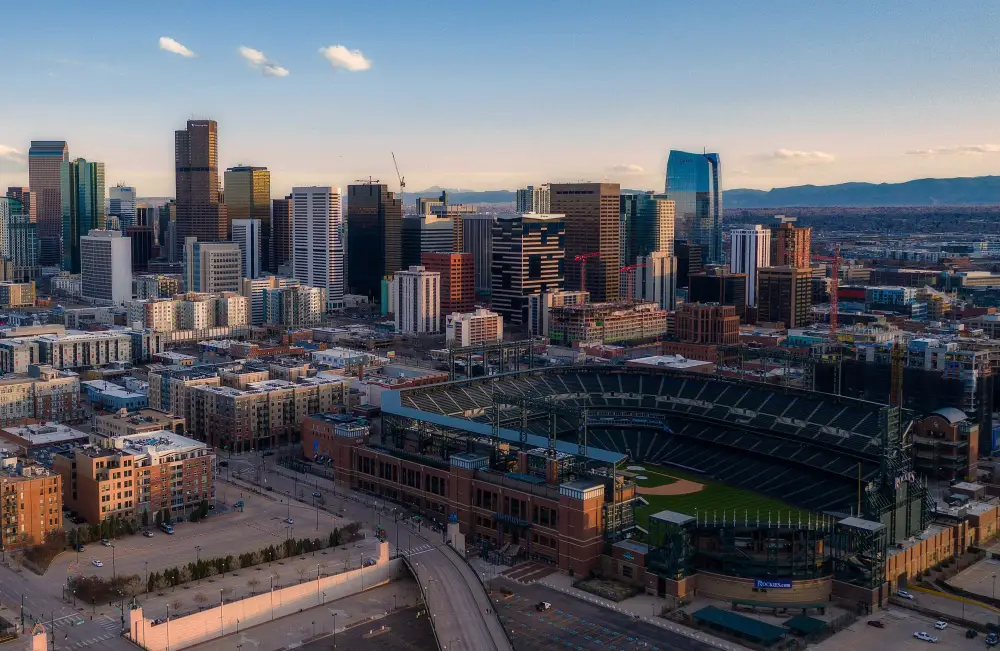
Denver skyline. CGH Injury Lawyers represents rideshare accident victims across Denver, Colorado.
Denver, Colorado

Denver Rideshare Accident Lawyers Who Force the Right Policy to Pay

When you are hurt in an Uber or Lyft crash in Denver, the most important question is not who was driving but what the driver's app said at the moment of impact. That single fact determines which insurance company owes you money and how much. We work from our Denver office at 2701 Lawrence St. to prove it. No fee unless we win.

No fee unless we win

It's More Than Money.

Get my free rideshare case review

100% confidential. No fee unless we win.

Our Denver Office CGH Injury Lawyers 2701 Lawrence St., Suite 201 Denver, CO 80205 (303) 209-9395 Se habla espanol
5-star rated on Google ABOTA trial advocate on the team Trial lawyers, not a settlement mill 8 attorneys, bilingual EN / ES
  • The coverage available after a Denver Uber or Lyft crash shifts based on the driver's app status at the moment of impact, ranging from limited contingent coverage during Period 1 to a $1 million commercial policy the instant a ride is accepted (C.R.S. 40-10.1-601).
  • Colorado strengthened rideshare UM/UIM protection under House Bill 22-1089, raising minimum uninsured and underinsured motorist limits to $200,000 per person and $400,000 per accident during Periods 2 and 3.
  • Colorado's modified comparative fault rule means you can recover damages as long as you were less than 50 percent at fault for the Denver crash; if your share of fault is 50 percent or more, recovery is barred (C.R.S. 13-21-111).

If you were hurt in a Denver Uber or Lyft crash as a passenger, a motorist, or a rideshare driver, the case turns on a piece of evidence most people never think about: what the driver's app was showing the second the collision happened. CGH Injury Lawyers operates from our RiNo office at 2701 Lawrence St., a few blocks from I-70 and Colfax Ave., and we handle the multi-carrier insurance battle, the preservation of app data and GPS logs, and trial in Denver District Court when an insurer refuses a fair offer. You pay nothing unless we win.

Who pays when

The four coverage periods that govern every Denver rideshare accident

Unlike an ordinary Denver car crash where one driver's insurer covers the loss, an Uber or Lyft accident involves overlapping policies that switch on and off based on the driver's real-time app status. The period that was active at the moment of your crash on I-25, Colfax Ave., or Pena Blvd. can be the difference between a $1 million policy and a coverage gap that leaves you fighting two insurers at once.

  1. Period 0: App off, personal policy applies

    When the driver's app is fully off, the driver is a private citizen and their personal auto policy is primary. The catch for Denver rideshare crash victims is the business-use exclusion: carriers like State Farm, GEICO, and Progressive investigate undisclosed rideshare activity and may deny a claim even when the app was not active during the crash. We pull the driver's app history to pin down exactly which period applied.

  2. Period 1: App on, waiting for a request (the coverage gap)

    With the app on but no ride accepted, Uber and Lyft provide only contingent liability coverage of $50,000 per person, $100,000 per accident, and $25,000 in property damage, and only after the driver's personal insurer formally denies the claim in writing. Denver drivers waiting in Period 1 near the I-225 corridor, at Denver International Airport, or idling on Federal Blvd. create real exposure because there is usually no collision or comprehensive coverage in this window.

  3. Period 2: En route to pick up (the $1 million policy activates)

    The instant the Denver driver accepts a ride and heads toward the pickup, the company's commercial policy becomes primary and provides $1 million in third-party liability coverage. Uber is insured through James River Insurance; Lyft is insured through Mobilitas and Liberty Mutual. Most people wrongly assume this level of coverage applies the entire time the app is on, which is why pinning the acceptance timestamp matters so much on a busy corridor like Speer Blvd. or US-6.

  4. Period 3: Passenger in the vehicle ($1 million remains active)

    From the moment a passenger gets in to the moment they are dropped off, the full $1 million commercial policy stays in force. This is typically the clearest Denver rideshare scenario, though complications arise when multiple people are injured and the limit must be split, or when a third-party driver cut off the Uber in the I-70 and I-25 Mousetrap interchange and bears shared fault.

Proving which period applied is where Denver rideshare cases are won or lost. Uber and Lyft app data and GPS logs can be deleted, so the right move is sending a preservation letter the moment you retain us, before any carrier can argue the data no longer exists. Our RiNo office is positioned to act quickly because we work Denver courts and Denver cases every day.

The hidden hurdle

Why your personal insurer has to deny you first in a Period 1 Denver crash

During Period 1, the rideshare company's coverage is contingent, not primary. James River or Mobilitas will not pay a dollar until the driver's personal carrier has denied the claim in writing. This procedural step is the reason many legitimate Denver rideshare crash claims stall or get abandoned before a single payment is made.

How the denial-letter sequence works in Denver

  • The driver files first with their personal carrier, which investigates whether the app was on by requesting phone records, app data, and recorded statements.
  • If the carrier finds the app was active, it issues a formal written denial citing the business-use exclusion.
  • Only with that denial letter in hand can the injured party pursue the company's contingent policy, after which James River or Mobilitas runs its own investigation to confirm the Period 1 status.

This back-and-forth can run 60 to 90 days or longer after a Denver crash. We shorten it by filing with both carriers at once, demanding written responses on a clock, and raising bad-faith exposure when an insurer stalls rather than responds. Denver's insurers know which law firms push back and which ones wait.

Local Knowledge

Denver corridors. Denver courts. Denver trauma care.

A Denver rideshare accident case is worked and filed in Denver. The evidence comes from Denver streets and the hospitals that treated you, and the case may be decided at a Denver courthouse. Here is the ground we work on every day.

High-Risk Corridors

I-25, I-70, and the LoDo Pickup Zone

Denver's busiest rideshare conflict zones cluster around the I-25 and I-70 Mousetrap interchange, Pena Blvd. approaching Denver International Airport (where drivers circle in Period 1's coverage gap), Colfax Ave. and Federal Blvd. through Capitol Hill and Five Points, Speer Blvd. between Cherry Creek and LoDo, and the Union Station area on weekends. Each corridor has its own traffic pattern and its own set of intersection risks that affect how fault is assessed. We know these streets and know which camera systems and traffic data exist to document what happened.

Trauma Care

Denver Health Medical Center

After a serious Denver rideshare crash, the most critically injured patients are often transported to Denver Health Medical Center, the region's Level I trauma center at 777 Bannock St. Those medical records, imaging studies, and surgical notes form the factual core of your damages claim. Denver passengers injured in rideshare crashes may also be treated at Saint Joseph Hospital, Presbyterian/St. Luke's Medical Center, or Rose Medical Center. We gather records from every facility and use them to document the full scope of your injury, past and future.

Courthouse

Denver District Court, 2nd Judicial District

Personal injury cases arising in Denver County are filed in Denver District Court, the 2nd Judicial District, with civil matters heard at the City and County Building, 1437 Bannock St. Denver civil procedure differs from suburban courts, and the judges, the local rules, and the defense firms you face are Denver-specific. We handle Denver District Court cases directly from our office two miles away in RiNo. When an insurer refuses a fair offer on your Denver rideshare claim, we file suit and try it here.

Compensation

What compensation can you recover after a Denver rideshare crash?

Colorado law lets injured Denver riders, drivers, and third-party motorists recover two broad categories of damages after an Uber or Lyft crash: economic losses you can document with bills and records, and non-economic losses for the human cost of the injury. Because rideshare claims can pull from several insurance sources at once, the full value often depends on identifying every policy in play, not just the first one an adjuster names.

Economic damages

  • Medical expenses, past and future, including care at Denver Health and follow-up specialists
  • Lost wages and income during recovery
  • Reduced earning capacity from a permanent injury
  • Rehabilitation and home modification costs
  • Property damage to your vehicle
  • Out-of-pocket expenses tied to the crash

Non-economic damages

  • Pain and suffering
  • Emotional distress and anxiety after the crash
  • Loss of enjoyment of life
  • Permanent disability or disfigurement

Colorado caps non-economic damages at $1.5 million for claims accruing on or after January 1, 2025 (C.R.S. 13-21-102.5), with inflation adjustments starting in 2028. Economic damages and compensation for physical impairment or disfigurement are not capped. Because a Denver rideshare claim may draw on the driver's personal policy, the company's commercial policy, your own UM/UIM coverage, and MedPay, identifying every source before the first adjuster narrows the conversation is the work that protects your recovery.

Uninsured drivers in Denver

Colorado's enhanced UM/UIM protection in Denver rideshare accidents

In 2022 Colorado passed House Bill 22-1089, raising the uninsured and underinsured motorist coverage rideshare policies must carry. The law was a direct response to cases where Denver passengers were seriously hurt by uninsured drivers and found the company's UM/UIM coverage too thin to cover their injuries.

  • Rideshare policies operating in Colorado must provide minimum UM/UIM coverage of $200,000 per person and $400,000 per accident, applicable during Periods 2 and 3 (HB22-1089).
  • Before this law some Denver passengers hit by uninsured drivers were left with only the $25,000 per person state minimum, which covered little more than initial ER costs for a serious crash at Denver Health.
  • Colorado also allows stacking of UM/UIM coverage from multiple policies in certain situations (C.R.S. 10-4-609), so a Denver passenger's own UM/UIM policy may sit on top of the company's limits. Insurers routinely fight stacking claims.

MedPay is a separate safety net that pays medical bills regardless of fault. Many Uber and Lyft drivers unknowingly opted out of MedPay to lower their premiums, and rideshare policies generally do not provide it during Period 1. We map every UM/UIM and MedPay source you can reach before any adjuster tries to limit your claim to a single policy.

Liability scenarios

Who is liable in different Denver rideshare accident scenarios

Liability after a Denver Uber or Lyft crash turns on two questions at once: who was at fault, and which coverage period applied. Colorado's modified comparative fault rule under C.R.S. 13-21-111 means you can recover damages as long as you were less than 50 percent at fault, with your award reduced by your percentage. If your share of fault reaches 50 percent or more, recovery is barred entirely.

  1. Denver Lyft or Uber passenger hurt by the driver (Period 3)

    An injured Denver passenger in an active ride has a claim under the company's $1 million commercial policy through James River or Mobilitas. This is the clearest scenario, but those carriers are sophisticated, and their adjusters often reach out quickly with early settlement offers before you know your full injury picture. Never give a recorded statement or accept any offer before speaking with our Denver office.

  2. Denver motorist hit by a rideshare vehicle (Period 2 or 3)

    If a Denver Uber or Lyft driver heading to pick up a rider or carrying a passenger hit your car on I-76, Speer Blvd., or Colfax Ave., you have a claim against the company's commercial policy. The carrier will request app and GPS data to confirm the period, dispute fault percentages under C.R.S. 13-21-111, and look for ways to characterize your conduct as the primary cause. Documentation of the scene and independent witnesses are critical.

  3. Rideshare driver or passenger hit by an uninsured Denver driver

    This is where Colorado's HB22-1089 UM/UIM protections matter most. The claim goes against your own or the company's UM/UIM carrier at the enhanced limits, and insurers scrutinize every detail to minimize the payout. These are exactly the cases where legal representation makes the largest practical difference in what injured Denver riders actually receive.

  4. Denver crash during Period 1 (the coverage gap scenario)

    The driver's personal carrier denies the claim on the business-use exclusion, and the company's contingent coverage caps at $50,000 per person, $100,000 per accident, and $25,000 in property damage. When Denver crash damages exceed those limits, the injured party may need to pursue the driver personally for the excess, which is why documenting the driver's total assets and any rideshare endorsement they may have purchased matters early in the case.

Why CGH

Why Denver rideshare accident victims choose CGH Injury Lawyers

A real Denver office, a team built for trial, bilingual staff, and no fee unless we win. We do not publish rideshare settlement figures because every crash is different and a number on a page tells you nothing about your specific case. What we offer is the work, not a headline.

The Law

C.R.S. 40-10.1-601

Colorado's rideshare coverage statute governs which policy applies in each period. We know exactly how to read app data against it to show which carrier owes you coverage.

Real Denver Office

Not a referral service.

Our office at 2701 Lawrence St., Suite 201 in Denver's RiNo neighborhood is where your attorney works. You can walk in, review your case file, and meet the team before any agreement is signed.

App Data

We preserve it fast.

GPS logs and app status data can disappear. Preservation letters go out immediately to prevent carriers from claiming the evidence no longer exists.

Multi-Carrier

We file with all of them.

We submit claims to every applicable carrier at once and demand written responses, rather than waiting for one insurer to point at another.

Trial-Ready

8 attorneys, prepared for Denver District Court.

Managing Partner Kevin Cheney is a member of the American Board of Trial Advocates and has tried over 25 cases to verdict. James River and Mobilitas negotiate differently when they know your counsel will take the case to a Denver jury.

Bilingual

Hablamos espanol.

Spanish-speaking staff and attorneys serve Denver's Spanish-speaking community across every practice area.

No Win, No Fee

Contingency only.

You pay zero out of pocket for legal fees. We advance the costs and collect only from a settlement or verdict in your favor.

After the Crash

What to do after a Denver rideshare accident

Take a screenshot of the app, get medical care, and call us before any carrier calls you. Here is the path we walk together from the moment you reach out from a Denver street to the moment the case closes.

  1. Preserve the app evidence immediately

    Before you do anything else, take a screenshot of the Uber or Lyft app on your phone showing the trip status at the time of the crash. This is the single piece of evidence that determines which coverage period applies. Do not delete any texts, notifications, or receipts from the app.

  2. Get medical care

    Denver Health Medical Center is the region's Level I trauma center. For less critical injuries, Saint Joseph Hospital and Presbyterian/St. Luke's also serve the Denver metro. Go even if you feel fine; adrenaline masks pain, and delayed medical records hurt your claim.

  3. Document the scene

    Photograph the vehicles, the intersection or roadway (whether it is I-25, Colfax Ave., or a surface street), and your visible injuries. Identify the driver, their vehicle, and any witnesses. Note whether there was dashcam footage in the rideshare vehicle.

  4. Call us before any insurer calls you

    James River, Mobilitas, State Farm, GEICO, and Progressive all have adjusters who may reach out within hours. Do not give a recorded statement or accept any offer. Call (303) 209-9395 and speak with our Denver team first.

  5. We send preservation letters and file multi-carrier claims

    We send preservation letters to Uber or Lyft for GPS and app data, identify every applicable policy, and file with all carriers simultaneously to prevent the denial-and-delay loop that traps Period 1 victims.

  6. Negotiate or litigate in Denver District Court

    Most Denver rideshare cases settle before a lawsuit is filed. When an insurer refuses a fair offer, we file in Denver District Court at 1437 Bannock St. and try your case before a Denver jury.

5-star rated on Google

I wish I could leave more than 5 stars!

Grace Macaluso, 5-star Google review
Deadlines

Filing deadlines for a Denver rideshare accident claim

Colorado sets different deadlines for different types of rideshare crash claims, and some insurance policies add requirements that run shorter than the legal deadline. Missing any of them can bar your recovery entirely.

  • For motor vehicle injury claims in Colorado, including rideshare crashes, the statute of limitations is generally three years from the date of the accident (C.R.S. 13-80-101(1)(n)).
  • If a Denver city vehicle or RTD bus was involved in the crash, the Colorado Governmental Immunity Act requires a written notice of claim within 182 days after you discover the injury (C.R.S. 24-10-109). This is a jurisdictional prerequisite, and missing it bars the claim entirely.
  • Most auto insurance policies require prompt notice of any accident, often within 24 to 72 hours. Waiting to report the Denver crash to each potentially applicable carrier can trigger coverage defenses before a lawsuit is ever filed.

Report every Denver rideshare crash to every potentially applicable carrier within 24 to 48 hours, even if you are unsure whether you will file a claim. Then call us so we can confirm your specific deadline and get preservation letters out before any data disappears.

Questions

Denver rideshare accident, frequently asked questions

Who pays for my injuries after a Denver Uber or Lyft crash?

It depends entirely on what the driver's app was showing at the moment of the Denver crash. If the app was off, the driver's personal auto policy is primary, though it may invoke a business-use exclusion. If the app was on but no ride was accepted (Period 1), the company provides only contingent coverage of $50,000 per person and $100,000 per accident, and only after the personal insurer denies the claim in writing. If the driver had accepted a ride or had a passenger, the company's $1 million commercial policy is primary. Proving the correct period through app data and GPS logs is the core task in every Denver rideshare case.

What is the coverage gap and why does it matter for Denver riders?

Period 1 is the gap when a Denver driver has the app on but has not yet accepted a ride. That is common around Denver International Airport, the I-25 corridor, and nightlife areas like LoDo, where drivers circle waiting for requests. During this window, Uber and Lyft provide only contingent liability coverage of $50,000 per person, $100,000 per accident, and $25,000 in property damage, and only after the driver's personal insurer has denied the claim. If that personal denial never comes, or comes too slowly, victims can be caught between two insurers with no clear path to payment. That fight is what we handle.

Can I sue Uber or Lyft directly after a Denver accident?

Because Uber and Lyft classify drivers as independent contractors, a direct negligence claim against the company for a driver's conduct is difficult. Their commercial policies are designed to cover accidents during active ride periods, providing up to $1 million. In rare situations involving the company's own gross negligence, such as knowingly retaining a driver with a disqualifying safety record, a direct claim may be possible. We evaluate that question in every Denver rideshare case we take.

How long do I have to file a rideshare accident lawsuit in Denver?

Colorado gives you three years from the date of the crash to file a personal injury lawsuit for injuries arising from the use or operation of a motor vehicle, including rideshare vehicles (C.R.S. 13-80-101(1)(n)). If a government vehicle or public agency was involved, however, a written notice under the Colorado Governmental Immunity Act must be filed within 182 days of discovering the injury (C.R.S. 24-10-109), and missing that notice bars the claim entirely. Most insurance policies also require prompt notice of the crash, often within 24 to 72 hours. The safest path is to contact our Denver office quickly, confirm your deadlines, and report the crash to every carrier right away.

Does Colorado's comparative fault rule affect my Denver rideshare claim?

Yes. Colorado uses a modified comparative fault rule under C.R.S. 13-21-111. You can recover damages as long as you were less than 50 percent at fault for the crash. If your share of fault is 50 percent or more, recovery is barred entirely. In multi-vehicle Denver rideshare crashes, insurers routinely inflate the injured person's fault percentage to reduce what they owe. Accident reconstruction and witness evidence are often what corrects that inflation at the negotiating table or before a Denver District Court jury.

What evidence do I need for a Denver rideshare accident claim?

Beyond the standard photos, police reports, and medical records, a Denver rideshare claim requires app-specific evidence: a screenshot showing the trip status at the time of the crash, GPS records confirming the driver's location and speed, and the driver's ride-acceptance timestamp. This data can be deleted quickly, so preserving it immediately is critical. Security and traffic camera footage at the Denver intersection where the crash occurred may also be essential and is often overwritten within days.

Where is a Denver rideshare accident lawsuit filed?

Personal injury cases arising in Denver County are filed in Denver District Court, the 2nd Judicial District, with civil matters heard at the City and County Building, 1437 Bannock St. Denver's local rules, its jury pool, and the defense firms that appear before Denver judges are specific to this court. Most rideshare cases settle before a lawsuit is filed, but where a case would be filed shapes how the opposing insurer values the claim. We handle Denver District Court cases from our office in RiNo, two miles from the courthouse.

Should I accept the first settlement offer from James River or Mobilitas after a Denver crash?

No. Rideshare insurers often make early offers before you understand the full extent of your injuries or know every source of coverage available to you. Accepting a quick offer from James River or Mobilitas after a Denver crash can permanently close out your claim for future treatment costs, lost earning capacity, and pain and suffering. Talk to our Denver team at (303) 209-9395 before you respond to any adjuster.

It's More Than Money.

You were hurt in a Denver rideshare crash. We handle the insurance maze.

Free consultation. No fee unless we win. Available in English and Spanish.

Tell us what happened

100% confidential. No fee unless we win.

Prefer to read first? See how Colorado's rideshare insurance law works.

CGH Injury Lawyers · 2701 Lawrence St., Suite 201, Denver, CO 80205