
ClickCease
Free consultations · Se habla espanol
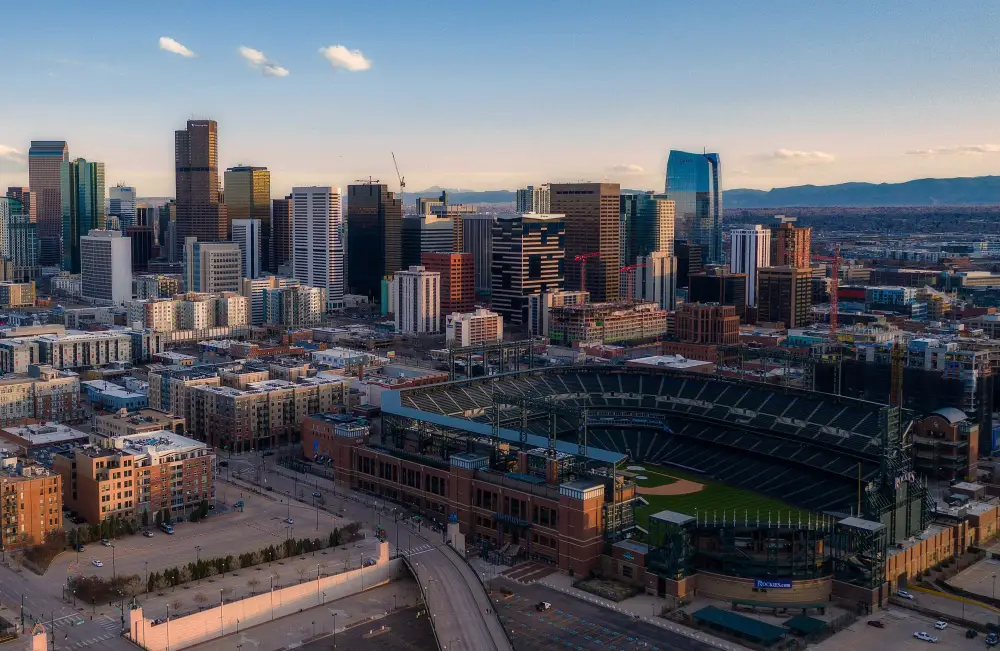
Denver skyline. CGH Injury Lawyers represents truck accident victims across Denver, Colorado.
Denver, Colorado

Denver Truck Accident Lawyers Who Go After the Carrier, Not Just the Driver

When a commercial truck hits you on I-70, I-25, or any Denver corridor, you are up against a carrier with defense counsel and adjusters who move fast. We work from our Denver office at 2701 Lawrence St. to secure the black box data before it disappears, investigate every party in the chain of responsibility, and prepare your case for trial. No fee unless we win.

No fee unless we win

It's More Than Money.

Get my free truck accident case review

100% confidential. No fee unless we win.

Our Denver Office CGH Injury Lawyers 2701 Lawrence St., Suite 201 Denver, CO 80205 (303) 209-9395 Se habla espanol
5-star rated on Google ABOTA trial advocate on the team FMCSA and FMCSR focused 8 attorneys, bilingual EN / ES
  • A crash with a commercial truck is not a bigger car accident. Interstate trucks must follow Federal Motor Carrier Safety Administration rules in Title 49 of the Code of Federal Regulations, Parts 350 to 399, covering driver hours, brakes, and electronic logging devices, and violations of those rules become the evidence that wins your case.
  • Black box data from the truck's engine control module can be overwritten in as little as 30 days, and dashcam footage disappears in 30 to 90 days. A spoliation letter to the carrier must go out within the first 72 hours or that evidence is gone.
  • Colorado's modified comparative negligence rule under C.R.S. 13-21-111 means your recovery is reduced by your share of fault and is barred entirely if you are 50 percent or more at fault. Carriers know this and will push hard to shift blame onto you.

If a commercial truck hit you on I-70, I-25, I-76, US-6, Pena Blvd., or any other Denver corridor, CGH Injury Lawyers is ready to act fast. We work from our Denver office in the RiNo and Five Points area, investigate every party in the chain of liability from the driver to the carrier to the cargo loader, and take cases to trial in Denver District Court when a carrier refuses to make things right. You pay nothing unless we recover for you.

Why truck cases differ

A Denver truck crash is not a car accident case

When a commercial truck strikes your vehicle on I-70 at the Mousetrap interchange or on I-25 heading through downtown Denver, the legal landscape is fundamentally different from a standard two-car collision. Truck cases carry more potential defendants, a separate body of federal regulation, and evidence that carriers will try to lose before you can get to it.

More parties can share the blame

  • The driver, for their own negligence behind the wheel on a Denver corridor
  • The trucking company, for negligent hiring, training, supervision, or failure to maintain the vehicle
  • Cargo loaders, freight brokers, and third-party maintenance contractors
  • The truck or component manufacturer when a mechanical defect contributed to the Denver crash

Critical evidence disappears fast

  • Electronic logging device data showing real hours driven versus what the carrier reported
  • Engine control module black box data on speed and hard braking, often stored only 30 days
  • Forward and driver-facing dashcam footage, typically deleted in 30 to 90 days
  • Maintenance records revealing a pattern of deferred repairs on the truck that struck you

Federal law requires carriers to retain electronic logging device data for six months and maintenance records for one year, but companies frequently overwrite or lose this information before victims retain counsel. Acting in the first 72 hours, before the data is gone, is the single biggest factor in preserving a Denver truck accident claim. The moment you contact our office, a spoliation letter goes out demanding the carrier preserve every piece of evidence tied to your crash.

Federal and state law

The trucking rules that decide your Denver case

Denver sits at the intersection of Colorado's two busiest interstate freight routes: I-70, which carries mountain-pass truck traffic through the Eisenhower Tunnel and into the metro, and I-25, the north-south spine connecting Denver to Pueblo and Fort Collins. Every commercial truck on those corridors answers to a dual-jurisdiction framework of federal FMCSA standards and Colorado-specific safety duties.

Federal Hours of Service (49 CFR Part 395)

  • 11-hour driving limit after 10 consecutive hours off duty
  • 14-hour on-duty window that cannot be reset by breaks
  • 30-minute break required after 8 cumulative hours of driving
  • 60 hours on duty in 7 days, or 70 hours in 8 days
  • Electronic logging devices required since December 2017 (49 CFR Part 395, Subpart B)

Colorado-specific duties on Denver-area roads

  • C.R.S. 42-4-235 sets minimum commercial vehicle safety equipment standards; a breach can establish negligence per se in Denver District Court
  • CDOT Code 16 chain law requires commercial trucks to chain up when activated on I-70; failure eliminates the bad-weather defense
  • Chains must be carried on I-70 between September 1 and May 31 for trucks traveling the mountain corridor into Denver
  • Weight limits of 80,000 pounds gross, 20,000 per single axle, and 34,000 per tandem axle on Denver interstates
  • C.R.S. 42-4-1010 governs mandatory brake check stations before major downgrades, including the I-70 descent into Denver

Regulatory violations become your proof of negligence

When a carrier's truck was overloaded on I-76, when the driver had been behind the wheel for 15 hours before the crash on Pena Blvd., or when the truck entered the I-70 mountain corridor without chains during a Code 16 activation, each of those violations maps directly onto your negligence claim. Colorado courts treat a violation of a statute enacted for the protection of persons like yourself as evidence of negligence per se, removing the need to prove the defendant failed to use reasonable care. We build the regulatory case alongside the damages case so that every rule the carrier broke works in your favor.

Local Knowledge

Denver corridors. Denver trauma care. Denver courts.

A Denver truck accident case is grounded in specific geography. The corridor where the crash happened, the hospital that treated your injuries, and the courthouse where the case may be filed all shape how the claim is built and litigated. Here is the ground we work on every day.

High-Risk Corridors

I-70, I-25, I-76, and the Mousetrap

Denver's freight corridors carry heavy commercial truck traffic through the city 24 hours a day. I-70 brings mountain-pass freight through the Eisenhower Tunnel and into the metro. I-25 is the north-south spine through downtown. The Mousetrap interchange where I-25 and I-70 meet is one of the most congested interchanges in Colorado. I-76 and US-6 carry additional freight loads through the northwest metro. Pena Blvd. connects Denver International Airport to the highway network and sees a high volume of commercial vehicle traffic. Where your crash happened determines the applicable speed limits, lane configurations, and which enforcement records we pull when building your case.

Trauma Care

Denver Health Medical Center

After a serious commercial truck crash in Denver, emergency responders typically transport the most critically injured patients to Denver Health Medical Center, the region's Level I trauma center, located at 777 Bannock St. in Lincoln Park. Those medical records document the full scope of your injuries, from acute trauma through long-term rehabilitation needs, and they become the foundation of your damages claim. Saint Joseph Hospital on E. 19th Ave. in Capitol Hill, Presbyterian/St. Luke's Medical Center in Uptown, and Rose Medical Center in the Cherry Creek area also treat crash injuries across the metro and maintain records we gather to document your recovery.

Courthouse

Denver District Court, 2nd Judicial District

Personal injury cases arising in Denver County are filed in Denver District Court, the 2nd Judicial District, with civil matters heard at the City and County Building, 1437 Bannock St. Denver civil procedure and local rules differ from suburban courts. The judges, opposing defense counsel from major carrier insurance firms, and the jury pool that decides your case are all specific to Denver. CGH Injury Lawyers handles Denver District Court cases directly from our office two miles away in the RiNo and Five Points neighborhood.

Who is liable

Holding the trucking company accountable, not just the driver

Carriers that operate freight routes through Denver often structure their businesses to push liability onto drivers. Courts in Denver District Court and across Colorado have consistently looked past those structures to the real relationships behind the crash.

  • Courts look past the "independent contractor" label to the real relationship. When a carrier controls how, where, and when the driver works, it can be vicariously liable under respondeat superior.
  • Even a truly independent driver does not shield the carrier from direct liability claims for negligent hiring, negligent training, negligent supervision, or failure to maintain the truck that caused your Denver crash.
  • The Graves Amendment (49 U.S.C. 30106) protects rental and leasing companies from vicarious liability, but it does not cover a lessor who was negligent in maintenance or who knew the driver was unqualified.
  • Federal leasing regulations under 49 CFR Part 376 impose recordkeeping and operational control duties that often reveal a carrier's true authority over the truck and driver, even when a lease agreement says otherwise.

Colorado's modified comparative negligence rule under C.R.S. 13-21-111 assigns fault percentages across all parties in the crash. Your recovery is reduced in proportion to your own fault, and you are barred from recovering anything if you are found to be 50 percent or more at fault. We analyze every source of liability to ensure the carrier and its insurer cannot shift enough blame onto you to reach that threshold, and we identify every insurance policy in play so your claim reaches the full available coverage.

How we build your case

What happens after a Denver truck accident

Your health comes first. Then evidence. Then the claim. Here is the path we walk with you from the first call forward.

  1. Get medical care immediately

    Denver Health Medical Center is the region's Level I trauma center for catastrophic truck crash injuries. Saint Joseph Hospital and Presbyterian/St. Luke's also treat serious injuries across the Denver metro. Even if you feel okay at the scene, get examined. Adrenaline masks injury symptoms, and delayed findings in your medical record can hurt your claim.

  2. Call us before the carrier's adjuster calls you

    The carrier's insurer may call within hours of the crash. Do not give a recorded statement and do not accept any offer before speaking with us. What you say in those early conversations becomes part of the claim file used against you. Call (303) 209-9395.

  3. Spoliation letters go out in 72 hours

    Within the first 72 hours we send formal demand letters requiring the carrier to preserve the truck's black box data, electronic logging device records, dashcam footage, maintenance logs, and driver qualification files before they can be overwritten or destroyed. Federal law requires carriers to retain ELD data for six months, but that protection disappears without a preservation demand.

  4. We investigate every party in the chain

    We look beyond the driver to the carrier, brokers, cargo loaders, and maintenance contractors. We work with accident reconstruction specialists who analyze skid marks, vehicle damage, road conditions, and data from the I-70 or I-25 corridor where the crash happened to establish exactly how it occurred and who was responsible.

  5. Build the regulatory and damages case together

    We map each FMCSA or Colorado safety violation onto the legal theory that proves negligence and document your full damages, from emergency treatment at Denver Health through future rehabilitation costs, lost earning capacity, and non-economic harm. We also evaluate whether the carrier's conduct supports a claim for punitive damages under C.R.S. 13-21-102.

  6. Negotiate from trial readiness, or litigate

    Most truck accident cases settle. When carriers and their insurers refuse a fair offer, we file in Denver District Court and try your case. Managing Partner Kevin Cheney is a member of the American Board of Trial Advocates and has tried over 25 cases to verdict. That preparation changes how insurers respond to every demand we send.

We also help manage the practical pressure of recovery during the case. Your health insurance or auto medical payments coverage typically handles bills while your claim moves forward, and we work with providers so treatment continues without interruption. You should never have to choose between getting care and pursuing your claim.

Why CGH

Why Denver truck accident victims choose CGH Injury Lawyers

A real Denver office, attorneys who know the Federal Motor Carrier Safety Regulations, bilingual staff, and no fee unless we win. We do not publish truck accident settlement figures on this page, because every crash is different and a number on a website tells you nothing about what your case is worth. What we offer is the work.

Evidence First

72-hour spoliation letters.

Black box data can be overwritten in 30 days. We demand preservation from the carrier before that clock runs out.

Real Denver Office

Not a P.O. box.

Our office at 2701 Lawrence St., Suite 201 is where your attorney works. You can walk in, review the file, and meet the team handling your Denver truck accident case. We are minutes from the Mousetrap interchange and Denver Health.

FMCSA Focused

We know the rulebook.

Hours of Service, chain law, ELD requirements. We map carrier violations onto your negligence claim from day one.

Multiple Defendants

Beyond the driver.

We investigate the carrier, brokers, loaders, and maintainers so no source of compensation is left on the table.

Trial-Ready

8 attorneys, built for trial.

Managing Partner Kevin Cheney is a member of the American Board of Trial Advocates and has tried over 25 cases to verdict. Timothy G. Tarr has been recognized by Best Lawyers every year since 2023. When a carrier's insurer knows your attorneys are genuinely prepared to try the case in Denver District Court, settlement offers change.

Bilingual

Hablamos espanol.

Spanish-speaking staff and attorneys serve Denver's Spanish-speaking community in truck accident cases.

No Win, No Fee

Contingency only.

You pay no legal fees unless we recover for you. We advance the costs of investigation and litigation.

Compensation

What can you recover after a Denver truck accident?

Commercial truck crashes tend to cause severe, long-term injuries because of the weight difference between a fully loaded 18-wheeler and a passenger vehicle. The damages in a serious truck case reach well beyond the first hospital bill at Denver Health.

Economic damages (no cap)

  • Emergency treatment and hospital stays, including care at Denver Health and other metro trauma centers
  • Future medical care and long-term rehabilitation costs documented in a life care plan
  • Lost wages from time missed at work during treatment and recovery
  • Diminished earning capacity if your injuries affect what you can earn going forward
  • Property damage to your vehicle

Non-economic and punitive damages

  • Physical pain and suffering caused by the crash and the recovery process
  • Emotional distress and trauma, which are common after high-impact truck crashes
  • Loss of enjoyment of life when injuries prevent activities you valued before the crash
  • Compensation for physical impairment or disfigurement, which is not subject to any cap under Colorado law
  • Punitive damages in cases of willful and wanton carrier conduct, such as falsified inspection logs or deliberate hours-of-service violations (C.R.S. 13-21-102)

Colorado caps non-economic damages such as pain and suffering at $1.5 million for claims accruing on or after January 1, 2025 (C.R.S. 13-21-102.5), with inflation adjustments starting in 2028. Two categories fall entirely outside that cap: economic damages such as medical bills and lost wages, and compensatory damages for physical impairment or disfigurement, which are never capped under Colorado law. Because truck crashes disproportionately cause catastrophic and permanent injuries, those uncapped categories are often where the largest portion of a serious case sits. We build your claim so that no category of harm you suffered is left on the table.

5-star rated on Google

I wish I could leave more than 5 stars!

Grace Macaluso, 5-star Google review
Questions

Denver truck accident, frequently asked questions

How long do I have to file a truck accident lawsuit in Colorado?

Colorado gives you three years from the date of the crash to file a lawsuit for injuries arising out of the use or operation of a motor vehicle, including commercial trucks, under C.R.S. 13-80-101(1)(n). However, shorter deadlines can apply. If any government entity is involved, such as a CDOT truck or Denver-operated vehicle, a formal written notice of claim must be filed within 182 days of discovering the injury under the Colorado Governmental Immunity Act (C.R.S. 24-10-109). Acting quickly also protects the evidence that can disappear in 30 to 90 days. Contact an attorney as soon as possible after a Denver truck crash.

Can the trucking company be liable, not just the driver?

Yes. The trucking company can be vicariously liable under respondeat superior if the driver was an employee acting within the scope of their work. Even if the driver was classified as an independent contractor, the carrier can still face direct liability for negligent hiring, training, supervision, or failure to maintain the truck. Many Denver truck accident cases involve multiple defendants, including the cargo loader and third-party maintenance contractors. We investigate every party in the chain of responsibility so no source of compensation is missed.

What evidence matters most in a Denver truck crash case?

The most time-sensitive evidence includes the truck's engine control module black box data (which carriers may overwrite in 30 days), the driver's electronic logging device records showing real hours driven, forward and driver-facing dashcam footage (typically deleted in 30 to 90 days), and maintenance records. Scene photographs, the Denver Police Department accident report, witness statements from other drivers on I-70 or I-25, and your medical records from Denver Health or another treating facility also form the backbone of the claim. A spoliation letter demanding preservation of all carrier evidence must go out within 72 hours of the crash.

What if I was partly at fault for the Denver truck crash?

Colorado uses modified comparative negligence under C.R.S. 13-21-111. If you were less than 50 percent at fault, you can still recover, and your damages are reduced in proportion to your own share of fault. If you are found to be 50 percent or more at fault, you recover nothing. Carriers and their insurers routinely push hard in Denver truck cases to shift blame onto the victim to reach or exceed that 50 percent threshold. We counter that effort by building the regulatory case against the carrier and documenting every violation that contributed to the crash.

Where is a Denver truck accident lawsuit filed?

Personal injury cases arising in Denver County are filed in Denver District Court, the 2nd Judicial District, with civil matters heard at the City and County Building, 1437 Bannock St. The local rules, the jury pool, and the defense firms representing major carriers are all specific to Denver. CGH Injury Lawyers handles Denver District Court cases directly from our office in the RiNo neighborhood, less than two miles from the courthouse.

What are the Hours of Service limits for commercial truck drivers?

The FMCSA limits commercial drivers to 11 hours of driving after 10 consecutive hours off duty, within a 14-hour on-duty window that cannot be extended by breaks. Drivers must take a 30-minute break after 8 cumulative hours of driving and cannot exceed 60 hours on duty in 7 consecutive days, or 70 hours in 8 days (49 CFR Part 395). Electronic logging devices have been required since December 2017 and record actual driving time. When the ELD data shows a truck that hit you in Denver had a driver who had exceeded these limits, that violation becomes direct evidence of negligence.

Can the carrier blame my Denver crash on bad weather on I-70?

Generally not. Colorado's CDOT Code 16 chain law treats winter driving on I-70 as a manageable duty, not an unforeseeable event. When a commercial truck causes a crash during a Code 16 activation without chains installed, the carrier cannot fall back on a bad-weather defense. Commercial trucks are also required to carry chains on I-70 between September 1 and May 31. The FMCSA adverse-driving-conditions exception to Hours of Service rules is frequently misapplied on the predictable I-70 corridor and does not excuse a fatigued driver who should have planned for mountain-pass conditions before heading into Denver.

What does a Denver truck accident attorney cost?

We work on a contingency fee, which means you pay no legal fees unless we recover for you. The initial consultation is free, we advance the costs of investigating the crash and building your case, and our fee comes only from the settlement or verdict we win for you. If there is no recovery, you owe no legal fee. There is no risk in calling us after a Denver truck crash: (303) 209-9395.

It's More Than Money.

A truck hit you. We hold the carrier accountable.

Free consultation. No fee unless we win. Available in English and Spanish.

Tell us what happened

100% confidential. No fee unless we win.

Prefer to read first? See how Colorado truck accident law works.

CGH Injury Lawyers · 2701 Lawrence St., Suite 201, Denver, CO 80205