
ClickCease
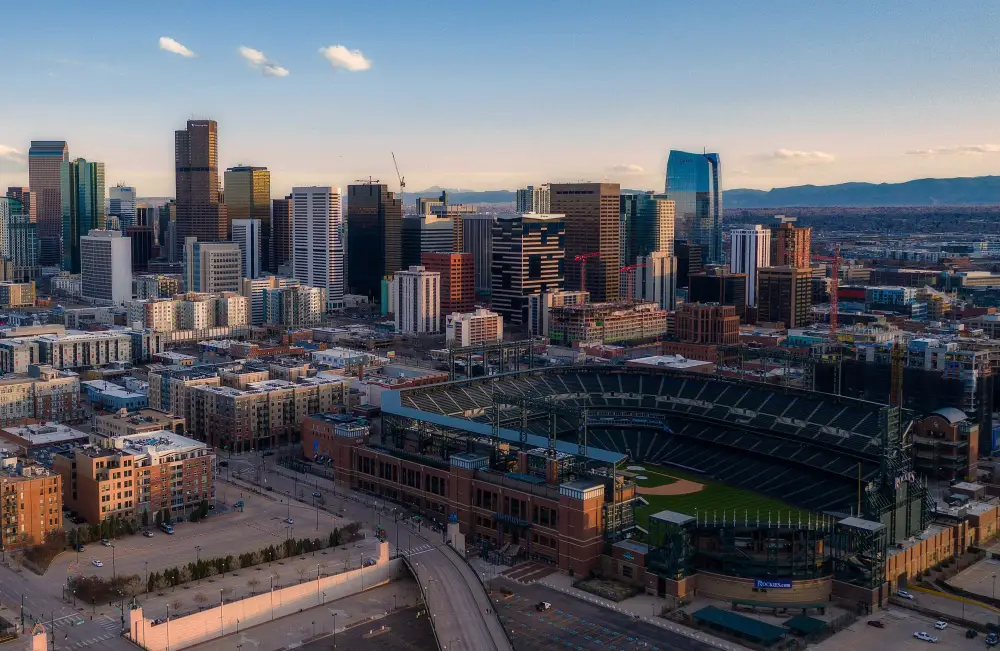
Denver skyline. CGH Injury Lawyers represents distracted driving accident victims across Denver, Colorado.
Denver, Colorado

Denver Distracted Driving Accident Lawyers Who Make Inattentive Drivers Pay

A driver who looked at a phone, fiddled with a GPS, or let attention wander for two seconds can change your life in a moment. We serve Denver from our office at 2701 Lawrence St. and we prove exactly what that driver did wrong. No fee unless we win.

No fee unless we win

It's More Than Money.

Get my free distracted driving case review

100% confidential. No fee unless we win.

Our Denver Office CGH Injury Lawyers 2701 Lawrence St., Suite 201 Denver, CO 80205 (303) 209-9395 Se habla espanol
5-star rated on Google ABOTA trial advocate on the team Trial lawyers, not a settlement mill 8 attorneys, bilingual EN / ES
  • A distracted driver who causes a crash in Denver is liable for your injuries under standard motor-vehicle negligence law. You must prove four elements: duty, breach, causation, and damages. A phone record, traffic camera clip, or police report notation is often the key piece of evidence that locks down the breach.
  • Colorado uses modified comparative fault. You can recover even if you share some blame, as long as your share is less than 50 percent (C.R.S. 13-21-111). Your award is reduced by your percentage of fault, and insurance adjusters often inflate that number early to cut your payout.
  • The deadline to file a lawsuit for injuries from a motor vehicle crash in Colorado is three years from the date of the crash (C.R.S. 13-80-101(1)(n)). Do not wait to get records pulled, because cell-carrier data and traffic-camera footage have short retention windows.

When a distracted driver hits you on I-25, Colfax Avenue, or Federal Boulevard, you are dealing with medical bills, lost work, and an insurance company that started building its defense before you left the hospital. CGH Injury Lawyers serves Denver from our office in the RiNo and Cole neighborhood at 2701 Lawrence St. We prove what the driver was doing, document your full damages, and take the case to Denver District Court when an insurer refuses to be fair. You pay nothing unless we recover for you.

Is this your situation?

Who we represent after a distracted driving crash in Denver

Distracted driving crashes in Denver happen in a wide range of situations. This page is for people dealing with any of them.

We represent you if you were

  • A driver or passenger hit by someone who was on their phone
  • A pedestrian struck at a crosswalk or along Colfax Avenue or Federal Boulevard by an inattentive driver
  • A cyclist hit near Ball Arena, Coors Field, or along a Denver bike lane by a driver who was not watching the road
  • A rear-end collision victim on I-25, I-70, or I-225 where the other driver had no time to brake
  • Someone hit at a Denver intersection where the other driver ran a light while distracted
  • A rideshare passenger injured because an Uber or Lyft driver was looking at the app

Situations we do not accept

  • Cases where you were 50 percent or more at fault for the crash under C.R.S. 13-21-111, Colorado's modified comparative fault rule. We will tell you plainly in the free review if the facts put you on the wrong side of that line.
  • Cases with no documentable injury. Minor fender-benders with no medical treatment and no wage loss are not cases we can honestly take on contingency.
  • Claims already resolved by a signed release with the at-fault driver's insurer. A signed release is generally final.

We will tell you exactly where your situation stands in a free consultation. If we cannot take your case, we will explain why so you are not left guessing.

The law that governs your case

Colorado negligence law decoded for Denver distracted driving victims

A distracted driving case in Denver is a motor-vehicle negligence case. The legal theory is straightforward, but proving it requires the right evidence gathered at the right time. Here is what the law actually requires.

The four elements you must prove

Every motor-vehicle negligence claim in Colorado rests on four elements. Miss one and the claim fails, which is why evidence quality matters so much from the first hours after a crash.

  1. Duty

    Every driver operating a vehicle on a Denver road owes a duty of reasonable care to other motorists, passengers, cyclists, and pedestrians. This element is almost always present in a distracted driving case.

  2. Breach

    The driver failed to meet that standard of care by being distracted. Phone records showing activity at the time of impact, a traffic camera showing the driver's head down, a witness statement, or a police report noting distraction are the common ways breach gets proven. This is often the hardest element to lock down, and it is where early evidence preservation is everything.

  3. Causation

    The distracted driver's breach caused your crash and your injuries. Insurance companies frequently argue that the crash had another cause or that your injuries existed before the crash. Medical records, imaging, and sometimes accident reconstruction are the tools that establish causation.

  4. Damages

    You suffered measurable harm: medical bills, lost wages, pain, and other losses. Documenting every category from the day of the crash forward is how you prevent an insurer from shrinking your recovery later.

Colorado comparative fault: what it means for your case

Colorado follows a modified comparative fault rule under C.R.S. 13-21-111. You can recover damages as long as your share of fault is less than 50 percent. If you are found to be 50 percent or more at fault, you recover nothing. If you are, say, 20 percent at fault, your award is reduced by 20 percent. This matters because insurance adjusters routinely claim the victim contributed to the crash. An attorney reviews the evidence to challenge inflated fault assessments before any number gets locked in.

The filing deadline for your Denver crash

Colorado gives you three years from the date of the crash to file a lawsuit for injuries arising out of the use or operation of a motor vehicle (C.R.S. 13-80-101(1)(n)). That sounds like a long time, but phone carrier records and traffic-camera footage have retention periods that are far shorter. The evidence that proves a driver was distracted can disappear in weeks. Call before the records are gone, not before the deadline.

Local Knowledge

Denver roads, Denver courts, Denver trauma care

A distracted driving crash in Denver happens on specific roads, gets treated at specific hospitals, and gets filed in a specific courthouse. Here is the ground we work on every day.

High-Crash Corridors

Denver's most dangerous roads for distracted driving

CDOT has identified East Colfax Avenue (from Moline Street to Peoria Street) as the number-one bike and pedestrian crash hotspot in the Denver metro, and Federal Boulevard as a high-density serious-injury and fatal crash corridor. Interstate 25, Interstate 70, Interstate 225, and Interstate 270 carry high vehicle volumes where a two-second attention lapse at highway speed produces catastrophic results. Empower Field at Mile High and Ball Arena generate surge traffic on adjacent corridors during events. We know which intersections produce the most crashes, where cameras are positioned, and which agencies hold the footage.

Trauma Care

Denver's Level I trauma centers

Serious distracted driving crashes in Denver most often route to Denver Health Medical Center, home of the Ernest E. Moore Shock Trauma Center, a Level I Adult Trauma Center and Level II Pediatric Trauma Center verified by the American College of Surgeons. UCHealth University of Colorado Hospital at the Anschutz Medical Campus in Aurora is a Level I Trauma Center, ACS-verified and CDPHE-designated. Children's Hospital Colorado, also at the Anschutz Medical Campus, holds Level 1 Regional Pediatric Trauma Center designation. The medical records from these institutions document the full scope of your injuries and form the foundation of your damages claim.

The Courthouse

Denver District Court, 2nd Judicial District

Personal injury cases arising in Denver County are filed in Denver District Court, the 2nd Judicial District. Civil matters are handled at the Clerk's Office at 1437 Bannock Street, Room 256, Denver, CO 80202. Denver civil procedure has its own local rules, and the attorneys and adjusters who work these cases either know your firm or they do not. We handle Denver District Court cases directly, which is different from having an attorney who files everything in their home county and drives over only when they must.

Denver Hazards

Local conditions that compound distracted driving risks

Denver averages 56.9 inches of snow annually, with measurable snow possible from mid-October through late April. Black ice and winter precipitation tracked by NWS Denver/Boulder create road conditions where a driver who was barely managing attention on a dry road becomes genuinely dangerous. Denver also sits under the NWS alert zone for high winds, flash flooding, and severe hailstorms, with 45 severe weather warnings in the past 12 months. A distracted driver who could get away with inattention in fair weather cannot when roads are icy on I-270 or Federal Boulevard.

Why CGH

Why Denver distracted driving victims choose CGH Injury Lawyers

A physical Denver office, attorneys who have tried over 25 cases to verdict, bilingual service, and no fee unless we win. We do not publish settlement figures for distracted driving cases, because what a driver's phone records show and what your injuries actually cost are facts that belong to your case, not a headline on a web page. Here is what we bring instead.

The Rule

C.R.S. 13-21-111

Colorado's modified comparative fault law means you can recover even if you share some blame, as long as your share is less than 50 percent. We push back when adjusters inflate your fault number.

Real Denver Office

Not a virtual address.

Our office at 2701 Lawrence St., Suite 201 is where your attorney works. You can walk in, review the police report and the insurance file together, and meet the team handling your case, all without leaving Denver.

Evidence Speed

Footage disappears fast.

Traffic-camera footage along I-25, Colfax Ave, and Federal Blvd has short retention windows. We send preservation letters immediately after you call.

Phone Records

The phone tells the truth.

Call logs, text timestamps, and app activity from a driver's carrier records can prove exactly when distraction began. We know how to get them before they are gone.

Trial-Ready

8 attorneys. Over 25 verdicts.

Managing Partner Kevin Cheney is a member of the American Board of Trial Advocates (ABOTA) and has tried over 25 cases to verdict. Timothy G. Tarr has been recognized by Best Lawyers every year since 2023. When adjusters know we try cases in Denver District Court, their first offer is not their only number.

Bilingual

Hablamos espanol.

Spanish-speaking staff and attorneys serve Denver's Spanish-speaking community. You should not have to explain your injuries through a stranger.

No Win, No Fee

Contingency only.

You pay nothing out of pocket for legal fees. We advance costs and collect only from a settlement or verdict. If we do not recover for you, you owe us nothing.

After the Crash

What to do after a distracted driving crash in Denver

The hours immediately after a Denver crash shape everything that follows. Evidence disappears, injuries get underestimated, and insurers start building their file. These steps protect your health and your claim at the same time.

  1. Get to safety and call 911

    A police report creates an official record of the scene. The officer's observations about the at-fault driver's behavior, condition, and statements go into that report. In Denver, request a copy of the incident number before you leave the scene.

  2. Seek medical care immediately

    Serious injuries from distracted driving crashes are treated at Denver Health Medical Center and UCHealth University of Colorado Hospital. Even a crash that feels minor at the scene can produce whiplash and traumatic brain injury symptoms hours later. A treatment gap is one of the first things an insurer uses to argue your injuries were not serious.

  3. Document the scene and the driver

    Photograph the vehicles, road conditions, skid marks, traffic cameras, and any visible signage. If you saw the other driver on their phone, write down exactly what you observed and when, while the memory is fresh. Collect witness names and contact information before they leave.

  4. Do not give a recorded statement

    The at-fault driver's insurer will call quickly. Do not agree to a recorded statement, and do not estimate the severity of your injuries before a full medical evaluation. Anything you say becomes part of the file. Call us first at (303) 209-9395.

  5. Call us before evidence is gone

    Traffic-camera footage along I-25, Colfax Avenue, Federal Boulevard, and Denver Union Station corridors is overwritten on short cycles. We send preservation letters to CDOT, the City of Denver, and private operators the same day you retain us. Cell carrier records follow a similar clock. The three-year filing deadline under C.R.S. 13-80-101(1)(n) exists to file suit, not to gather evidence.

  6. We build, negotiate, and litigate your claim

    We gather phone records, police reports, medical records, and footage; calculate your full damages; and send a documented demand. Most cases settle. When the insurer refuses a fair offer, we file in Denver District Court and try the case.

Compensation

What compensation can you recover after a distracted driving crash in Denver?

Colorado law recognizes two broad categories of damages after a motor vehicle crash. Knowing what is capped and what is not is critical to building a claim that does not leave money on the table.

Economic damages (never capped)

  • Emergency care, surgery, and hospitalization
  • Ongoing medical treatment and rehabilitation
  • Future medical care and life-care costs
  • Lost wages and lost income during recovery
  • Lost earning capacity when an injury is permanent
  • Property damage to your vehicle
  • Out-of-pocket expenses tied to the crash

Non-economic damages (capped in most cases)

  • Pain and suffering
  • Emotional distress
  • Loss of enjoyment of life
  • Loss of consortium for a spouse or family member

The damages cap explained

For claims accruing on or after January 1, 2025, Colorado caps non-economic damages such as pain and suffering at $1.5 million under C.R.S. 13-21-102.5, with inflation adjustments beginning in 2028. Lower, inflation-adjusted caps apply to older claims depending on when the claim accrued. Two categories are never subject to the cap: economic damages (medical bills, lost wages) and compensatory damages for physical impairment or disfigurement, which together often represent the bulk of a serious crash recovery. Punitive damages are available under C.R.S. 13-21-102 when a defendant acted with fraud, malice, or willful and wanton disregard for others, but they are separate from and in addition to compensatory damages.

What the other side argues

Defenses insurers use in Denver distracted driving cases, and how we counter them

Distracted driving claims do not die in court, they die during the claims process when the victim does not know what to say to the adjuster. Here are the three most common defenses and the evidence that defeats them.

  1. "You were partly at fault too"

    Colorado's modified comparative fault rule under C.R.S. 13-21-111 means every point of fault the adjuster pins on you reduces your award. Claiming you were tailgating, not watching ahead, or speeding is a standard tactic. We respond with the full evidence picture: traffic-camera timing, vehicle data recorders, police reports, and witness accounts that show where the fault actually sat and by how much.

  2. "There is no proof the driver was distracted"

    Without a recorded admission or a police citation, insurers often argue the driver was simply inattentive rather than distracted by a device. The difference matters because device use is harder to dispute when records exist. We issue preservation letters immediately and subpoena carrier records if the case goes to litigation. The driver's phone tells a story the adjuster cannot rewrite.

  3. "Your injuries were pre-existing or not serious"

    Insurers pull medical history and argue that a prior back problem, a previous concussion, or a gap in treatment proves your injuries were not caused by this crash. We address this by building a clear medical timeline from day one, connecting diagnostic imaging to the mechanism of injury, and using treating-physician testimony to establish causation. A pre-existing condition can be aggravated by a crash, and aggravation is compensable under Colorado law.

We will also tell you honestly if your case has a problem we cannot overcome. If the evidence does not support the claim or the facts put your fault at 50 percent or more under C.R.S. 13-21-111, we say so in the free consultation rather than take a case we cannot win. Honesty upfront is worth more than false hope later.

I wish I could leave more than 5 stars!
Grace M., 5-star CGH Injury Lawyers client review
How insurance works in these cases

Insurance coverage in Denver distracted driving claims

Understanding whose insurance pays what, and when your own policy comes into play, is the practical foundation of any Denver car crash claim.

  • Colorado is not a no-fault state. You pursue your claim against the at-fault distracted driver's liability insurer, not your own. The at-fault driver's insurer begins building a defense from the moment the crash is reported, which is why having counsel before you give a statement matters.
  • If the at-fault driver has no insurance or inadequate limits, your own uninsured and underinsured motorist (UM/UIM) coverage becomes the primary recovery path. Colorado UM/UIM claims are governed by C.R.S. 13-80-107.5 under Pham v. State Farm, 2013 CO 17. We confirm all available coverage sources before accepting any settlement number.
  • When the distracted driver was operating a commercial vehicle, a delivery van, or a rideshare vehicle on a trip, additional insurance layers and potentially multiple liable parties come into play. These cases require a different investigation from the start.
  • Insurers will offer early settlements that look reasonable before you know the full cost of your injuries. Do not sign anything until you have reached maximum medical improvement and can document every future cost. A release is typically final and cannot be undone.
Questions

Denver distracted driving accident, frequently asked questions

How do you prove a driver was distracted in Denver?

Phone carrier records showing call, text, or app activity at the moment of impact are the most direct evidence. Traffic-camera footage from Denver corridors including I-25, I-70, and Colfax Avenue can show a driver's head position before impact. The police report may note the officer's observations. Witness statements, vehicle event data recorders, and the physical evidence at the crash scene all contribute to the proof. The challenge is preserving this evidence before it is overwritten or lost, which is why retention letters go out the day you call us.

How long do I have to file a distracted driving lawsuit in Denver?

Colorado gives you three years from the date of the crash to file a lawsuit for injuries arising out of the use or operation of a motor vehicle (C.R.S. 13-80-101(1)(n)). That deadline is for filing in court, not for gathering evidence. Phone records and camera footage can disappear in weeks. Start the process early, not near the deadline.

What if I was partly at fault for the Denver crash?

You can still recover as long as your share of fault is less than 50 percent under Colorado's modified comparative fault rule (C.R.S. 13-21-111). Your award is reduced by your percentage. So if you were 20 percent at fault and your damages are $100,000, you recover $80,000. If you are found 50 percent or more at fault, you recover nothing. Insurance adjusters often push the victim's fault number up early in the process. We review the evidence to challenge inflated assessments before any number gets accepted.

Where is a Denver distracted driving lawsuit filed?

Personal injury cases arising in Denver County are filed in Denver District Court, the 2nd Judicial District. Civil matters are handled through the Clerk's Office at 1437 Bannock Street, Room 256, Denver, CO 80202. Most cases settle before suit is filed, but where the case would be tried affects strategy from the first demand letter. We handle Denver District Court cases directly.

Is there a cap on damages in a Denver distracted driving case?

Economic damages, which include medical bills, lost wages, and future care costs, are never capped in Colorado. Non-economic damages such as pain and suffering are capped at $1.5 million for claims accruing on or after January 1, 2025 under C.R.S. 13-21-102.5, with inflation adjustments starting in 2028. Compensation for physical impairment or disfigurement is also not subject to the cap. Lower caps apply to claims that accrued before January 1, 2025, with the specific amount depending on when the crash occurred.

What if the distracted driver had no insurance or low limits?

If you carry uninsured or underinsured motorist (UM/UIM) coverage, you may file a claim with your own insurer when the at-fault driver's coverage is absent or inadequate. Colorado UM/UIM claims are governed by C.R.S. 13-80-107.5 under Pham v. State Farm, 2013 CO 17. We identify every available coverage source, including your own policy, the driver's commercial or rideshare insurer if applicable, and any umbrella policies, before we calculate your full potential recovery.

Which Denver hospitals treat serious distracted driving crash injuries?

Denver Health Medical Center runs the Ernest E. Moore Shock Trauma Center, an ACS-verified Level I Adult Trauma Center and Level II Pediatric Trauma Center. UCHealth University of Colorado Hospital at the Anschutz Medical Campus in Aurora is an ACS-verified, CDPHE-designated Level I Trauma Center. Children's Hospital Colorado at the Anschutz campus holds Level 1 Regional Pediatric Trauma Center designation. The records from these institutions document the severity of your injuries and become the evidence core of your damages claim.

Can I still file a claim if I did not call the police at the Denver crash scene?

Yes. The absence of a police report makes building the case harder but does not eliminate it. Your medical records, photos from the scene, witness statements, and the other driver's insurance information all still exist. The key is acting quickly: without a police report, the other driver's account of events is not documented, and evidence from the scene fades fast. Call us as soon as possible so we can assess what you have and what still needs to be gathered.

It's More Than Money.

A distracted driver changed your life in two seconds. We hold them accountable for every cost that follows.

Free consultation. No fee unless we win. Available in English and Spanish. Phone records and camera footage disappear fast, so call today.

Tell us what happened

100% confidential. No fee unless we win.

Read next: How Colorado car accident law works

CGH Injury Lawyers · 2701 Lawrence St., Suite 201, Denver, CO 80205