
ClickCease
Free consultations · Se habla espanol
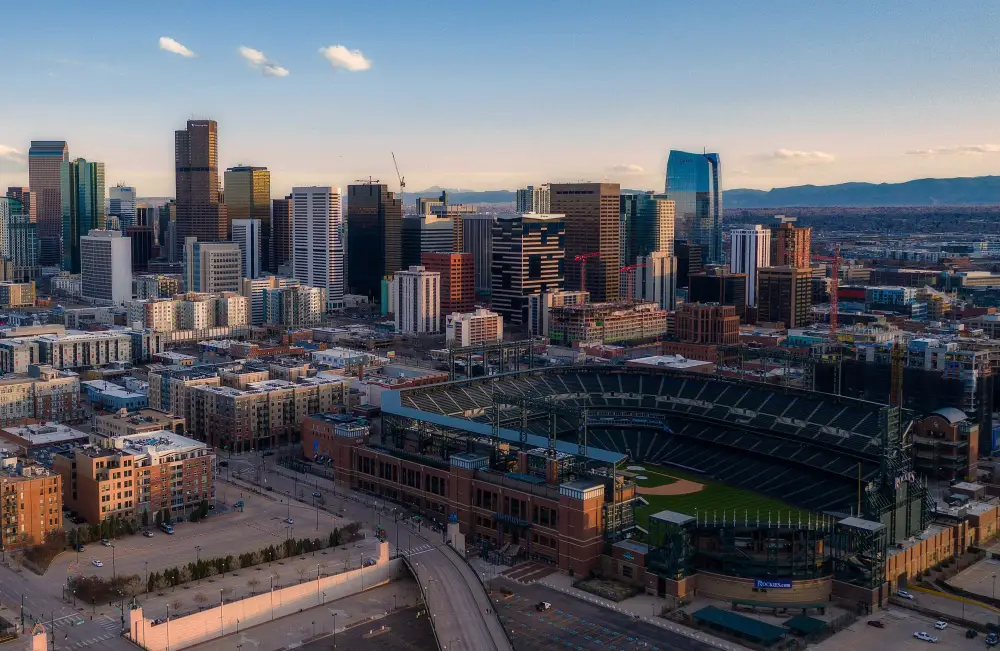
Denver skyline. CGH Injury Lawyers represents families who lost loved ones to negligence across Denver, Colorado.
Denver, Colorado

Denver Wrongful Death Lawyers Who Fight for Your Family's Future

When a Denver crash on I-25, a medical failure at Denver Health, or another act of negligence takes someone you love, the Colorado Wrongful Death Act gives your family the right to pursue justice. We work from our office in Denver's RiNo neighborhood and handle the legal fight so you can focus on your family. No fee unless we win.

No fee unless we win

It's More Than Money.

Get my free wrongful death case review

100% confidential. No fee unless we win.

Our Denver Office CGH Injury Lawyers 2701 Lawrence St., Suite 201 Denver, CO 80205 (303) 209-9395 Se habla espanol
5-star rated on Google ABOTA trial advocate on the team Trial lawyers, not a settlement mill 8 attorneys, bilingual EN / ES
  • The Colorado Wrongful Death Act (C.R.S. 13-21-201 through 13-21-204) is the law that lets surviving family members seek civil compensation after a fatal act of negligence. It governs who can file, what damages are available, and the deadlines your Denver family must meet.
  • In the first year after the death, only the surviving spouse has the right to file. In year two, both the surviving spouse and the children may bring a claim. Parents and, under HB 24-1472, siblings have standing only when no spouse or children survive.
  • The general deadline to file a Colorado wrongful death claim is two years from the date of death (C.R.S. 13-80-102). A much shorter window applies when the at-fault party is a government entity: written notice within 182 days of discovering the injury is required under C.R.S. 24-10-109.

If someone you love died in a Denver crash on I-25 or Colfax Ave, in a medical error at a Denver hospital, or because of any other act of negligence, CGH Injury Lawyers can help your family understand who has the right to file, what your claim is worth, and how to meet every deadline. Our office is at 2701 Lawrence St. in the RiNo neighborhood, minutes from downtown Denver, and we handle wrongful death cases from investigation through trial at Denver District Court. You pay nothing unless we recover for your family.

Why these cases are different

What the Colorado Wrongful Death Act does for a Denver family

Losing a family member is devastating, and the law cannot reverse the loss. The Wrongful Death Act exists for a narrower purpose: to hold a negligent party accountable and to secure the financial stability a family needs to move forward. It covers funeral costs, replaces lost future income, and recognizes the loss of companionship your family will never get back.

A civil claim, separate from any criminal case

  • A wrongful death claim is a civil action. It can move forward even if the person who caused the death is never charged with a crime, or is acquitted in criminal court in Denver or anywhere else in Colorado.
  • Civil cases focus on compensation for your family and require a lower burden of proof: a preponderance of the evidence. Your family controls the process, including whether to settle with an insurer or take the case to a Denver District Court jury.
  • Criminal cases focus on punishment and require proof beyond a reasonable doubt. Your family has limited control over how those proceedings unfold, and a criminal acquittal does not end a civil claim.

Many Denver wrongful death cases grow out of car crashes on I-70 or Speer Blvd, trucking collisions at the I-25/I-70 interchange, medical errors at Presbyterian/St. Luke's or Rose Medical Center, or construction-site fatalities in the city's RiNo or LoDo development corridors. Whatever the cause, the legal framework is the same: Colorado law gives your family a path to accountability that runs entirely parallel to any criminal investigation.

Who has the right to file

The First Year Rule: who can bring a Denver wrongful death claim

Colorado law sets a strict order of who may bring a wrongful death lawsuit and when. Getting this hierarchy right is essential, because filing out of turn can put your family's recovery at risk.

  1. Year one: the surviving spouse

    During the first year after the death, only the surviving spouse has the right to file. This exclusive standing exists even when there are adult children or parents who are also grieving. The surviving spouse may choose to include other heirs, such as children, in the claim.

  2. Year two: children and the surviving spouse

    If the surviving spouse does not file within the first year, or there is no surviving spouse, the right passes to the deceased's children. In the second year, both the surviving spouse and the children may file.

  3. Parents, when there is no spouse or child

    If there is no surviving spouse and no surviving children, the right to file passes to the deceased's parents. This situation can arise in cases where a younger Denver resident is killed, such as a pedestrian fatality near Capitol Hill or a construction accident in Five Points.

  4. Siblings, under HB 24-1472

    Under HB 24-1472, siblings now have standing, but only when the deceased left no surviving spouse, no surviving children, and no surviving parents. This change closed a gap that previously left some Denver families without legal recourse after losing a sibling.

Because standing is time-sensitive and the hierarchy is strict, Denver families should confirm who holds the right to file before the first year passes. We help you identify the correct claimant at the start of your case, so a procedural misstep never costs your family the recovery.

Compensation

What damages can a Denver wrongful death claim recover?

Colorado divides wrongful death damages into two categories. The distinction matters, because a statutory cap applies to one category and not the other.

Economic damages (not capped)

  • Net pecuniary loss: the future income and benefits your loved one would have provided
  • Medical expenses incurred between the injury and the death
  • Funeral and burial costs
  • Loss of household services, such as childcare and home maintenance your family must now pay for

Non-economic damages (capped)

  • Grief and emotional suffering
  • Loss of companionship
  • Loss of consortium
  • Pain and suffering of the survivors

Economic damages are not subject to a statutory cap. For Denver families who lost a primary earner, these damages often form the largest part of the claim. Non-economic damages in a Colorado wrongful death case are capped at $2.125 million for claims accruing on or after January 1, 2025 (C.R.S. 13-21-203), with inflation adjustments starting in 2028. The cap disappears entirely if the death resulted from a felonious killing. Lower caps apply to older claims and to medical malpractice deaths, so the date and cause of the death matter. When a death results from gross negligence or willful and wanton conduct, punitive damages may also be available. We calculate the full value of every category before we ever discuss settlement.

A strategic choice for Denver families

The solatium election: a guaranteed payment for grief

Colorado offers a mechanism called solatium under C.R.S. 13-21-203.5. It lets a surviving spouse, and in some cases parents, elect a fixed statutory sum for grief and loss of companionship instead of proving those losses in front of a Denver District Court jury.

  • Solatium is a guaranteed flat-rate payment. For claims accruing on or after January 1, 2024, the certified amount is $135,990 (C.R.S. 13-21-203.5, as adjusted and certified by the Colorado Secretary of State), and it is paid in addition to economic damages once liability is established. There will be no additional adjustments to this figure.
  • Electing solatium can act as a privacy shield for a Denver family. In a traditional non-economic damages claim, the defense may investigate the quality of the marriage or relationship through invasive depositions and subpoenas of private communications. Solatium lets a family bypass that process entirely.
  • Electing solatium does not limit economic damages. Lost income, medical bills, and funeral costs remain recoverable and are not capped regardless of which path your family chooses.

Whether solatium makes sense for your Denver family depends on the nature of the loss and the strength of your damages evidence. We walk through both paths in the free consultation so you understand exactly what each option means before making any election.

Two different claims

Wrongful death claim versus survival action

A single fatal incident in Denver often gives rise to two separate legal claims. They serve different purposes and distribute funds differently, and they are frequently filed together at Denver District Court.

For the survivors

The wrongful death claim

Brought by surviving family members to recover the losses they personally experienced, including lost financial support and loss of companionship. The beneficiaries are the spouse, children, or parents, as defined by the First Year Rule in the Colorado Wrongful Death Act.

For the estate

The survival action

Brought on behalf of the deceased's estate to recover losses the deceased suffered before passing, such as pre-death medical bills at Denver Health, lost wages between the injury and the death, and the pain they endured. Proceeds are distributed under the will, or under Colorado intestacy law if there is no will.

Consider a Denver victim who survives a collision on I-25 for four days in the ICU at Saint Joseph Hospital before passing away. The pain and medical bills from those four days belong to the survival action. The loss of the next twenty or thirty years of income and companionship belongs to the wrongful death claim. Filed together, the two claims pursue full recovery for both the family and the estate.

Local Knowledge

Denver courts. Denver trauma care. Denver corridors.

A Denver wrongful death case lives in Denver: the courthouse where your family's claim is filed, the hospitals that documented the injuries, and the roads where the fatal crash or incident occurred. Here is the ground we work on every day.

Courthouse

Denver District Court, 2nd Judicial District

Wrongful death cases that arise in Denver County are filed in Denver District Court, the 2nd Judicial District, with civil matters heard at the City and County Building, 1437 Bannock St. Denver's civil docket, its judges, and the defense firms that represent Denver's major insurers and corporations are all familiar territory for our attorneys. We handle Denver District Court cases directly and prepare every case as if it will go to a Denver jury.

Trauma Care

Denver Health Medical Center

The most critically injured patients in Denver are transported to Denver Health Medical Center, the city's Level I trauma center. Its medical records document the full clinical picture from the moments after injury through death, and those records become the factual backbone of both the wrongful death claim and any related survival action. Saint Joseph Hospital, Presbyterian/St. Luke's Medical Center, and Rose Medical Center also treat patients across the metro, and we obtain and analyze records from all of them.

Fatal Corridors

I-25, I-70, Colfax Ave, Speer Blvd, Pena Blvd

Denver's major corridors are where many fatal crashes occur. The I-25 and I-70 interchange through downtown carries enormous freight and commuter traffic. US-6 (6th Ave) and Federal Blvd are high-volume surface corridors with significant pedestrian and cyclist fatality histories. Colfax Ave runs the full width of the city. Pena Blvd is the sole access road to Denver International Airport and the site of serious truck and motor vehicle crashes. When a death happens on one of these corridors, crash reconstruction and evidence preservation must move quickly.

Cases we handle in Denver

Common causes of wrongful death in Denver

Wrongful death claims arise whenever negligence, recklessness, or intentional misconduct causes a fatal outcome. These are the contexts Denver families encounter most often.

Motor vehicle crashes

Fatal car, truck, and motorcycle crashes on I-25, I-70, I-76, I-225, and surface corridors such as Colfax Ave and Speer Blvd. Commercial trucking cases often involve corporate liability, federal safety violations, and multiple insurance policies that require immediate investigation to preserve evidence.

Medical malpractice

Surgical errors, misdiagnosis, medication mistakes, anesthesia errors, and failure to monitor at Denver Health, Saint Joseph, Presbyterian/St. Luke's, or any other facility. Medical malpractice wrongful death claims are governed by a separate cap schedule under HB 24-1472 and require expert testimony to establish the standard of care and how it was breached.

Premises liability

Deaths caused by unsafe property conditions across Denver neighborhoods, including dangerous walkways in Cherry Creek and LoDo, inadequate security in Capitol Hill apartment complexes, pool drownings, and construction-site fatalities in the city's rapidly developing RiNo and Five Points corridors.

Pedestrian and bicycle fatalities

Denver's density and its mix of vehicle, pedestrian, and cyclist traffic on corridors like Federal Blvd and Colfax Ave create serious risk. When a driver fails to yield, runs a red light, or operates while impaired, and a pedestrian or cyclist is killed, a wrongful death claim against the driver and potentially the vehicle owner is the path to accountability.

Workplace accidents

Fatal injuries on Denver construction sites, in industrial facilities, and during transportation work. These cases may involve both workers' compensation death benefits and a separate third-party civil claim against a contractor, equipment manufacturer, or property owner.

Other fatal negligence

If a loved one died in Denver because someone else was careless or reckless, we will tell you honestly in the free consultation whether a wrongful death claim is available and who in your family holds the right to file it.

Comparative fault in Denver wrongful death cases

What if your loved one was partly at fault?

Colorado uses a modified comparative fault rule. The percentage of fault attributed to your loved one matters, and Denver defense lawyers and insurance adjusters work hard to inflate it.

  • Under C.R.S. 13-21-111, a plaintiff recovers as long as the deceased's negligence was not as great as the defendant's. In plain terms: if your loved one is found 50 percent or more at fault, your family recovers nothing. If your loved one is found less than 50 percent at fault, your family recovers the full damages reduced by that percentage.
  • A Denver insurer that assigns even 10 or 20 percent of the fault to your loved one is doing so to reduce its payout, not because the evidence requires it. We gather crash reconstruction evidence, witness statements, black-box data, and surveillance footage early, before evidence is lost, so the comparative fault picture is built on facts, not insurer assumptions.
  • If the at-fault party is a Denver city vehicle or a Regional Transportation District bus, the Colorado Governmental Immunity Act (C.R.S. 24-10-114) limits recovery against that entity to $505,000 per person and $1,421,000 per occurrence for claims accruing on or after January 1, 2026. A written notice of claim must be filed within 182 days after discovering the injury (C.R.S. 24-10-109), and missing that deadline bars the claim entirely.
Why CGH

Why Denver families choose CGH Injury Lawyers for wrongful death

A real Denver office, trial-ready attorneys, bilingual service, and no fee unless we win. We do not publish wrongful death settlement figures, because every case is different and a number on a website tells you nothing about your family's recovery. What we offer is the work, not a headline.

The Act

C.R.S. 13-21-201 et seq.

Colorado's Wrongful Death Act defines every rule that matters: who can file, what damages are available, and when. We know which path is right for your family before the first deadline arrives.

Real Denver Office

Not a referral service.

Our office at 2701 Lawrence St., Suite 201, in Denver's RiNo neighborhood is where your attorney works. You can walk in, review the evidence file, and meet the team handling your family's case. Denver District Court is minutes away.

Deadlines

Two years. Sometimes less.

The general SOL is two years from the date of death (C.R.S. 13-80-102). Government entity claims require notice within 182 days of discovery. We track every deadline from day one.

The Cap

$2.125M for non-economic losses.

For claims accruing on or after January 1, 2025, the WD non-economic cap is $2.125 million (C.R.S. 13-21-203). Economic damages are never capped. Felonious killings carry no cap at all.

Trial-Ready

8 attorneys, prepared for trial.

Managing Partner Kevin Cheney is a member of the American Board of Trial Advocates and has tried over 25 cases to verdict. When attorneys are genuinely ready to try a wrongful death case in Denver District Court, insurers respond to settlement demands very differently.

Bilingual

Hablamos espanol.

Spanish-speaking staff and attorneys serve Denver's large Spanish-speaking community, including families in neighborhoods like Westwood, Globeville, and Elyria-Swansea.

No Win, No Fee

Contingency only.

You pay nothing out of pocket for legal fees. We advance costs and collect only from a settlement or verdict. A grieving family should never have to pay to seek justice.

5-star rated on Google

I wish I could leave more than 5 stars!

Grace Macaluso, 5-star Google review
After the loss

What happens after you call our Denver office

We take the legal weight off your family so you can focus on each other. Here is the path we walk together from the first call through resolution.

  1. Free, confidential consultation

    We review what happened, confirm who in your family holds the right to file under the Colorado Wrongful Death Act's standing hierarchy, and identify every applicable deadline. There is no charge and no obligation. Call (303) 209-9395 or submit the form on this page.

  2. Evidence preservation

    We issue litigation holds and preservation demands immediately. In a Denver crash case, that means black-box data, surveillance footage from nearby businesses or RTD cameras, and CDOT traffic data. In a medical death at Denver Health or Saint Joseph, it means obtaining the complete medical chart before records are amended or lost.

  3. Investigation and damages analysis

    We retain economic experts to calculate the full scope of lost future income and household services, forensic specialists for crash reconstruction when needed, and medical experts to link the cause of death to the defendant's conduct. We calculate every category of loss, including the solatium election analysis, before we consider any settlement figure.

  4. Insurer and defense negotiations

    Most Denver wrongful death claims resolve through negotiation or mediation. We demand full value and handle all communication with the at-fault party's insurer. You will never be asked to give a recorded statement or sign anything without our review.

  5. Trial at Denver District Court, if necessary

    When a carrier refuses to make your family whole, we file in Denver District Court, the 2nd Judicial District, at 1437 Bannock St, and try the case. Because we genuinely prepare for trial from the first day we take a case, this threat carries weight in every negotiation.

  6. Distribution and closure

    After a settlement or verdict, Colorado law requires a fair division among eligible survivors. We help your family reach a consensus on distribution before the hearing so that a painful process does not become a public dispute at the courthouse.

Questions

Denver wrongful death, frequently asked questions

Who can file a wrongful death claim after a death in Denver?

Colorado follows a strict hierarchy. In the first year after the death, only the surviving spouse may file. In the second year, both the surviving spouse and the children may file. Parents may file only if there is no surviving spouse or children. Under HB 24-1472, siblings have standing only if the deceased left no surviving spouse, no children, and no parents. Getting the standing question right before any filing deadline passes is one of the first things we confirm in the free consultation.

How long does a Denver family have to file a wrongful death lawsuit?

The general deadline is two years from the date of death (C.R.S. 13-80-102). That deadline is strictly enforced. If the at-fault party is a government entity, such as a city of Denver vehicle or an RTD bus, a written notice of claim must be filed within 182 days of discovering the injury under the Colorado Governmental Immunity Act (C.R.S. 24-10-109). Missing that notice deadline bars the entire claim, not just the damages. Because the standing hierarchy and the SOL can run simultaneously, it is important to contact an attorney soon after the death.

What damages can a Denver wrongful death claim recover?

Families may recover economic damages, including the income and benefits your loved one would have provided over their lifetime, medical expenses incurred before death, and funeral and burial costs. Economic damages are not capped. Non-economic damages such as grief, loss of companionship, and loss of consortium are subject to a statutory cap. For claims accruing on or after January 1, 2025, that cap is $2.125 million under C.R.S. 13-21-203, and it disappears entirely if the death resulted from a felonious killing. When a death results from gross negligence or willful and wanton conduct, punitive damages may also be available.

What is solatium, and should a Denver family elect it?

Solatium, under C.R.S. 13-21-203.5, is a fixed statutory payment a surviving spouse (and in some cases parents) can elect for grief and loss of companionship instead of proving those losses at trial. For claims accruing on or after January 1, 2024, the certified solatium amount is $135,990, paid in addition to economic damages once liability is established. There will be no further adjustments to this amount. Families often elect solatium to avoid the invasive discovery that a traditional non-economic damages claim can invite. Electing solatium does not limit economic damages, which remain uncapped. Whether it makes sense for your Denver case depends on your specific facts and the evidence available.

What if my loved one was partly responsible for the crash or incident?

Colorado uses a modified comparative fault rule under C.R.S. 13-21-111. Your family can still recover as long as the deceased was found to be less than 50 percent at fault. If the deceased is found 50 percent or more at fault, the family recovers nothing. Below that threshold, the total damages are reduced by the percentage of fault attributed to the deceased. Denver defense lawyers and insurance adjusters routinely try to inflate the deceased's share of fault. We build the evidence case early to keep that number honest.

Where is a Denver wrongful death lawsuit filed?

Wrongful death cases arising in Denver County are filed in Denver District Court, the 2nd Judicial District, with civil matters heard at the City and County Building, 1437 Bannock St. Most claims resolve through negotiation or mediation before a lawsuit is ever filed. But where a case would be filed affects the local rules, the jury pool, and which defense firms you face. We handle Denver District Court cases directly from our Lawrence St. office.

Is a wrongful death claim the same as a survival action?

No. A wrongful death claim is brought by surviving family members for the losses they personally suffered, such as lost financial support and loss of companionship. A survival action is brought on behalf of the deceased's estate to recover losses the deceased suffered before passing, including pre-death medical bills and pain endured between injury and death. A Denver family can file both claims together to pursue full recovery. We analyze both options at the start of every case to make sure no avenue is overlooked.

It's More Than Money.

You lost someone. We carry the legal weight.

Free consultation. No fee unless we win. Available in English and Spanish from our Denver office.

Tell us what happened

100% confidential. No fee unless we win.

Prefer to read first? See how Colorado's wrongful death law works.

CGH Injury Lawyers · 2701 Lawrence St., Suite 201, Denver, CO 80205